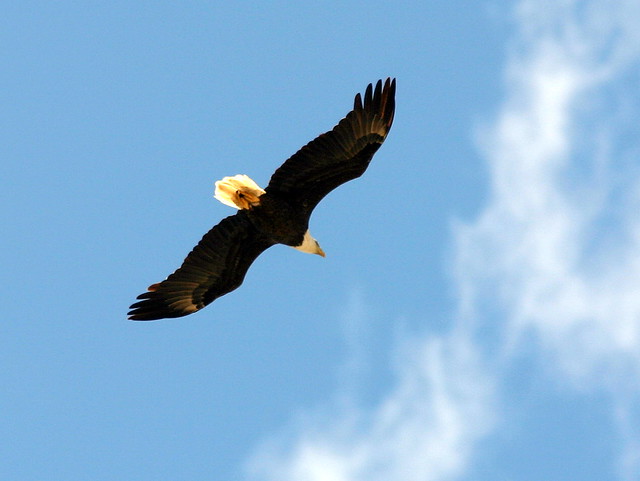
Mary Lou and I usually start out walking briskly together, but soon I am panting in her wake (or idly checking out something high in the sky-- is it a bird or a plane?).
Admittedly, seeking out the little tykes has one great advantage. With advancing age I increasingly welcome the chance to find a shady place where I can just stay still and watch for movement in the foliage. It is a bit like fishing-- there is joy in the anticipation, the rapt attention to the slightest ripple in the leaves, and the many that "got away" to fuel dreams of future success. Like fishing, golf and other individual pursuits, this habit does not strengthen the marital bond, except when I can share some of my trophies (if not in the larder or on the fireplace mantel, at least on the computer screen).
Among the "smallish" local breeding birds are the Downy Woodpecker (6.75") and Common Ground-Dove (6.5"), but I'm talking here about birds that are no bigger than most sparrows. I can count on one hand the number of sparrow-sized and smaller species that build their nests locally.
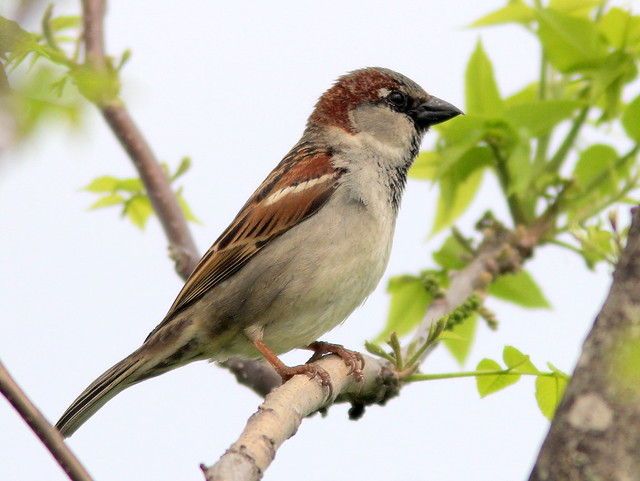
We do not even see House Sparrows (6.25 inches long), so common in the more urban areas of our city. I photographed this male House Sparrow near our second home in NE Illinois:
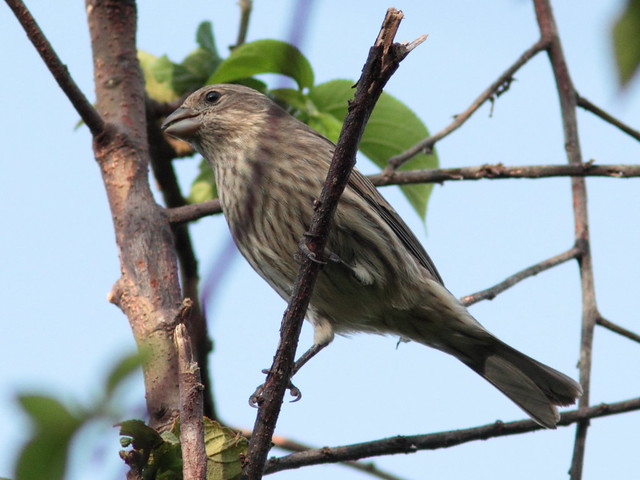
The House Finch (6.0") is known to breed within our County, but I have seen it only once locally, this female on September 30, 2011:
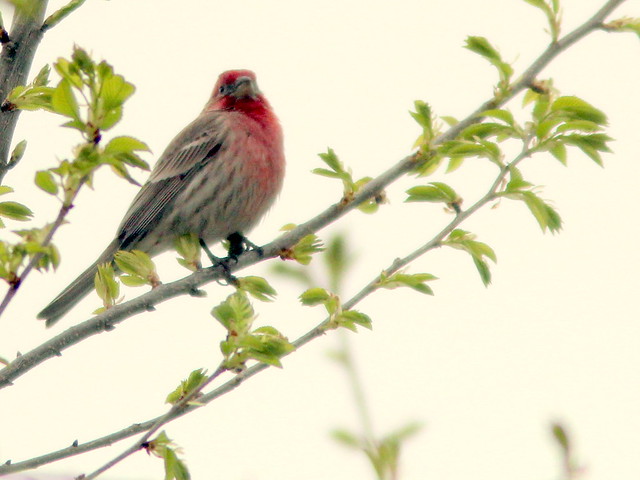
I found this male House Finch near our daughters's home in Batavia, Illinois on a dark and dreary day in May, 2011. I had to use flash with an exposure of 1/4000 second at f/5.6 and ISO 640, so the image is soft.
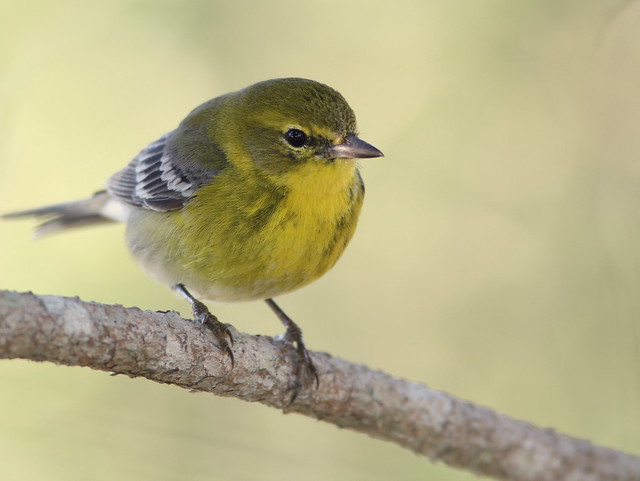
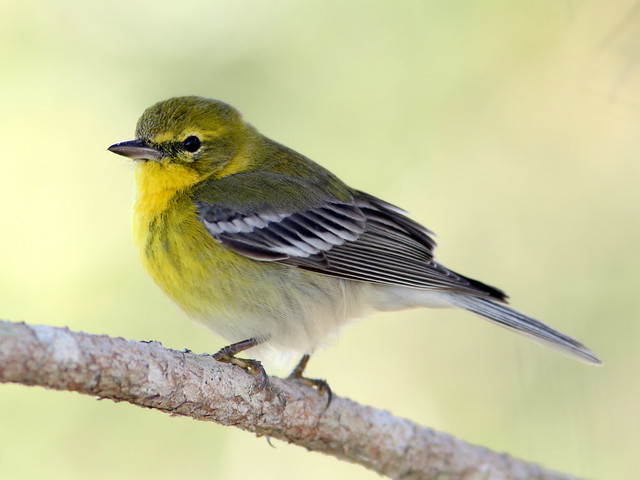
The Pine Warbler (5.5") breeds in Everglades National Park, which is about 50 miles south of our home, as well as in coniferous forests far to our north, but it has never been reported in Broward County during the months of June or July. I have seen them locally only from September through March. This beautiful Pine Warbler visited the Slash Pines at Chapel Trail Nature Center about 2 miles north of our home, in March, 2011:
Moving down the size scale, the smaller birds that I know to breed in the adjacent water preservation area are:
Carolina Wren (5.5"), in our local wetlands, June 5, 2014...
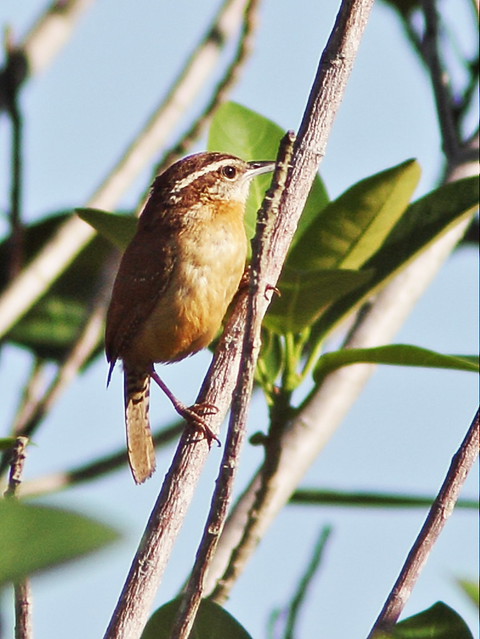
...and another on August 27, 2014:
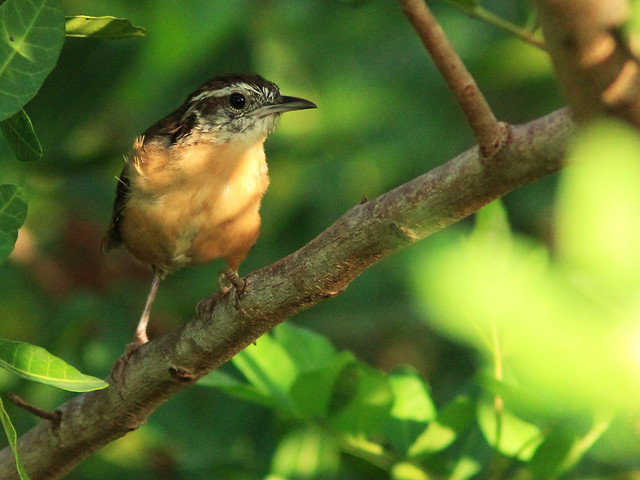
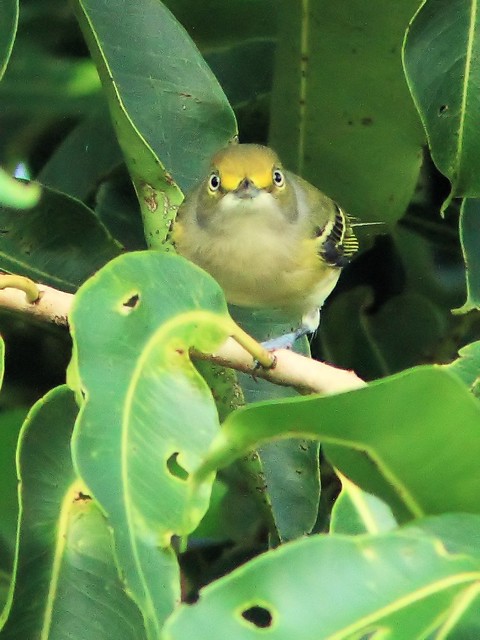
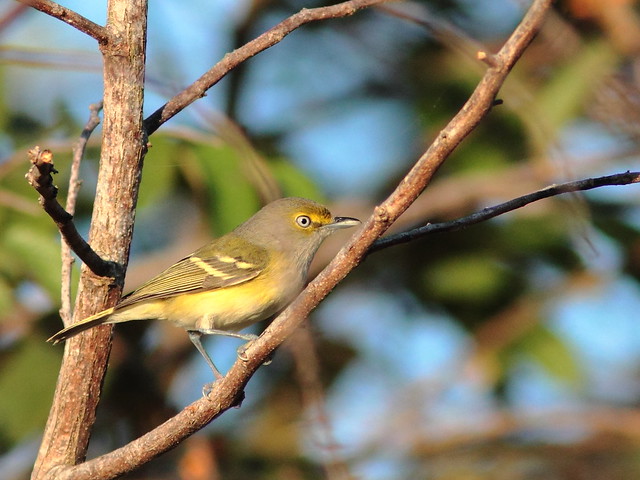
This White-eyed Vireo (5.0") stares at me so intently that it seems to be angry about sitting for a portrait.
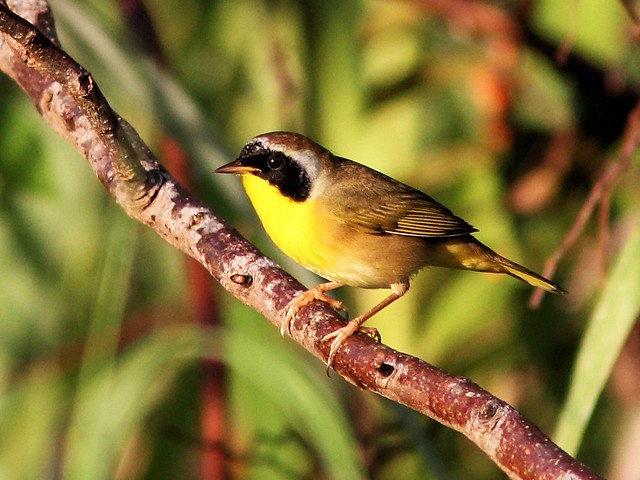
All of these little birds, particularly this Common Yellowthroat (5.0"), are reclusive, hard to find and seem unable to hold a perch for more than two seconds. This is an adult male:
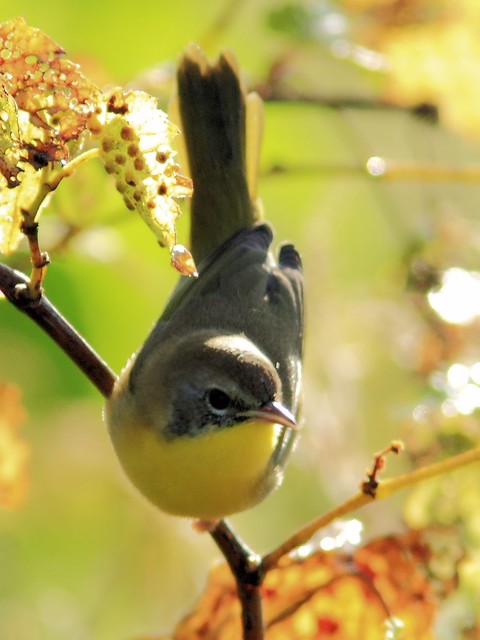
This immature male has not yet developed a full mask:
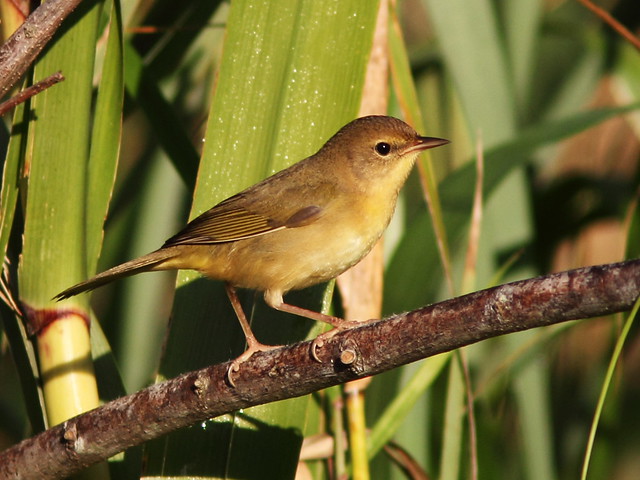
The female is rather non-descript but always shows its eponymous yellow throat:
The Prairie Warbler (4.75") is a bit easier to capture in the viewfinder, as it usually forages along a single branch before flying to the next. It is one of my favorite subjects. The male is boldly marked:
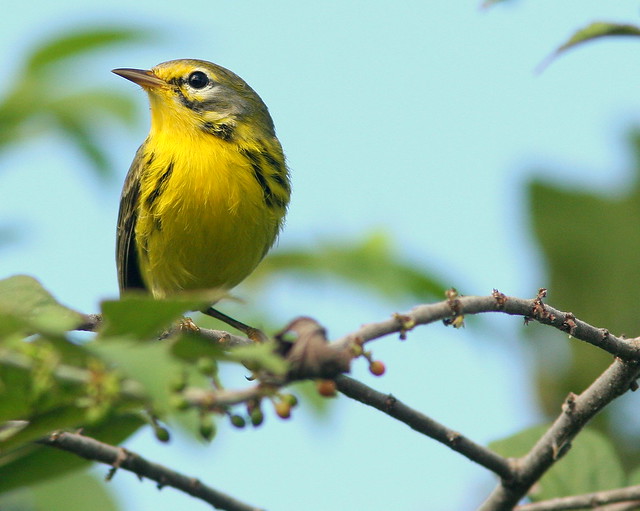
"What was that you said about me?"
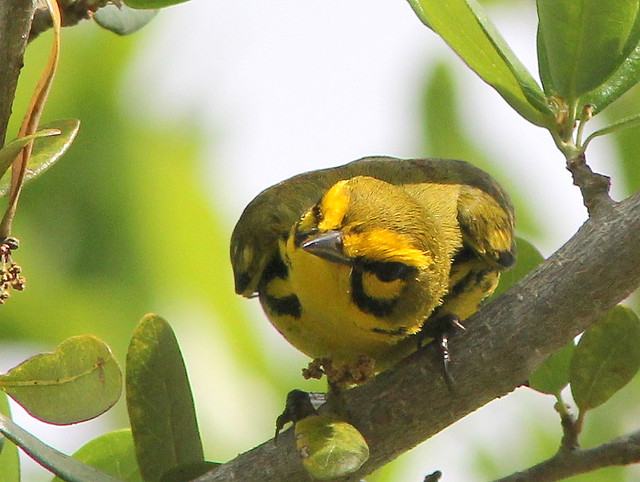
The female has the same general pattern, but the streaks are more subdued.
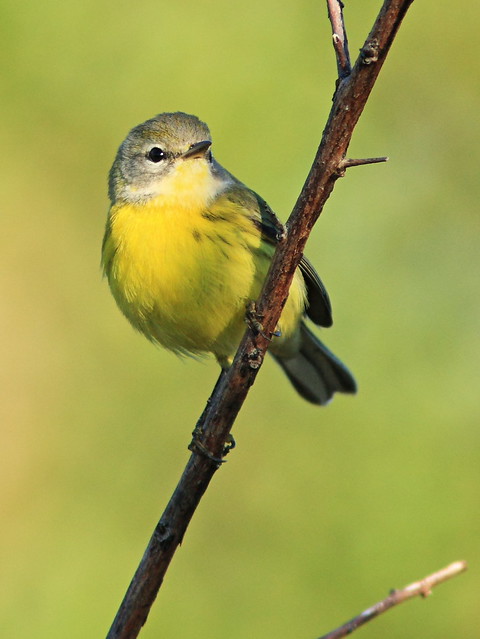
Believe it or not, that's it-- there aren't any more!