We are back in Illinois and hoping to catch up with the northbound migrants that failed to visit our Florida neighborhood. Migration in southeastern Florida has been much quieter in spring than in the autumn, generally due to the prevailing southeasterly winds that steer migrants from Cuba towards the west coast and often allow them to continue non-stop over the Gulf of Mexico. We also departed Florida a bit ahead of the peak warbler migration.
Northern Illinois experienced record rainfall during the months of March and April. This broke the serious drought conditions that prevailed last year and caused massive crop failures. Now the farmers are concerned because their fields are too wet to permit planting of corn. Flooding and storms interfered with flight schedules, but we enjoyed fair skies on the first few days at our second home.
Suffering from "cabin fever," our granddaughters could not wait to get out on a "bird hike" with us, so we brought them to local Hawk's Bluff Park in Batavia on the morning after we arrived. As it turned out, model race cars and swing sets provided them with a much more interesting pastime, but it was great just being outside.



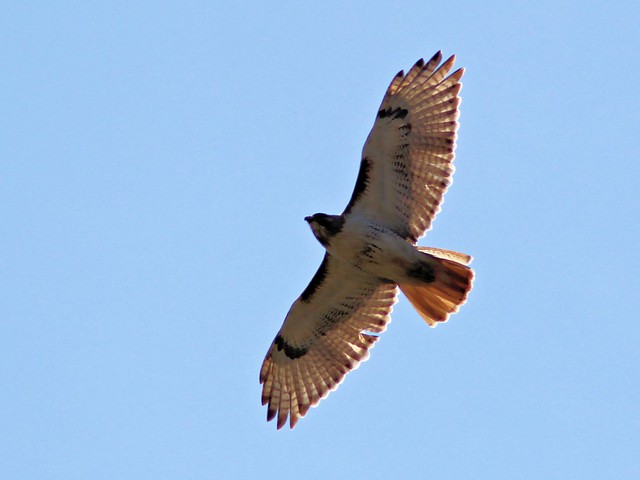
While Mary Lou supervised the children I broke away to capture this Red-tailed Hawk in flight.
The calls of a White-breasted Nuthatch caught my attention.

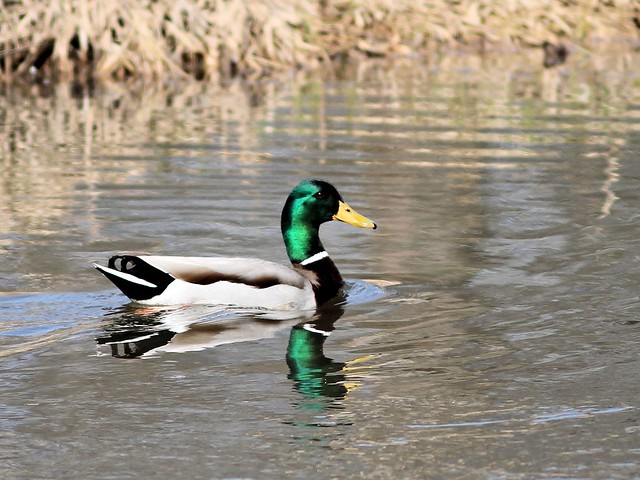
A male Mallard lounged in a quiet corner of the creek.
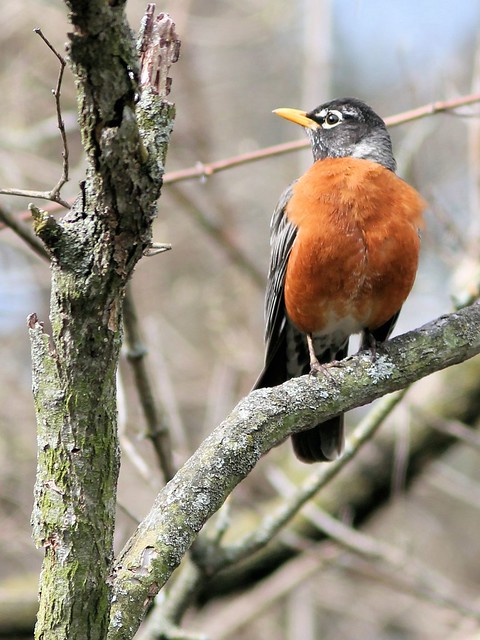
American Robins were already building their nests.
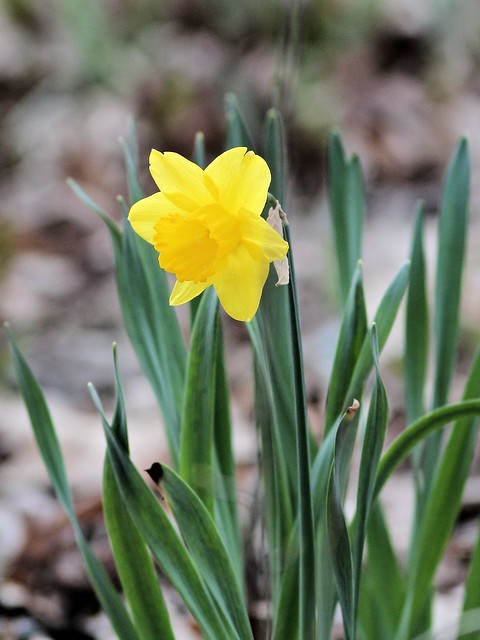
Daffodils were in bloom.
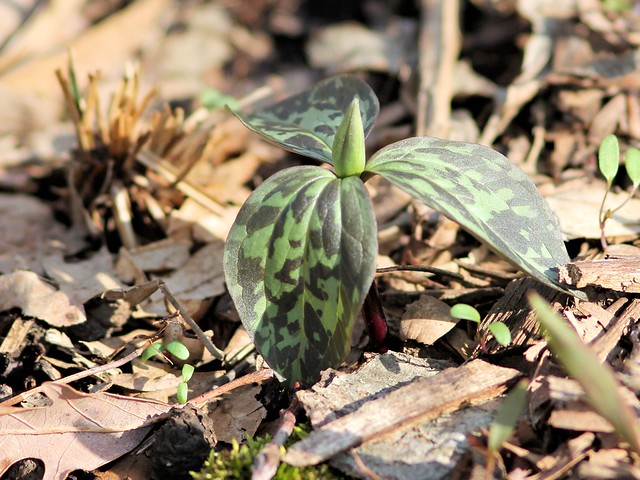
Wake Robin (Trillium) buds were ready to open.
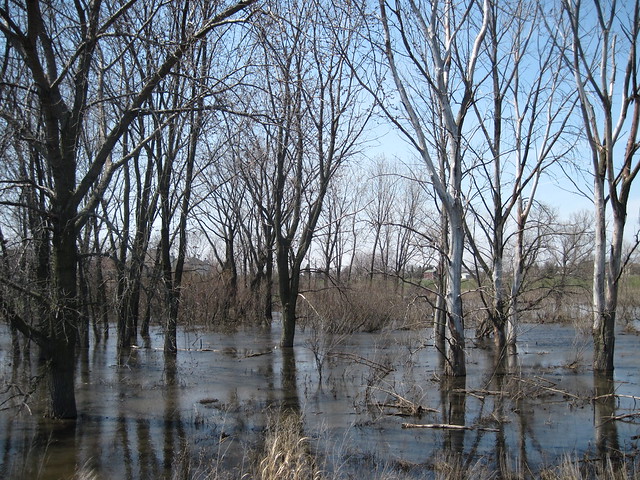
A stop at neighboring Jones Meadow Park was a disappointment. Flood waters had receded about three feet but still blocked the path and engulfed the woodlands.
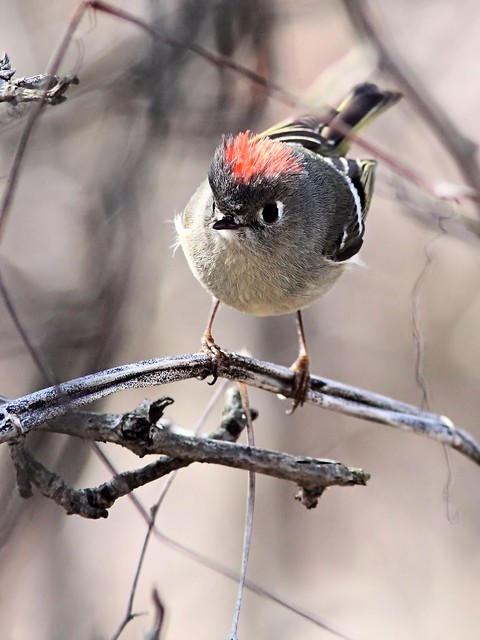
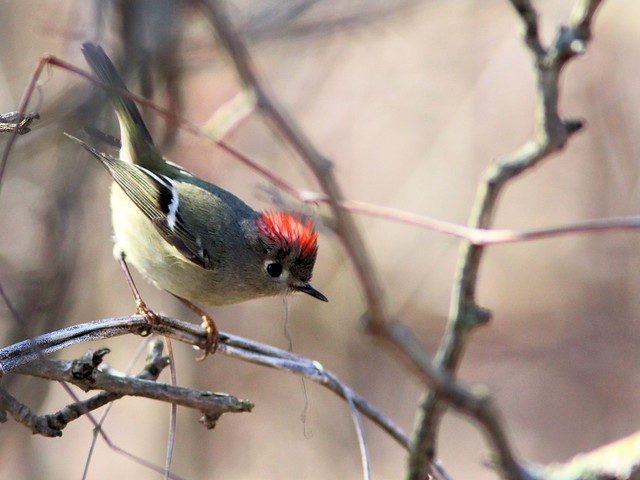
The next morning was a school day. It dawned bright, but windy and chilly (by Florida standards). Mary Lou and I headed for one of our favorite spots, Nelson Lake/Dick Young Kane County Forest Preserve in Batavia. We knew that we were a week or so ahead of the expected arrival of warblers, but we got great views of Ruby-crowned Kinglets.
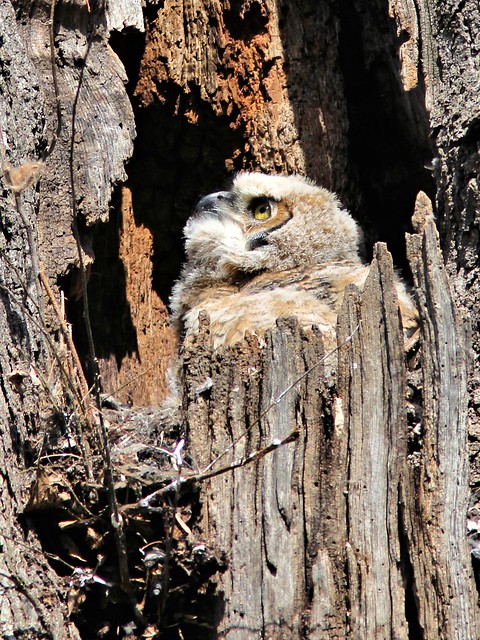
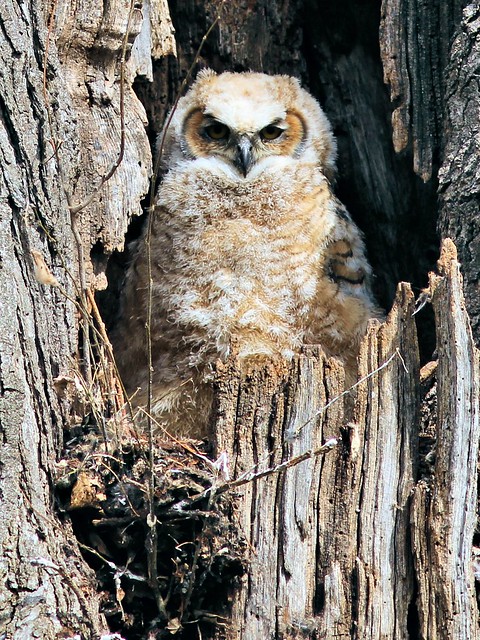
We went on to visit Fabyan West Forest Preserve in Geneva, where we got to see the Great Horned Owl nestling that has attracted much attention. Here the owlet stares at an airplane as it passes overhead.
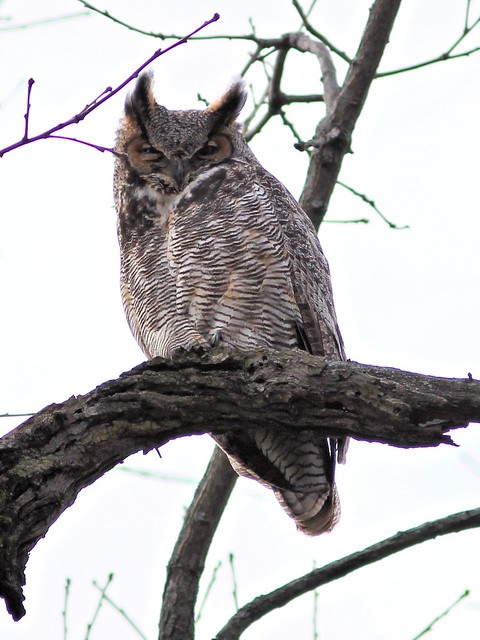
One of the parent owls dozed high in a nearby tree.
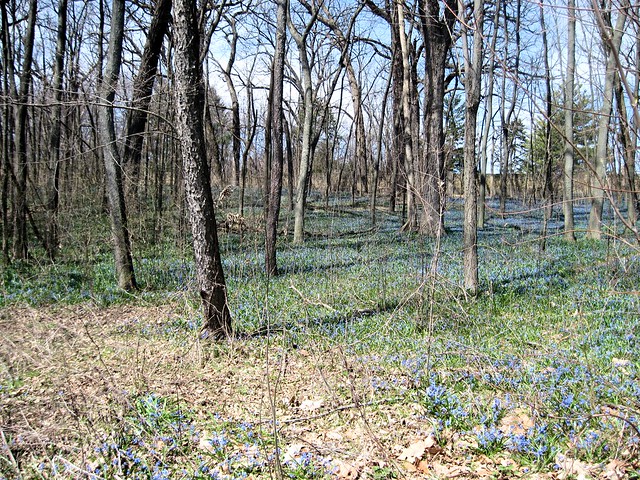
A blue carpet of Scilla covered the floor of the open woodland.
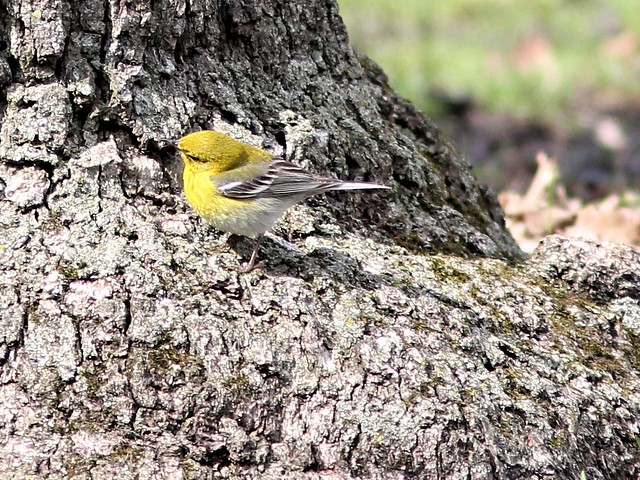
Several warblers foraged on the ground, probably because of the high winds. Among them was this Pine Warbler, usually found exploring the tips of pine trees.
We later brought the girls over to see the owls. The chick flew from the nest that very night.
We capped off our first week in Illinois with visits to nearby Les Arends Preserve and Lippold Park, where numerous Tree Swallows flitted overhead. This one posed nicely, showing off its electric blue plumage.

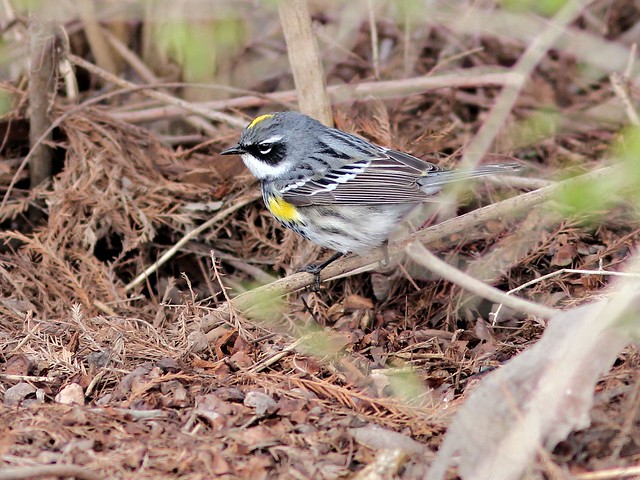
Yellow-rumped Warblers are among the earliest and most numerous spring arrivals. They were everywhere.
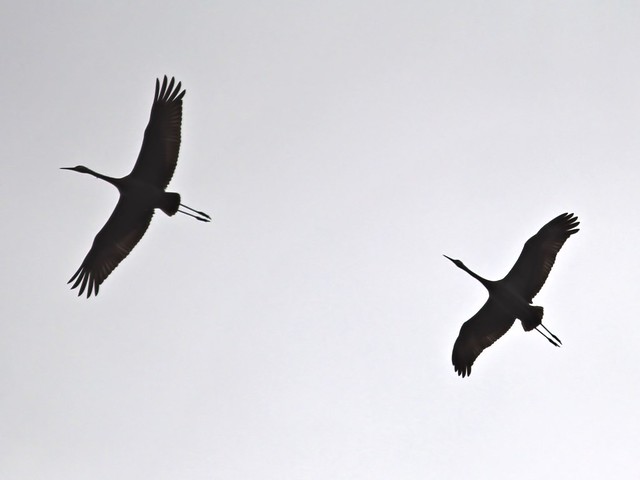
Arriving Sandhill Cranes flew high above.
I caught this Yellow Warbler as it hover-gleaned in the junipers.

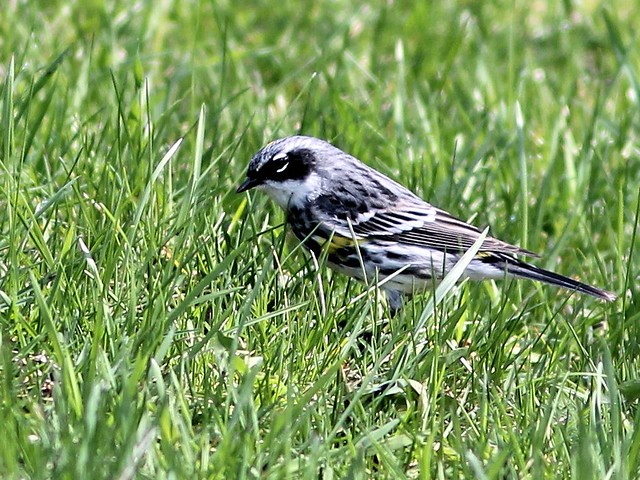
At Les Arends there were more Yellow-rumps hunting for insects on the lawns.
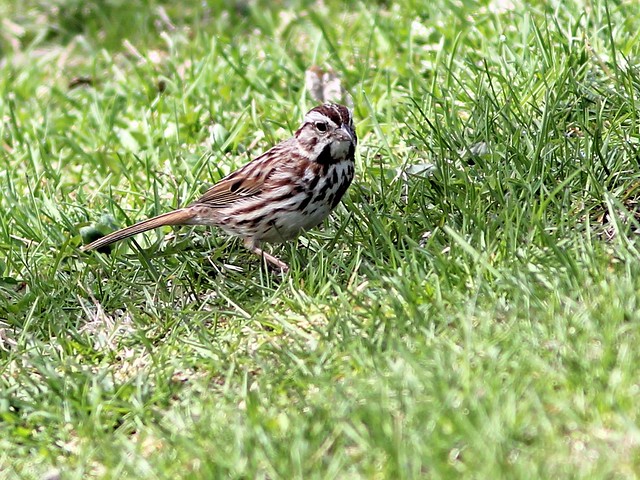
Song Sparrows joined the warblers.
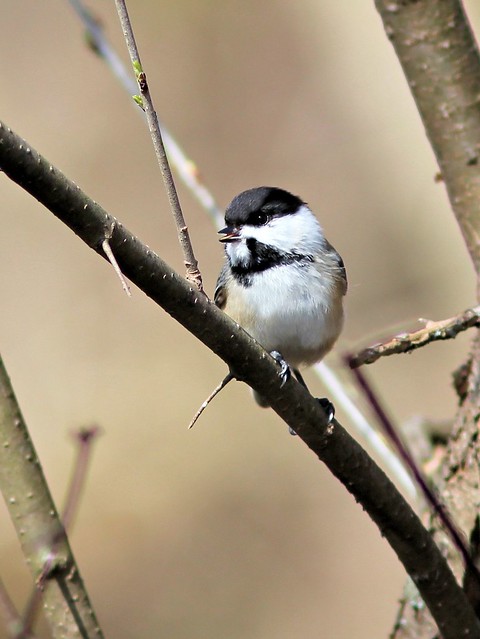
I could not resist this photo-op with a Black-capped Chickadee.
Each time we relocate between our first and second homes in south Florida and northeastern Illinois the time lapse of several weeks or months amplifies our awareness of changes that have taken place. Like Rip Van Winkle, we see the full impact but fail to perceive the gradual transition from what was then and what is now.
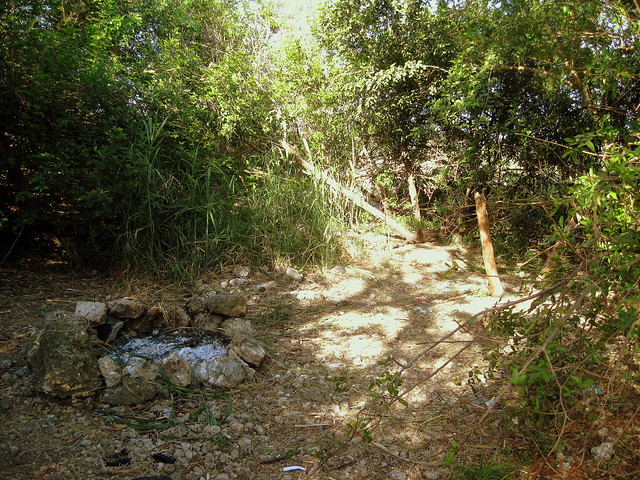
Change is inevitable, from the destruction of our quiet sitting spot, now in full sunlight and overgrown with grasses, to the clearing of the prairie in front of our Illinois townhouse.
When we returned to Florida only a month ago we saw that vandals, who earlier removed the only 5 mature native Trema trees, had carved an ATV road through the heart of the last small patch of woodlands that we called our "Fake Hammock." Click on this link to see it before it was disturbed. They also ignited a small wildfire. Now the quiet dark and cool spot under the canopy has become a nighttime gathering place with a fire pit.
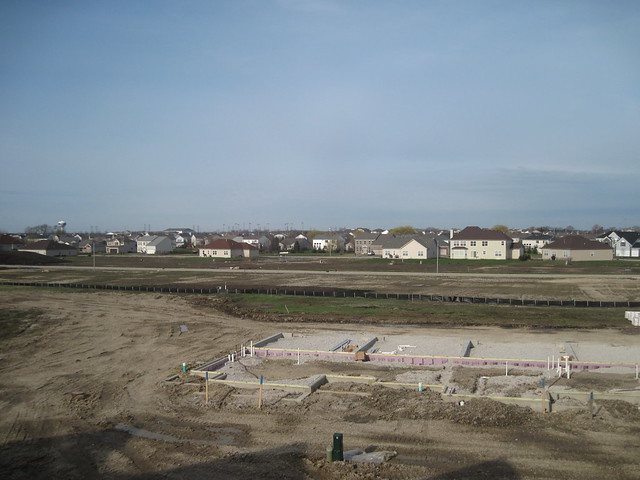
 Upon arrival in Illinois I captured this view from the top floor of our Illinois condo. The scene has changed radically. Where meadowlarks, Spotted Sandpipers and Horned Larks once nested and Sandhill Crane families visited we now stare upon a drastically altered landscape. See Illinois "Yard" Birds. Construction of additional townhomes was not unexpected, but delays in completion of the project allowed us to grow accustomed to the scarred but bountiful prairie that developed as the land lay fallow over the past nine years.
 On a positive note, there were interesting creatures to be seen in Florida during the week prior to our departure for Illinois. As usual, Mary Lou and I got out before sunrise, and she beat me home by over an hour. This is a view looking to the northwest just as the early rays are reaching the high clouds.
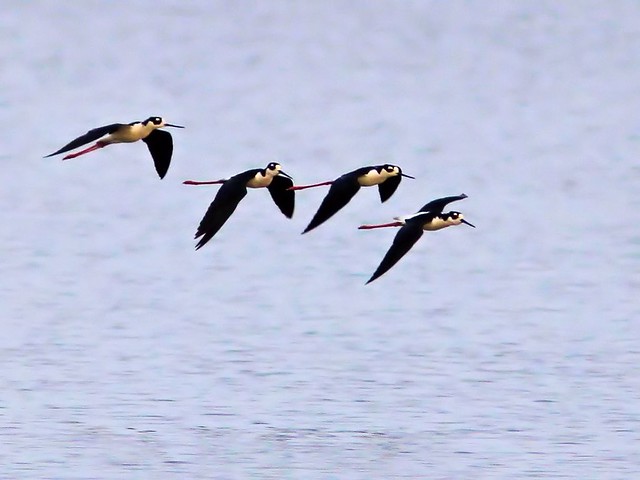
 The lake held a welcome surprise. A noisy flock of Black-necked Stilts flew across the water in front of me.
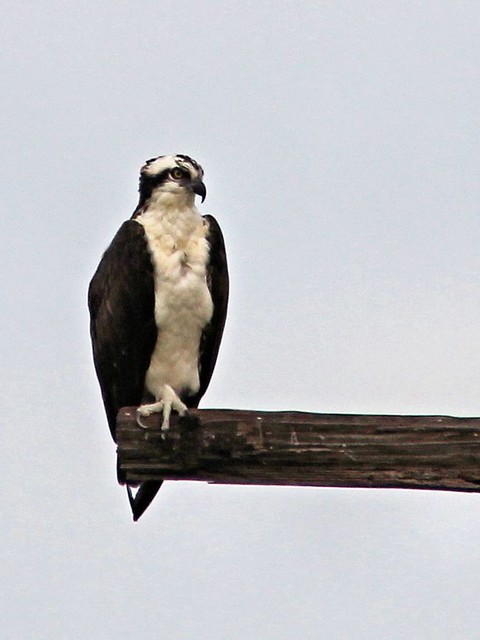
 An Osprey occupied its usual roost.
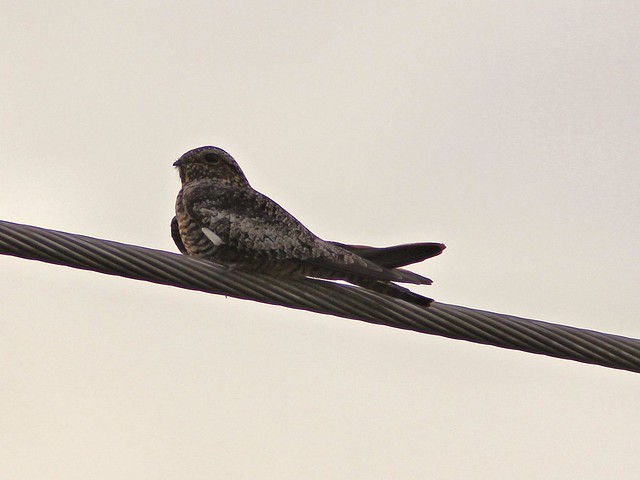
 A Common Nighthawk, probably getting ready to nest at the side of the path, watched me from its perch on a wire.
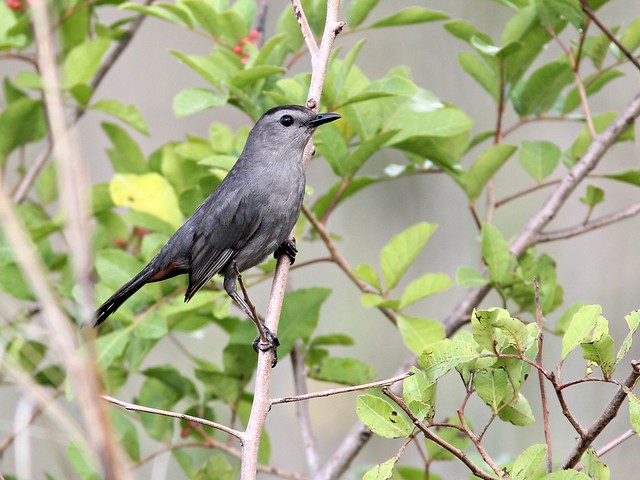
 Gray Catbirds were everywhere, but not a single warbler had migrated in. Southeasterly winds seem to be encouraging migrants from Cuba to follow north along the west side of the Florida peninsula or even cross the open water of the Gulf of Mexico.
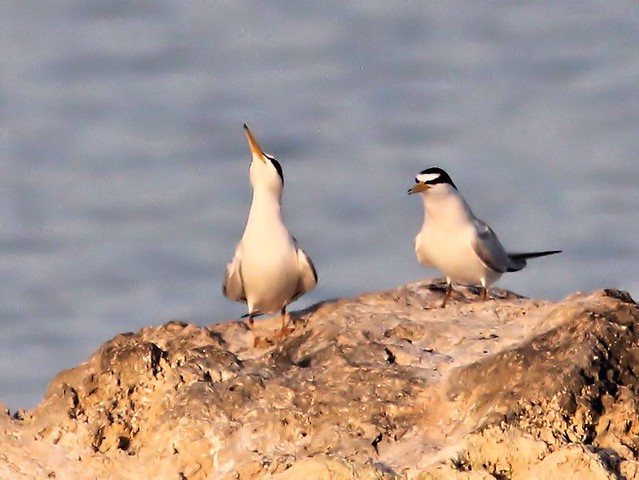
 Least Terns have arrived, and within two days I observed their mating rituals. The male brings a little fish to the female who adopts a bill-up posture. If he proves to be a good provider, she will accept him as a mate within a week or so. See the full ritual in: The Least of the Terns.

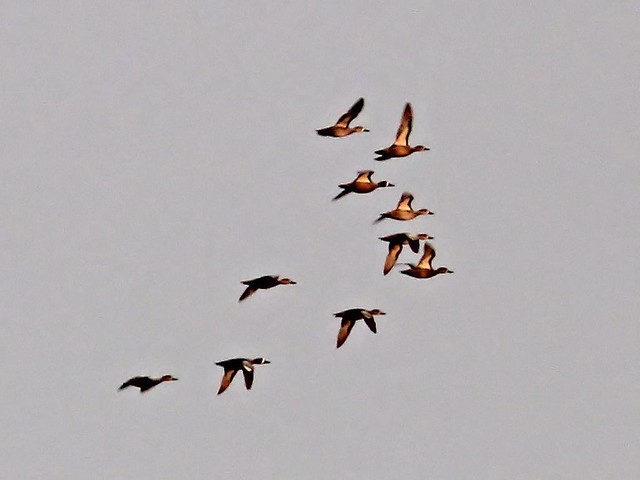
 Duck migration was in progress. Several small flocks of a dozen or so flew rapidly to the north, high overhead and illuminated from beneath by the first rays. Most were teal and shovelers. This flock consisted of Blue-winged Teal.
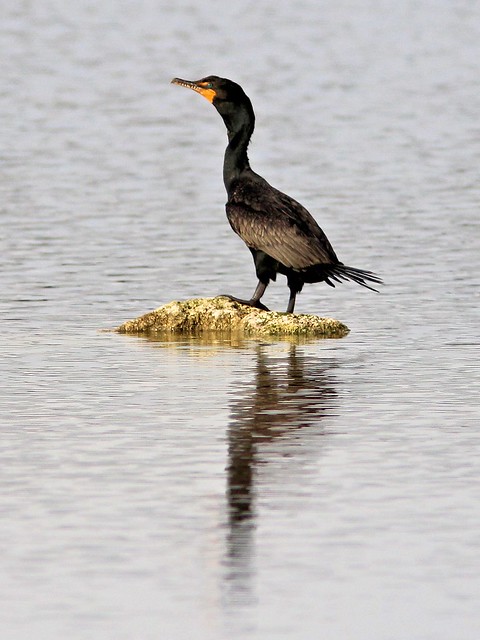
 Cormorants were mirrored in the early morning calm.
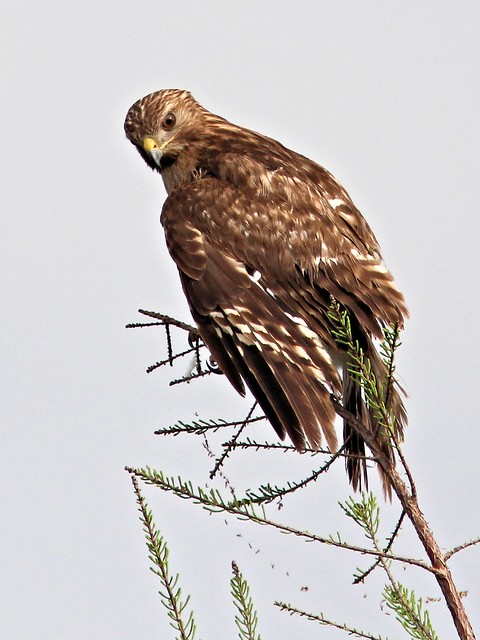
 The humidity was high, and this immature Red-shouldered Hawk spread its well-worn feathers to dry them in the rising sun.
 All was well in the Yellow-crowned Night-Heron rookery, with at least six nests in various stages of completion and at least three pairs incubating.
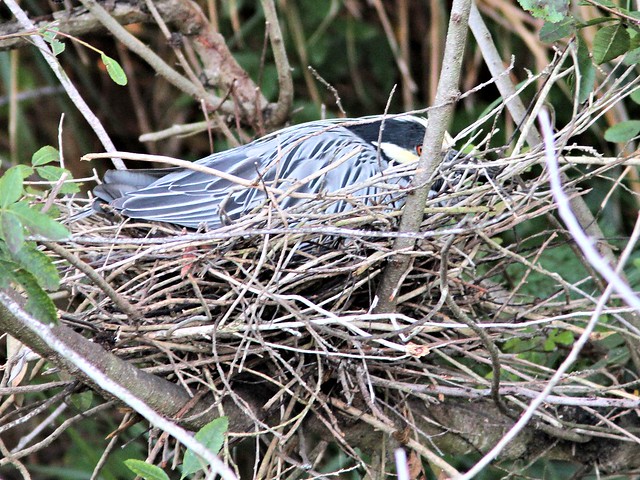
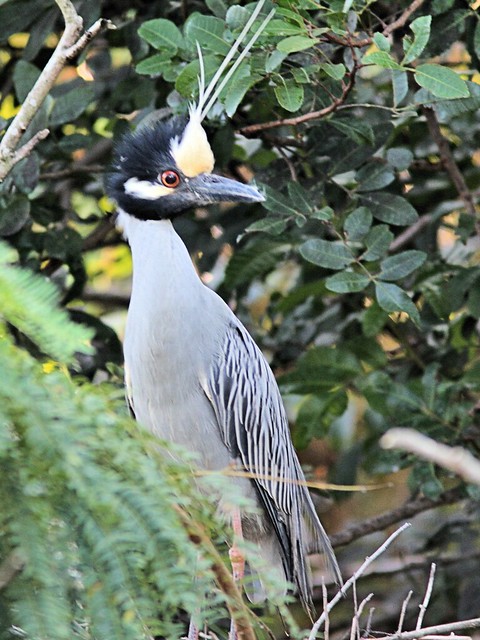 There were two immature birds among the dozen or more adult herons.
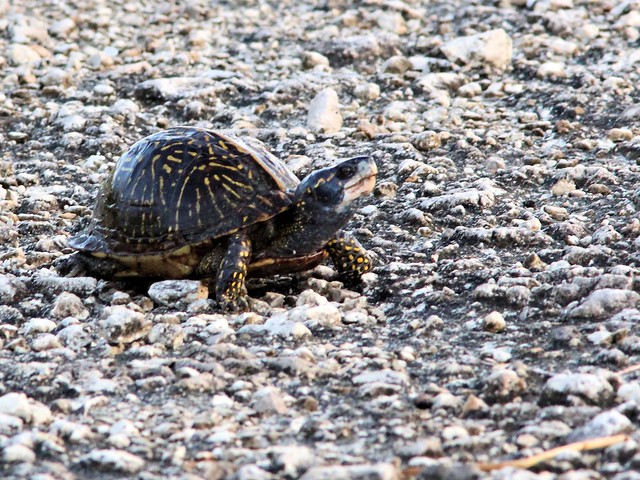
 An Eastern Box Turtle ambled across the path. I would have missed him, but Mary Lou pointed him out.
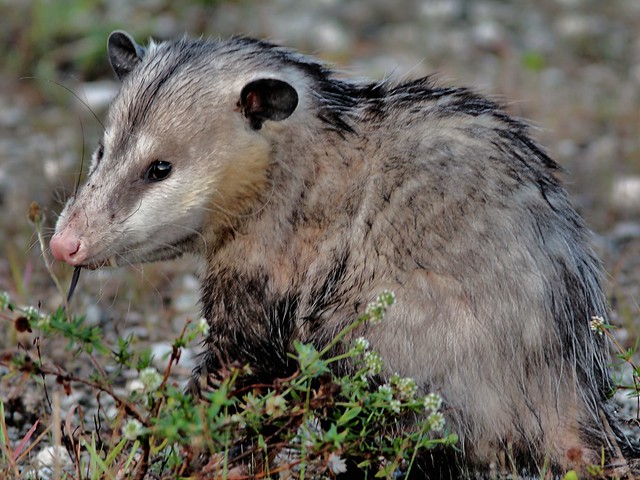
 This Opossum was crossing the gravel road. When it saw me it started moving away. Suddenly it stopped and picked up a freshly-killed rat. It proceeded to eat it in large bites, right down to its tail.
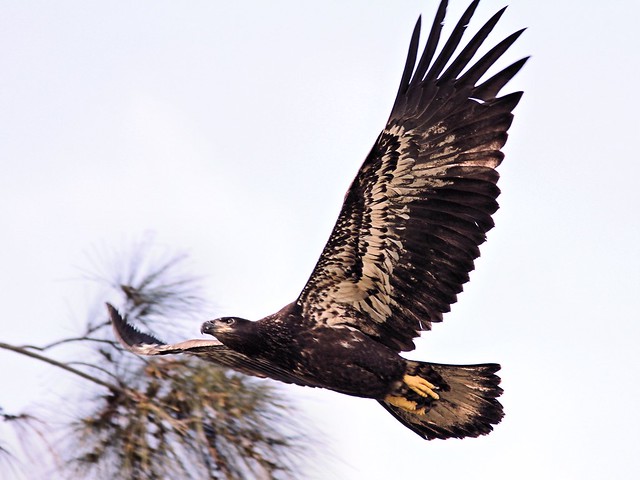
 We made a last stop at the local Bald Eagle nest to check on the welfare of the recently-fledged eaglet. It was roosting just adjacent to the nest tree, calling to be fed.
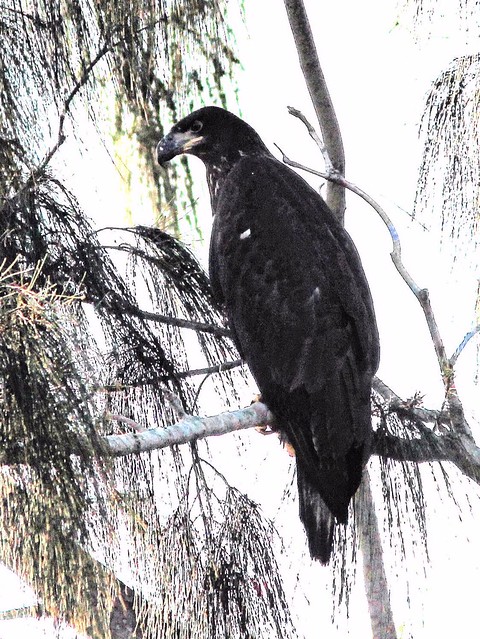 The eaglet swooped down right in front of me, heading for a tree where an adult was resting.
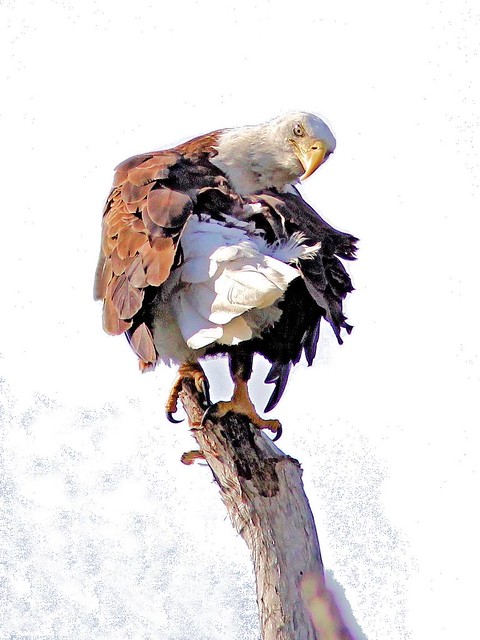
 The adult did not even look up at its demanding offspring, and continued preening.
 A young Gray Squirrel scurried up a tree in my neighborhood as I finished my walk. ¡Hasta la vista!
