Saturday, June 1, 2013

Nighthawks and Night-Herons

These two birds illustrate a convention in the use of capitalization and hyphens in their names. Why not Night-Hawk and Nightheron, or nighthawk and night heron? In preparing an article for a popular publication I encountered a problem when I wrote of the Black Rosy-Finch, but the proofs came back as "black rosy finch," suggesting that I must have had difficulty in deciding the color of the finch.

The simple answer is that, in North America, the American Ornithologists' Union (AOU) has established "official" common names. They are capitalized if used to describe a distinct species, and follow general rules. For example, if the compound name of a bird describes its taxonomic classification it is hyphenated, but if it describes a characteristic (such as the behavior called "hawking" insects), there is no hyphen. Hence, we have "night-heron" and "nighthawk," and "Yellow-crowned Night-Heron" and Common Nighthawk. There are exceptions for some names that have been in use for a long time (such as goldfinch instead of gold-finch).

At sunrise the day after we arrived back home to Florida, we walked the gravel road into our local wetlands. It was warm and humid. This and the relative lack of bird song suggested that spring was over and the summer/rainy season pattern was now in place. Mockingbirds and this Northern Cardinal broke the silence.
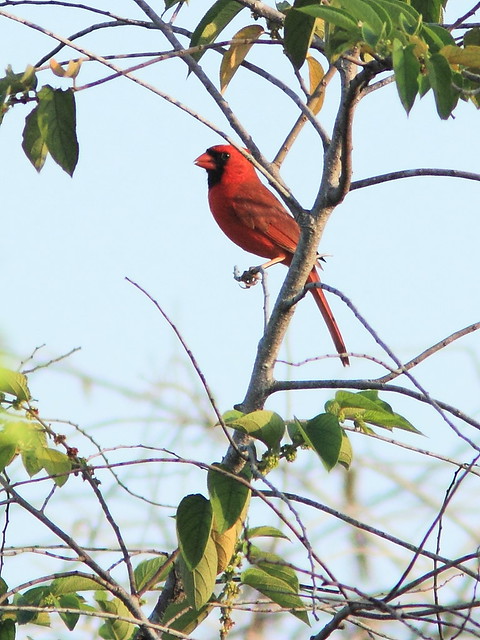
Northern Cardinal 20130519

The air was calm, just perfect for capturing the reflection of this Great Egret.
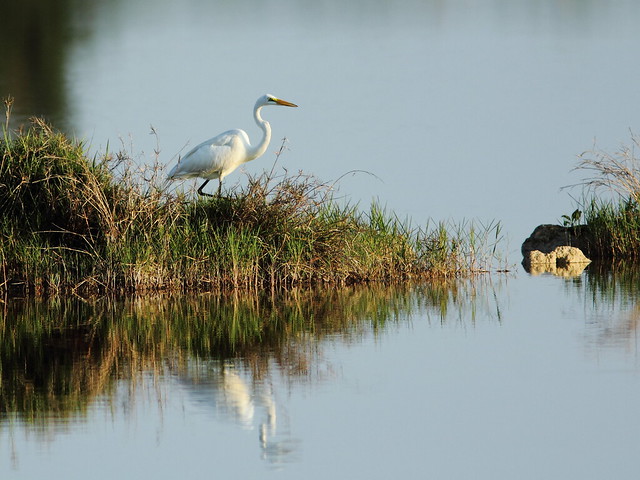
Great Egret reflection 20130519

I was disappointed to see that the recreational off-road vehicle drivers had not only knocked down the "No Trespassing" sign but had dragged it out into the road, as if to flaunt their indifference.
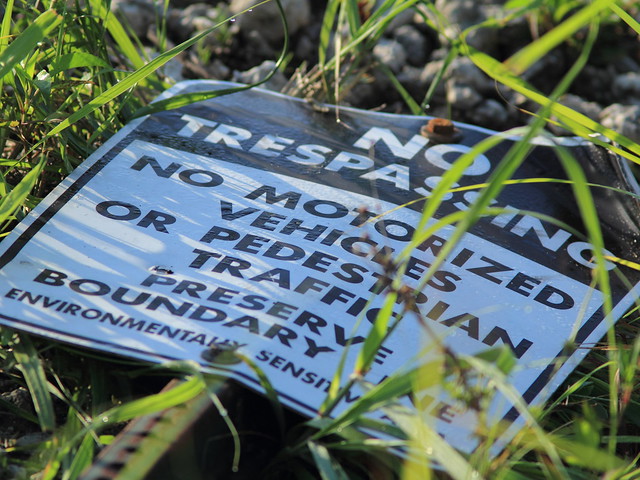
Sign - Trampling on rules 20130519

After walking the full length of the mile-long road, I pushed on to check up on the Yellow-crowned Night-Heron rookery, as I was anxious to see what had happened there since we left for Illinois a month previously. At that time I observed courtship and recorded the locations of nests under construction. I assigned a number to each nest, relating it to the position of the 30 regularly spaced live oaks that had been planted along the near side of the canal. The numbers run from north to south.

As I proceeded northward along the side of the canal opposite the rookery trees, I found four active Yellow-crowned Night-Heron nests. The first (#22) was in a new location and contained two nestlings. Look closely to see the red eye of one of them (click on photo to enlarge).
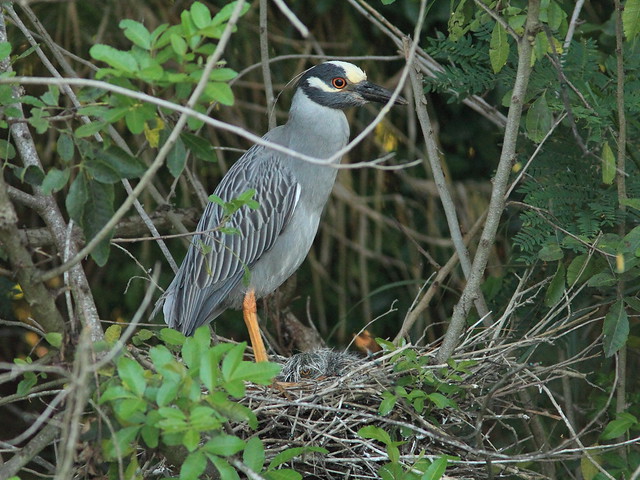
Yellow-crowned Night-Heron 22-HT female with nestling 20130519

A few days I discovered a second nest  (#18) within arms reach of a makeshift dock which had two or three nestlings. I could not get any good photos

A third nest (#13.5) was in the same location as in the previous year. I had re-found it the month before but now it was entirely obscured by vegetation, though I saw fresh whitewash and could discern some movement that indicated it was still active. My neighbor Scott photographed four chick at this nest the week before.

A fourth nest (#10) contained two or more blue eggs. Like the first, it was over the water and quite exposed to view.

Yellow-crowned Night-Heron 10- nonHT female with eggs 20130519

A fifth nest (#9) was one from last year being reconstructed by a pair when I charted it before leaving for Illinois a month before, but it had disappeared.

The sixth nest (#4.5) was near the far north end of the canal, in a new location. The month before I had found an occupied nest out in the open only a few yards north of it, but now it was gone. Perhaps a storm (or vandals) had destroyed it and the nest pictured below represented a second attempt. It also contained eggs.
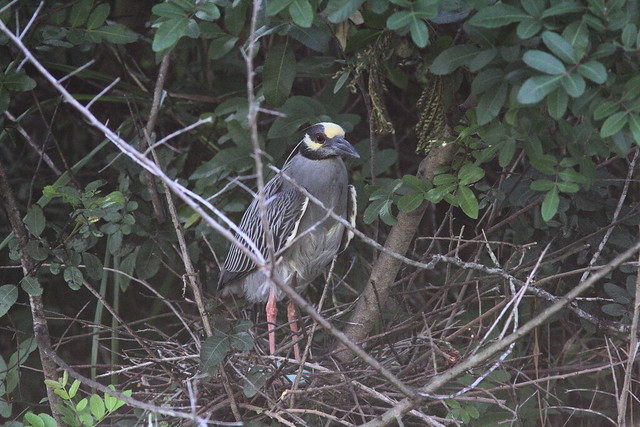
Yellow-crowned Night-Heron 2-5- nonHT male with eggs 20130519

Another nest (#2.5) that was under construction a month ago had also disappeared.  Last year six pairs of Yellow-crowned and three pairs of Green Herons nested in the rookery. 

Green Herons are more secretive, and their nests are easy to miss. I found one new Green Heron nest at #5.5 but could only see movement through the leaves and hear one or more nestlings' begging cries as it was being fed by a parent. A second Green Heron Nest (#20.3) contained eggs on May 25.
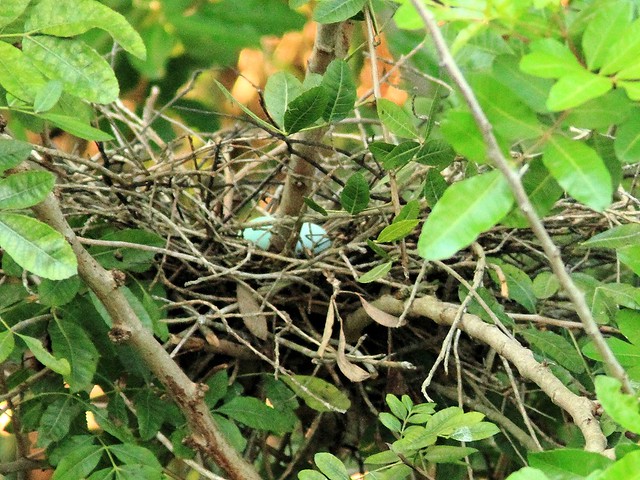
Green Heron nest 20-3 non-HT with eggs 20130525

However two days later it was empty and an adult male Green Heron was roosting next to the nest but did not enter it and soon flew to a nearby branch.
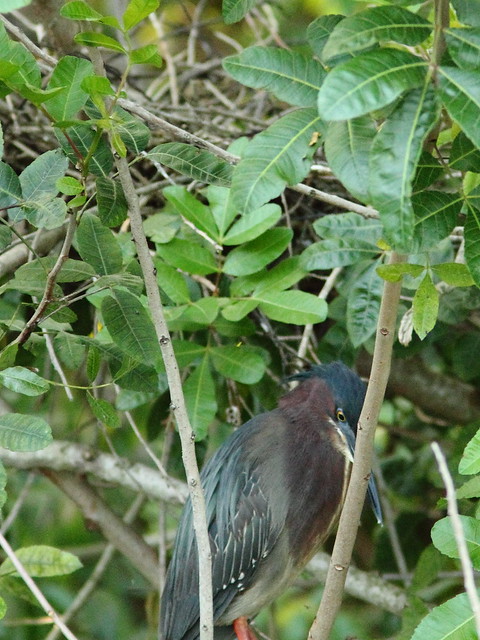
Green Heron at nest 20-3 2-20130527

This male in breeding condition has bright reddish legs as opposed to the yellow-orange legs of the females. 
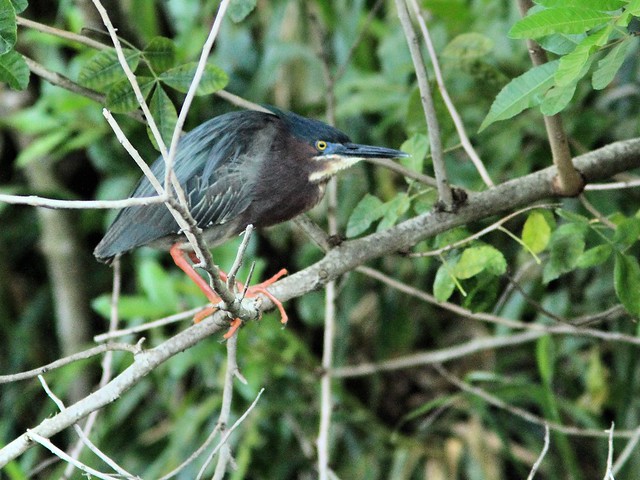
Green Heron at nest 20-3 20130527

Suddenly, a very young immature Yellow-crowned Night-Heron appeared on the nest and began eating something. It probed in the nest and I took many photos it an attempt to see what it was eating-- the eggs of the other species? Only one photo gave any clue, as it appears clear that at this point the young intruder was eating some kind of insect, possibly a large beetle.
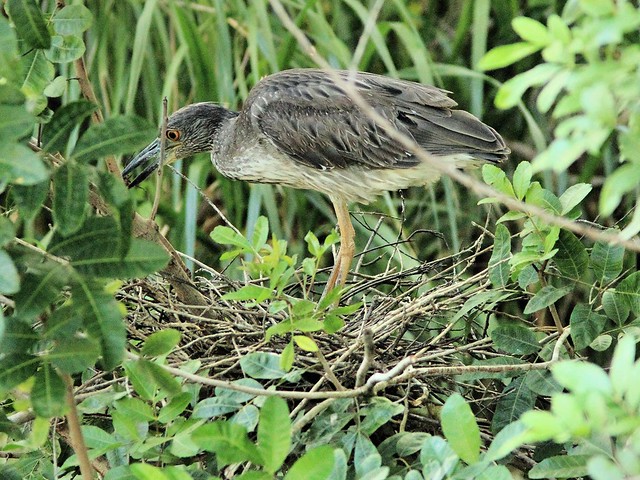
Yellow-crowned Night-Heron immature eating at Green Heron nest 20-3 2-20130527

Here is a close-up of the insect in its bill. 
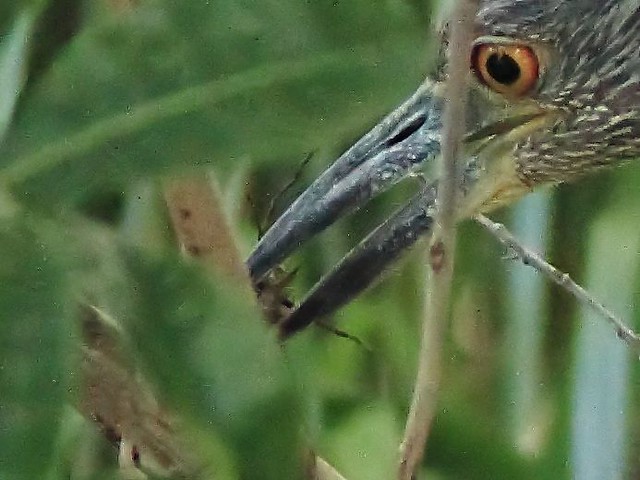
Yellow-crowned Night-Heron immature eating at Green Heron nest 20-3 20130527

What happened to the Green Heron's eggs or young remains a mystery. Perhaps they had been destroyed withing the past 48 hours and the  beetle was attracted to their remains

So far I have identified these five active Yellow-crowned Night-Heron and two Green Heron nests. I found three fledgling Green Herons that I could not associate with any particular nest. The streaked breast and the presence of a tuft of natal down identifies this Green Heron as a juvenile.
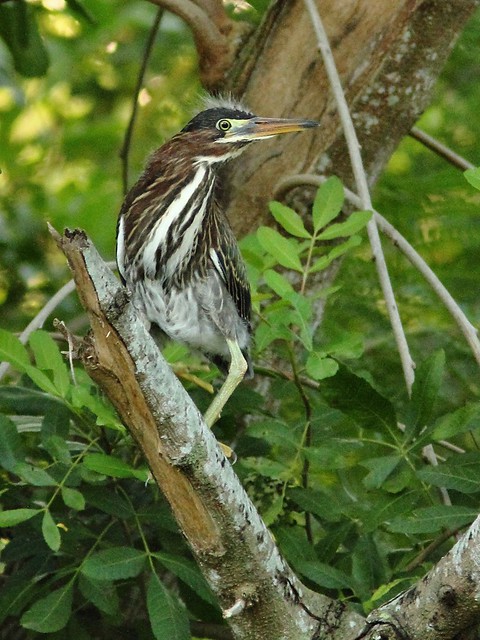
Juvenile Green Heron 2-20130524

At least one other pair of adult Green Herons was present. It is quite possible that I missed some nests and will keep looking.

On my way back home I observed interesting behavior on the part of a Common Nighthawk. Last month I suspected that a pair of nighthawks was planning to nest in this area, and now saw that one of them was flying short hops just in front of a walker, evidently in an attempt to lead him away from the nest. 
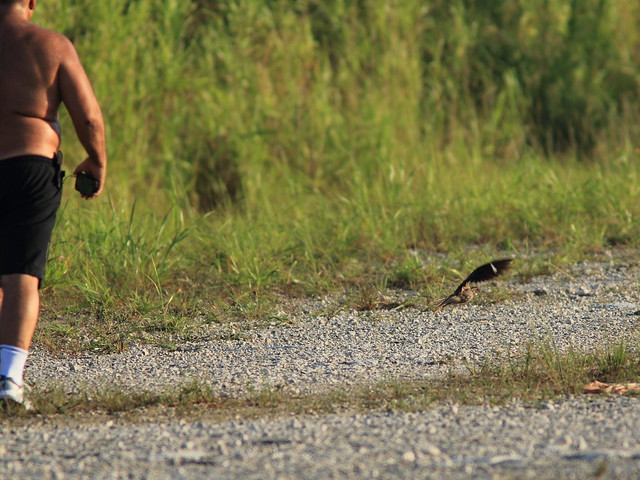
Common Nighthawk distraction display 20130519

I quietly watched as the nighthawk returned to a spot that I assumed may have been the nest site. Being very careful about where I planted my feet, I ventured a short distance off the side of the road and saw an empty egg shell but no evidence of a hatchling.
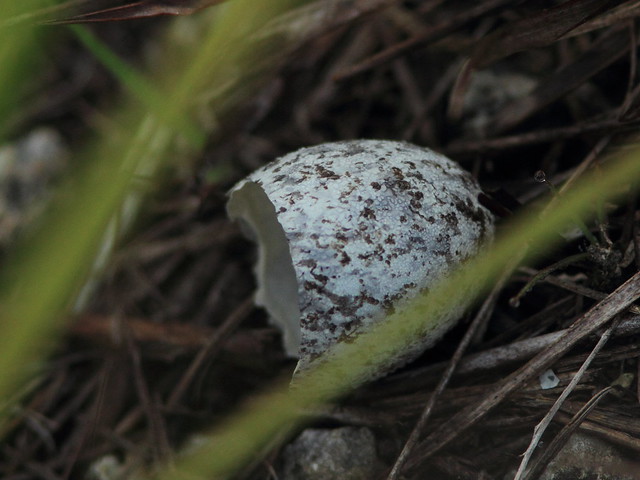
Common Nighthawk egg shell 20130519

Of course a baby bird could well have been right in front of my eyes as they are so well camouflaged. In the meantime the nighthawk landed a short distance away and waited for me to depart. As I left it actually walked (almost ran) in front of me before taking short flights as I followed it away from the nest area.
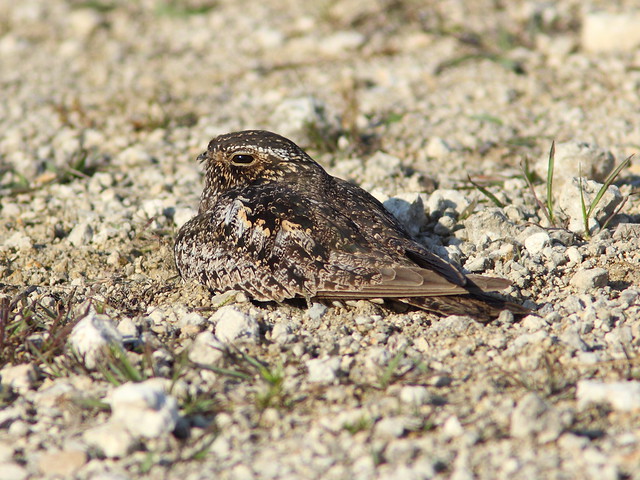
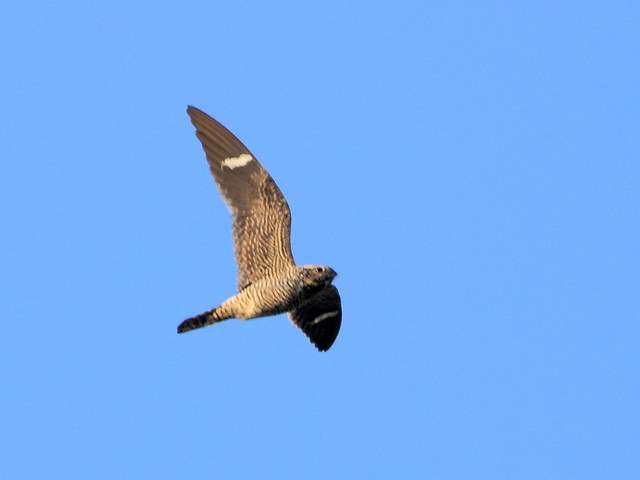
Common Nighthawk 6-20130519

Common Nighthawk 2-20130519

Saturday, May 25, 2013

Heading back to Florida

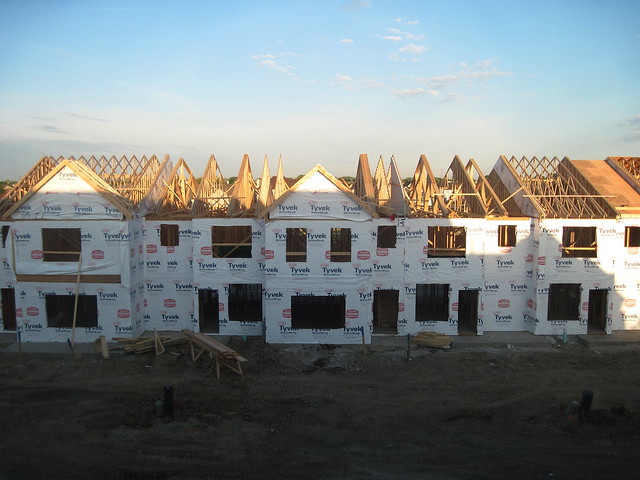
Waiting at our door to be picked up by the limousine to the airport at 6:00 AM on our last day in Illinois, I pondered the evolution of our homesite, a former tallgrass prairie turned into a cornfield. Long ago it was covered by ice, then became a wet and barren land deeply scarred by glaciers, succeeded by a lush evergreen forest. As the climate warmed and the land dried up, hardwoods overtook the spruce and fir. Grasslands did not complete their dominance of the land until only some 3,500 years ago. The entire life of our little prairie patch and now its death at the hands of man occupied but a tiny moment of geologic time (see my reference to the Nelson Lake  pollen studies that document the genesis of the local prairies). 

The noisy carpenters would not arrive for another hour. I listened to the dawn chorus, now muffled by the presence of 29 new townhomes in various stages of construction. Only a few acres in the several blocks now under development will be spared as a "park." The songs of a multitude of robins nearly drowned out the subtle refrains of a meadowlark, Song Sparrows, goldfinches, and surprisingly, the distant territorial peeping of a Spotted Sandpiper and the serenade of a Vesper Sparrow on the roof of our building.

This view from our third story front window had formerly overlooked our "front yard birding patch."

Illinois front yard 20130516

Presently a patch of grassland planned for the park remains relatively undisturbed, though half of its surface has been graded and the pothole was filled in. Last spring it attracted a Muskrat along with nesting Red-winged Blackbirds and visiting ducks, geese and Sandhill Cranes. I doubt that the sandpipers and sparrows will be able to find a breeding niche as there is no longer any open water and the only shrubby cover is beside an old pile of topsoil that almost certainly will be removed for lawns and foundation plantings.

The "park" will occupy the area beyond the black plastic fence. The topsoil mound is presently its highest point, just right of center.

Illinois condo from SW corner 20130516

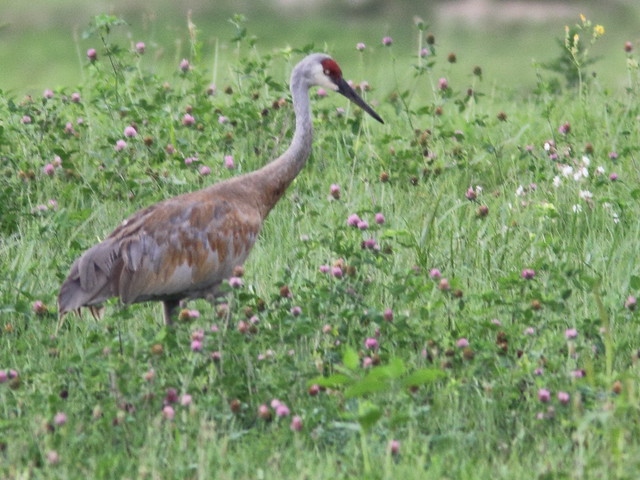
In 2011, I took this photo of a Sandhill Crane from my front doorstep.

Sandhill Crane 20110819

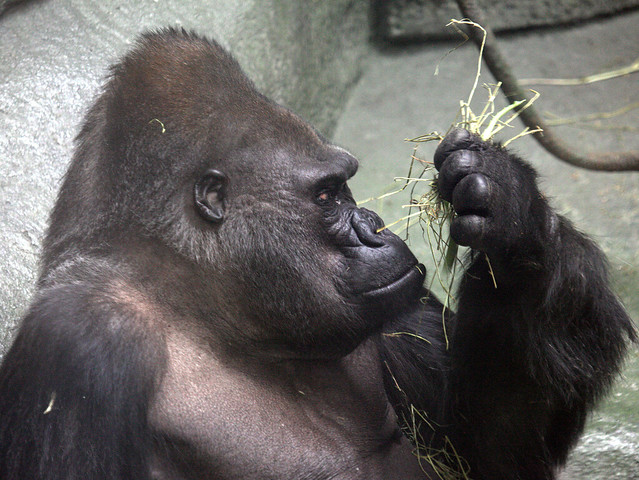
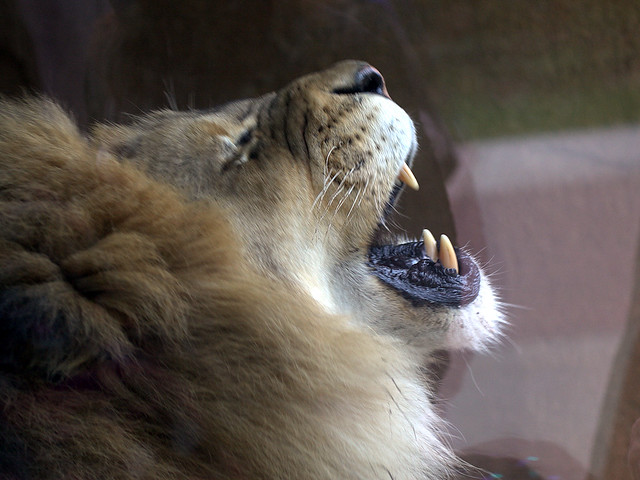
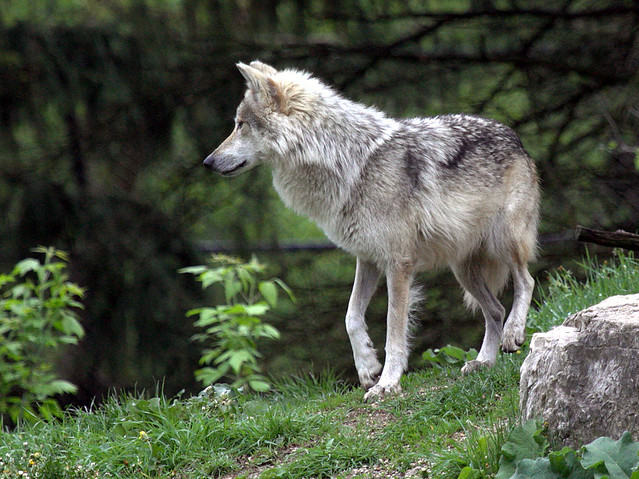
Earlier in the week our younger granddaughter had a school excursion to the Brookfield Zoo, where the apes, big cats and wolves were main attractions.

Gorilla 20130510

Lion 20130510

Wolf 2-20130510

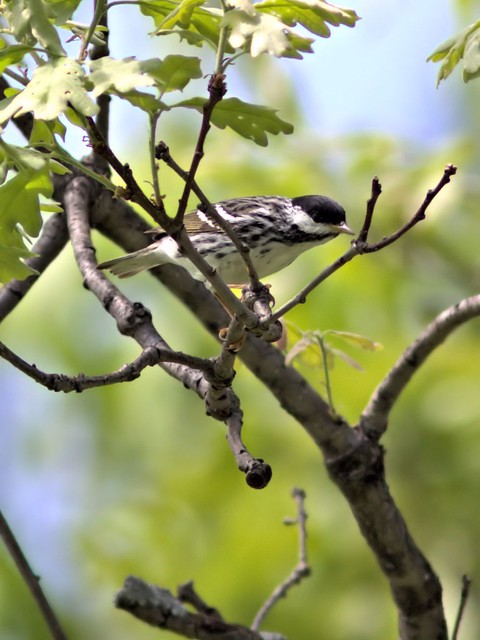
Despite temperatures that varied between 30 and 82 degrees (F), our last couple of days in Illinois provided some photo opportunities at Nelson Lake. Warblers remained scarce, but we did see two Blackpolls...

Blackpoll Warbler 20130516

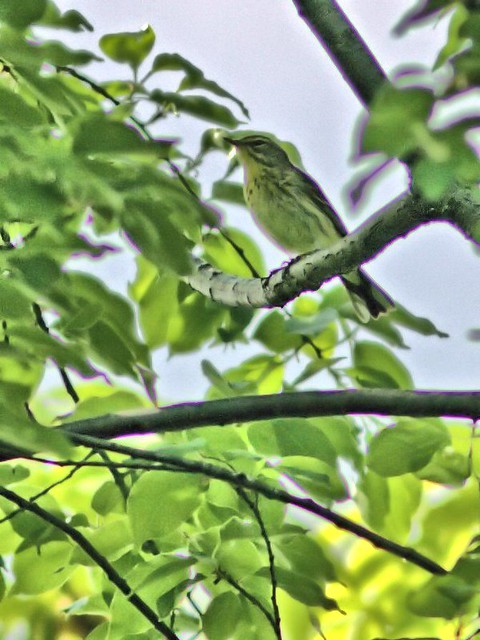
...an eastern (yellow) Palm Warbler...

Palm Warbler 20130516

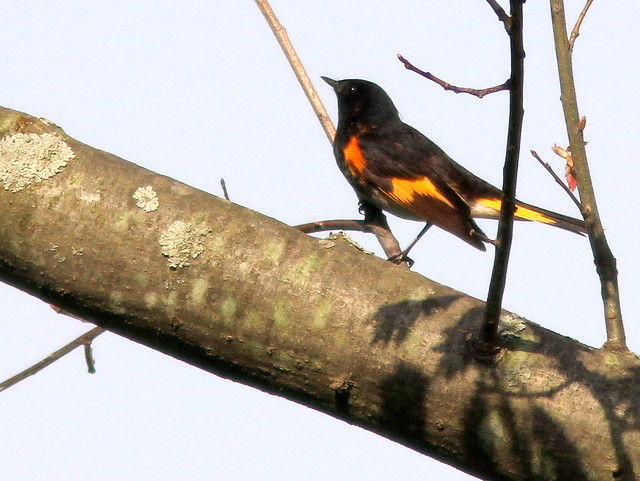
...an American Redstart...

American Redstart 20110511

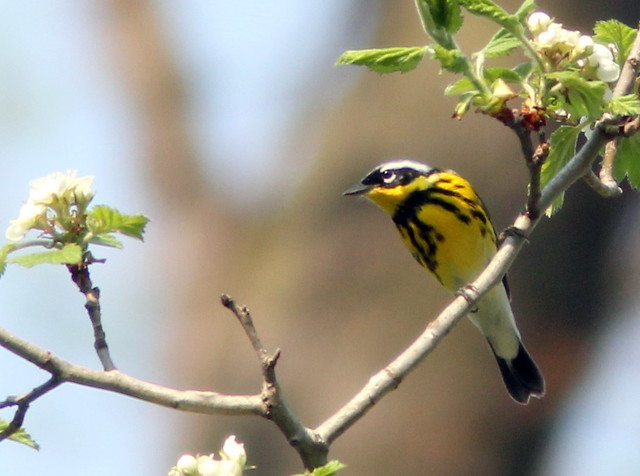
...and a Magnolia Warbler.

Magnolia Warbler 5-20110510

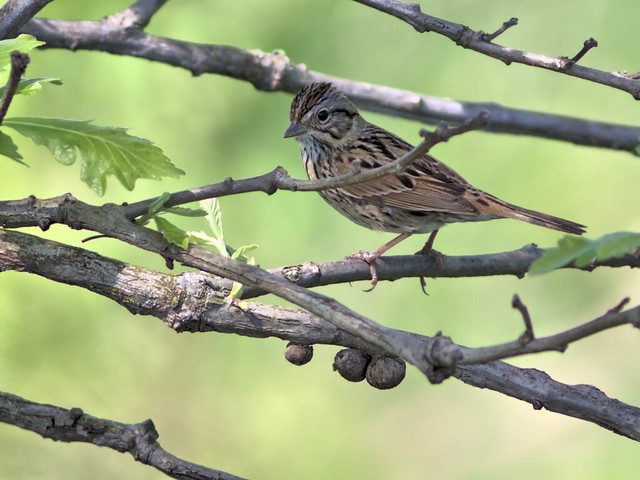
Two reclusive Lincoln's Sparrows appeared briefly. As usual, they stayed behind the branches.

Lincoln's Sparrow 2-20130516

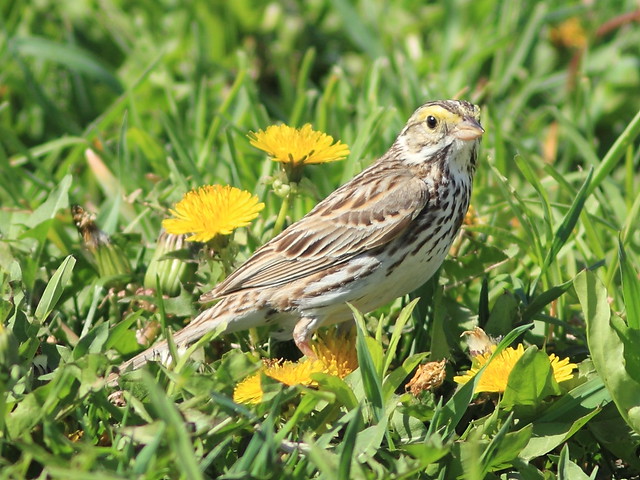
Another LBJ (Little Brown Job) was this Savannah Sparrow.

Savannah Sparrow 2-20130515

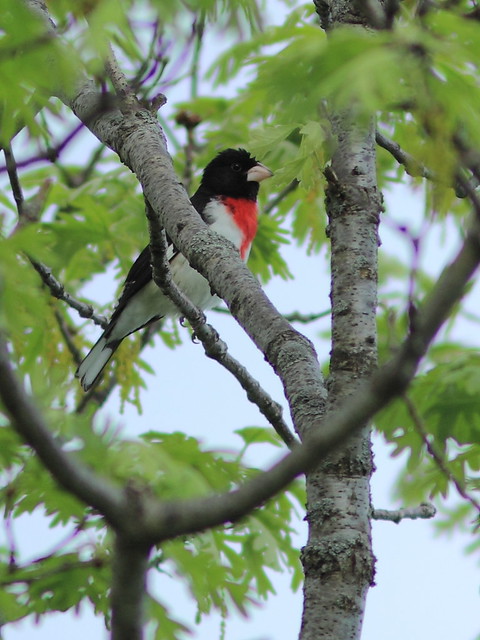
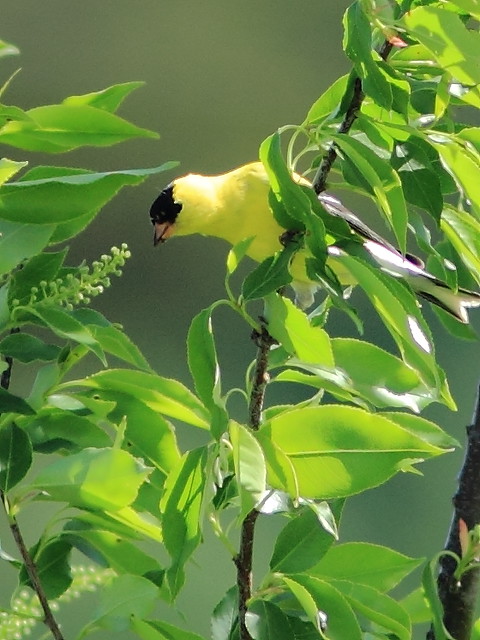
For color, here are mandatory last shots of a Rose-breasted Grosbeak...

Rose-breasted Grosbeak 2-20130516

...an American Goldfinch...

American Goldfinch 20130515

...and a Northern Cardinal.

Northern Cardinal 20130515


On our last free evening we baby-sat with our two granddaughters, first taking them out to dinner and then visiting Jones Meadow Park. They played and I explored the area as twilight advanced.

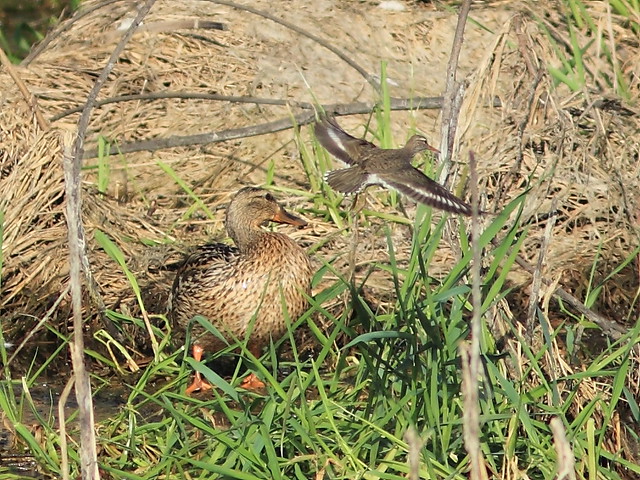
A Spotted Sandpiper flew over the lake and headed for the adjacent wetland, where I caught it in flight as it passed over a female Mallard.

Spotted Sandpiper and Mallard 20130515

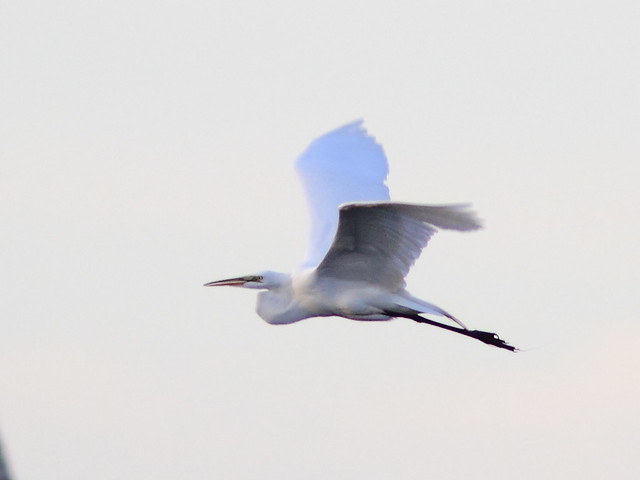
The low light imparted a softness to the image of a Great Egret in flight.

Great Egret in flight 2-20130516

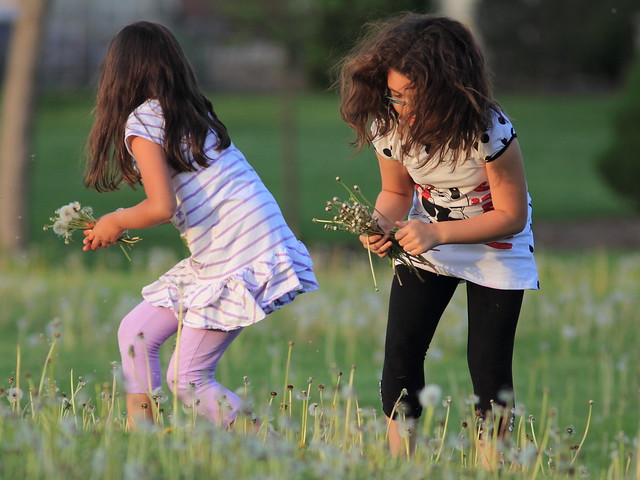
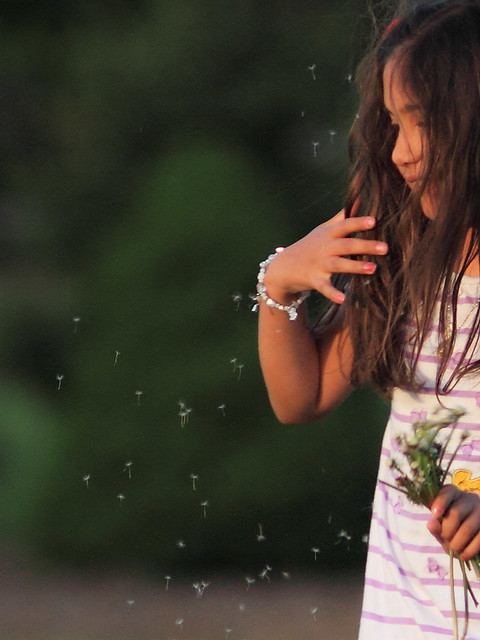
In the waning light, the girls collected dandelion stalks and fashioned them into a long chain. I captured these images with my long lens so they would not suspect they were under surveillance.

Dandelions 4-20130516

Dandelion detail 20130516


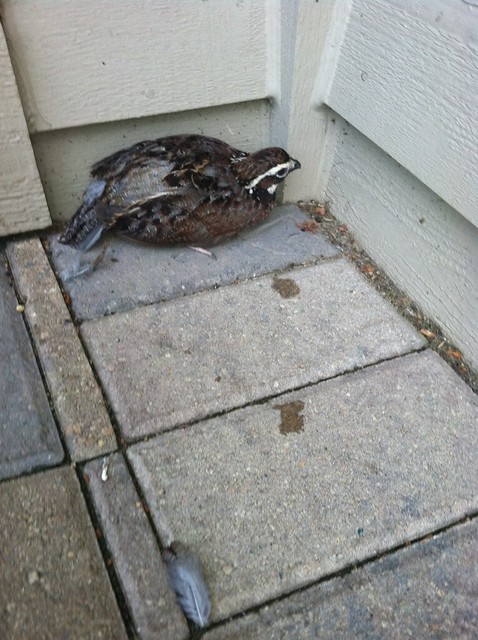
Addendum-- After we departed, our Illinois granddaughters had some excitement. Let me tell it as narrated by the 9 year old, and the photos are from her mother's cell phone. I assume this Northern Bobwhite was a captive reared bird often used to train hunting dogs.

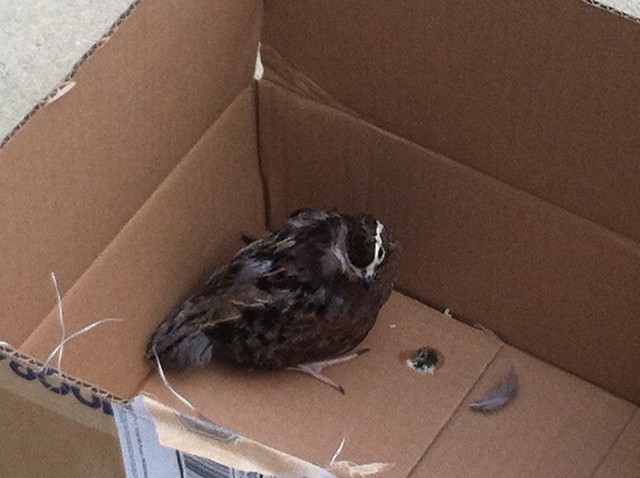
Yesterday after school, a Bob White (which are not normally seen in our area) flew into our glass door & knocked itself out. Our big dog, Agramonte, proceeded to investigate. He pawed at it & then picked it up in his mouth.                                                                      

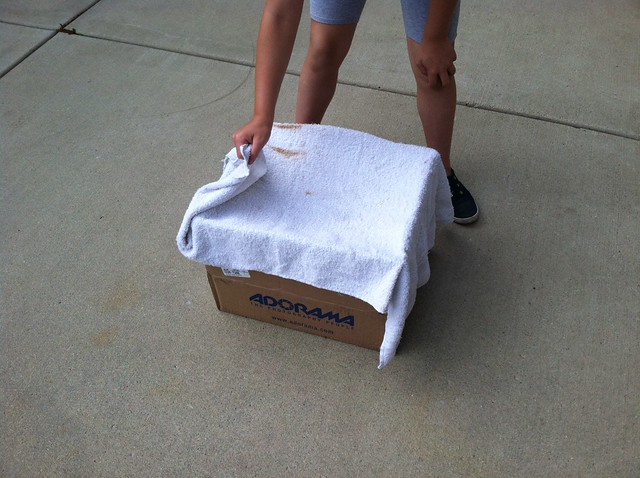
Thank goodness Mom was able to get Agramonte to drop it!  We were so worried about the health & safety of the bird (which was identified as a Bob White by Grandpa) that we decided to bring it to the Wildlife Rehabilitation Center in Elburn at the Forest Preserve on Rt 38. When we brought the box (covered with a white cloth) into the Center, the naturalist uncovered the box & the bird flew out & all around the Center's Office!! The naturalist examined the bird & determined that it was not injured. She then asked us to bring the bird back home to our house & set it free!! It was quite an exciting time at the Orama house, but everything ended well as the bird flew off into the prairie behind our house!!


Just after it hit the glass door.

Bobwhite first shot 20130522

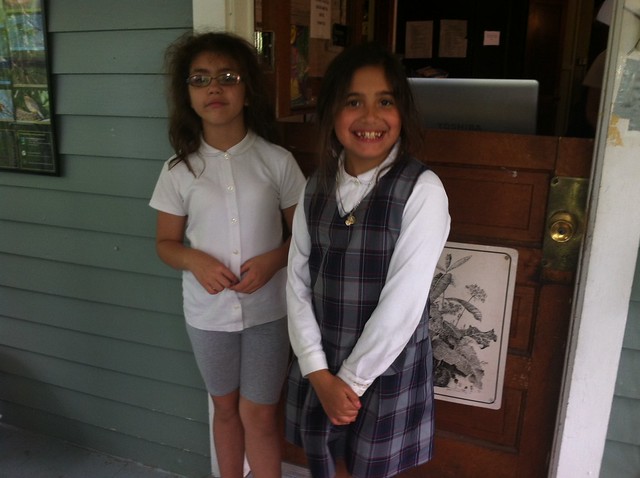
Taking Bob White to the Rehabilitation Center with Sis in school clothes.

Bobwhite in car 20130522

At the door of the Center.

Bobwhite at rehab door 20130522

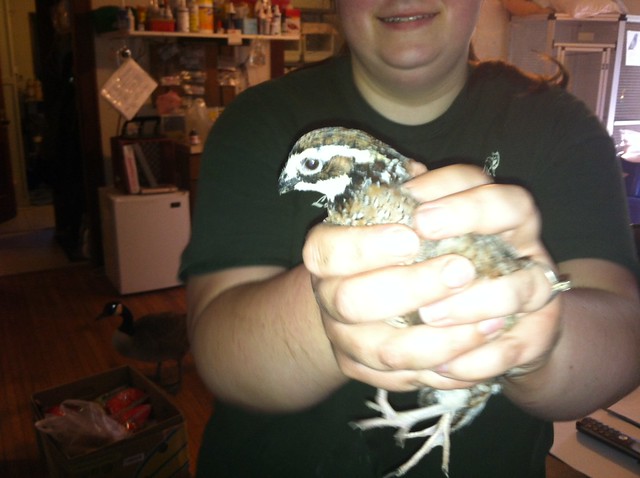
The naturalist examining Bob White.

Bobwhite checkup 20130522

Back home I'm ready to release him.

Bobwhite before uncovering at home 20130522

Just before Bob White flew into Mom's face when we let him go. Wish we had it on You Tube.

Bobwhite before flying away 20130522