Thursday, May 30, 2019

Ground-nesting nighthawk and Killdeer (#861)

I stumbled upon, or should I say I almost stepped on, the nest of a Common Nighthawk at about 8:30 AM on May 19. It was located very near the edge of the path along the side of the gravel road which leads into our local Wounded Wetlands. 

The female alarmed me by suddenly flying up when I was only a few feet away from the nest. I froze in place and carefully looked around the spot from which she had erupted in flight. Sure enough, I found two eggs on the bare ground next to a small patch of weeds.

The female was very disturbed by my presence. She performed a distraction display about 10 feet away, flopping on the ground as if injured:

Common Nighthawk female display 04-20190526

The eggs blended with the colors and textures of the surrounding terrain:
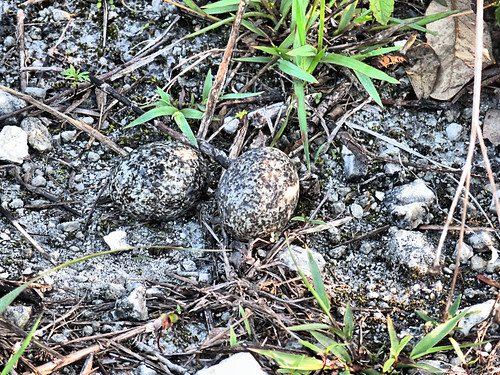
Common Nighthawk eggs 03-20190519

Indeed, I was lucky to find them as they are practically invisible when viewed from any distance. This is about how they looked when I found them. You probably can see them easily here, but if not, look closely at the upper left hand corner of this photo (1/3 down from top and from left edge of frame):
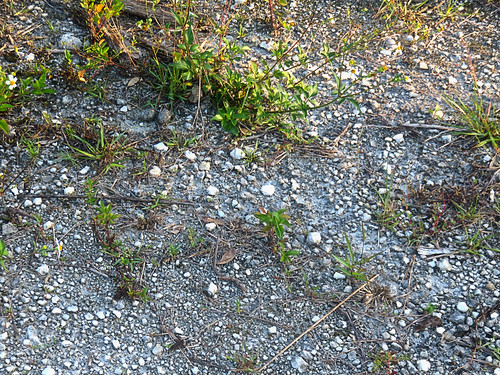
 Common Nighthawk eggs 04-20190519

Stepping back, they are very difficult to locate. They are in the lower right quarter of this photo:

Common Nighthawk eggs 05-20190519

This photo shows how vulnerable the nest may be, as people walk their dogs along the path and predators such as Opossums, Raccoons, feral cats  and Bobcats all prowl through the area (Arrow points to nest):

Common Nighthawk eggs AT ARROW 06-20190519

Since then I have photographed the nest every morning from a safe distance with my telescopic lens. Even though I know where to look, the incubating female is almost invisible:

Common Nighthawk female incubating 01-20190522

Common Nighthawk female incubating 02-20190522

The female sits on the eggs for 16 to 20 days while the male often flies overhead, swooping down and "booming" just over the heads of any passerby. Males have a bright white collar, lacking in the female, and have larger wing spots:
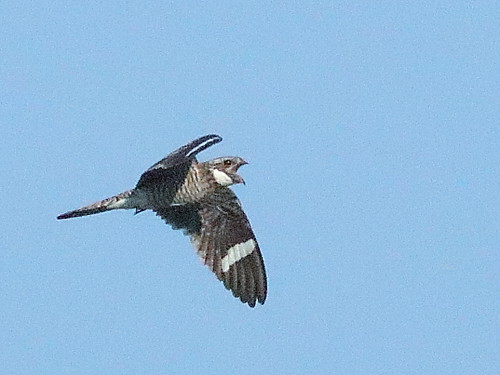
Common Nighthawk 01-20180621

Common Nighthawk in flight 08-20180619

Both members of the pair feed the young, and often the female will start incubating a new batch of eggs while the male continues caring for the first brood.

Killdeers are also nesting along the gravel road. They, too, perform distraction displays to lead intruders away from the nest. Here are examples of one fanning its bright tail and acting as if seriously disabled:
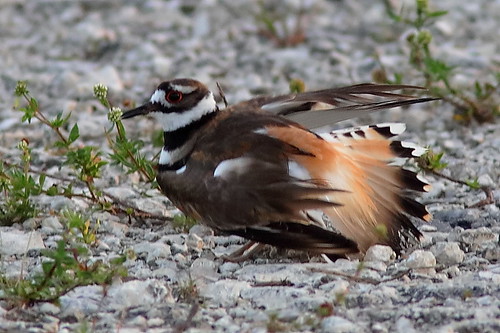
Killdeer distraction display 4-20190525

Killdeer distraction display 20190525

Again, I almost stepped on the Killdeer nest, as it was out in the open. The nest is merely a scrape which is surrounded by a ring of small pebbles which may continued to be added until the eggs hatch. It contained three eggs. The one in the foreground shows the normally darker rounded end which is facing the camera:

Killdeer eggs 2-20190525

Indeed, the next day (May 27) I found another new egg, which I presumed to complete the normal clutch of four for this species. I expected them to soon be rearranged so that all the pointed ends face inward to provide for more efficient incubation:

Killdeer eggs 4th 20190527

Surprise! On the morning of May 29 I found yet another egg for a total of five. They must be incubated for 24 to 28 days, exposed to all the hazards which include joy-riding vandals on ATVs:

Killdeer 5 eggs 20190529

Out early, the lake provides nice reflections of the clear sky. A clump of Spatterdock (Yellow Pond Lily) floats on the surface:

Spatterdock 20190521

To the south, storm clouds build over the Florida Keys before sunrise:
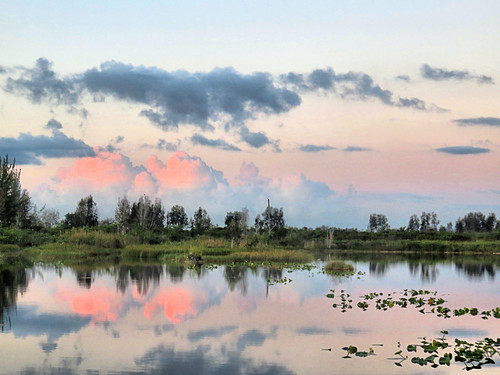
View to south before sunrise 20190521

A Tricolored Heron hunts in the predawn twilight:
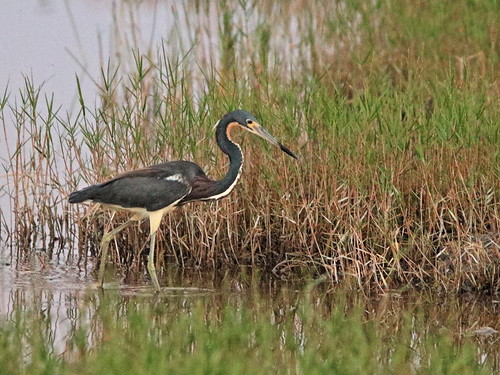
Tricolored Heron before sunrise 20190527

In our back yard, the mangoes are ripening:
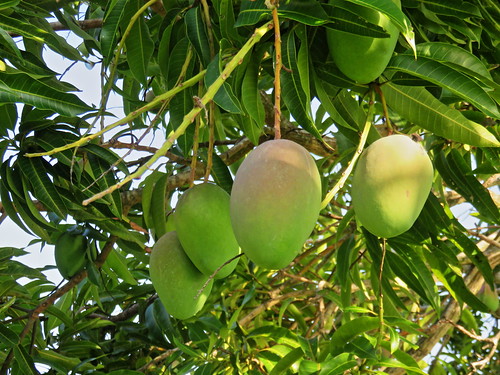
Mango tree south side Glenn variety 3-20190525

A note about observing nests-- While birds generally will not abandon a nest after brief disturbances, it is best to observe nesting birds from as great a distance as possible. This requires using binoculars or a long lens for photographs. If a bird is flushed from a nest with eggs, it is important to allow the bird to return as soon as possible. As seen in these photos, the disturbance causes great energy-depleting stress for the parent birds. Uncovered eggs are exposed to predation and the effects of extreme temperatures, particularly overheating by the sun which may kill a developing embryo or nestling. Predators also may be attracted to the nest by following your scent or observing your intrusion.  

= = =  = = =  = = = =  = = = = =

Linking to Misty's  CAMERA CRITTERS,

Linking to Eileen's SATURDAY'S CRITTERS,

Linking to SKYWATCH FRIDAY by Yogi, Sylvia and Sandy

Linking to WEEKEND REFLECTIONS by James

Linking to BirdD'Pot by Anni

Linking to Our World Tuesday by Lady Fi

Linking to Wild Bird Wednesday by Stewart

Linking to Wordless Wednesday (on Tuesday) by NC Sue

Linking to ALL SEASONS by Jesh

________________________________________________

Please visit the links to all these memes to see some excellent photos on display

________________________________________________

Thursday, May 23, 2019

Crops & Clips: I saw a Sora

During our brief stay with our daughter's family in northeastern Illinois, I enjoyed watching the birds from the deck in their back yard. We had visits from local breeding birds and even one species which had not departed for its nesting grounds to the north.

Several White-crowned Sparrows brightened up the surroundings by perching on the fence:

White-crowned Sparrow 01-20190512

White-crowned Sparrow 02-20190512

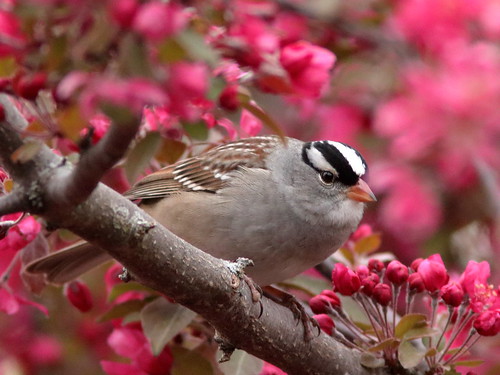
The presence of black in front of their eyes (lores) and pinkish bills indicate that these belong to the East Tiaga population which breeds in the eastern Canadian tundra. They will soon be departing. One took a perch in a blooming cherry tree:

White-crowned Sparrow 06-20190512

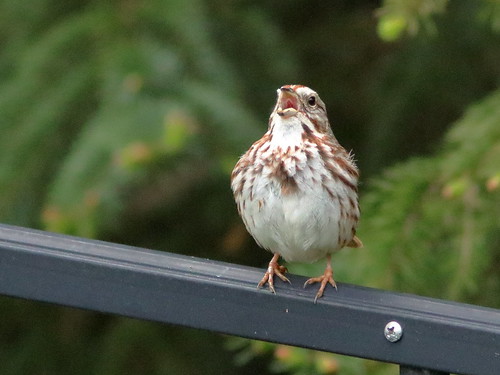
Song Sparrows breed locally and were singing from the fence and nearby spruce trees:

Song Sparrow 03-20190512

Song Sparrow 01-20190512

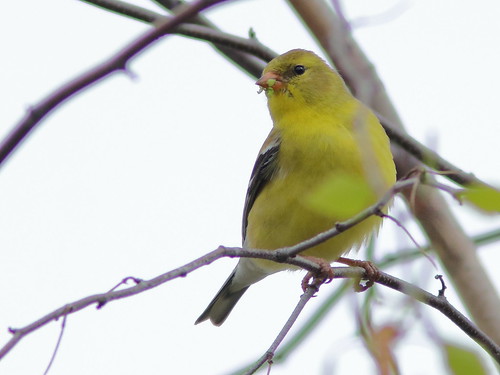
Other visitors included Eastern Goldfinches. A female was eating the catkins of a birch tree (I learned that people can eat them too):

American Goldfinch female 02-20190509

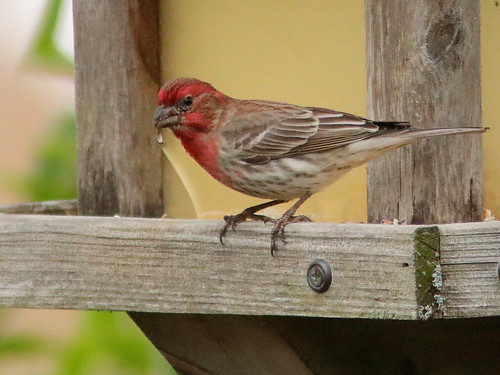
Male House Finches were in full song...

House Finch 01-20190512

...and visited the freshly stocked feeder...

House Finch 03-20190512

...as did House Sparrows...

House Sparrow male 01-20180512

...and Brown-headed Cowbirds:

Brown-headed Cowbird 01-20190512

The fence also hosted a cooing Mourning Dove...
Mourning Dove 01-20190512

...and a male Northern Cardinal:

Northern Cardinal 02-20190512

Northern Cardinal 01-20190509

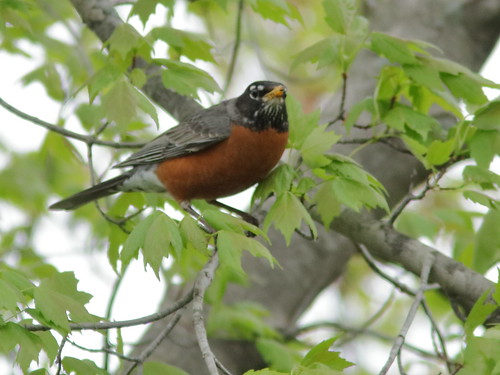
American Robins were starting to nest:

American Robin 20190509

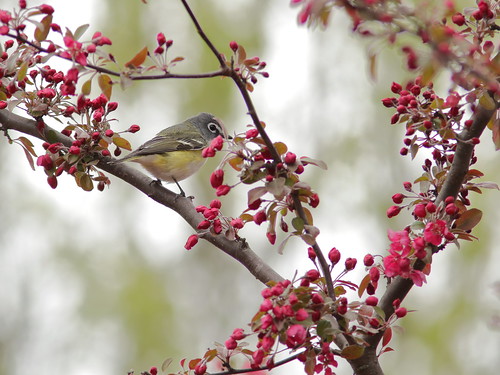
A surprise visitor was a Blue-headed Vireo which posed for a few photos as it foraged among the buds and flowers:

Blue-headed Vireo 06-20190509

Blue-headed Vireo 03-20190509

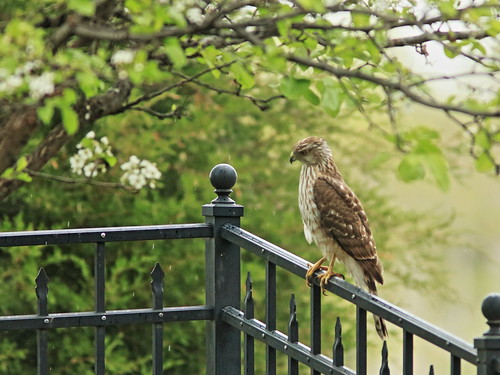
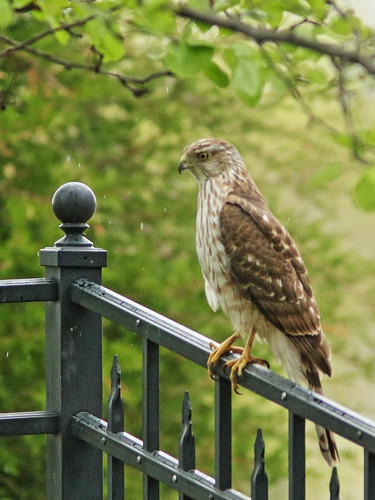
I glanced out the kitchen window and saw that I was not the only one attracted to the yard birds. An immature Cooper's Hawk perched for a moment before plunging into a small bush after an unidentified bird. It was not successful and flew away empty-taloned. My photo is soft because I shot through the window:

Cooper's Hawk immature 02-20190511

Cooper's Hawk immature 01-20190511

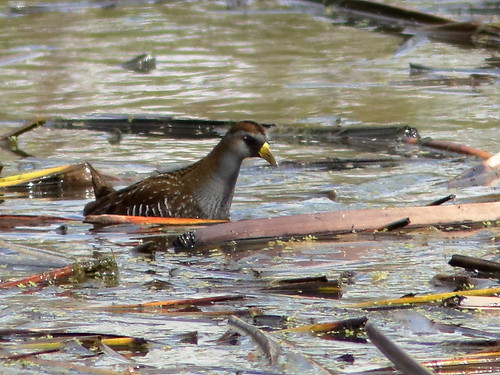
My first venture outside was a single-minded search for a Sora in nearby Jones Meadow Park, which I hoped had already returned for the summer. They winter in Florida, but I rarely see them near our home. I succeeded, though my glimpse of one was momentary:

Sora 02-20190510

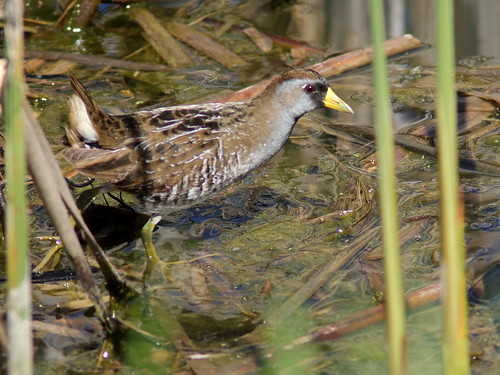
On a subsequent visit the Sora appeared at closer range but was very shy and elusive:

Sora 01-20190513

Sora 02-20190513

The cool outside air made me feel better. Seeing the Sandhill Cranes (described in my prior post) also lifted my spirits!

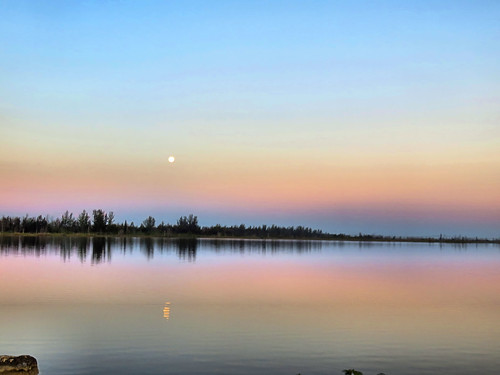
Back home in Florida, a rare Seasonal Blue Moon made its appearance on May 19. The more common "Blue Moon" occurs as the second full Moon in a month with two full Moons. This happens about once every two or three years. The Seasonal Blue Moon is the second of three full Moons which appear during one of the four seasons, in this case between the spring equinox and the summer solstice.

The Seasonal Blue Moon descends in the southeastern sky just before sunrise over our local wetlands:

Full Seasonal Blue Moon 2-20190519


= = =  = = =  = = = =  = = = = =

Linking to Misty's  CAMERA CRITTERS,

Linking to Eileen's SATURDAY'S CRITTERS,

Linking to SKYWATCH FRIDAY by Yogi, Sylvia and Sandy

Linking to WEEKEND REFLECTIONS by James

Linking to BirdD'Pot by Anni

Linking to Our World Tuesday by Lady Fi

Linking to Wild Bird Wednesday by Stewart

Linking to Wordless Wednesday (on Tuesday) by NC Sue

Linking to ALL SEASONS by Jesh

 Linking to Fences Around the World by Gosia

________________________________________________

Please visit the links to all these memes to see some excellent photos on display

________________________________________________