Thursday, September 1, 2022

Crops & Clips: Flashback to September, 2019

As I do on the first Thursday of each month, I enjoy looking back over my archived photos, taken three years previously, to remember how things were then as contrasting with events this year at our new home in Connecticut. As usual, I searched for images which reflected favorite memes: critters of all kinds (especially birds), skies and clouds, reflections, flowers and scenes which speak for themselves. We spent the entire month at home in south Florida.

The month started with winds from the very powerful Category 5 Hurricane Dorian which struck the Bahamas on September 1 with wind gusts over 220 mph (355 km/h), causing catastrophic damage. It stalled near Grand Bahama for more than a day before following a slow northward course parallel with the Florida Coast.  

We experienced tropical storm force winds but were spared the full fury of the storm which was felt all along the Atlantic Coast up to Nova Scotia and Newfoundland, Canada.  Foul weather kept us inside for the next few days. We finally got out on September 6, to be greeted by a sentinel Loggerhead Shrike, its feathers fluffed in the breeze:

A Green Heron roosted near the path:

The storm seemd to have stirred up the butterflies. Among them, a Horace's Duskywing...

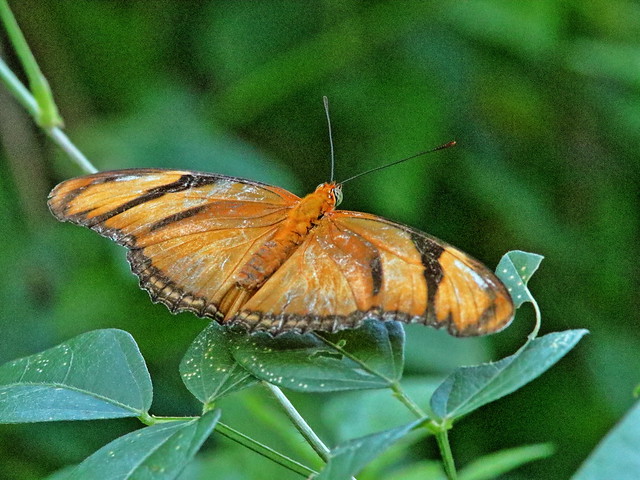
...a Julia longwing male...

...and a female of the same species:
A Gulf Fritillary female was depositing an egg: 

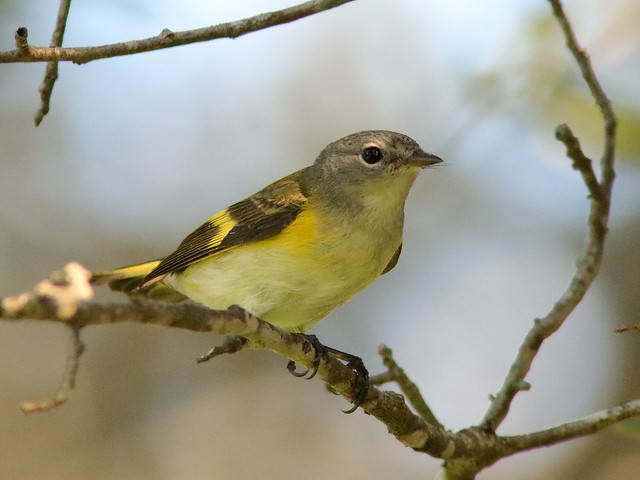
A bit of blazing color, a male American Redstart:

The female redstart has a different brand of beauty:
A Northern Parula warbler looked at me sideways:

On our back yard lake, a pair of Egyptian Geese...

...and a flyover by a Little Blue Heron:

The male Black-and-White Warbler has a black mask...
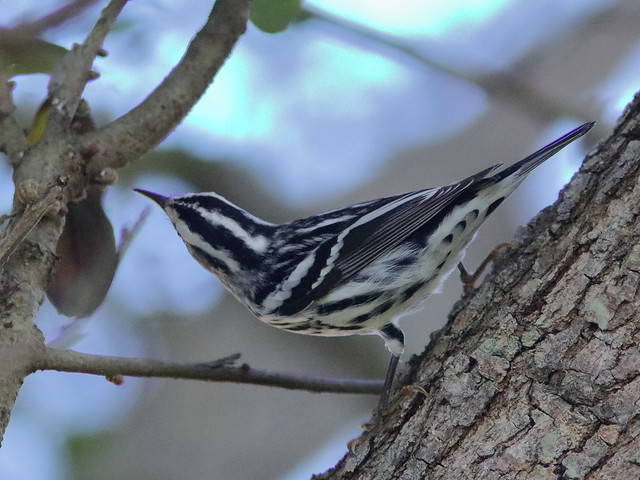
...while the Black-and-White female is less strongly marked and has a pale face:

This Male Northern Cardinal sub-adult still has a dark bill which will soon turn red:

Adult Female Northern  Cardinal:

Prairie Warblers are present much of the year:
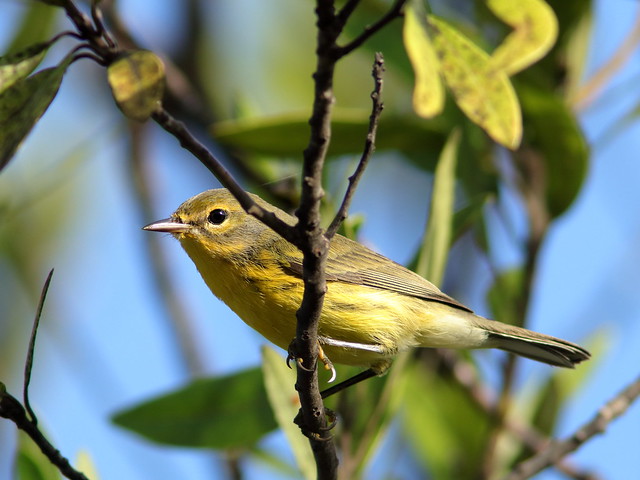
A migrating Worm-eating Warbler provided a photo op:

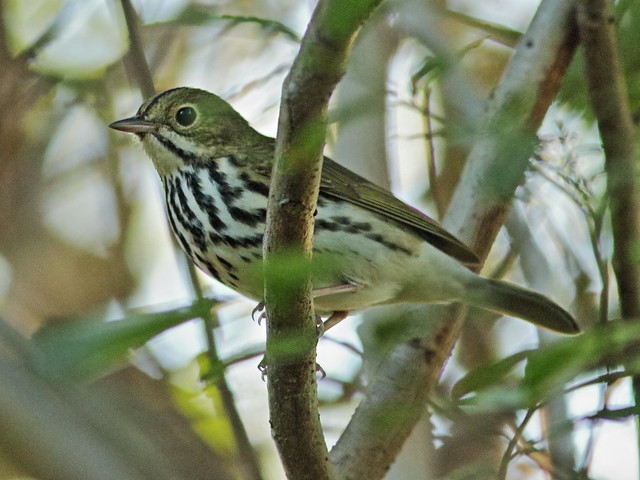
Ovenbirds are most common during the fall migration:
Baltimore Orioles were passing through:

An inquisitive Gray Squirrel begged to have his picture taken:

A Great Egret reflected on the lake in the wetlands...

...as did this Tricolored Heron:

The yellow eyes of the Brown Thrasher are striking: 

On September 29 the local pair of bald Eagles (Pride and Jewel) were already adding and arranging sticks. The larger female is to the right :


The shadow of a thunderhead projected westward  just after sunrise on September 13:


Linking to:


Skywatch Friday

Weekend Reflections

Saturday's Critters

BirdD'Pot

All Seasons


Wild Bird Wednesday

My Corner of the World
________________________________________________

Please visit the links to all these posts to see some excellent photos on display
________________________________________________

Thursday, August 25, 2022

Hummingbirds, Yellow Jackets and a Pig Roast

Our single nectar feeder has been unusually busy with adult female and immature hummingbirds. The adult males have presumably migrated to the south and the others are storing energy for the long flight before they depart in the coming  weeks:


A few days ago, Yellow  Jacket wasps suddenly took over the feeder and were driving away any hummingbirds that wished to sip the sugar water. The sight of only a single wasp may discourage a hungry hummer. Wasps do sting hummingbirds. I could not substantiate claims that they have even killed them (** REF below). A wasp can attack suddenly and very accurately:

The feeder has very small feeding holes located some distance above the surface of the nectar, which is supposed to make it impossible for bees and wasps to reach it. However, the wind rocks the feeder and I think the hummingbirds themselves spill some nectar around the holes. Smaller wasps sometimes manage to get through, only to drown in the nectar.

Flowers have faded and the ground is parched. In any event, the thirsty wasps have taken over. Indeed, as soon as I walk out to hang the feeder after replenishing it, a wasp may land on it just as I step out the door:


This wasp trap has somewhat reduced the threat, but they still visit the feeder:

I took this slow motion video to show how quickly the wasps attack and disrupt the hummingbirds: 

My back yard list of bird species remains stalled at a total of 66 species, though I was able to shift the Indigo Bunting from "heard only" to "photographed on site" when one landed on the back fence on July 31, raising this subset to 51 species. It was a poor shot from a distance:

The birds are very quiet. Some migrants have already disappeared and others are completing their  post-breeding molt and storing energy for the long flight.  I was surprised to hear the plaintive whistle of an Eastern Wood-Pewee which was perching on a treetop against the gray sky, a photographic challenge:

An immature Red-shouldered Hawk permitted some through-the-window photos as it rested on the back fence:


A White-tailed Deer fawn joined his mother to browse on the Sow Thistle in the cleared area back of the home. I think it is a male because it has small antler knobs which square off the top of its head. Females usually have rather smooth dome-shaped crowns:

The doe kept watching me but they were still feasting peacefully as I crept away from the top of the cliff which overlooks the clear-cut:


A highlight this past weekend was a pig roast, which our daughter and son-in-law hosted for relatives, friends and neighbors. Our SIL emigrated from Cuba at twelve years of age and grew up in nearby Hartford. His new job allowed him to live anywhere in the NE states. His parents and a brother reside quite close by. Over seventy guests attended. No other homes are visible from their property, so we were pleased to meet several of our neighbors for the first time.  

The pig was slowly cooked in a "caja china," which is Spanish for "Chinese box."  It is a roasting box which is often said to have been used in Cuba in the mid-1800s by Chinese laborers. However, in Cuba it is called "caja asador" (cooking box) and may have gotten its name "china" because anything foreign or exotic can be called "chinese" by Latin American Spanish speakers-- analogous to the way English speakers may say "it is Greek to me" about anything difficult to understand.

The yard was all set up before guests arrived:

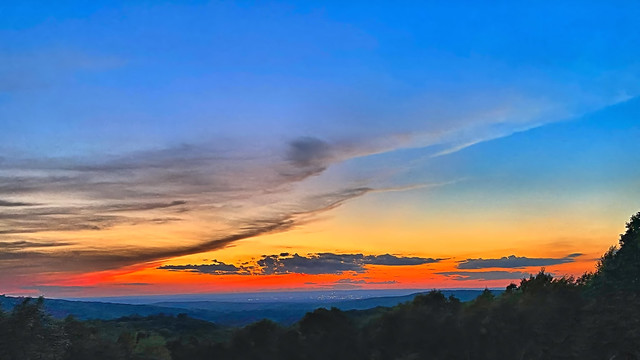
The partygoers enjoyed a beautiful sunset:


**Of interest: 10 Common Things That Kill Hummingbirds

= = =  = = =  = = = =  = = = = =

Linking to:


Skywatch Friday

Weekend Reflections

Saturday's Critters

BirdD'Pot

All Seasons

Wordless Wednesday (on Tuesday)

Wild Bird Wednesday

My Corner of the World
________________________________________________

Please visit the links to all these posts to see some excellent photos on display
________________________________________________