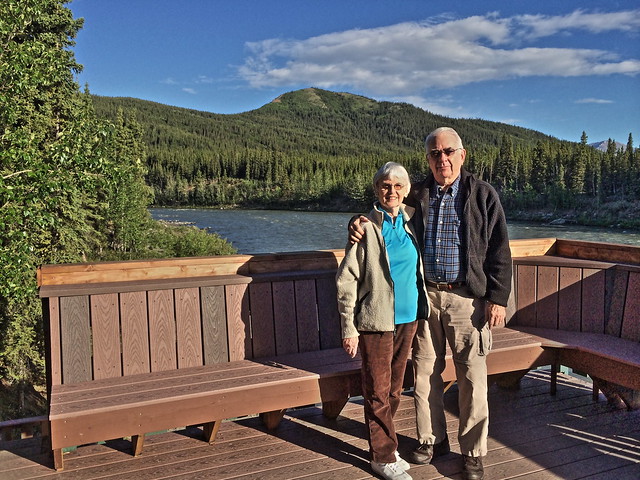
On the final day of our Alaska cruise-tour we relaxed in the resort area of Denali Park Village before boarding the noon Alaska Railroad train from the Denali National Park Depot. Behind us is the Nenena River, which flows from the Nenana Glacier in the northern Alaska Range about 100 mi (160 km) south of Fairbanks. This river forms the eastern boundary of Denali National Park and Preserve.
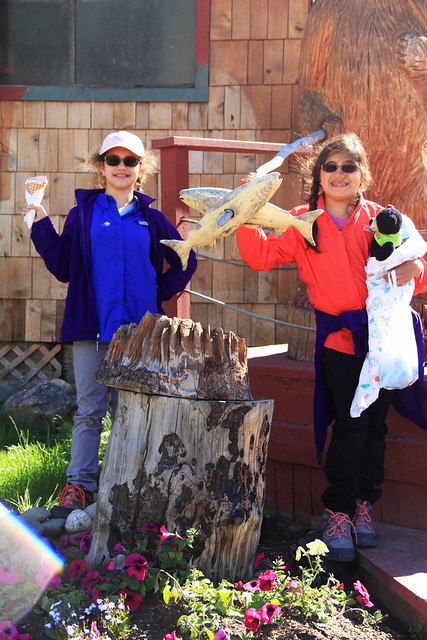
Our granddaughters enjoyed shopping and frolicking in the Village
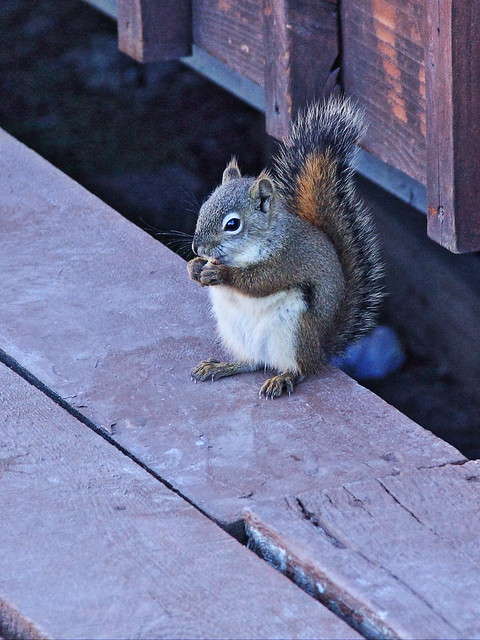
This Red Squirrel was looking for handouts.
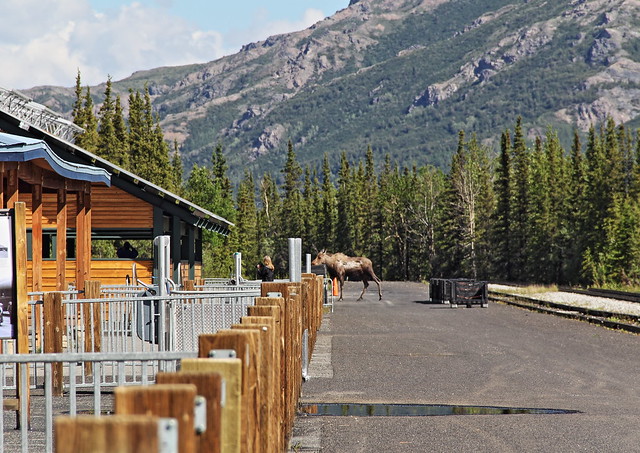
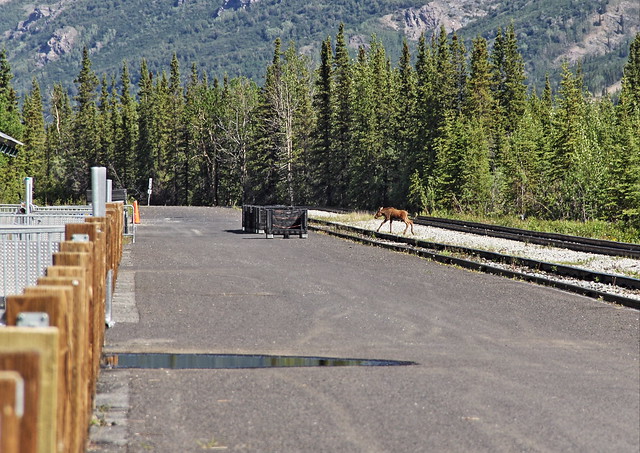
As we awaited the arrival of our train, a cow Moose crossed the tracks...
...followed by her calf.
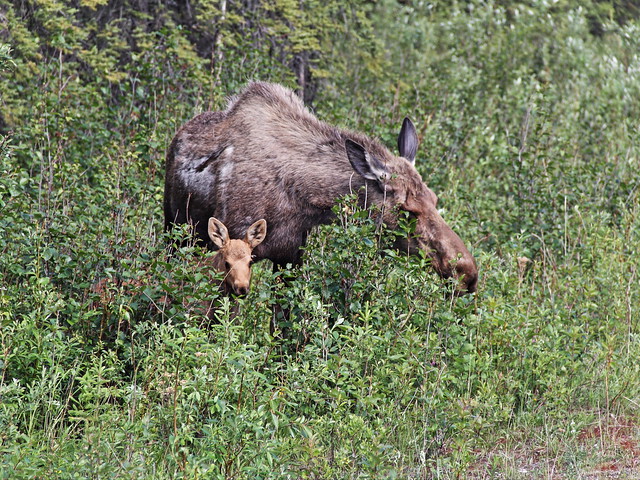
The Moose sheltered her young one while she browsed within a few feet of the depot.
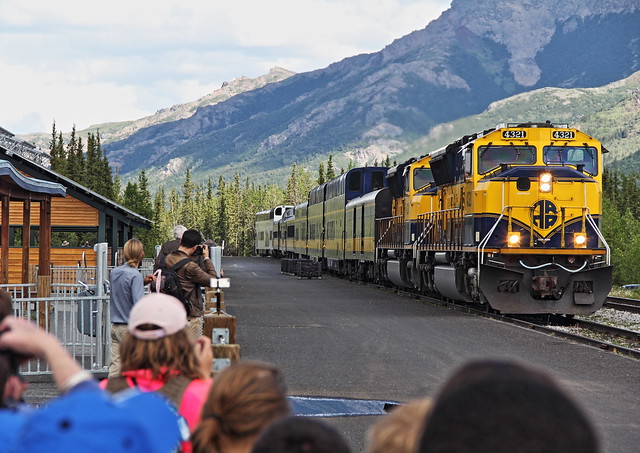
The train pulled into the station, several minutes late. Since it is a one-track line, the schedule is often only approximate, depending on freight traffic.
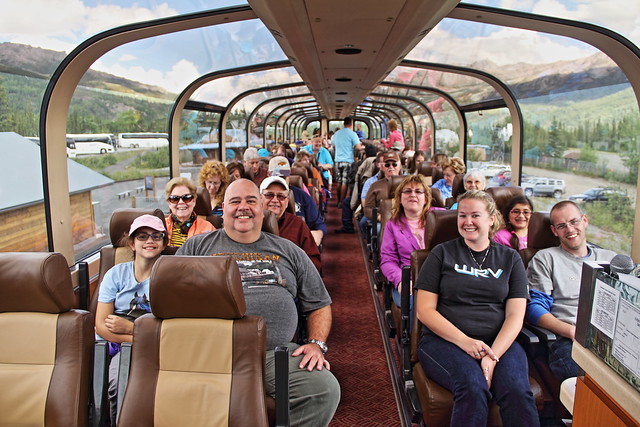
Our car was the special Wilderness Express double-deck observation car at the rear end of the train.
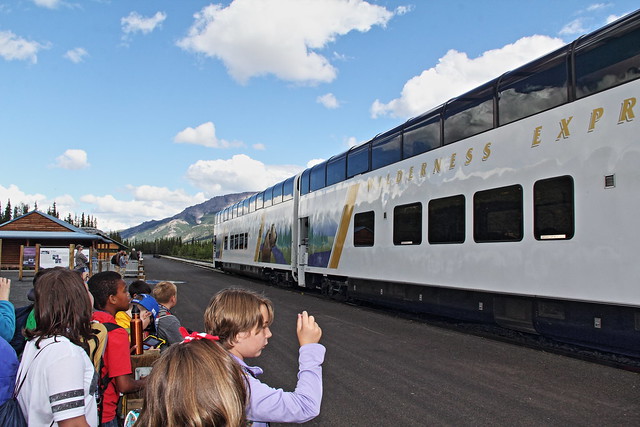
I snapped this shot as the train was pulling out of the station. Our party of eight and some friends we made occupied all the front seats upstairs. The lower floor is our dining area.
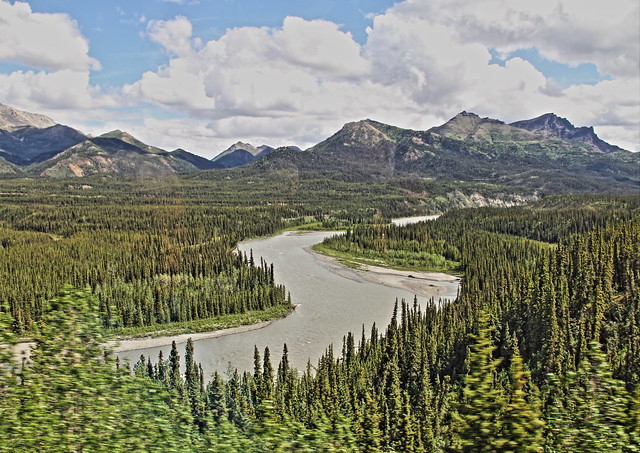
Initially, we followed the Nenena River, which flows from east to west northward as we set out. This river actually crosses through valleys to the other side of the Alaska Range and ultimately empties into the Bering Sea.
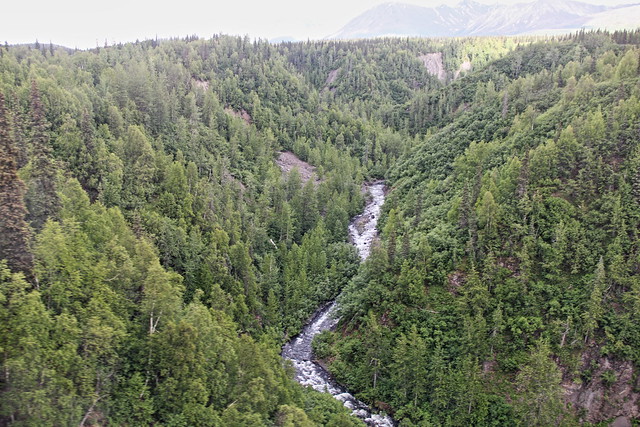
We then followed the Sustina River which flows southerly past Anchorage into Cook Inlet and the Pacific ocean. We crossed several high trestles.
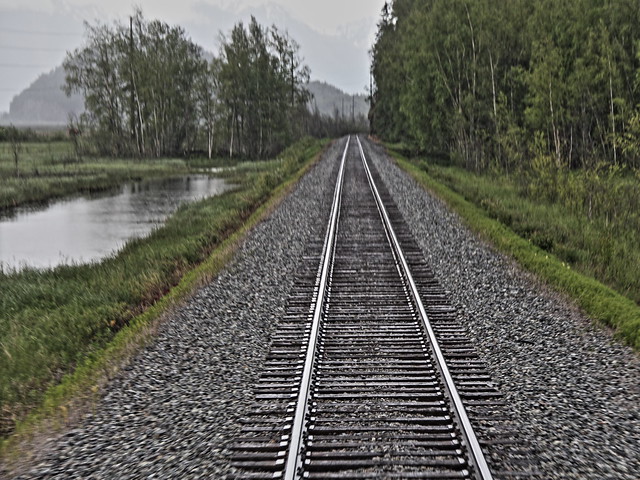
Trumpeter Swans and other waterfowl occupied the placid lakes, but I obtained no photos as we whizzed by, causing the foreground to be blurred in these photos.
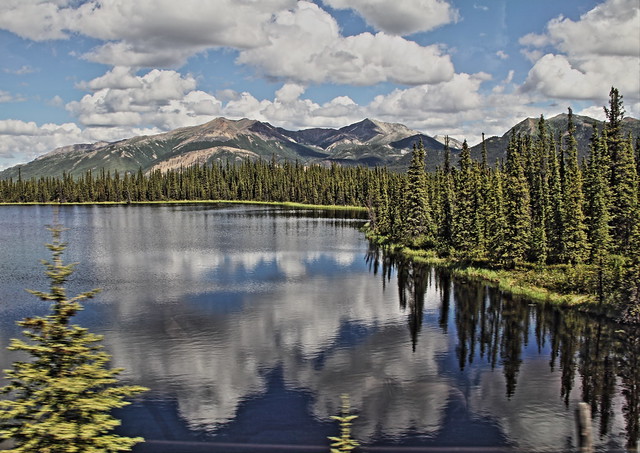
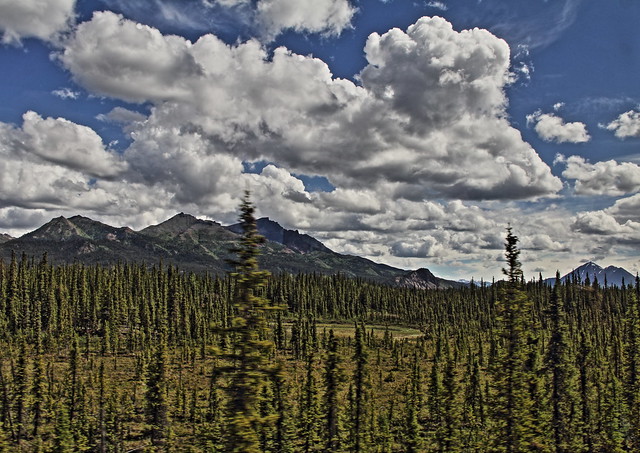
This is typical tiaga, occupied by rather widely spaced spruce trees. The permafrost, short growing season, harsh winters and relatively poor nutrition in the soil all limit the forest's ability to sustain a greater number or variety of trees.
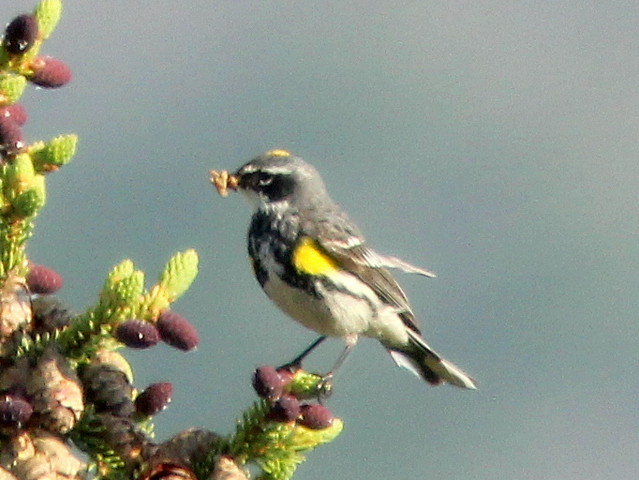
A few land bird species were identifiable, but photography was not possible. I took this photo of a Yellow-rumped Warbler on a previous trip to Denali, in June, 2011. Interestingly, it has the white throat of the eastern "Myrtle" subspecies rather than the yellow throat of the western "Audubon's" form which I expetected to see. Forces related to the retreat of the glaciers 16,000 to 13,000 years ago are responsibel for the failure of the Audubon's subspecies to expand its breeding range to the northwest.
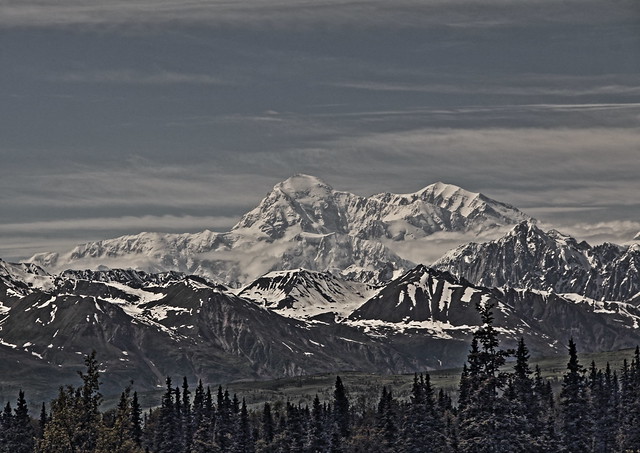
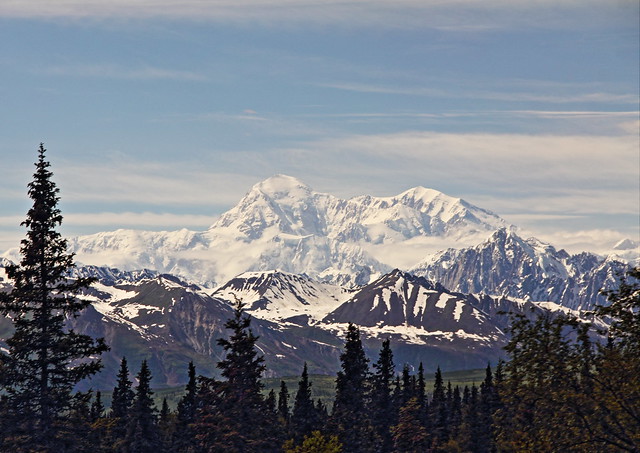
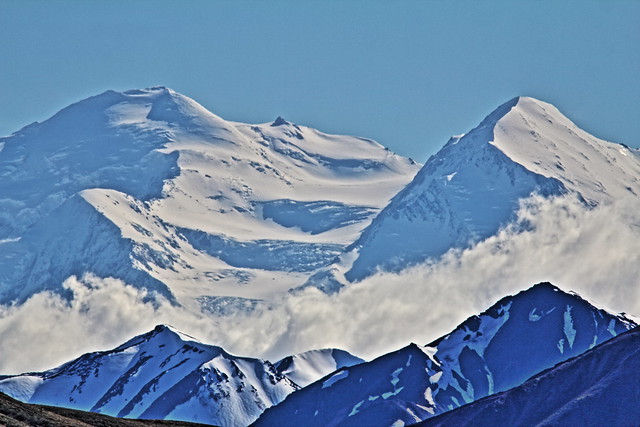
Amazingly, despite scattered showers and often cloudy conditions, I got some of my best photos of Mount McKinley (Denali) from the moving train. Distance and the camera's image stabilization contributed to the sharp images, overcoming the blurring as seen in the foreground.
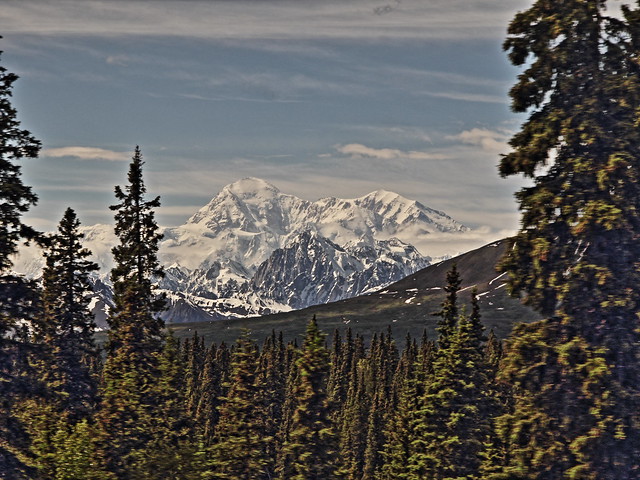
I had to shoot blindly through openings in the trees, hoping for clear views in some of the photos.
Looking back on a delightful trip as we pulled into Anchorage in the light rain.
 Visit these links to view the entire series of blogs on this Alaska trip:
Cruising to Ketchikan, Alaska
Cruising to Alaska's Icy Strait and Hoonah
Visiting Juneau and Skagway
Hubbard Glacier and Seward, Alaska
Denali National Park
Riding the rails from Denali to Anchorage
The final stop on our Alaska cruise-tour was Denali National Park. This was our fourth visit here. After our first brief visit we liked it so much that we returned for an extended stay in Camp Denali in Kantishna, 90 miles inside the Park. That time we slept in a little cabin that lacked electricity and running water. We stoked a small potbelly stove to break the morning chill, but were on our way exploring before the place even warmed up. Every day we had an unobstructed view of Denali (Mount McKinley) through the heart-shaped window in our outhouse door. The two subsequent visits were like this one, much less active, with family and luxurious hotel accommodations.
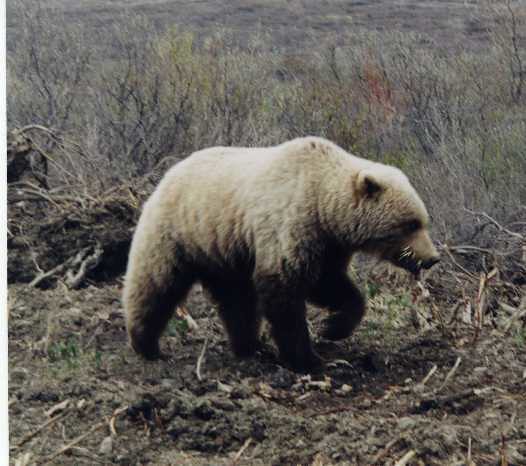
On our first visit, some 20 years ago, we took a short bus tour and encountered this very sad sight along the road. A Brown Bear evidenced an encounter with a Porcupine. Its face was covered with quills that had penetrated deeply. We wondered whether it ever survived. I scanned this photo of the poor creature.
This time we did take the 8-hour Tundra Wilderness Tour which penetrates 63 miles into the heart of the Park. We rode in a modified school bus, leading me to expect an uncomfortable and jarring experience.
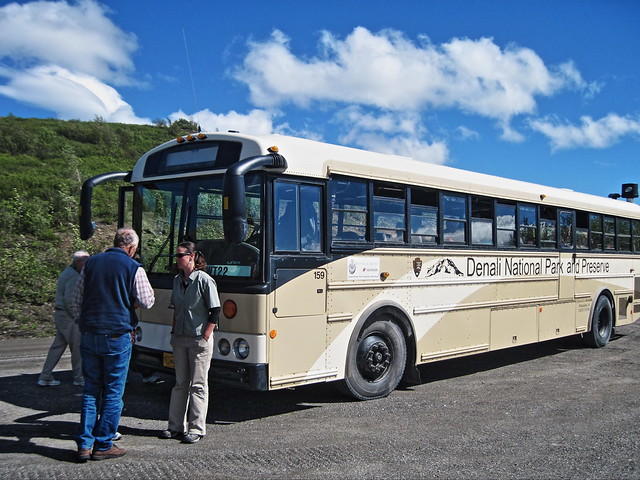
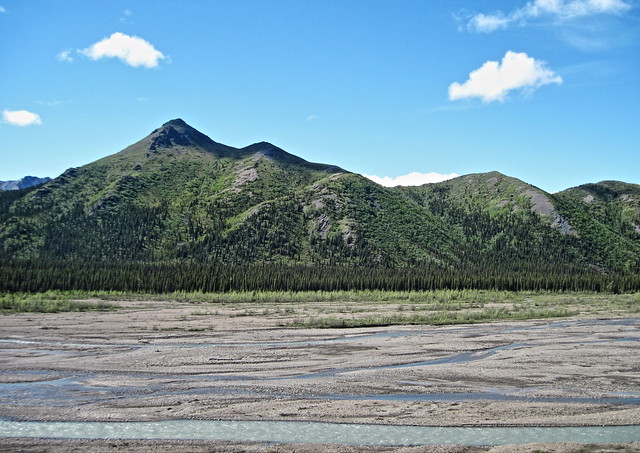
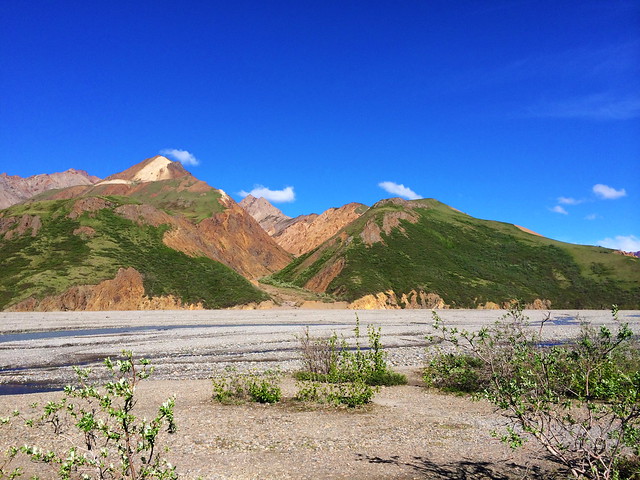
Quite honestly, I do not remember being aware of any discomfort the entire time! The rainy weather that greeted us as we set out from Talkeetna early in the day took a 180 degree turn, so that by the time we reached Denali National Park the skies were blue. Vistas opened up as we moved along Savage River, a braided glacial stream.
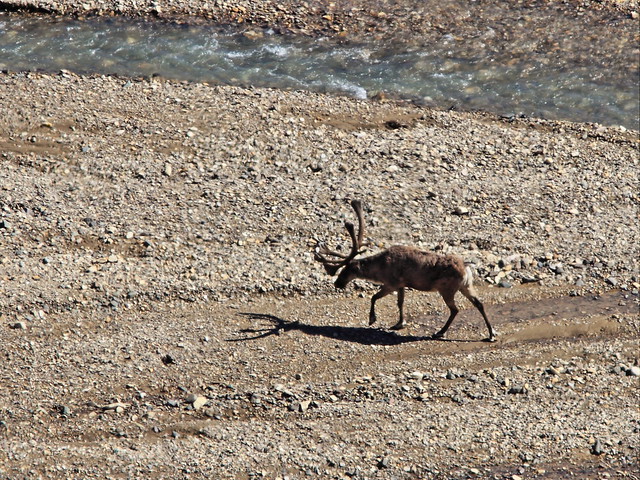
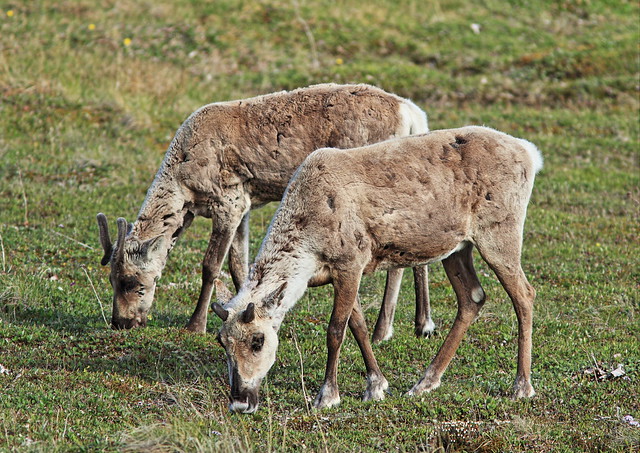
We saw our first Caribou along the river.
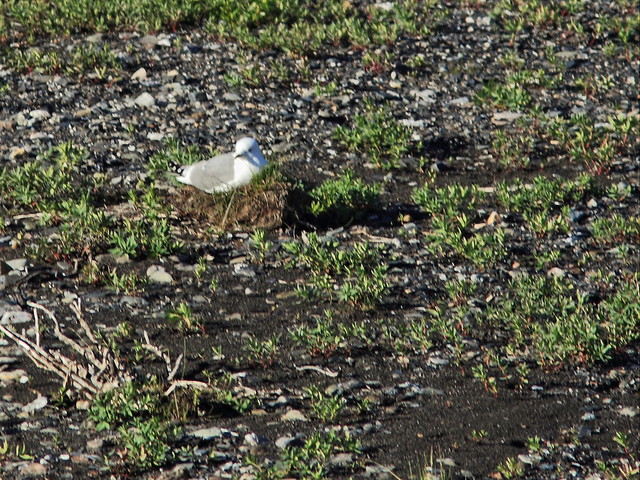
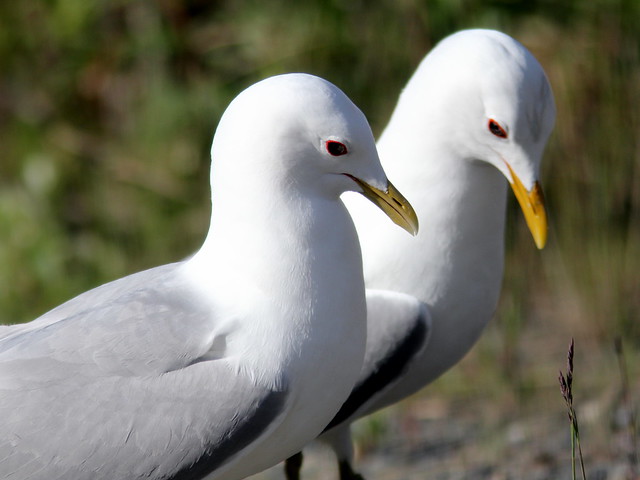
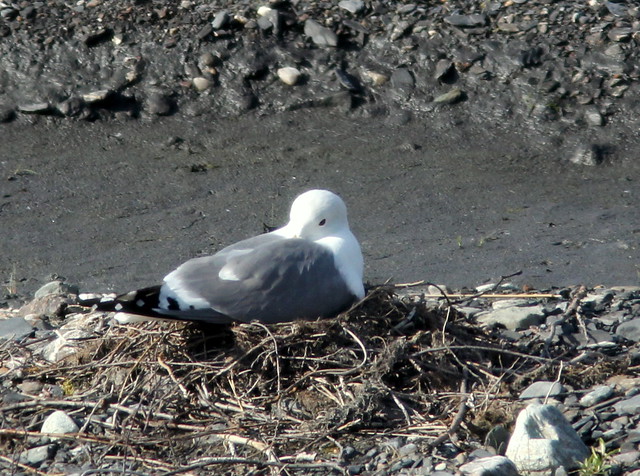
At Mile 15 the park road crosses the Savage River. Beyond this point private vehicles are restricted. Mew Gulls nested on the many islands created by the meandering river.
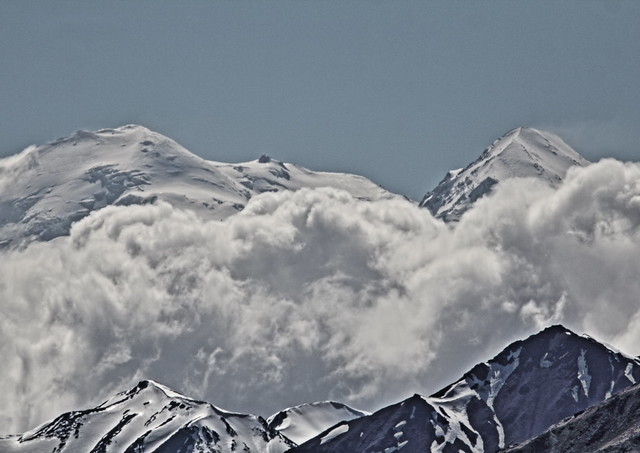
We caught our first view of Denali (Mount McKinley), 20,237 feet (6,168 meters) above sea level, the highest peak in North America. Measuring from base to summit, it is taller than Mount Everest, which rises only 12,000 feet (3,700 meters) from its base, which is at 17,000 feet (5,200 meters), while Denali rises vertically about 18,000 feet (5,500 meters) from its base. The mountain creates its own weather and we found it partly shrouded by clouds.
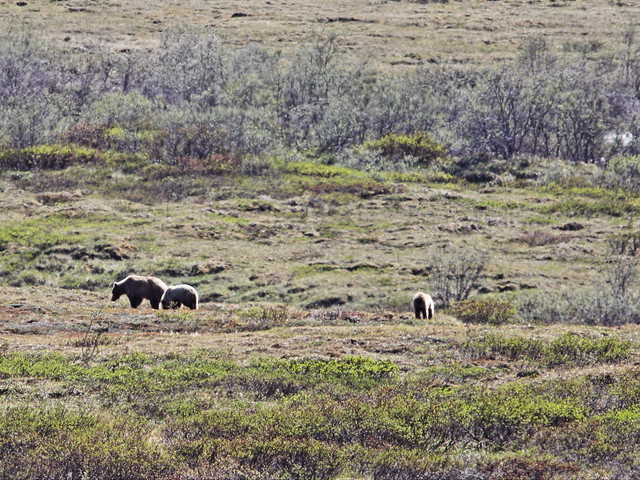
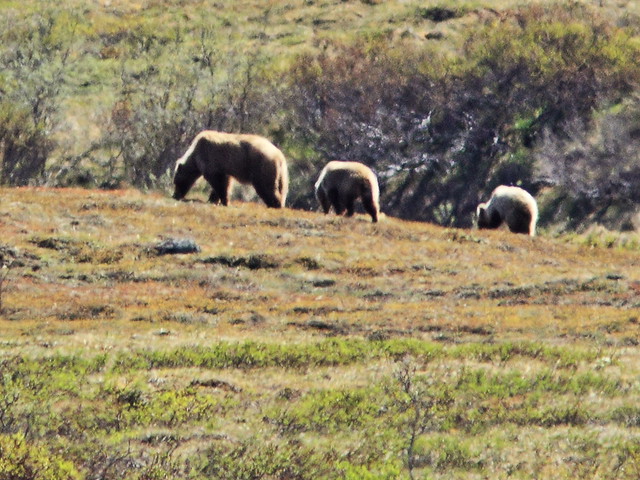
In the distance, we spied a Brown Bear sow with two yearling cubs. This species is known as Grizzly Bear in the lower 48 states. Brown Bears range widely into Europe and Asia as well as North America. Those on Alaska's Kodiak Island are much larger, with males weighing 800-1400 lbs (360 -635 kg) as opposed to the mainland individuals, which average 400–790 lbs (180–360 kg). While the Kodiak Bears are genetically isolated, their greater weight may largely be attributable to their much better diet. Those in zoos may attain weights of up to 2400 lbs (1080 kg).
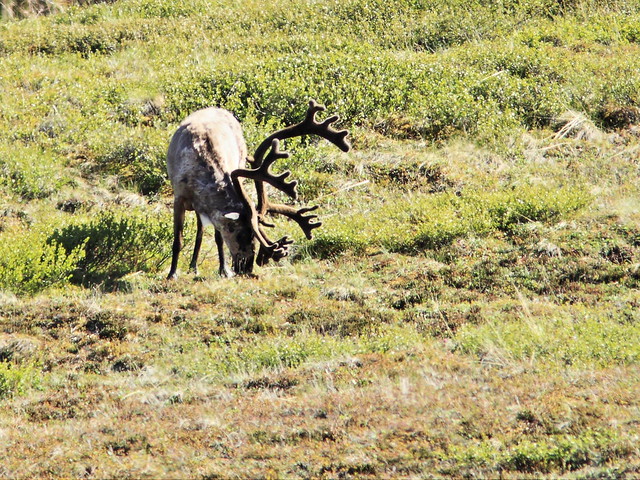
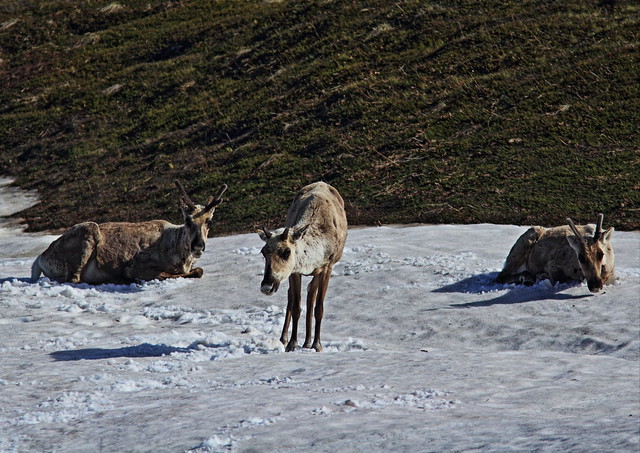
We encountered large herds of Caribou on the mountain slopes. Many lounged on residual snow drifts. Several grazed just off the road.
The highest point before we turned around was at Polychrome Pass. This is Polychrome Peak, so named for its colorful rock formations. The road over this mountain is very narrow and carved out of the side of its cliffs. Guides say it is also known as "Poison Peak," because "one drop will kill you."
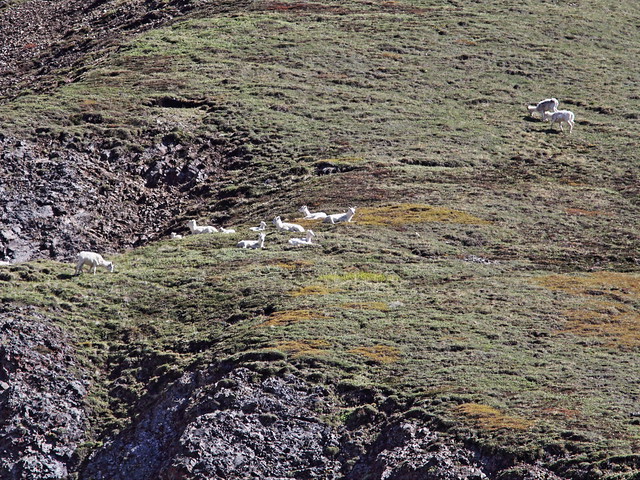
Same-sex flocks of Dall Sheep roamed the heights. This group consisted entirely of ewes and lambs.
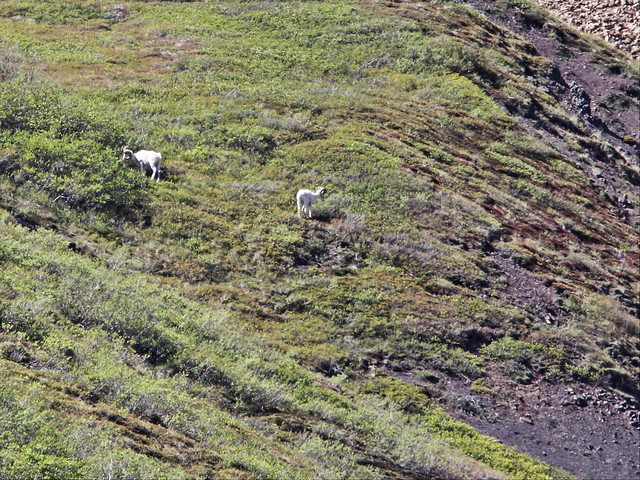
Most were out of camera range. These are recognizable as rams. interestingly, there are no Mountain Goats, which occupy southeastern Alaska.
.
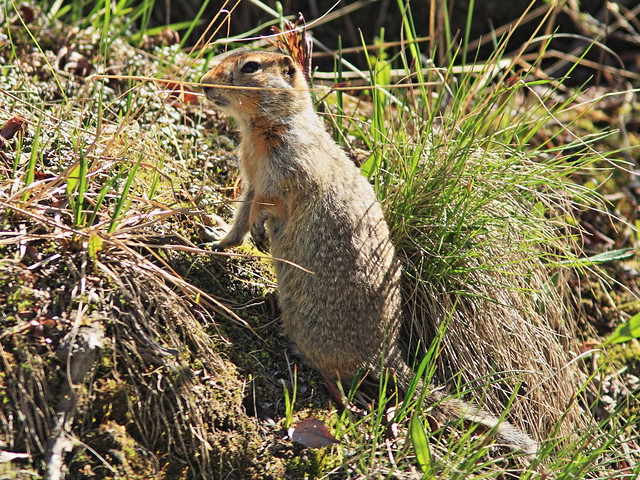
Robust Arctic Ground Squirrels often watched as the bus passed by. This species hibernates most of the year, from late August into April. Remarkably, while hibernating their body temperature may drop to 27 degrees Fahrenheit (-3 degrees C).
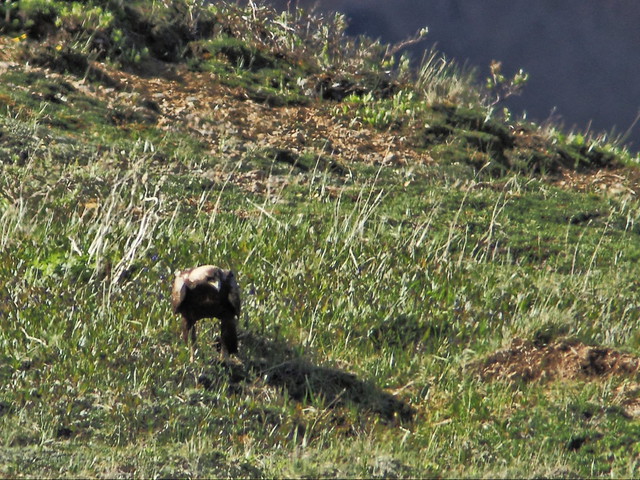
We were on the alert for Golden Eagles, as they feed on ground squirrels and were said to be fairly common in this area of Polychrome Mountain. One of the participants suddenly spotted one. I must admit that I had earlier seen it and passed it off as a rock!
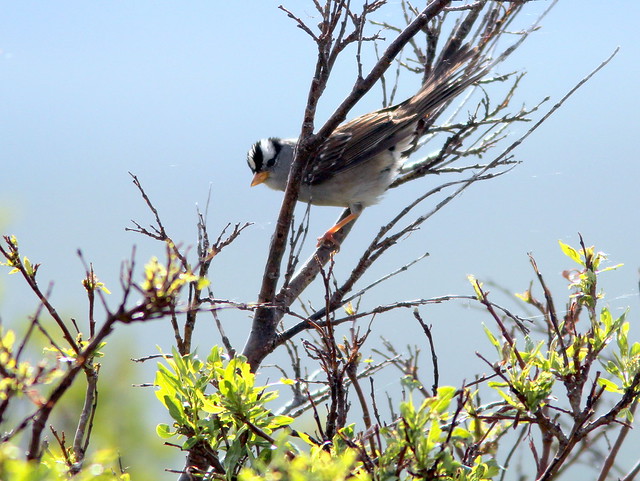
Few other birds were present. There was a group of fly-by rosyfinches and several White-crowned Sparrows. I must draw upon my archives from our visit to this area three years ago to illustrate the latter species.
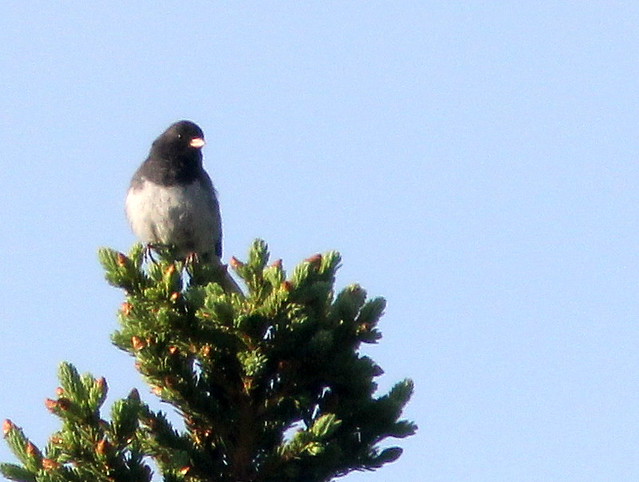
At that time I also obtained better shots of Dark-eyed Juncos which also eluded my camera during this visit.
The Mew Gulls were courting on the bridge and nesting close by in June, 2011 and strutted in front of me at the Savage River crossing.
On our way back we saw that the clouds had cleared, giving us a stupendous view of Denali.
Next day, we journey back to Anchorage on the Alaska Railroad.
Visit these links to view the entire series of blogs on this Alaska trip:
Cruising to Ketchikan, Alaska
Cruising to Alaska's Icy Strait and Hoonah
Visiting Juneau and Skagway
Hubbard Glacier and Seward, Alaska
Denali National Park
Riding the rails from Denali to Anchorage