Showing posts with label backyard. Show all posts

Thursday, January 19, 2017

Random back yard visions

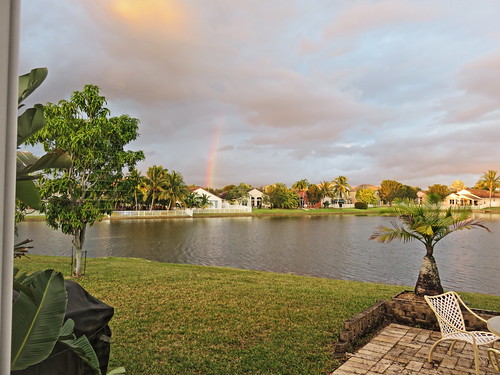
Rainbow from our back patio:

Rainbow from back patio 20161123

Our next door neighbor's pet goes for a doggie paddle:
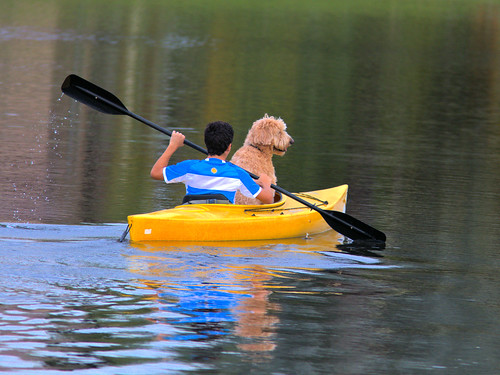
Doggy Paddle 20170106

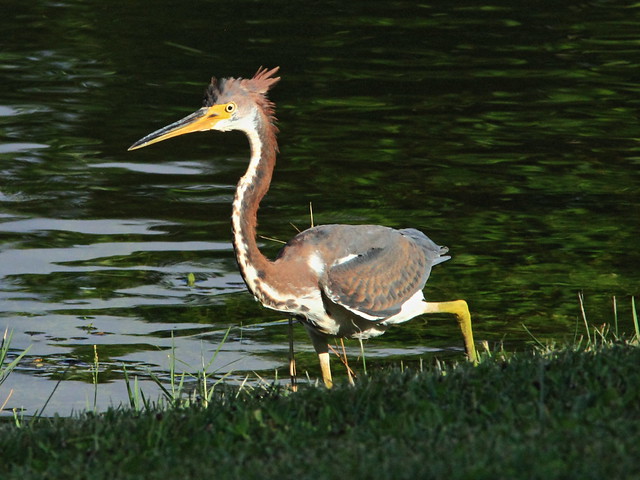
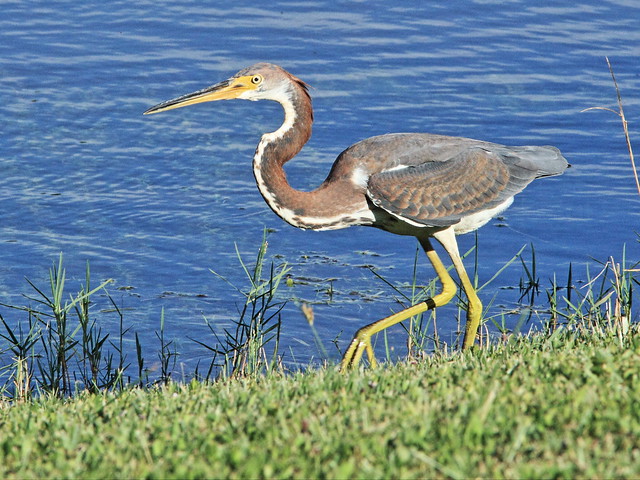
A Tricolored Heron moves purposefully along the edge of our lawn:
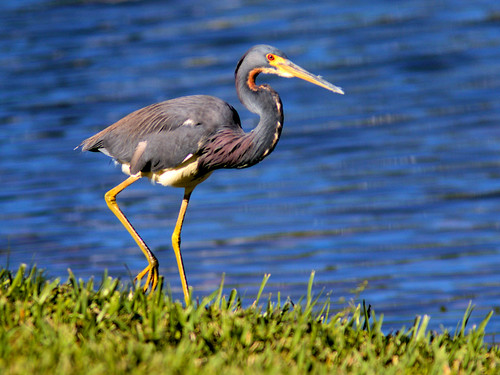
Tricolored Heron 03-20170105

Great Egrets are much more shy, so I must capture this view through the back patio window:
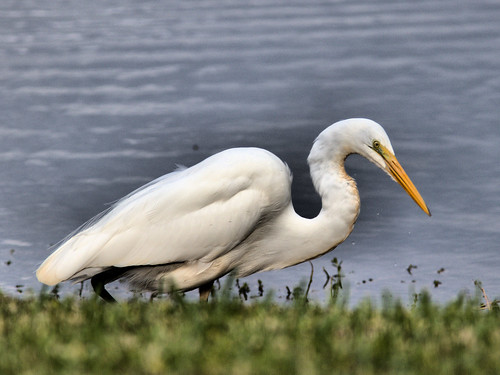
Great Egret thru window 20170106

A Muscovy Duck leads her five new hatchlings:
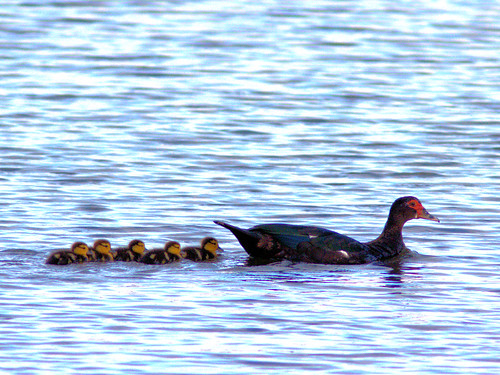
Muscovy Duck and ducklings 20170101

A Gray Squirrel nibbles on an acorn in our front yard:
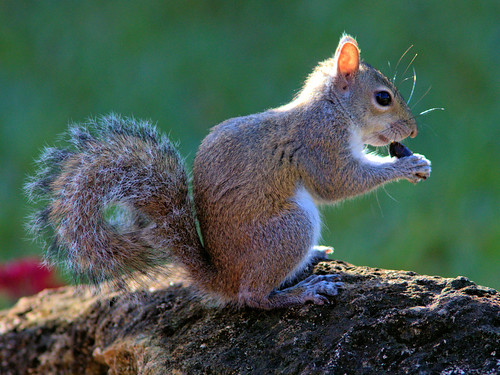
Gray Squirrel 20170101

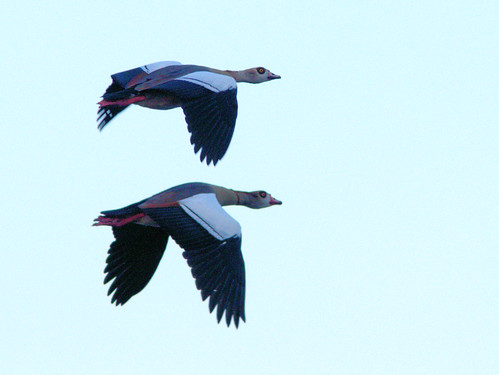
A flyover by Egyptian Geese:

Egyptian Geese 01-20170101

Close-up of a Green Iguana on our lawn:
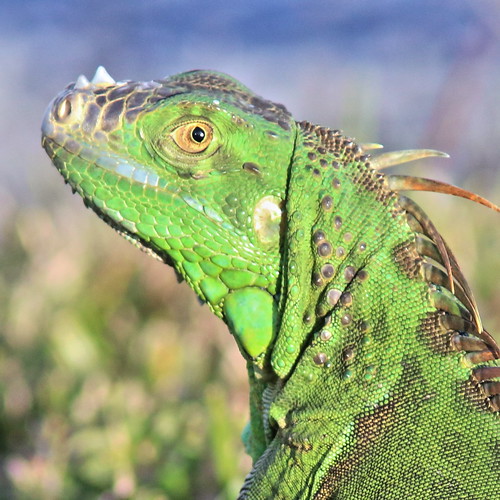
Green Iguana portrait 20161129

The International Space Station passed over our house in November, 2016:
International Space Station 20161129

A half hour before sunrise, we pass the gate to our subdivision as we head out to the wetlands:
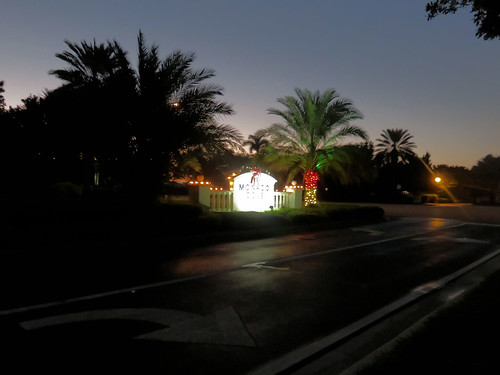
Monaco Cove gate 20161229

A Long-tailed Skipper visits a Lantana blossom:
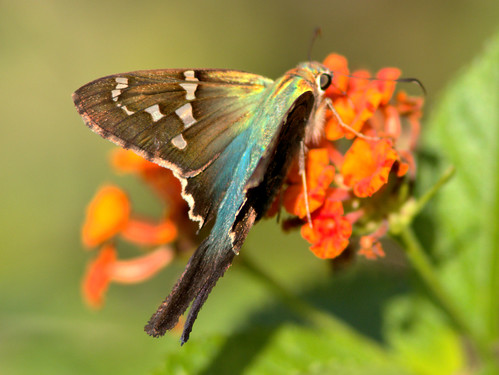
Long-tailed Skipper 02-20170101

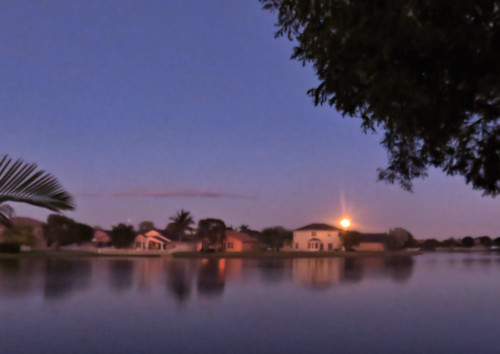
Snow Moon rising:


 Snow Moon rising HDR 20160222

An early morning rainbow over the wetlands:
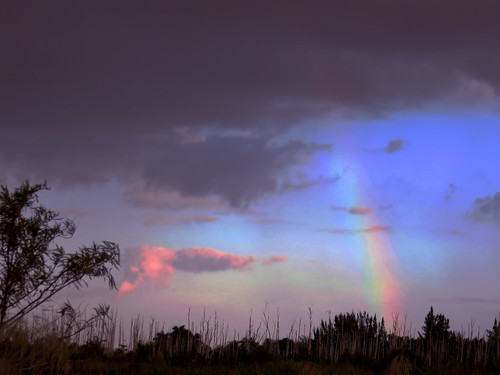

Rainbow north end HDR 20161125


I have placed the blog on auto-pilot for a couple of weeks as we are dealing with some demands on our time involving neighbors and loved ones, not me personally. I promise to get back to visit you all as things settle down.


= = =  = = =  = = = =  = = = = =

Linking to Misty's  CAMERA CRITTERS,

Linking to Eileen's SATURDAY'S CRITTERS,

Linking to GOOD FENCES by Gosia

Linking to SKYWATCH FRIDAY by Yogi, Sylvia and Sandy

Linking to WEEKEND REFLECTIONS by James

Linking to BirdD'Pot by Anni

Linking to Wild Bird Wednesday by Stewart

Linking to Today's Flowers Friday by Denise

Linking to Wordless Wednesday (on Tuesday) by NC Sue

Linking to ALL SEASONS by Jesh

________________________________________________

Please visit the links to all these memes to see some excellent photos on display

________________________________________________
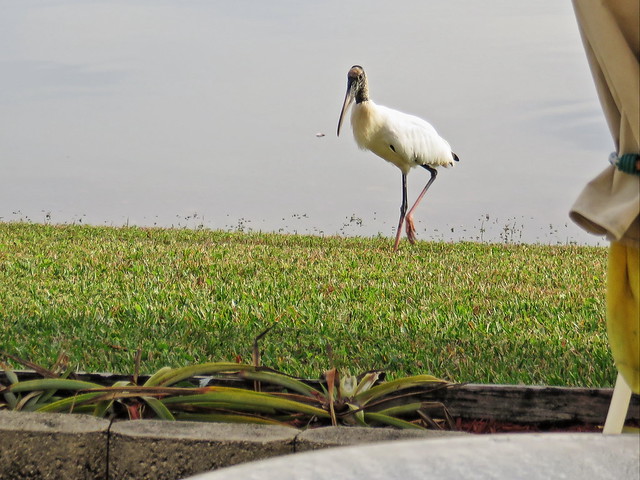

Saturday, January 10, 2015

A Patio Stork

We have seen few Wood Storks on our lake this fall, probably a good sign as water conditions appear more ideal for breeding. All have been single birds, hopefully foraging to find food for their incubating partners or nestlings. 

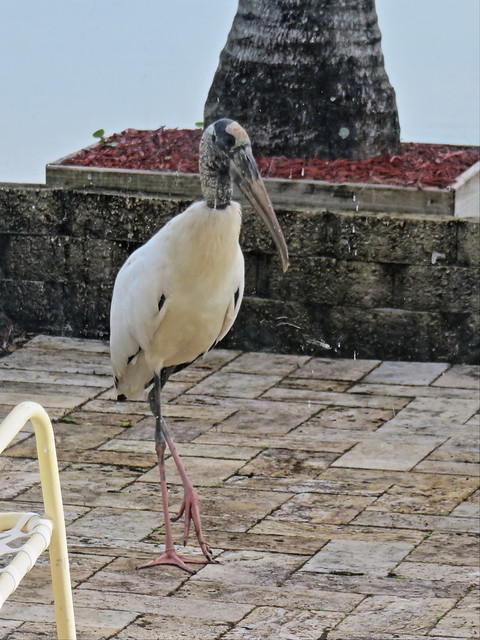
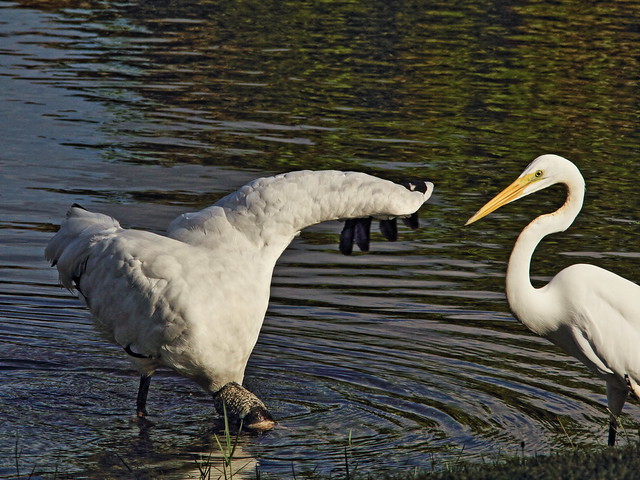
Remarkably, this stork walked right up on our patio and to the  back door. I hope no one has been feeding them as the behavior is unusual. Our neighbor's playful dog ended this magical encounter just as I was getting ready to make a video.

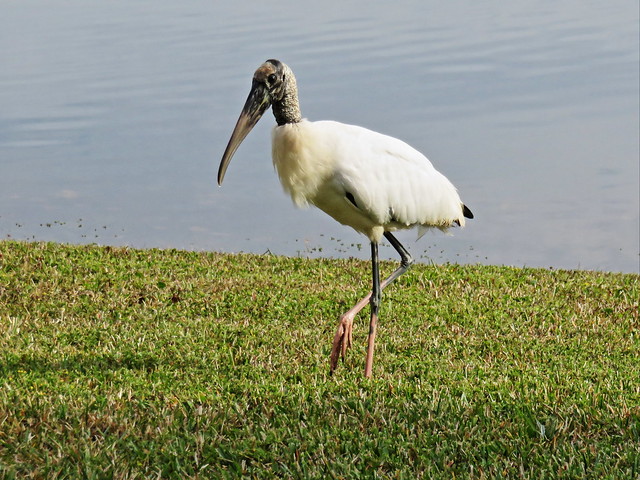
Mary Lou alerted me of the stork's presence along the edge of our backyard lake. I quickly grabbed my new pocket camera (Canon PowerShot SX 700 HS) and carefully stole out on the patio to get this photo:

Wood Stork approaches 20141221

The stork seemed to ignore my presence and started walking up on the lawn towards me. I backed away to fit the entire bird in the camera's frame:

Wood Stork approaches 2-20141221

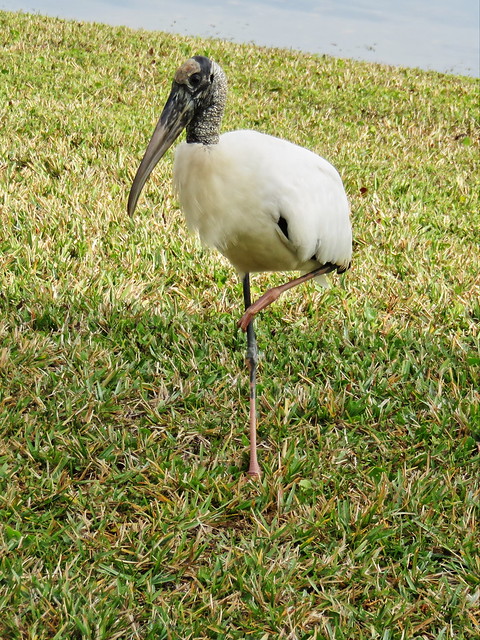
It then balanced on one foot, characteristically holding onto its knee with the other foot, as if wondering about what to do as I slowly backed into the house.

Wood Stork approaches 3-20141221

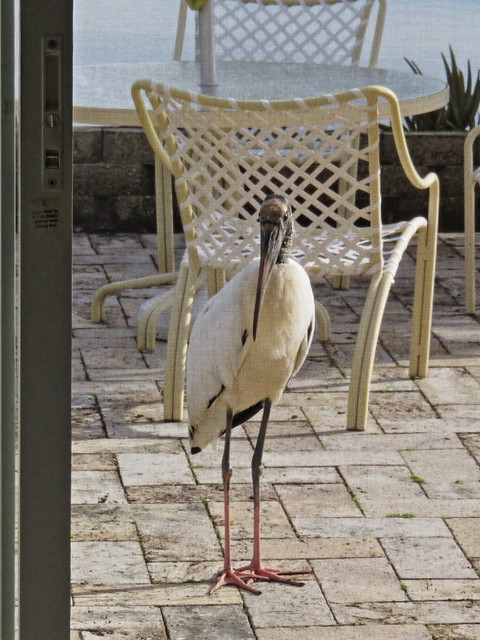
From inside, I watched through the window as the stork approached on our patio:

Wood Stork through the window 20141221

I shot this photo through the screen, adding texture to the image:

Wood Stork through the screen 2-20141221


It moved right up to within less than 3 feet of the glass door:

Wood Stork through the window 2-20141221

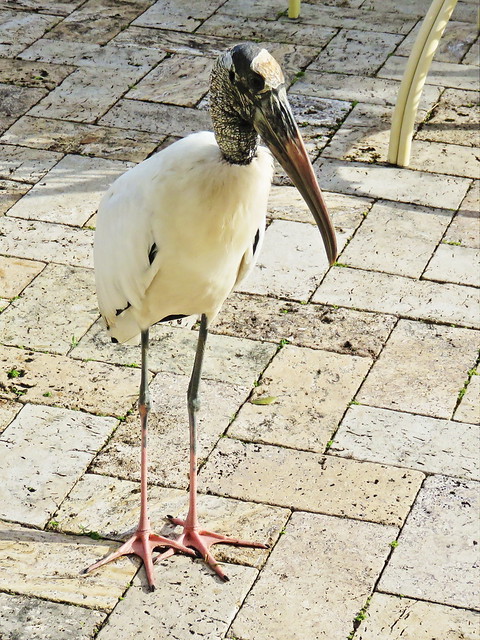
The stork's bubble-gum pink feet are an adaptation to its style of tactile foraging, the better to startle small fish into its open jaws as it stirs the water:


Wood Stork pink feet 20141221

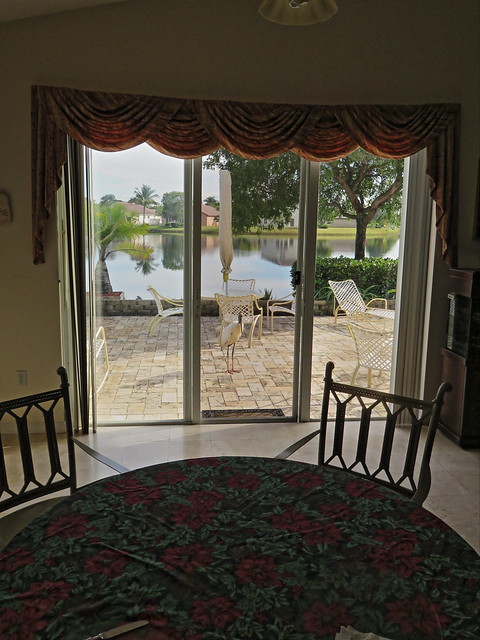
Again I backed up, this time into the kitchen, to capture the entire scene:

Wood Stork through the screen 20141221

Through the window, a portrait. The reflection from the window glass is captured in its eye:

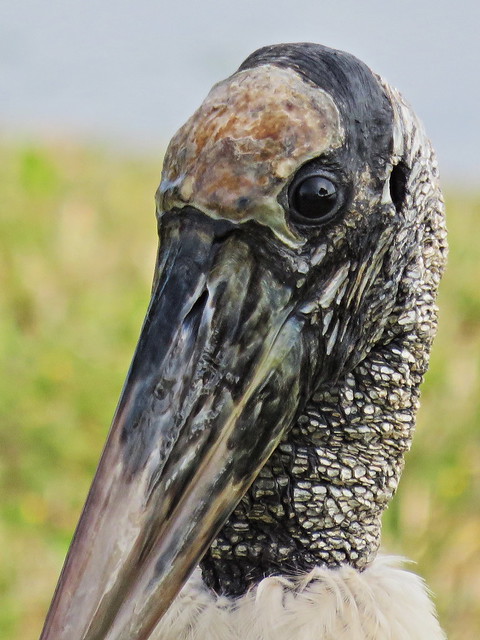
Wood Stork portrait 20141221

Suddenly the stork appeared alarmed and quickly leaped up and flew away to the right. Within a second our next door neighbor's Goldendoodle pup streaked across in front of the window, in hot pursuit of the stork, which continued flying directly away over the lake. The dog, still full of energy, returned back towards home (or perhaps saw some ducks she could harass):

Wood Stork attacker 20141221

Saturday, September 20, 2014

Commensalism: Wood Stork and herons cooperate

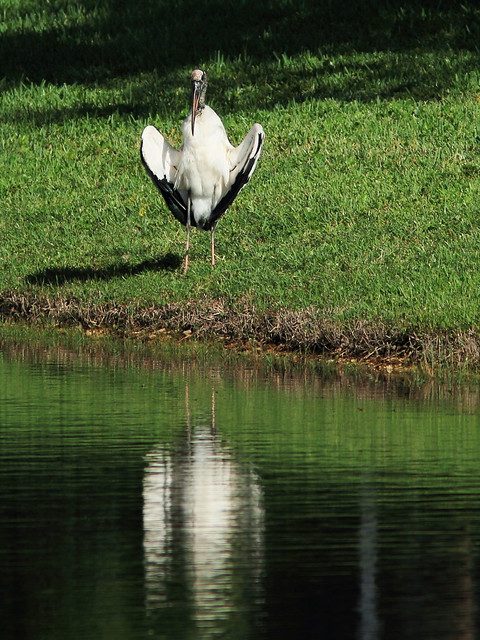
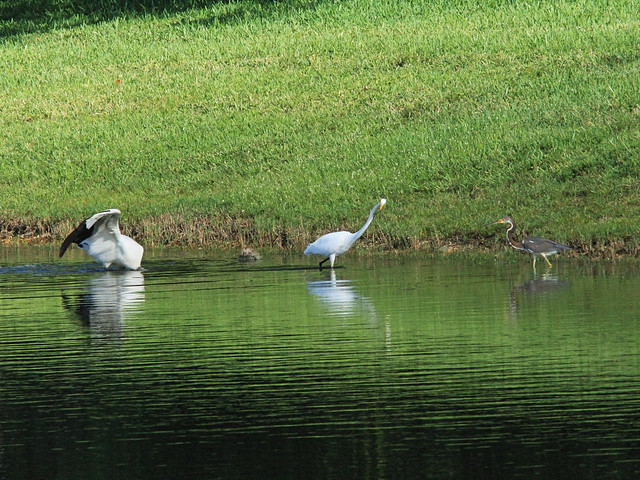
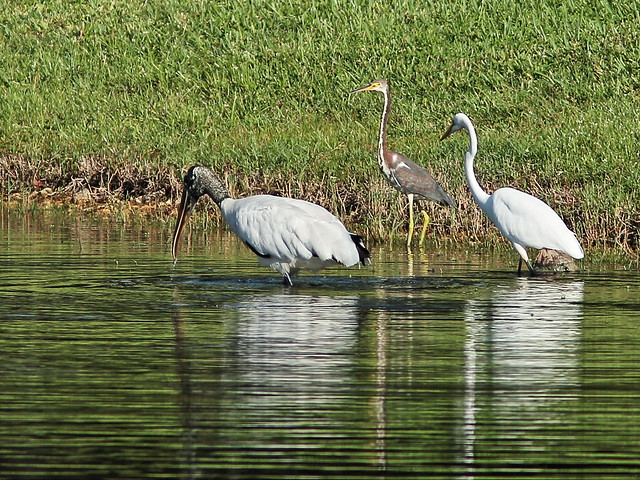
In late afternoon I looked out the back window and saw a Wood Stork on the lawn of the small park diagonally across our lake. Its wings were fully extended, probably drying off after a brief downpour. By the time I got my camera, the stork had partially closed its wings. 

Wood Stork 20140912

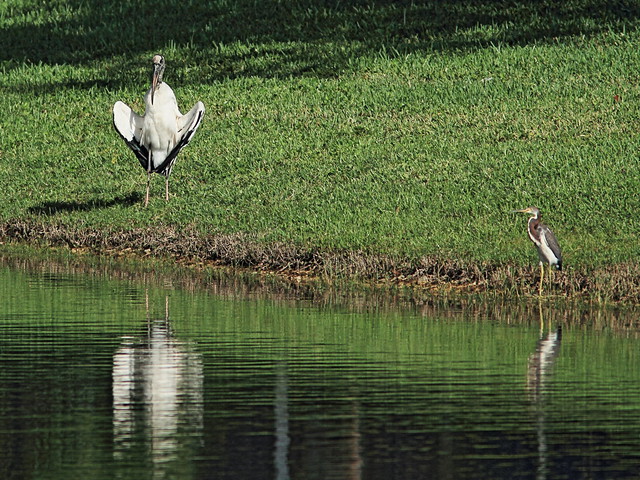
Next to the stork, an immature Tricolored Heron also rested and preened. 

Wood Stork and Tricolored Heron 20140912

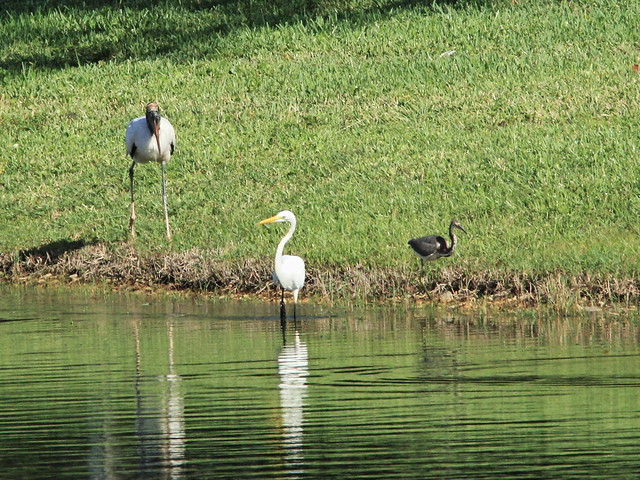
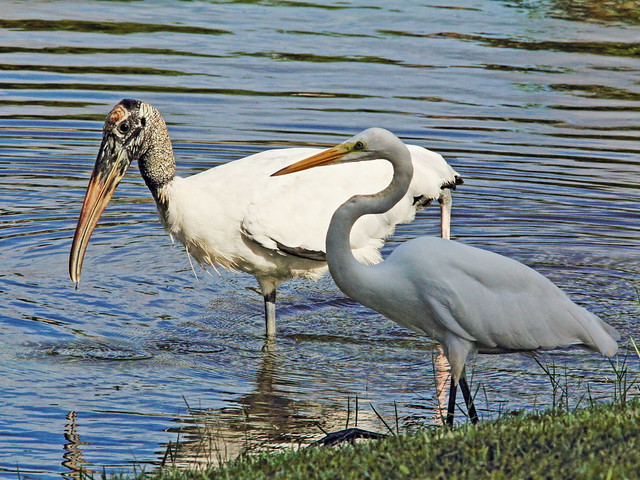
Suddenly a Great Egret flew in and settled at the edge of the water near the heron. Both started running to the right and the stork rushed over to join them. 

Stork and herons 20140912

I could see the water was disturbed by a school of small fish. The trio began feeding together, and they moved further down the shoreline. 

Stork and herons 2-20140912

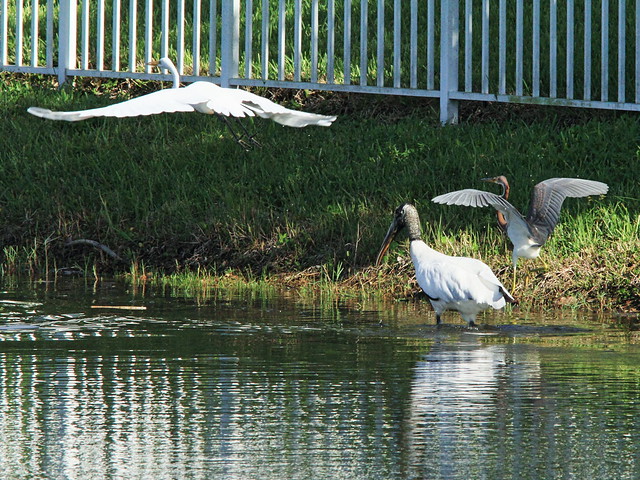
Then the egret seemed to see another school of fish back the other way. Both herons took flight, with the stork running along behind them. 

Stork and herons relocate 2-20140912

Stork and herons relocate 3-20140912

Again they fished together... 

Stork and herons relocate 4-20140912

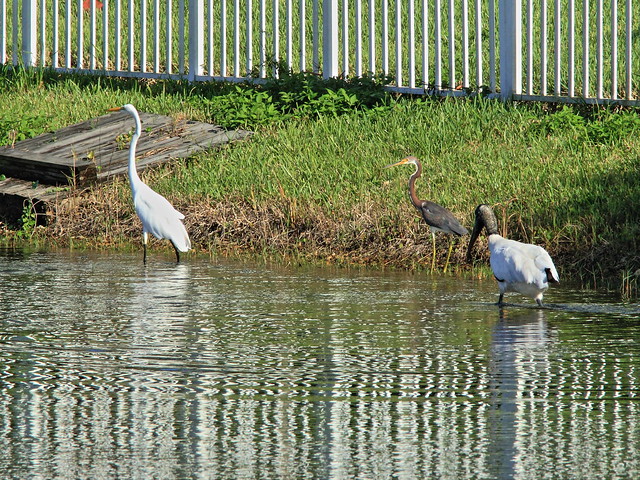
...until once again they relocated to the edge of the lake immediately in back of our home. They were so close that I could not fit them all in a single frame with my 420 mm f/5.6 telephoto lens system, but I got some good shots when they passed along in front of me as I stood on the patio. 

The Tricolored Heron led the charge excitedly, the feathers on its head erect.

Tricolored Heron immature 3-20130912

Tricolored Heron immature 6-20130912

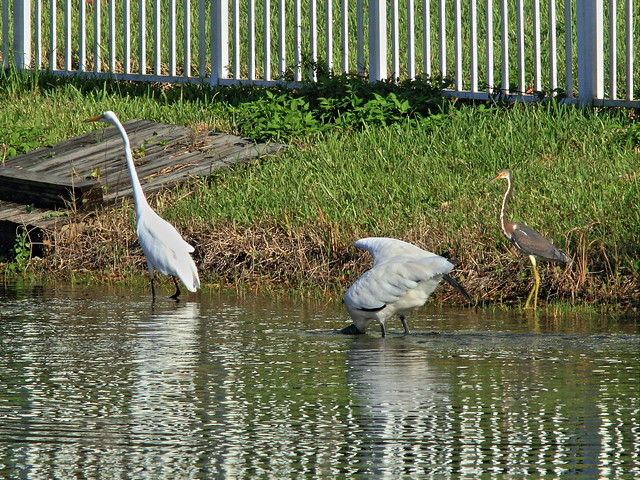
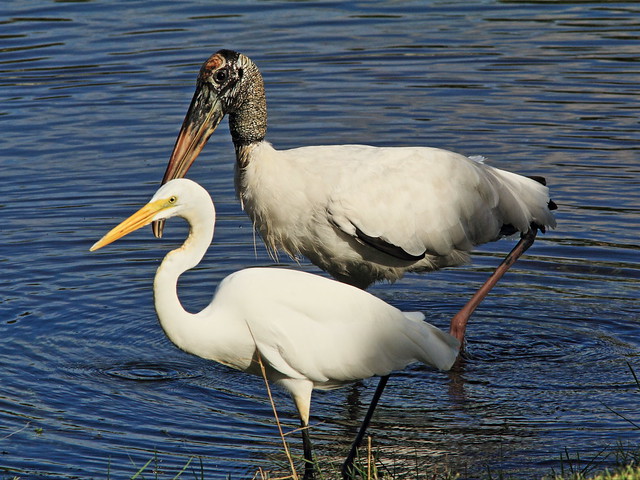
The stork and egret were close behind.

Great Egret and Wood Stork 3-20140912

Great Egret and Wood Stork 20140912

The egret watched, ready to pounce on any fish that appeared as the stork shaded the surface and stirred the water.

Great Egret and Wood Stork 2-20140912

As before, the egret sighted another school back where they had previously been fishing, and the trio flew over there. 

Stork and herons again relocate 3-20140912

I believe this is an example of commensalism, with all three species deriving mutual benefit of the others-- the sharp vision of the herons helped find the prey and the stork stirred the water with its foot as it probed, driving the fish out of hiding and thus aiding the herons. 

If video does not appear in the space below, TRY THIS LINK


Saturday, April 12, 2014

This week's Crops & Clips: Northern Cardinal

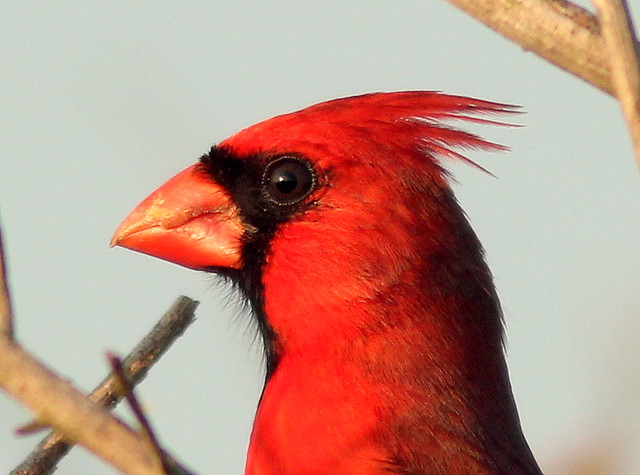
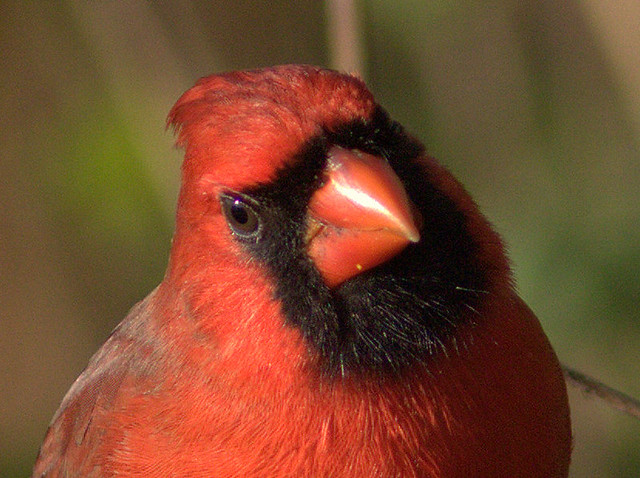
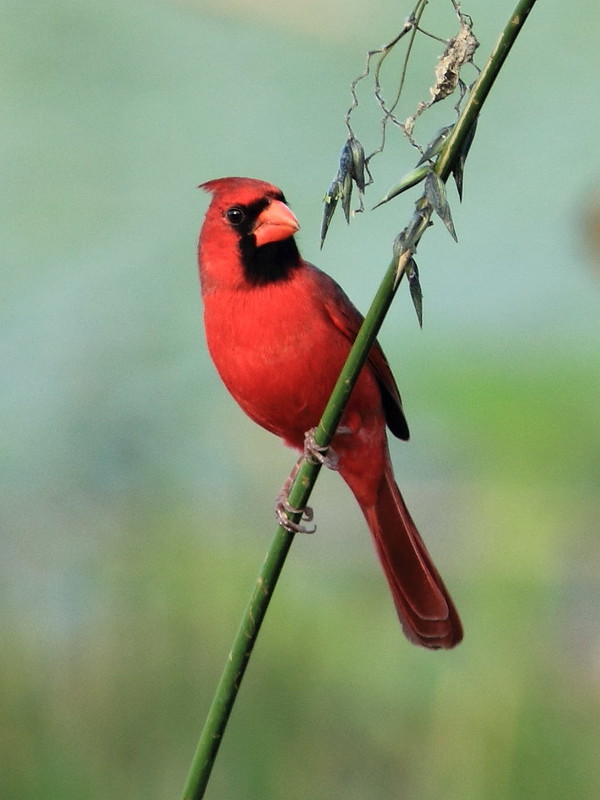
It is impossible to pass by a cardinal without taking a second look, or a photo (usually many) if camera is in hand. As a child I remember my grandmother called it a "Redbird," and that name stuck until I got my first bird book. I didn't know it, but way back then the New York City area was only beginning to celebrate the return of this species. During the first quarter of the 20th Century it had inexplicably withdrawn from the northern limits of its range. 

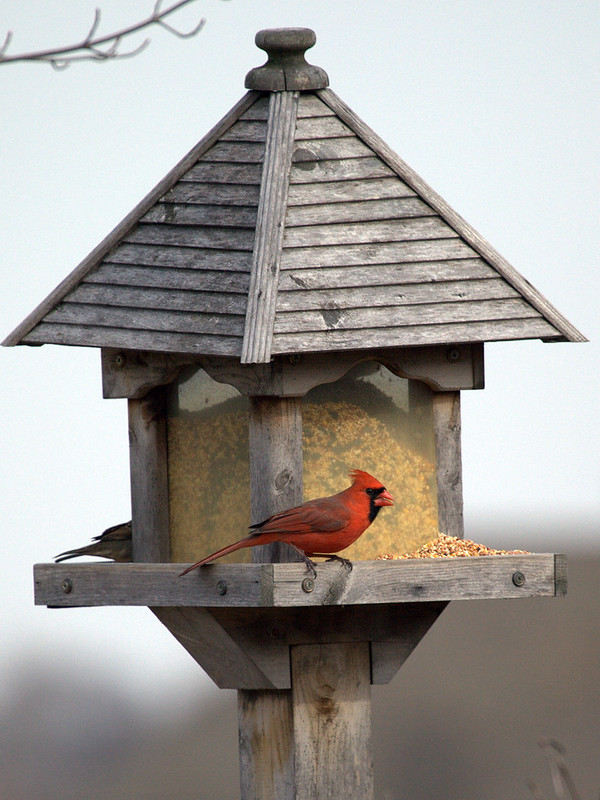
Northern Cardinal 20110330

Ludlow Griscom wrote, in 1923 (Birds of the New York City Region, Amer. Mus. Nat. Hist., NY), that the "Eastern Cardinal" had been "extirpated" from the area. Its return to my home turf in New Jersey during the 1930s and 40s was variously attributed to milder winters and the increasing number of bird feeding stations. 

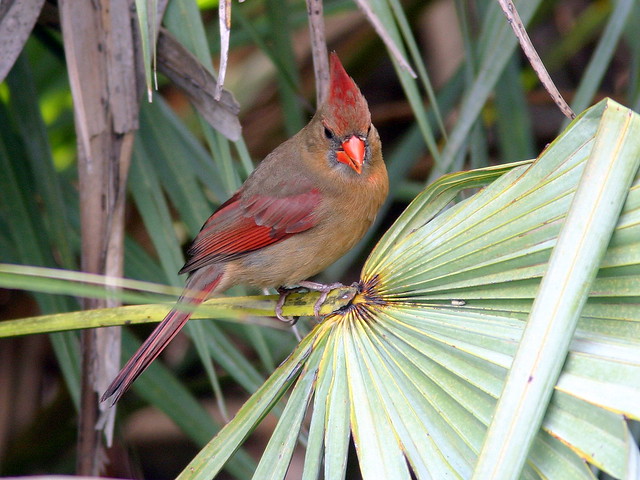
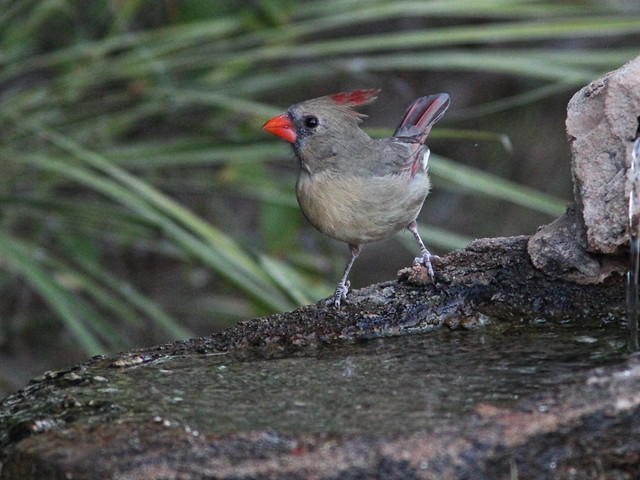
Female Northern Cardinal 20091228

I was gifted with a copy of Allan Cruickshank's 1942 edition of Birds Around New York City, which became my point of reference when I found an unusual bird or one during an unexpected time of year. Cruickshank described the cardinal as "...slowly but steadily re-establishing itself northward... Like all permanent residents which reach the northern limits of its range here, the Cardinal is subject to severe winter killings." 

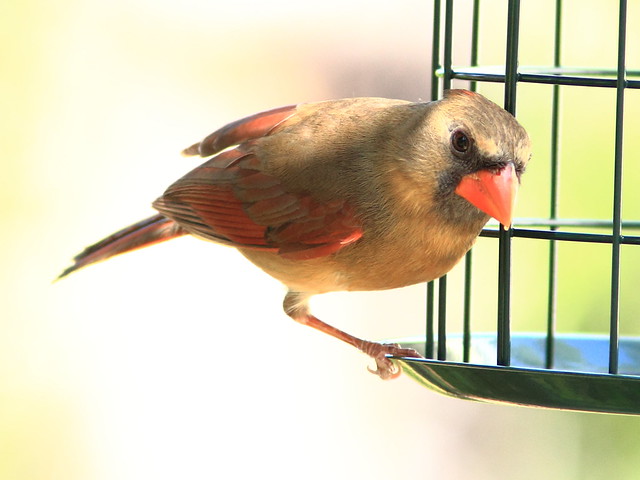
Northern Cardinal close 20111104

Later, John Bull would write: "The increase and spread of the Cardinal in the New York City region, as well as throughout most of the northeast, particularly since the mid-1940s, and more especially in the 1950s, has been positively phenomenal. Few, if any, species have made such gains" (Birds of the New York Area, 1962). Since that time we have seen extraordinary range expansions of other bird species, for example the House Finch, Cattle Egret, Boat-tailed Grackle, White-winged Dove, Eurasian Collard-Dove and the steady northward shift of the breeding grounds of many native land birds.

Northern Cardinal female portrait 20131031

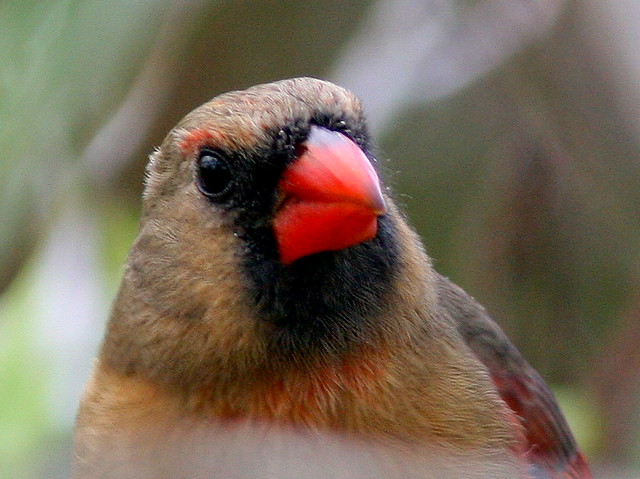
In the above portraits I have provided equal space for both male and female Northern Cardinals, for if one captivates us with color, the other subdues us with softness.

Northern Cardinal 2-20121226


Female Northern Cardinal 20090225

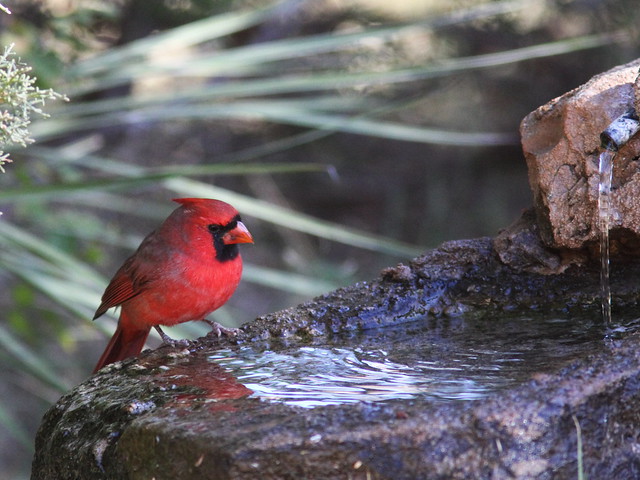
Cardinals may be North America's most welcome visitors to water features and back yard feeders.

 Northern Cardinal 20131102

Northern Cardinal female 2-20131102

Northern Cardinal 20130218

Northern Cardinal 20130310

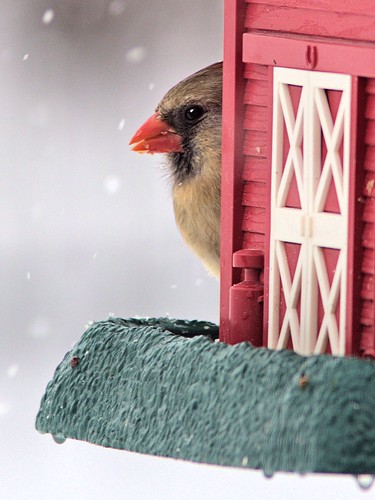
Because I took up photography after moving to the sunny South, I suffer a notable absence of images of red cardinals on white snow, a magnificent combination. However, if you look closely at this coy female peering around our daughter's feeder in Illinois, you may catch a few snowflakes.

Northern Cardinal 20130305

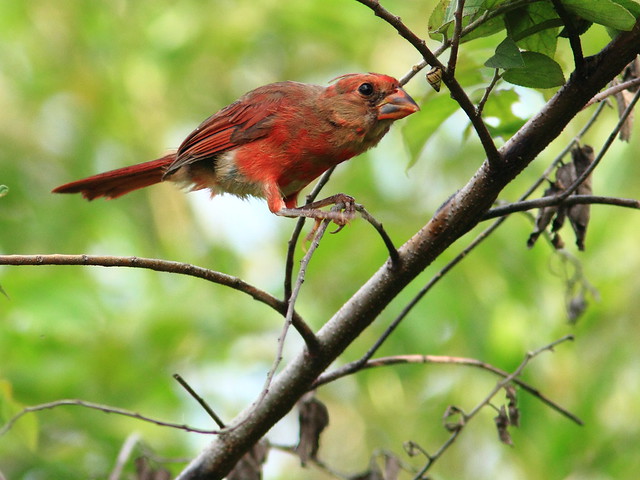
In the interest of fairness, I should also embarrass this adolescent male before he has time to dress in his finery. Note the dark bill which will become fully red as an adult. 

Northern Cardinal 2-20120808

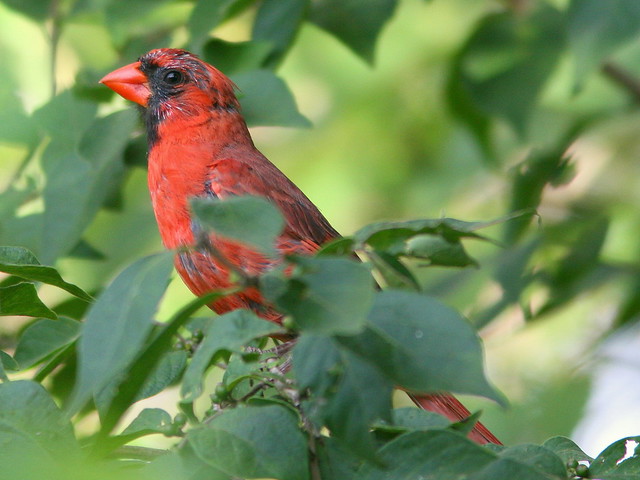
An adult male in molt can be a sorry sight. I can't blame him for hiding behind a leaf!


Motley Cardinal 20100826

Saturday, March 15, 2014

Sapsucker wars

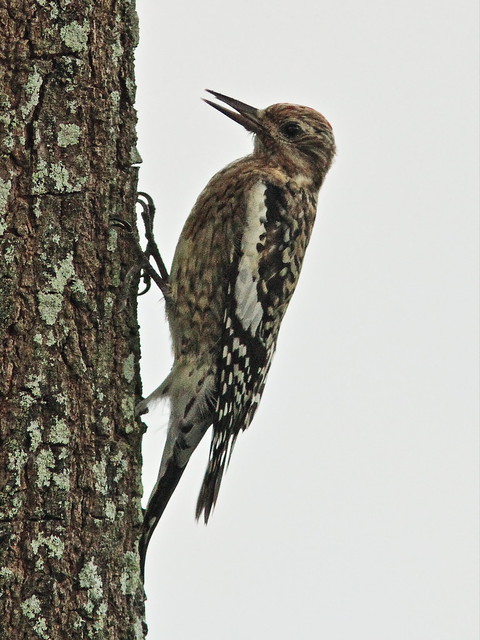
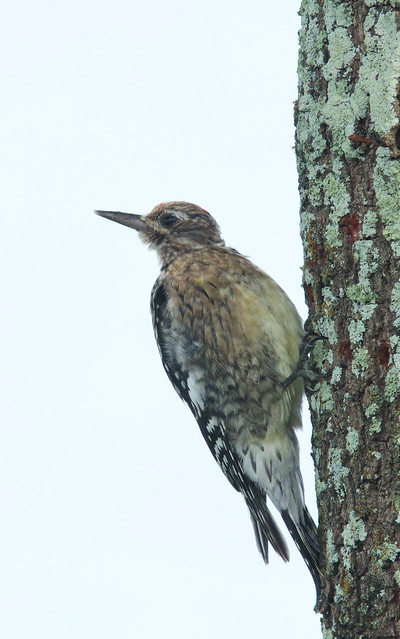
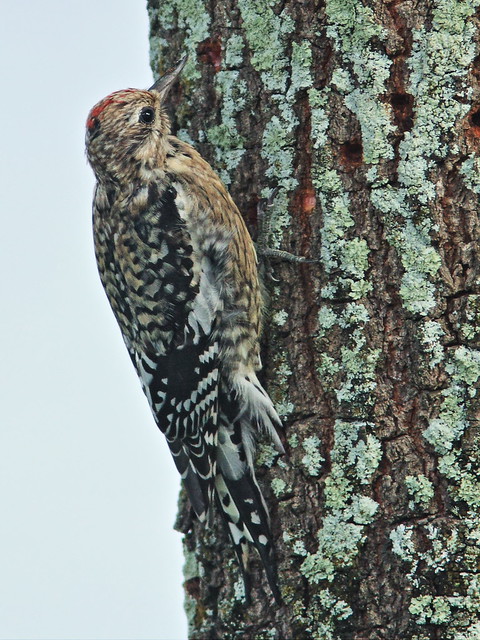
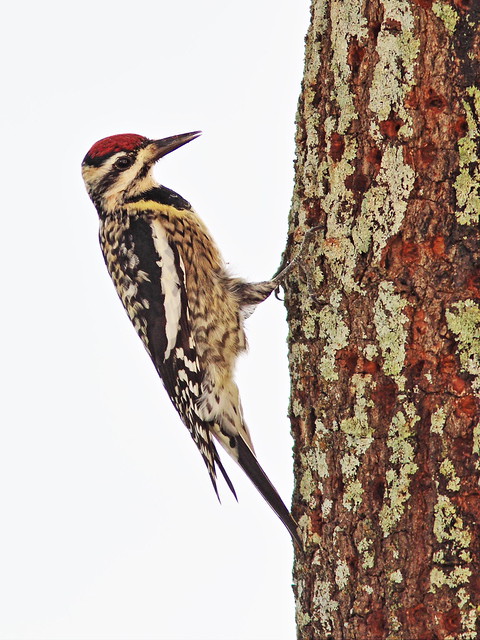
Just before Christmas, 2013 we first noticed this immature Yellow-bellied Sapsucker on an East Indies Mahogany tree in our back yard. Busily drilling a neat line of holes in the bark, it was instantly recognizable as a woodpecker by its shape and habits, and as a sapsucker by the longitudinal white line  along its wings, the "sapsucker stripe." 

I regarded its appearance as an opportunity to observe the sapsucker's plumage transition into that of a full adult. This happened over the next 10 weeks, but we also gained insights about its habits and its fighting nature when it came to squabbles over rights to its favorite tree. We did not expect to become directly involved in a confrontation with this little creature, but eventually love turned to hate and a life was at stake.

These photos taken December 24, 2013, which showed a hint of red on the bird's forehead and a lack of any red feathers on its throat, suggested that it was a female.

Yellow-bellied Sapsucker 4-20131224

Yellow-bellied Sapsucker 4-20131225

The next day (December 25) I was able to better document the red area on its crown. The large number of sap wells on the tree suggested that it had gone unnoticed for several days.

Yellow-bellied Sapsucker 3-20131225

The sapsucker stayed with us for an extended period. It visited daily, sometimes appearing before sunrise and tarrying until after sunset. It often was present for several hours each day, busily drilling holes, drinking the sap and eating the insects it attracted. We watched as its plumage gradually matured. 

On January 13, 2014 the red area was a bit more noticeable.

Yellow-bellied Sapsucker 2-20140113   

According to experts, the plumage change in this species is very gradual and often not complete before it migrates back to breeding grounds to the north. Yet, only five days later, on January 18, I thought it had undergone a rapid and dramatic transformation.

Yellow-bellied Sapsucker adult female2-20140128

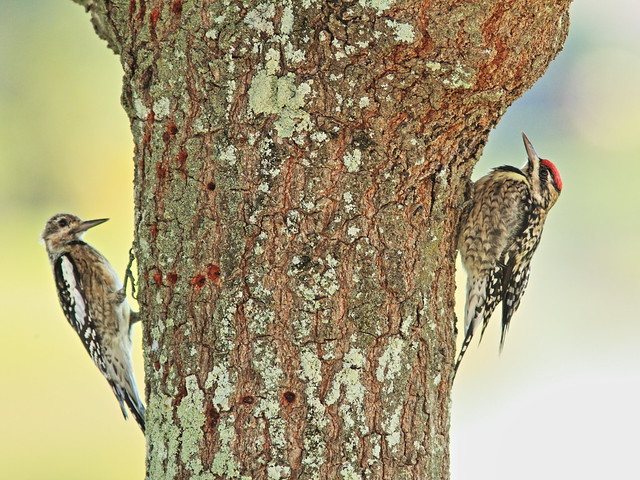
However, I was wrong, for a moment later I noticed that there were TWO sapsuckers on the tree, the adult female pictured above as well as to the right in the photo below, and our familiar juvenile bird.

Yellow-bellied Sapsuckers 20140128

The adult sidled up beside the youngster, which I took as a friendly gesture, but before I could raise my camera they locked in a ferocious battle. Both fell to the ground, out of sight behind a hedge. Moments later, the adult bird flew away, apparently defeated by the juvenile.

The adult bird showed up again on February 2, appearing very alert and anxious that the rightful owner of the sap tree might show up. Although the second bird did return briefly a couple of times, we never saw both together after that.

Yellow-bellied Sapsucker adult female 20140201

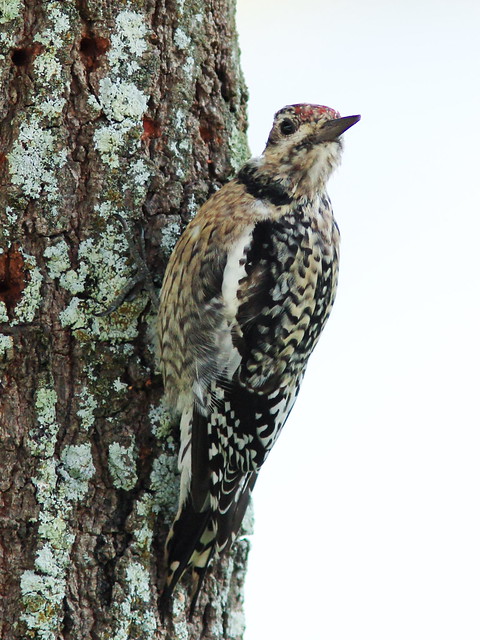
The young bird resumed its peaceful routine, tapping holes and feeding on our tree. On February 9, 2014 she had developed a black "bib." and her facial markings were more distinct. The red area had enlarged, covering the entire top of her head.

Yellow-bellied Sapsucker 20140209

The bird was almost invisible when foraging with her back to us. No wonder we had not noticed her earlier. Here she is on February 16, 2014.

Yellow-bellied Sapsucker 3-20140216

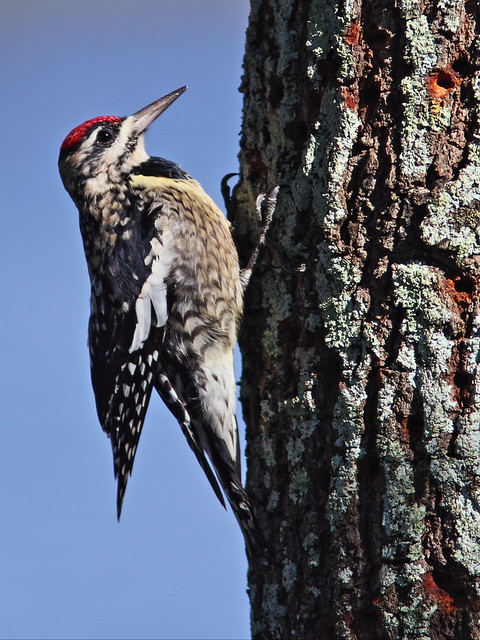
On the morning of February 23 the adult reappeared briefly, again looking around all the time as if in fear of being discovered. This time I had my best photo opportunity. Because I did not want to scare the birds, most of my previous shots were taken through the back window of our home. For this one, I sneaked out the front door and stole around the side of the house with the sun at my back.

Yellow-bellied Sapsucker adult female 20140223

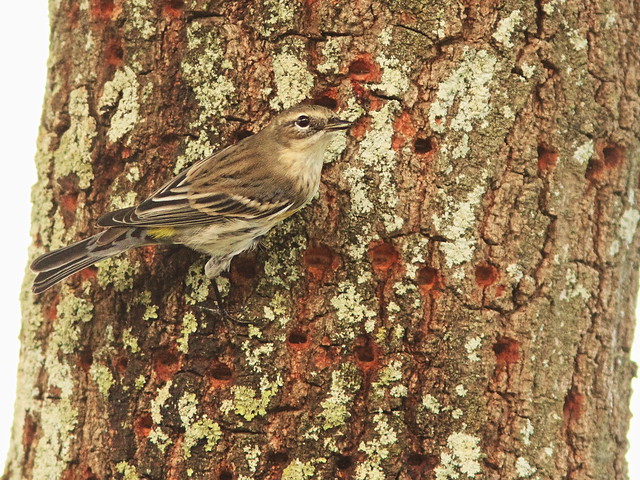
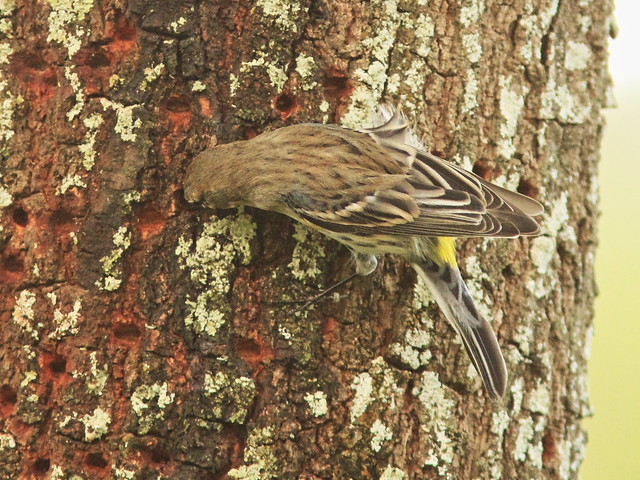
Later that day, the immature sapsucker resumed an interesting series of encounters with a Yellow-rumped Warbler that was intent on stealing from its larder. The warbler often perched on a plant hanger pole, waiting for the sapsucker to disappear on the other side of the trunk.

Yellow-rumped Warbler in yard 2-20140219

As quickly as the warbler landed, the woodpecker chased it away. It rarely had time to explore one of the sap holes.

Yellow-rumped Warbler sap-stealer 2-20140223

Yellow-rumped Warbler sap-stealer 3-20140223

The chase went on for hours. The sapsucker might fly away but return in a flash as soon as the warbler perched on the coveted tree. They never came to blows; the warbler was much too quick.

By February 28 her crown was almost as extensive as that of the adult, and facial markings were more distinct.


Yellow-bellied Sapsucker 20140228

Yellow-bellied Sapsucker 2-20140228

Mary Lou expressed concern about the damage that the sapsucker was inflicting. Based upon my cursory research, I reassured her that we would be dead and gone before the bird could do serious harm. We continued to enjoy its presence. 

Under local laws, each new home must have at least one native tree. Our mahogany qualified as such, and we were very fond of its symmetrical spread. Our deck faces east, and the tree casts welcome morning shade. 

Sapsuckers do not "suck" sap , but their brushy tongues are specialized to lap it up. They also eat insects attracted to the sap, and I was surprised to learn that about a quarter of their stomach contents consist of tree tissues extracted from under the bark

They drill holes through the bark into the vascular layers that transport water and nutrients. Xylem, just under the bark, circulates water up from the roots. Phloem lies next to the wood and carries nutrients manufactured by the leaves to those parts of the tree that are actively growing. It mostly flows down to the roots, but also redirects nutrients to any part of the tree that requires energy, such as new buds, flowers and fruit. Between the xylem and phloem is a multipotential layer of cambium, a permeable membrane which produces the cells that make up the two vascular layers and regulates movement of water between them.  

Sapsucker damage to Mahogany 2-20140228

Most of the literature about sapaucker tree preferences focuses upon the northern areas where the birds breed. They are known to attack over 1,000 tree species, but were said to favor birch, maple and fruit trees. An Internet search revealed that a western species (the Red-breasted Sapsucker) caused extensive damage to Curlleaf Mountain-Mahogany. In the Florida Everglades, the West Indies Mahogany is a frequent host. We noticed that the northern side of our tree was turning yellow and the leaves were falling off. The main branch that supports this area was most densly riddles with sap wells.

Sapsucker damage 6-20140228

Thus began our war against the sapsucker. We started with water pistols and escalated to streaming a jet from our garden hose, but the sapsucker either just moved higher up the tree or flew to an adjacent mango tree and returned to the mahogany as soon as we moved away. We draped the trunk with canvas, but the bird just moved its activities to areas above and below the fabric.

Sapsucker tree with drape 20140302

Although the bird should be returning north within a few weeks, we did not want any further damage, so we resorted to using a sticky substance which deters birds from roosting. So far it has worked. The sapsucker should be returning north very soon.