Showing posts with label Belted Kingfisher. Show all posts

Thursday, August 19, 2021

A quiet wet week with few butterflies

In early August, morning rain and some necessary appointments have limited and shortened my excursions into the Wounded Wetlands. Predictably, bird counts were low, averaging about 15 common species. We also escaped dual threats from tropical storms Fred and Grace. 

Most photos were taken in bad light due to cloud cover or very early observations.

This Belted Kingfisher was a surprise on August 5, the first County record for the fall migratory season. 


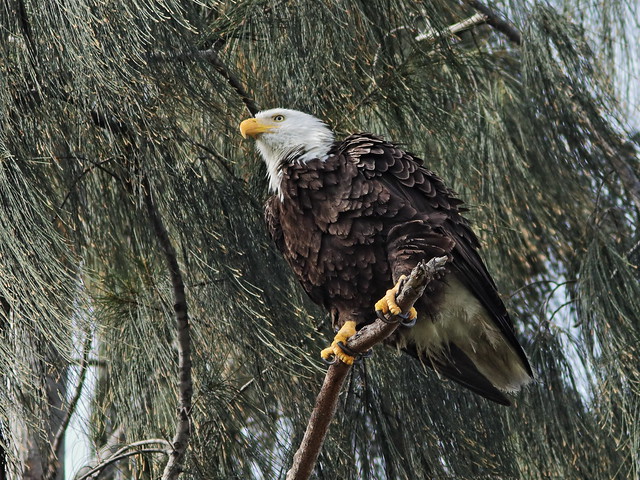
An adult Bald Eagle provided me with a distant early morning view:

In one frame it ventured into full sunlight:

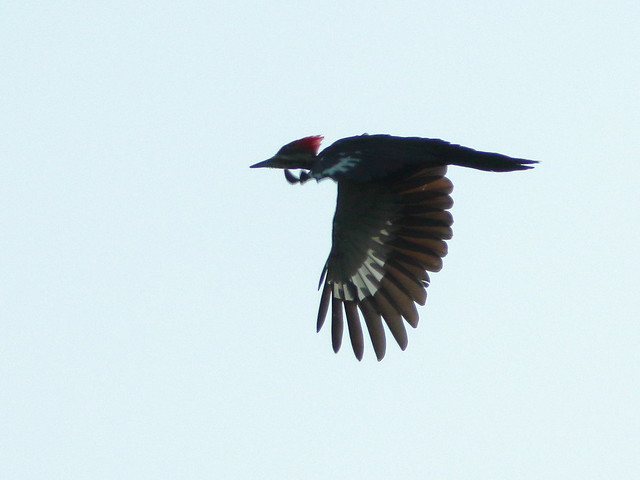
These pre-dawn fly-over shots of a Pileated Woodpecker barely revealed its red crest:

Some mornings I returned with no images at all, so I must reach back a few weeks for some photos not shared in earlier posts:

On August 2, a Great Egret settled into the grass along the path, probably hoping to capture insects and lizards:


The Northern Cardinals were reclusive and not singing, but a juvenile male peered out at me on August 5: 

A Mourning Dove foraged on the gravel track:

A Great Egret rested in a treetop:

I obtained a better flight shot of a female Pileated Woodpecker back in July:

Loggerhead Shrike on July 19:

Our local Wounded Wetlands are bordered by residential properties. I fear that insecticides are having an adverse effect upon butterfly populations. Many residents are utilizing automated  backyard "mosquito misting systems." They dispense aerosols into the air "a few times per day" around the clock. 

Advertisers of these multiple continuous dispersion devices emphasize the dangers of insects in Florida and push them as effective in preventing insect-borne diseases. Most claim to use only pyrethrin, touted as a "natural" or "organic" product derived from chrysanthemums. While non-toxic to humans and pets, pyrethrins can be deadly to bees, butterflies, caterpillars and other insects which commonly visit residential gardens. Pyrethrins are relatively safe when applied to individual plants, but it is also used as an aerosol to "knock down" flying insects. 

Alone, pyrethrins are not very potent when dispersed in this manner. To make them more effective they may be mixed with other ingredients to increase effectiveness. For example, a "pyrethrin" aerosol may contain piperonyl butoxide (PBO), a toxic non-organic ingredient which retards the breakdown of pyrethrins. Some mosquito control systems advertise that they utilize innocent-sounding combinations of natural oils and unspecified EPA-approved control products. (Then there is the fact that many home and residential insecticides contain neonicotinoids... but that is another story. End of rant)    

Butterflies have been unusually scarce in numbers and variety. This is a Zebra longwing, the State Butterfly of Florida:

White Peacock:

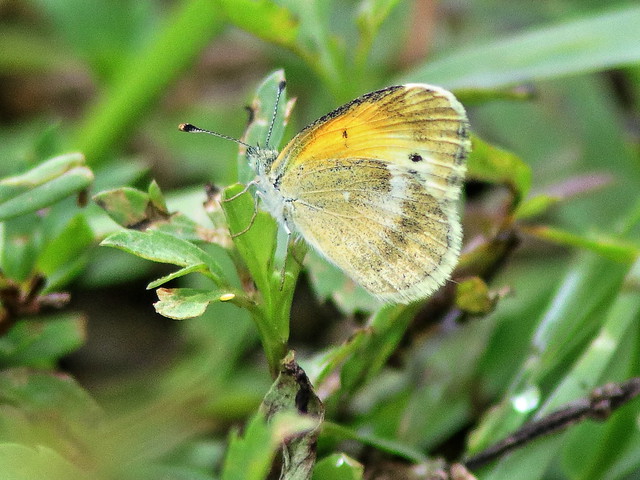
A tiny Dainty Sulphur:
This Orange-barred Sulphur (Phoebis philea) is a very large tropical species with a wingspan of 2 3/4 - 3 1/2 inches (7.0--8.9 cm). It is fairly common in south Florida, but its habits of flying erratically and usually high in the trees makes it difficult to identify and photograph. This was my first image of one from a distance, visiting a Firebush (Hamelia patens), heavily cropped and over-exposed:

Often, before sunrise, I stop on a peninsula which thrusts out into the lake, listening for owls and nightjars and watching the morning light play over the clouds. It is interesting to see how the rising sun illuminates the clouds as it moves up towards the horizon. These two photos of the same clouds were taken 5 minutes apart, just before and after sunrise on August 11:


= = =  = = =  = = = =  = = = = =

Linking to:


Nature Thursday

Skywatch Friday

Weekend Reflections

Saturday's Critters

BirdD'Pot

Camera Critters

All Seasons

Wordless Wednesday (on Tuesday)

Natasha Musing

Our World Tuesday

________________________________________________

Please visit the links to all these posts to see some excellent photos on display
________________________________________________

Thursday, March 25, 2021

A morning visit to Chapel Trail Preserve

At least once a week I try to visit Chapel Trail Nature Preserve, a City park in nearby Pembroke Pines. In previous years I led a public monthly wetlands walk during the cooler half of the year (September - March). Thanks to COVID-19 all the walks were canceled in the fall of 2020 and early 2021. 

For a time the park itself was closed, but in recent months restrictions have been eased and visitors are encouraged to wear masks and practice social distancing. 

On March 11 my visit was shortened by an approaching rain storm. Under menacing clouds I snapped a few shots of American Coots...

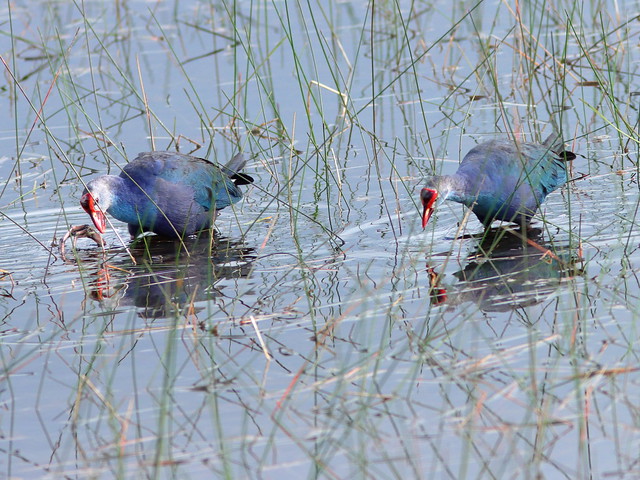
...and Gray-headed Swamphens....

...before heavy rain arrived and I sought shelter in my car:: 

As the sky began clearing I decided to check the Bald Eagle nest, hoping to see the eaglet(s) which hatched about a week earlier. I found both members of the pair on the nest. The female (Jewel) was sitting high and the male (Pride) appeared to be tending or feeding a chick, but they were out of sight

Pride flew off the nest to roost nearby:


The skies darkened and ended the morning's bird quest. 

My next visit to Chapel Trail, shortly after sunrise on March 18, was more productive. I was the first visitor-- almost! A Raccoon left tracks in the heavy dew which covered the boardwalk:

A Purple Gallinule was harvesting the spent flowerheads of the Spatterdock (Yellow Pond Lily). The developing seeds of this plant are one of the gallinule's favorite foods:


A distant male Belted Kingfisher kept watch. It will soon be migrating north to its breeding range:


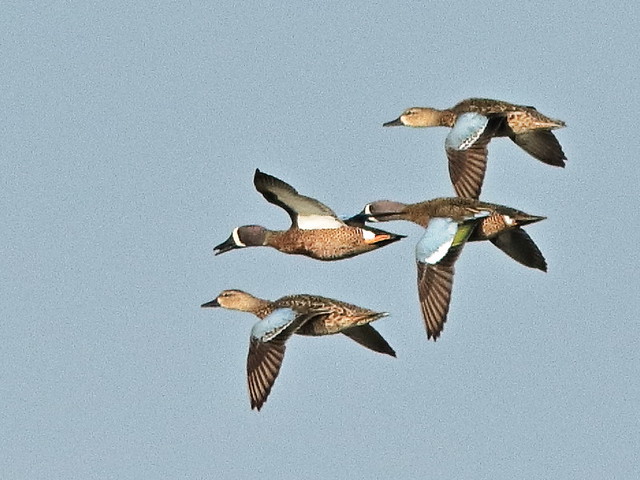
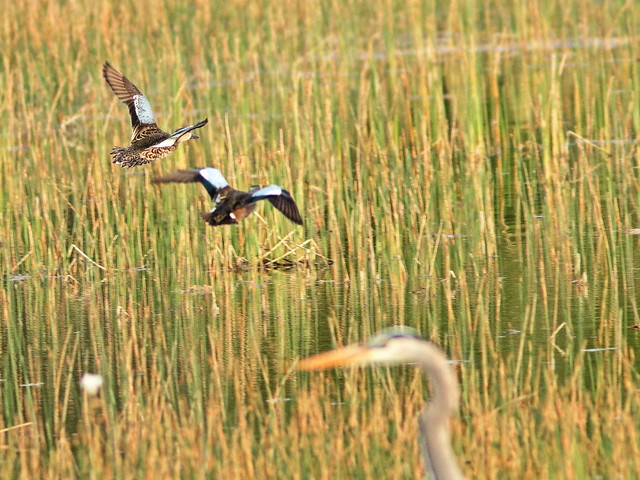
Blue-winged Teal were visiting before their departure to Canada and the the northern tier of the US:

Two pairs circled the wetlands before settling down


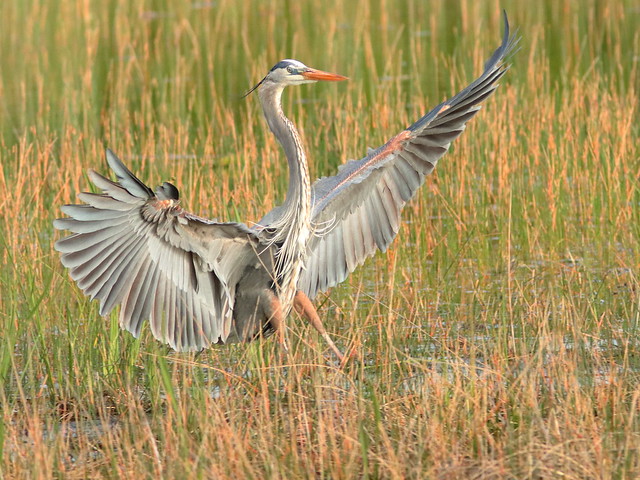
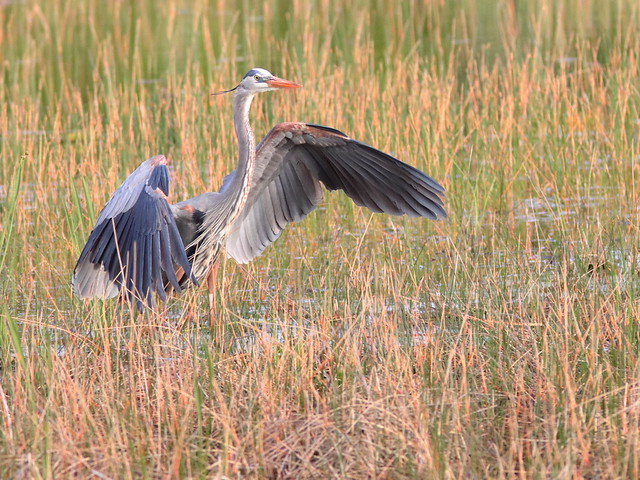
A Great Blue Heron obliged me by posing on the boardwalk before flying off...


...and settling down in the wet prairie, where fresh Spikerush was restoring green color to the landscape:


A male Boat-tailed Grackle looked me over:

The bright blue bill of a Tricolored Heron indicated that it was in breeding condition:


An adult Little Blue Heron flew over, non-stop:

Carnivorous Florida Yellow Bladderwort were blooming. They capture insect larvae and even small fish fry by trapping them underwater in collapsed hollow tubular root-like leaves. When disturbed, the end of the tube snaps open and creates a vacuum. which sucks in the prey:

Blossoms decorated the Wild Magnolia trees:

On our local wetlands in the darkness an hour before sunrise, the fragrant Moonflowers almost glowed. This vine Ipomoea alba, aka Tropical White Morning-Glory, is an annual native to North America and flourishes as a perennial in subtropical climate of south Florida. Unable to photograph them in such poor light, I used flash to see them before the flowers closed up and died after sunrise.

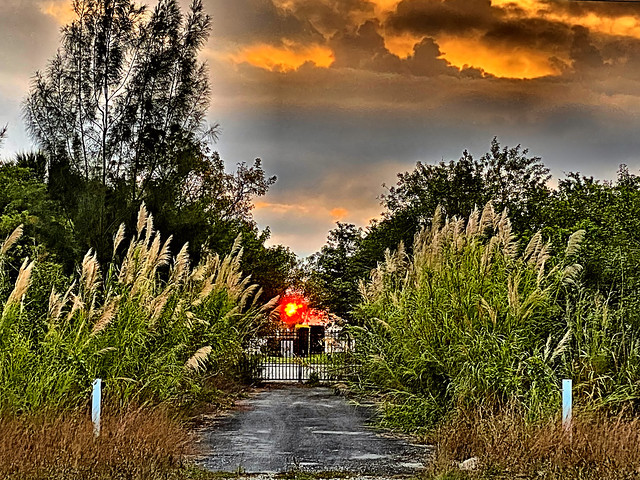
As expected at the vernal equinox, the sun rose directly to the east over the lake, lined up with "Sundial Alley:"


= = =  = = =  = = = =  = = = = =

Linking to:

Garden Affair

Fences Around the World


Skywatch Friday

Weekend Reflections

Saturday's Critters

BirdD'Pot

Camera Critters

All Seasons

Wordless Wednesday (on Tuesday)

Natasha Musing

Our World Tuesday

________________________________________________

Please visit the links to all these posts to see some excellent photos on display
________________________________________________

Thursday, February 18, 2021

Placid lake on a foggy morning

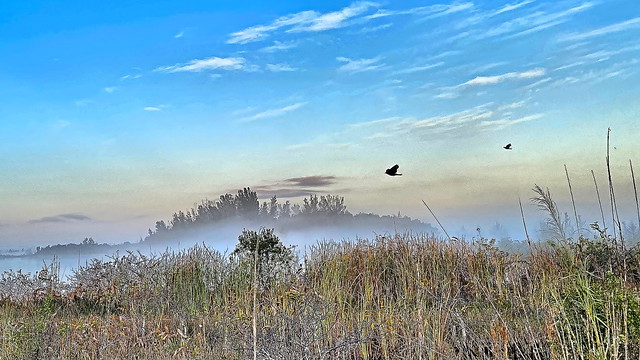
On a still and very humid morning, fog accumulated over the lake as predicted. It peaked just around sunrise, before lifting as the sun's rays penetrated and heated the surface of the water. 

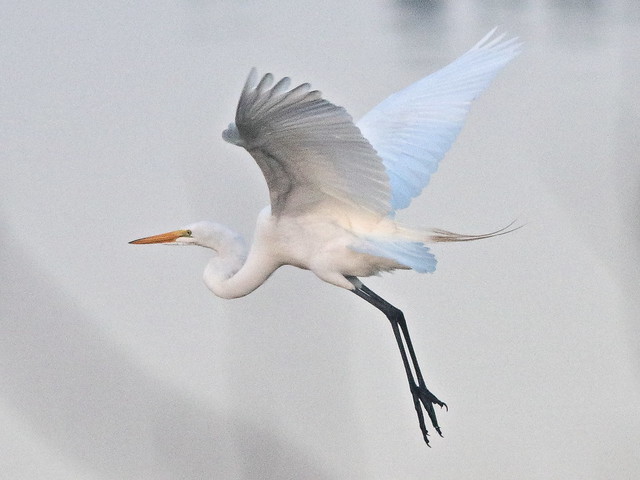
A Great Egret descended, white feathers against white fog,...

...mirrored on the surface:

A Wood Stork arrived...

...and joined the egret:


With bubble-gum pink feet, the stork stirs the water to frighten fish into its beak:


A Mottled Duck looked on...

...and provided my favorite shot of the morning:

Another egret waded in the foggy wet prairie:

A female Belted Kingfisher perched at the edge of the prairie:

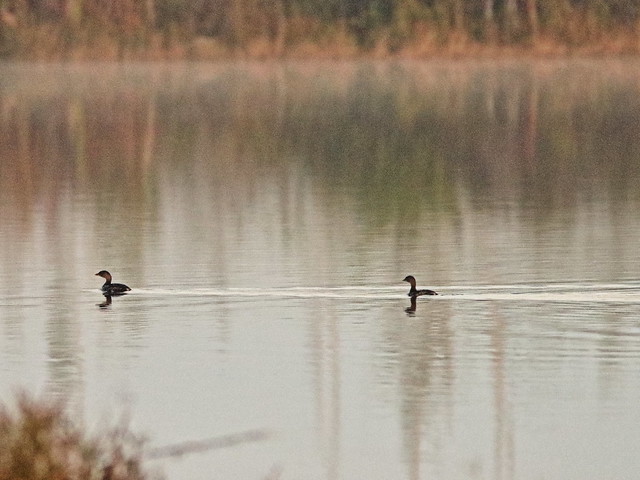
A pair of Pied-billed Grebes carved a wake on the lake's surface:

Before sunrise, the Wood Stork and Great Egret punctuated the landscape:


The Pine Bank was shrouded in fog as sunlight illuminated the foreground:

Moments later, rays of the sun reached the shore of the Pine Bank

Over the wetlands along the canal, fog persisted after sunrise:

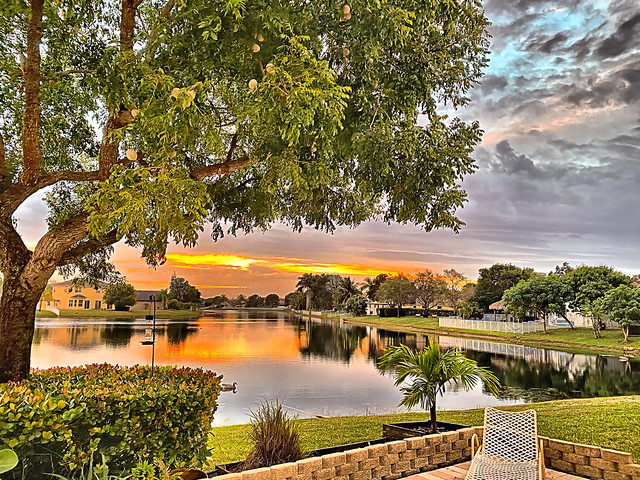
There was no fog to spoil our view of the sunrise from our back yard on February 16th: 


= = =  = = =  = = = =  = = = = =

Linking to:

Nature Thursday

Skywatch Friday

Weekend Reflections

Saturday's Critters

BirdD'Pot

Camera Critters

All Seasons

Wordless Wednesday (on Tuesday)

Natasha Musing

Our World Tuesday

________________________________________________

Please visit the links to all these posts to see some excellent photos on display
________________________________________________