The Common Ground-Dove is an easy species for us to overlook during our morning walks in the Wounded Wetlands. Only about 6 1/2 inches (17 cm) long and drab in appearance, it does not gather in flocks which are so characteristic of other members of its family of pigeons and doves. Instead, it forages quietly in the grass or at the edges of woodlands, flying away low before being approached too closely.
It has a sprightly scientific name, Columbina passerina, which could be danced to a Macarena or a salsa tune and translates as "tiny dove sparrow."

We usually see them in pairs or with one or two of their offspring. Indeed, they are said to mate for life. Its major population is in the tropics, but it ranges into the extreme southern USA, including all of Florida and parts of the other Gulf States, southern California, southwestern Arizona as well as much of Mexico, Central and South America.
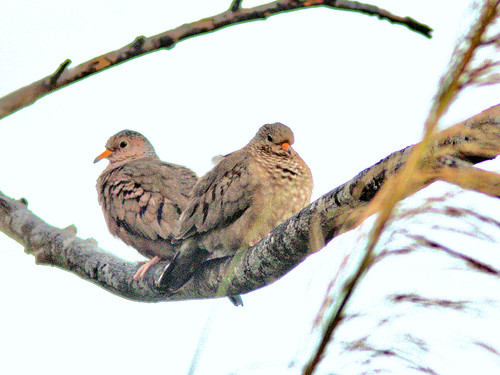


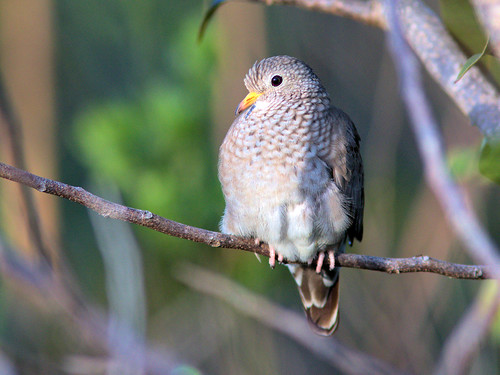
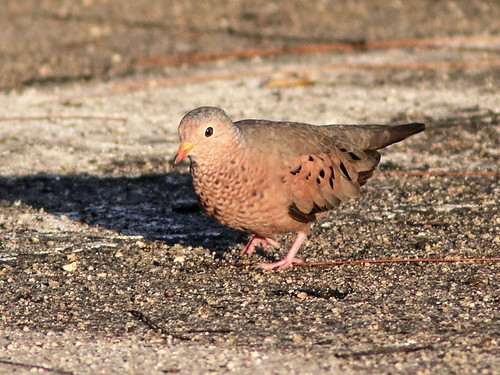
A brown bird with a lighter grayish head, the Common Ground-Dove's plumage has a scaly appearance, especially on its neck, breast and undersides. The similar but slightly larger Ruddy Ground-Dove wanders north of Mexico and sometimes breeds in southwestern US.
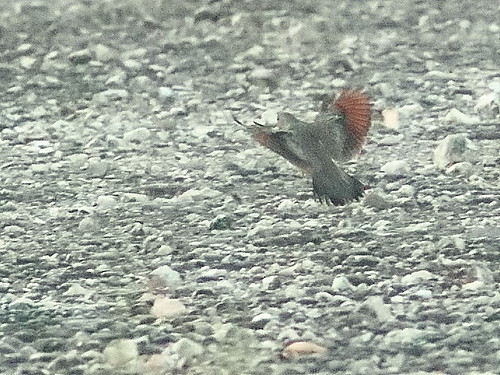
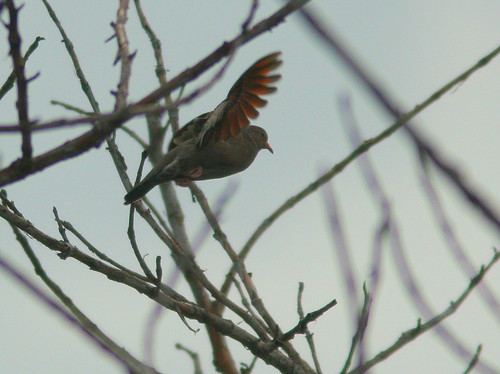
The Common Ground-Dove's song is also unassuming, a repetitive and monotonous soft "woot, woot, woot..." Yet it has a strikingly brilliant plumage feature-- bright reddish brown primary wing feathers and underwing linings, which only show when the bird bursts into flight.
I have only captured a few (very poor) views of a Common Ground-Dove in flight:
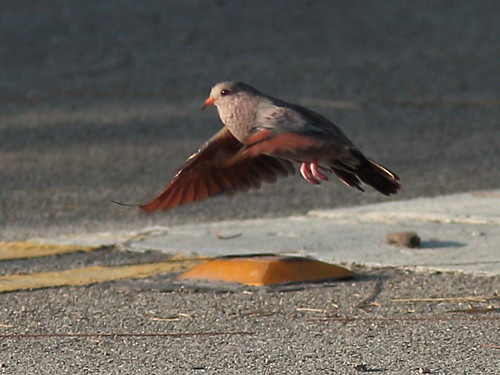


Adult female Common Ground-Dove:
The male is more brightly colored, with pink highlights on its neck, breast and crown, and bluish gray crown and nape of his neck:
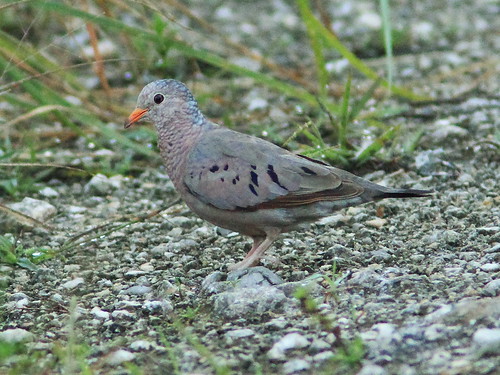
I encountered this male up fairly close and in bright sunlight:
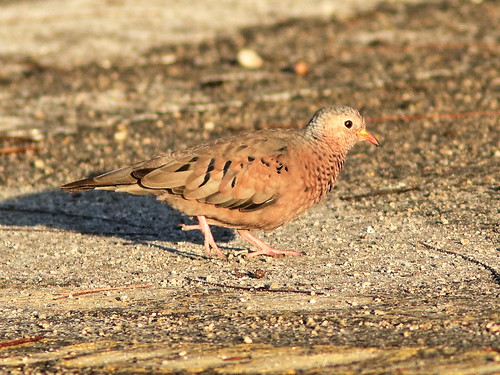
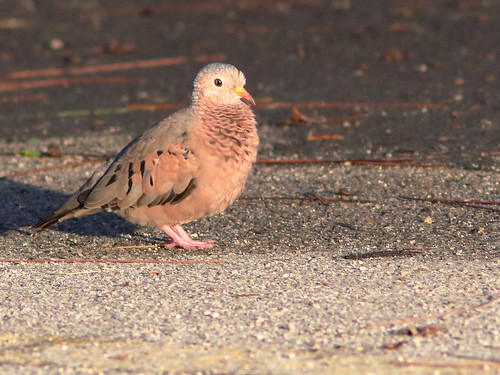
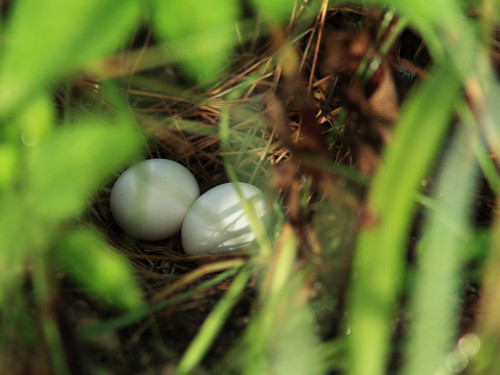
By accident, I discovered an active Common Ground-Dove nest on August 17, 2014, the first ever reported in Broward County. While I was walking along the side of the gravel road, a dove flew up out of the grass just to my side. The flimsy nest contained two white eggs, barely visible the vegetation. (Photos from the roadway with telephoto lens):

This is the female which had been sitting on the nest:

During the next several days I checked the nest without disturbing it and the eggs remained intact. This was the nest on August 22:

However, ten days after I had located the nest, the landscapers came through and mowed all along the side of the road (August 27, 2014):

They left no sign of the nest structure or remains of the eggs:
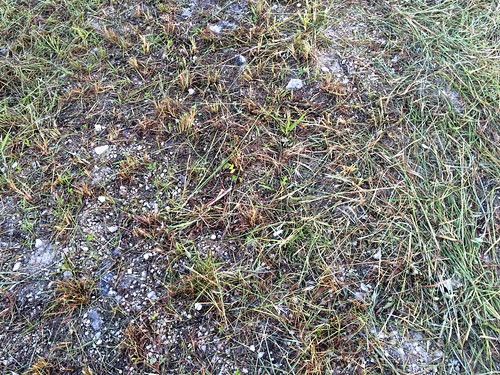
An encouraging sign-- Two years later, on August 19, 2016, a pair was tending to two fledgling young (to the left), along the same roadside weed patch:

This is one of my favorite photos of a Common Ground-Dove. It seems such a peaceful setting:

Trees felled by Hurricane Irma almost two years ago reflect chaotic beauty in the wetlands, now flooded after our area's wettest July ever:
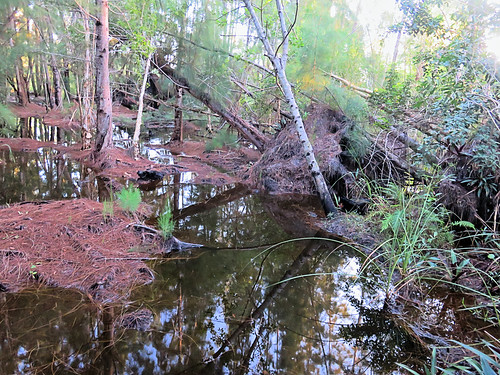
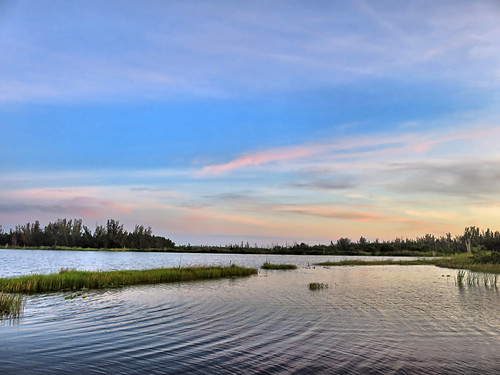
On August 8 it was 80 degrees F (26.6 C) just after sunrise. A westerly breeze, so welcome, stirred the surface of the lake:
An adult Bald Eagle often passes over just around sunrise, flying from the nearby nest tree to forage in the large lake to the southeast:

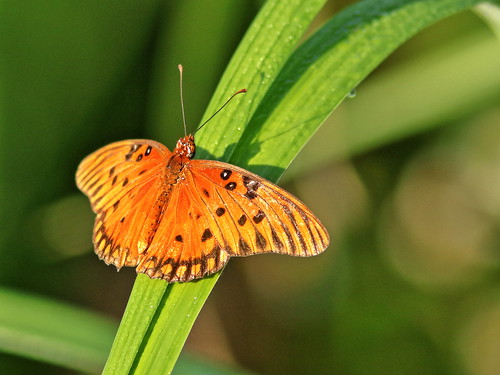
Butterflies are still scarce. I have not seen any Monarchs for several weeks. A Gulf Fritillary rested on a grass stem:
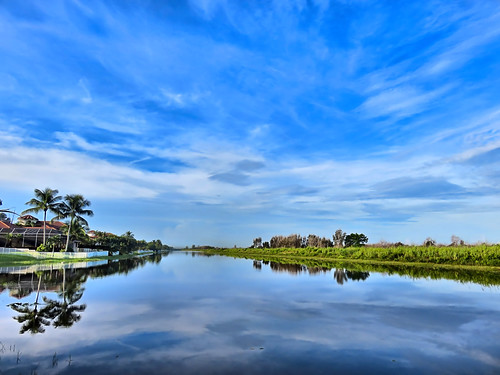
This is the view to the south along the large canal on a fair morning. The Wounded Wetlands are on the right (west) side, opposite "civilization" (August 14):
= = = = = = = = = = = = = = =
Linking to Misty's CAMERA CRITTERS,
Linking to Eileen's SATURDAY'S CRITTERS,
Linking to SKYWATCH FRIDAY by Yogi, Sylvia and Sandy
Linking to WEEKEND REFLECTIONS by James
Linking to BirdD'Pot by Anni
Linking to Our World Tuesday by Lady Fi
Linking to Wild Bird Wednesday by Stewart
Linking to Wordless Wednesday (on Tuesday) by NC Sue
Linking to ALL SEASONS by Jesh
Linking to Fences Around the World by Gosia
________________________________________________
Please visit the links to all these memes to see some excellent photos on display
________________________________________________
We had three cold fronts move through in succession this past week, driving the overnight temperatures into the mid 40's F (7 degees C) with a brisk northerly breeze. Daytime temperatures barely reached the chilly mid-50s F (15 degrees C).
We get out early. Here is the view from our back yard taken at 6:24 AM, 40 minutes before sunrise on December 17, 2017:
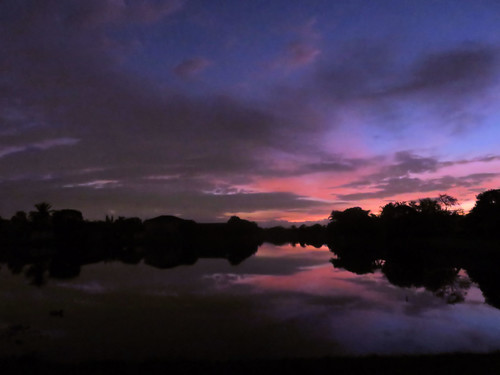
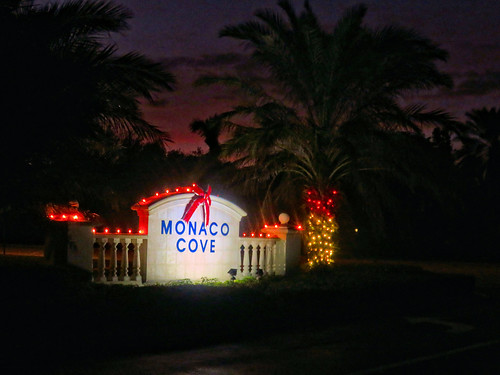
A half hour before sunrise, the sky is just beginning to lighten up behind the entrance gate of our subdivision:
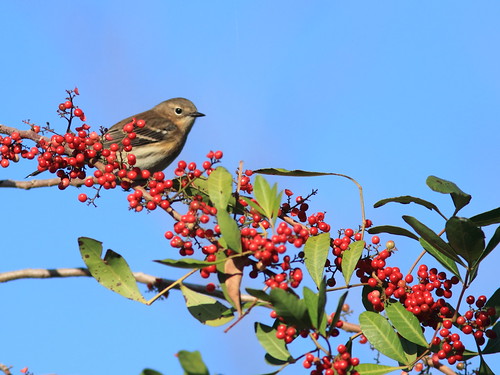
With Christmas and the holiday season upon us, I look back on some of my photos which convey the theme. Nothing rare, but lots of color and seasonal joy. We are in south Florida, so these are not holly berries--
Yellow-rumped Warbler...
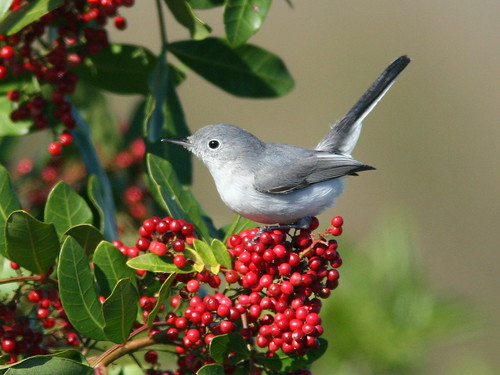
...and Blue-gray Gnatcatcher, on Brazilian Pepper:
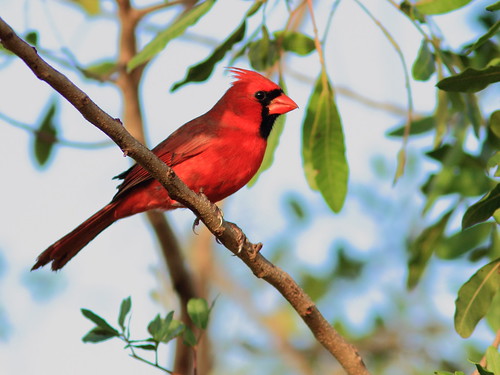
European holiday greeting cards often feature Robins and Turtle Doves. Here in the US, the most popular birds shown on Christmas cards seem to be cardinals and chickadees.
Northern Cardinal:
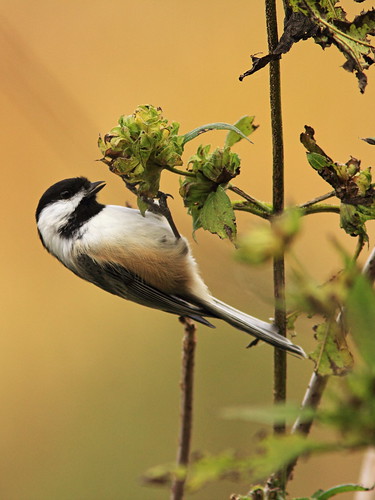
Black-capped Chickadee (taken in Illinois, as it does not range into south Florida):
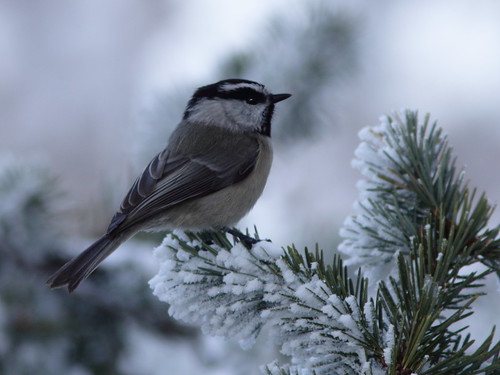
No snow here. This Mountain Chickadee appears in one of my New Mexico photos:
This loving pair of Common Ground-Doves must substitute for Turtle Doves (getting over a lovers' quarrel?):
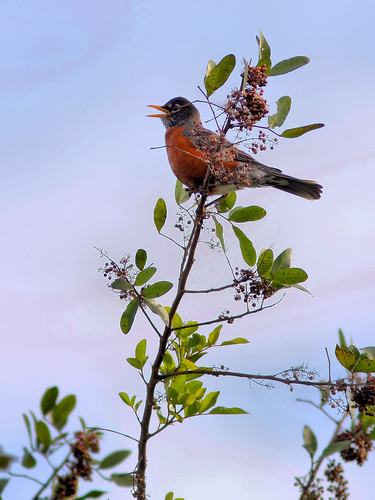
This American Robin, namesake of the unrelated European species, is an uncommon but welcome winter visitor to our local wetlands:
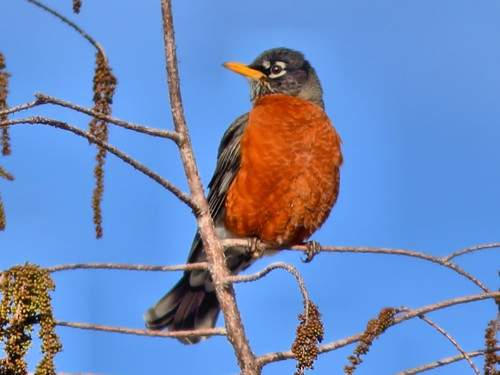
It too was eating the Brazilian Pepper berries:
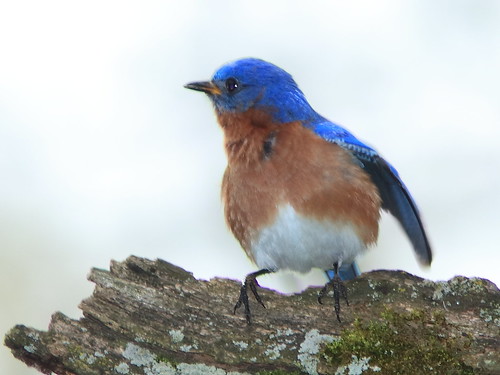
Like our robin, the Eastern Bluebird is a member of the thrush family. Their images often adorn holiday cards. I saw this one in Illinois:
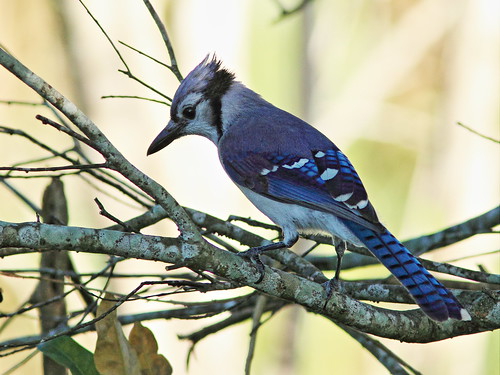
I wish I had photos of a Blue Jay on snow...
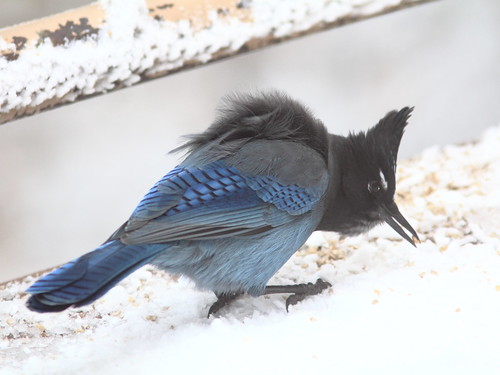
...but I did catch this snow scene, of the closely related Steller's Jay, almost two miles high on Sandia Crest in New Mexico:
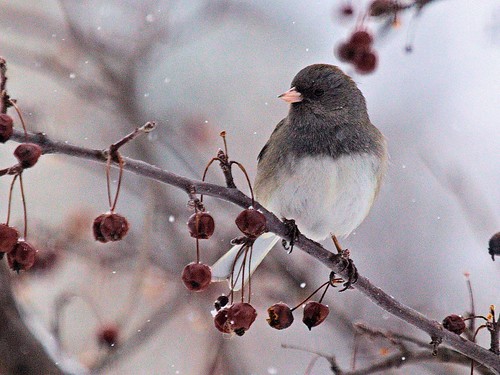
Florida has many "snowbirds" of the people kind, but the Dark-eyed Junco deserves the name. This one was enjoying the snowflakes in our daughter's back yard in Illinois:
I searched my archives for photos taken on Christmas day--
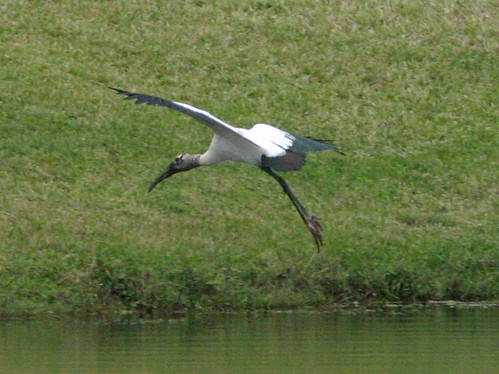
A back yard Wood Stork (2008):
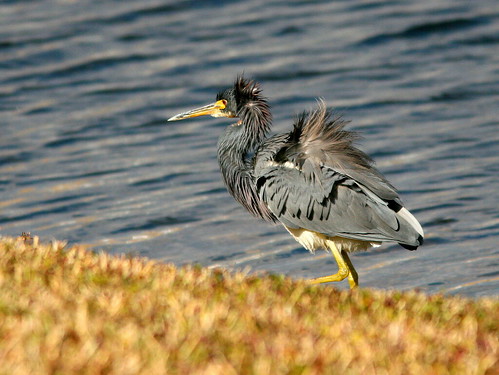
A wind-blown Tricolored Heron on our lawn (2010):
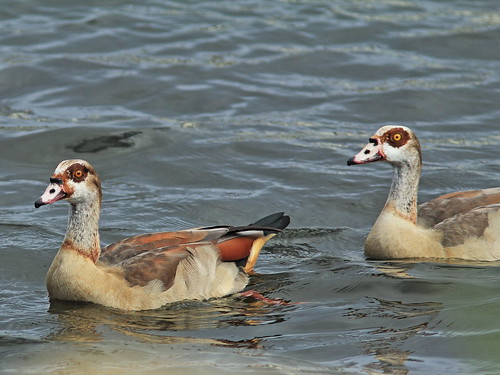
Pair of Egyptian Geese approaching the near shore of our lake (2013)
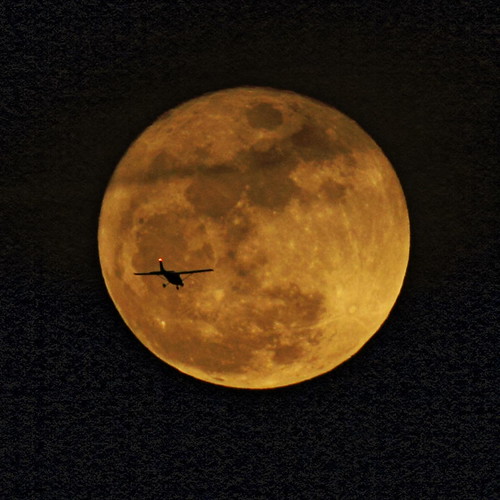
From the back patio, an airplane crossing in front of the full Cold Moon (2015):
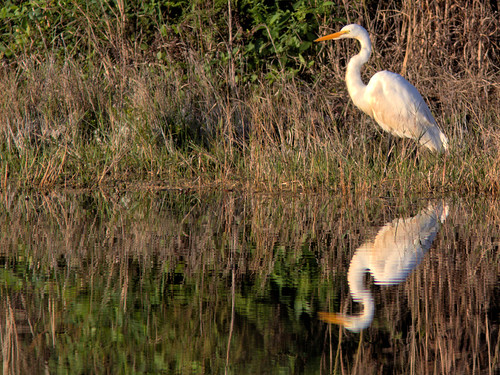
Also on Christmas, 2016, a Great Egret in the local wetlands reflected nicely:
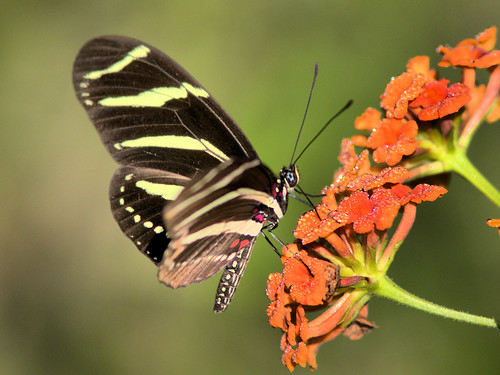
This photo of a Zebra Heliconian was taken on Christmas Day just last year. The butterfly is feasting on Lantana flower nectar. This year, Hurricane Irma struck on September 10, and so altered the habitat that nearly all flower buds and fruits were stripped off the trees and shrubs. This resulted in a serious lack of butterflies, even though the artificial "pruning" later caused a flush of blossoms which peaked in mid-November.
The Lantanas have now gone to fruit and have no flowers at all. Their berries, which normally ripen and persist through much of the winter, are an important food source for wildlife. The same happened to the Trema trees, but the ones which were not blown down have not yet recovered and show no signs of new buds.
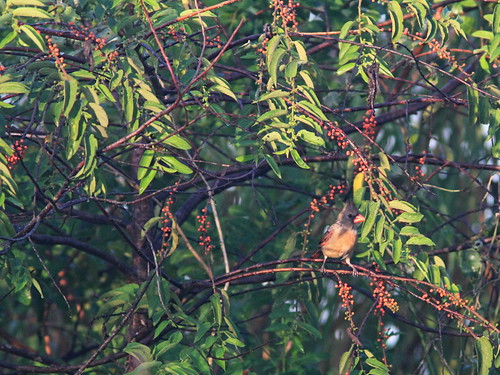
This photo shows a Northern Cardinal on a Trema rich with fruit. (I use it as wallpaper for this blog.) It was taken on September 5, 2016, almost exactly one year before the hurricane struck. Note that new fruit appears and ripens sequentially at the tips of the branches. The shoots continue to grow out and produce new berries all winter. Not this year!
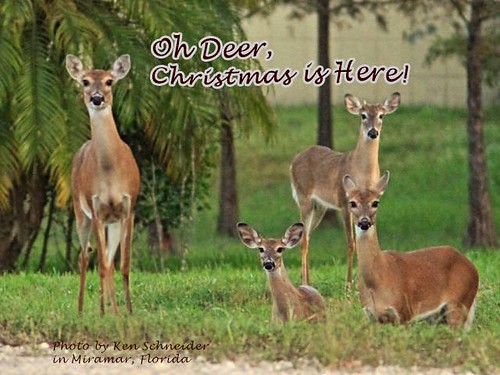
Merry Christmas, Happy Holidays and Happy New Year to all, and thank you for visiting and hosting my blog, which I started back in 2006. A good friend, who has since passed, created this Christmas Card from one of my photos only three years ago:
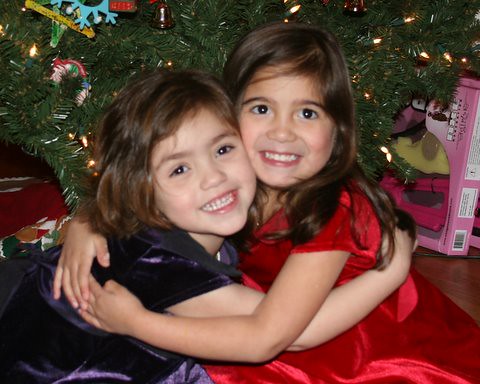
On a happy note, I ran across many Christmas photos of our grandchildren. I thought these two, of our Illinois granddaughters were special (2007):

(2008):
 = = = = = = = = = = = = = = =
Linking to Misty's CAMERA CRITTERS,
Linking to Eileen's SATURDAY'S CRITTERS,
Linking to FENCES AROUND THE WORLD by Gosia
Linking to SKYWATCH FRIDAY by Yogi, Sylvia and Sandy
Linking to WEEKEND REFLECTIONS by James
Linking to BirdD'Pot by Anni
Linking to Wild Bird Wednesday by Stewart
Linking to Wordless Wednesday (on Tuesday) by NC Sue
Linking to ALL SEASONS by Jesh
________________________________________________
Please visit the links to all these memes to see some excellent photos on display