Here is a sampling of some I have encountered in our back yard.
White-winged Doves moved up from Mexico and became popular targets for south Texas hunters in the early 1900s. During the 1980s they were spreading into the southwestern US and Florida. By the turn of the century they had been reported in human-disturbed areas through much of the the US and now have invaded Alaska and much of southern and western Canada.
In our suburban neighborhood they build their flimsy nests in live oaks and other roadside ornamental trees. One of their common calls sounds like "Who cooks for you?"
This is one of my favorite views of this species, taken through the window of our back patio:

A pair were roosting high on a dead tree along the Levee Trail:


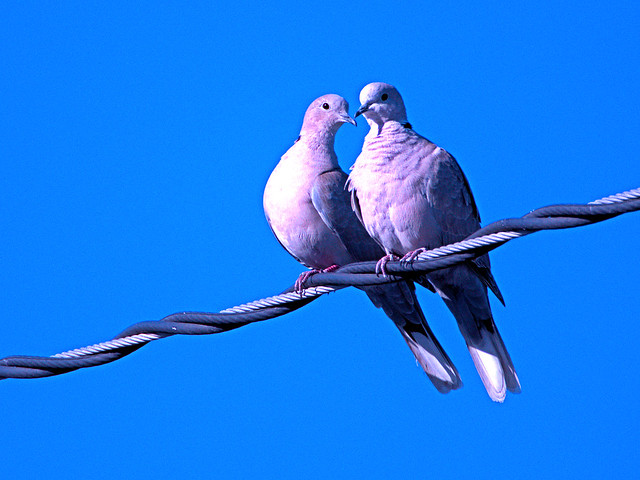
Eurasian Collared-Doves are native to Europe and Asia. They have now spread through most of North America, descendants of about 50 birds which were released in the Bahamas during the 1970s. Favoring populated areas, they also nest in a variety of trees and ornamental shrubs as well as on human structures such as the tops of hurricane shutters and other niches in buildings. Their call seems to answer that of the White-winged species, "You cook too!"
A lovey-dovie pair snuggled up on a power line, while another posed out in the open:


A recent addition to the list of established exotic birds is the Egyptian Goose, a species which probably escaped from aviculturists' collections. Although wild birds were first reported as breeding in Florida in the 1980s, their south Florida population appears to have exploded during the past 10 years. A few were first reported in our (Broward) County in 2006 and their numbers rapidly increased. I first saw them locally in 2011 and this was my first photo, one of a pair flying over the wetlands:

Since then, they have become a common sight in our back yard lake and are breeding locally.


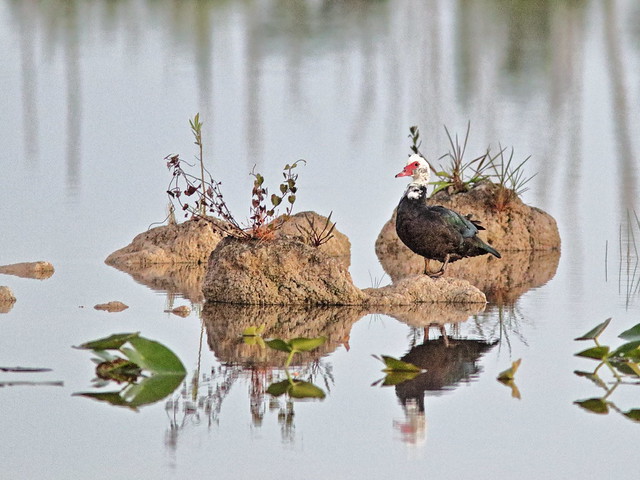
Muscovy Ducks are not closely related to our native ducks but may be closer to the Egyptian Geese (which are not true geese, but relatives of the shelducks, sort of in between geese and ducks).
Muscovy had been domesticated by the indigenous people of South America long before Europeans arrived, and many plumage variations have been selectively bred. They raise large families on our lake:


They fly high and roost on trees and rooftops:

Here, a Muscovy shares a neighbor's roof with an Egyptian Goose:

Although many Muscovy Ducks are dependent upon handouts from residents (a practice which is prohibited by the City), they may also be seen out on the wetlands:
European Starlings have been here so long that one might not think of them as "exotic," yet they are anything but ordinary:


Other backyard exotic fauna include reptiles such as the Green Iguana...

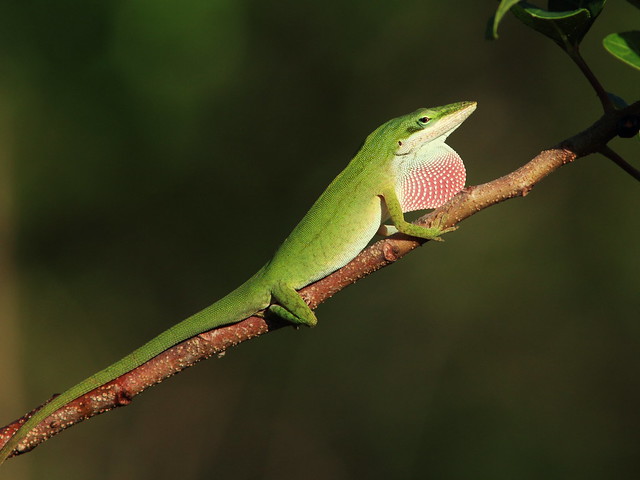
...and Brown Anoles native to Cuba and the Caribbean islands, here displaying its dewlap:

Our native Green Anoles are out-competed by the Brown species:
Other exotic lizards are descended from imported pets. The population of the large Knight Anole is increasing:

The Curly-tailed Lizard is another established escapee:

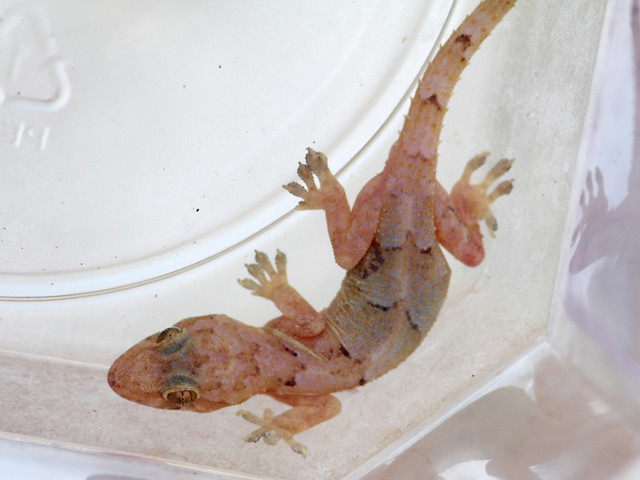
Our granddaughter caught this baby Mediterranean Gecko in our back yard. They are usually found around or inside human structures. Adults chirp and sing like little birds:
Cuban Tree frog on our window sill:

The Cane Toad (Bufo marinus), also known as the Giant Neotropical Toad or Marine Toad, was deliberatively imported in 1936 to control insect pests in Florida's cane fields. (*See added footnote about the Cane Toad invasion in Australia, thanks to Erica*) It is highly toxic and can kill a predator, including pet dogs and cats:

When threatened it secretes a milky-white poisonous fluid known as bufotoxin from its parotid glands:

Of course, I could go on and on, but I want to share a couple of back yard views of the sky to the east just after sunrise...

...and after sunset

*Erica-- Thanks for the information about the Cane Toad invasion in Australia. I had not heard about it. Here are a couple of links including the 1988 Australian film:
Cane Toads: The Conquest Official Trailer
Cane Toads An Unnatural History 1988
= = = = = = = = = = = = = = =
Linking to:
Fences Around the World
Skywatch Friday
Weekend Reflections
Saturday's Critters
Bird D'Pot
Camera Critters
All Seasons
Wordless Wednesday (on Tuesday)
Natasha Musing
Our World Tuesday
Please visit the links to all these posts to see some excellent photos on display
________________________________________________