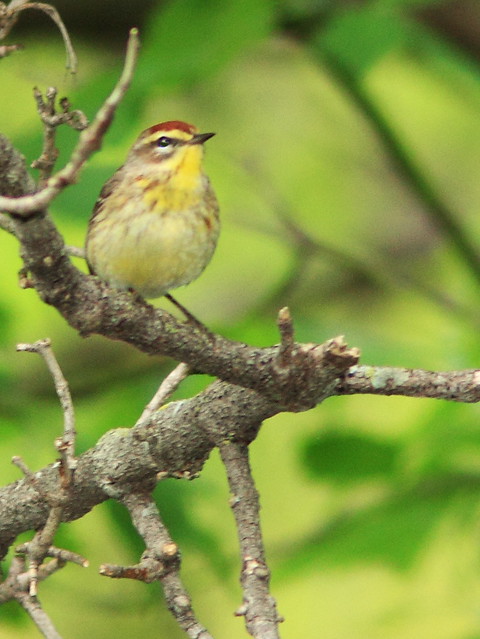
The Palm Warbler's long legs are an adaptation to terrestrial foraging habits, and their coloration is somber brown, causing many people to mistake them for sparrows. There are two subspecies, an eastern "Yellow Palm Warbler" and a western dull form. They occupy separate breeding areas in Canada and parts of northernmost US. The eastern subspecies has entirely yellow underparts, while in the western form the yellow is less extensive, confined to the undertail coverts and sometimes throat, while its belly is whitish or only slightly tinged with yellow. In breeding plumage their brown caps turn to a bright chestnut color.
Here is a typical western Palm Warbler I photographed on February 19, 2012 as it was enjoying a big meal.
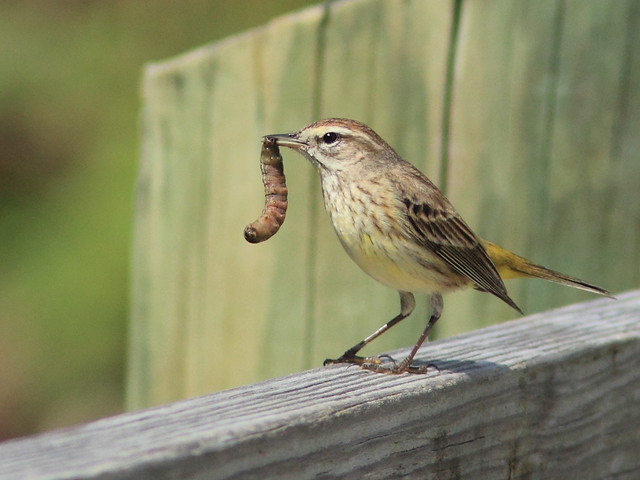
Our winter visitors show some variation in coloration.
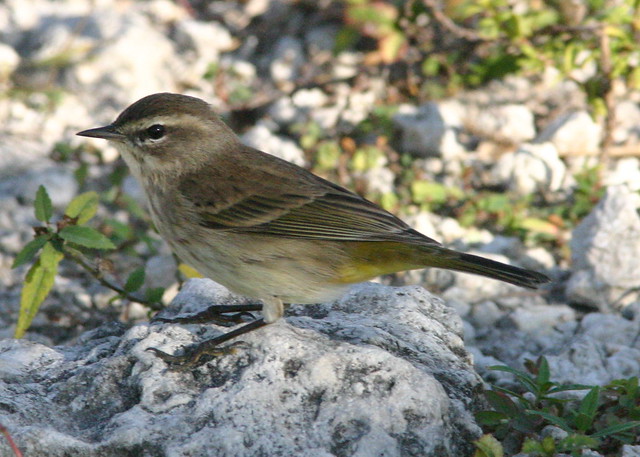
This Palm Warbler showed a rather bright reddish cap, on February 24, 2012:

Another local mid-winter Palm Warbler appeared to be unusually bright on November 29, 2009. Its all-yellow underparts identify it as an eastern "Yellow Palm Warbler." Over the past 10 years I have only seen three or four of this subspecies in our neighborhood:
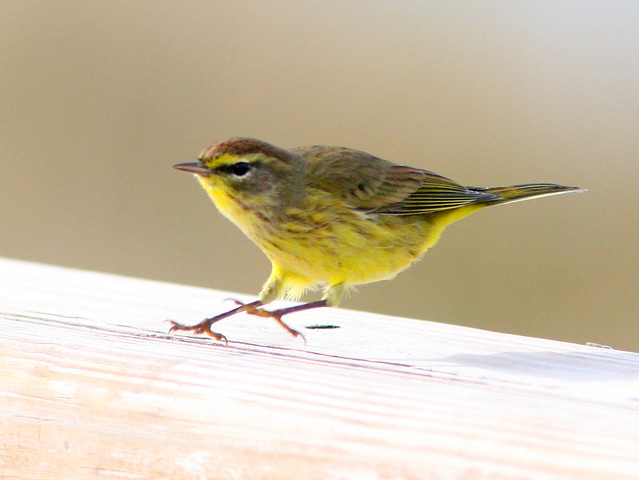
As spring approaches the winter visitors brighten up a bit and many begin to look more like the eastern Yellow Palm Warblers. This photo was taken in south Florida on March 2, 2009. It probably is the common western subspecies, as its breast and belly are not entirely suffused with bright yellow. Yet the difference between the two is subtle, making this a close call, especially in the field:
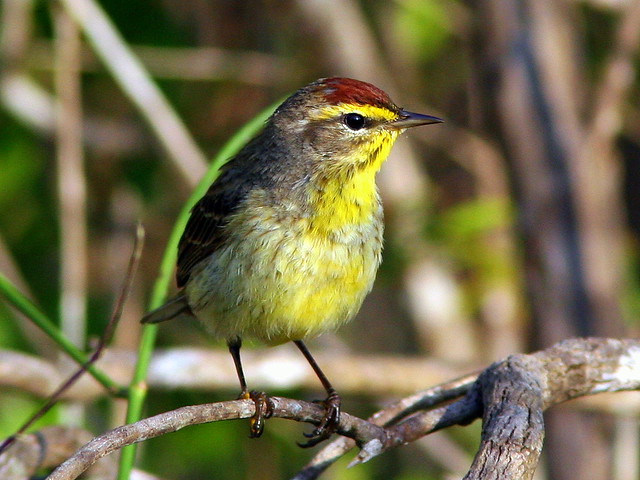
This bird is characteristic of the eastern subspecies, photographed in Illinois, May 1, 2012:
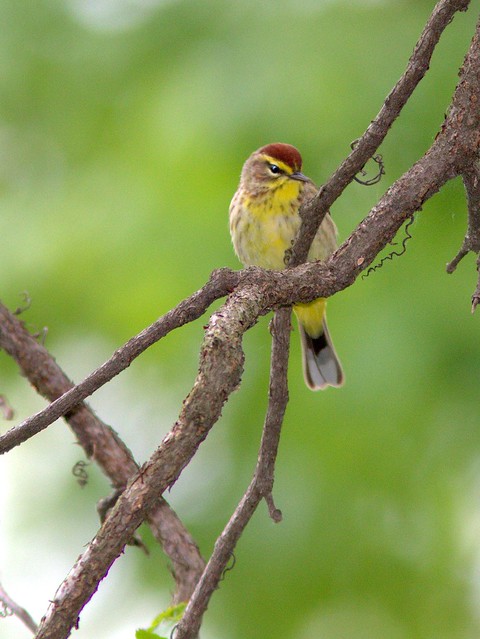
Many "Yellow Palm Warblers" were passing through in early May when we arrived at our second home in NE Illinois:
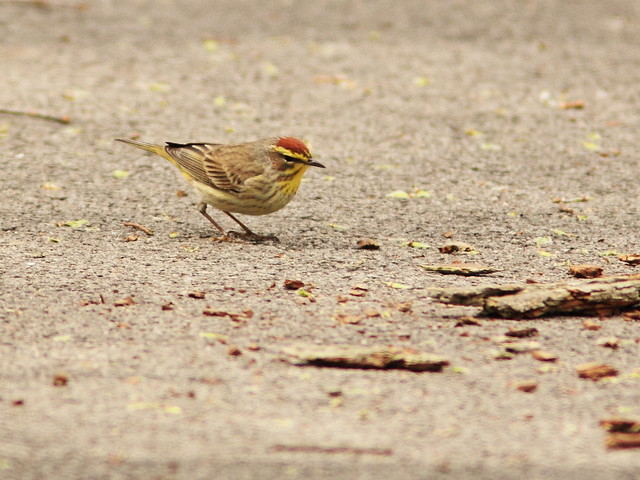
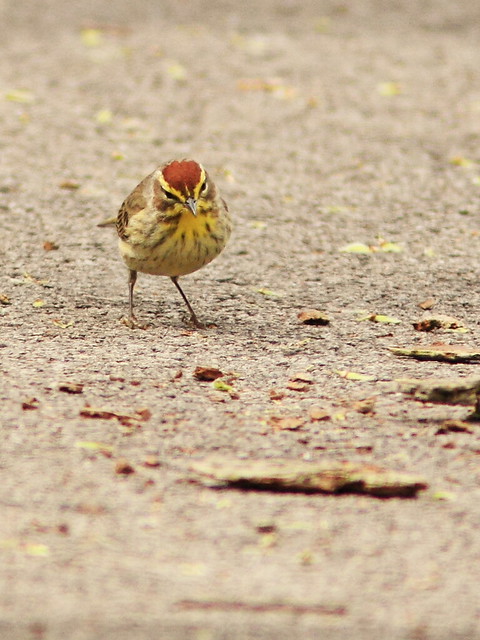
Yellow Palm Warbler in NE Illinois, May 12, 2014. Although pale, the yellow color suffuses its entire undersides:
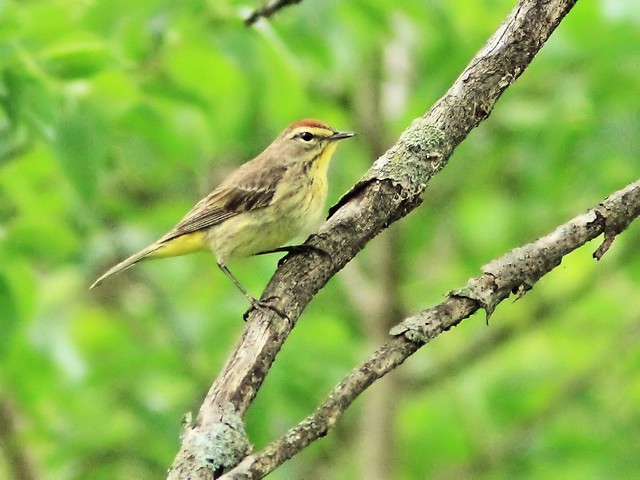
Another representative of the eastern subspecies, seen on May 14, 2014: