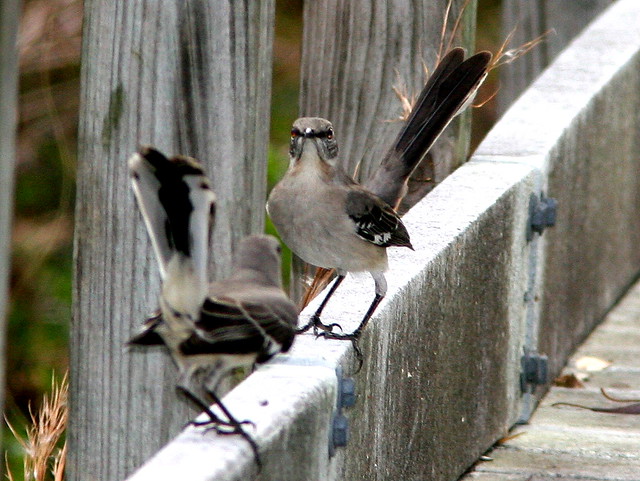
If the winter walk is cut short by threat of rain or other pressing matters I can still pick up 12 to 15 species rather easily. Starting before sunrise, it is possible to "bird by ear." While it is still dark the calls of mockingbirds ring out, and even before sunrise a Carolina Wren may start singing.
As the sky lightens up the Gray Catbirds start mewing, the Common Grackles begin flying in from the Everglades, and the Boat-tailed Grackles screech their "songs" from the treetops. Blue Jays cry out to warn of my presence, House Wrens chatter a protest as I pass by. Pairs of Red-bellied Woodpeckers call back and forth. An Osprey or Great Egret may fly over.
Ten species are logged already, of which eight were identified by their sounds. I should be hearing the clear whistled song of a Northern Cardinal, but no. Maybe later I will see one, as they are quite common.
Blue Jay:

House Wren:

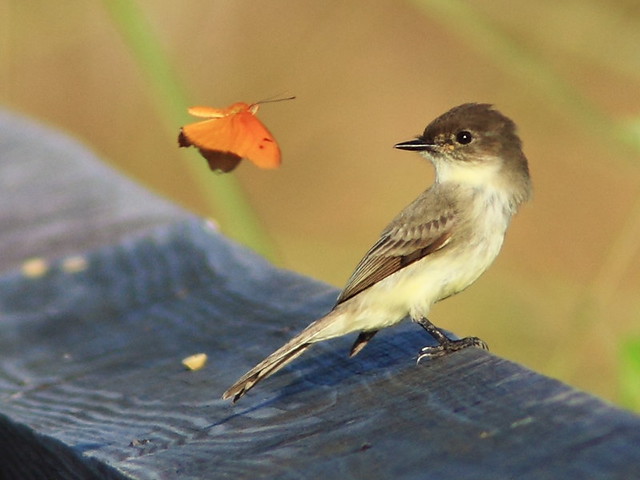
Soon White Ibises and Ring-billed Gulls fly over, and Black and Turkey Vultures rise up to test the thermals. Eastern Phoebes "chip" and repeatedly slur their names. Fifteen species tallied, and I am only halfway out, almost reaching the lake.
White Ibis:

Black Vulture:

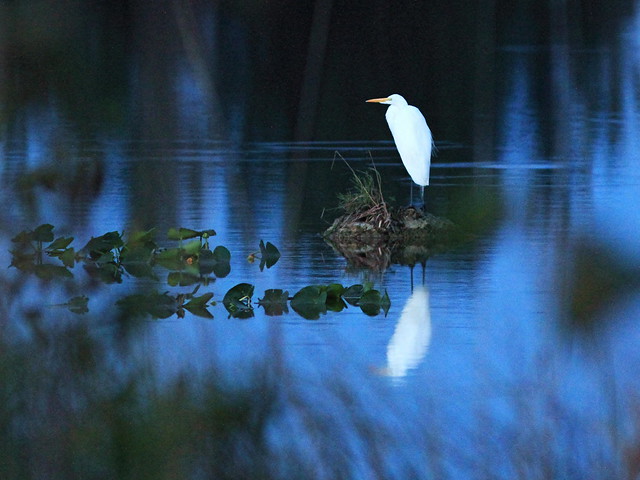
If the lake water were not so high, the mudflats would have hosted many long-legged waders: Snowy Egrets, Tricolored, Green and Little Blue Herons and even a Wood Stork. However, the unusually high water levels have dispersed the fish so that the birds must now range widely and work harder to find them, so I am lucky to pick up even one or two. Only a Great Egret, a species already counted, casts a reflection in still water under early light:
Unlucky this morning, I push on, finding the starlings, but the Fish Crows do not give away their presence. My tally is stuck at sixteen, a breeze picks up and the clouds are gathering.

There is just enough time to visit the remains of the rookery, where a single lonely Yellow-crowned Night-Heron is an easy find. I recognize this Night-Heron as "Dirty-Crown" by her unusually streaked forehead and signs of old injury to her left leg. She has been present in the rookery for at least three breeding seasons. Last year she and a mate started a nest but abandoned it:

Now it is time to get aerobic and walk briskly, as home is more than a mile away. A Mourning Dove straddles a power line, and a cormorant lands in the lake as I hurry by. Only two more species are needed if I am to meet my RDA. Alas, on other winter mornings when I had the leisure to look and listen I did better by finding such "extras" as--
Northern Flicker:

Red-shouldered Hawk:

American Kestrel:

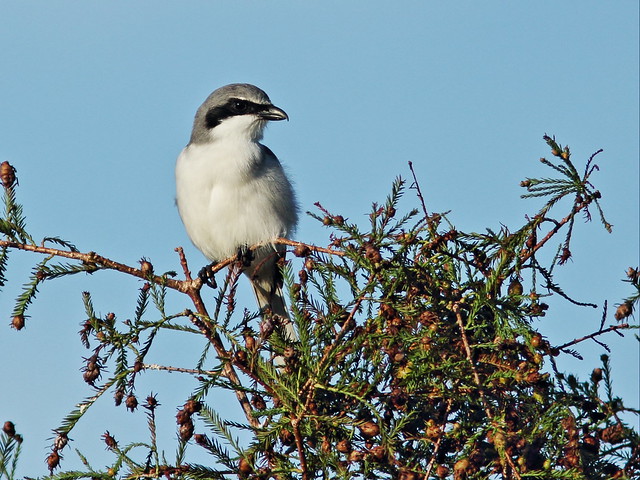
Loggerhead Shrike:
Anhinga:

The flowers and berries of Lantana attract buntings:

An immature Painted Bunting shows only hints of the brilliant color which will emerge in spring:

An adult male Indigo Bunting in winter plumage shows a striking pattern:

The Indigo Bunting is pestered by a female Painted Bunting as he probes at a seed head:

A White-eyed Vireo sings its winter song::

A Blue-gray Gnatcatcher amuses us with its acrobatic actions:

Alas, I failed to see even one of the coveted Northern Cardinals:

The broken fence in front of the Bald Eagle nest has been repaired and there is now a gate with barbed wire on top. Clearly a deterrent to anyone who does not know how to untie his shoes (or the bright red ribbon that serves as the "lock"):

= = = = = = = = = = = = = = =
Linking to Misty's CAMERA CRITTERS,
Linking to Eileen's SATURDAY'S CRITTERS,
Linking to GOOD FENCES by Tex (Theresa).
Linking to WEEKEND REFLECTIONS by James
Linking to BirdD'Pot by Anni
Linking to Wild Bird Wednesday by Stewart
Linking to I Heart Macro by Laura
________________________________________________
Please visit the links to all these memes to see some excellent photos on display
________________________________________________