Thursday, February 6, 2020

Crops & Clips: Flashback to February, 2017

Three years ago we spent the entire month of February at home in south Florida. In reviewing over 1,000 photos I processed that month, I found many to illustrate favorite memes-- critters (especially birds), skyscapes, reflections, flowers, fences and scenes which speak for themselves. 

Highlight of the month was the delayed arrival of two eaglets in the local Bald Eagle nest, the 17th and 18th known offspring produced at this nest. In the prior breeding season, the parents suffered loss of their first brood. Undaunted, they nested again and produced two more eaglets which hatched in March, 2016, almost three months later than normal. 

Only one survived, and fledged in mid-June. It required the care and attention of the adults until mid-September. Normally, the eaglets would have been independent and migrating north by late May or early June. The demands placed upon the parents surely delayed their renovation of the nest and courtship.

The eaglets hatched respectively on or about February 5th and 8th. We were able to see and photograph the older eaglet for the first time on February 24: 
Bald Eaglet -P Piney 17-  2-20170224

Three days later, both eaglets posed as their mother (Jewel) roosted next to the nest:

Bald Eagle female and 2 eaglets 2-20170227

The elongated black object protruding up from the nest is the seed pod of the  Flamboyant Tree (Royal Poinciana). The leaves and seeds of this tree are toxic, containing cyanide and tannins. Some believe that the eagles deliberately collect them to deter nest parasites. However, these trees are common in the nearby residential areas and these branches may have been randomly selected.

Bald Eagle female and 2 eaglets 20170227

This is the male eagle (Pride) roosting nearby:

Bald Eagle male roosting 2-20170206

Morning rays:

Morning rays 20170203

Any day when we see a male Painted Bunting is a great day. Sadly, many are trapped for the illegal pet trade:

Painted Bunting 09-20170205

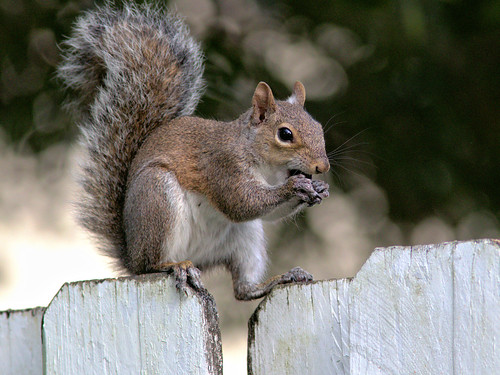
A perky squirrel perches on a fence:

Gray Squirrel 20170228

In the local rookery, a Yellow-crowned Night-Heron displayed to potential mates, although the females appeared to ignore him: 

Yellow-crowned Night-Heron displaying 20170226

A Great Egret foraged on a foggy morning:

Great Egret in fog 20170225

In the woodlands, we found a White-eyed Vireo...

White-eyed Vireo 01-20170224

...a female Red-bellied Woodpecker...

Red-bellied Woodpecker 02-20170224

...a male Common Yelllowthroat...

Common Yellowthroat 20170218

...a male Northern Cardinal...

Northern Cardinal male 2-20170206

...and his mate...

Northern Cardinal female 20170206

...a male Northern Flicker...

Northern Flicker male 20170216

...another flicker, golden in flight...

Northern Flicker 20170206

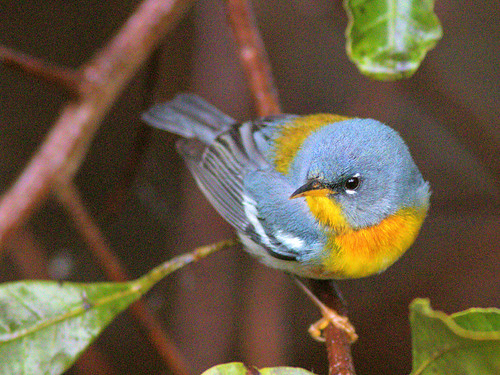
...and a Northern Parula (warbler):

Northern Parula 05-20170209

Walking in early, we found a curious red morph Eastern Screech-Owl:

Eastern Screech-Owl 02-20170219

The Brazilian Pepper is an invasive exotic plant, but the birds love it and their droppings help to spread its seeds. Gray Catbird:

Gray Catbird in Brazilian Pepper 20170225

A Prairie Warbler is more interested in eating the insects attracted to the berries:

Prairie Warbler 4-20170202

Royal Palms bear both male and female flowers. The spent male flower stems are in the foreground, and successively ripening crops of female buds and fruits are arrayed behind them. Look closely to see foraging Palm and Yellow-throated Warblers:

Palm and Yellow-throated Warblers 20170224

Spiny Orb-weaver Spider (aka "Crab Spider"):

Spiny Orb-Weaver 20170223

Along the path into the wetlands, sunrise and a crescent Moon:

Sunrise and crescent Moon 20170221

Wood Storks have newly occupied a rookery in Weston, a town about 10 miles to our north. I love to capture images as they glide in to join the flock:

Wood Stork in flight 07-20170220

Wood Stork in flight 05-20170220

Wood Stork in flight 02-20170220

On the lake, a Great Blue Heron, 15 minutes before sunrise:

Great Blue Heron 15 min before sunrise 20170226

Little Blue Heron:

Little Blue Heron 4-20170207

Lantana blossoms wrapped in spider silk:

Lantana blossoms wrapped in spider silk 2-20170214

The Snow Moon setting, 15 minutes after sunrise:

Snow Moon setting 15 min after sunrise 20170211

= = =  = = =  = = = =  = = = = =

Linking to :

My Corner of the World

Fences Around the World


Skywatch Friday

Weekend Reflections

Saturday's Critters

BirdD'Pot

Camera Critters

All Seasons

Wordless Wednesday (on Tuesday)


Our World Tuesday

________________________________________________

Please visit the links to all these posts to see some excellent photos on display
________________________________________________
_______________________________________________________________

Thursday, January 30, 2020

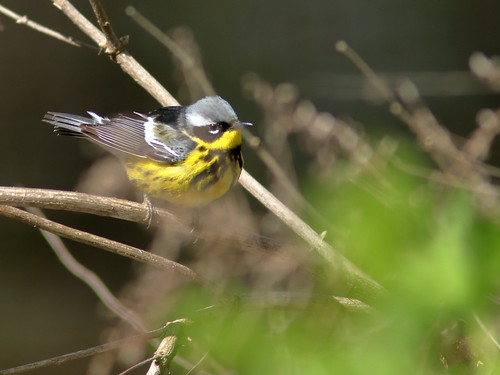
A very pale Magnolia Warbler

The Magnolia Warbler is a colorful little bird which breeds in the far northern reaches of North America. In south Florida we see it when on its way to its winter range, which includes the Caribbean islands, far southern Mexico and Central America. A few commonly spend the winter with us. 

Although this warbler nests far north of any Magnolia tree, it was named for the location in which it was first "discovered." American ornithologist Alexander Wilson found this species in magnolias near Fort Adams, Mississippi  The adults are brightly patterned in yellow, black, blue-gray and white. 

I photographed this northbound male in bold breeding colors at Nelson Lake preserve in northeastern Illinois on May 10, 2011:

Magnolia Warbler 2-20110510

Exactly eight years later, on May 10, 2019 I found this adult male in almost the same spot:

Magnolia Warbler 20190510

Also in Illinois, I obtained an underside view of another male back in May, 2014. Note the distinctive and unique undertail pattern with two terminal black spots:

Magnolia Warbler 20140518

This is a fall female (Illinois, September, 2017):

Magnolia Warbler 02-20170925

Most of the fall Magnolia Warblers we see here in Florida are first year birds. Their colors are subdued. These were present at Chapel Trail Preserve near our home during December, 2019--

Magnolia Warbler 01-20191227

Magnolia Warbler 03-20191220

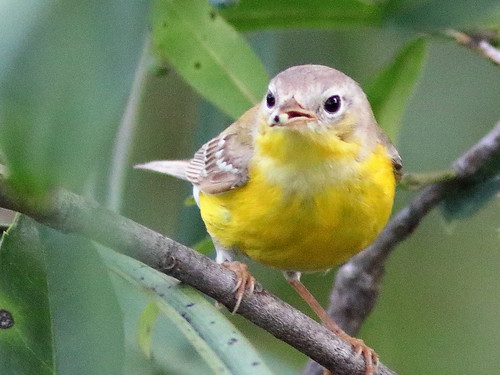
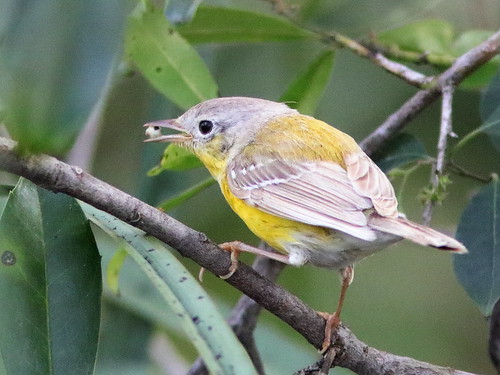
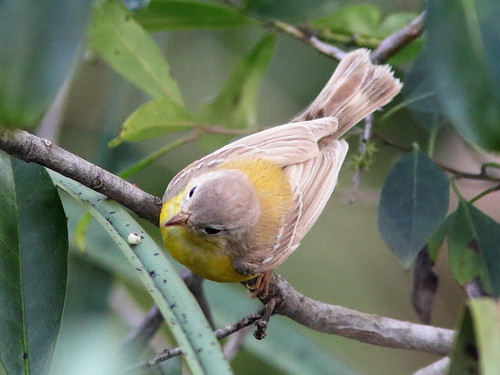
In early January, while leading a nature walk at Chapel Trail I spotted an unusual Magnolia Warbler. It was a very bright yellow female, probably a first year immature bird. Its legs and bill were very pale. Its back was bright yellow without the normal dark streaking, and its head, wings and tail were light tan rather than dark gray. The spots under its tail were brown rather than black. Likewise, its eyes seemed not to be pitch black, but rather were brownish. During the following week I obtained a series of photos to document its plumage:

Magnolia Warbler type 4 albinism 091-20200111

Magnolia Warbler type 4 albinism 08-20200111

Magnolia Warbler type 4 albinism 09-20200111

Although I was willing to describe this bird as having "dilute" plumage or possibly as being "leucistic," experts had a more specific name for its faded appearance. They classified it as exhibiting Type 4 oculo-cutaneous albinism. It lacks a specific black melanin pigment, but does produce other lighter melanin. A "pure" albino (Type 1A) would have no melanin and its plumage would be all white with pink eyes. Such a bird would probably not survive in the wild. This Magnolia Warbler may be relatively easy for a predator to locate and capture. (I enjoyed the thrill of discovery, but this may be more than you ever wanted to know!*) 

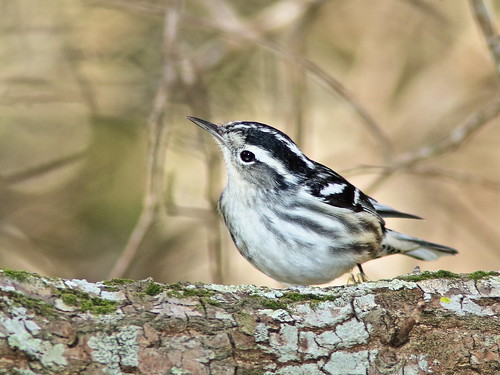
Other warblers present at Chapel Trail were a Black-and-White Warbler...

Black-and-White Warbler 02-20200118

Black-and-White Warbler 04-20200118

...an Orange-crowned Warbler:

Orange-crowned Warbler 01-20200111

...and many Yellow-rumped Warblers:

Yellow-rumped Warbler 20200111

The boardwalk at Chapel Trail Nature Preserve:

Chapel Trail boardwalk 01-20200118

Common Gallinule reflection:

Common Gallinule 20190701

*REF: Melanins are the ubiquitous pigments distributed in nature. They are one of the main pigments responsible for colors in living cells. Birds are among the most diverse animals regarding melanin-based coloration, especially in the plumage, although they also pigment bare parts of the integument. This review is devoted to the main characteristics of bird melanins... (LINK to EVEN MORE THAN YOU EVER WANTED TO KNOW)


= = =  = = =  = = = =  = = = = =

Linking to :

Camera Critters

Saturday's Critters

Skywatch Friday

Weekend Reflections

BirdD'Pot

Our World Tuesday

Wild Bird Wednesday

Wordless Wednesday (on Tuesday)

All Seasons

Fences Around the World
______________________________________________

Please visit the links to all these posts to see some excellent photos on display
________________________________________________