Showing posts with label Agramonte. Show all posts

Thursday, January 14, 2021

Remembering Agramonte

Ten and a  half years ago, Agramonte and I celebrated my birthday in Batavia, Illinois. In his third year of life, the purebred Tibetan Mastiff was such a good friend:

He was our canine Grandson (Nieto). Our human Neitas took part in the celebration (Why are there only 7 1/2 candles on my cake? I think they know why!):


They welcomed Agramonte into their home just before Christmas in 2007:


He knew he was loved:

Agramonte played in the snow. His winter fur was so dense that he could sleep in a snowdrift:

We first met him when we "migrated" back to our second home in April, 2008. Agramonte was 5 months old:

He grew up very rapidly. Here he is at 10 months of age:
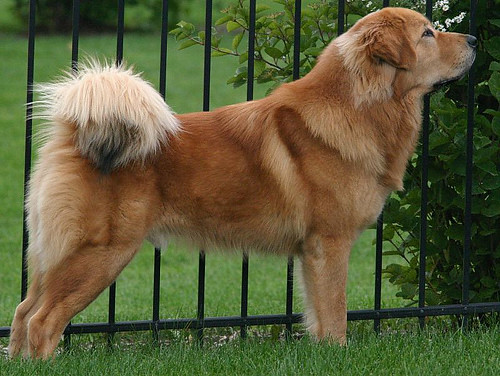
When one year old old, he weighed 108 pounds and his mane was growing:

Neighbors sometimes thought our granddaughters had a lion on a leash. He loved the girls and was very protective of them, not in a fierce way but he would stand between them and any possible threat. One day I walked Agramonte with them to a small playground in a nearby park. The girls played on the swings and slides, so I decided to walk Agramonte a little way down the path. However, when we reached a turn where he could no longer see the children, he stopped dead, sat down and absolutely refused to go any further. I tried to make him stand and lead him on until I realized he did not want to lose sight of his treasured little friends:   

Here he is at 10 years of age in 2017, as he watched me barbecue a chicken in the back yard. If he wanted to, he could have overpowered me and inhaled that bird:

Moncada, another Tibetan Mastiff and Agramonte's little "brother," joined the family in 2018.  This is how the mastiffs spend most of their days:

A few days later, Cazador, a black Standard Poodle puppy, made them a doggie threesome:


Agramonte, the alpha, greeted the newest member of the pack:


Agramonte always loved the snow. His mane became huge during winter:


We last visited Illinois and saw Agramonte in early April, 2019. Sad to say, this was my last photo of him, with Cazador, back in September, 2018:

Our Illinois family flew down in April 2019 to join us for a short but memorable vacation on the Florida Keys.  "The sun comes up and the sun goes down. The hands on the clock keep going around..." And then there was the Coronavirus.

Tranquility Bay sunset:


April memories: Sedate Black-necked Stilts in formal garb, reflecting... 


...and a Northern Cardinal. There are old traditions-- “When a red cardinal visits your yard, it’s a visitor from heaven”. . . "The red cardinal bird symbolizes the phases of restoring when going through great difficulties with greater hope in God"... "Seeing a red cardinal after a death can be a message for you from the divine"... “When a cardinal appears, a loved one is near...,”

During our last visit to Illinois in May, 2019, it was clear that Agramonte's health was failing, He retained his sweet disposition despite a loss of energy.

The COVID restrictions have kept us apart since then. 

Despite treatment, his attempts to walk became increasingly painful and impaired. Finally he could not even stand up. For a large breed at 13+ years, his "dog age" calculator says that both he and I are about the same age. 

The veterinarian just made a home visit and helped Agramonte say goodbye.

A little spark of consciousness has been extinguished, and the universe is somehow diminished.

Goodbye, Agramonte, you big friendly, fluffy, furry phlegmatic doormat of a dog.

Sunset in Batavia, Illinois:

= = =  = = =  = = = =  = = = = =

Linking to:

Fences Around the World


Skywatch Friday

Weekend Reflections

Saturday's Critters

BirdD'Pot

Camera Critters

All Seasons

Wordless Wednesday (on Tuesday)

Natasha Musing

Our World Tuesday

________________________________________________

Please visit the links to all these posts to see some excellent photos on display
________________________________________________
 

Thursday, September 3, 2020

Crops & Clips: Flashback to September, 2017

Reviewing the photo archives from three years back excites memories of our former home in the mountains of New Mexico. As usual, I will search for images which reflect favorite memes: critters of all kinds (especially birds), skies and clouds, reflections, flowers and fences, as well as scenes which speak for themselves. 

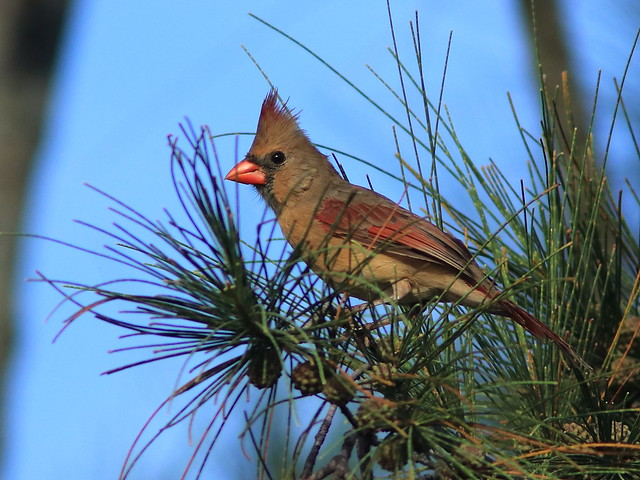
In our local south Florida wetlands I photographed this Female Northern Cardinal, on September 4th:

Northern Cardinal female 20170904

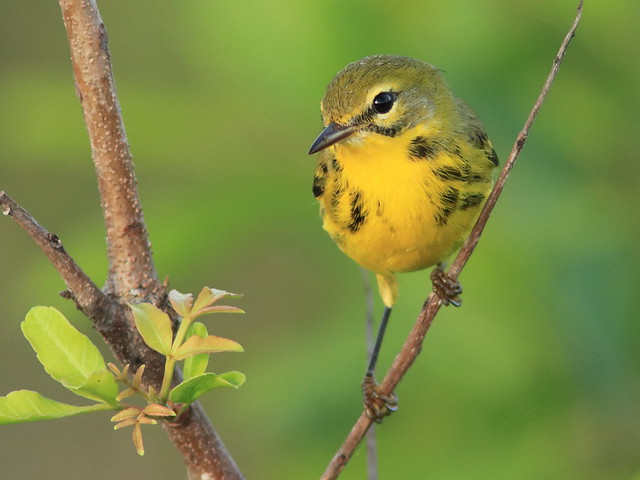
Prairie Warblers had returned from their nesting areas in coastal Mangroves:

 Prairie Warbler 06-20170904 

Prairie Warbler 09-20170904

September, 2017 opened as Hurricane Irma, an extremely powerful Cape Verde hurricane, was building up strength to Category 3. South Florida remained firmly in its projected path as it moved slowly towards us. At first we thought it would be safe to ride out the storm. On September 4 Irma was approaching the eastern Carribbean and had reached Category 5 with winds of 180 mph (285 km/h). It was expected to strike Florida on or about September 7th. 

The view before sunrise on September 1:

North shore HDR 20170901

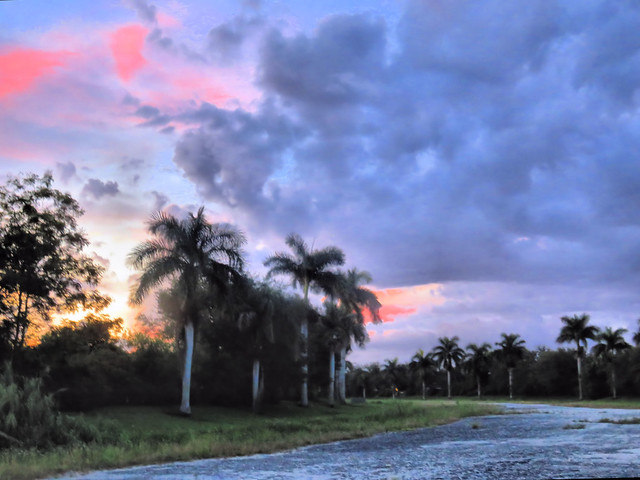
Walking home under an unsettled sky:

Road to south 20170901

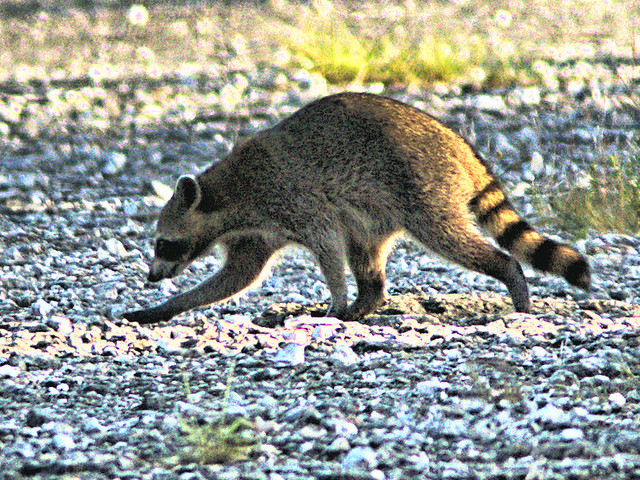
Ahead, a Raccoon crossed the path:

Raccoon 20170901

Queen Butterfly on Bidens alba:

Queen butterfly 20170903

We then decided to shutter our home and find higher ground, but could not book a flight to our condo in Illinois. Alternatively, we decided to fly to Albuquerque, New Mexico via a 2-stop itinerary, reaching there on September 6th. 

The hurricane almost stalled before reaching Cuba on September 9 and the next day made landfall along the west coast of Florida. It spared our home a direct hit but we were in its huge wind field with hurricane-force winds extending out 80 mi (130 km) and gale-force winds spanning an area 220 mi (350 km) in diameter.

In Albuquerque we stayed in Kirtland Air Force Base lodging with the Sandia Mountains as a backdrop:

KAFB Inn 01-20170909

We wasted no time and drove up to Sandia Crest (elevation 10,678 ft / 3,255 m), birding along the 12 mile road which winds its way to the top. About halfway up, we stopped at Capulin Spring with its famous water feature which is very attractive to birds in the dry habitat. When we lived in New Mexico, MaryLou and I spent several years as volunteer interpreters with the US Forest Service and this was a  prime objective on our nature walks. 

Our retreat from Hurricane Irma to "high and dry" New Mexico provided me with great memories of when we lived here. In the early 1990s I worked with other USFS volunteers to rehabilitate an old hollow log which had served as a wildlife watering trough. It was rotted at one end and the pipes which fed water into it from Capulin Spring had shattered after the rock wall which enclosed it deteriorated into rubble. 

We replaced the pipe and reconstructed the wall, restoring the flow of water, and we covered the hole in the log with a rubber plate. This worked well for over a dozen years but the log had to be finally replaced by one hewn out painstakingly by a new generation of US Forest Service volunteers. It had now been flowing for about two years and this was the first time I visited the (now new) "Bird Log at Capulin Spring" in more than seven years. It lives up to its reputation, attracting nearly every local and migratory bird and mammal species to this only source of water over an expanse of mountainous forest in the Sandia Mountains east of Albuquerque.

The "Bird Log" at Capulin Spring:

Bird Log at Capulin Spring 20170907

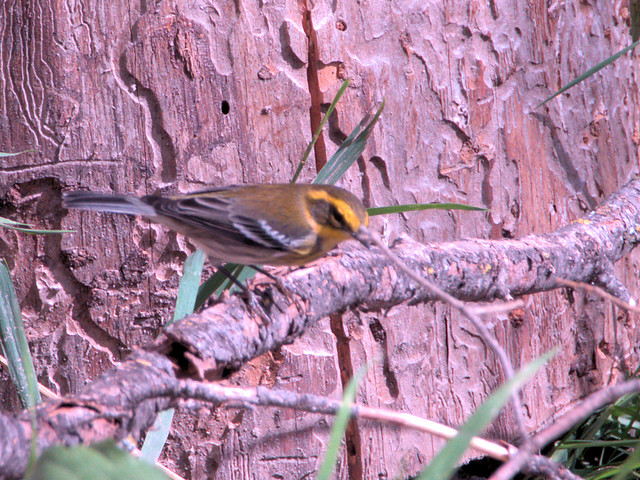
Traveling light, I carried only my new mirrorless camera and still had not mastered all of its adjustments, so my photographic record is poor. Among the avian visitors to the log, a Townsend's Warbler...

Townsend's Warbler 20170909 

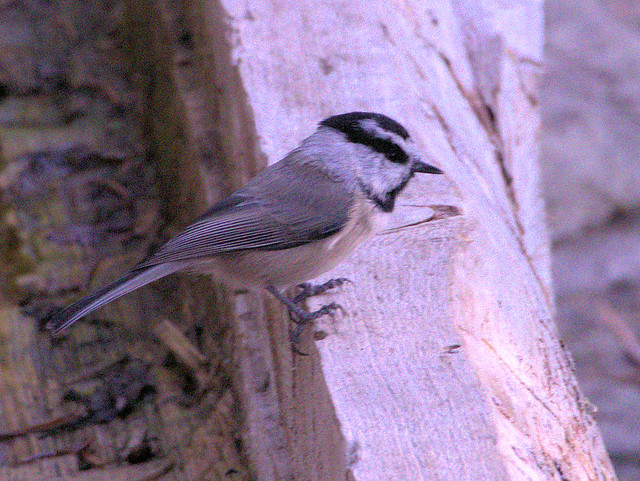
...a Mountain Chickadee...

Mountain Chickadee 01-20170911

...a Dark-eyed (Gray-headed) Junco...

Dark-eyed Gray-headed Junco 01-20170909

...Wilson's Warbler...

Wilson's Warbler 02-20170909

...Plumbeous Vireo...

Plumbeous Vireo 01-20170909

...Spotted Towhee...

Spotted Towhee 02-20170911

...Cassin's Finch...

Cassin's Finch male 3-20170911

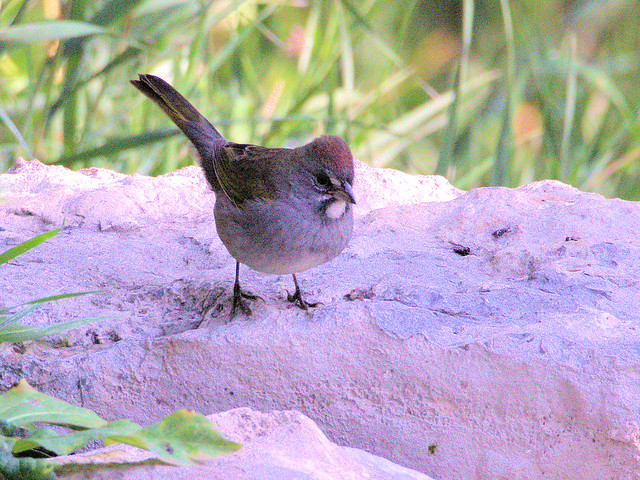
...and, among many other species, a Green-tailed Towhee...

Green-tailed Towhee 04-20170911

...and a Chipmunk:

Chipmunk on bird log 2-20170909

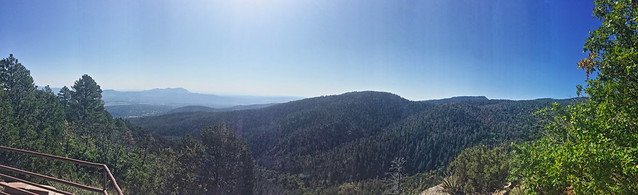
Nearby Balsam Glade Picnic Area provided a panoramic view to the northeast:

Balsam Glade panorama 20170911

At the top of Sandia Crest was the Gift Shop and Restaurant where I instituted the Rosy-Finch feeding program which has grown into an important research site for these threatened species. They would not be visiting here until the snows of November, but the sugar water feeders attracted Black-chinned Hummingbirds:

Black-chinned Hummingbird 03-20170908

Hummingbirds 20170908

Sandia Crest 04-20170907

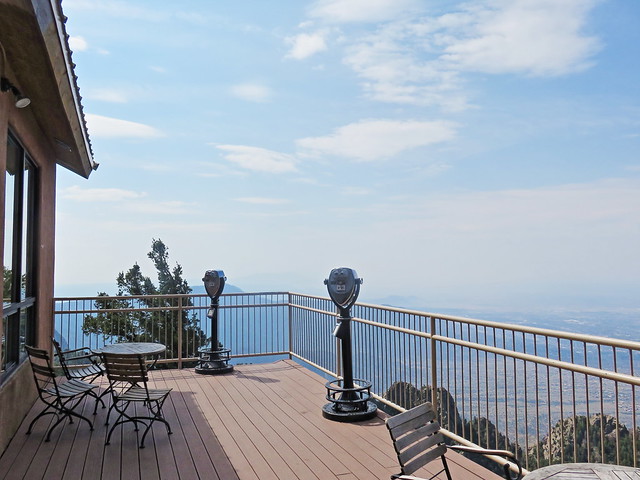
The Crest House deck overlooks Albuquerque and the Rio Grande Valley:

Sandia Crest 07-20170907

We returned to Florida on September 12 to find that we had suffered no wind damage and only had a  few hours' lapse in electric service. We then took our previously planned flight to Illinois only 4 days later. The view of Port Everglades as we took off from Fort Lauderdale early on September 16:

Port Everglades 01-20170916

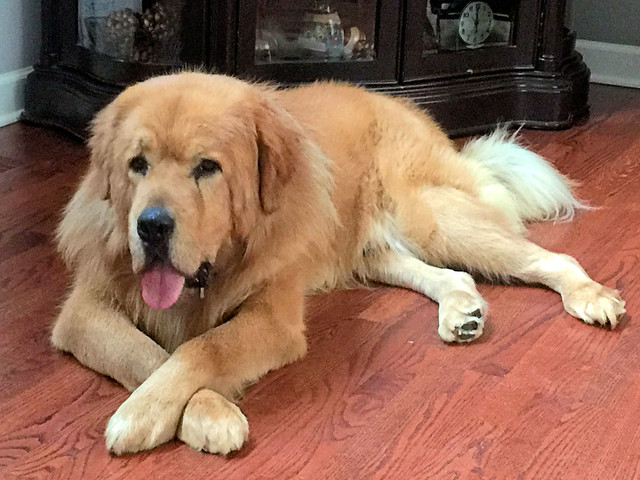
Lovable Tibetan Mastiff Agramonte, our daughter's family pet, greeted us:

Agramonte 20170918

Fall migration was underway. A rainwater impoundment in St. Charles attracted a Buff-breasted Sandpiper...

Buff-breasted Sandpiper 01-20170921

...and Wilson's Snipe...

Wilson's Snipe 20170921

...as an immature Red-tailed Hawk kept watch:

Red-tailed Hawk 02-20170921

We visited Jones Meadow Park near our condo:

Jones Meadow Park pond and fence 20170924 

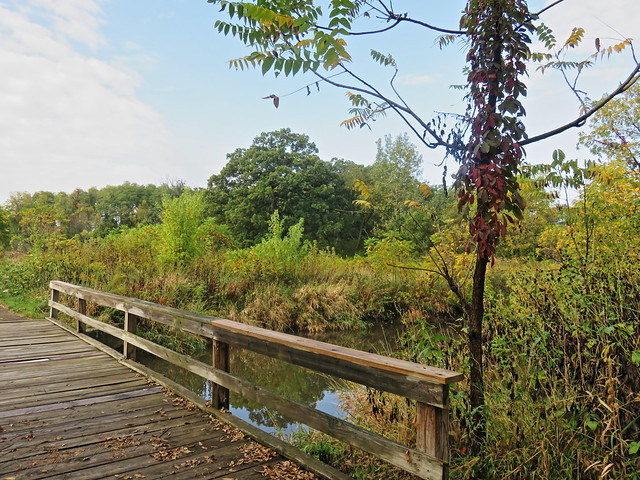
The bridge over Blackberry Creek in Bliss Woods:

Blackberry Creek 01-20170919

I  love this barn scene at Hannaford woods, which I reproduced as a simulated oil painting (click to enlarge):

Hannaford Barn OIL 01-20170925

Along the trail in Hannaford, there were Red-headed Woodpeckers... 

Red-headed Woodpecker 01-20170925

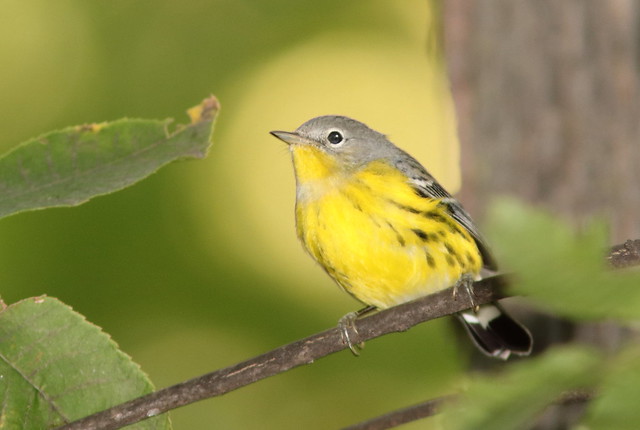
...and a Magnolia Warbler was surrounded by a bokeh glow:

Magnolia Warbler 04-20170925

On September 30, MaryLou was dwarfed by the lone oak at Hawk's Bluff Park, a few doors from our daughter's home in Batavia:

Lone oak at Hawks Bluff Park 20170928

A White-breasted Nuthatch explored its spreading limbs:

White-breasted Nuthatch 01-20170928

Hurricane Irma caused at least 134 deaths, 92 in the contiguous United States. Florida's estimated economic agricultural damages alone totaled over $2.5 Billion, according to the Florida Department of Agriculture and Consumer Services. There was massive loss of flowering and fruiting plants in the wild lands as well. It took over two years for several species of butterflies to rebound from the loss of adults, eggs, larvae and nectar sources.

= = =  = = =  = = = =  = = = = =

Linking to:

Fences Around the World

Skywatch Friday

Weekend Reflections

Saturday's Critters

BirdD'Pot

Camera Critters

All Seasons

Wordless Wednesday (on Tuesday)

Natasha Musing

Our World Tuesday


________________________________________________

Please visit the links to all these posts to see some excellent photos on display
________________________________________________