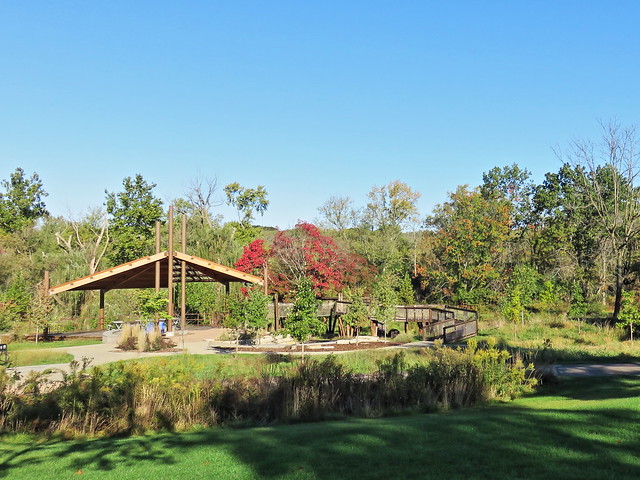
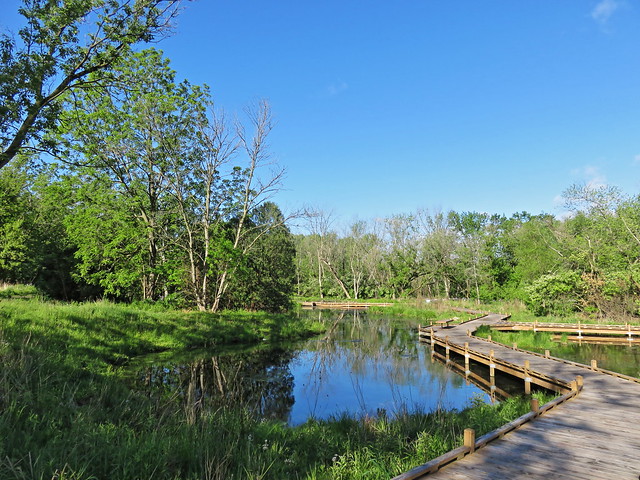
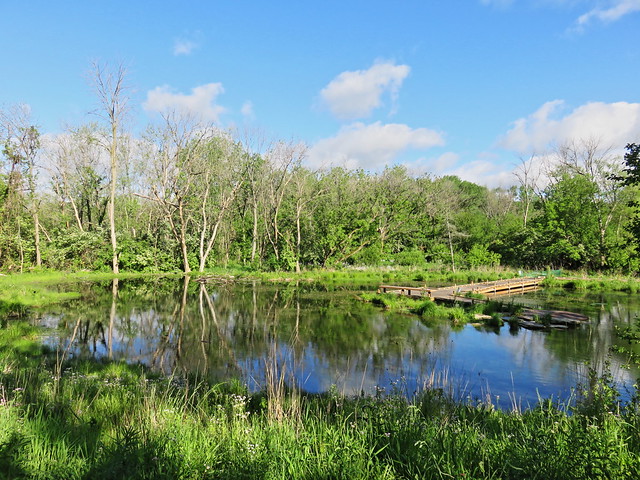
I was disappointed when land was cleared and the area near the entrance was torn up. Over the months an old maintenance shed was demolished and a pavilion was constructed. It included an elevated walkway which provided views of birds at tree-top level. Trails were improved and paved, exotic vegetation removed and butterfly-friendly shrubs were planted. Schoolchildren now attend organized walks and educational programs. The old pond and marshy area are traversed by a new boardwalk which also leads to the river's edge.
This image was taken last October and shows the curving fenced walkway:
During a break in the rainy weather this past week Mary Lou and I visited Lippold park. Here are a couple of views of the pond and boardwalk:
In the fall, Purple Finches visited the cones of one of the tall Bald-cypress trees near the river's edge:
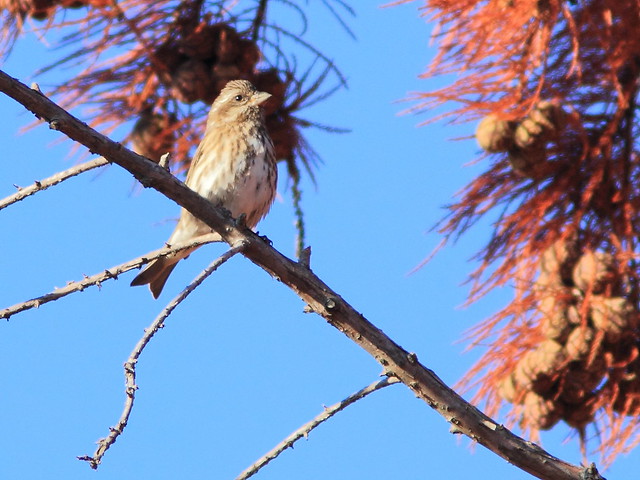
Unlike other conifers, the Bald-cypress trees lose their needles over the winter. Last week they were sprouting fresh green foliage and emerging green cones.
We were surprised to find a small flock of Cedar Waxwings (Bombycilla cedrorum) moving through the green branches of one of the cedars. At first I thought they were finding insects, but then noticed that they were examining the tiny cones...
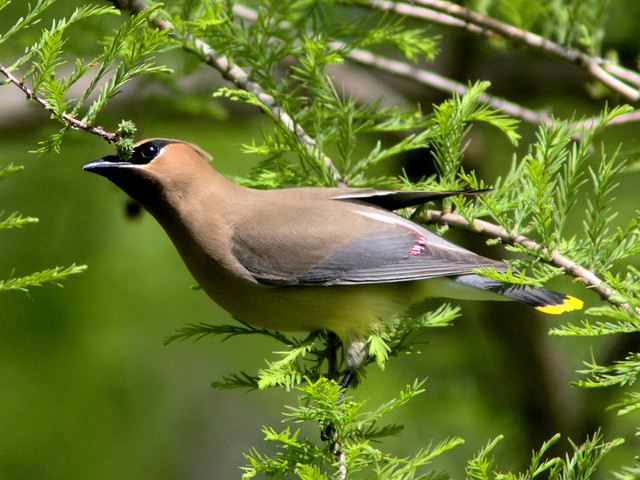
...and plucking them!
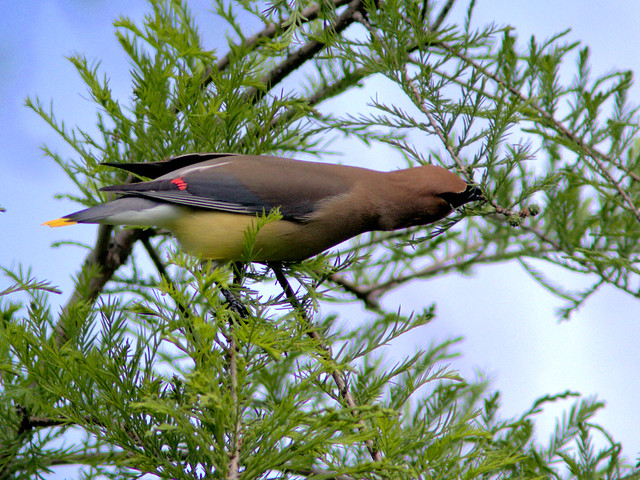
Their actions were acrobatic as they gathered cone buds from the tips of the branches:
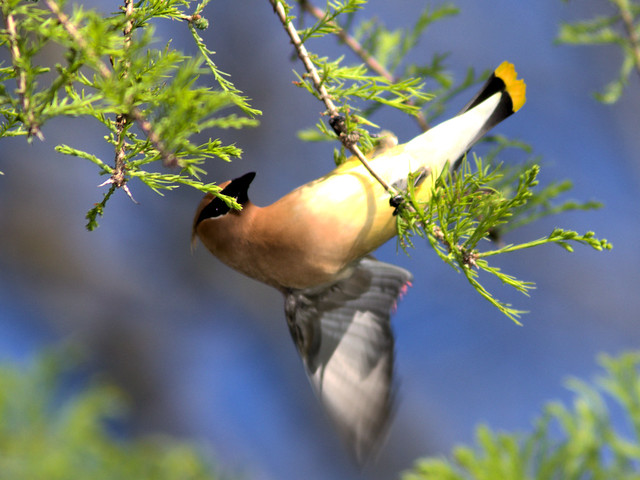
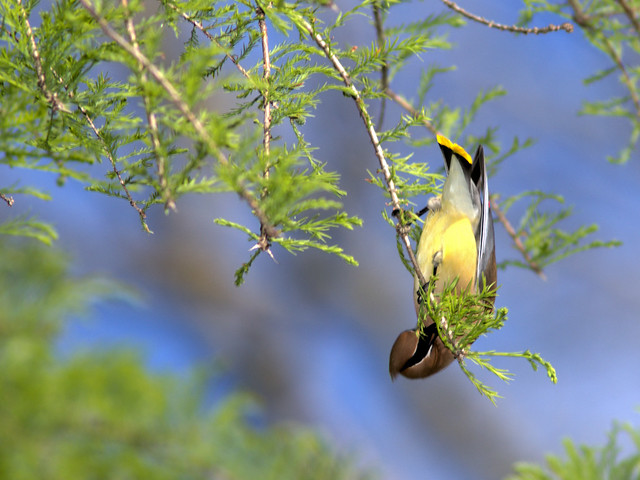
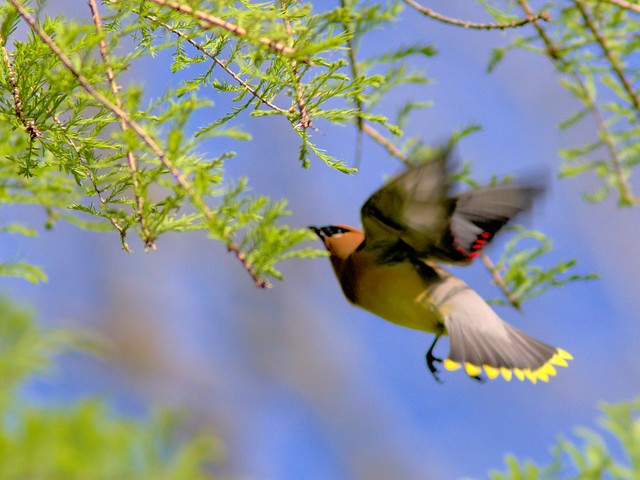
Cedar Waxwings are one of only three members of a family which includes the Bohemian and Japanese Waxwings. The latter is an Asian species and the Bohemian breeds in the far northwestern reaches of Canada into Alaska.
Cedar Waxwings breed all across the northern tier of the US and in southern Canada. They winter south into all of the US, Mexico and Central America. Northernmost birds probably take the place of others which migrate to the south, but their presence can be quite irregular. In Florida we may see large flocks one winter and none at all for most of the next.
Back in Florida, a flock of over 50 Cedar Waxwings seemed to have perfectly synchronized wing-beats (February, 2010):
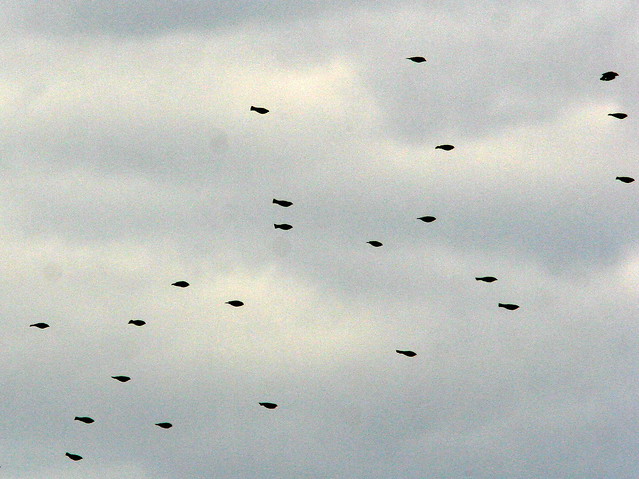
Waxwings get their names from distinctive red wax-like tips on the bare ends their secondary flight feathers. Their diet mainly includes berries, fruit and tree buds, but also many insects. Often they may be seen high in the sky, hawking flying insects in flocks along with swallows. Their habit of eating juniper ("cedar") berries during the winter earned the Cedar Waxwings their first names.
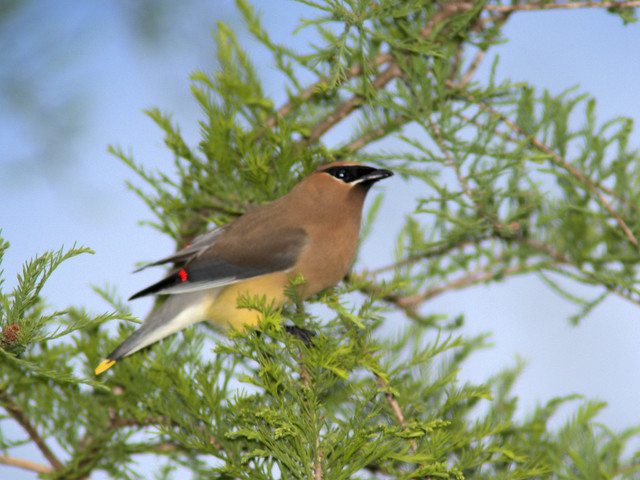
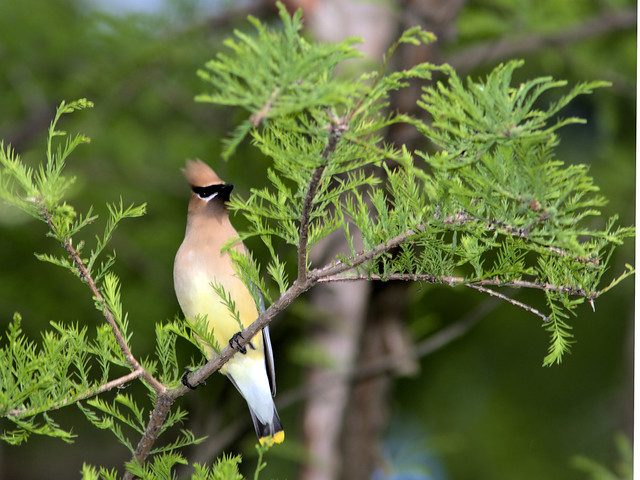
Here are two of my favorite images of the species, both taken at Lippold Park, in May, 2009...
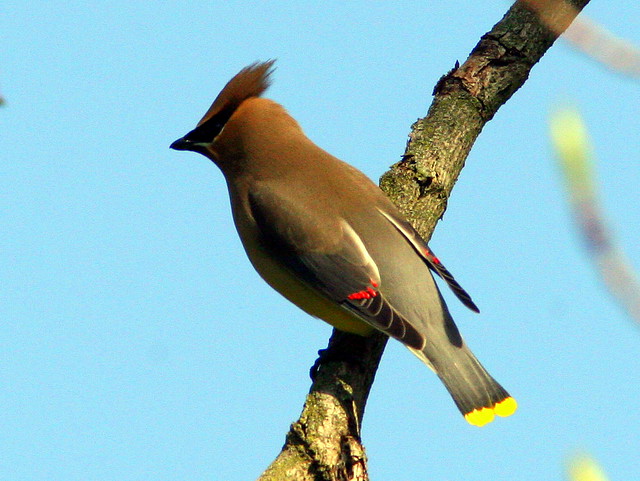
...and in September, 2011:
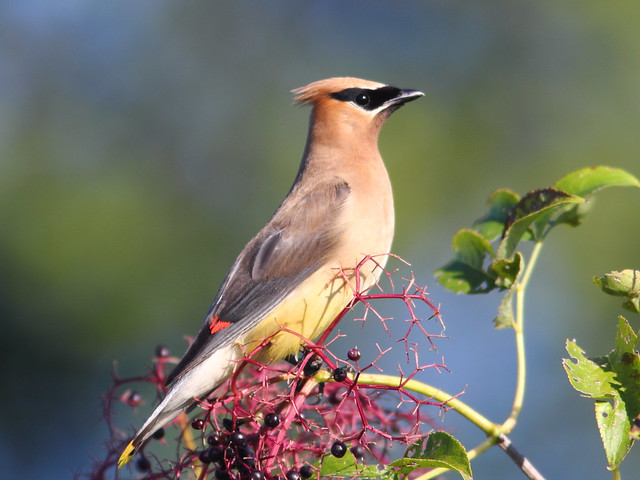
= = = = = = = = = = = = = = =
Linking to Misty's CAMERA CRITTERS,
Linking to Eileen's SATURDAY'S CRITTERS,
Linking to FENCES AROUND THE WORLD by Gosia
Linking to WEEKEND REFLECTIONS by James
Linking to BirdD'Pot by Anni
Linking to Wild Bird Wednesday by Stewart
Linking to Wordless Wednesday (on Tuesday) by NC Sue
Linking to ALL SEASONS by Jesh
________________________________________________
Please visit the links to all these memes to see some excellent photos on display
________________________________________________