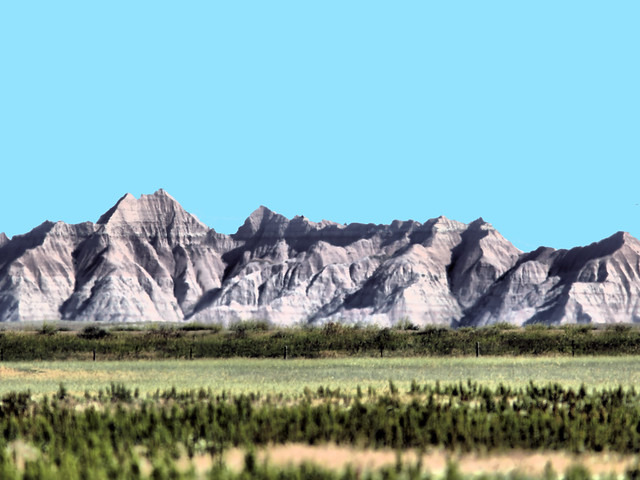
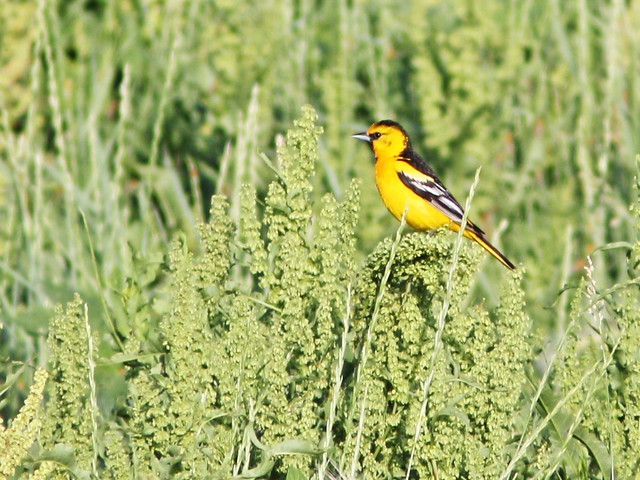
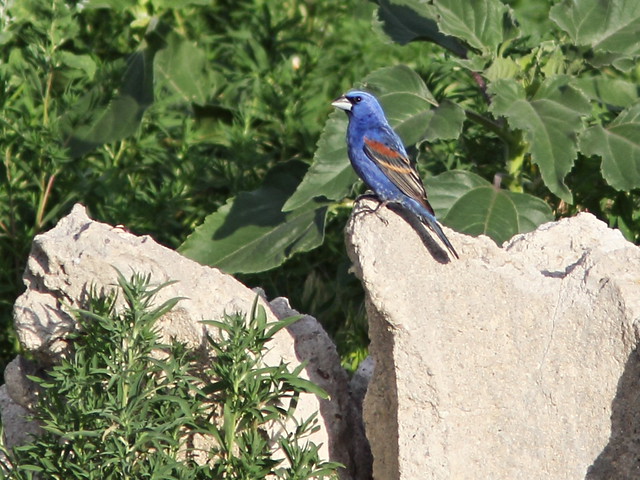
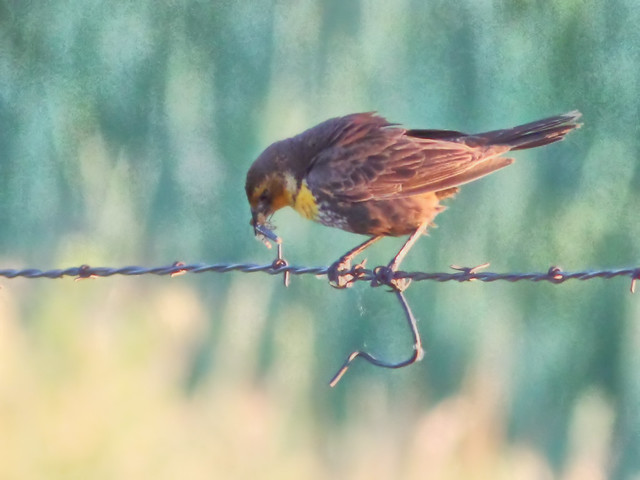
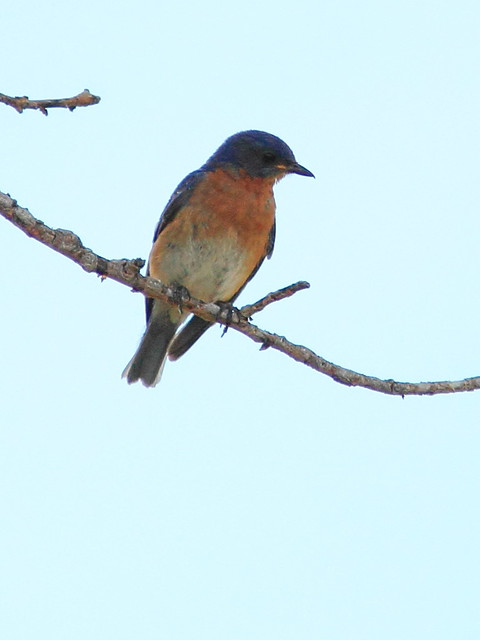
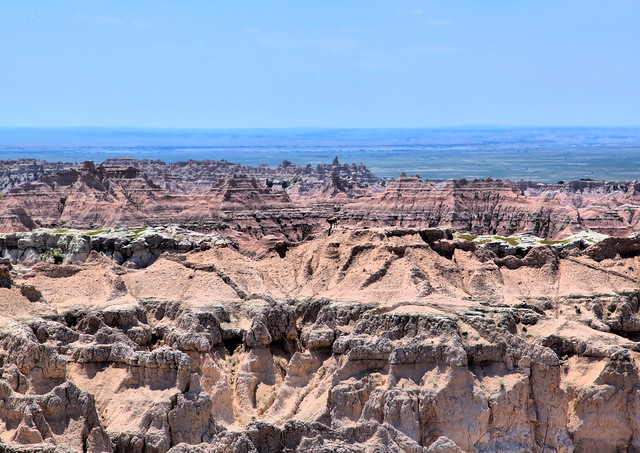
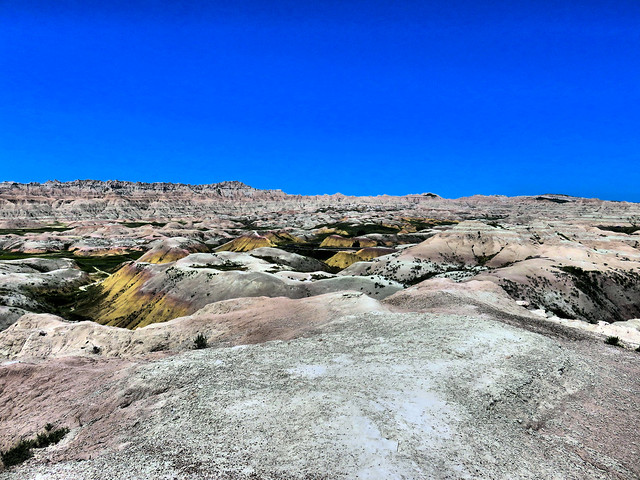
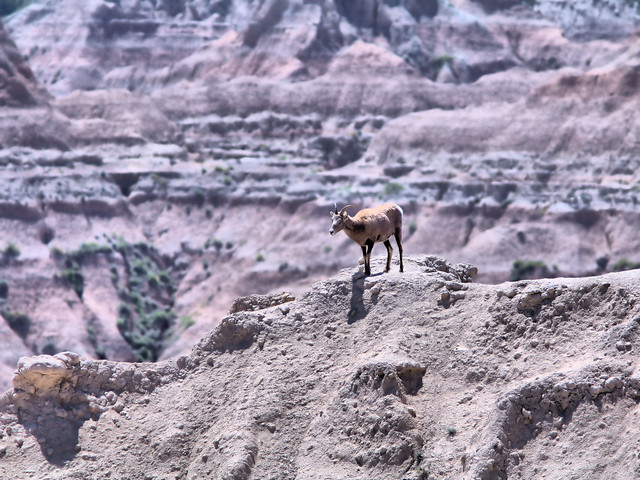
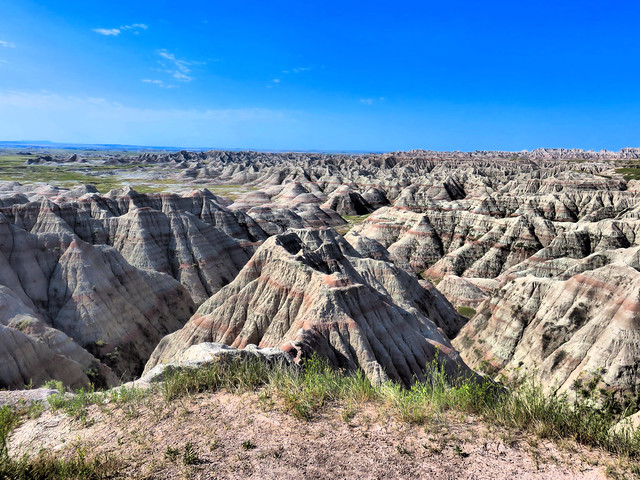
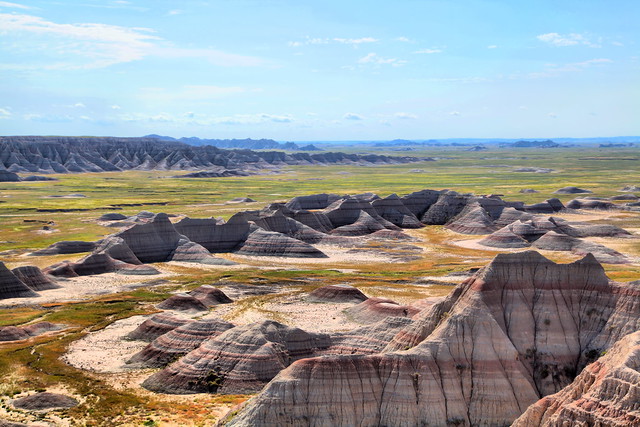
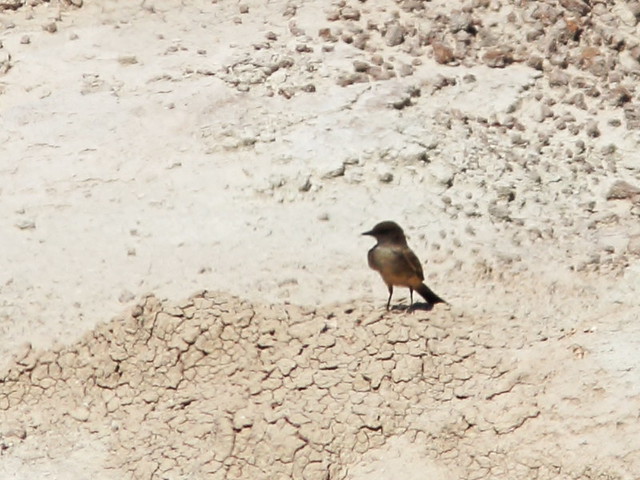
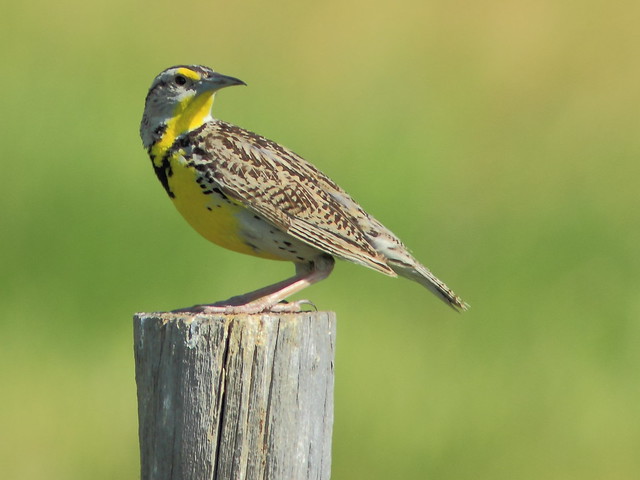
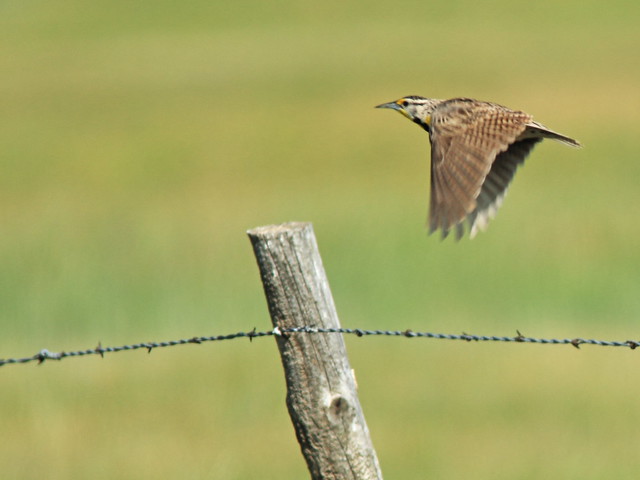
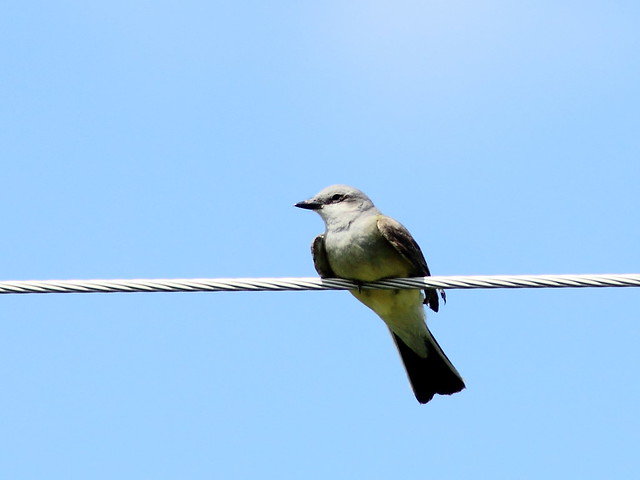
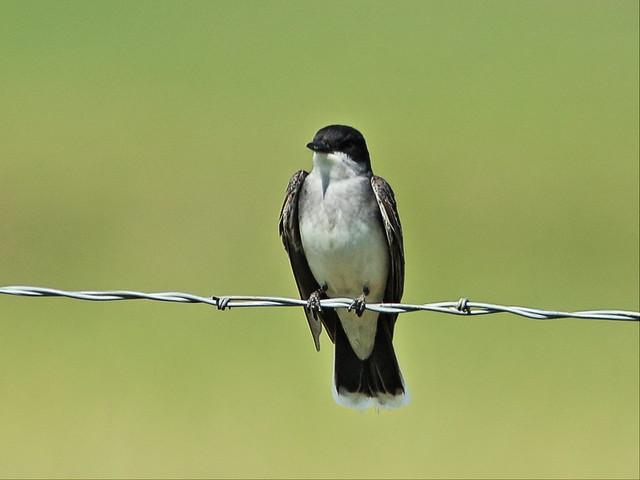
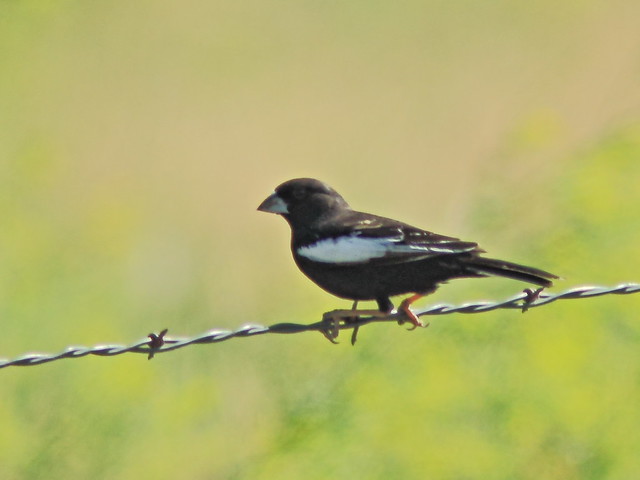
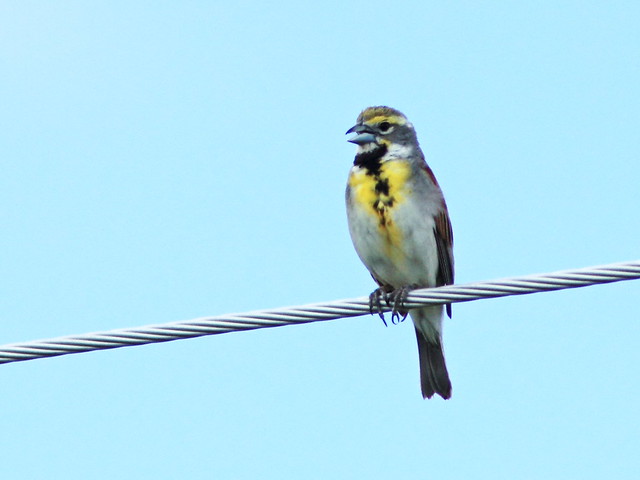
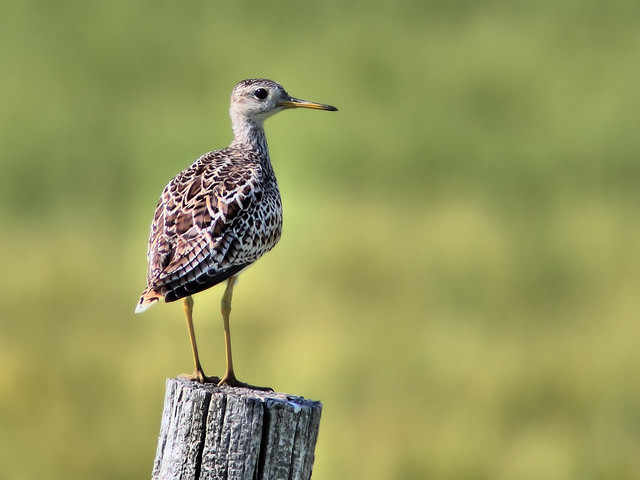
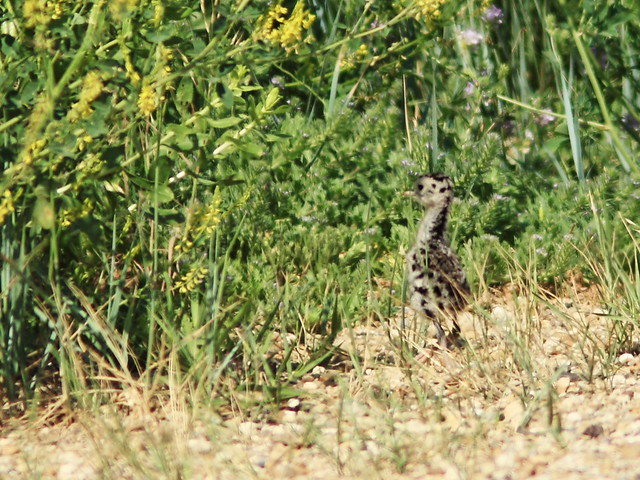
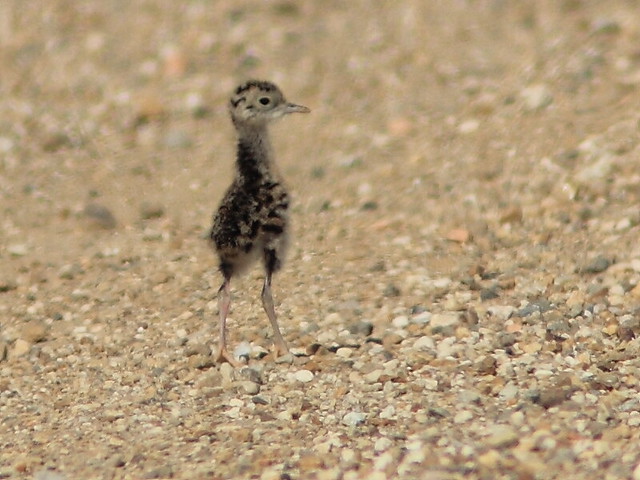
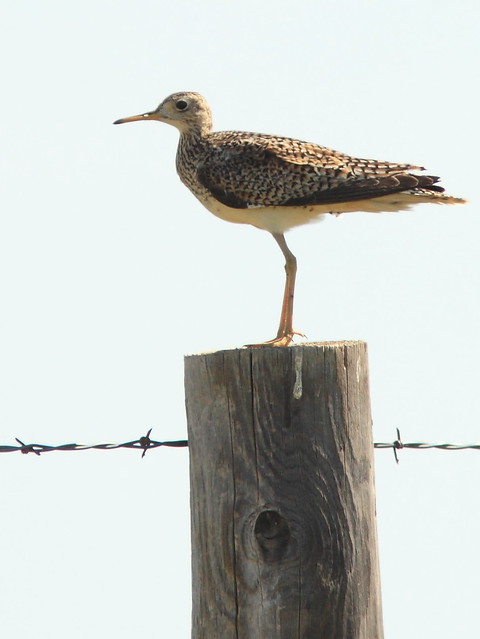
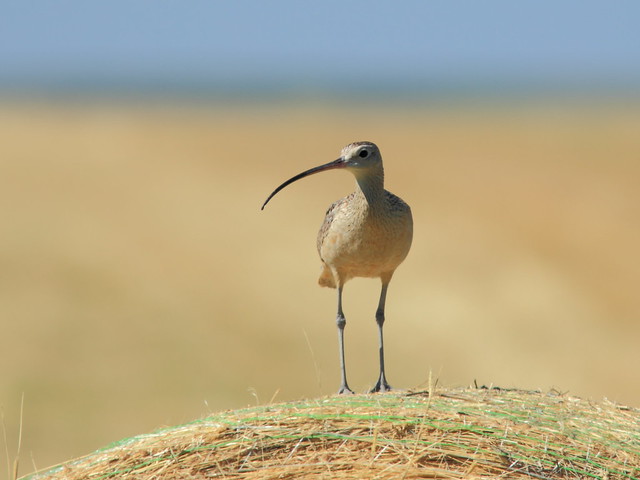
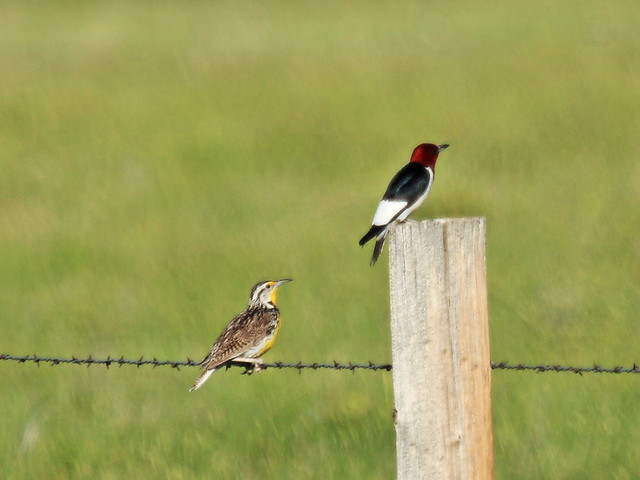
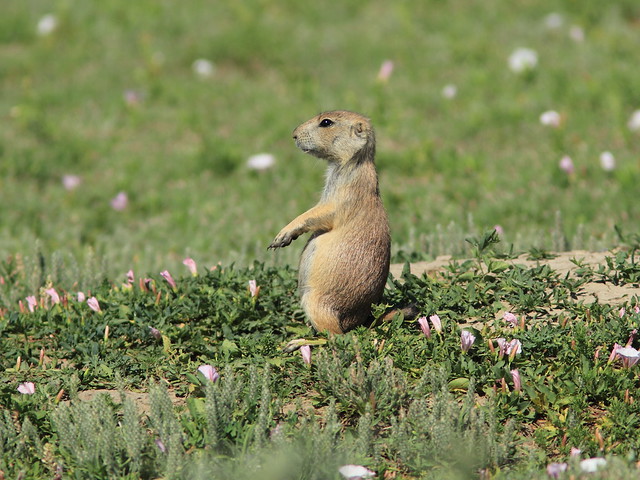
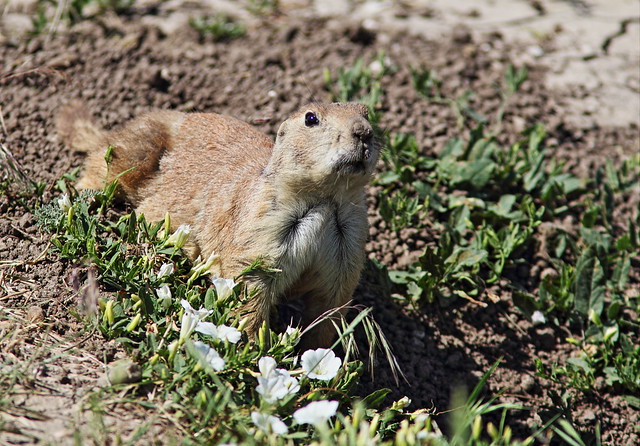
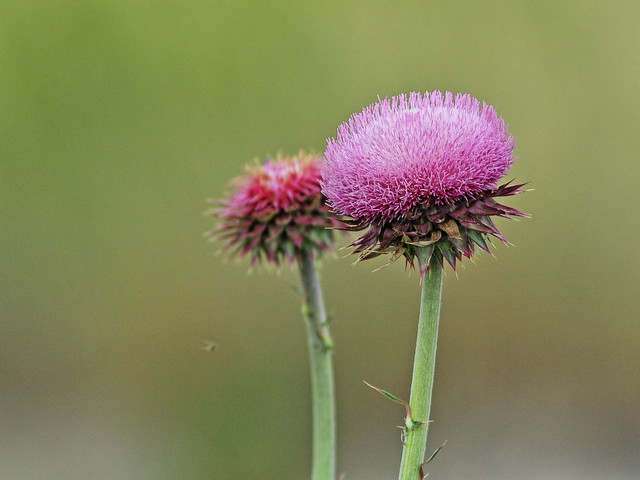
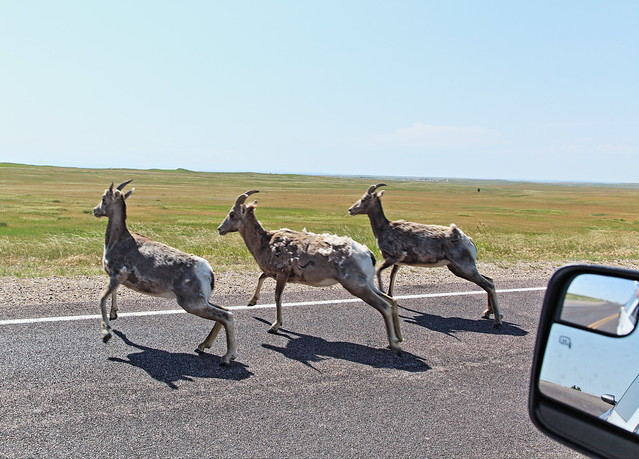
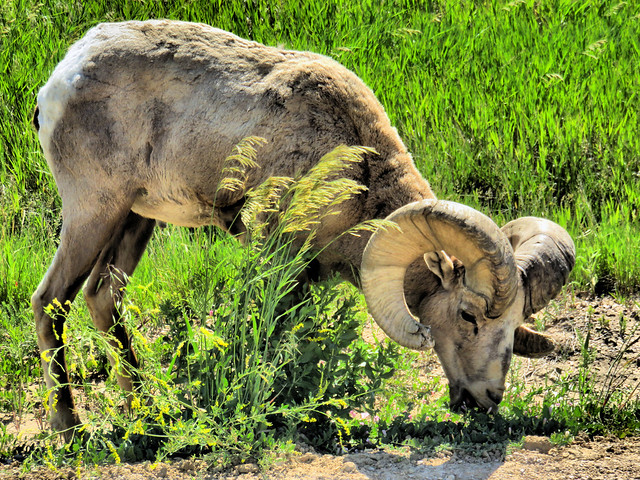
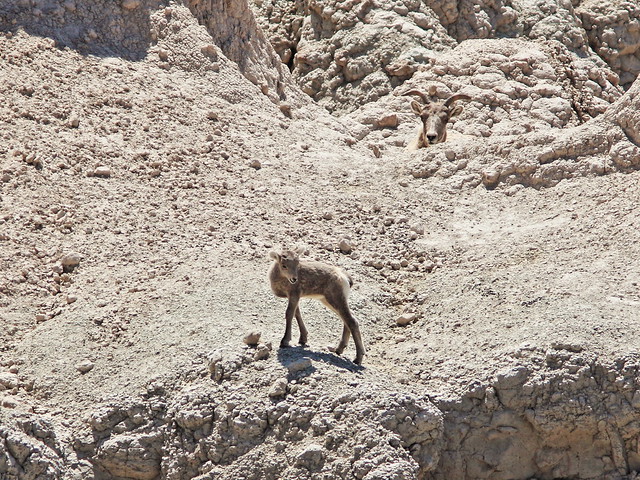
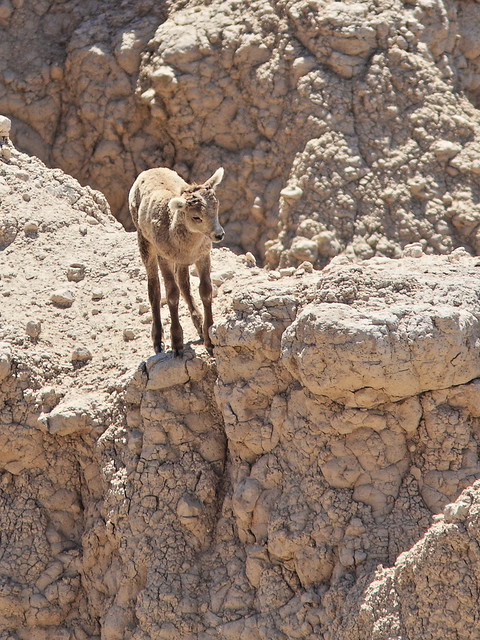
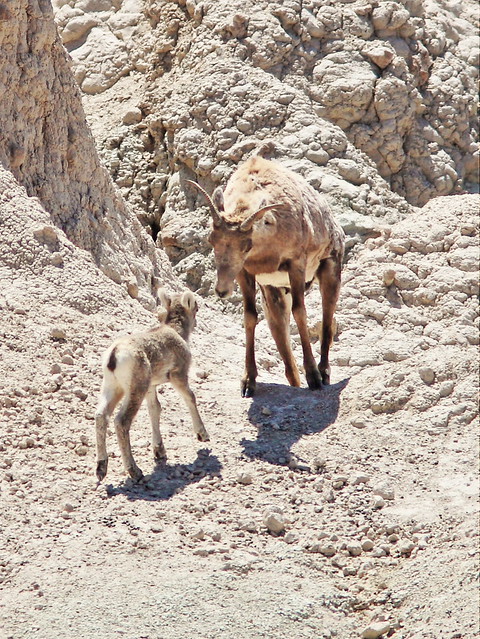
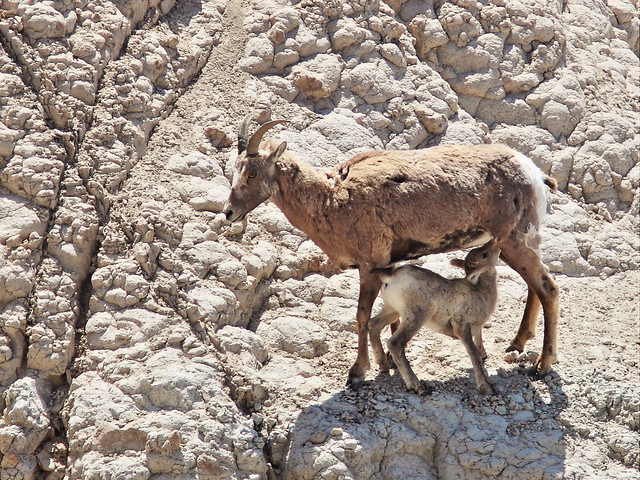
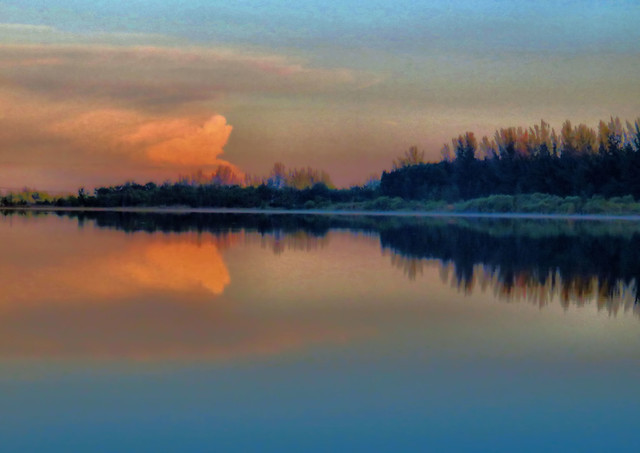
Our two night stay at Circle View guest ranch in the Badlands of South Dakota was a true wildlife watching adventure. I provided a taste of the experience in my PREVIOUS POSTwith descriptions of my observations on our first morning as I sipped coffee on the porch of our tiny "Treehouse" cabin. From our cabin, this is a view of the Badlands to the north: Later that morning, in full sun, a Bullocks Oriole appeared in the wet meadow just to the west of the cabin: A Blue Grosbeak stood out against the vegetation: A female Yellow-headed Blackbird landed on a nearby fence. She was gathering grasshoppers for her young. Her more brightly-colored mate showed up later but was too far away for a photo: An Eastern Bluebird perched on a nearby tree. I had rather expected to see Western Bluebirds as we had in Colorado, but the latter species has a blue throat and lower belly and their ranges do not overlap this far north: We set out on a tour of the main portion of Badlands National Park. The color of the rock formations varies considerably, from red... ...to yellow... ...to purple (accented by a Bighorn Sheep)... ...but were mostly multicolored: A Say's Phoebe is visible in this distant shot: Western Meadowlarks comprised the most common bird species we encountered on the open prairie: We watched for birds roosting on fences and utility wires in the National Grasslands which surround the rugged hills. Here is another Western Meadowlark, in flight: Western Kingbird: An Eastern Kingbird provided a comparison. Its more extensive range overlaps with its Western relative: Lark Buntings were a welcome sight, I had not seen any since we moved away from New Mexico. They were very shy and I had trouble getting a good photo: Dickcissels perched and sang from the wires: I logged a new "Life Bird" when Roly, our son-in-law, spotted this Upland Sandpiper roosting along the gravel road. Unlike many other sandpipers, it nests on short-grass prairie away from water: Remarkably, two Upland Sandpiper chicks were walking along right in front of our auto. One quickly disappeared into the roadside vegetation. Note its cryptic coloration: A second chick afforded a better view: Later we saw another Upland Sandpiper: We encountered a closely related dry-land member of the sandpiper family as we exited the grasslands. It was a Long-billed Curlew: Probably the most unusual bird photo I have ever obtained is that of an almost unimaginable combination-- a Western Meadowlark with a Red-headed Woodpecker in close contact. Since there were no trees in sight we joked that maybe the woodpecker was asking for directions! There were several large Black-tailed Prairie Dog towns in the grasslands. This one stood guard and yipped its squeaky warning "bark"... ...while another prairie dog seemed to be curious about our presence. Note that flowers tend to grow in the cleared areas around their mounds, probably because of years of fertilization by the rodents' wastes: Thistles predominated on the prairie: Bighorn Sheep were common on the rugged hills. These three ewes were standing in the road and suddenly were startled and all fled at once: A large Bighorn ram grazed along the road and seemed oblivious to our presence. I could hardly fit him into my camera's frame: Finally, we witnessed a bit of drama as a very young Bighorn lamb seemed to be reflecting on whether to jump from a very high cliff to a pinnacle which was about 10 feet away. Note its mother watching-- her head is barely visible in the background: The lamb decided not to jump across the chasm... ...and returned to its mother: Once again, I could not find any good reflections among the many photos I took in the arid Badlands. I don't think the picture of the car mirror meets the standard, so I must reach back into the archives. This is a storm which was developing over the Everglades, taken in our local Florida wetlands the week before we departed:
= = = = = = = = = = = = = = = Linking to Misty's CAMERA CRITTERS,
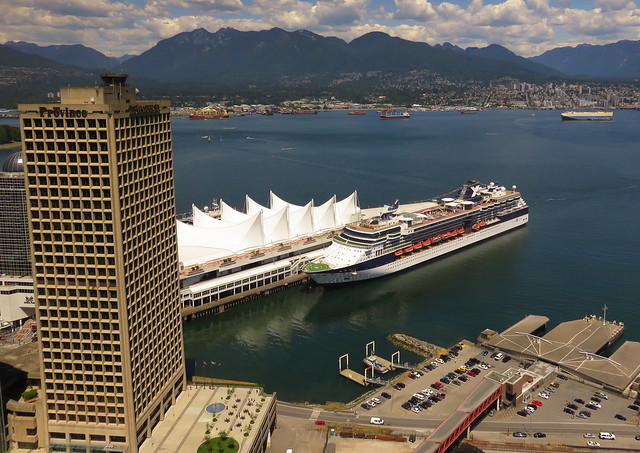
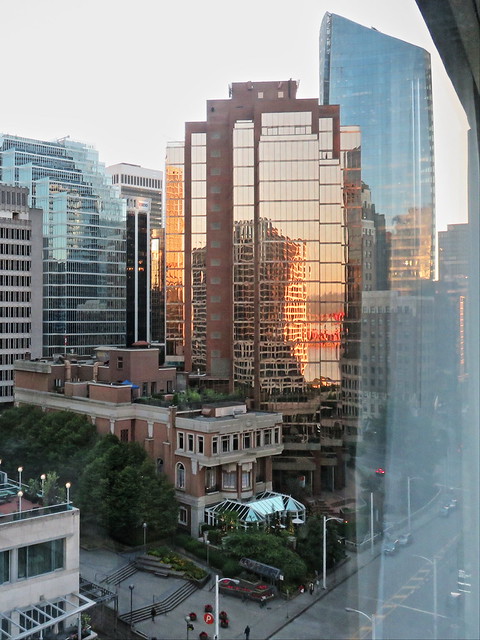
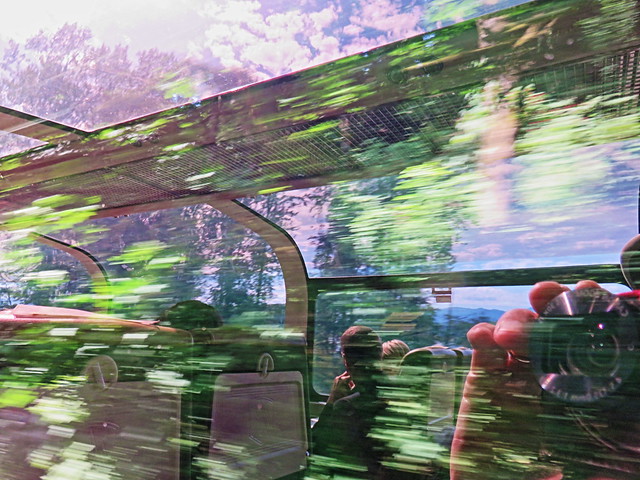
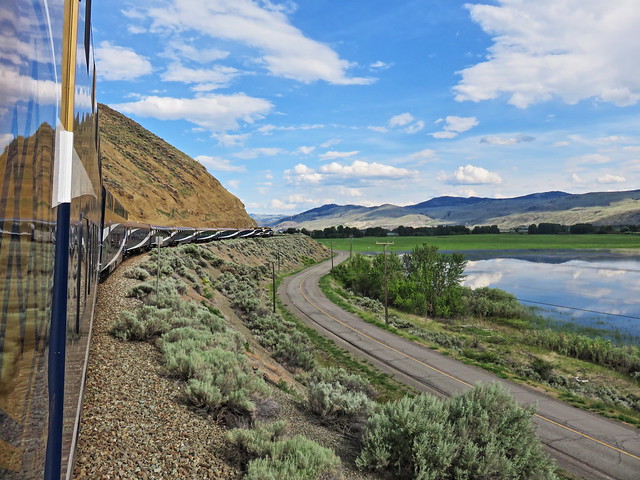
A train trip into the Canadian Rockies has long been on my Bucket List. Mary Lou was rather reluctant as she thought that sitting on a train for two straight days could be difficult. Twice on trips to Alaska we took an observation car ride on the Alaska Railway from Denali to Anchorage and enjoyed it immensely. I finally convinced her that, since we would be staying at hotels each night there would be ample time for us to get some exercise. This was not a "wildlife tour," though it held the promise of possible sightings of bears, deer, elk, Bighorn Sheep and Mountain Goats. I did not expect that there would be much time for birding. Much of our time would be spent on moving trains and tour buses. In the interest of portability and convenience I decided not to pack my big camera rig (Canon EOS 60D 18 MP Digital SLR Camera with 420 MM lens system: Canon EF 300mm f/4L IS USM telephoto Lens with 1.4X extender). Instead, I carried only my pocket camera, a Canon SX700 HS with 30X optical zoom. This turned out to be a wise choice. We departed at 6:00 AM from Fort Lauderdale and flew to Dallas-Fort Worth Airport, where we connected with the flight to Vancouver. Each leg was about 3 1/2 hours.We gained 3 hours on the clock, arriving at our hotel at about 1:00 PM, so it was a very long day. We took advantage of the daylight by ascending the Vancouver Lookout Tower, where we captured nice views of the city and the harbor. The sun was still bright at about 8:30 PM, providing some interesting REFLECTIONS: We boarded the Rocky Mountaineer train early the next morning, moving through Vancouver's extensive freight yards. Remotely-controlled switching engines scurried about. Flashing red lights warned that no humans were aboard. Reflections from the car's windows and the movement of the train ruined almost all the photos I took the first day. As bad as this photo turned out, I liked the sense of motion and the reflections of my camera and the passengers instead of the lake, my intended target, in the background: Soon we were following the Fraser River, which widened to form several beautiful lakes. As the river entered Fraser Canyon the stream narrowed and created Hell's Gate, a tremendous torrent which few boats are able to cross. If the video fails to load in the space below, please click HERE
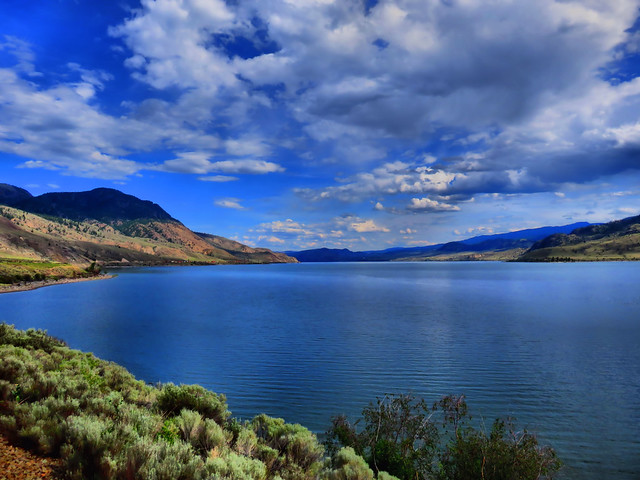
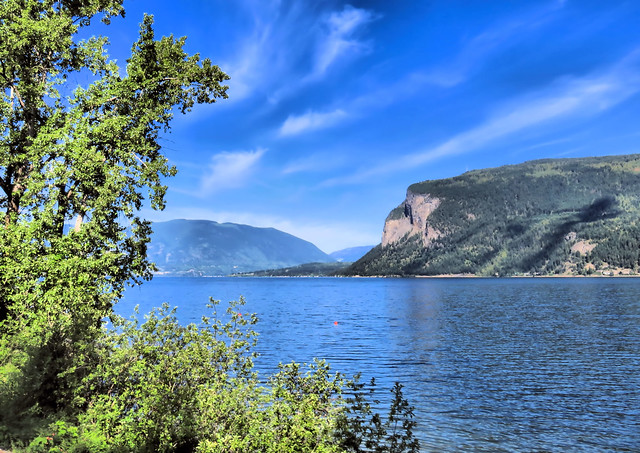
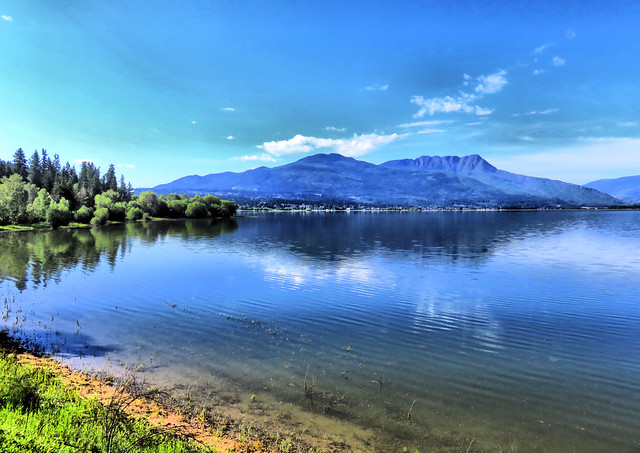
After a night in Kamloops, we resumed the journey, continuing along the Thompson River. Now I took photos from the observation deck. Despite the movement of the train, some came out very nicely.
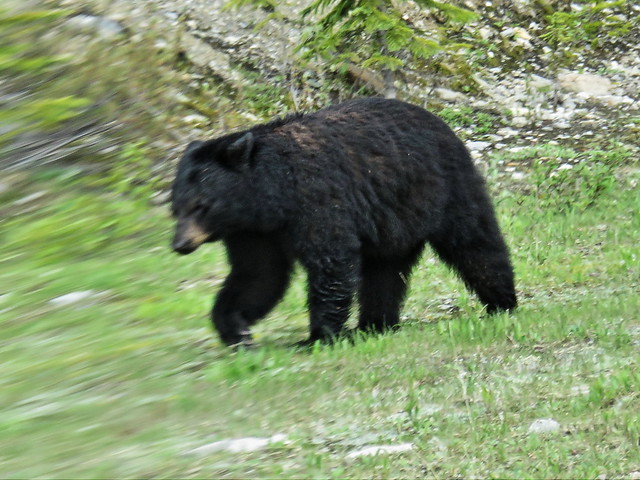
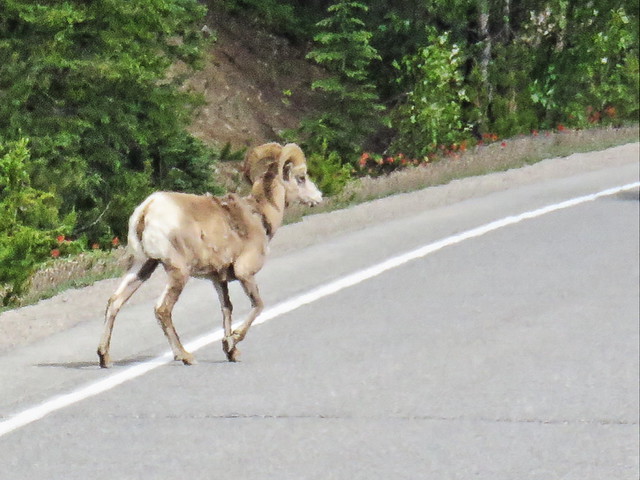
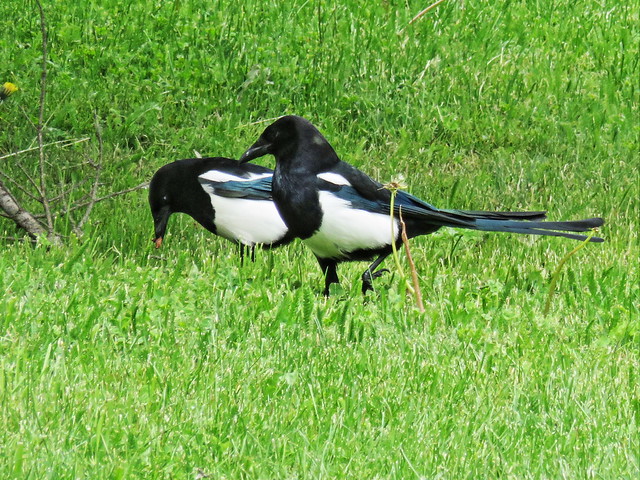
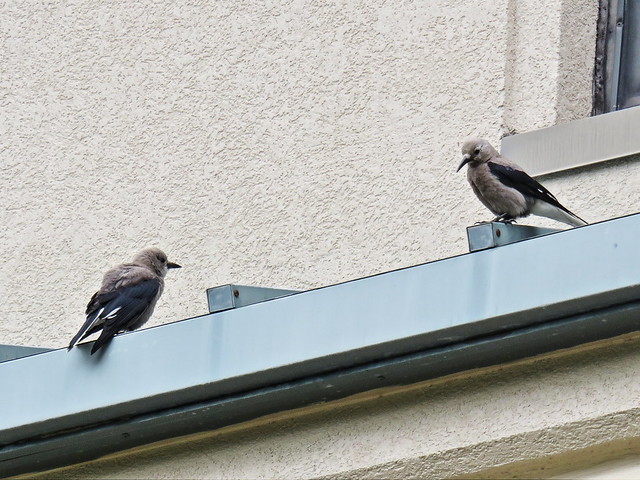
In contrast with the hundreds of skies and reflective lakes, contacts with "CRITTERS" were few and far between. On our bus trip on the Icefield Parkway between Lake Louise and Jasper, we startled a Black Bear that was eating dandelions along the road. I had to shoot through the curved windshield from the opposite side of the vehicle, and this distorted the only image I obtained: A pair of young Bighorn Sheep blocked the highway, allowing me to get a few shots as well as a video: BIRDS presented few photo opportunities. Black-billed Magpies posed on the hotel grounds at Lake Louise: Another Corvid species, Clark's Nutcrackers, were also noisy visitors around the hotel:
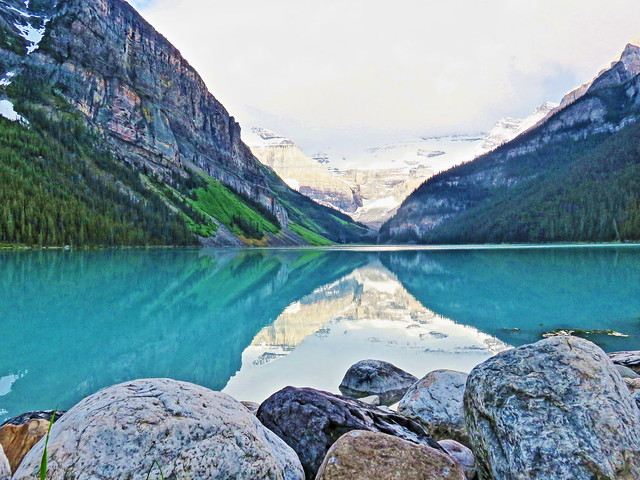
My closest approximation of a MACRO photo during the Canada trip is one that shows colorful river rocks with Victoria Mountain and Glacier in the background, at Lake Louise:
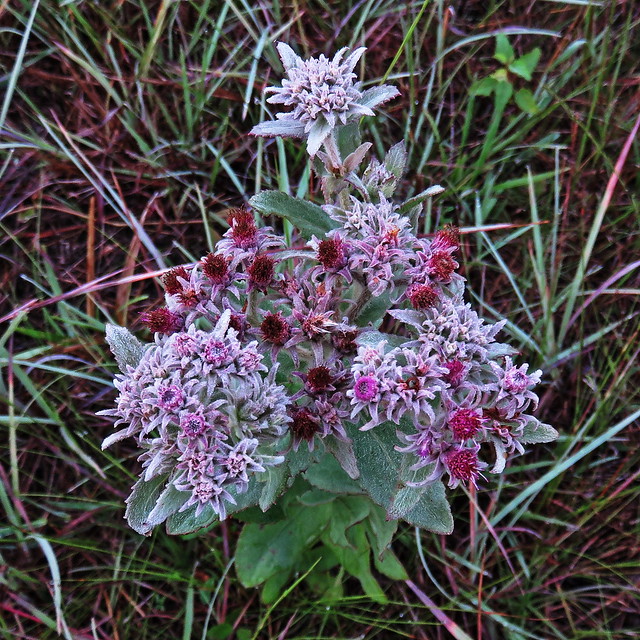
This bona fide macro was taken back in Florida, showing a tiny clump of flowers, about 1.5 inches (4 cm) wide, taken from a distance of only about 3 inches (8 cm) with my PowerShot. It turned out looking like a huge bouquet:
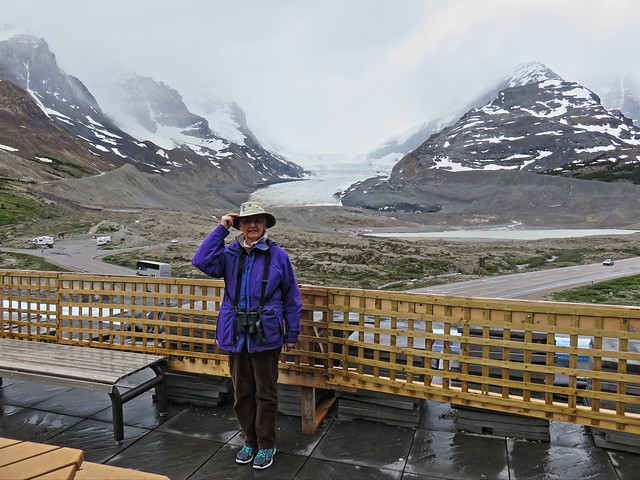
My FENCE photos are both from the Columbia Ice Field glacier area. Here is Mary Lou in the wind and rain with the Athabascan Glacier in the background. We subsequently walked up on the glacier.
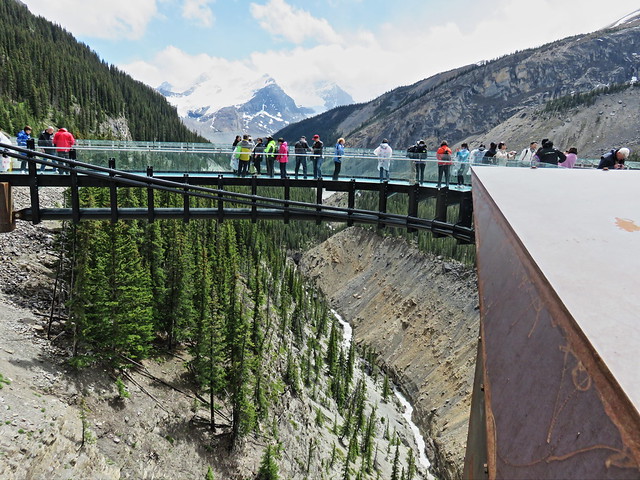
I was the only one brave enough to take the Jasper Glacier Skywalk, a glass walkway that looks straight down almost 1000 feet into the valley:
Linking to I Heart Macro by Laura ________________________________________________ Please visit the links to all these memes to see some excellent photos on display ________________________________________________