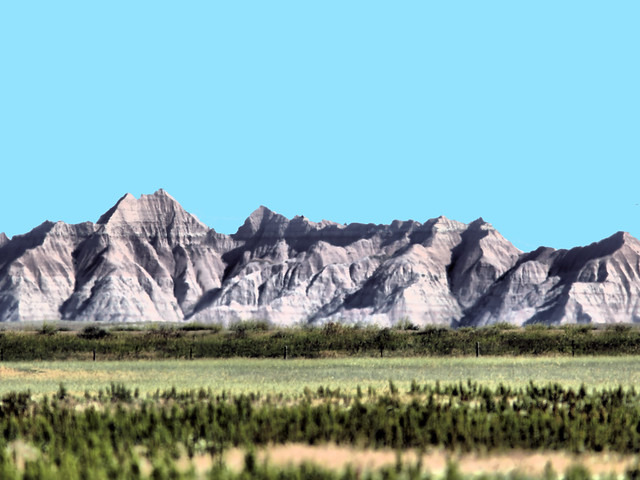
From our cabin, this is a view of the Badlands to the north:
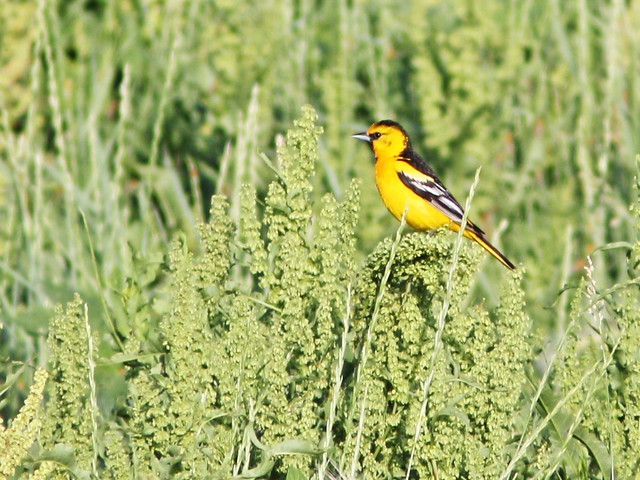
Later that morning, in full sun, a Bullocks Oriole appeared in the wet meadow just to the west of the cabin:
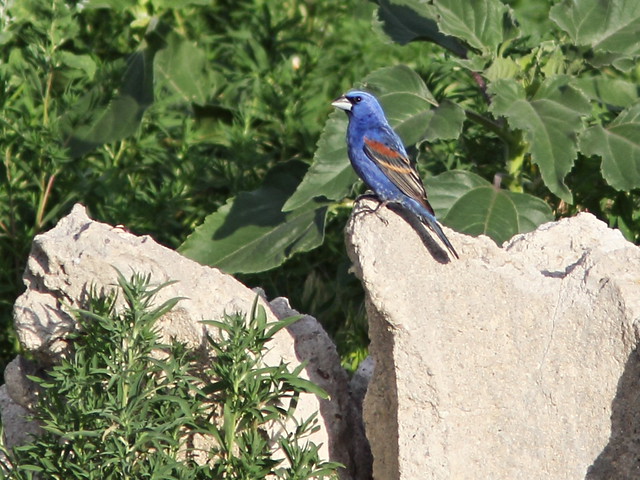
A Blue Grosbeak stood out against the vegetation:
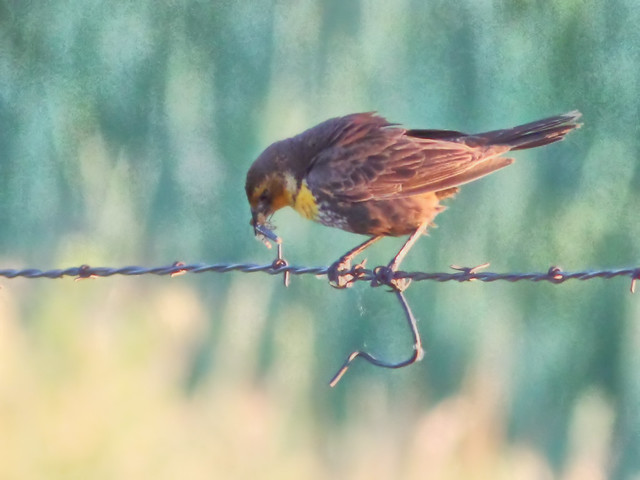
A female Yellow-headed Blackbird landed on a nearby fence. She was gathering grasshoppers for her young. Her more brightly-colored mate showed up later but was too far away for a photo:
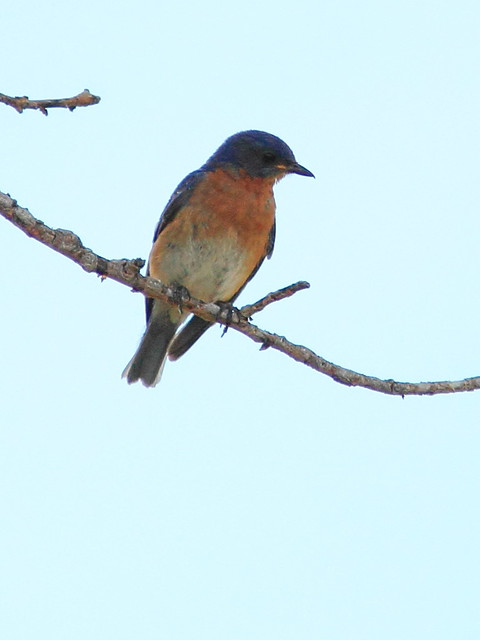
An Eastern Bluebird perched on a nearby tree. I had rather expected to see Western Bluebirds as we had in Colorado, but the latter species has a blue throat and lower belly and their ranges do not overlap this far north:
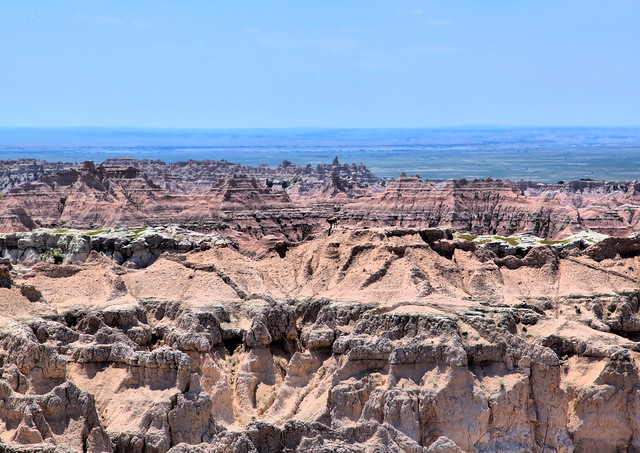
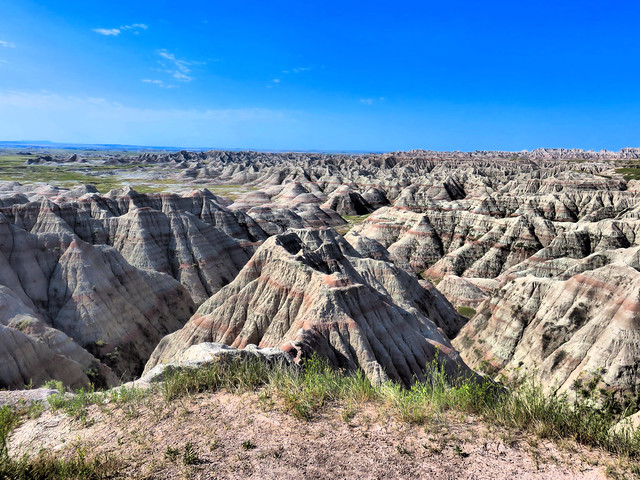
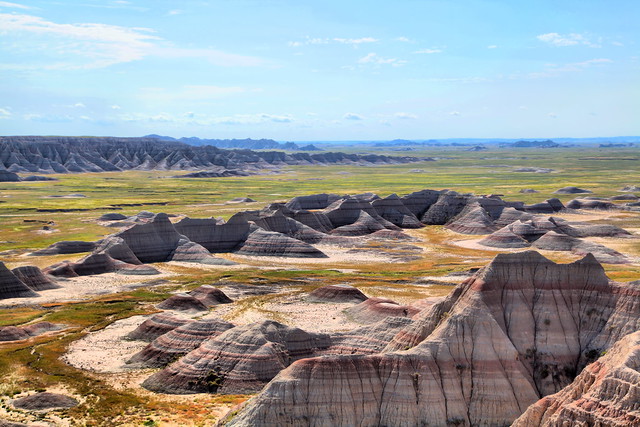
We set out on a tour of the main portion of Badlands National Park. The color of the rock formations varies considerably, from red...
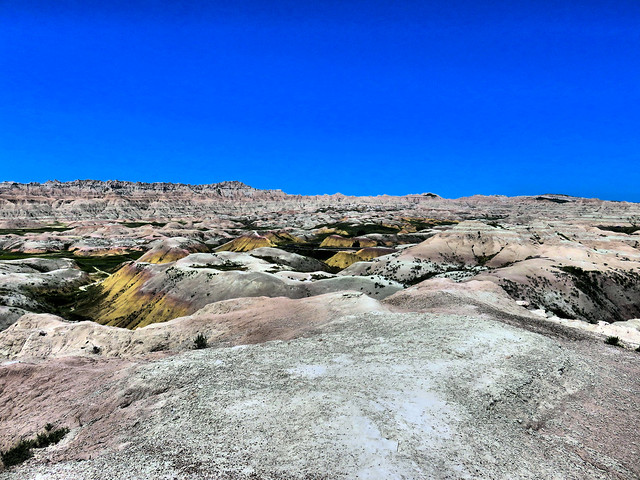
...to yellow...
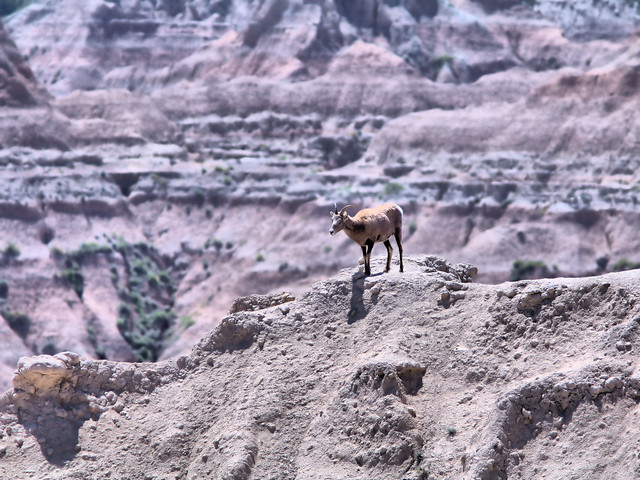
...to purple (accented by a Bighorn Sheep)...
...but were mostly multicolored:
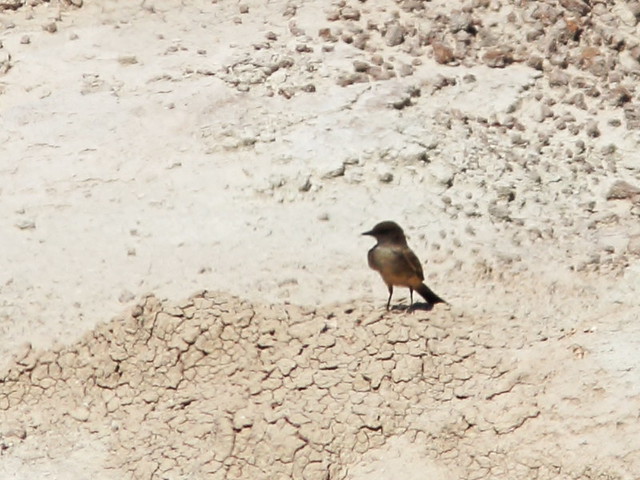
A Say's Phoebe is visible in this distant shot:
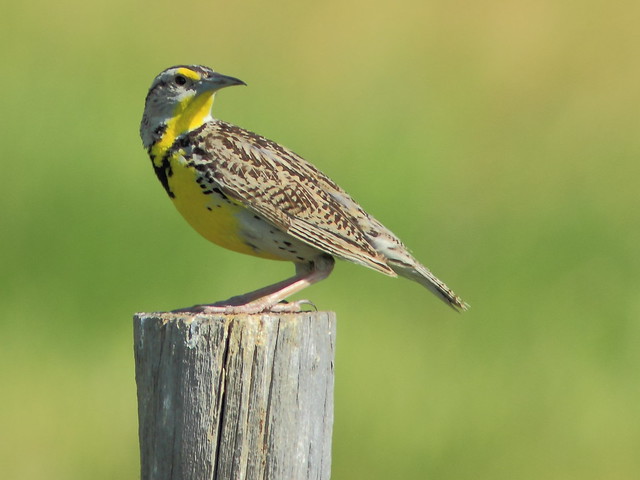
Western Meadowlarks comprised the most common bird species we encountered on the open prairie:
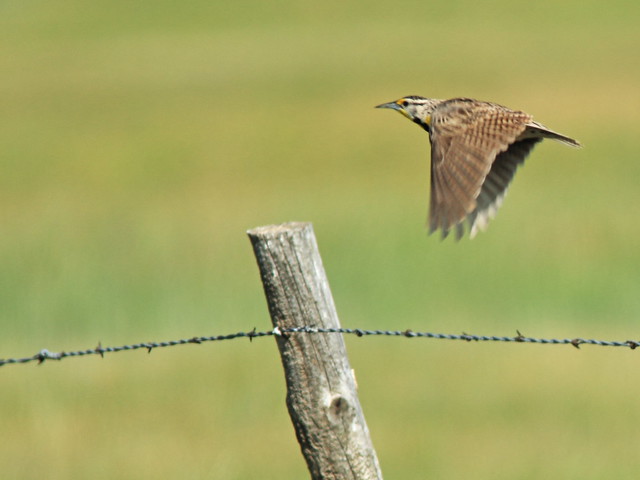
We watched for birds roosting on fences and utility wires in the National Grasslands which surround the rugged hills. Here is another Western Meadowlark, in flight:
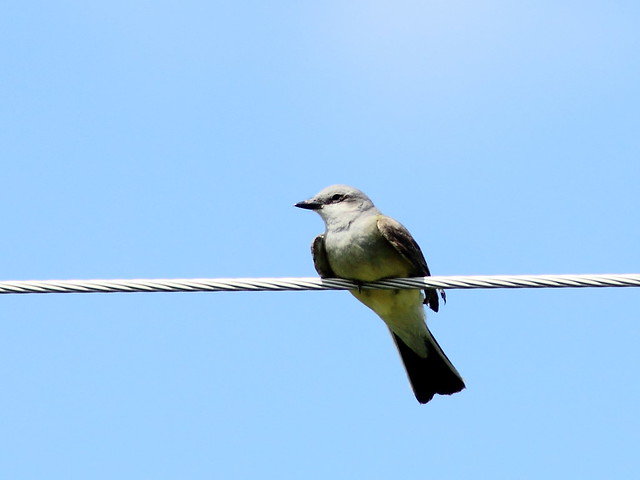
Western Kingbird:
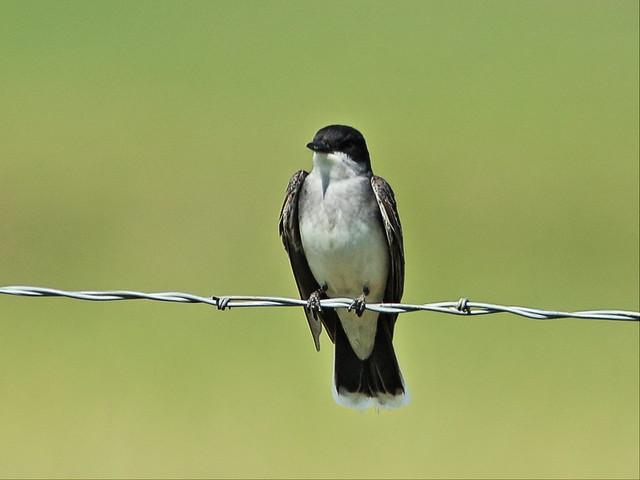
An Eastern Kingbird provided a comparison. Its more extensive range overlaps with its Western relative:
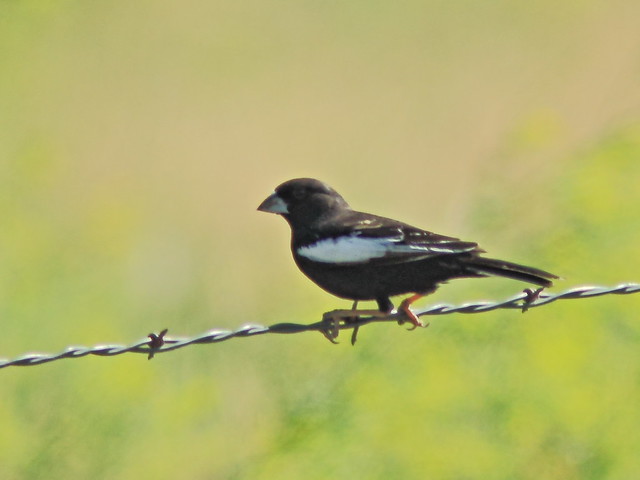
Lark Buntings were a welcome sight, I had not seen any since we moved away from New Mexico. They were very shy and I had trouble getting a good photo:
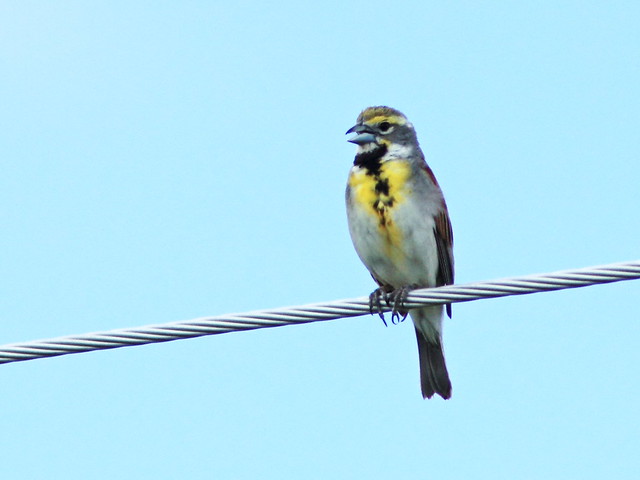
Dickcissels perched and sang from the wires:
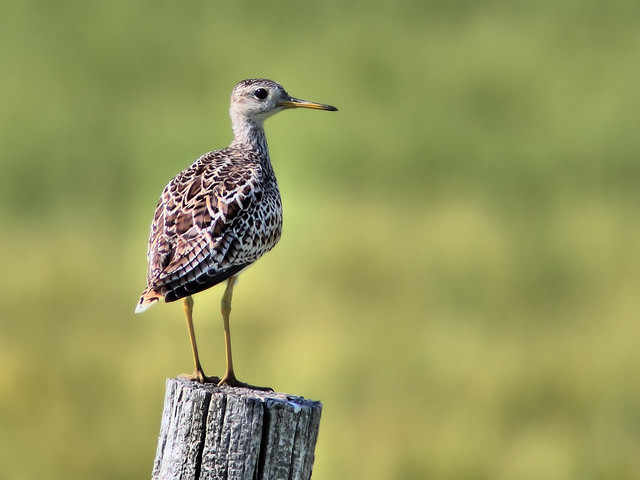
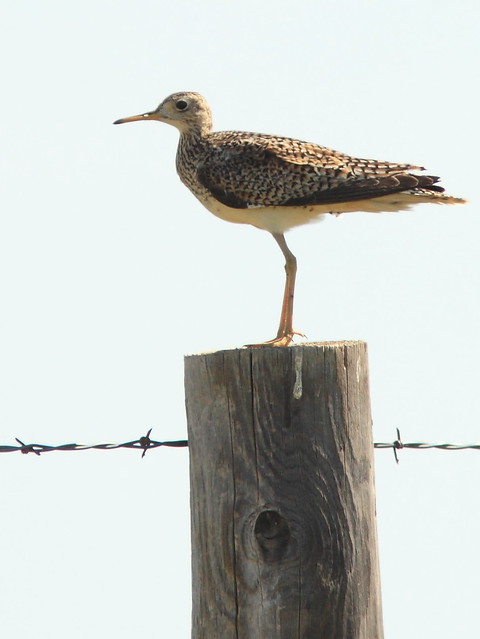
I logged a new "Life Bird" when Roly, our son-in-law, spotted this Upland Sandpiper roosting along the gravel road. Unlike many other sandpipers, it nests on short-grass prairie away from water:
Remarkably, two Upland Sandpiper chicks were walking along right in front of our auto. One quickly disappeared into the roadside vegetation. Note its cryptic coloration:
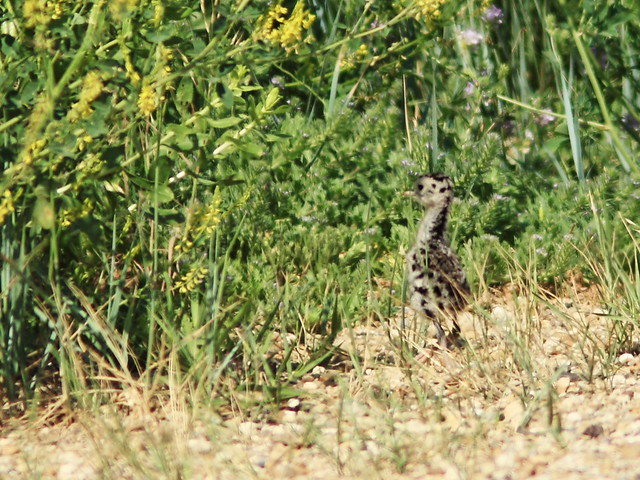
A second chick afforded a better view:
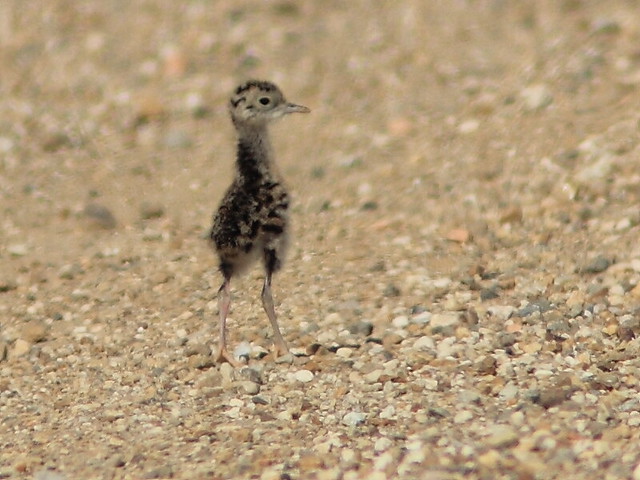
Later we saw another Upland Sandpiper:
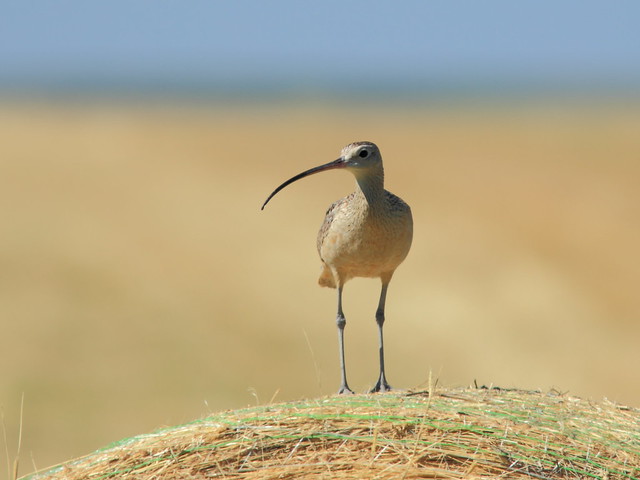
We encountered a closely related dry-land member of the sandpiper family as we exited the grasslands. It was a Long-billed Curlew:
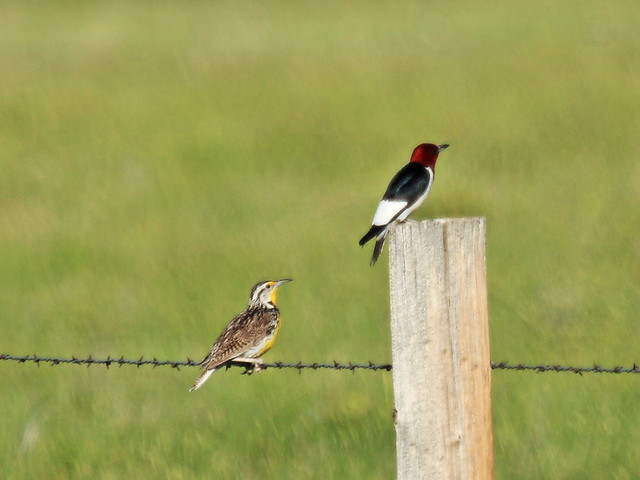
Probably the most unusual bird photo I have ever obtained is that of an almost unimaginable combination-- a Western Meadowlark with a Red-headed Woodpecker in close contact. Since there were no trees in sight we joked that maybe the woodpecker was asking for directions!
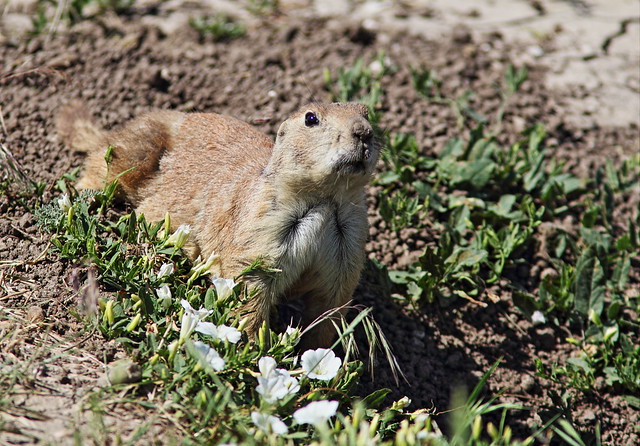
There were several large Black-tailed Prairie Dog towns in the grasslands. This one stood guard and yipped its squeaky warning "bark"...
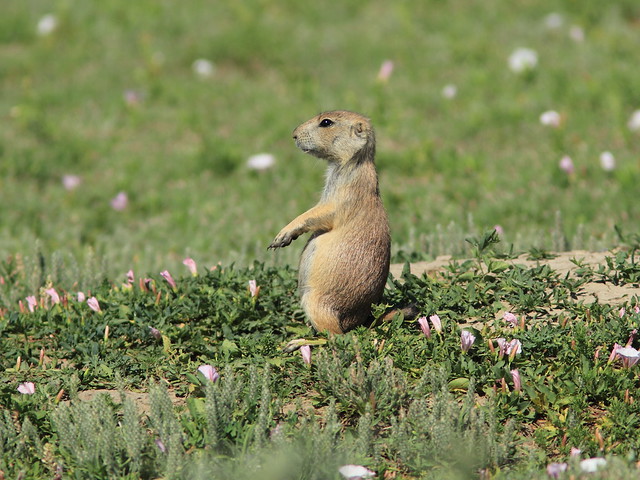
...while another prairie dog seemed to be curious about our presence. Note that flowers tend to grow in the cleared areas around their mounds, probably because of years of fertilization by the rodents' wastes:
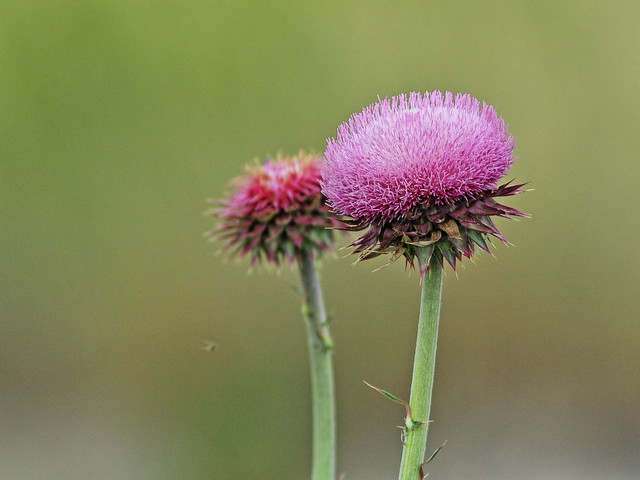
Thistles predominated on the prairie:
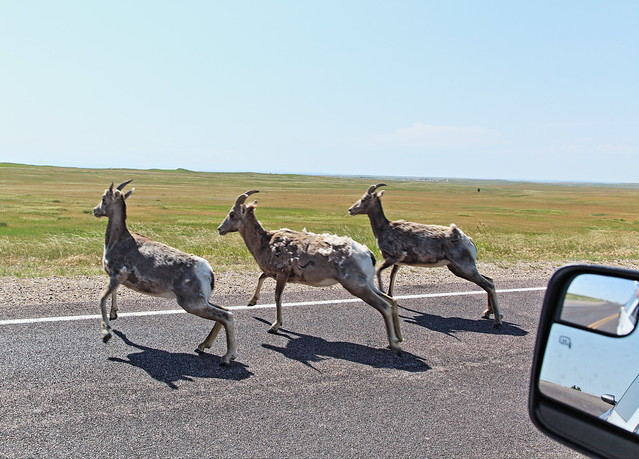
Bighorn Sheep were common on the rugged hills. These three ewes were standing in the road and suddenly were startled and all fled at once:
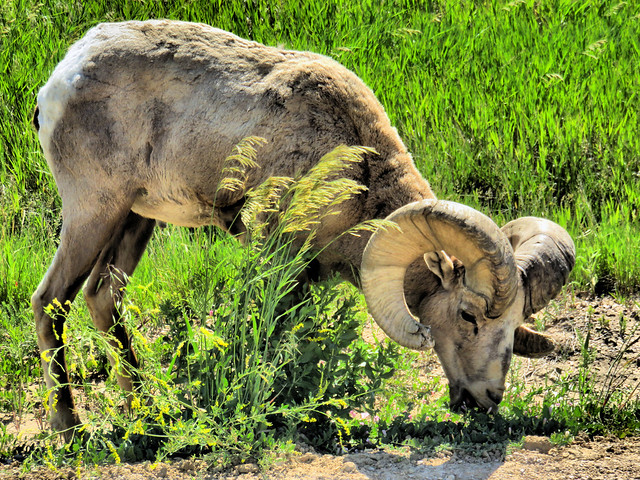
A large Bighorn ram grazed along the road and seemed oblivious to our presence. I could hardly fit him into my camera's frame:
Finally, we witnessed a bit of drama as a very young Bighorn lamb seemed to be reflecting on whether to jump from a very high cliff to a pinnacle which was about 10 feet away. Note its mother watching-- her head is barely visible in the background:
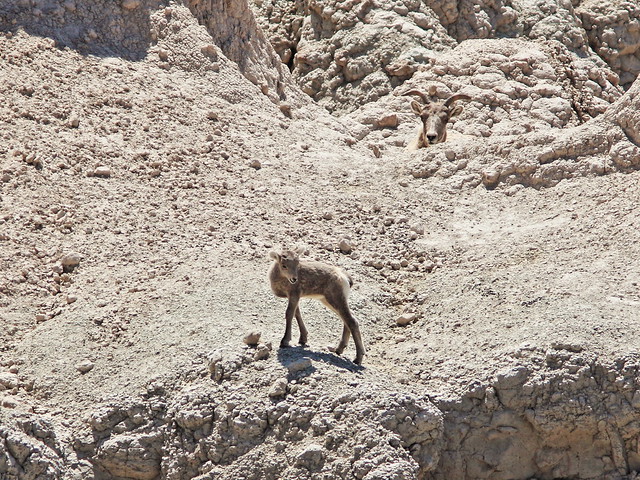
The lamb decided not to jump across the chasm...
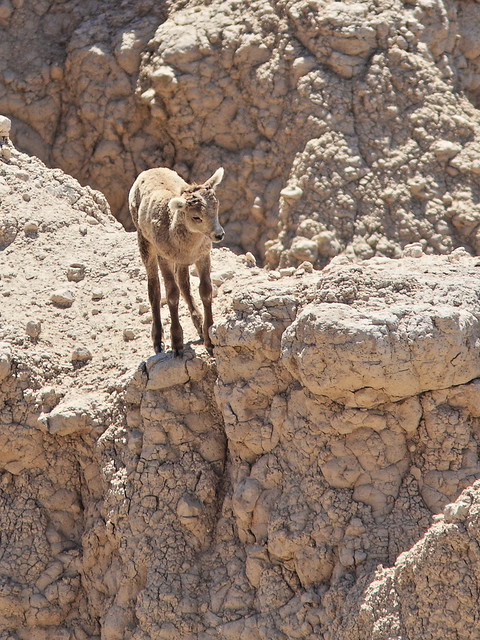
...and returned to its mother:
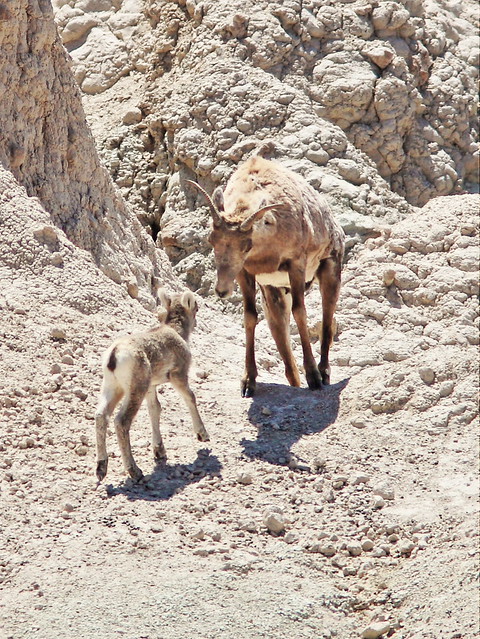
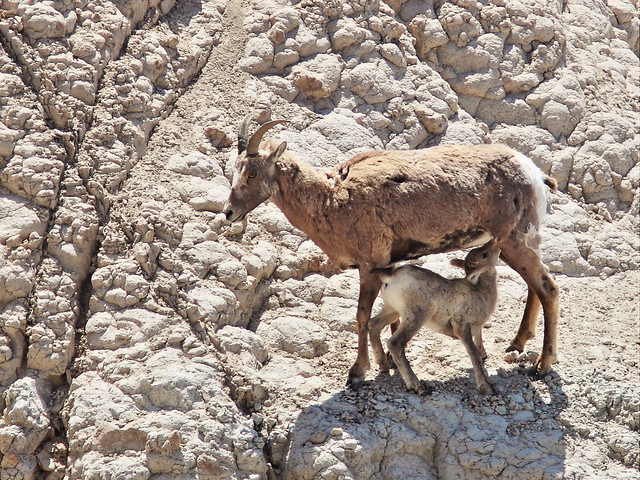
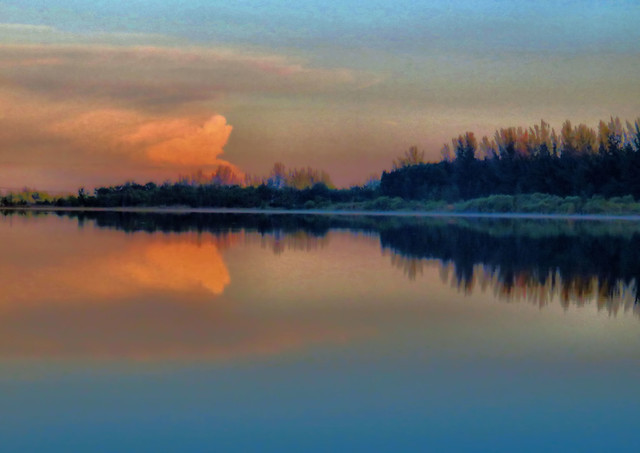
Once again, I could not find any good reflections among the many photos I took in the arid Badlands. I don't think the picture of the car mirror meets the standard, so I must reach back into the archives. This is a storm which was developing over the Everglades, taken in our local Florida wetlands the week before we departed:
= = = = = = = = = = = = = = =
Linking to Misty's CAMERA CRITTERS,
Linking to Eileen's SATURDAY'S CRITTERS,
Linking to GOOD FENCES by Tex (Theresa).
Linking to WEEKEND REFLECTIONS by James
Linking to BirdD'Pot by Anni
Linking to Wild Bird Wednesday by Stewart
Linking to Today's Flowers Friday by Denise
Linking to Wordless Wednesday (on Tuesday) by NC Sue
________________________________________________
Please visit the links to all these memes to see some excellent photos on display
________________________________________________


