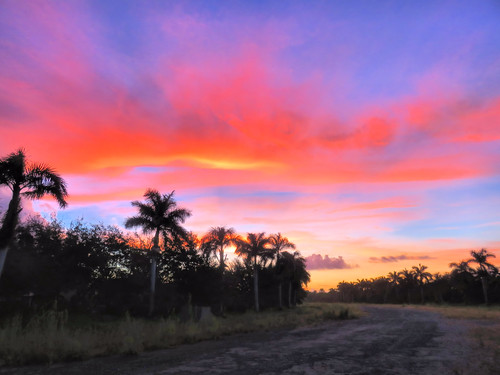
This is the view looking back down the road before sunrise:
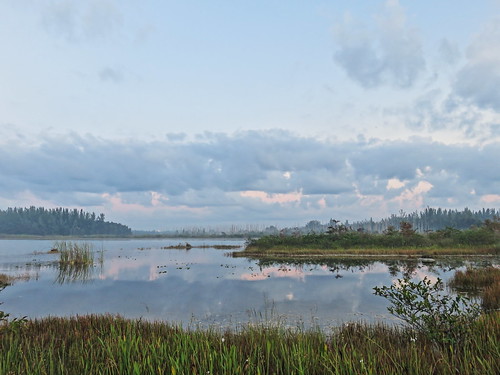
View of the lake on a murky morning this week, just before sunrise:
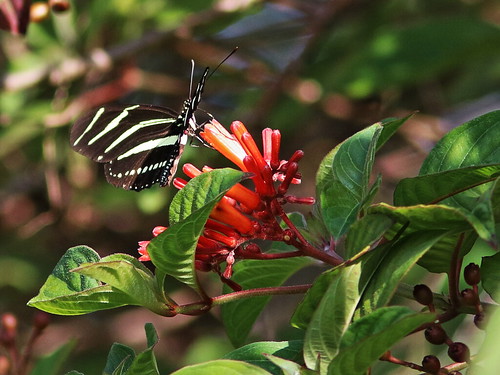
This past year our Homeowners Association planted hedges of Firebush (Hamelia patens), a most welcome innovation. Their blooms attract wintering hummingbirds and also butterflies such as this Zebra heliconian:
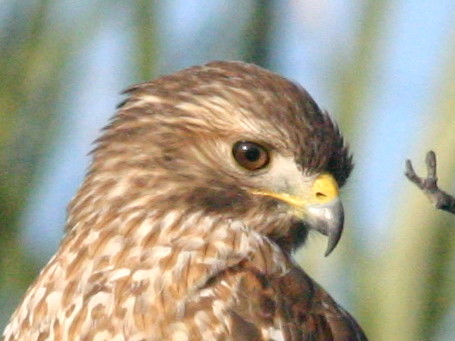
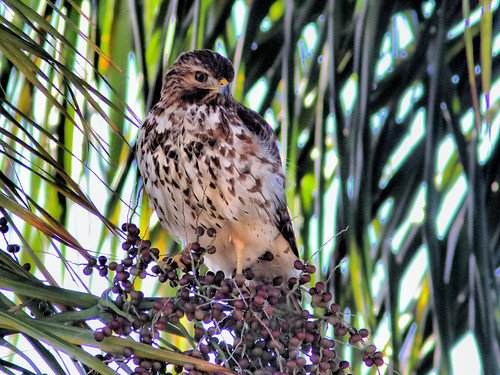
A roosting Red-shouldered Hawk strikes a characteristic pose. It appears to be deep in thought, with head gently bowed, chin to chest. Its mind must be so far off, meditating, contemplating its place in the order of nature? Might I startle it into awareness by touching its red shoulder?
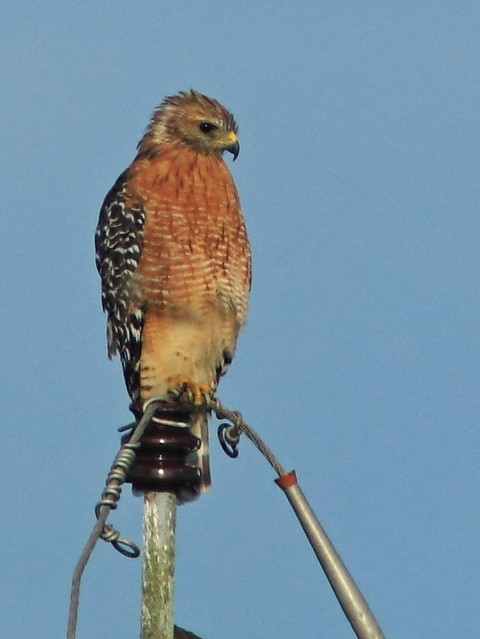
Of course, this is far from the truth. The hawk is keenly aware of the surroundings. Sharp eyes are actually watching for any scant movement which might betray the presence of a prey item, whether insect, reptile, amphibian, small mammal or bird. Immobility and stealth are essential assets for a successful hunt.
Adult Red-shouldered Hawks vary from very colorful (as above) to rather pale. Those native to Florida tend to have a sun-bleached appearance, due to genetic variation rather than the effects of UV rays:
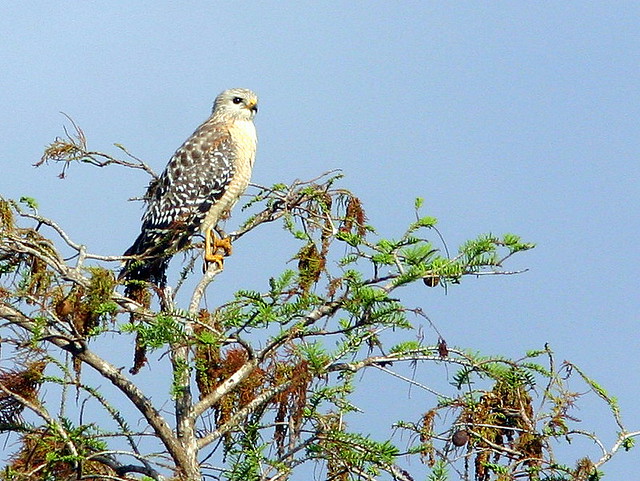
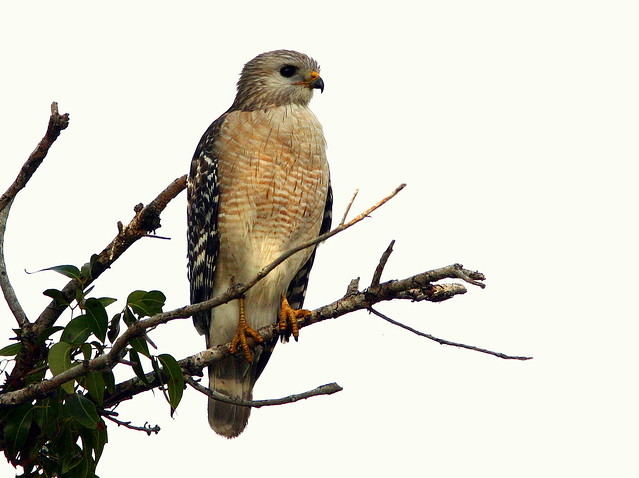
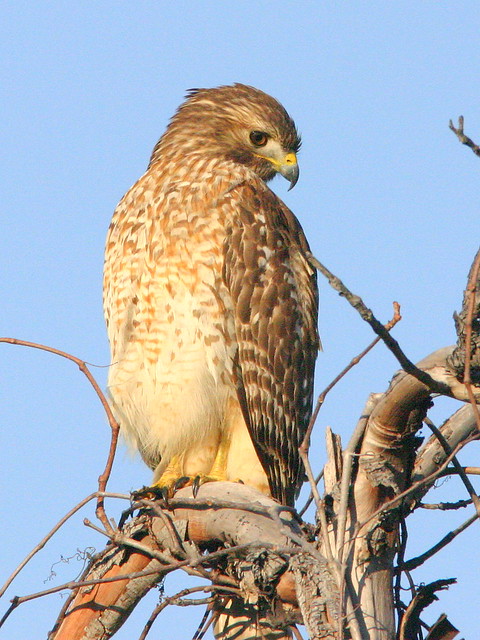
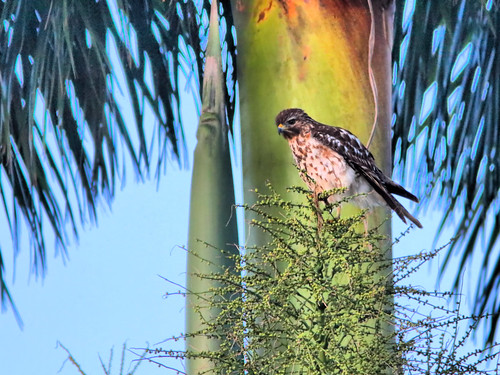
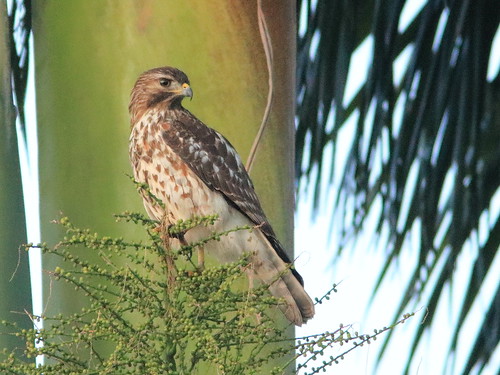
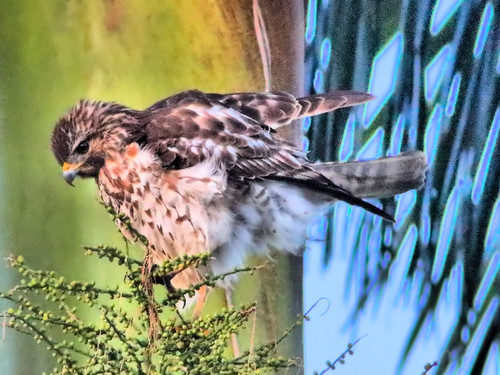
Immature Red-shouldered hawks also vary somewhat in the intensity of their streaked plumage, which they retain for about 18 months:
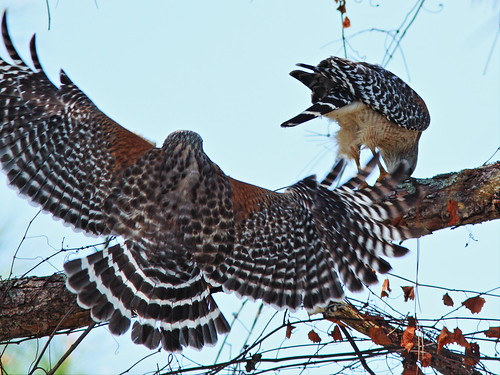
The red on the adults' shoulders shows up best in flight:
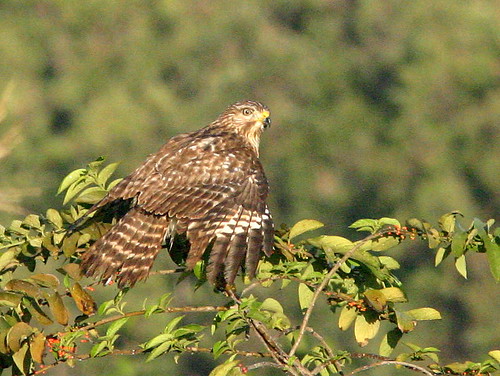
This juvenile Red-shouldered hawk exhibits a more useful identifying mark. The outer primaries are white at their base, creating a light band or "window" near its wingtips:
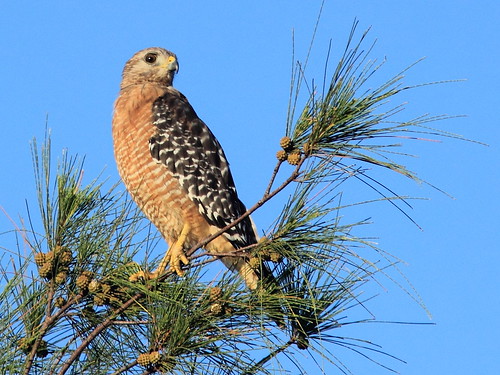
I usually hear and see one or more of this species on our morning walks in the local wetlands. This is a handsome adult bird:
They prefer wetland habitats, and their diet varies by location. Amphibians, reptiles and invertebrates comprise about three-quarters of their prey in southern states, but studies in Quebec, Massachusetts, Wisconsin and Maryland have revealed a predominance of mammals. They also capture birds but are usually unsuccessful in such attempts.
One immature Red-shouldered Hawk currently favors an area along the entrance to our birding patch. It roosts in the tall Royal Palms along the sides of the road. Here it perches on a clump of the palm's fruit:
= = = = = = = = = = = = = = =
Linking to Misty's CAMERA CRITTERS,
Linking to Eileen's SATURDAY'S CRITTERS,
Linking to GOOD FENCES by Tex (Theresa).
Linking to WEEKEND REFLECTIONS by James
Linking to BirdD'Pot by Anni
Linking to Wild Bird Wednesday by Stewart
Linking to Today's Flowers Friday by Denise
Linking to Wordless Wednesday (on Tuesday) by NC Sue
________________________________________________
Please visit the links to all these memes to see some excellent photos on display
________________________________________________