Showing posts with label Snow Moon. Show all posts

Thursday, February 13, 2020

Birding under a Snow Moon

On February 8 the Moon was not quite full as it disappeared into the clouds when we walked into the Wounded Wetlands. At the rookery site I found two Yellow-crowned Night-Herons. One was an adult approaching breeding condition as evidenced by its bright orange legs, clear yellowish white cap and occipital and scapular (head and shoulder) plumes:

Yellow-crowned Night-Heron 01-20200208

The other night-heron was an immature bird, approaching one year of age:

Yellow-crowned Night-Heron immature 02-20200208

My camera was set for night-flying birds with flash, and I forgot to turn off the flash when I snapped the first photo, that of the  juvenile Yellow-crowned Night-Heron. It looks like an alien creature!

Yellow-crowned Night-Heron immature 05-20200208

On February 9, we reached the lake before the full Snow Moon settled into the horizon. On the way in I had stopped to record the song of an Eastern Whip-Poor-Will. In addition to its namesake phrase, the bird uttered an assortment of "whip" and "wheel" calls. (My recording of its song may be heard at this linkbut listen carefully as the bird was not very close by.)

A cold front had passed through with morning temperatures dipping into the high 40s and low 50s (~10C), grounding the insects and requiring the whip-poor-will to rest and conserve energy. Some of its Nightjar (Caprimulgidaeaka Goatsuckers)  relatives, notably the Common Poorwill, actually "hibernate," entering into a prolonged state of torpor in which their heart rate slows dramatically and body temperature drops. Hummingbirds also may become torpid and may survive periods of cold weather. 

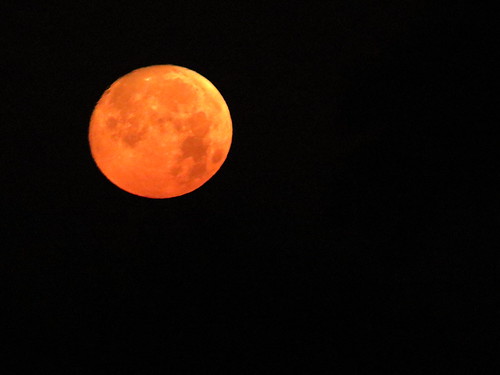
The Snow Moon in a black sky, an hour before sunrise:

Full Snow Moon 01-20200209

That's MaryLou with her flashlight, walking in about 55 minutes before sunrise. My new iPhone 11 Pro Max really  brightened up the night with help of moonlight and a tall street lamp about 100 yards behind me!

 Snow Moon at sunrise minus 55 minutes 20200209 

Opposite the Moon, at 26 minutes before sunrise, the eastern sky  was starting to lighten up :

Sunrise minus 26 minutes 20200209

At 23 minutes before sunrise, I had almost reached the lake:
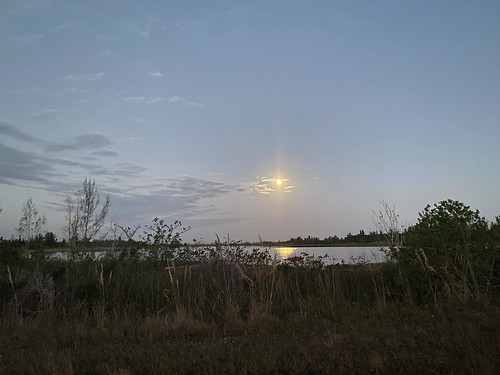
Snow Moon at sunrise minus 23  minutes 20200209

A flock of blackbirds flew across the face of the Moon:

Full Snow Moon and birds 02-20200209

We watched as the Moon settled into the lake, four minutes after sunrise:
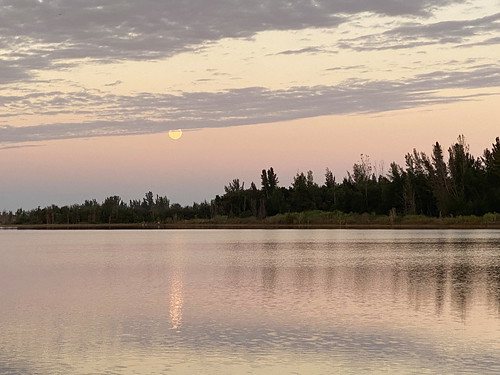

Snow Moon at sunrise plus 04  minutes 20200209

Full Snow Moon 03-20200209

Six minutes after sunrise:

Snow Moon at sunrise plus 06  minutes 20200209

A male American Kestrel flew into a lakeside tree...

American Kestrel 01-20200209 

...then, surprisingly, foraged for insects on the gravel track:

American Kestrel 03-20200209

American Kestrel 04-20200209

A Loggerhead Shrike then drove the kestrel away. I did not capture the actual encounter. Here is the kestrel as the shrike attacked:

American Kestrel 06-20200209

American Kestrel 07-20200209

The shrike then occupied the high perch:
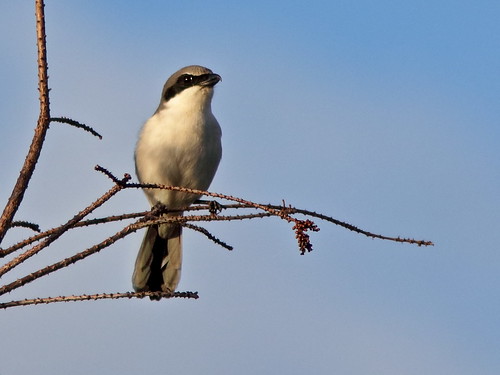
Loggerhead Shrike 20200209

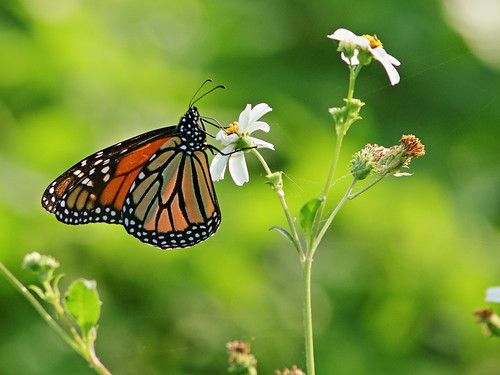
Monarch butterflies have been very scarce. There is a local non-migratory population, but because of Hurricane Irma which devastated their host plants, their numbers have been down for the past two years. This is a bad photo, but it was the first one I have seen this year:

Monarch in Phragmites head 20200209

Other  butterflies on the morning of the Full Snow Moon included a tiny Fiery Skipper, here taking nectar from a Shepherd's Nettle (Bidens alba) flower:
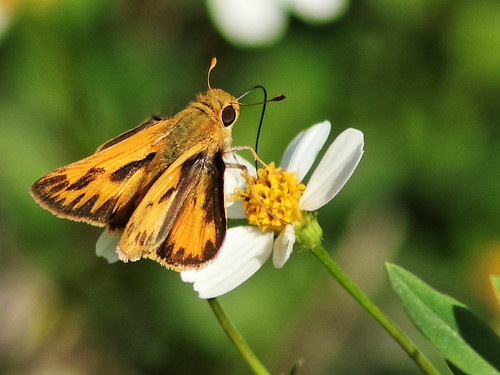
Fiery Skipper on Bidens alba 01-20200209

I always hope for a clear day after a full Moon, as it sets later and provides a nice backdrop for early morning photos. My  telephoto camera does not have much depth of field, so I cannot get the Moon in sharp focus, as shown in this image of a Northern Mockingbird...
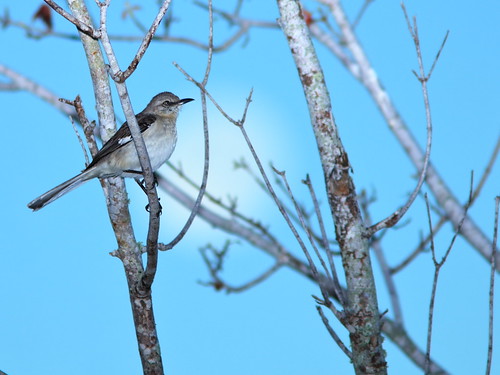
 Northern Mockingbird Snow Moon 20200210

...until it decided to fly up and rest on the Moon! (Only fooling--- this is a finial atop a concrete fence post):

Northern Mockingbird 2-20200210

The Moon stood still long enough to provide a backdrop for a female Northern Flicker:
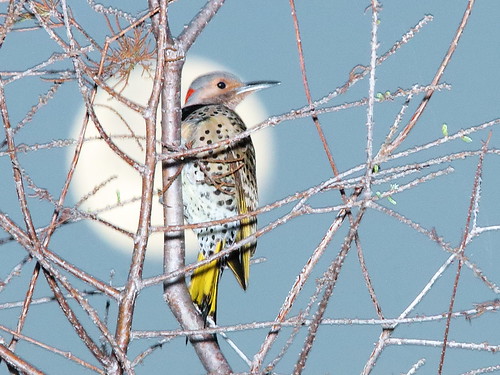
Northern Flicker female 02-20200210

The mustachioed male flicker perched by patiently, but never posed in front of the Moon:

Northern Flicker male 04-20200210

The female flicker joined him and began to fan her tail. I have noted that the female often initiates the courtship display:

Northern Flicker female 05-20200210

I had to back away to fit both in a single frame. Although the quality of the photo is poor, I liked the action and thought it looked "painterly:':
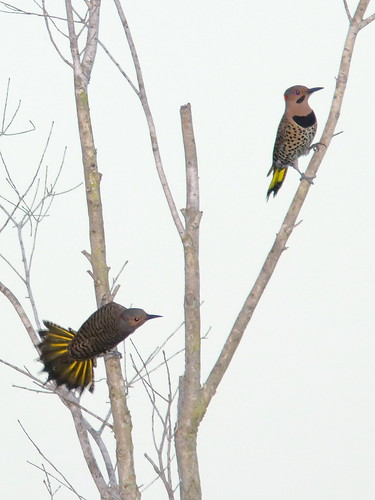
Northern Flicker pair 06-20200210

An Egyptian Goose flew over, his mate following:
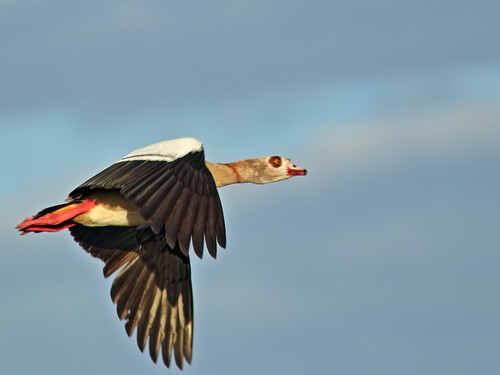
Egyptian Goose 01-20200209

As I was returning home, a yearling male White-tailed Deer emerged from the brush and walked towards me. The wind was in my favor and at first he seemed to think I was another deer:

White-tailed button buck 02-20200209

The "button buck" finally recognized me and bounded off:

White-tailed button buck 04-20200209

White-tailed button buck 07-20200209

Two rival male Julia heliconian butterflies stopped sparring for a moment and rested near each other on a Lantana:

Two male Julia heliconians 20200209

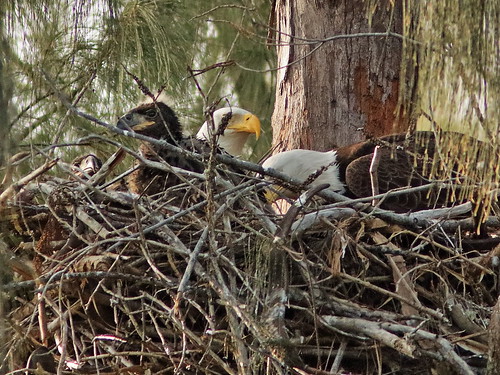
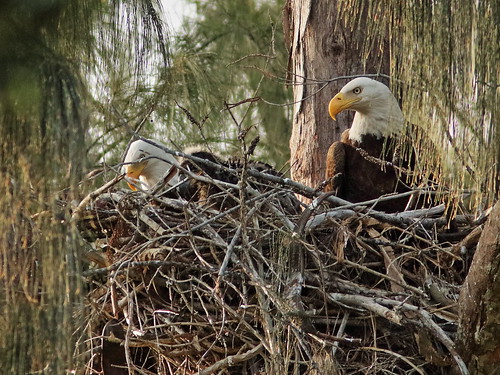
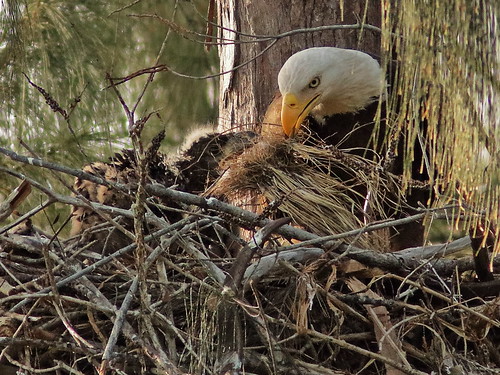
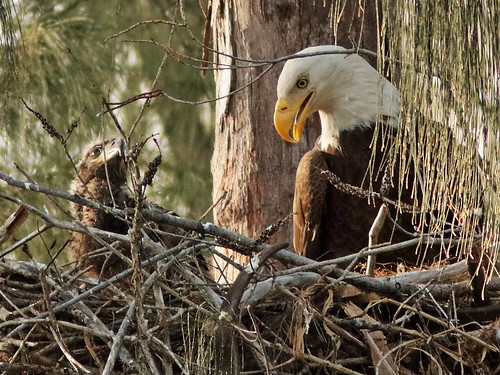
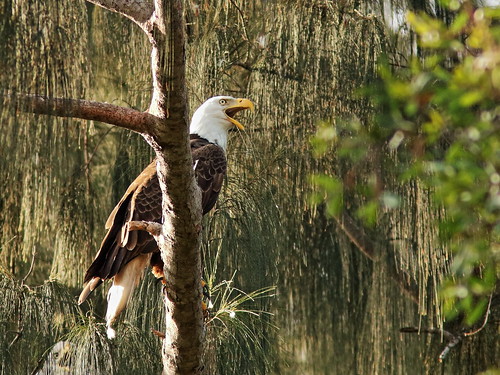
A note about our local Bald Eagles. It appears that they may have lost their eggs or newly hatched eaglets in an early January wind storm which damaged their nest. They could have started a second brood. Follow them in my Bald Eagle FORUM. 

Here is the female, Jewel, roosting near the nest while the male is sitting deep in the nest, possibly sitting on eggs (February 10):

Bald Eagle female 03-20200208
= = =  = = =  = = = =  = = = = =

Linking to :

My Corner of the World

Fences Around the World    

Skywatch Friday

Weekend Reflections

Saturday's Critters

BirdD'Pot

Camera Critters

All Seasons

Wordless Wednesday (on Tuesday)

Our World Tuesday

________________________________________________

Please visit the links to all these posts to see some excellent photos on display

________________________________________________
Thursday, February 21, 2019

Crops & Clips: Mid-February clicks

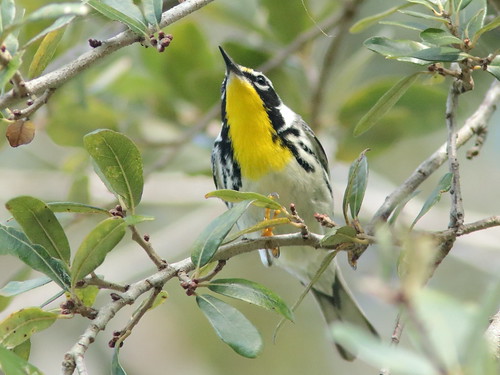
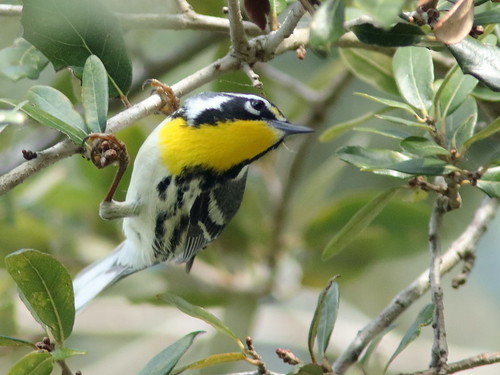
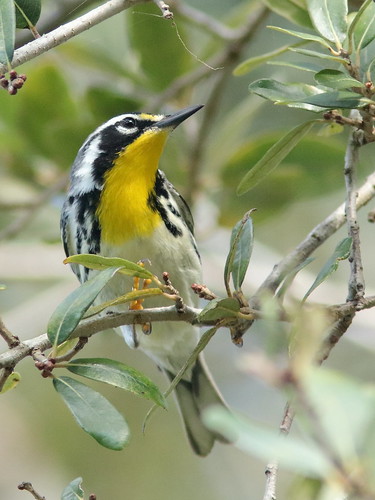
One of my favorite winter birds here in south Florida is the Yellow-throated Warbler. Their breeding range has expanded from the southeastern US into the northeast and north central states. I have seen and photographed them in NE Illinois.

Although they nest down into central Florida, they are rarely seen south of Lake Okeechobee during spring and early summer. They winter in Florida, the Caribbean and along the Gulf of Mexico coast down into Central America

Their foraging habits make Yellow-throated Warblers difficult to observe and photograph, as they creep along the outer limbs in the treetops. On February 17 I followed two of these beautiful birds as they moved along three Live Oak trees. I took over a hundred photos, nearly all of which provided partial views, poorly exposed against the bright sky. In a stroke of good luck, one of them decided to forage for a few seconds in full sun on the near side of the third tree.

Yellow-throated Warbler 01-20190217

Yellow-throated Warbler 02-20190217

Yellow-throated Warbler 04-20190217

Yellow-throated Warbler 08-20190217

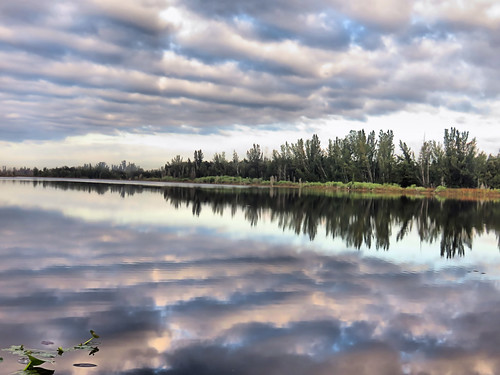
On the morning of February 17, an unusual cloud formation reflected on the still surface of the lake, providing a sort of shadow box picture frame for this view of the opposite shore:

View to northwest 20190217

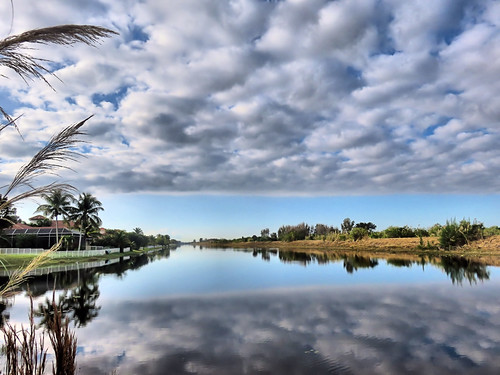
Later that morning, as I was walking home, I saw the same effect over the canal which separates our subdivision from the wetlands preserve:

195th AV Canal View to south 20190217

The full Snow Moon was setting as we entered the Wounded Wetlands, nearly an hour before sunrise on February 18:

Snow Moon 20190218

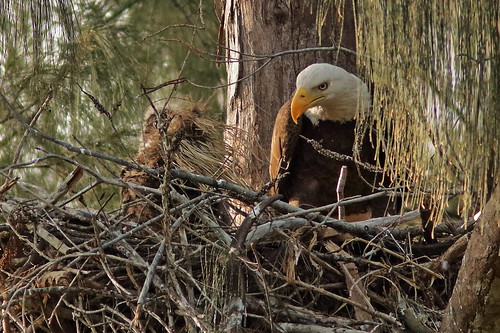
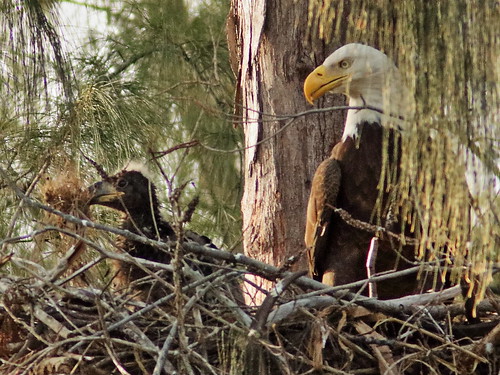
Our local pair of Bald Eagles have two eaglets, now just over 5 weeks old. They provided me with my first photo of the entire family together on the nest. Mom and Dad (Pride and Jewel) and P Piney 21 and 22:

Bald Eagle 0843AM 20190216 9731

Bald Eagle 0843AM 2019 0216 9736

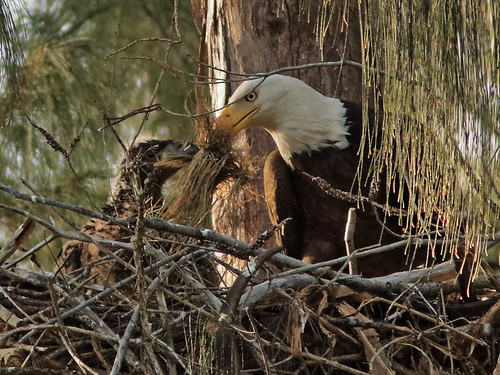
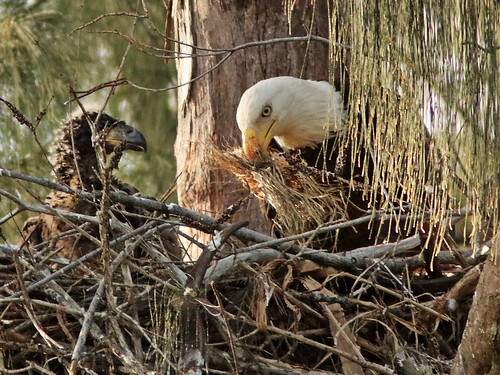
After their chicks hatch, the eagles often add to the soft lining of the nest. They bring in fresh grass and leaves. Some say this helps deter parasites. Indeed, they carried in some pods from the Flamboyant tree (AKA Royal Poinciana) which, like many other legumes (such as Lima Beans which are poisonous if not cooked) contain toxic substances and cyanide. I think they are also covering up some of the debris in the nest, "sweeping the dirt under the rug."

We observed a rather humorous interaction. Pride was rearranging some nest lining materials and the younger eaglet, perhaps thinking it was a tasty morsel,  grasped a clump of sod from his beak.

Bald Eagle 0844AM 20190216 9742

Bald Eagle 0845AM 20190216 9743

Pride watched as the eaglet carried it away to the left side of the nest.

Bald Eagle 0847AM 20190216 9747

Bald Eagle 0848AM 20190216 9750

Pride tugged on the sod and retrieved it and finally replaced it on the floor of the nest.

Bald Eagle 0849AM 20190216 9753

He then turned towards the eaglet as if to admonish it:

Bald Eagle 0850AM 20190216 9758

Ever alert, Pride flew up above the nest to drive off an intruding eagle. We could hear it in the trees behind and to the right but never saw it. Perhaps it was one of their progeny from a previous season, or a wandering adult:

Bald Eagle 0855AM 20190216 9821

We are seeing dreadfully few Monarch butterflies this winter. Most of the south Florida population is non-migratory. This one is sipping nectar from Bidens Alba:

Monarch on Bidens alba 20190218

= = =  = = =  = = = =  = = = = =

Linking to Misty's  CAMERA CRITTERS,

Linking to Eileen's SATURDAY'S CRITTERS,

Linking to SKYWATCH FRIDAY by Yogi, Sylvia and Sandy

Linking to WEEKEND REFLECTIONS by James

Linking to BirdD'Pot by Anni

Linking to Our World Tuesday by Lady Fi

Linking to Wild Bird Wednesday by Stewart

Linking to Wordless Wednesday (on Tuesday) by NC Sue

Linking to ALL SEASONS by Jesh

 Linking to Fences Around the World by Gosia

________________________________________________