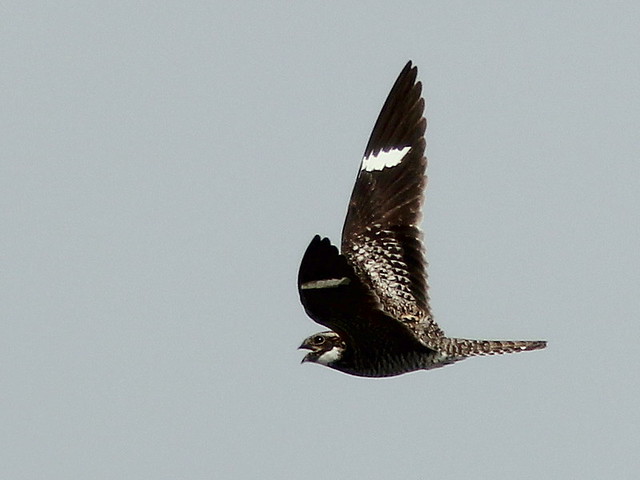
In the eastern US, the Common Nighthawk is the most familiar member of the goatsucker family (Caprimulgidae), also known as Nightjars. Worldwide in distribution, this group of birds drew their name from an ancient belief that they sucked milk from goats with their widely gaped mouths, actually an adaptation for catching insects in flight:
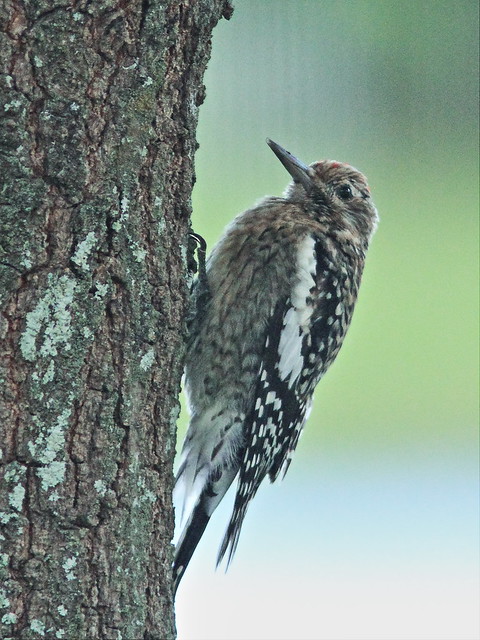
The sapsuckers are also misnamed, as they do not suck up sap or any other fluid. They do chisel holes in the bark of trees and drink the sap which flows from them, and also eat any insects which may be attracted to them.
The four sapsucker species are woodpeckers in the genus Sphyrapicus, all native to the New World. The Yellow-bellied Sapsucker breeds across Canada and the northeastern USA and winters in the southeastern States, although vagrants have occasionally wandered across the Atlantic Ocean to the UK.
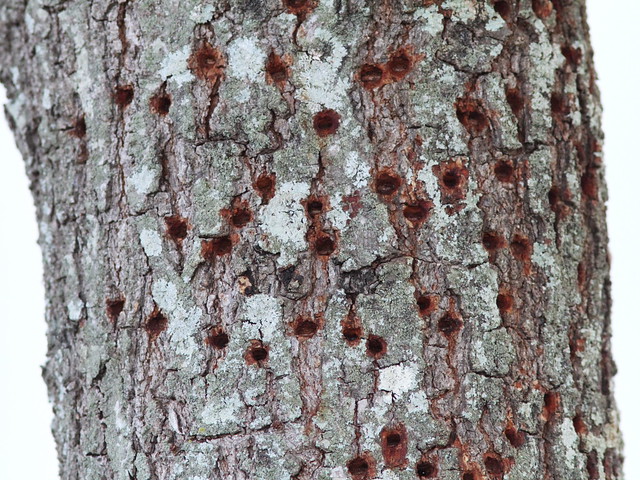
An immature female Yellow-bellied Sapsucker visited our back yard on Christmas Eve in 2013. At about 5 PM I looked out the back window and saw this juvenile sapsucker drilling holes in our West Indies Mahogany. Our tree now has neat rows of holes chiseled out of its bark in hopes that sap would flow and insects will also be attracted:
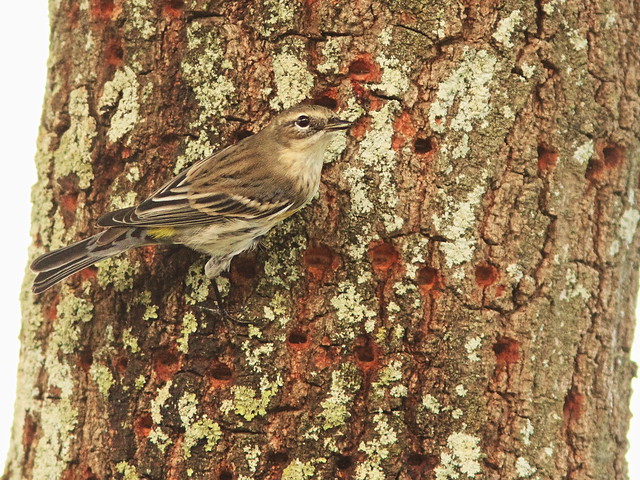
Other birds, such as this Yellow-rumped Warbler, helped themselves to the flies which gathered at the holes:
The sapsucker lingered in our yard into late March.
On January 28, 2014 it was joined by a mature female of its species, but the young bird consistently drove away the intruder:
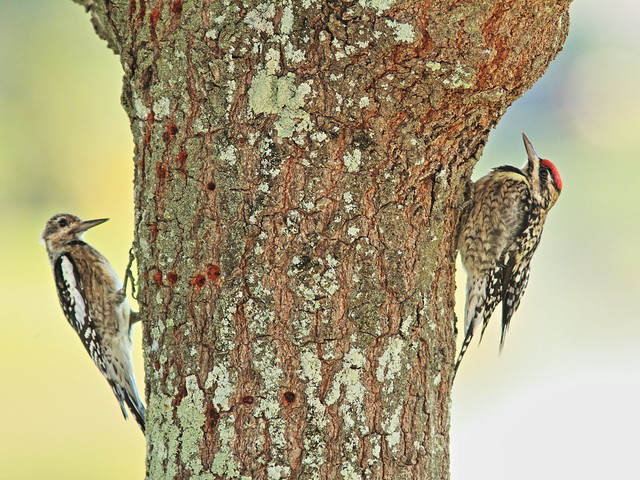
It favored our back yard West Indies Mahogany tree, inflicting considerable damage to the bark:
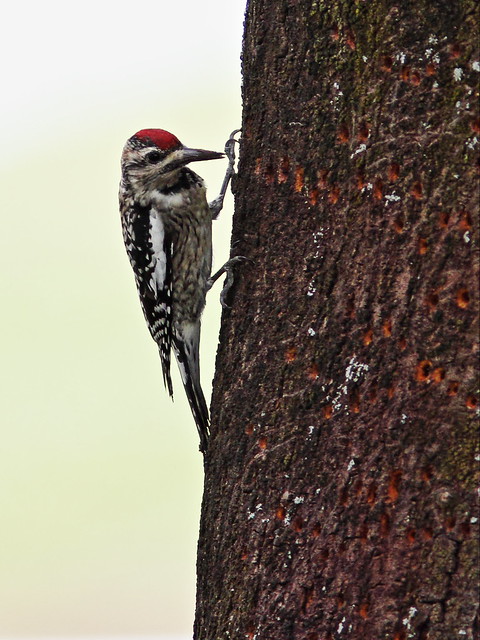
Over the three month period, we saw the sapsucker's plumage gradually change from immature to adult female:
Too late, we noticed that an entire section of our tree appeared to be stressed and possibly dying:
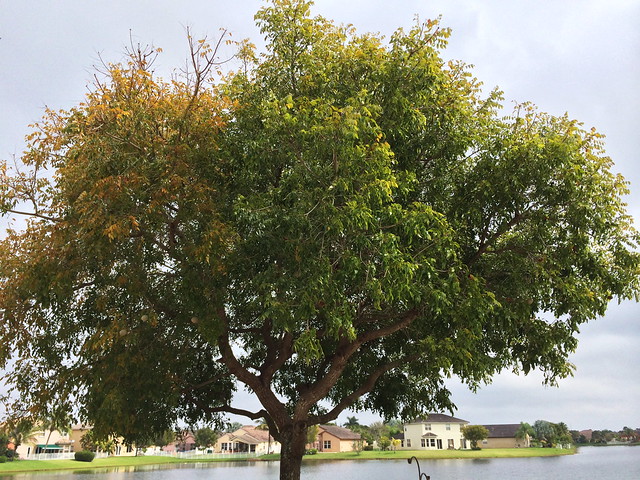
We did our best to discourage the woodpecker by chasing it with water guns and the garden hose, and it did abandon our yard. Very likely it was time for it to migrate back north anyway. The affected part of the tree lost all its leaves about two weeks before the entire tree shed its leaves on schedule. Within weeks the entire tree looked normal as the new leaves filled in completely.
We did not see the sapsucker again in our yard until November 25, 2015 when I took this photo of it or another adult female through the back patio window:
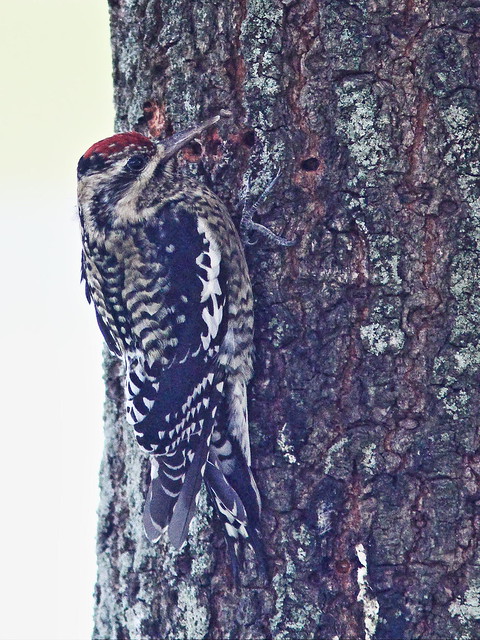
Once again I scared it away, but it returned in February, 2016 and continued to drill sap wells:
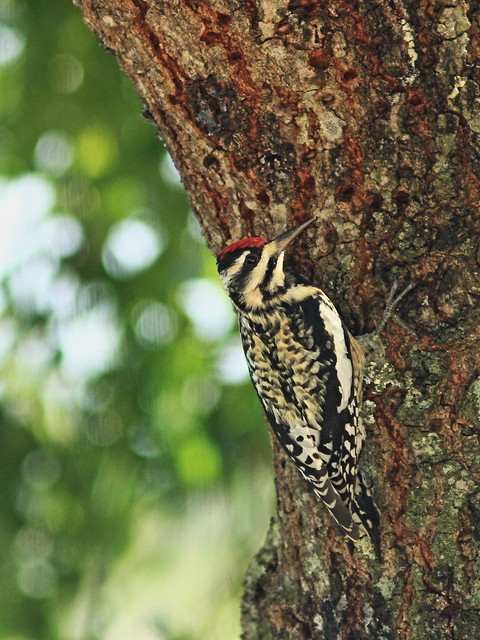
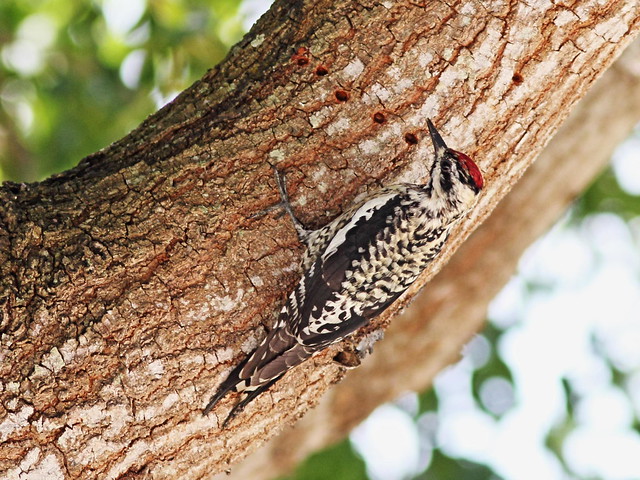
So far our program of harassing the bird seems to have worked, or the time came for it to migrate home to the north. This was our last sighting of the sapsucker, on March 3:
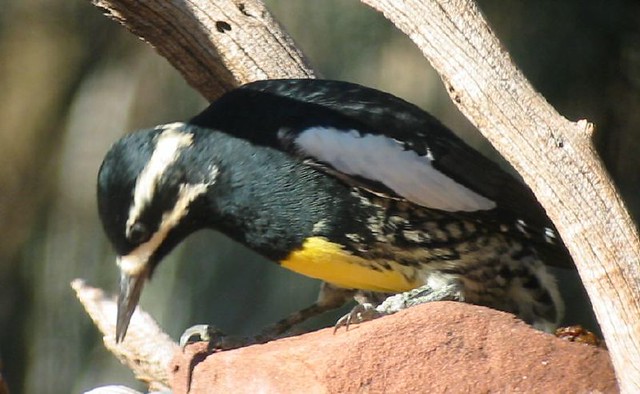
Over the years I have seen the other three sapsucker species. The Red-naped Sapsucker visited our home in New Mexico before I owned a DSLR, but I did digiscope a beautiful Williamson's Sapsucker in our front yard with my little 2.0 megapixel Canon A40:
In Alaska, I got a lucky shot of a Red-breasted Sapsucker:
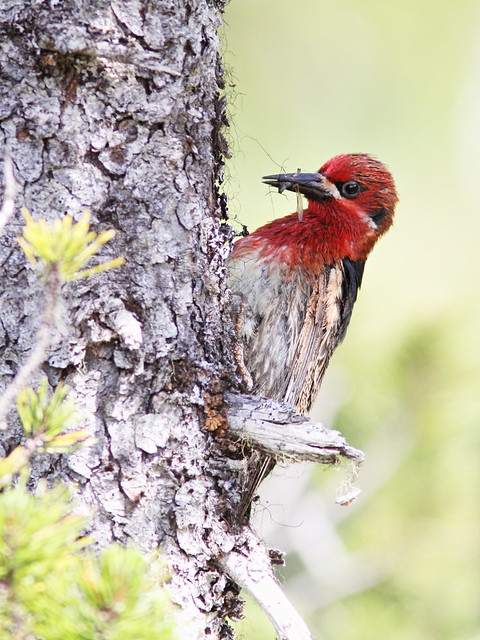
All four sapsucker species have a characteristic horizontal white line on their wings-- the "sapsucker line.'
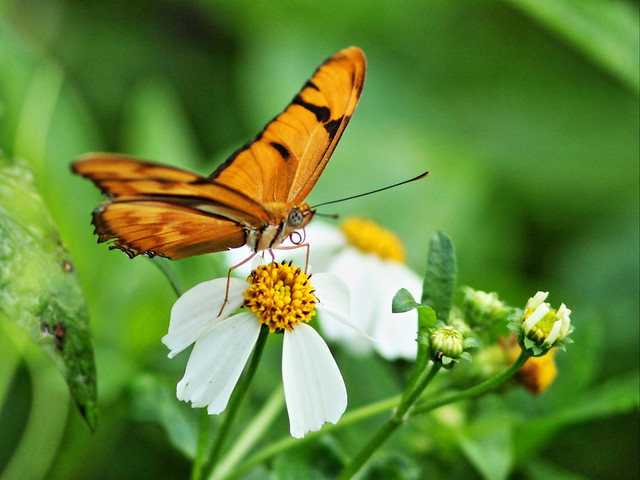
Julia heliconian female visits a tiny composite, Bidens alba, whose two-toothed seeds (called beggar's ticks) cling to socks and pant legs:
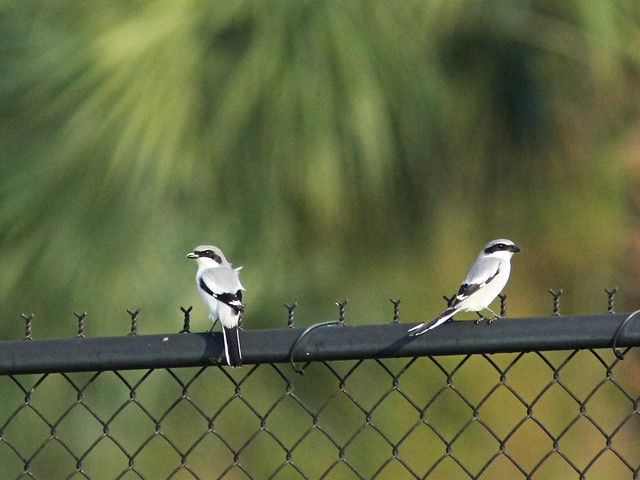
Loggerhead Shrikes on fence at nearby Chapel Trail Nature Preserve:
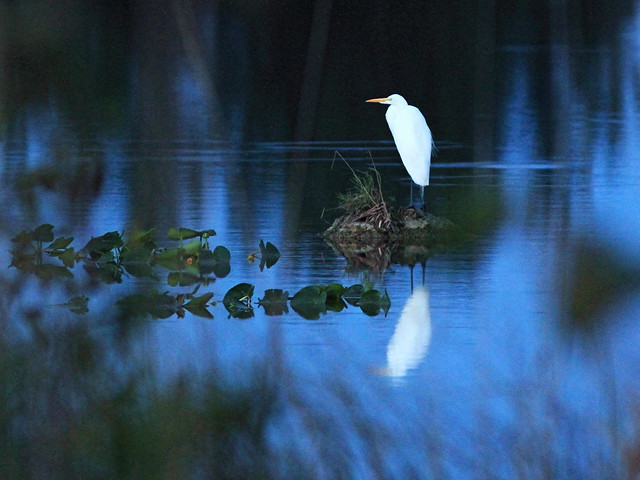
A Great Egret casts a fine reflection in the pre-dawn darkness:
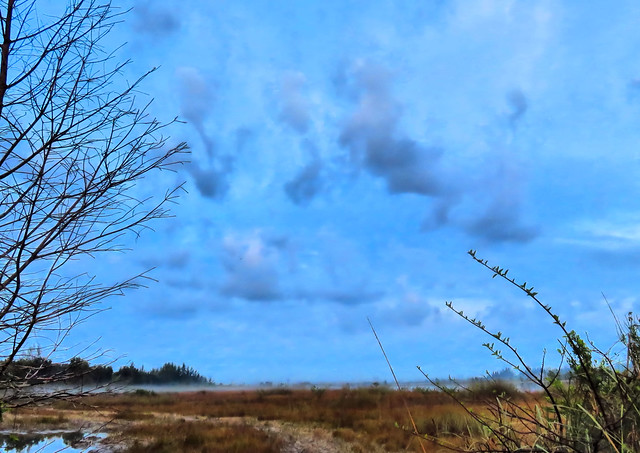
Early morning overcast-- fog over wet prairie at sunrise:
= = = = = = = = = = = = = = =
Linking to Misty's CAMERA CRITTERS,
Linking to Eileen's SATURDAY'S CRITTERS,
Linking to GOOD FENCES by Tex (Theresa).
Linking to WEEKEND REFLECTIONS by James
Linking to BirdD'Pot by Anni
Linking to Wild Bird Wednesday by Stewart
Linking to I Heart Macro by Laura
________________________________________________
Please visit the links to all these memes to see some excellent photos on display
________________________________________________