Showing posts with label flicker. Show all posts

Thursday, November 5, 2020

Crops & Clips: Flashback to November, 2017

I combed the archives of photos taken three years back and searched for images which reflected favorite memes: critters of all kinds (especially birds), skies and clouds, reflections, flowers and fences, as well as scenes which speak for themselves. We spent the entire month of November 2017 at our principal home in Florida and saved 340 images. 

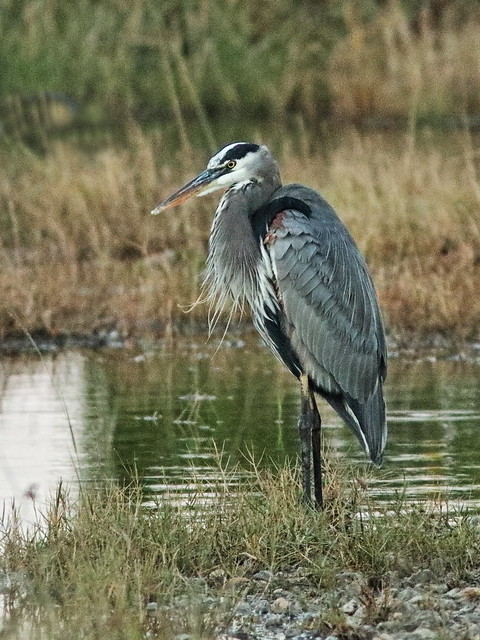
On the first day of November, a Great Blue Heron allowed my close approach before lifting off over the local wetlands:


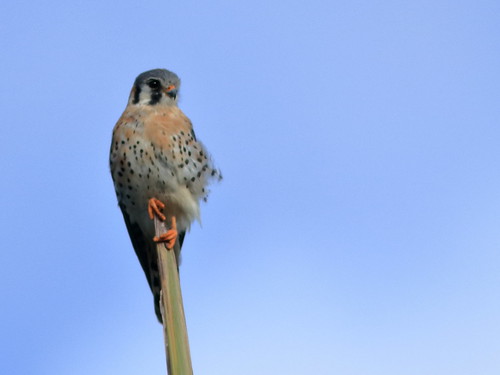
A male American Kestrel roosted on top of an Australian Pine and then took flight:


At nearby Chapel Trail preserve, a Cattle Egret chased insects attracted to a Longhorn cow:


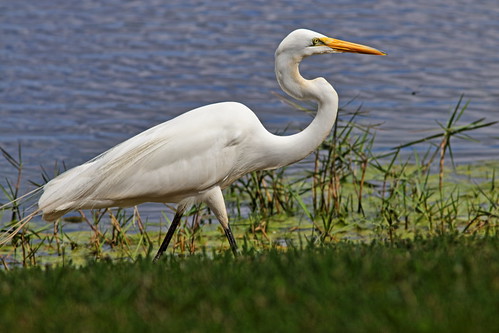
Great Egret roosting lakeside:


An immature Little Blue Heron struck a nice pose as it foraged energetically:


Before sunrise, a Great Egret made a graceful landing against a pink sky:


Another reflected as it occupied a blooming Melaleuca:
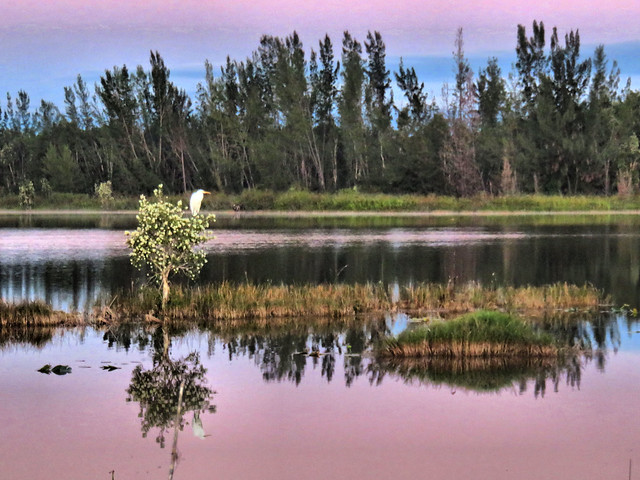

A "fogbow" over the lake:


From a distance I thought this heron had captured a large snake, but it was an amphiuma. I watched as it dispatched it and then swallowed it whole (November 5, 2017):


The Two-toed Amphiuma (Amphiuma means) can grow to a length of 3 feet or more—one of the largest salamander species in the world. Two-toed Amphiumas have tiny, nearly useless front and hind legs with two toes on each leg:


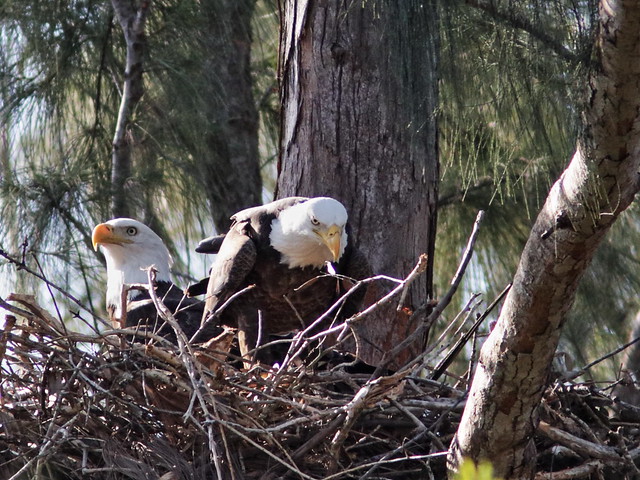
The local pair of Bald Eagles were busy restoring their nest on November 11:

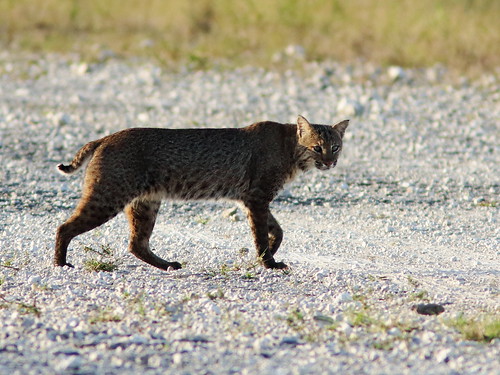
I caught a distant view of a Bobcat as it strolled along  the barrier fence on the "road to nowhere:"


Most of the migrating warblers had passed through by the end of October, but the Pine Warblers made their usual appearance in early November. This was a drab immature female...


...and a somewhat more colorful immature male:


Nearby, a beautiful female Northern Cardinal:


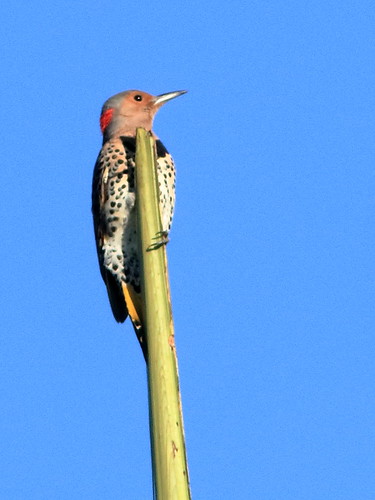
Female Northern Flicker:


A glimpse through the foliage of a White-eyed Vireo (well-named!):


Female Painted Bunting, our only truly green songbird:


This was one of the few White-crowned Sparrows recorded in our County, on November 14. (Actually I reported and photographed 1 back in 2012, the first County record of the century, then 2 in 2014 for the highest count ever). This immature bird will trade the dark brown on its crown for bold white when it molts into breeding plumage:


A Red-shouldered Hawk flew off:


This Gray Squirrel seemed to be eating flowers of the exotic and invasive Melaeuca tree. They smell like turpentine and must taste awful:


Garden Spider in her orb:


The canal which separates the residential area from the Wounded Wetlands, November 24:


Chapel Trail Nature Preserve boardwalk, November 28:


= = =  = = =  = = = =  = = = = =

Linking to:


________________________________________________

Please visit the links to all these posts to see some excellent photos on display
________________________________________________

Thursday, February 20, 2020

Crops & Clips: This week's clicks

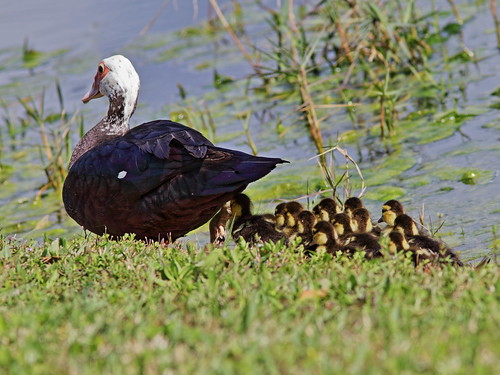
A Muscovy Duck emerged from the dense Cocoplum shrub in our back yard and presented us with her 14 newly hatched ducklings:

Muscovy Ducklings 03-20200217  

Muscovy Ducklings 02-20200217

She led them into the water for their first swim:

Muscovy Ducklings 04-20200217

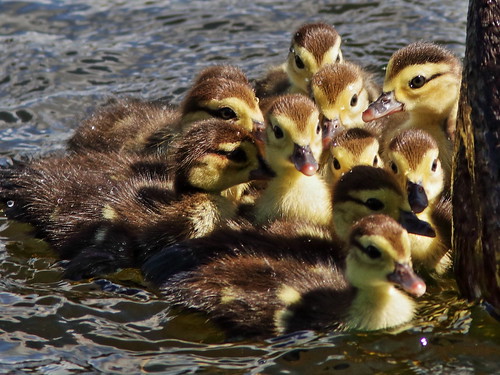
They clustered around her:

Muscovy Ducklings 01-20200217

Sadly, it is very likely that the ducklings' numbers will quickly be reduced by predation from Largemouth and Peacock Bass, turtles,  herons, hawks, Raccoons and feral cats. They may even be killed by rival male Muscovy Ducks, as I witnessed and reported other instances in this blog, Purposeful Infanticide: Birds killing babies

Our back yard West Indies Mahogany tree has hosted Yellow-bellied Sapsuckers for several winters. We are concerned about the damage they may do and shoo them away as soon as we see them. They fly off, or sometimes just hide on the opposite side of the trunk or in the upper branches. As soon as we go back into the house they are busy drilling their wells and sipping the sap.

Usually we see immature sapsuckers, but this winter an adult female has dominated the tree. She occasionally allows a younger bird to work in her presence. 

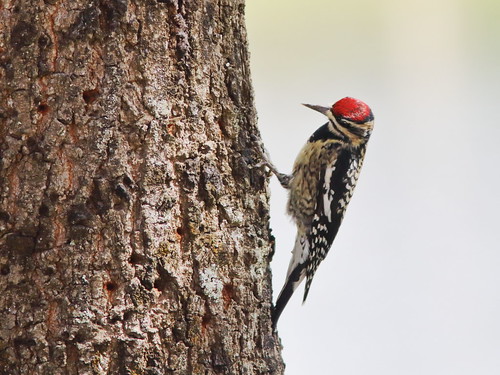
Female Yellow-bellied Sapsucker:

Yellow-bellied Sapsucker female 4-20200217

Hundreds of sap wells, many freshly drilled, cover the trunk and all the main branches of the tree: 

Yellow-bellied Sapsucker female 5-20200217

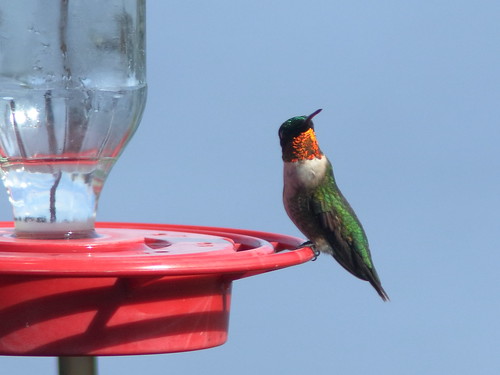
A male Ruby-throated Hummingbird has succeeded in taking over our back yard feeder. Females have defended it every winter, until a few weeks ago when this male appeared:

Ruby-throated Hummingbird male 01-20200207

Ruby-throated Hummingbird male 02-20200207

Ruby-throated Hummingbird male 05-20200207

Another back yard visitor, a Great Egret (shot through the window):

Great Egret thru window 20200217

Out in the Wounded Wetlands, the large male Bobcat appeared along the trail on February 13, emerging from the brush not very far ahead of me. I almost did not see him in the deep shade, about an hour after sunrise:

Bobcat 01-20200213

Bobcat 02-20200213

He saw me but seemed rather indifferent as he walked across in front of me, the sun behind him. Obtaining a proper exposure was difficult, so the quality of these photos suffered:

Bobcat 04-20200213

Unflappable, he looked back at me one last time before disappearing on the other side of the track:

Bobcat 05-20200213

A Loggerhead Shrike stared me down:

Loggerhead Shrike 02-20200213

At the lake, an Anhinga dried its wings:

Anhinga 02-20200212

An American Kestrel kept  watch from high on a Royal Palm spire:

American Kestrel 03-20200213

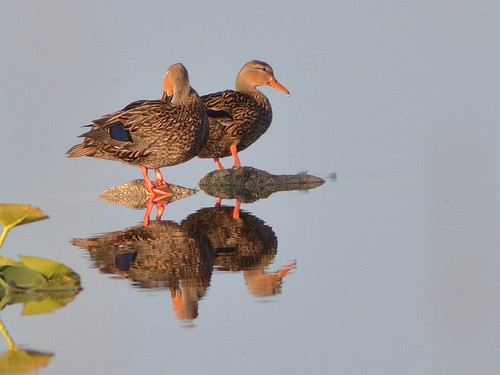
A pair of Mottled Ducks cast reflections on the quiet surface of the lake:

Mottled Ducks 01-20200214

Northern Flickers put on an amazing show. The female called repeatedly from a Royal Palm spire:

Northern Flicker female calling 05-20200218

She flew to a tree very close to me and a male joined her, so close that I could not fit all the action into my viewfinder. Typically, the female displays while the male (or sometimes two or three) dance about like fencers. They parry as if there is an invisible sword extending from their bills, usually not coming into physical contact, but darting and swaying, advancing and retreating. 

This is tail of the female:

Northern Flicker female display 01-20200218

Here she dives down, allowing me one of my few full-body photos:

Northern Flicker female display 02-20200218

This was my only (almost) unobstructed view of the male flicker:

Northern Flicker male 02-20200218

A White Ibis probed the earth for worms and insects along the trail:

White Ibis 01-20200217

At Chapel Trail Nature Preserve in nearby Pembroke Pines, two female Painted Buntings appeared:

Painted Bunting female 03-20200216

Painted Bunting female 01-20200216

At Chapel Trail there were nearly a dozen exotic Gray-headed Swamphens, pulling up the Spike-rush to eat their tender roots and shoots:

Gray-headed Swamphen 01-20200216

Gray-headed Swamphen 02-20200216

About 15 years ago, over 3,000 of these invasive swamphens were gunned down because they were reported to kill the young of native birds and also destroy the Spike-rush, a cornerstone species in the wet prairies of the Everglades. I fear that a similar native species may have been easily confused with the dreaded swamphen. Indeed, I found far fewer Purple Gallinules after the extermination campaign. Were they an unintended "by-catch?"

This sub-adult Purple Gallinule, grazing on lotus flowers, has a pale beak. An adult's beak will be bright red with a yellow tip. It is about half the size of a swamphen:

Purple Gallinule sub-adult 01-20200216

Back on our local wetlands, other critters deserved attention. This is a Horace's Duskywing, on an Ixora flower:

Horaces Duskywing 20200217

One of the few Monarch butterflies I've seen so far this winter. It may be a member of the local non-migratory population:

Monarch butterfly 20200218

I had to kneel down to photograph two tiny butterflies-- Ceraunus Blue...

Ceraunus Blue 02-20200218

Ceraunus Blue 01-20200218

...and Fiery Skipper:

Fiery Skipper 20200218

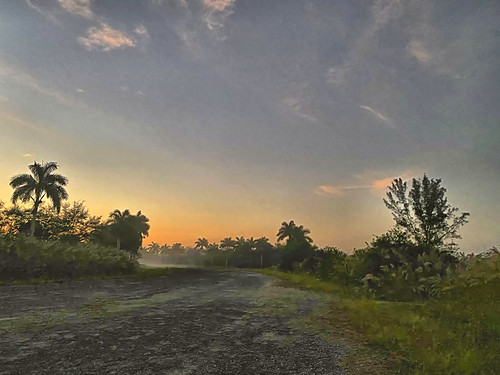
The view before sunrise, looking back to the east:

Before sunrise 20200214

Fog lifting over the Pine Bank:

Pine Bank 20200214

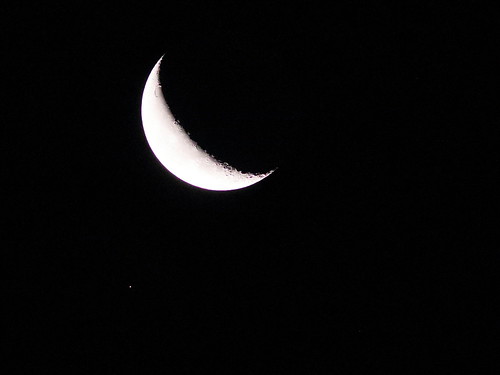
On the morning of February 18, the Snow Moon eclipsed (occluded) the Red Planet Mars. I actually  was unaware of the event, although I noticed a bright heavenly body very close by, the white dot in the lower left of this photo, hand-held (click on photo to enlarge). My Canon 80D has remarkable image stability-- see EXIF* below. The round dot even contained a few red pixels:

Planet Mars and waning crescent Sno Moon 20200218

*EXIF for Moon and Mars image:

Camera Model Canon EOS 80D
Shooting Date/Time 2/18/2020 6:05:49 AM (50 minutes before sunrise)
Tv (Shutter Speed) 1/250
Av (Aperture Value) 8.0
Exposure Compensation -1
ISO Speed 6400
Lens EF300mm f/4L IS USM +1.4x
Focal Length 420.0mm


= = =  = = =  = = = =  = = = = =

Linking to :

Fences Around the World


Skywatch Friday

Weekend Reflections

Saturday's Critters

BirdD'Pot

Camera Critters

All Seasons

Wordless Wednesday (on Tuesday)

Our World Tuesday