I did not expect this trip to provide many opportunities to lurk and wait for the little ones to come into view, and did not expect a high level of performance from such a small backup camera. Settling on the Canon SX700 HS was not easy, as the reviews suggested several very close contenders with an optical zoom of 30X. I chose Canon partly out of faith in the Canon ecosystem. I own two earlier PowerShots, an A40 (only 2.0 megapixels!) and an A-1100 IS (12.1 megapixels), and both performed very well.
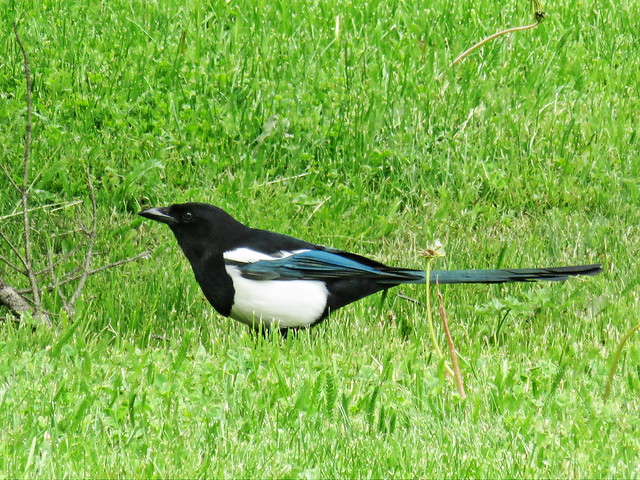
The new PowerShot SX700 HS (16.1 megapixels), captured this image of a Black-billed Magpie on the grounds of the Fairmont Chateau Hotel in Lake Louise, Alberta, on June 18, 2015:
My next post will include more photos and videos taken on the Rocky Mountaineer Railway trip from Vancouver, British Columbia to Calgary, Alberta.
Just to demonstrate that the number of pixels is relatively unimportant, here is an example of a digiscopic photo of a Western Bluebird that I took in New Mexico back in 2003 with my first 2.0 megapixel Powershot through the lens of a Kowa Prominar TSN-24 spotting scope zoomed to about 30x:
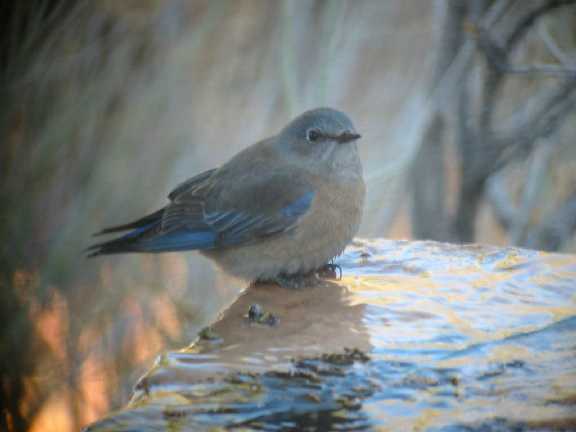
Certainly the image (576 x 423 pixels) is very soft, yet is is one of my favorite bird pictures. This leads me to ask myself why I need more megapixels. I'm not out to sell any of my photos, although I am honored when one is used for educational purposes under my FLICKR Creative Commons license (especially if I first receive the courtesy of a request!). No, what I value most is the feeling of the time and place where I captured an image. National Geographic is certainly above my pay grade!
The optical lens of the PowerShot SX700 HS zooms from a focal length of 4.5 to 135.0 mm, which is said to be up to the equivalent of 450 mm in a 35 mm camera. Digital zoom can be added when fully zoomed optically, from 0 to 4x, producing magnification up to to 1200x.
My first few attempts at photographing creatures in the wild produced some nice results. See this post for some examples: http://rosy-finch.blogspot.com/2014/12/bird-photography-with-pocket-camera.html
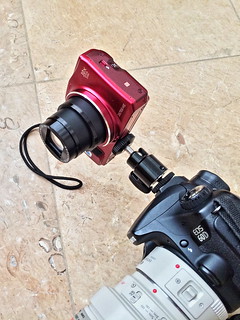
To more objectively test my new Powershot I purchased a hot shoe mount with a simple ball head (Smallrig LCD Monitor Adapter 1/4" Camera Hot Shoe Mount, $9.50 at Amazon.com). The Powershot can be mounted directly over the DSLR to allow both cameras to take photos of the same scene nearly simultaneously.
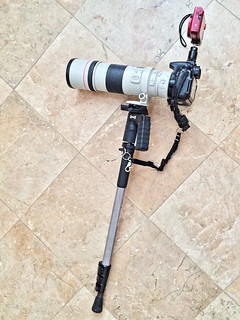
I took a series of test photos comparing the two cameras. The DSLR was fitted with the 420 mm lens system and the Powershot was at full optical 30X zoom. Unless otherwise noted, the photos are compared full frame and straight out of the cameras (SOOC), with the exception of the DSLR images, which I cropped on one or both sides to reduce them to the same 4:3 format as the pocket camera. This permits a fair comparison of the relative size of the images.
Similarly, the images from both cameras were processed with Canon DPP using the HD (single layer) application to sharpen and enhance color automatically. The DSLR was set to Av f/5.6 and the Powershot to AUTO for all photos.
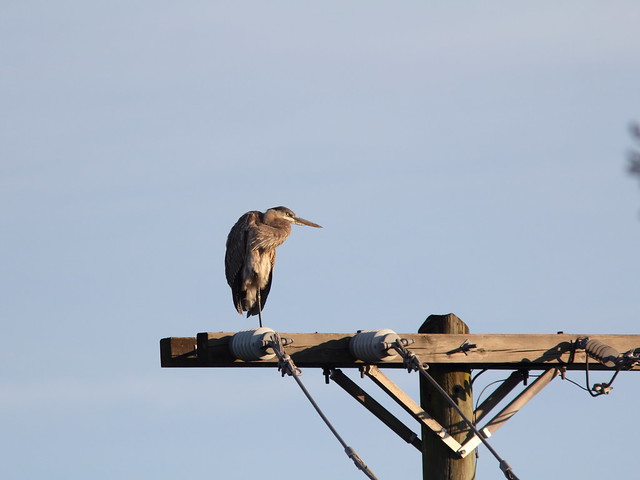
My first attempt, using the dual mounts on a monopod, was to photograph this Great Blue Heron roosting on a power pole about 120 feet away with the low morning sun coming in from the right side of the frame. The two photos were taken less than 30 seconds apart. This is the DSLR image, straight out of the camera (SOOC), with 420 mm focal length, Aperture Priority. shutter Speed (Tv) 1/640; Aperture Value (Av) f/5.6; ISO 200:
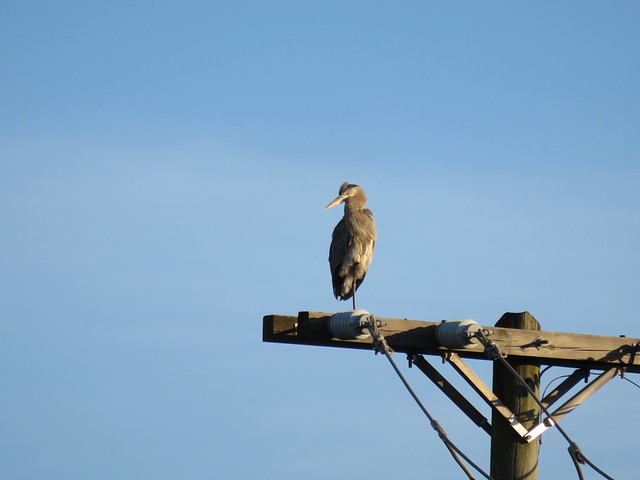
The PowerShot image is fairly comparable in size. It was optically zoomed to 105.0 mm. Shutter speed (Tv) 1/250; Aperture Value (Av) f/6.3; ISO 100 (Auto):
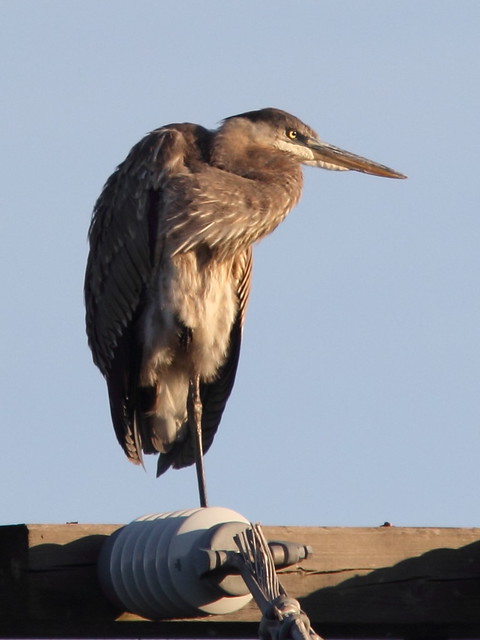
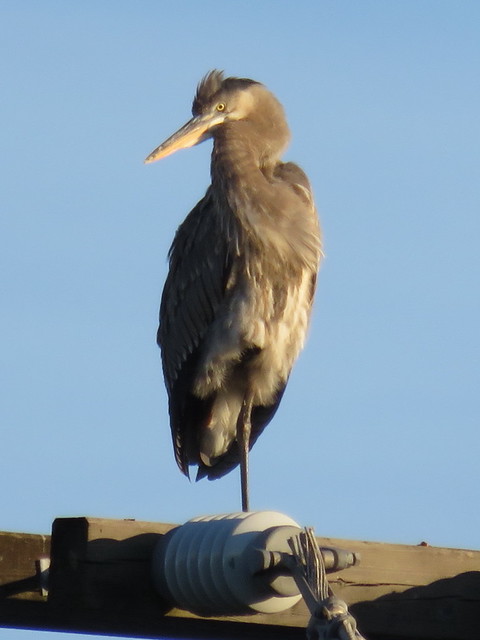
Here are crops of the above two photos, not otherwise processed. This is from the
Canon 60D DSLR:
Canon PowerShot SX700 HS:
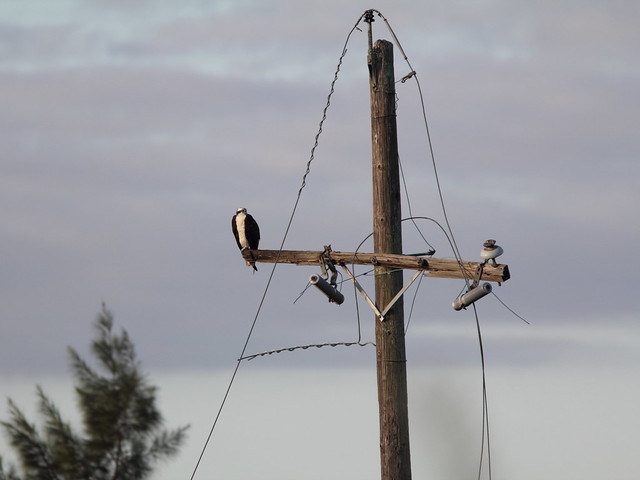
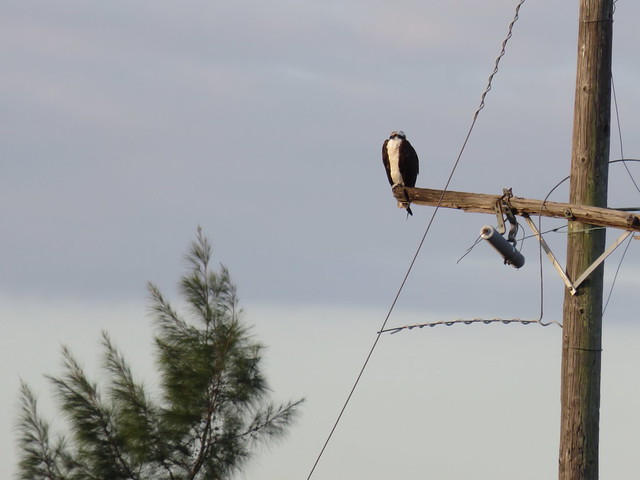
In my next comparison the subject was an Osprey on an extinct utility pole about 350-400 feet away, again using the hot shoe tripod extender mounted atop the DSLR. The photos are taken within seconds of each other from the same range. The pocket camera is set on AUTO while the DSLR is shooting Aperture Priority at f/5.6. EXIF data for pocket camera: Tv 1/160, Av 6.9, ISO 125 (auto). EXIF for DSLR: Tv 1/800, Av 5.6, ISO 200.
Canon 60D DSLR:
Canon PowerShot SX700 HS at 30X zoom:
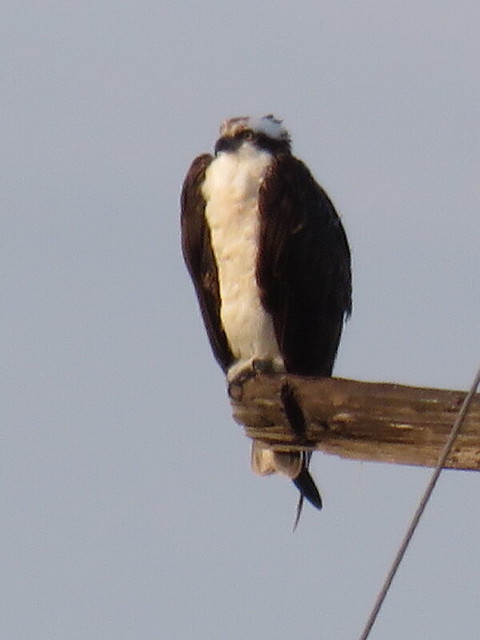
Cropped to produce images of comparable size, the eyes of the Osprey are reproduced more distinctly by the Canon 60D DSLR:
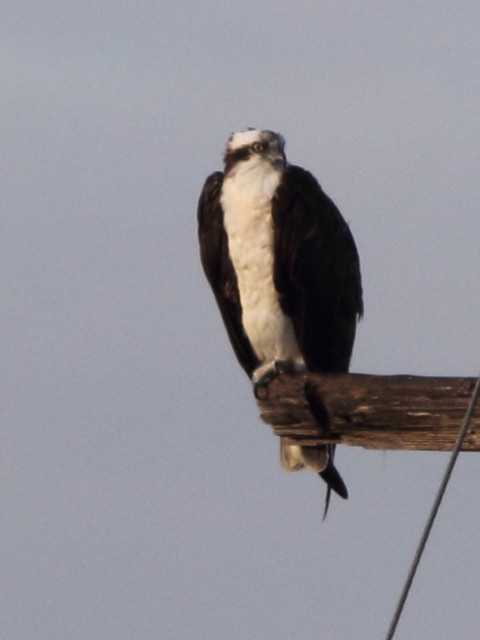
Canon PowerShot SX700 HS:
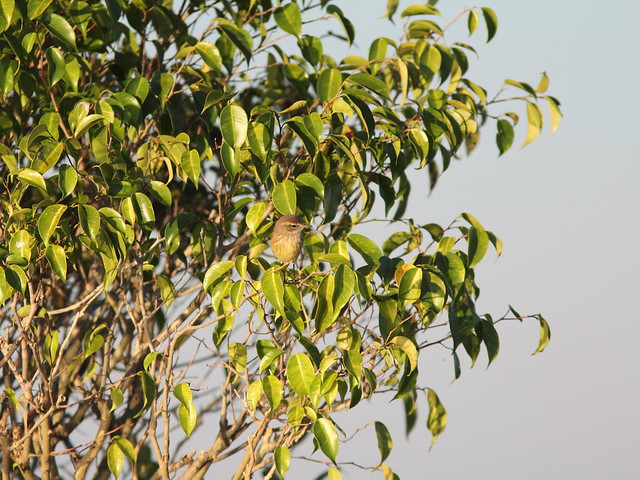
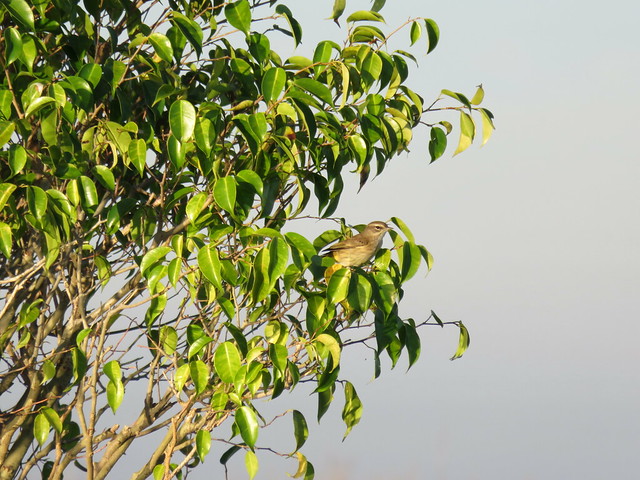
Small birds are not easy to capture without a viewfinder. The LCD screen of the PowerShot is bright enough in daylight, but if the sun is directly to the rear it washes it out badly. This bird was moving about and was hard to track, so the images are not entirely comparable, but both were taken from the same distance of 25 feet (7.5 meters).
Palm Warbler SOOC, trimmed at sides but not processed, taken by the Canon 60D DSLR:
Canon PowerShot SX700 HS, SOOC, unprocessed:
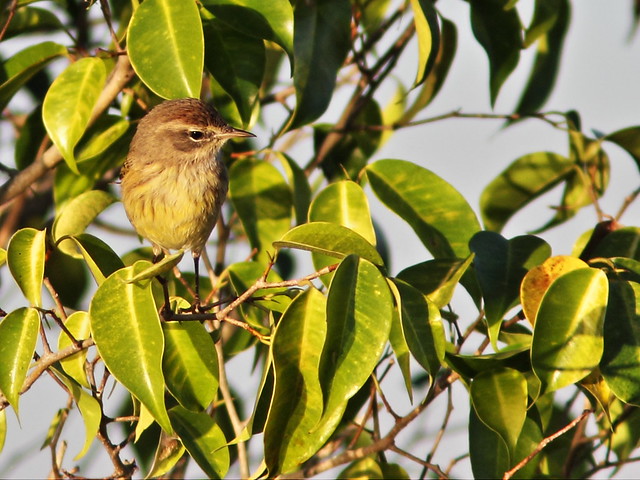
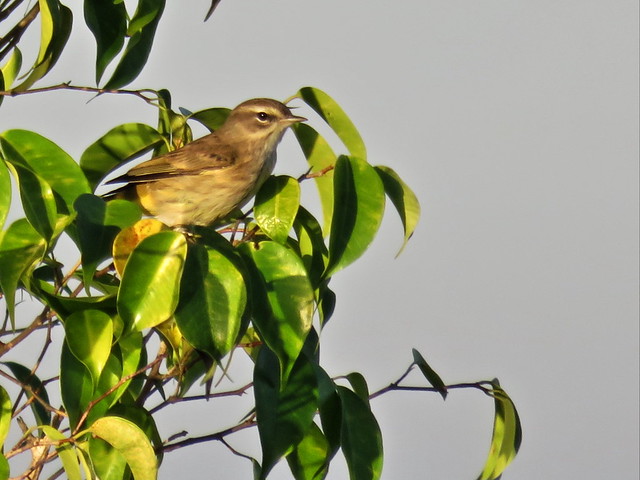
Below is a set of cropped and similarly processed images of the same bird within seconds of each other (processed in Canon DPP with HD tool but no other color adjustments) comparing the two cameras.
Canon 60D DSLR:
To get around the problem of the PowerShot's LCD image being washed out in sunlight, I rigged this contraption with the Hoodman Loupe which I normally use in the field to review my DSLR photos. The rubber bands are the standard accessory for attaching it to the larger camera for videography, but they fit the PowerShot perfectly without interfering with any of the control buttons.
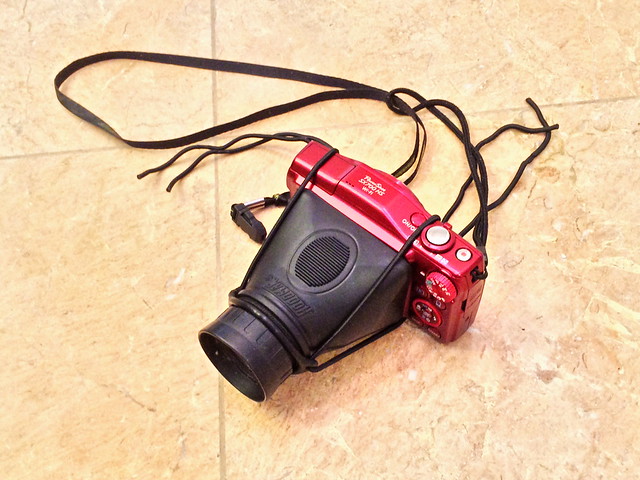
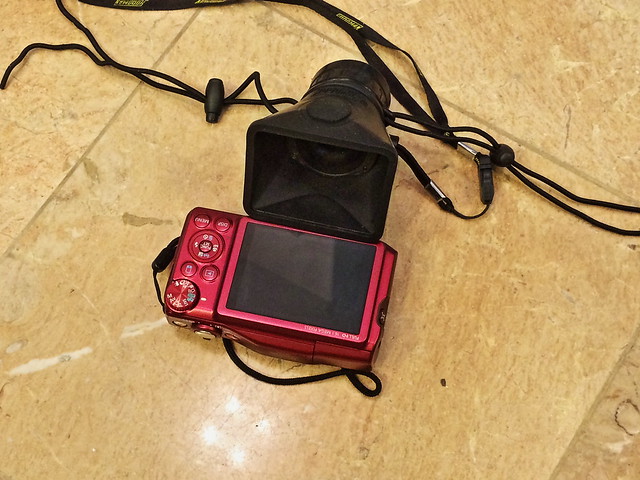
Reviewers downgrade the Canon SX700's low light performance. I put it to the test at only 10 minutes after sunrise, with both the Powershot (at 30X zoom) and my Canon 60D with the 420 mm lens, on a monopod with the above dual mount. The subject was about 160 feet (50 meters) away. The unprocessed shots follow:
This is the DSLR image as captured straight out of the camera, cropped to size but not otherwise processed, Aperture Priority setting (Tv 1/200 sec, Av f/5.6, ISO 3200):
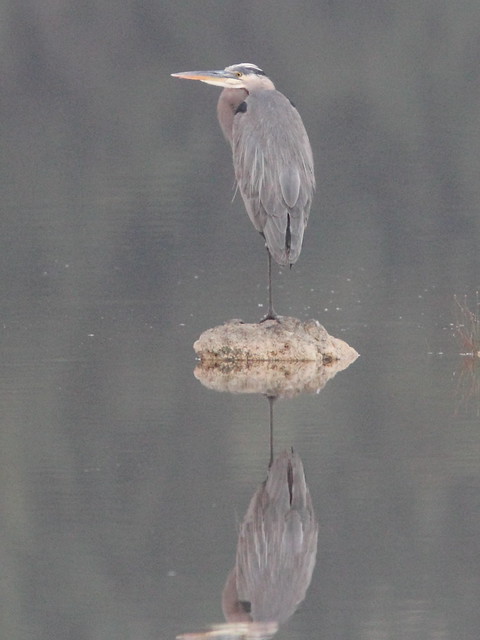
This is the corresponding Powershot image, AUTO setting, SOOC (Tv 1/30 sec, Av f/6.9, ISO 800). The image is remarkably steady, given the long exposure :
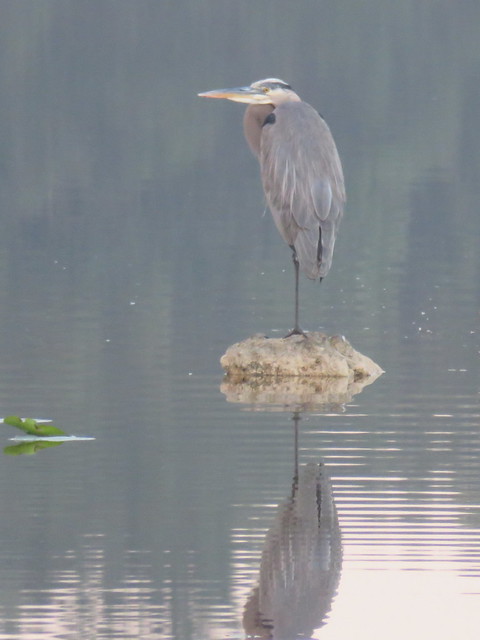
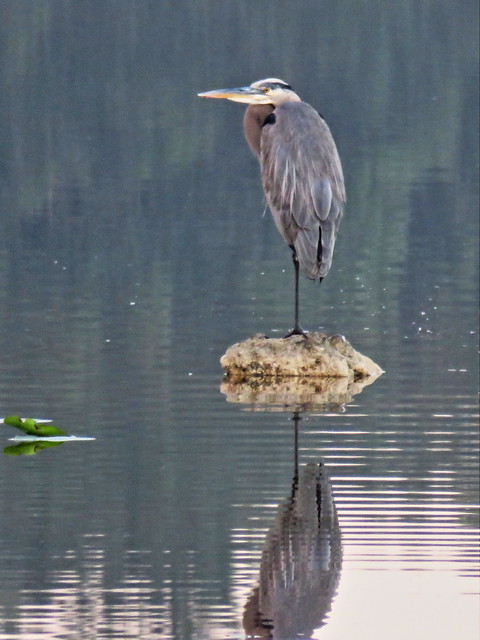
After processing the images identically, using Canon DPP presets, here are the finished results:
Canon 60D:
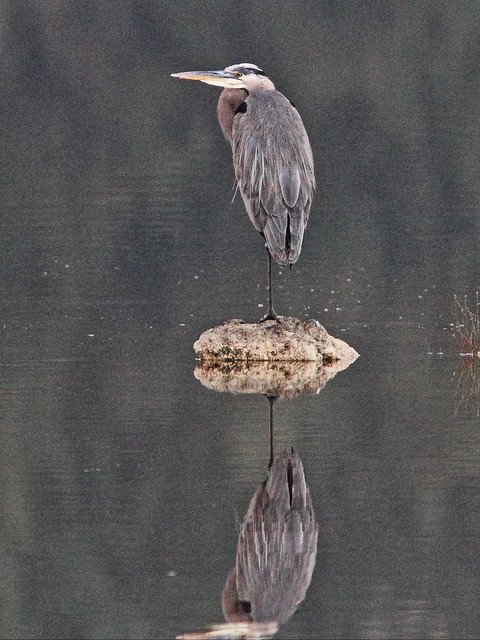
Canon PowerShot:
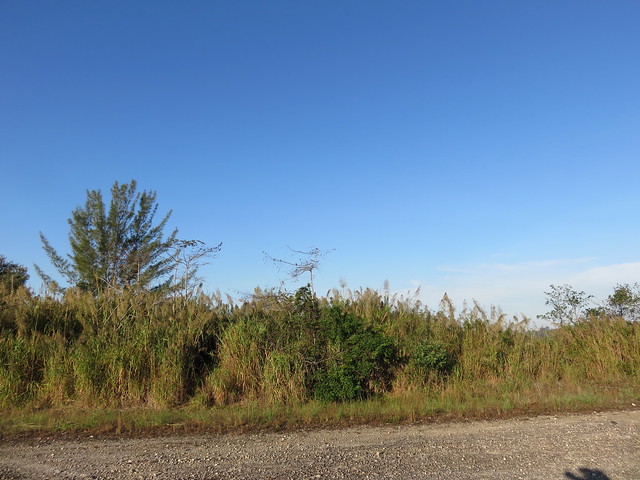
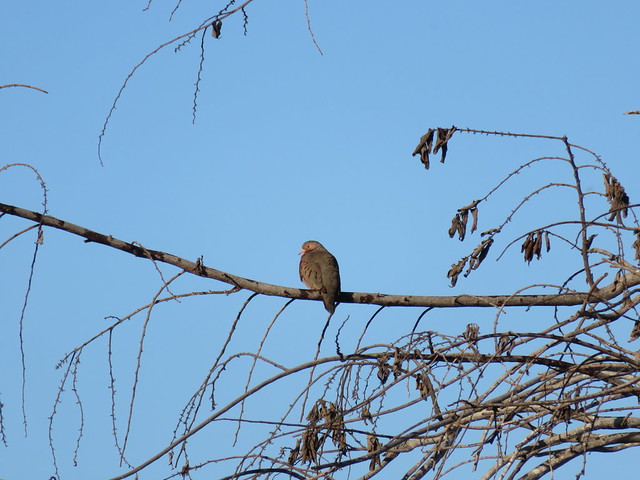
Here are comparable images of a Common Ground Dove, perched about 15 feet high, about 100 feet away. This is the PowerShot image, not zoomed. The dove is barely visible just below the center of this photo:
The DSLR image at 100 feet:
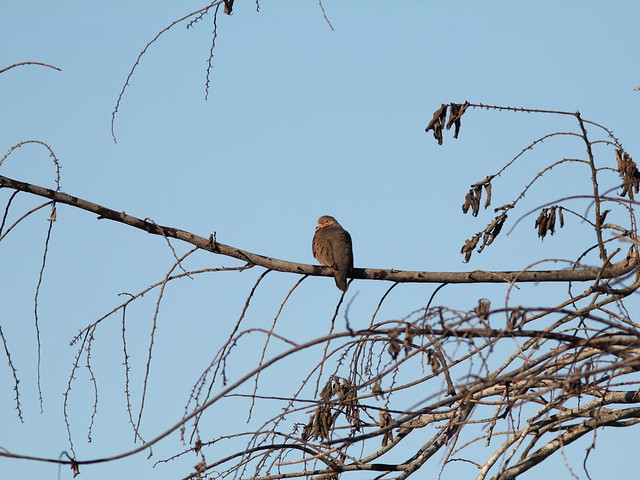
The corresponding optically zoomed PowerShot image (Tv 1/320 sec, Av f/6.9, ISO 100):
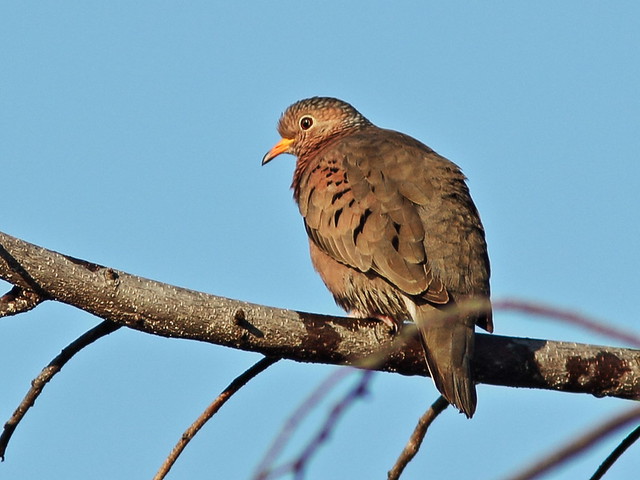
Moving closer, at 60 feet, here are similarly processed images. This is from the 60D DSLR (Tv 1/640 sec, Av f/5.6. ISO 100):
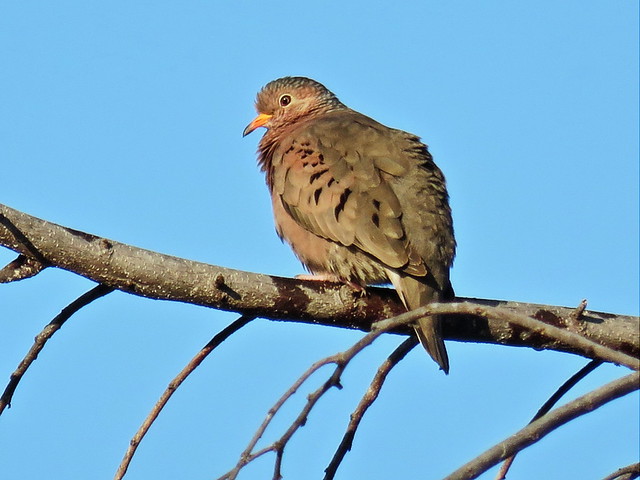
The corresponding processed PowerShot image:
Following are some random processed images taken with the PowerShot, all set to AUTO and hand-held unless otherwise noted.
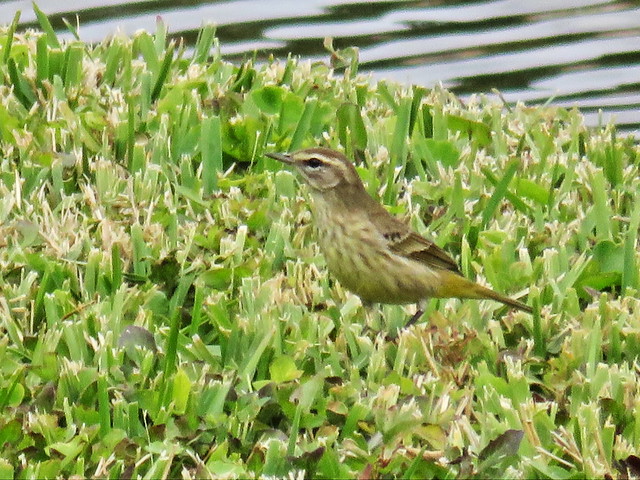
Palm Warbler at 70 feet, 30X optical zoom:

Another shot of the same bird with 1.6X added digital zoom (48X):
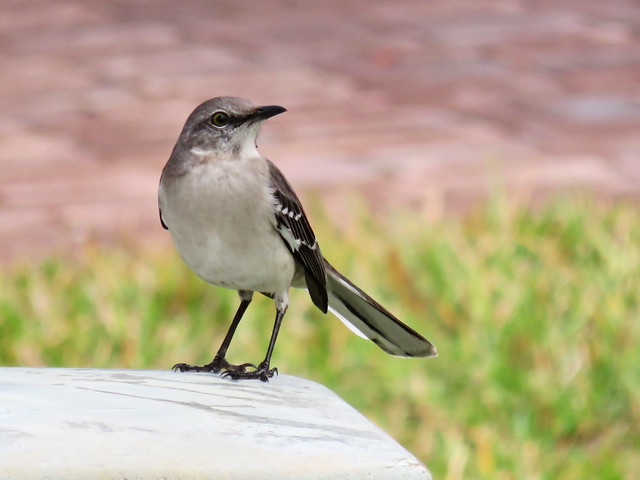
Northern Mockingbird at about 20 feet, 50% crop, zoomed optically to 30X:
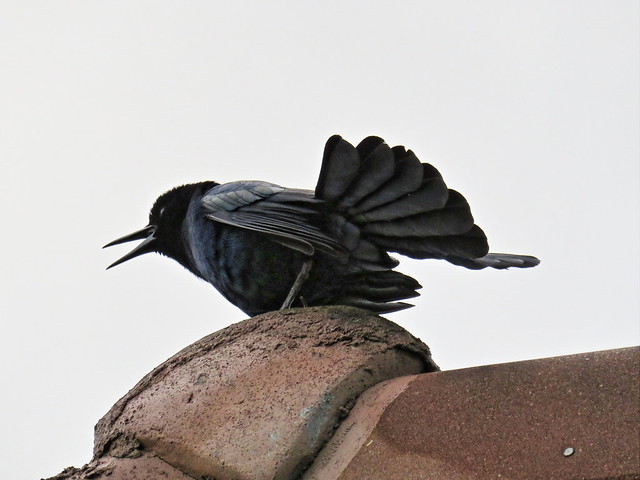
Boat-tailed Grackle on roof, 20 feet above, digitally zoomed to 42.8 mm (about 9.5X).
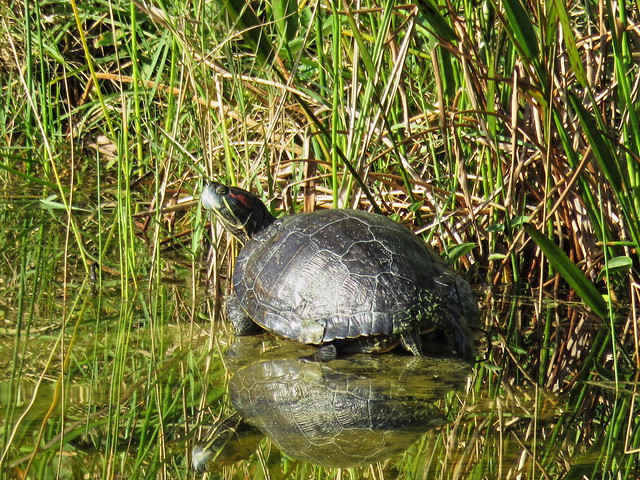
Turtle at range of 60 feet (18 meters) at 30X optical zoom:
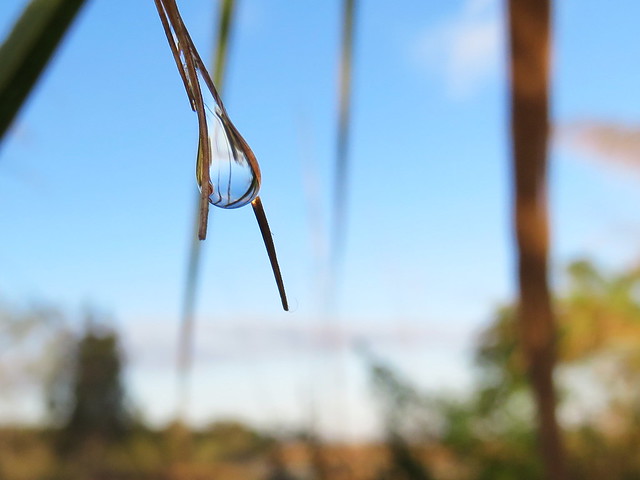
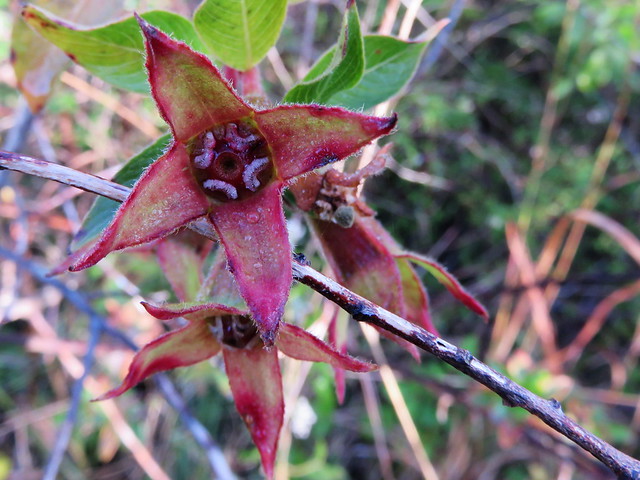
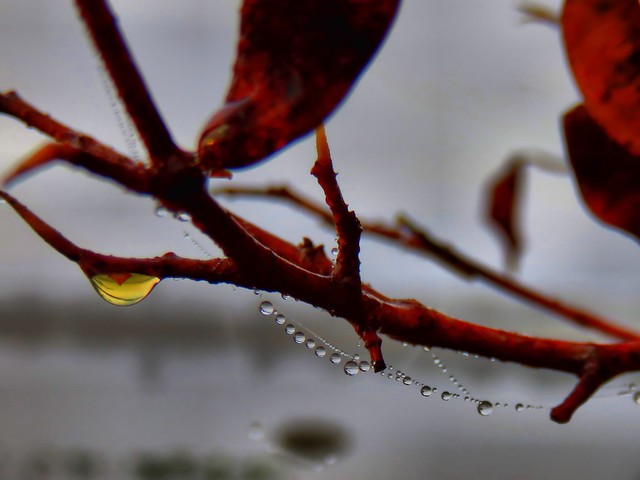
Hand-held macro photos:
Dewdrop at about 3/4 inch (2 cm) from lens:
Tiny flower calyx about 1 1/4 inch (4 cm) from lens:
Spider silk with dew drops from about 8 inches (20 cm):
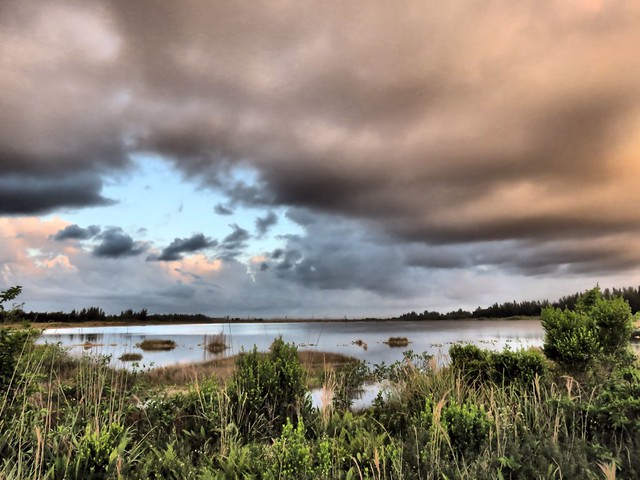
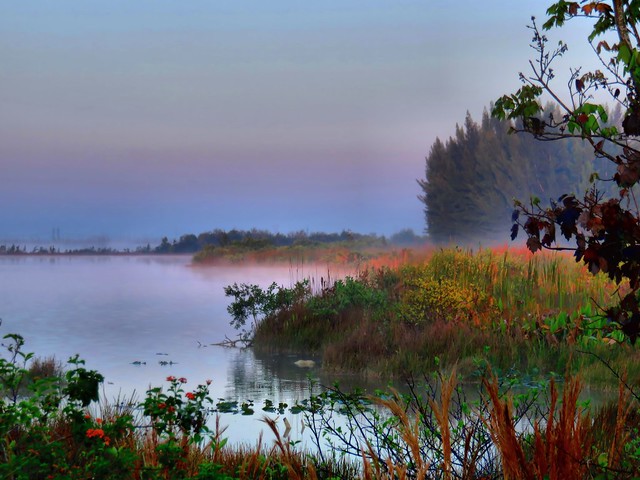
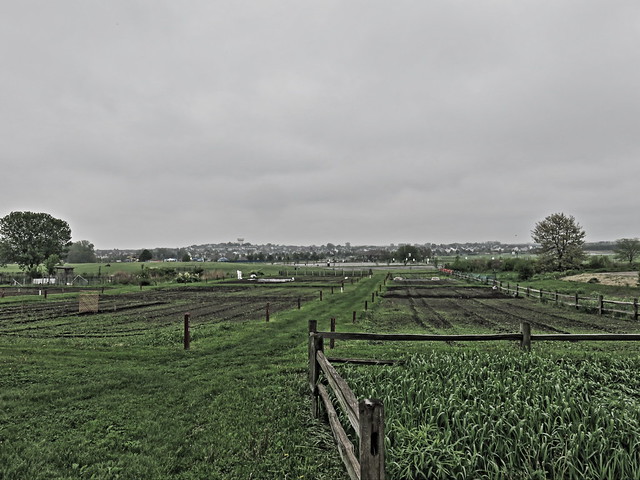
I have also been pleased with the quality of the landscapes produced by the PowerShot. The following were processed in Corel PaintShop ProX X7 by layering three exposures from a single JPG to create HDR images:
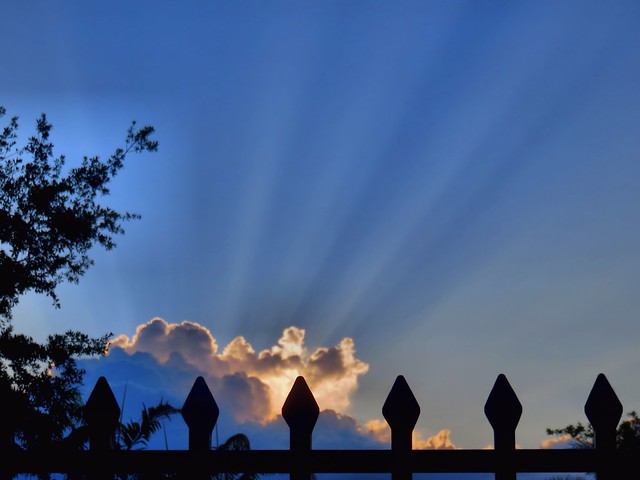
This photo of the split rail fence around the community gardens in St Charles, Illinois was processed from a single image using only the HD filter of Canon Digital Photography Professional (DPP):
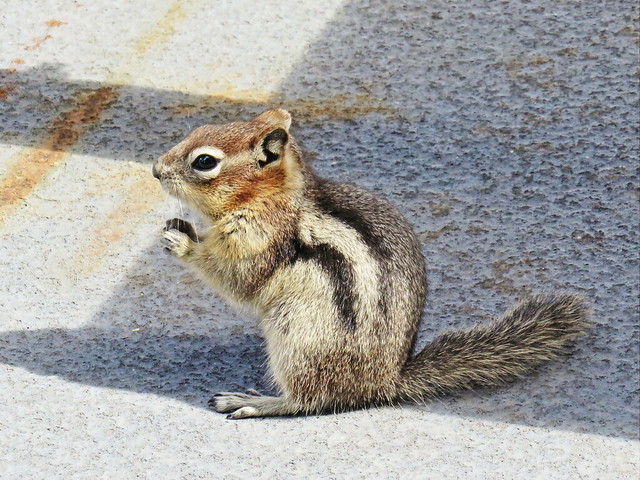
Having just returned from the Canada rail trip, I am still reviewing over 1200 photos I took with the PowerShot. Most were landscapes. As expected, wildlife encounters were limited. This Golden-mantled Ground Squirrel entertained visitors at the tram terminal at the top of Sulphur Mountain in Banff, Alberta:
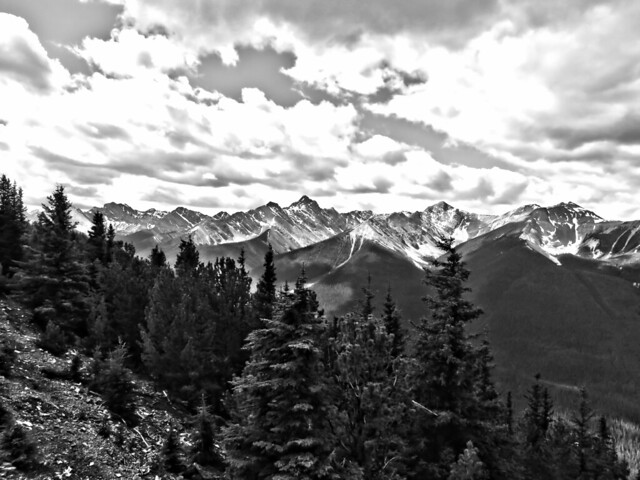
Also from the top of the mountain, this is a monochrome rendering (three layers from a single exposure) of the view to the west:
To summarize, the Canon PowerShot SX700 HS performed quite well with smaller wildlife subjects and under marginal light conditions. Performance would probably have improved with use of a tripod, although the image stabilization is remarkably reliable. I have not yet explored other camera features, notably shooting in Aperture Priority mode which would isolate and enhance the image of smaller subjects.
= = = = = = = = = = = = = = =
Linking to Misty's CAMERA CRITTERS,
Linking to Eileen's SATURDAY'S CRITTERS,
Linking to GOOD FENCES by Tex (Theresa).
Linking to WEEKEND REFLECTIONS by James
Linking to BirdD'Pot by Anni
Linking to Wild Bird Wednesday by Stewart
Linking to I Heart Macro by Laura
________________________________________________
Please visit the links to all these memes to see some excellent photos on display
________________________________________________


