Showing posts with label Great Blue Heron. Show all posts

Thursday, October 28, 2021

My Patch list # 1-10

My health condition now (hopefully temporarily) prevents me from straying very far from home. Therefore I will take advantage of my forced leisure to reflect on the birds I have seen since moving from New Mexico to south Florida. This list only includes bird species seen in our back yard and the preserve adjacent to our home, the West Miramar Water Conservation Area in Broward County, Florida (AKA "Wounded Wetlands"). 

We moved to Florida in 2004, but I only started to report sightings on eBird late in 2008. I did not take up photography until 2008 and deemed two of my earlier sightings important enough to report retroactively. I  picked out a representative photo of each species, not necessarily the first one taken, but always one among many from the Wounded Wetlands. My checklist includes a total of 185 species to date for this location, most of which I eventually photographed here. 

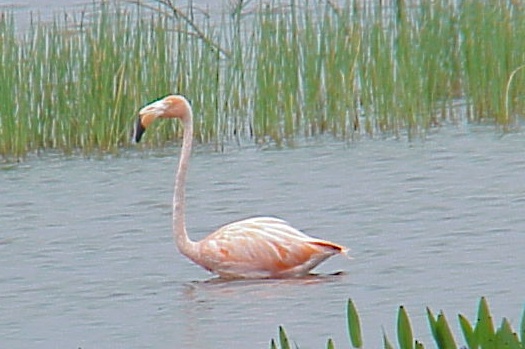
# 1. American Flamingo, 12 Jul 2005

I was fishing in our back yard lake when I looked up in amazement as a flock of four long-legged, crooked-billed flamingos coursed from south to north right over in front of me. I was not sure at the time that this was a most unusual sighting, indeed the first flock reported locally in several years. I saw four again over the lake the next evening, flying almost the same course. 

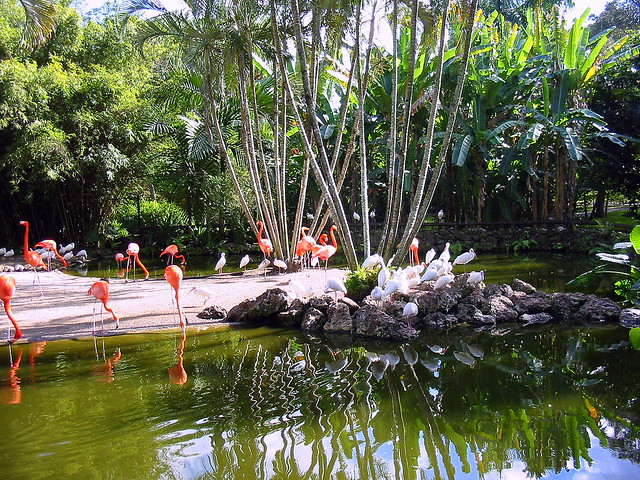
Flamingos once roamed extensively over South Florida, but in recent years the only reliable sightings were of a flock at the southern tip of the peninsula at Snake Bight. Inquiries about all known captive flamingos confirmed that none had escaped. Here is a photo of those in the nearest flock, confined in Flamingo Gardens:
I put the word out on the Internet and others discovered them, a flock of "seven or eight or up to twenty" foraging in a wetland preserve adjacent to the north end of my Patch. I was not carrying a camera, but David Tringo, a neighbor, took this photo and kindly permitted me to publish it: 

# 2. Savannah Sparrow, 26 Dec 2008. This is a photo of one in November, 2018:

# 3. Rock Pigeon, 23 Oct 2009. That day I photographed a feral albino specimen, very likely an escapee from a wedding celebration or peace demonstration:

# 4. White-winged Dove, 23 Oct 2009. This one was looking for nesting materials on our driveway:

# 5. Mourning Dove. 23 Oct 2009. 

# 6. Killdeer, 23 Oct 2009

# 7. Anhinga, 23 Oct 2009

# 8. Double-crested Cormorant, 23 Oct 2009

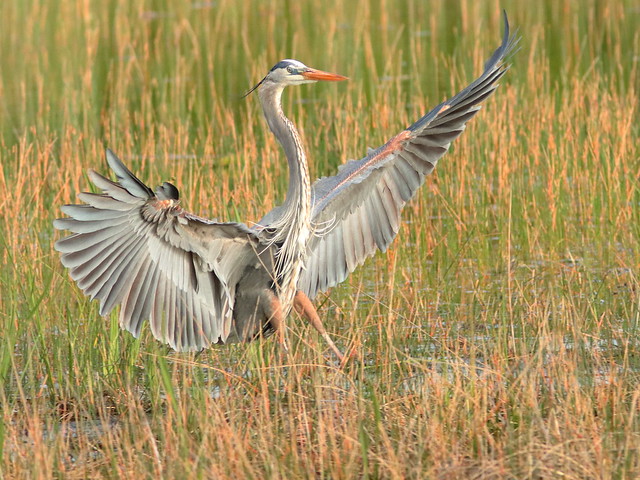
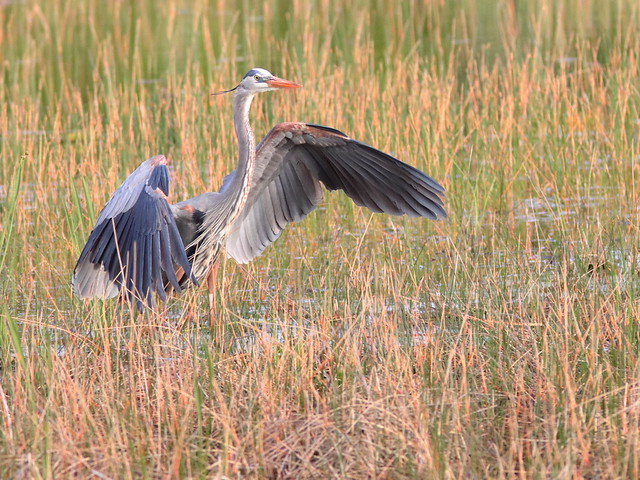
# 9. Great Blue Heron, 23 Oct 2009

# 10. Great Egret, 23 Oct 2009

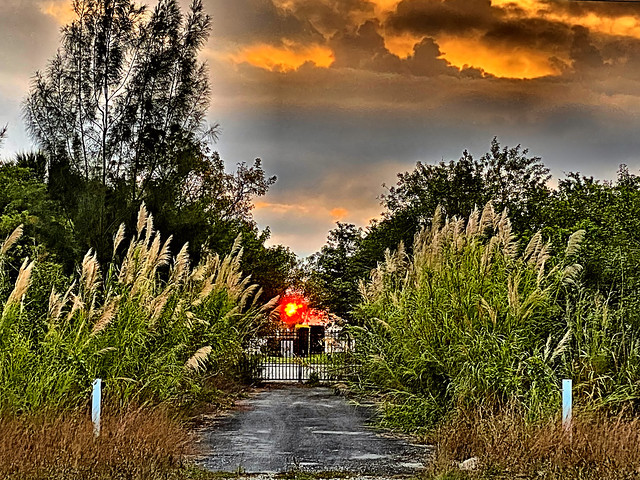
Our walks usually started out about an hour before sunrise, to take advantage of the cooler temperatures and listen to the owls and nightjars. The peninsula in the wetlands lake provided a wide open view over the Everglades to the west.   An advantage to being a stay-at-home birder is that I can see the sunrise on the eastern horizon, which is obscured by the trees out in the wetlands. 

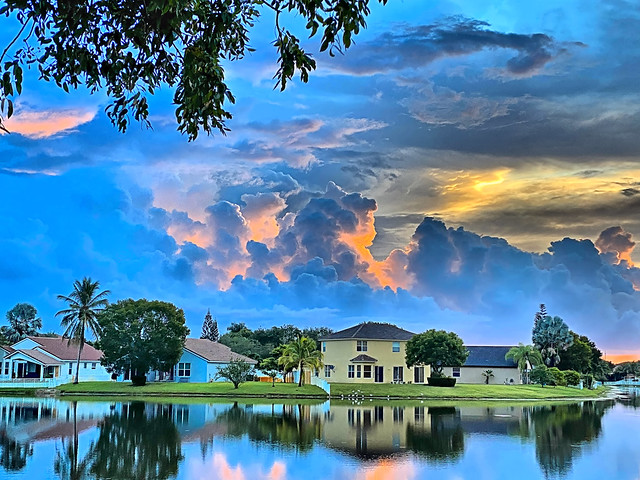
The morning after I got home from the hospital this was the view of sunrise from our back patio:

A flock of White Ibises foraged on the lawn of a home across the lake:
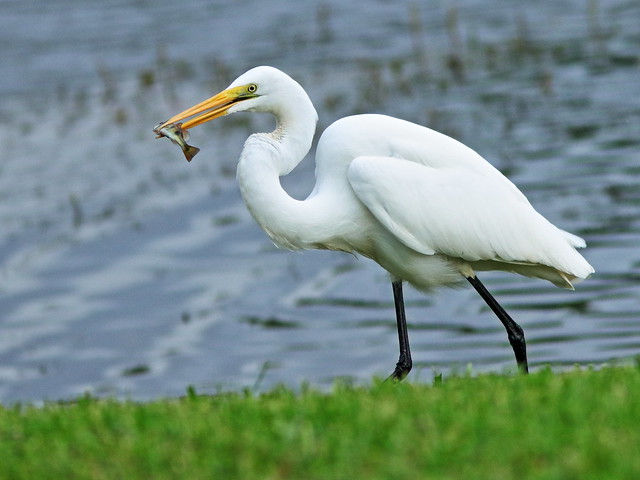
Later in the day the overcast sky provided a shadow-less view of a Great Egret, which hurried along our lawn. It appeared to be intently watching a prey item along the shore:

It plunged and came up with a small Peacock Bass:



= = =  = = =  = = = =  = = = = =

Linking to:


Garden Affair


Skywatch Friday

Weekend Reflections

Saturday's Critters

BirdD'Pot

Camera Critters

All Seasons

Wordless Wednesday (on Tuesday)

Natasha Musing

Our World Tuesday

________________________________________________

Please visit the links to all these posts to see some excellent photos on display
________________________________________________

Thursday, May 27, 2021

Missing my MDR of twenty species

Although I do not keep a running total of species seen as I enter them into the eBird app, I usually reach my Minimum Daily Requirement (MDR) of  20 without trying very hard. I just noticed that my last eight eBird checklists (since May 18) never got above 21 species: 20, 19, 19, 16, 20, 21, 13, 14. 

Warblers and vireos (even a couple of locally breeding species), egrets, Killdeer, and Common Nighthawks have been scarce or absent from the Wounded Wetlands. Some birds are less conspicuous because they are tending to nests and young. Cardinals and Carolina Wrens are singing less often or are silent, but doves and mockingbirds do fill the air with their songs. 

On one of those dull mornings this past week, standing vigil lakeside just after sunrise, I heard the call of a Green Heron. "Heard only" birds are accepted by eBird, but I tried unsuccessfully to find it-- until it walked out into the open:


A shaggy immature Great Blue Heron cast a reflection:

A Loggerhead Shrike hunted for grasshoppers from a low perch and a hungry youngster waited:


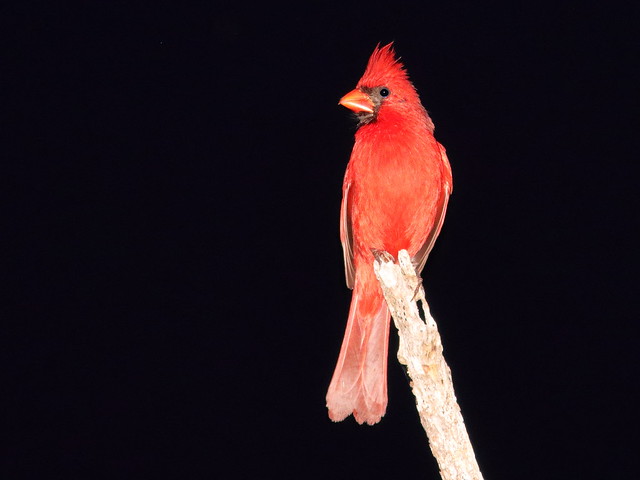
A singing Northern Cardinal was only visible with my flashlight:

An Osprey flew low overhead:

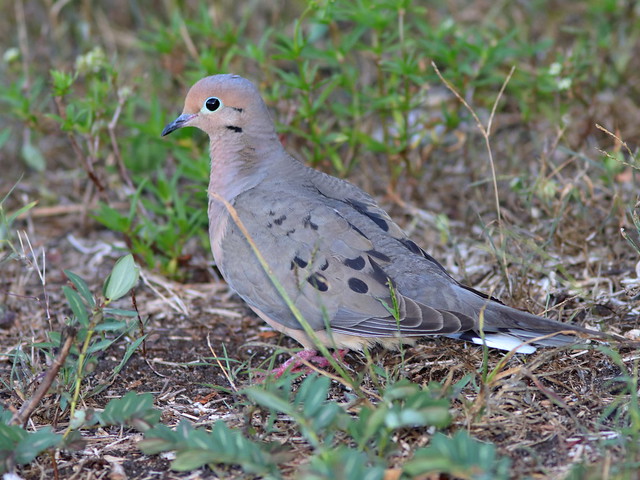
This adult Mourning Dove allowed a close approach:

Nearby, an immature of its species eyed me with suspicion:

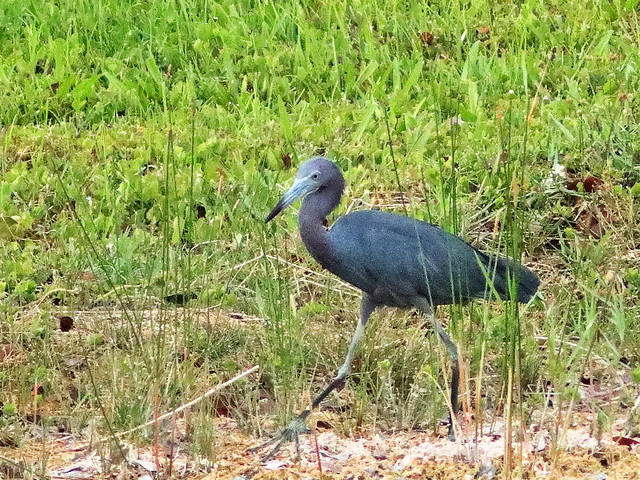
A Little Blue Heron foraged along the canal:

Overhead, Purple Martins dined on mosquitoes:   

Sunlight brought out the iridescence in the plumage of a male Boat-tailed Grackle:

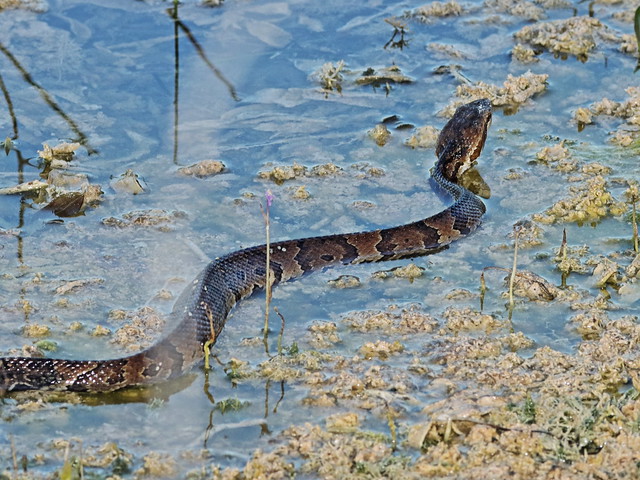
A venomous Cottonmouth Water Moccasin lounged near shore:

Close look at its black mask and slit pupil:

This curious Gray Squirrel was far from any trees and dashed off to find one as I approached:

At sunrise, a sunburst:

The sky was brightening up, but the Pine Bank had not yet been touched by the sun's rays:

UPDATE (MAY 26): Sad news about the youngest Bald Eaglet P Piney 27

The Audubon Center for Birds of Prey in Maitland, Florida released this statement about P Piney 27, the first eaglet to fall from the nest, at the age of about 5 weeks on April 18:

“The Audubon Center For Birds of Prey is saddened to report that the first eaglet rescued from the Pembroke Pines nest had to be humanely euthanized due to the severity of her injuries and lack of response to treatment. These difficult decisions are not made lightly and are discussed with a consulting vet and US Fish and Wildlife to determine what is best for the bird and their future quality of life. While this is not the outcome we all hoped for, we are grateful to those who watched this nest and helped rescue this young bird when her nest collapsed. The prognosis for the sibling who also has a wing fracture is still uncertain, but we are doing our best to give it every opportunity to heal and get a second chance at life. We appreciate your support and understanding.”

This was my first photo of P Piney 27, on March 18, exactly one month before he (we assumed a male because of its slower growth and passive behavior in the nest) fell from the damaged nest. He was probably a little over one week old at this time: 

This was my last photo of him with P Piney 26, his older and larger (presumed) sister in the nest, on April 7: 

= = =  = = =  = = = =  = = = = =

Linking to:


Skywatch Friday

Weekend Reflections

Saturday's Critters

Bird D'Pot

Camera Critters

All Seasons

Wordless Wednesday (on Tuesday)

Natasha Musing

Our World Tuesday

________________________________________________

Please visit the links to all these posts to see some excellent photos on display
________________________________________________

Thursday, March 25, 2021

A morning visit to Chapel Trail Preserve

At least once a week I try to visit Chapel Trail Nature Preserve, a City park in nearby Pembroke Pines. In previous years I led a public monthly wetlands walk during the cooler half of the year (September - March). Thanks to COVID-19 all the walks were canceled in the fall of 2020 and early 2021. 

For a time the park itself was closed, but in recent months restrictions have been eased and visitors are encouraged to wear masks and practice social distancing. 

On March 11 my visit was shortened by an approaching rain storm. Under menacing clouds I snapped a few shots of American Coots...

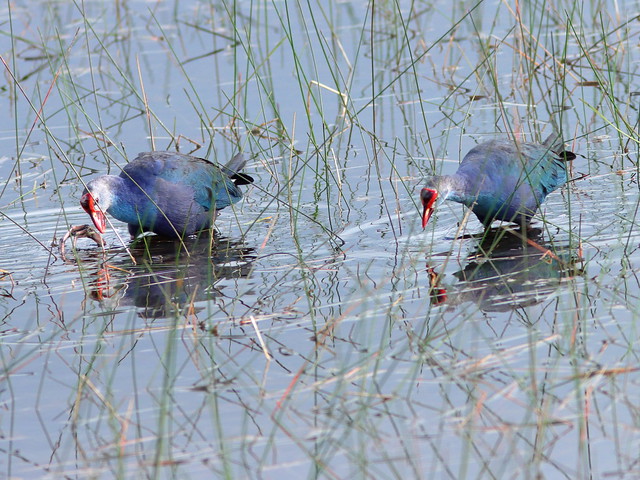
...and Gray-headed Swamphens....

...before heavy rain arrived and I sought shelter in my car:: 

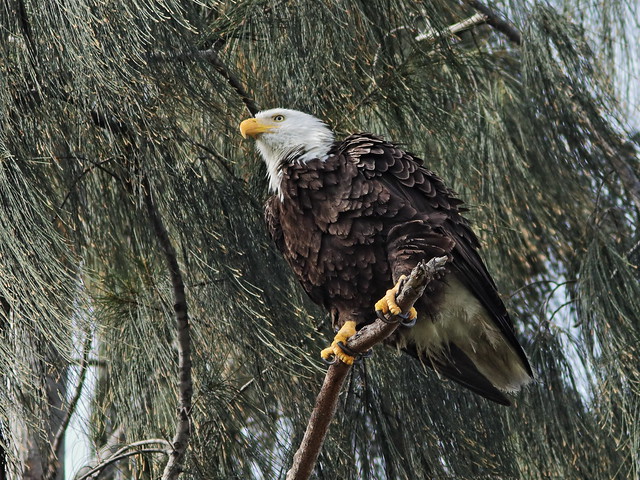
As the sky began clearing I decided to check the Bald Eagle nest, hoping to see the eaglet(s) which hatched about a week earlier. I found both members of the pair on the nest. The female (Jewel) was sitting high and the male (Pride) appeared to be tending or feeding a chick, but they were out of sight

Pride flew off the nest to roost nearby:


The skies darkened and ended the morning's bird quest. 

My next visit to Chapel Trail, shortly after sunrise on March 18, was more productive. I was the first visitor-- almost! A Raccoon left tracks in the heavy dew which covered the boardwalk:

A Purple Gallinule was harvesting the spent flowerheads of the Spatterdock (Yellow Pond Lily). The developing seeds of this plant are one of the gallinule's favorite foods:


A distant male Belted Kingfisher kept watch. It will soon be migrating north to its breeding range:


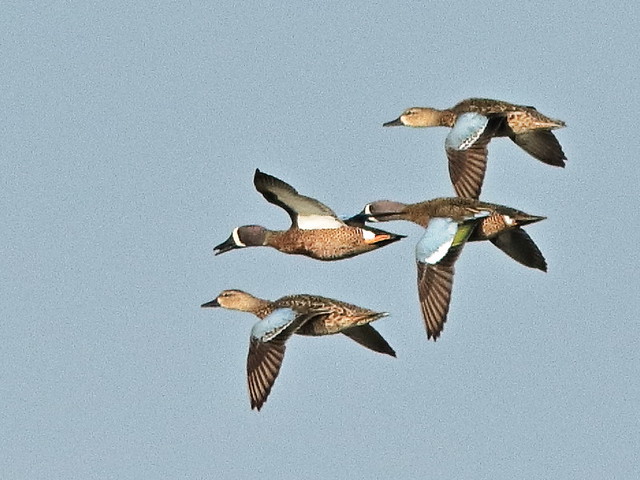
Blue-winged Teal were visiting before their departure to Canada and the the northern tier of the US:

Two pairs circled the wetlands before settling down


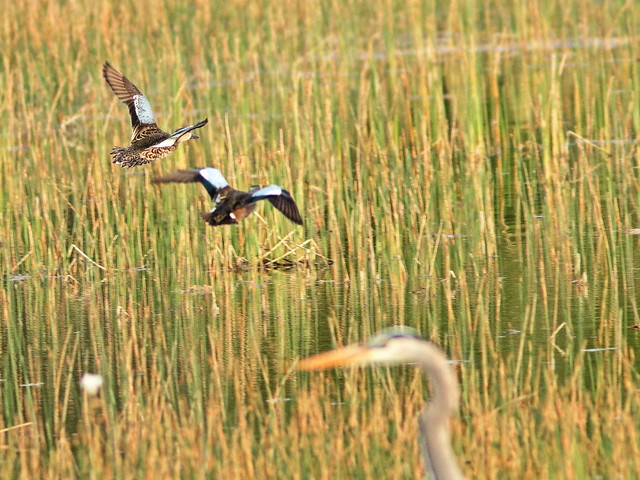
A Great Blue Heron obliged me by posing on the boardwalk before flying off...


...and settling down in the wet prairie, where fresh Spikerush was restoring green color to the landscape:


A male Boat-tailed Grackle looked me over:

The bright blue bill of a Tricolored Heron indicated that it was in breeding condition:


An adult Little Blue Heron flew over, non-stop:

Carnivorous Florida Yellow Bladderwort were blooming. They capture insect larvae and even small fish fry by trapping them underwater in collapsed hollow tubular root-like leaves. When disturbed, the end of the tube snaps open and creates a vacuum. which sucks in the prey:

Blossoms decorated the Wild Magnolia trees:

On our local wetlands in the darkness an hour before sunrise, the fragrant Moonflowers almost glowed. This vine Ipomoea alba, aka Tropical White Morning-Glory, is an annual native to North America and flourishes as a perennial in subtropical climate of south Florida. Unable to photograph them in such poor light, I used flash to see them before the flowers closed up and died after sunrise.

As expected at the vernal equinox, the sun rose directly to the east over the lake, lined up with "Sundial Alley:"


= = =  = = =  = = = =  = = = = =

Linking to:

Garden Affair

Fences Around the World


Skywatch Friday

Weekend Reflections

Saturday's Critters

BirdD'Pot

Camera Critters

All Seasons

Wordless Wednesday (on Tuesday)

Natasha Musing

Our World Tuesday

________________________________________________

Please visit the links to all these posts to see some excellent photos on display
________________________________________________