This month's potpourri gathered from my photo archives features the themes of critters, fences, skies, macros and reflections. It is a retrospective view of photos taken three years ago, in August, 2012. Actually it is a scavenger hunt, as at that time I did not seek to portray each of these memes. Let's see how far I need to go into the month to find at least one of each. If I can get them all I will have won the game eight months in a row since starting in January, 2015.
The month started out on a disappointing note. I should have been happy because the native Trema trees were bursting with fruit and this foretold of lots of food for the warblers and tanagers passing through this autumn. We were about to leave for our second home in Illinois.
August 8, 2012:
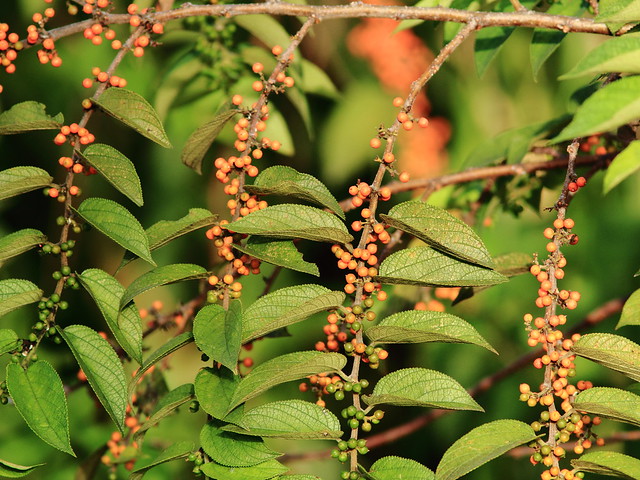
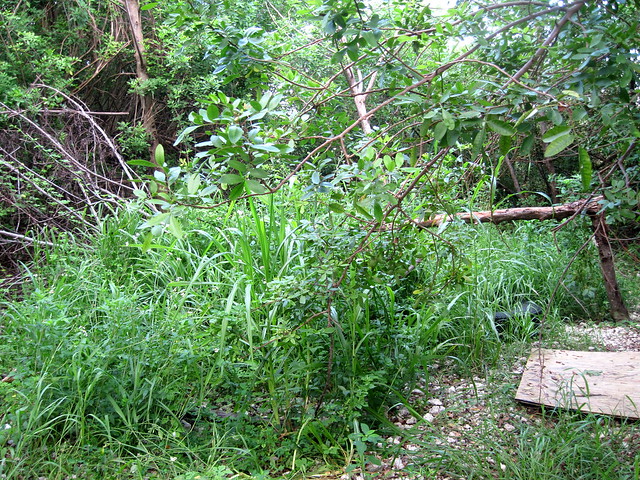
However, the vandals who had ravaged my favorite "sit spot" which, four years ago, I called the "Fake Hammock" had completed their destruction of the habitat. After cutting down all 5 of the mature Tremas, their campfires ignited a blaze that completely opened up my shady and secluded retreat. Now it is exposed to the sun and invaded by tall grass:
CRITTERS:
Also on August 8, I watched as an Anhinga caught and then swallowed a very large sunfish in our local wetlands. Here is a link to a video of the entire sequence of photos "Never Eat Anything Bigger Than Your Head":


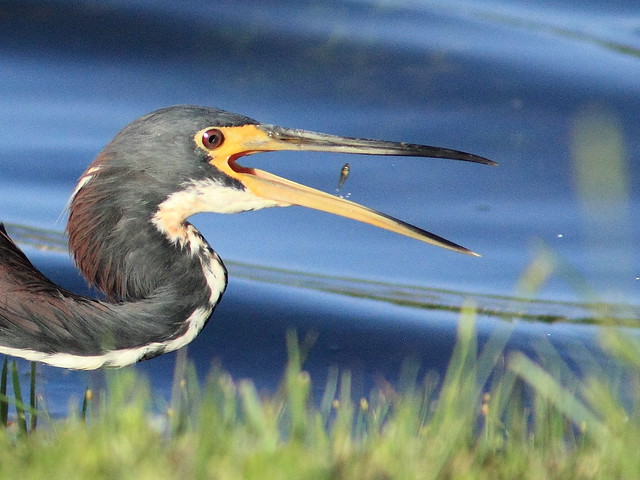
In contrast, the same day, this Tricolored Heron caught a tiny fish in our back yard lake. Look closely:
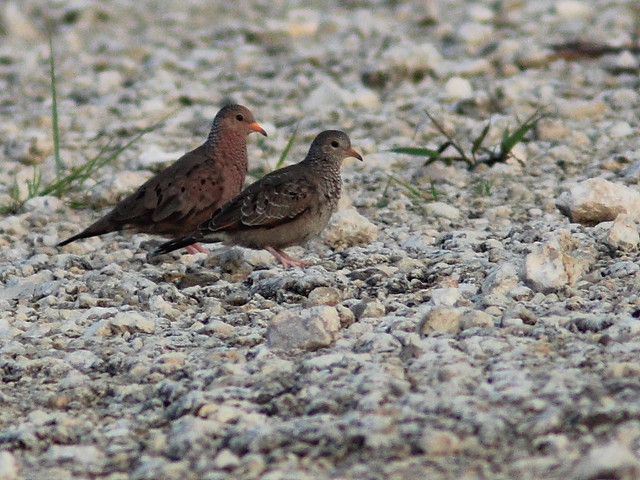
A pair of Common Ground Doves walked the gravel road on August 8, 2012. The more brightly colored one is the male:
A Northern Parula was the final warbler I would log before departing from Florida, this photo also taken on August 8, 2012

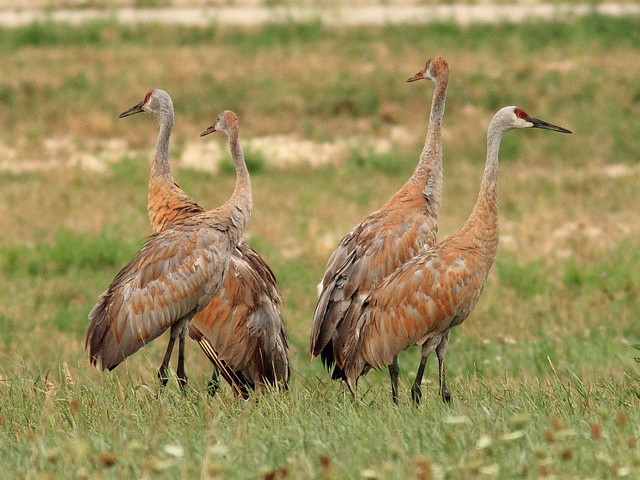
In Illinois, a family of Sandhill Cranes occupied the"backyard" of our condo. Their feathers are discolored by minerals in the water:
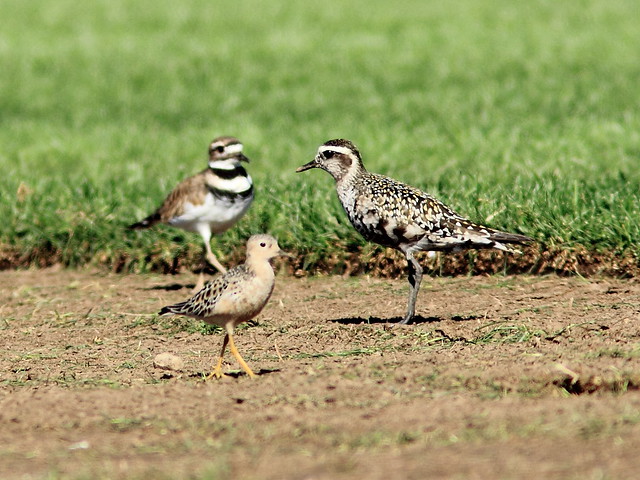
On August 22, 2012, at an Illinois sod farm, I captured this "triple play" of a Killdeer, an American Golden-Plover, and a Buff-breasted Sandpiper:
MACRO:
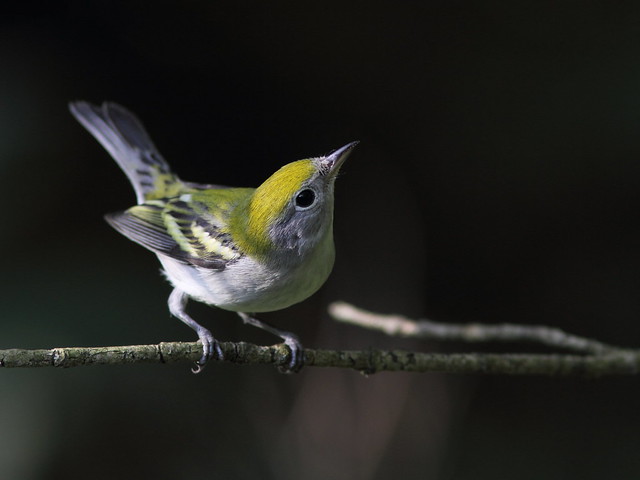
On August 24, a delightful photo of a female Chestnut-sided Warbler in Batavia, Illinois:
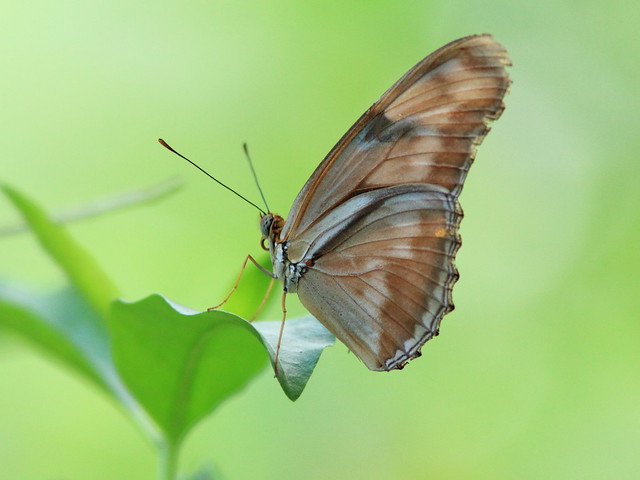
A Green Anole (August 4), a female Julia heliconian (August 8) and a bee look-alike hoverfly (August 31) posed for my favorite MACROs of the month:

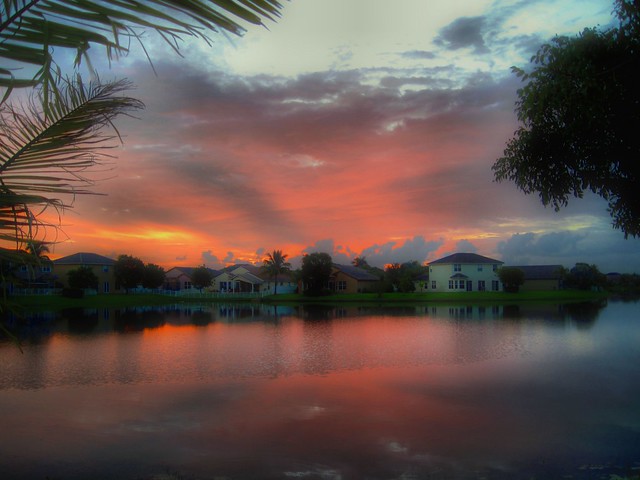
 SKY, REFLECTION (and, if you look closely, a FENCE-- sorry it does not meet Texas standards, but this was the best I could do that month Theresa!):
The morning before leaving Florida we had a beautiful sunrise over our lake, on August 10, 2012:
Well, that was fun. I think I may have just squeaked by and kept my record clean, provided Tex gives me a break.
Linking to Misty's CAMERA CRITTERS,
Linking to Eileen's SATURDAY'S CRITTERS,
Linking to GOOD FENCES by Tex (Theresa).
Linking to SKYWATCH FRIDAY by Yogi, Sylvia and Sandy
Linking to WEEKEND REFLECTIONS by James
Linking to BirdD'Pot by Anni
Linking to Wild Bird Wednesday by Stewart
Linking to I Heart Macro by Laura
________________________________________________
Please visit the links to all these memes to see some excellent photos on display
________________________________________________
A few times a year we try to visit some of the wetlands in Palm Beach County, about an hour's drive north of our home. Before our arrival back in Florida from our second home in Illinois, we were greeted with the news that a Smooth-billed Ani had appeared in the Arthur R. Marshall Loxahatchee National Wildlife Refuge. Midsummer is not the best time to visit muggy and buggy wetlands Though I had seen this species in Puerto Rico I have never encountered it in the "official" American Birding Association (ABA) area. This was a good excuse to drive up to the refuge and pick up a new "lifer" as soon as our schedule permitted. We departed from home in predawn darkness and arrived there at 7:00 AM.
Smooth-billed Anis formerly bred in Loxahatchee but have been absent for about 15 years. This pair of anis were first located about three weeks previously and their nest was subsequently discovered near the Marsh Trail observation tower in the largest of the two trees to the right of this photo (click on photos for larger size and additional images):
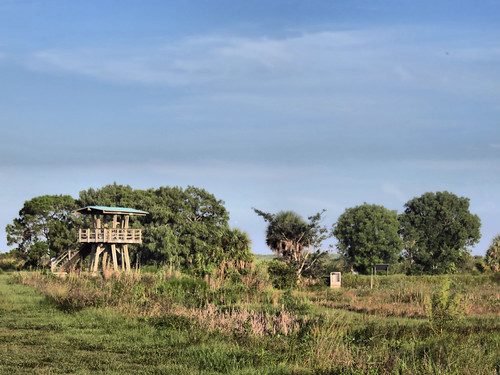
We were immediately rewarded with great views of one member of the pair. The other was sometimes visible through the foliage and is presumably incubating.
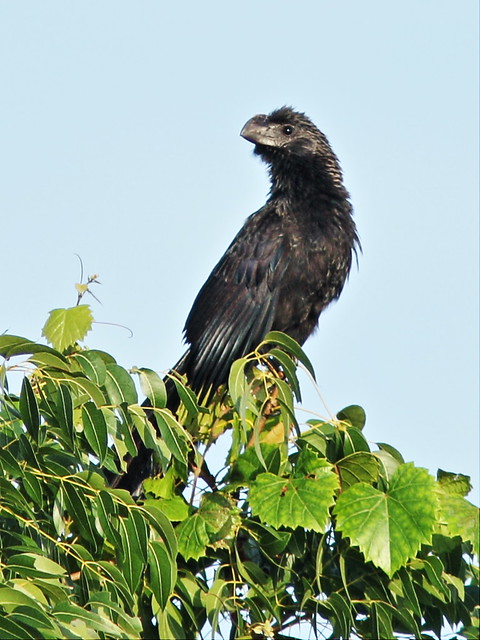
The ani is classified as a member of the cuckoo (Cuculidae) family. Its closest relative is the Hoatzin. Like the latter, the ani is normally a cooperative breeder, with several families sharing a nest and helping raise the young. Indeed, more than one female has been known to lay eggs in a nest as it is being built. The dominant female often will bury the eggs of those deposited earlier, incorporating them into the nest structure and assuring that they will not hatch.
The ani's large bill is most interesting, as it is arched and parrot-like. Overall it looks like a large blackbird (14.5 inches/37 centimeters), about the length of our Boat-tailed Grackle. Its long tail hangs down and appears to be loosely attached and its wings are short and broad.
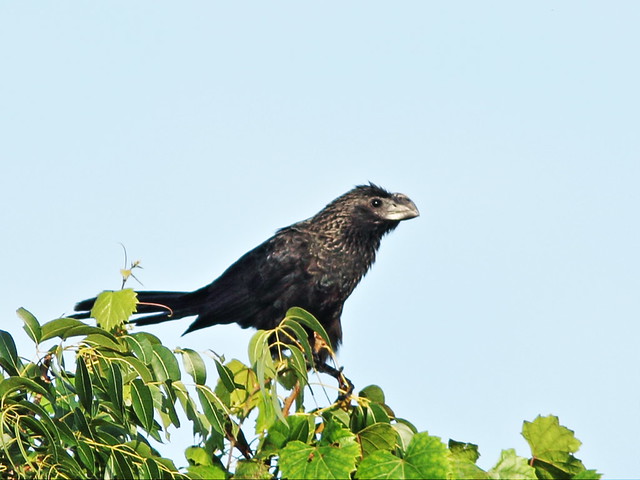
Bill detail:
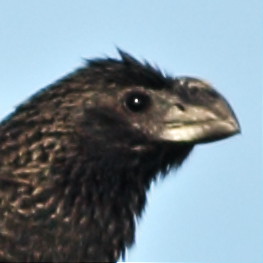 Residents of south Florida and the Caribbean, they were much more abundant locally about 30-40 years ago. Severe winters in the 1970s and habitat loss due to development are partly blamed for their reduced numbers. Now they are found in the USA almost exclusively in southern Florida, in scattered locations in the Florida Keys and along the coasts of the Gulf of Mexico, the Atlantic Ocean and Lake Okeechobee. They feed primarily on insects and small lizards and frogs, but also eat fruit, especially during the dry season. They typically nest at the beginning of the rainy season (summer, here in Florida) when insects are most abundant.
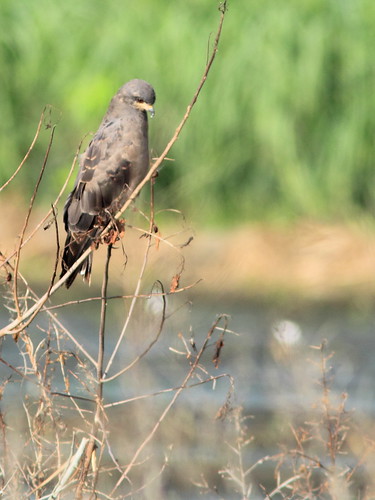
We did not stay very long as we had afternoon obligations, but had time to look for threatened Snail Kites, including this one with color-coded leg bands placed by researchers. This species depends heavily upon declining numbers of Apple Snails, but is adapting to another large exotic snail that is displacing the native species.
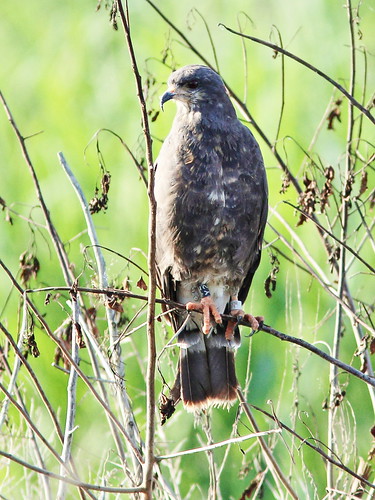
The Snail Kit's narrow and sharply curved bill is specialized for extracting the flesh from the snails:
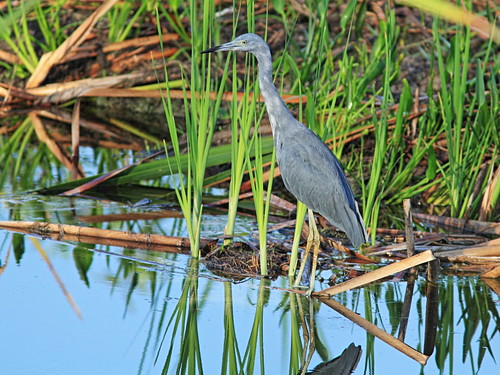
This Little Blue Heron is transitioning from its first-year white to the adult plumage that gives it its name:
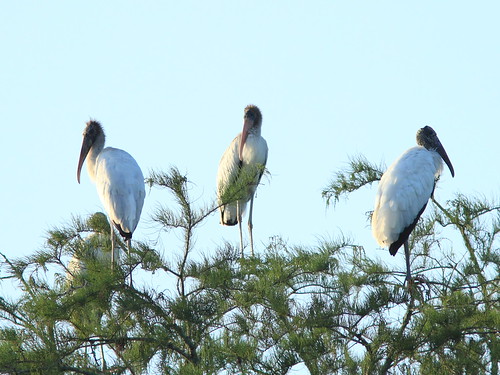
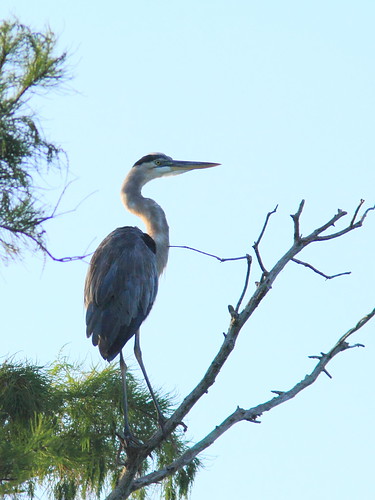
Wood Storks and a Great Blue Heron roosted in treetops along the trail. The two young storks have fuzzy heads and lighter bills than the adults:
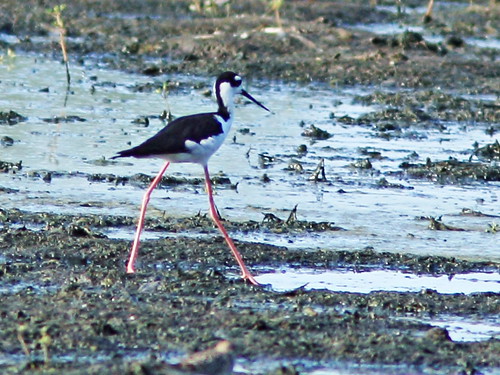
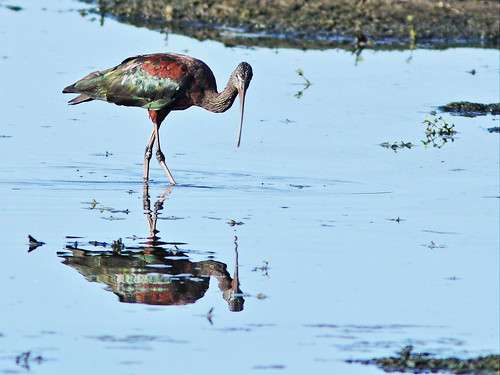
Black-necked Stilts and Glossy Ibises foraged in a flooded agricultural field near the entrance of the Refuge:
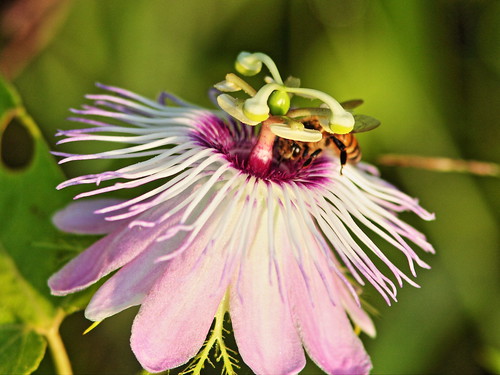
A Passion Flower attracted a Honeybee:
We proceeded to Green Cay wetlands, a waste water treatment area that is a great birding "hotspot."
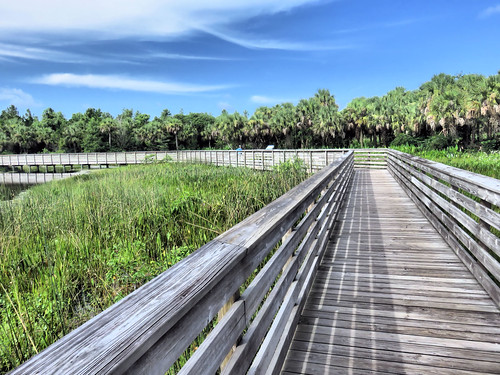
The 1.5 miles (2.4 kilometers) of boardwalk are well-maintained:
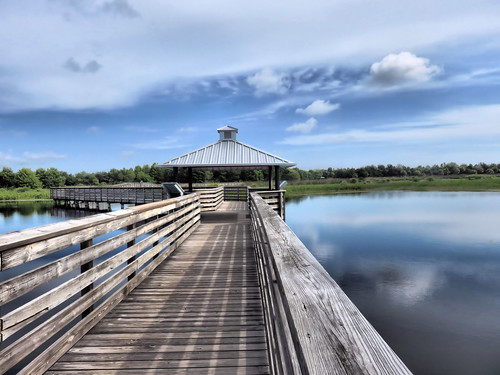
That's Mary Lou in the blue shirt, well in front of me (as usual):
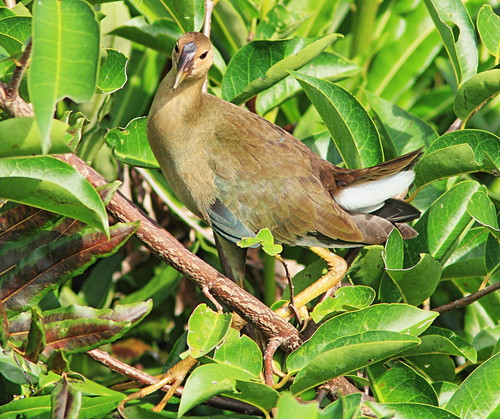
Purple Gallinules were particularly abundant, both adults...
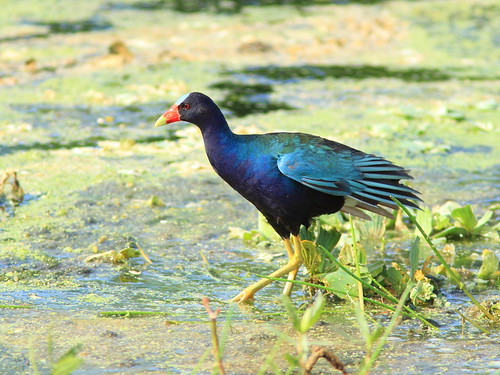
...and immature birds:
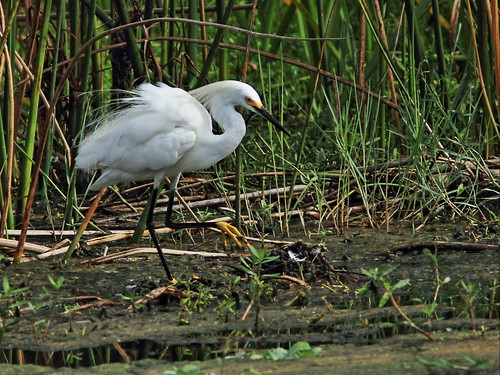
A Snowy Egret pranced on golden slippers in the mud flats:
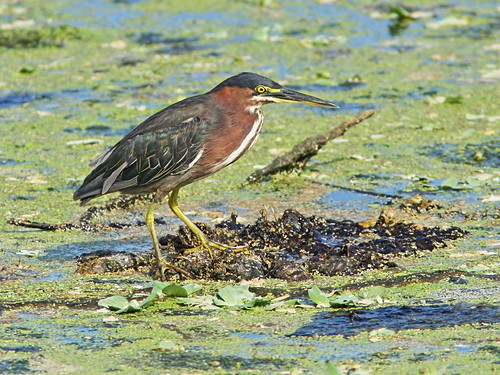
Green Herons foraged patiently, ...
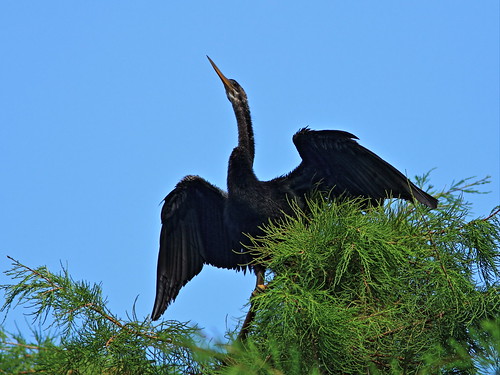
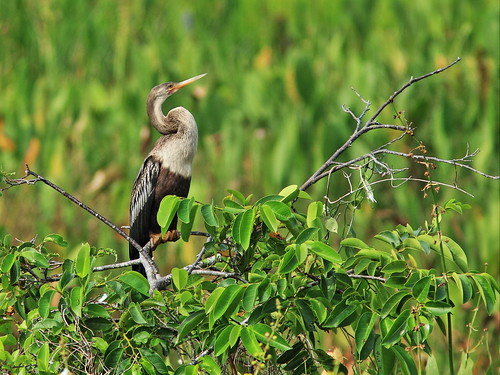
... and Anhingas dried their wings and preened:
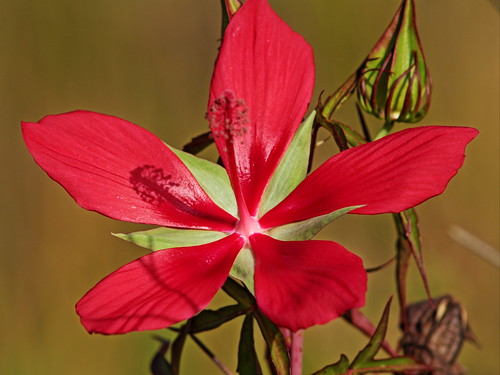
Striking red native Swamp Hibiscus bloomed along the boardwalk, ...
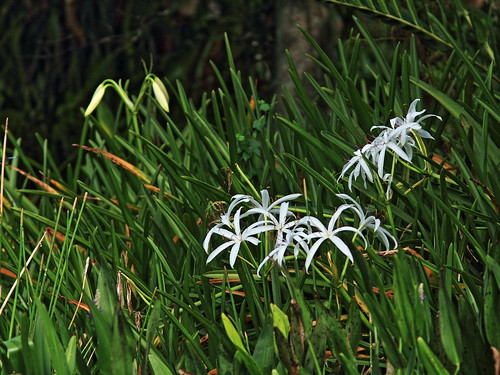
...contrasting with white Marsh Lilies..
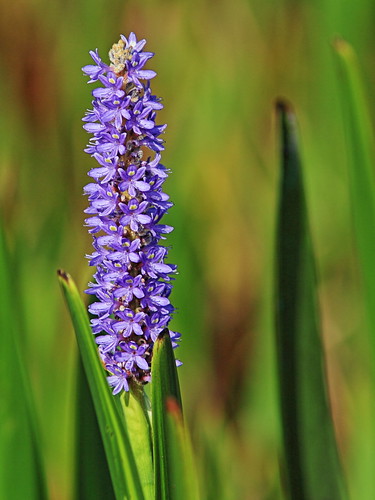
...and purple flowers of Pickerel-weed:
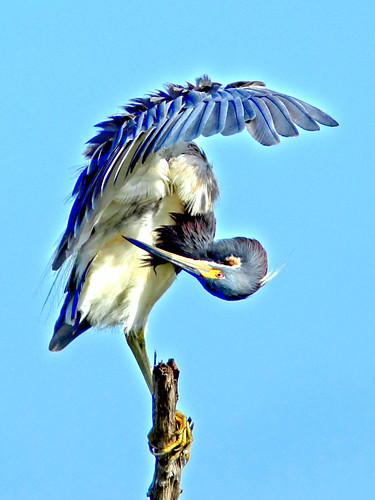
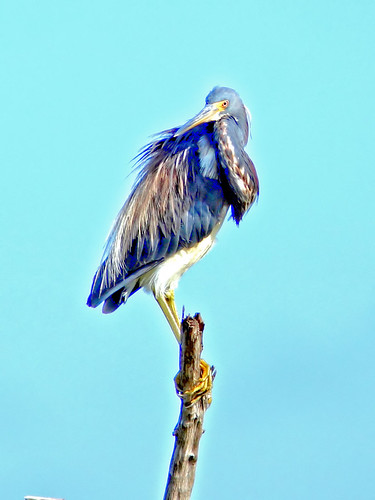
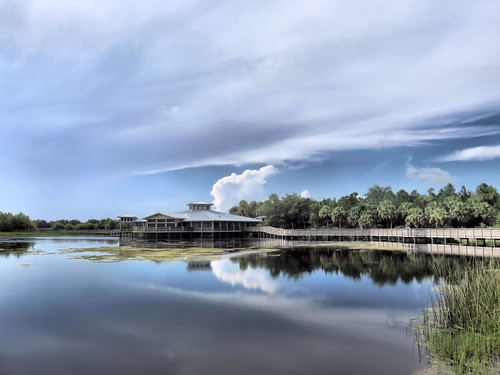
A Tricolored Heron posed so nicely that I was inspired to render it in HDR images by creating and layering different exposures from single RAW photos (I used this technique for the landscapes included in this post):

It was only mid-morning, but thunderheads loomed to the south over the Nature Center when we departed. We arrived home in the rain:
= = = = = = = = = = = = = = =
Linking to Misty's CAMERA CRITTERS,
Linking to Eileen's SATURDAY'S CRITTERS,
Linking to GOOD FENCES by Tex (Theresa).
Linking to SKYWATCH FRIDAY by Yogi, Sylvia and Sandy
Linking to WEEKEND REFLECTIONS by James
Linking to BirdD'Pot by Anni
Linking to Wild Bird Wednesday by Stewart
Linking to I Heart Macro by Laura
________________________________________________
Please visit the links to all these memes to see some excellent photos on display