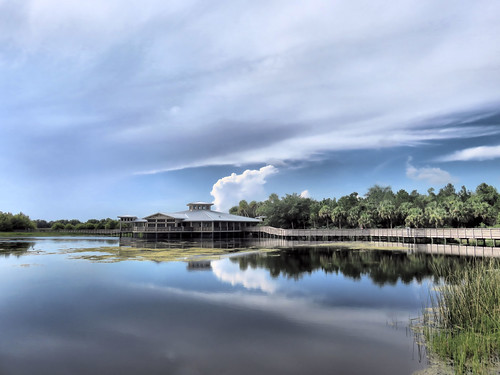
The Purple Gallinule is a Florida favorite. It was one of those species in my bird book whose picture looked so exotic and which, as a kid in New Jersey, I hoped one day to see. It took a while, but I finally set eyes on one in Avery Island, Louisiana, in 1967. Here in south Florida it is easy to find them in the right places, especially the settling ponds at water treatment plants such as Green Cay Wetlands in Boynton Beach:
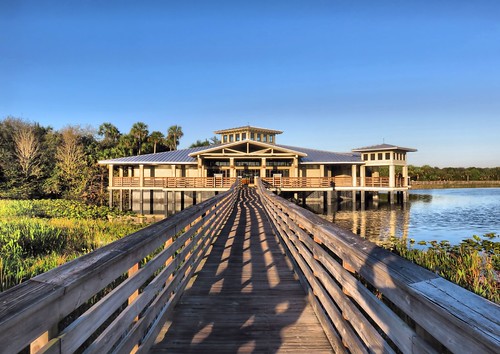
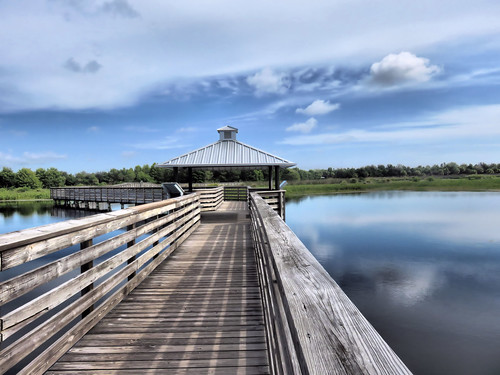
This is the nature center and beginning of the boardwalk at Green Cay:
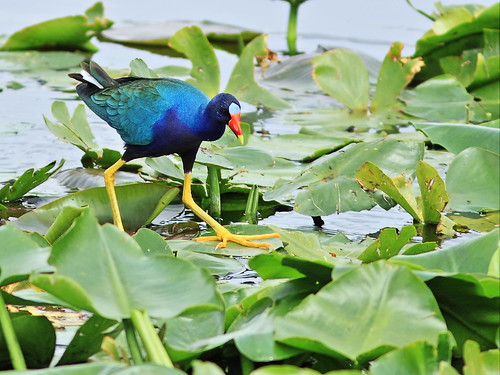
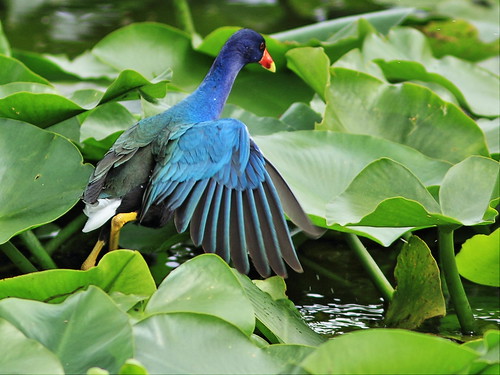
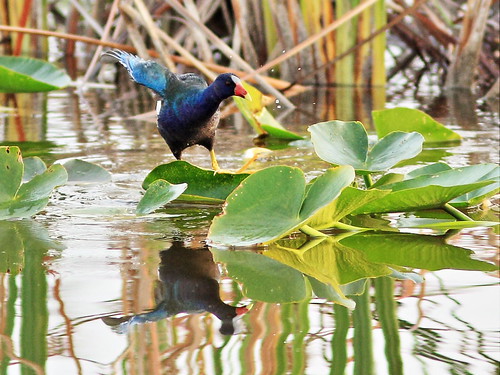
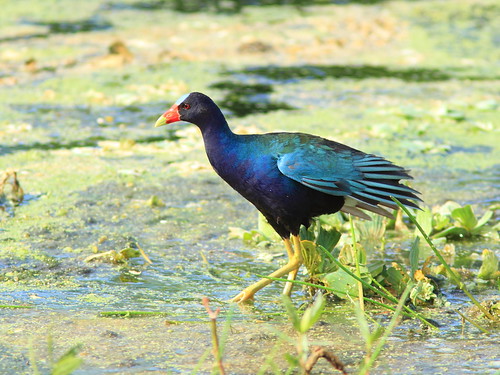
Peaceful Waters Park in Wellington is another such location. Here a Purple Gallinule shows off its long toes which allow it to walk across the floating vegetation:
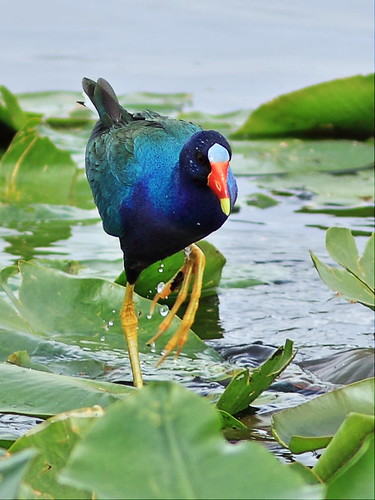
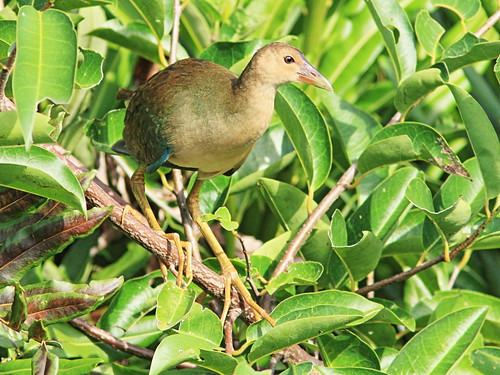
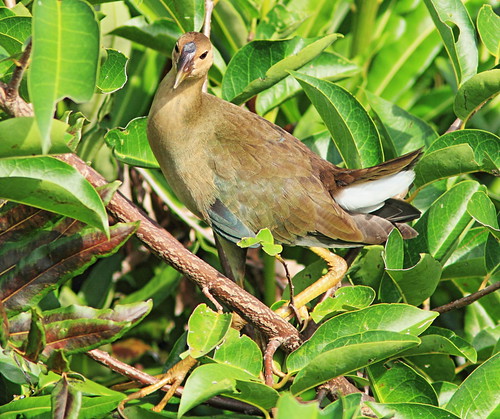
The juvenile can be rather drab. This one was at Loxahatchee National Wildlife Refuge in Palm Beach County:
The first time I saw this species in our neighborhood Wounded Wetlands was in January, 2015, when a pair showed up. I hoped the pair would breed, but they disappeared after only a week or so:
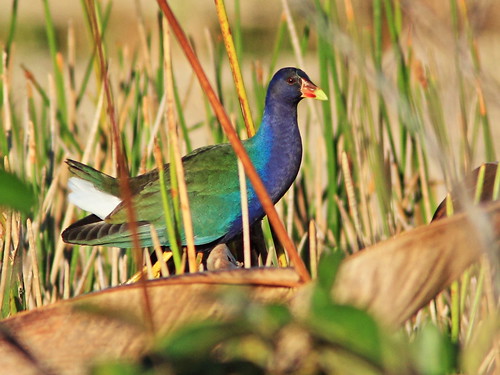
One year later, also in January, a single adult Purple Gallinule appeared in the same location. Try as I did, I could not find a second bird. It remained into March:
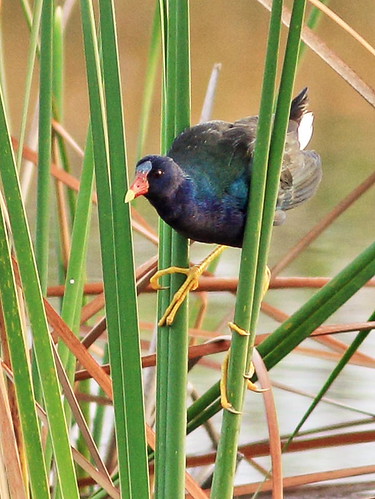
This December I saw a juvenile gallinule in the same local wetlands patch. The light was bad and it was rather secretive, so at first I was not sure of its identity. I patiently waited for it to come out into the open. It was eating the flowers and seed of Alligator Flag:
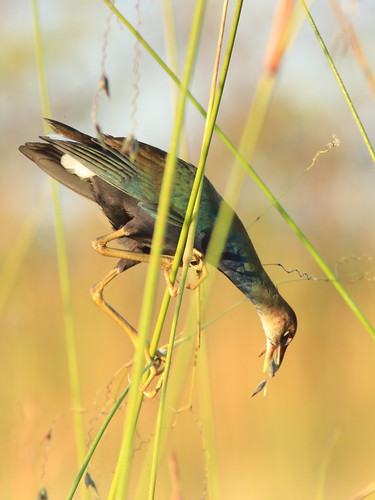
Alligator Flag must have its roots in water most of the time, so it is found on the edges of marshes and other persistent bodies of water. In the Everglades, this plant often signals the presence of an alligator hole.
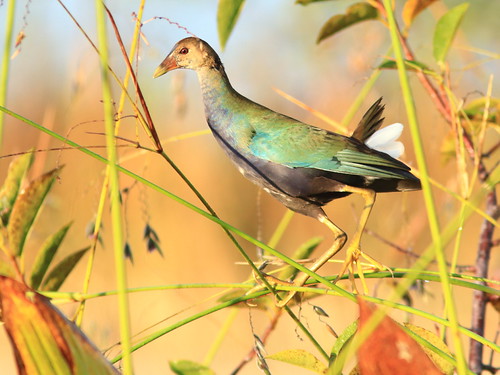
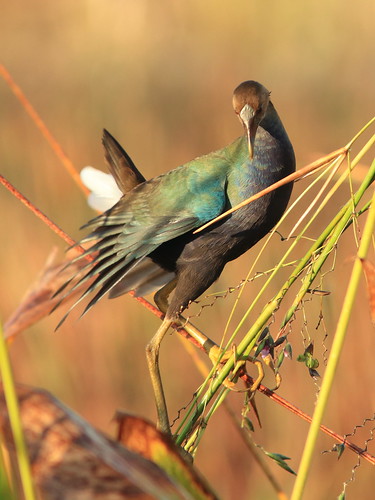
The tiny flowers of Alligator Flag rise high above on slender stems and the only way the bird can get up to them is to gather several stalks in each of its huge feet and take advantage of the construction principle of triangulation (the use of triangular shapes to give stability to structures such as buildings and towers-- the Eiffel Tower is a good example). In good light, the beauty of this immature Purple Gallinule is revealed. I love this striking pose:
 = = = = = = = = = = = = = = =
Linking to Misty's CAMERA CRITTERS,
Linking to Eileen's SATURDAY'S CRITTERS,
Linking to SKYWATCH FRIDAY by Yogi, Sylvia and Sandy
Linking to WEEKEND REFLECTIONS by James
Linking to BirdD'Pot by Anni
Linking to Our World Tuesday by Lady Fi
Linking to Wild Bird Wednesday by Stewart
Linking to Wordless Wednesday (on Tuesday) by NC Sue
Linking to ALL SEASONS by Jesh
________________________________________________
Please visit the links to all these memes to see some excellent photos on display
________________________________________________
A few times a year we try to visit some of the wetlands in Palm Beach County, about an hour's drive north of our home. Before our arrival back in Florida from our second home in Illinois, we were greeted with the news that a Smooth-billed Ani had appeared in the Arthur R. Marshall Loxahatchee National Wildlife Refuge. Midsummer is not the best time to visit muggy and buggy wetlands Though I had seen this species in Puerto Rico I have never encountered it in the "official" American Birding Association (ABA) area. This was a good excuse to drive up to the refuge and pick up a new "lifer" as soon as our schedule permitted. We departed from home in predawn darkness and arrived there at 7:00 AM.
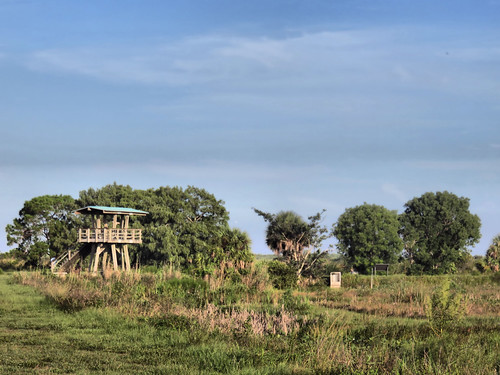
Smooth-billed Anis formerly bred in Loxahatchee but have been absent for about 15 years. This pair of anis were first located about three weeks previously and their nest was subsequently discovered near the Marsh Trail observation tower in the largest of the two trees to the right of this photo (click on photos for larger size and additional images):
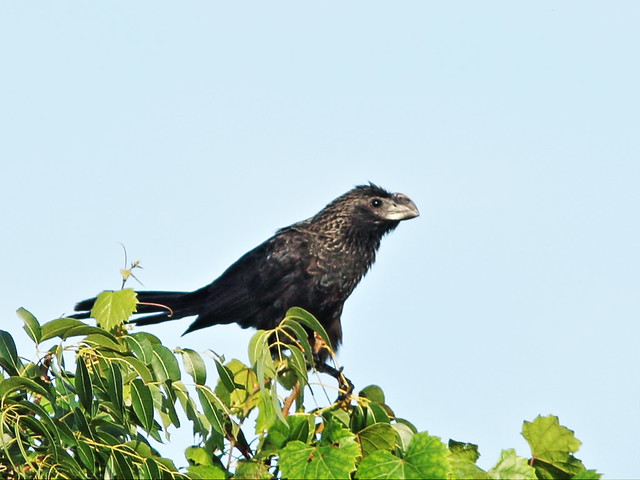
We were immediately rewarded with great views of one member of the pair. The other was sometimes visible through the foliage and is presumably incubating.
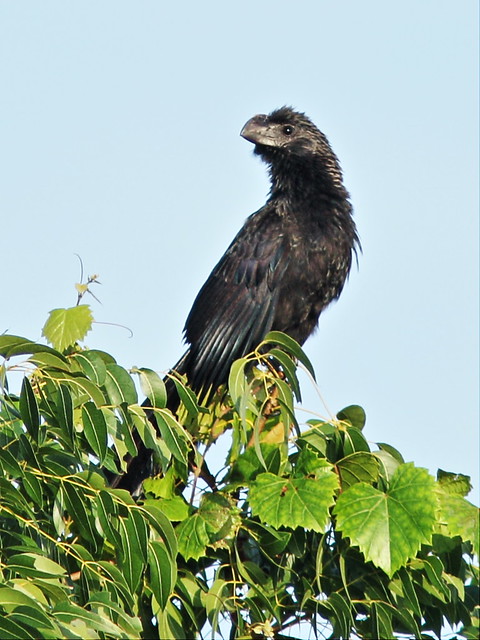
The ani is classified as a member of the cuckoo (Cuculidae) family. Its closest relative is the Hoatzin. Like the latter, the ani is normally a cooperative breeder, with several families sharing a nest and helping raise the young. Indeed, more than one female has been known to lay eggs in a nest as it is being built. The dominant female often will bury the eggs of those deposited earlier, incorporating them into the nest structure and assuring that they will not hatch.
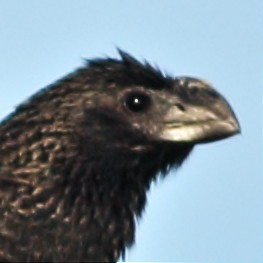
The ani's large bill is most interesting, as it is arched and parrot-like. Overall it looks like a large blackbird (14.5 inches/37 centimeters), about the length of our Boat-tailed Grackle. Its long tail hangs down and appears to be loosely attached and its wings are short and broad.
Bill detail:
 Residents of south Florida and the Caribbean, they were much more abundant locally about 30-40 years ago. Severe winters in the 1970s and habitat loss due to development are partly blamed for their reduced numbers. Now they are found in the USA almost exclusively in southern Florida, in scattered locations in the Florida Keys and along the coasts of the Gulf of Mexico, the Atlantic Ocean and Lake Okeechobee. They feed primarily on insects and small lizards and frogs, but also eat fruit, especially during the dry season. They typically nest at the beginning of the rainy season (summer, here in Florida) when insects are most abundant.
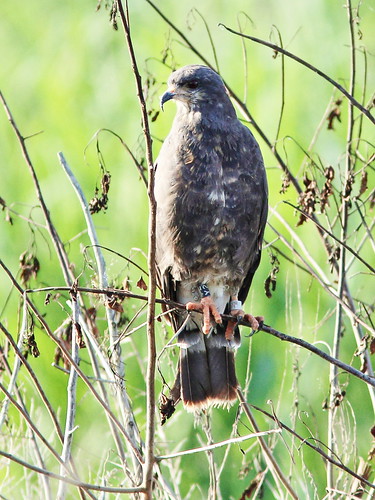
We did not stay very long as we had afternoon obligations, but had time to look for threatened Snail Kites, including this one with color-coded leg bands placed by researchers. This species depends heavily upon declining numbers of Apple Snails, but is adapting to another large exotic snail that is displacing the native species.
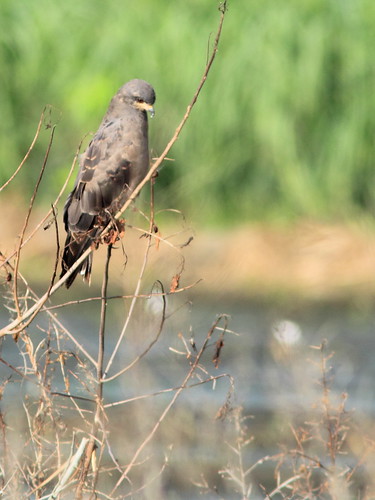
The Snail Kit's narrow and sharply curved bill is specialized for extracting the flesh from the snails:
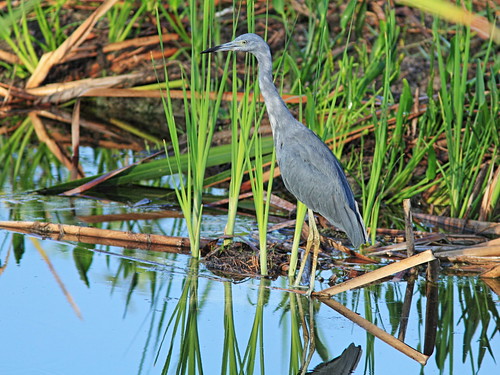
This Little Blue Heron is transitioning from its first-year white to the adult plumage that gives it its name:
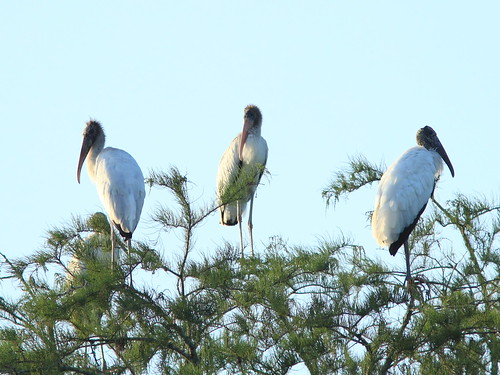
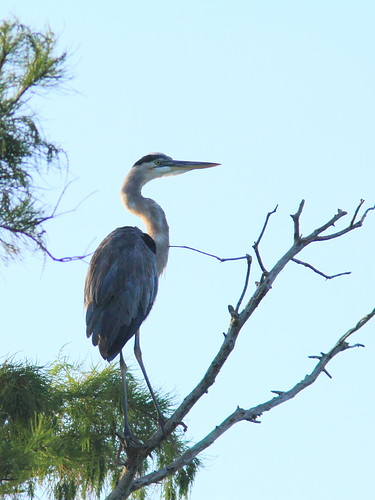
Wood Storks and a Great Blue Heron roosted in treetops along the trail. The two young storks have fuzzy heads and lighter bills than the adults:
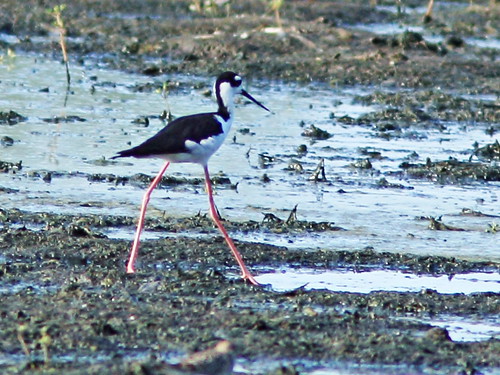
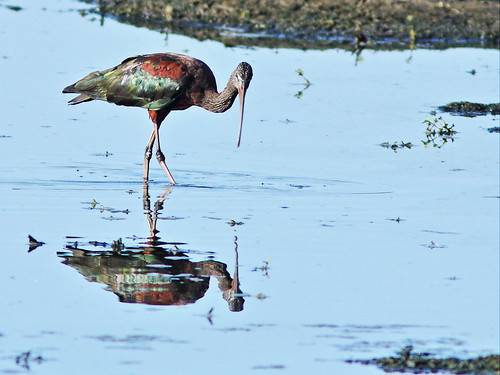
Black-necked Stilts and Glossy Ibises foraged in a flooded agricultural field near the entrance of the Refuge:
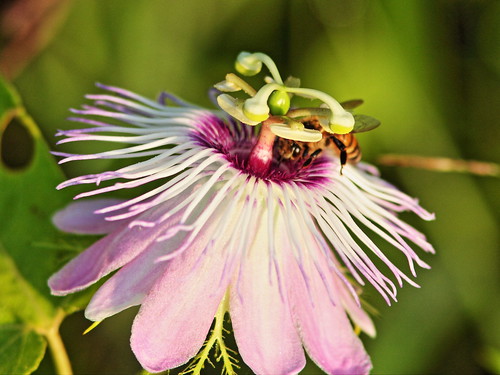
A Passion Flower attracted a Honeybee:
We proceeded to Green Cay wetlands, a waste water treatment area that is a great birding "hotspot."
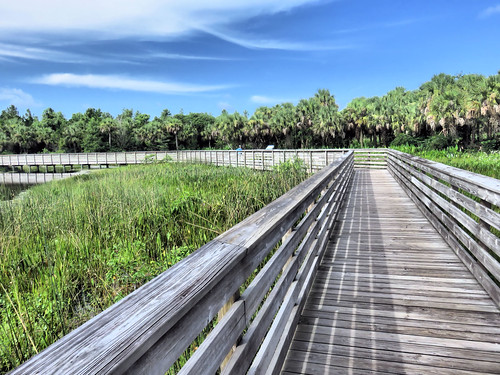
The 1.5 miles (2.4 kilometers) of boardwalk are well-maintained:
That's Mary Lou in the blue shirt, well in front of me (as usual):
Purple Gallinules were particularly abundant, both adults...
...and immature birds:
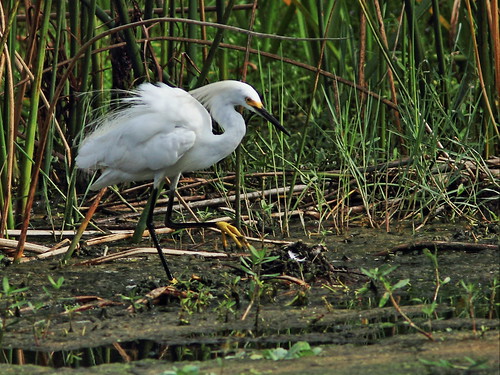
A Snowy Egret pranced on golden slippers in the mud flats:
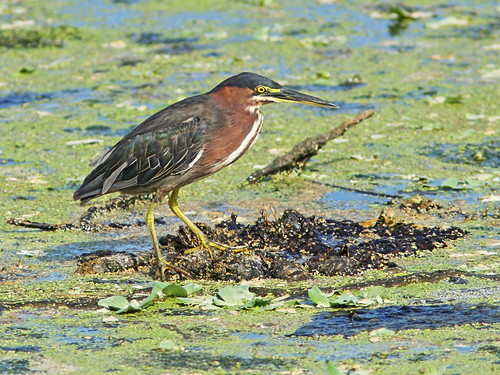
Green Herons foraged patiently, ...
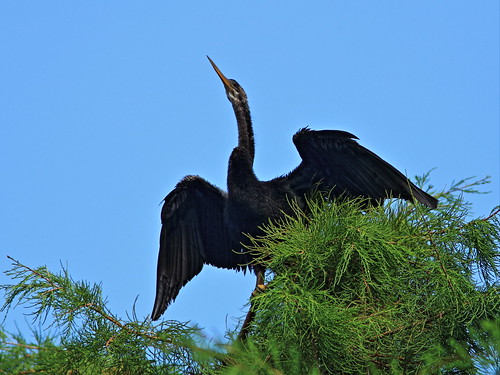
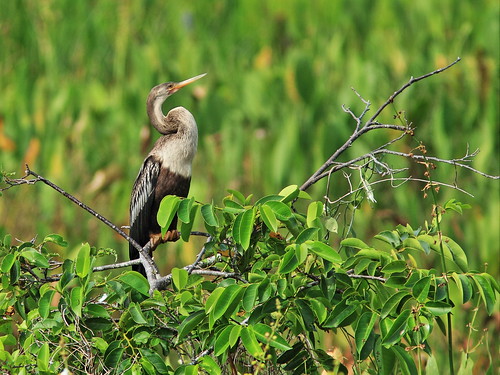
... and Anhingas dried their wings and preened:
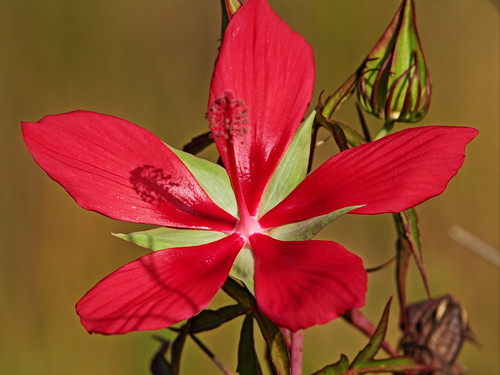
Striking red native Swamp Hibiscus bloomed along the boardwalk, ...
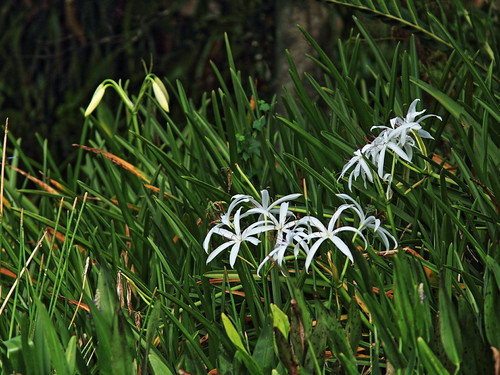
...contrasting with white Marsh Lilies..
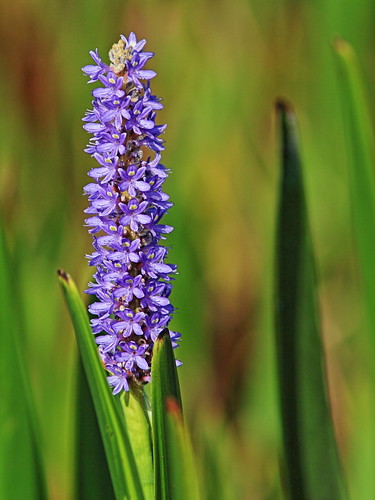
...and purple flowers of Pickerel-weed:
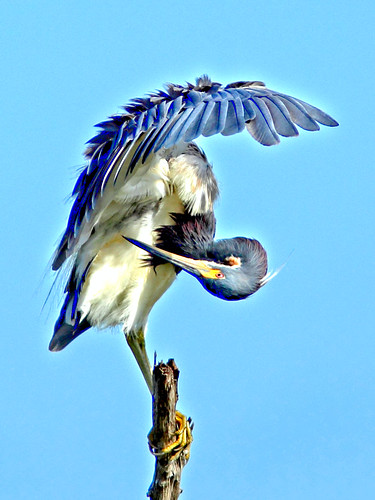
A Tricolored Heron posed so nicely that I was inspired to render it in HDR images by creating and layering different exposures from single RAW photos (I used this technique for the landscapes included in this post):

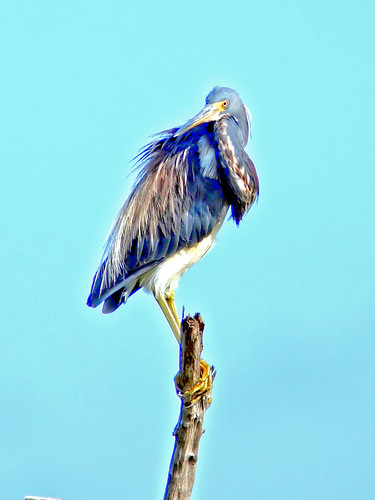
It was only mid-morning, but thunderheads loomed to the south over the Nature Center when we departed. We arrived home in the rain:
= = = = = = = = = = = = = = =
Linking to Misty's CAMERA CRITTERS,
Linking to Eileen's SATURDAY'S CRITTERS,
Linking to GOOD FENCES by Tex (Theresa).
Linking to SKYWATCH FRIDAY by Yogi, Sylvia and Sandy
Linking to WEEKEND REFLECTIONS by James
Linking to BirdD'Pot by Anni
Linking to Wild Bird Wednesday by Stewart
Linking to I Heart Macro by Laura
________________________________________________
Please visit the links to all these memes to see some excellent photos on display
Our visit to two of the famous birding locations in West Palm Beach County started at Green Cay Wetlands. It was a beautiful clear morning, without a cloud in sight. This is the boardwalk that leads out into the wetlands from the Nature Center.
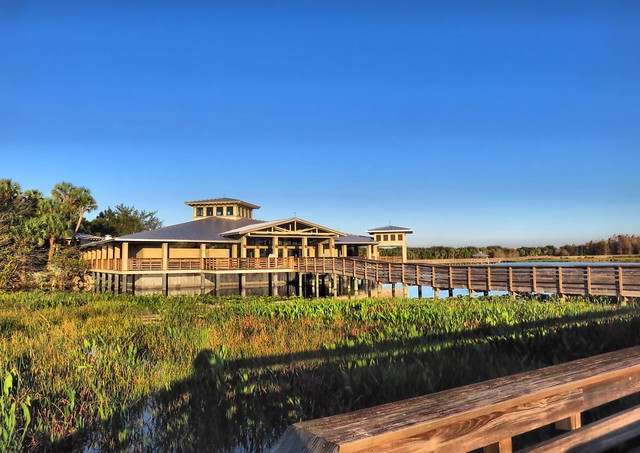
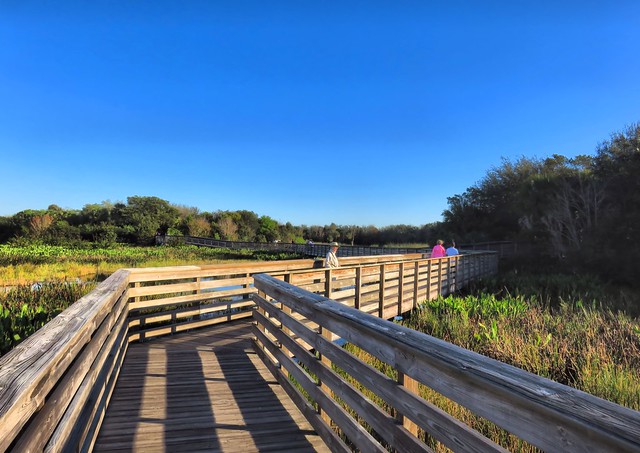
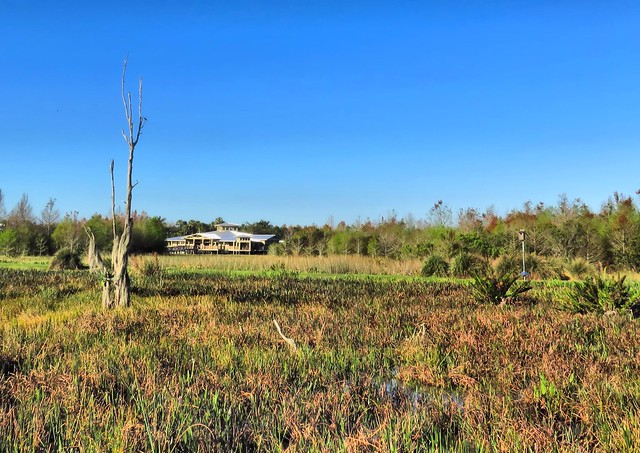
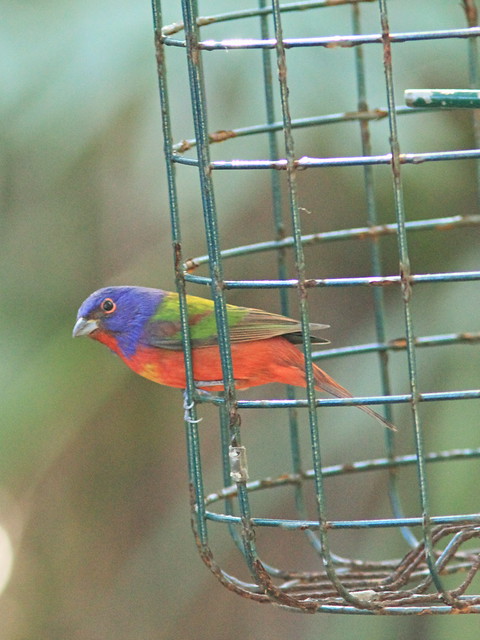
The birding action started even before we set foot on the boardwalk, with an abundance of Painted Buntings at the feeders along the path to the Nature Center:
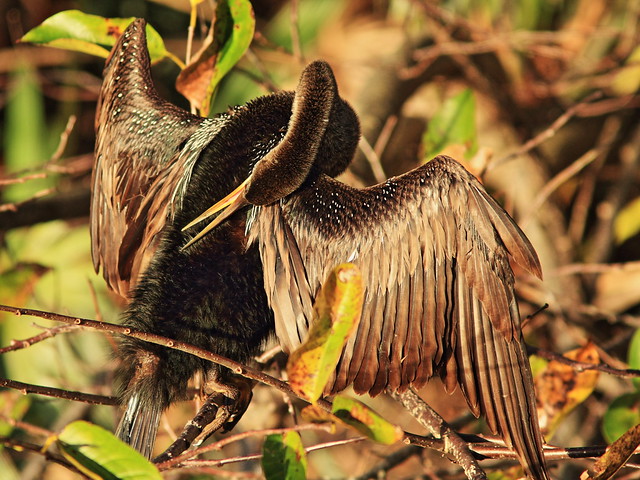
A young Anhinga preened, oblivious to human presence. In the wetlands near our home there are so few people that this species is particulary wary:
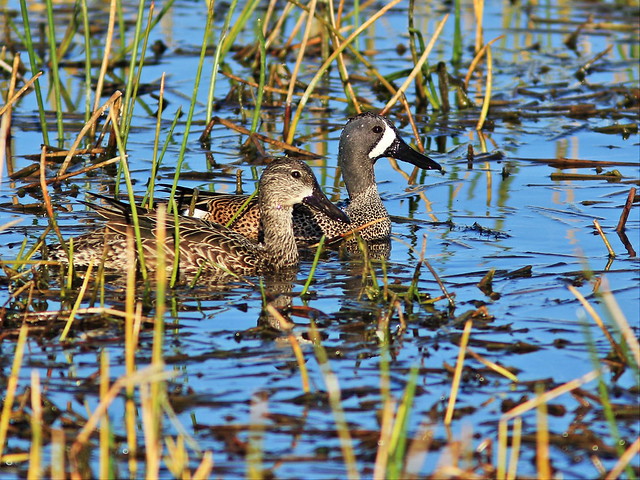
Along the boardwalk , this pair of Blue-winged Teal was one of many:
A Green Heron hunted so close by that I had to back up to fit it in the viewfinder:

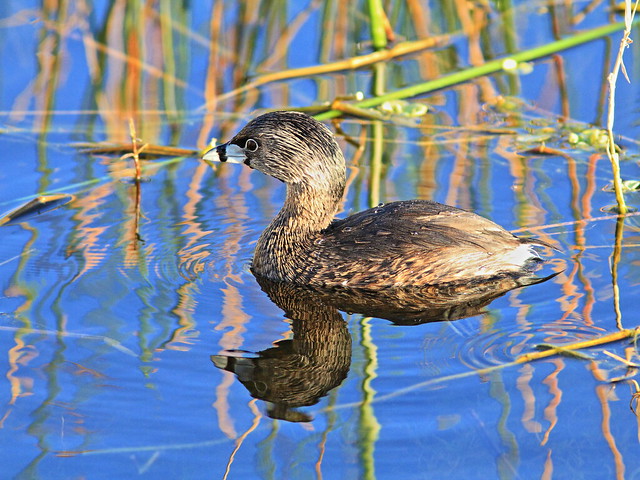
Pied-billed Grebes dived and swam under the boardwalk:
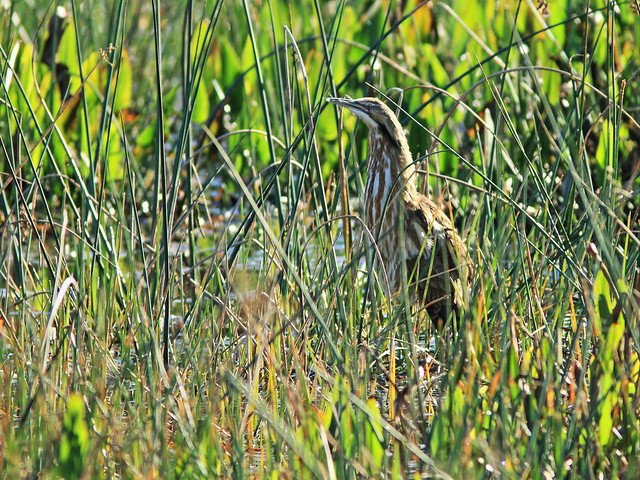
An American Bittern stood stark still for a long time, emitting soft calls of alarm. Another photographer pointed out that it was reacting to the danger posed by a Northern Harrier that was sitting, hidden deep in the grass only a few feet away:
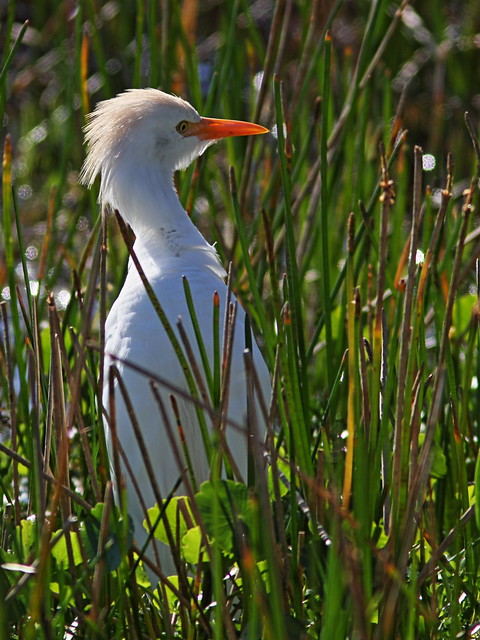
The light caught the subtle rusty feathers on a Cattle Egret's head:
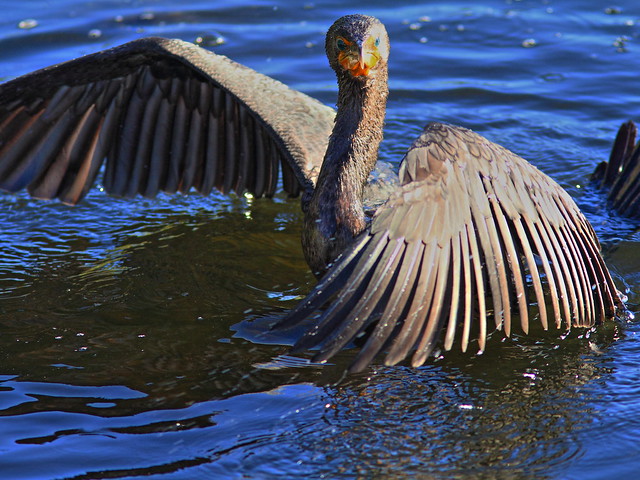
A blue-eyed Double Crested Cormaorant posed:
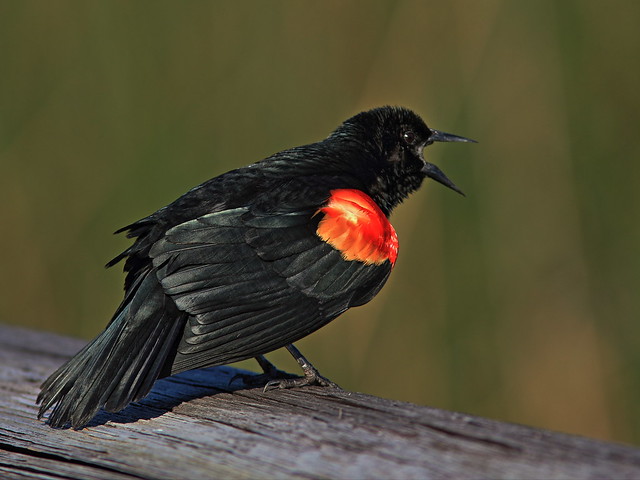
A Red-winged Blackbird sang and displayed on the boardwalk railing:
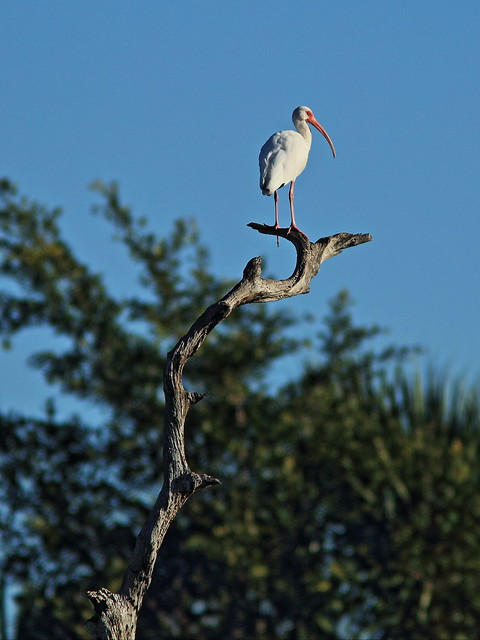
On a snag, a White Ibis provided a nice photo-op:
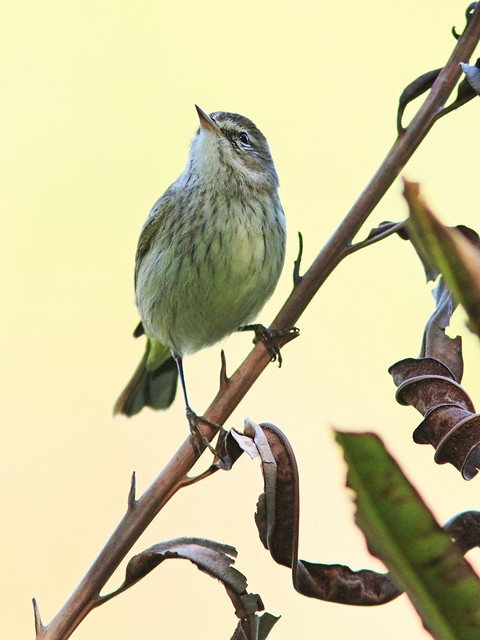
In the trees on the islands between the boardwalks, we saw warblers, including a Palm Warbler...
...Pine Warblers...

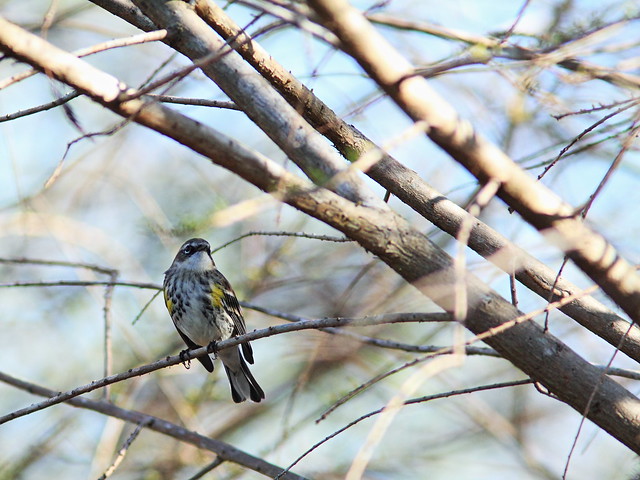
...Yellow-rumped Warblers...
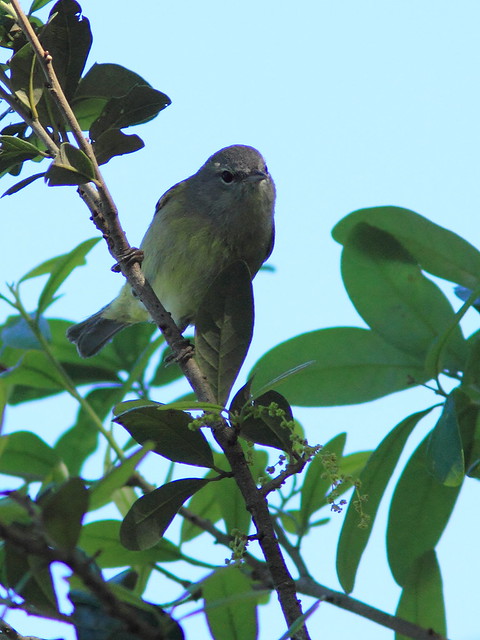
...and an Orange-crowned Warbler:
We moved on to Wadokahatchee Wetlands, where there were the nests of many herons, Anhingas, cormorants and storks.
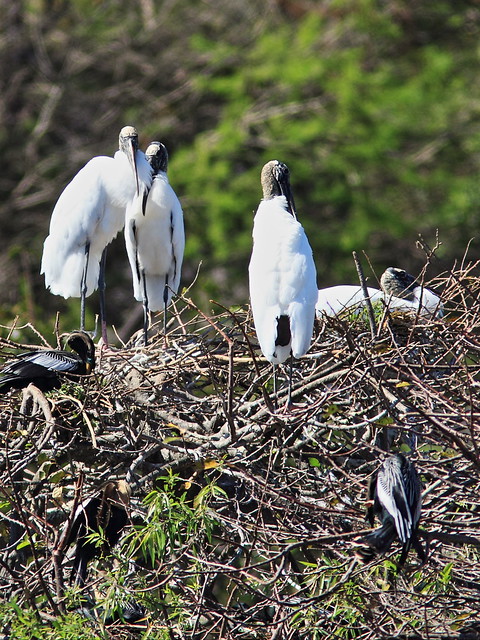
There may have been as many as 12 pairs of Wood Storks, which have practically abandoned their historic breeding grounds to the south:
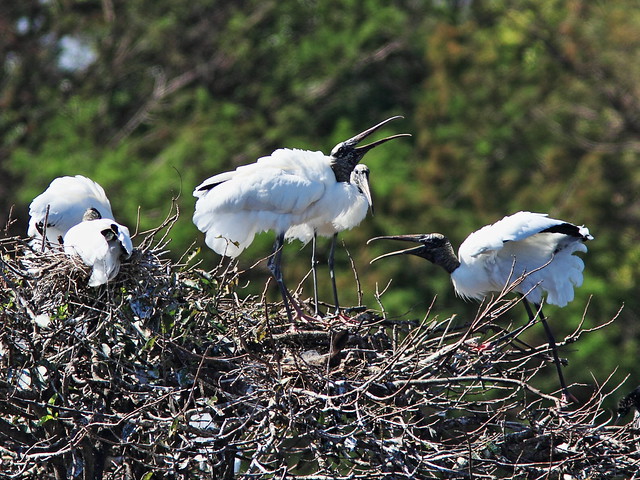
The storks competed with Anhingas for space in a single tree:
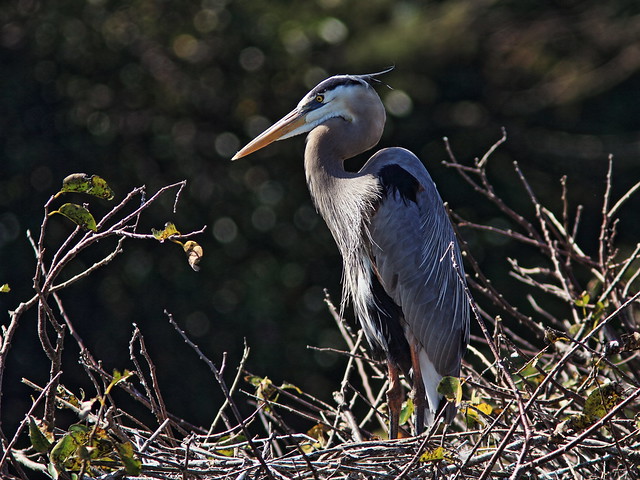
There were many nesting Great Blue Herons:
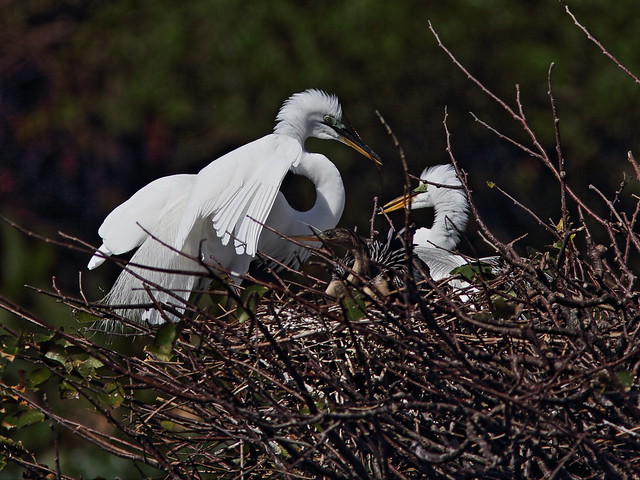
A Great Egret arranged a stick in its nest (an Anhinga chick is in the foreground):
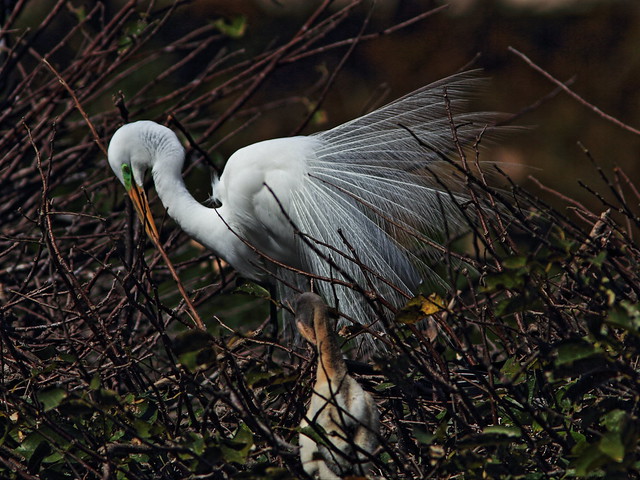
The male Great Egret in this nest exhibits the green face and the nearly black upper mandible that appear at the height of breeding condition:
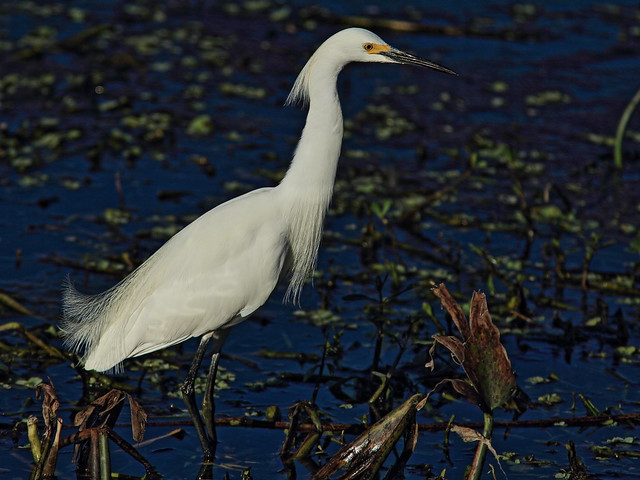
A Snowy Egret:
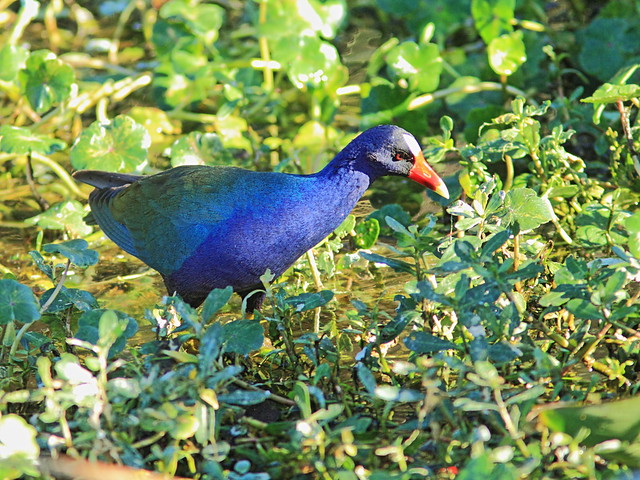
One of many Purple Gallinules:
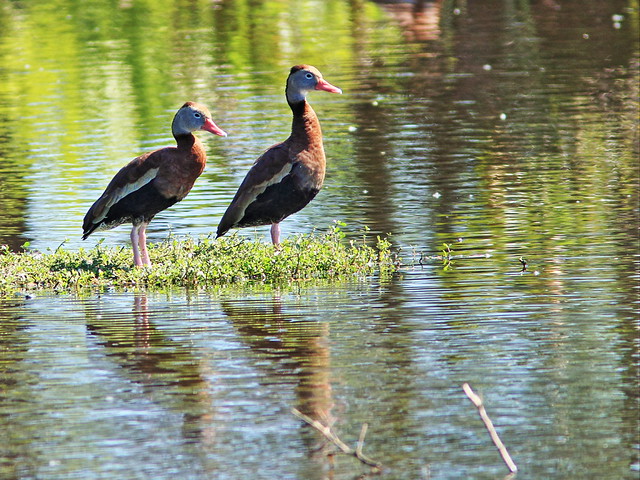
There were numerous Black-bellied Whistling-Ducks, which became abundant here only a couple of years ago:
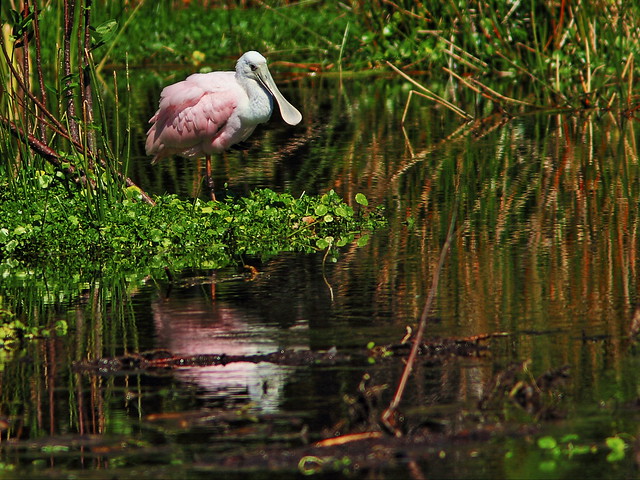
Perhaps the most spectacular bird at Wadokahatchee was this Roseate Spoonbill. I loved its pink reflection:
Linking to Misty's CAMERA CRITTERS,
Linking to Eileen's SATURDAY'S CRITTERS,
Linking to GOOD FENCES by Tex (Theresa).
Linking to SKYWATCH FRIDAY by Yogi, Sylvia and Sandy
Linking to WEEKEND REFLECTIONS by James
Linking to BirdD'Pot by Anni
Linking to Wild Bird Wednesday by Stewart
________________________________________________
Please visit the links to all these memes to see some excellent photos on display
________________________________________________