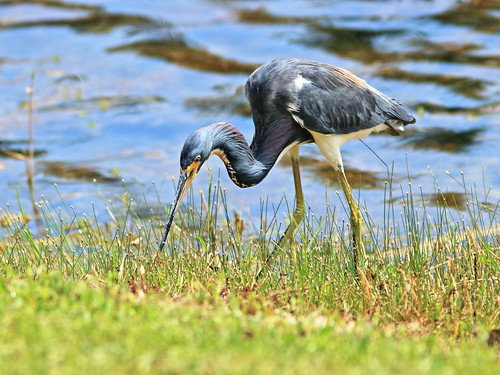
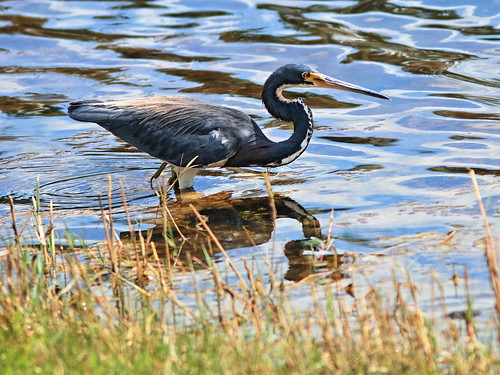
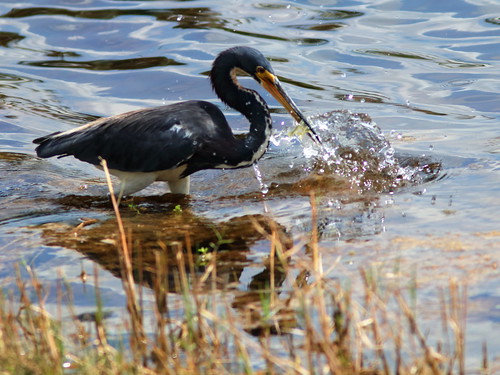
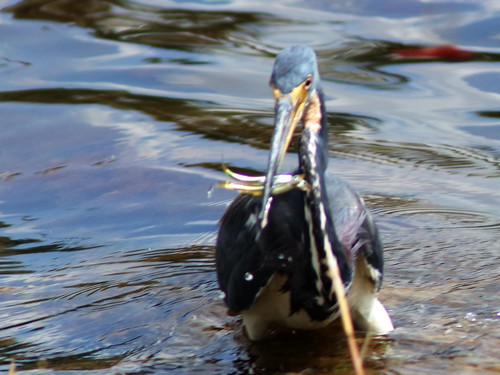
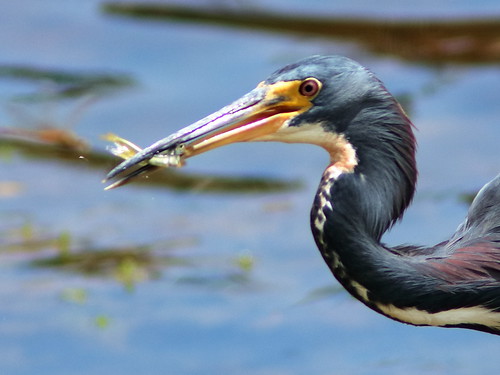
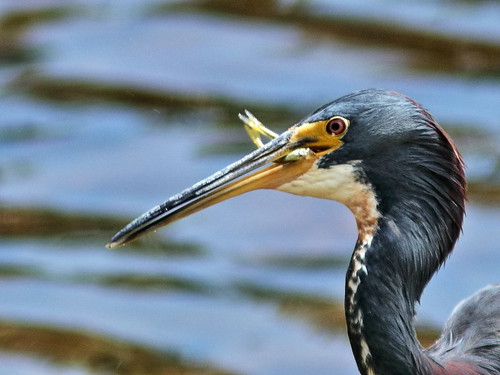
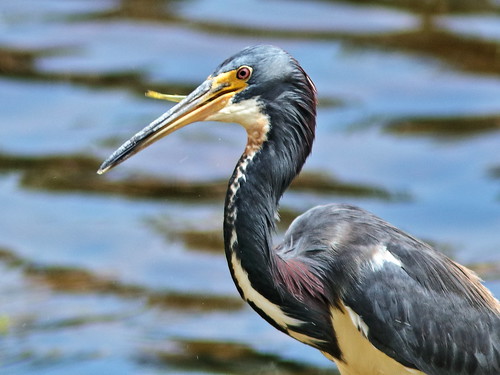
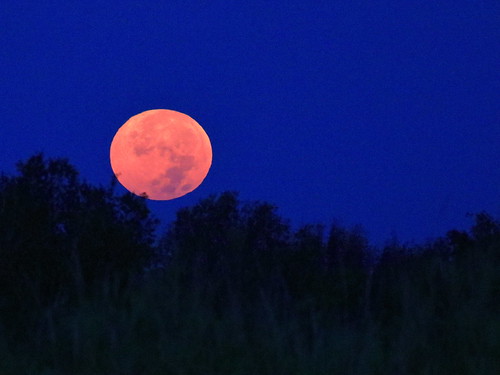
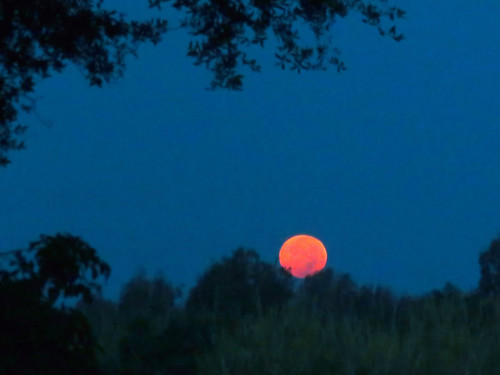
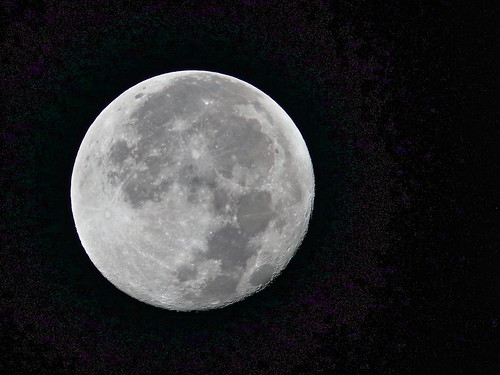
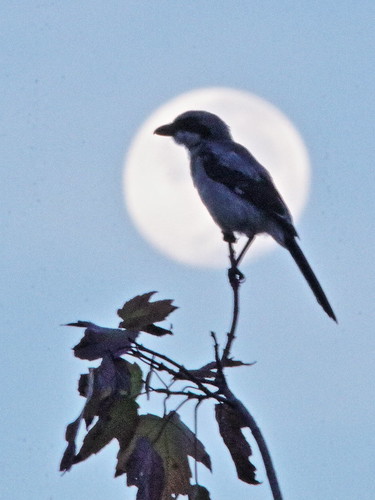
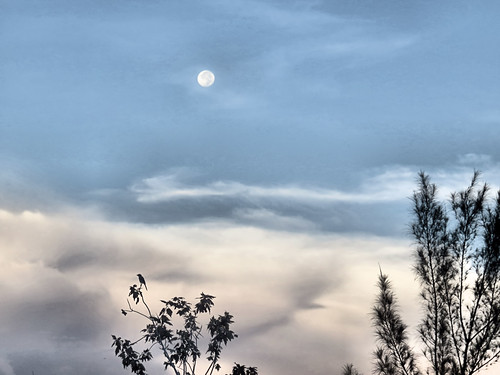
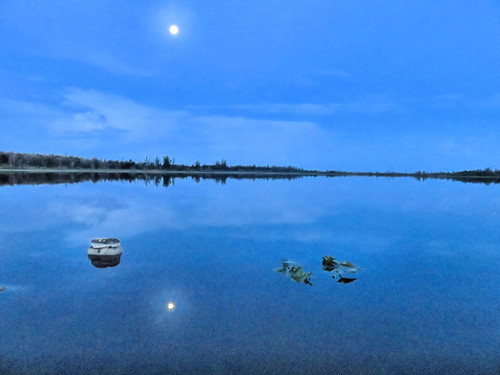
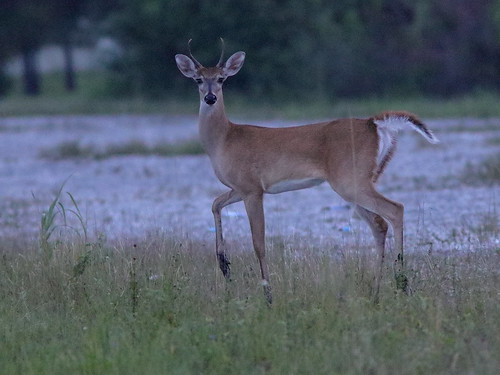
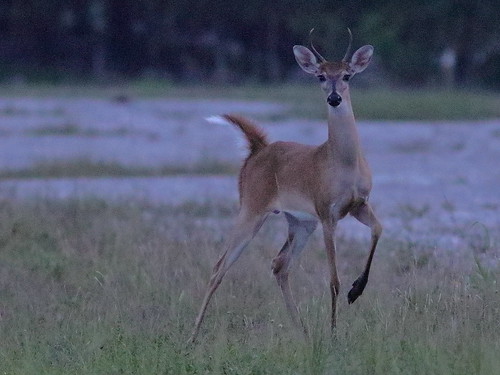
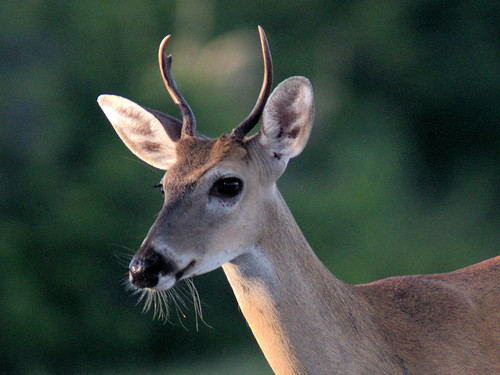
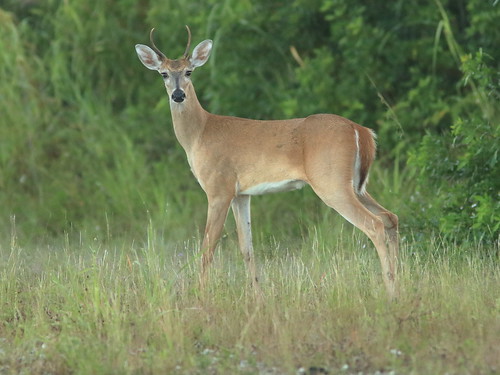
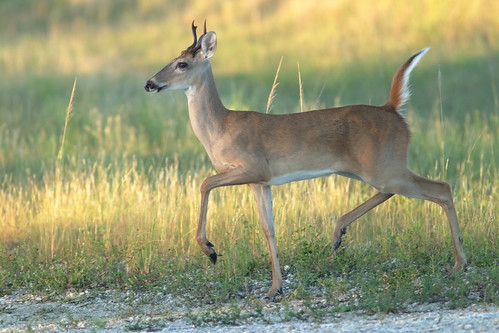
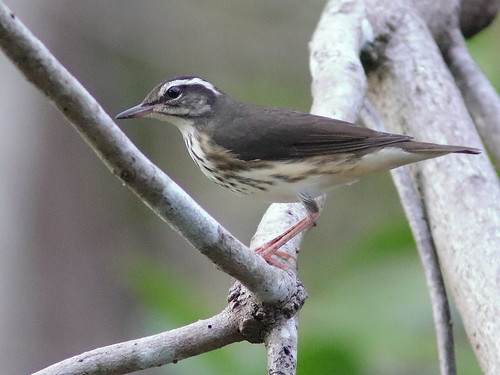
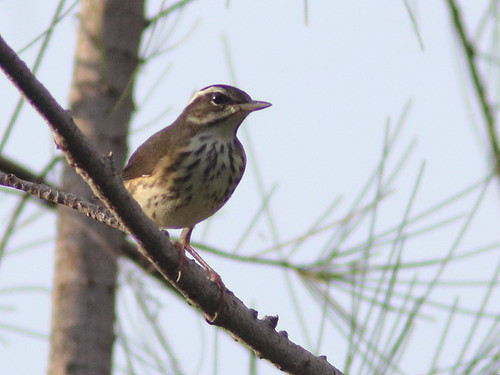
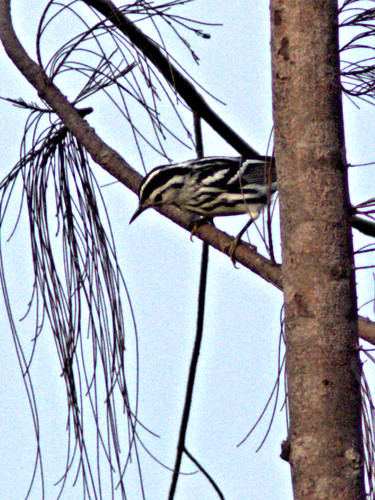
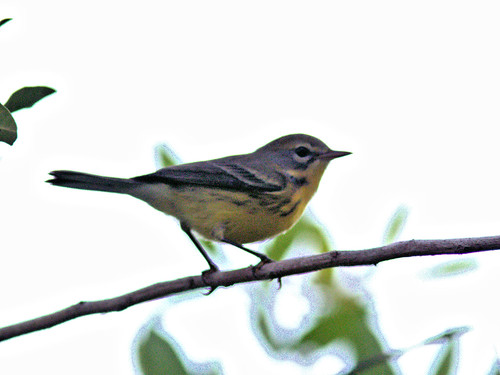
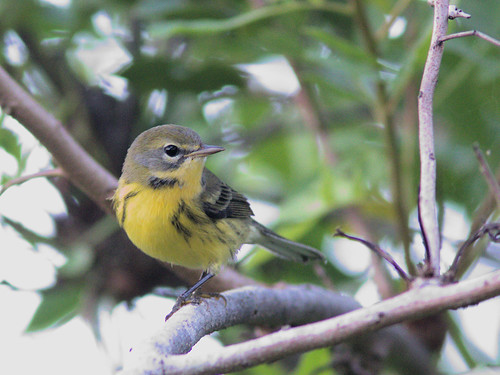
A Tricolored Heron accomplished a feat which reminded me of the Grimms' Fairy Tale about the little tailor (das Schneiderlein). You may remember that he found a swarm of flies on his jam sandwich and killed seven in one swat with a feather duster. He proudly advertised his feat by embroidering in golden letters on his wide belt: "Seven at One Blow." Perhaps the heron will not gain as much courage, fame and fortune as was rewarded to das Schneiderlein, but what I saw was not a fairy tale. The Tricolored Heron hunted in the lake at the edge of our back yard,... ...stalking a fish... ,,,and striking. Look closely and you may see that it caught two small fish in a single thrust: Somehow, the heron managed to maneuver the two little wiggling creatures up the length of its bill and finally swallow them. Of course, the Atlantic Puffin does even better than this. It has backward-pointing spines on its upper palate to hold dozens of little fish which are pushed up by its specialized bristly tongue and stored there while it catches even more. (Ref: LINK). I wonder if the heron used its tongue to help in the process: During the last part of July, the pre-dawn sky was dark except for the red planet Mars, as the Moon had been setting during the night, before we ventured out. The July full Moon is traditionally known as the "Buck Moon," because this is the time of year when the antlers of deer are undergoing rapid growth. On July 27, the Earth passed directly between the Sun and the Moon, creating a total lunar eclipse which lasted nearly four hours. It was the longest of the 21st century. Unfortunately it was not visible here in south Florida. The eclipse did not commence until 3:30 PM our time, as it was rising the next morning over Africa, Europe, Australia, and Asia. The Moon turns blood-red during an eclipse because the Earth's atmosphere scatters the light, just as it does at sunrise and sunset. This was the nearly-full Buck Moon setting below the western horizon, about a half hour before sunrise, as we walked out into the Wounded Wetlands at 6:20 AM on July 27. Its red color is not related to the impending eclipse, but is enhanced by the dust which has blown across the Atlantic Ocean from the Sahara Desert: We had hoped to see the Moon set over the lake the next morning, but there were storms which kept us home until July 29, when it still looked almost full against the dark sky: The Moon rode high in the brightening sky and served as the backdrop for a Loggerhead Shrike perched atop a Red Maple: The same shrike appears in this photo: Rain again threatened, but the Buck Moon briefly peeked through the clouds over the lake before disappearing: As if on cue to celebrate the Buck Moon, a yearling male White-tailed Deer pranced towards me in the low light. The wind was at his back, so the spike-buck did not catch my scent. At first he may have mistaken me for another deer and cautiously moved closer before he recognized me and bounded off: Twice more this past week, I got much better views of the spike buck Again, he approached quite closely before fleeing, leading me to wonder whether he was being fed by someone in the adjoining residential area : On the last day of July, a Louisiana Waterthrush arrived, the first sign that fall migration was now underway: A Black-and-White Warbler was nearby, the first I had seen since last April: The next day I saw two Prairie Warblers, first of the season at this location. Prairie Warblers breed in southeasterm Florida but practically disappear from inland areas during May and June, as they nest mostly in mangroves along the Atlantic Coast at that time. They may also undergo their post-breeding molt, when many birds become reclusive. Feather replacement is very energy-intensive and they may migrate to favorable habitat where food is more abundant. Migrants from the north greatly increase their numbers during the winter season.
= = = = = = = = = = = = = = = Linking to Misty's CAMERA CRITTERS,
Looking back three years brings back some vivid memories of favorite memes: critters of all kinds, skies adorned with clouds and rainbows, reflections on calm waters, signs of the season, fences, and those images which speak for themselves. Now that we have sold our second home in Illinois, this exercise also reminds us of how much we gained by spending some of the warmer months "up north."
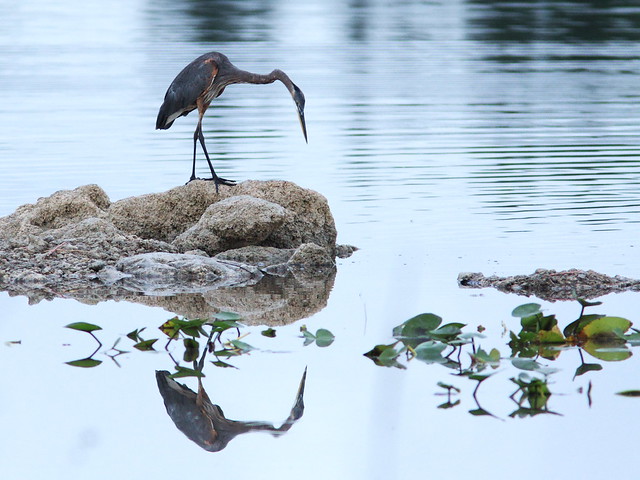
The month started out at our Florida home. In contrast with the present year, the water levels in the lake and surrounding wet prairie had dropped. This attracted wading birds to the shallows along the lake margins and exposed areas of mud flats. Fish were trapped or exposed in pools left by the receding water. A Great Blue Heron reflected nicely from a rock that is usually submerged at this time of year:
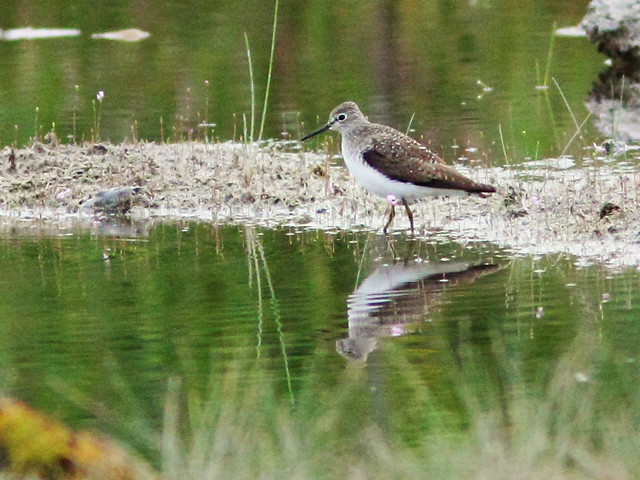
On August 1st a Solitary Sandpiper foraged along the shore:
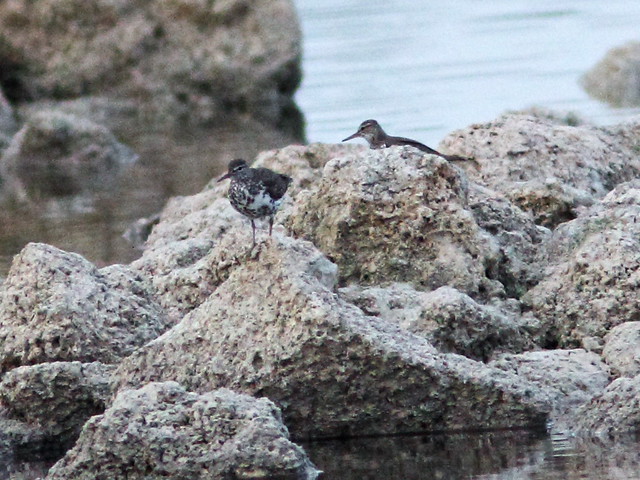
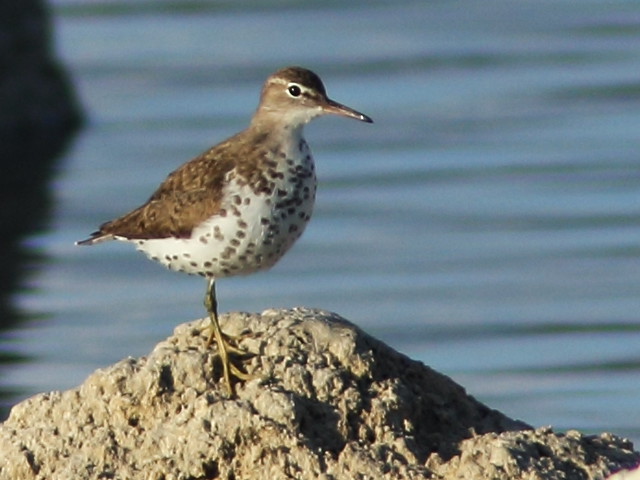
Spotted Sandpipers searched the crevices among the rocks:
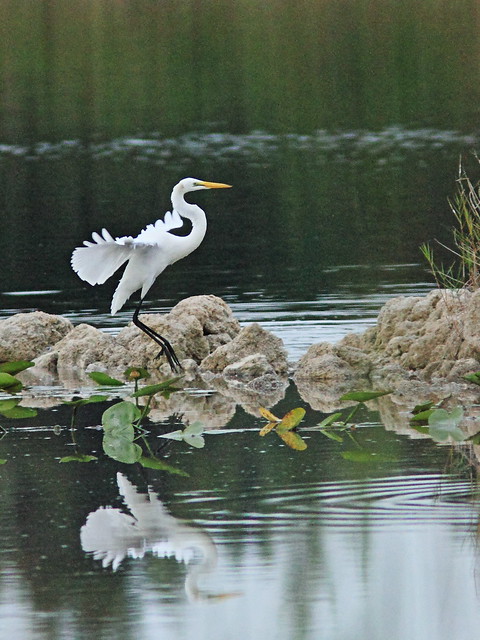
A Great Egret arrived to partake of the feast:
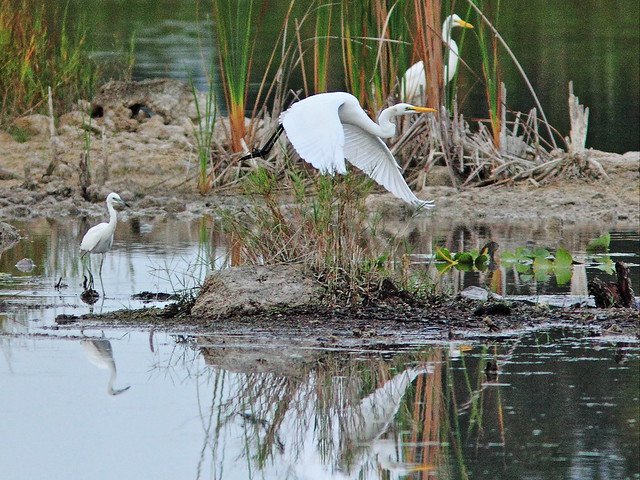
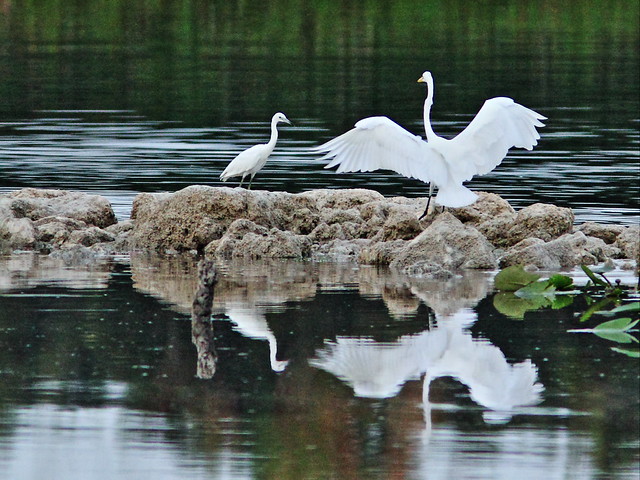
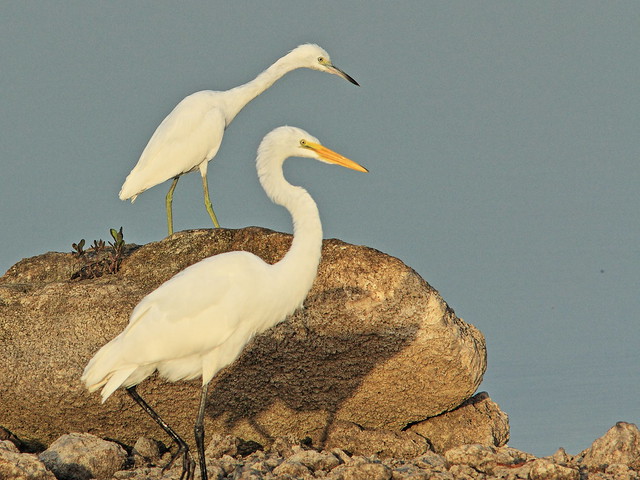
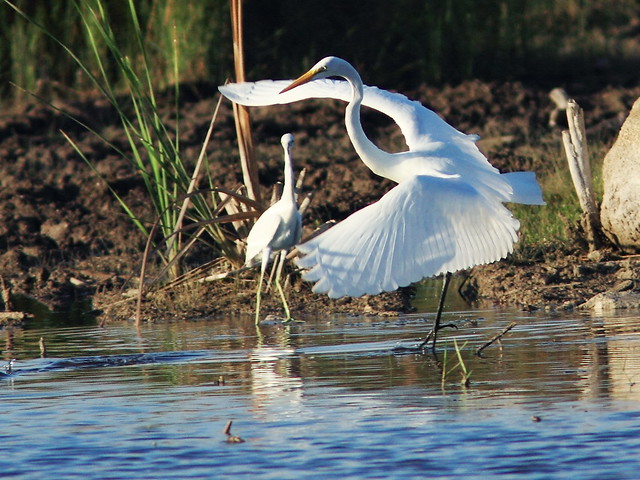
The egrets provided a nice comparison with a smaller white immature Little Blue Heron:
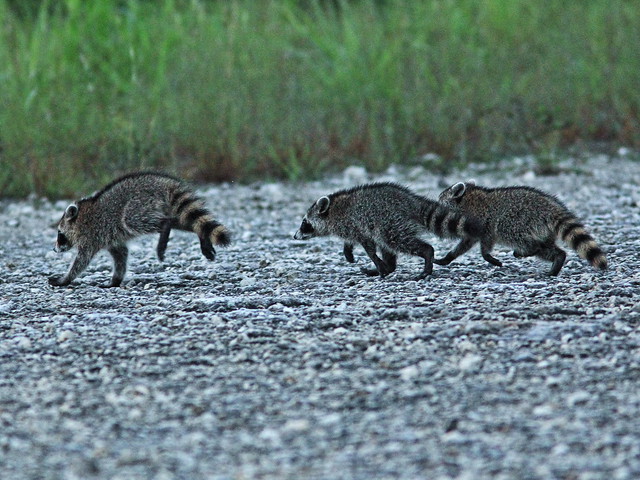
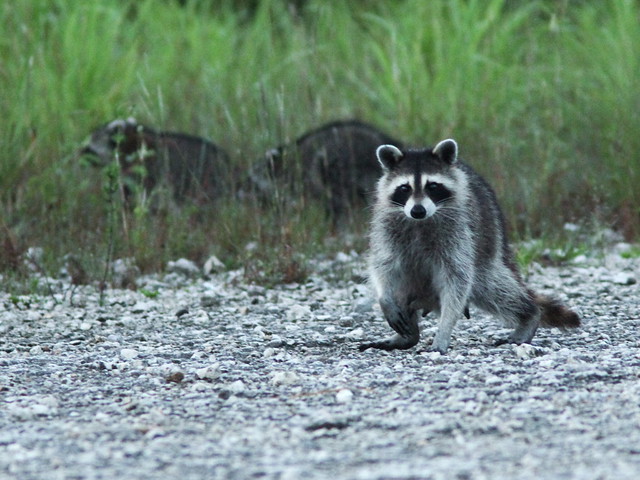
A mother Raccoon led her babies across the path in front of me:
She took a defensive posture as they scrambled to safety:
Oh my! I'm only up to August 5th and have over 500 more photos to sift through!
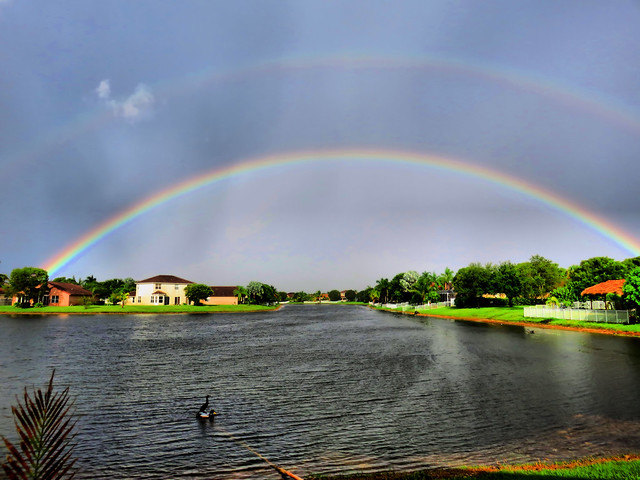
On August 7th a brief shower was followed by a double rainbow over the lake in back of our home (please pardon the deliberate over-saturation):
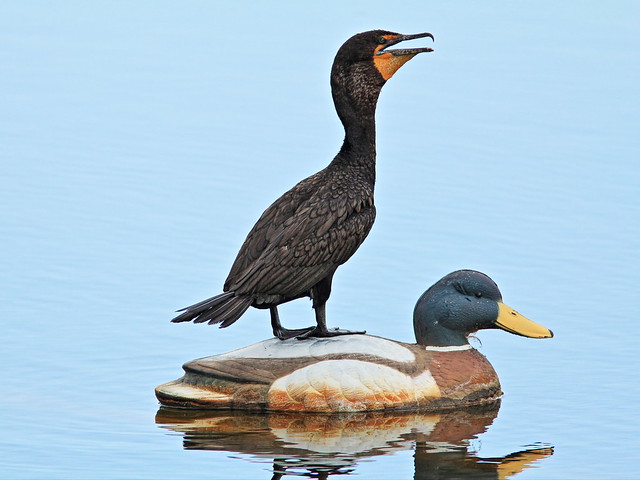
In case you missed it in the above photo, the Double-crested Cormorant returned the next day to perch on the decoy:
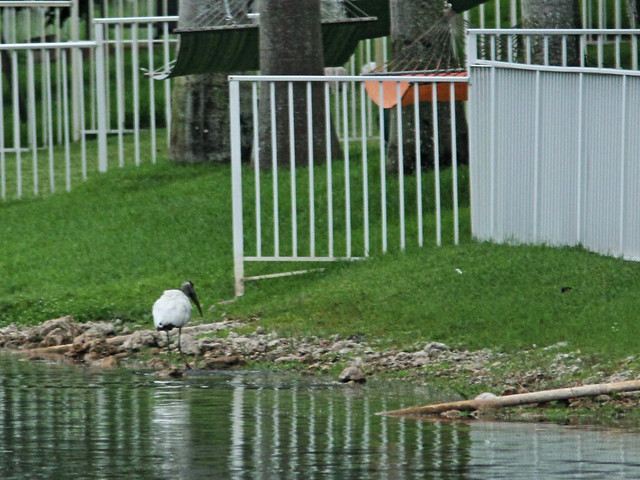
A welcome sight was this Wood Stork, the first we had seen on our lake in several months. They failed to breed in south Florida for the prior two or three years because of abnormal water conditions. It hunted along the shore near a neighbor's fence:
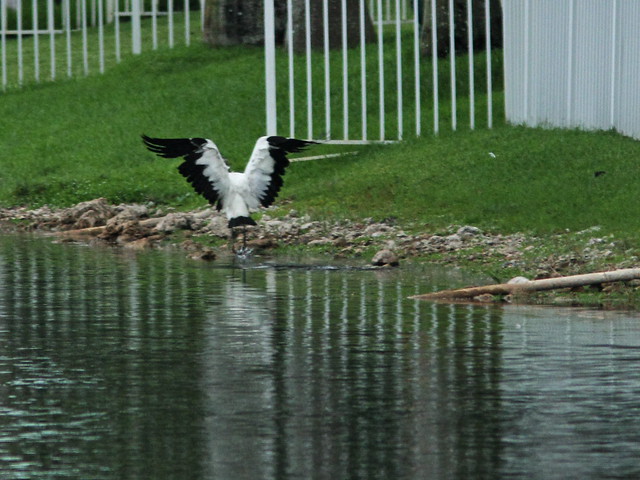
The stork opened its wings to reveal their feather pattern:
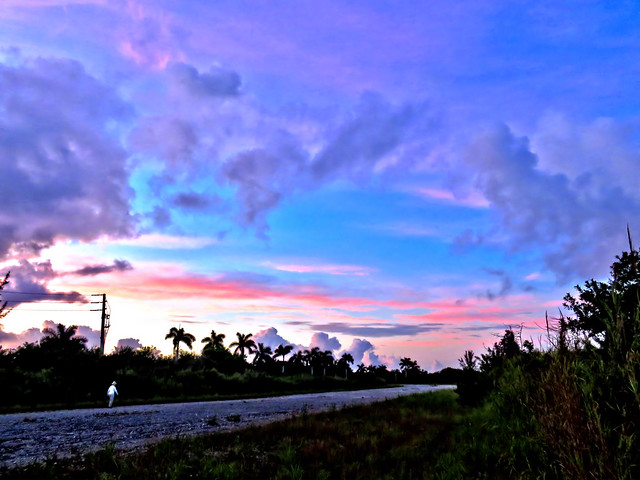
Just as we are experiencing this year (2018), dust blown across the Atlantic from the Sahara Desert produced beautiful pink sunrises. One good thing about the dust cloud is that it suppresses the development of hurricanes:
Here is Mary Lou walking home before sunrise under a colorful sky (I'm so slow that I am still going the other way. We started out very early to try to find the Barn Owl which I saw the previous day. No luck!):
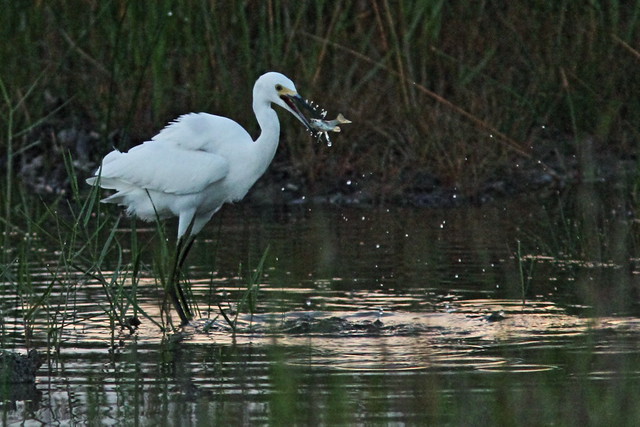
A struggling fish in the grasp of a Snowy Egret scatters water droplets:
Here is a video of the "dance" of this Snowy Egret as it chases after fish in one of the lakeside pools (WARNING: turn down the sound if you do not like the dance music):
If the video fails to load in the space above, please click HERE
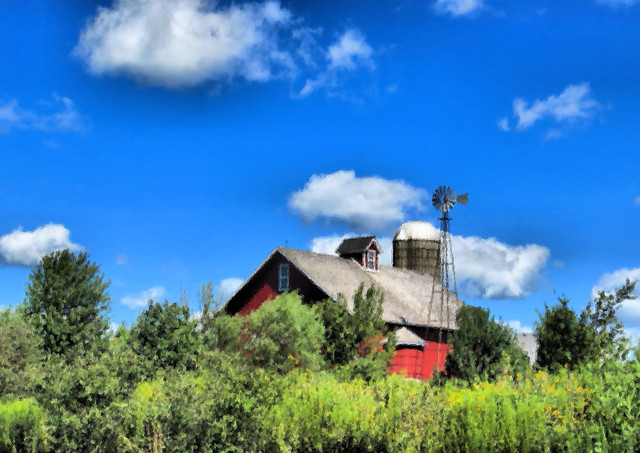
Fast forward to August 24, the day after we arrived at our second home in northeastern Illinois. We visited Hannaford Woods in Sugar Grove, Illinois. Across from the entrance is this barn, which I rendered as an oil painting (click on image to enlarge):
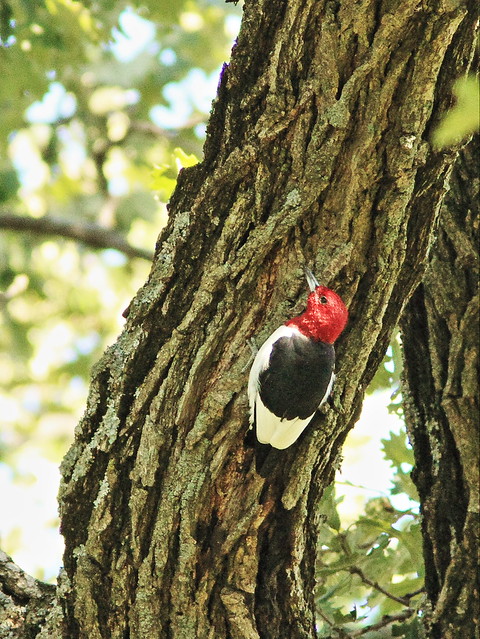
At Hannaford, we saw a favorite species, the Red-headed Woodpecker:
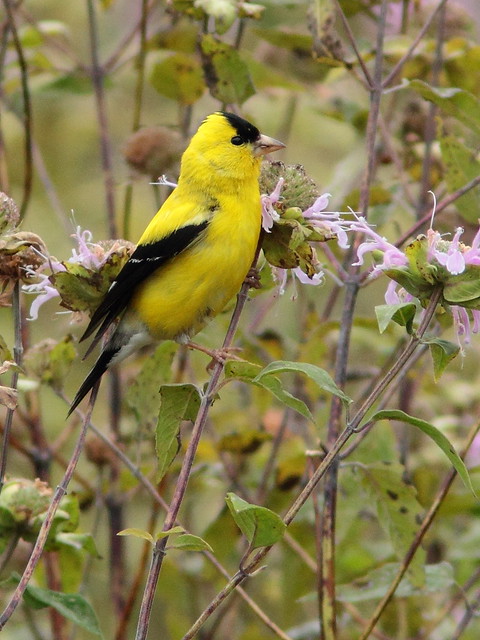
American Goldfinch at Lippold Park, near our condo in North Aurora:
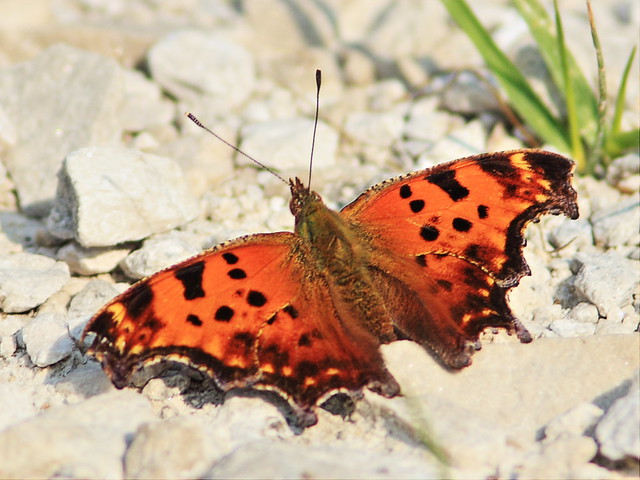
Butterflies at Aurora West preserve-- an Eastern Comma...
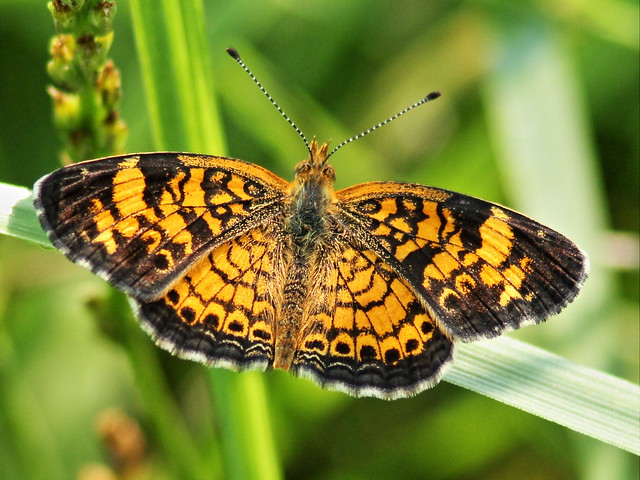
...and a Pearl Crescent:
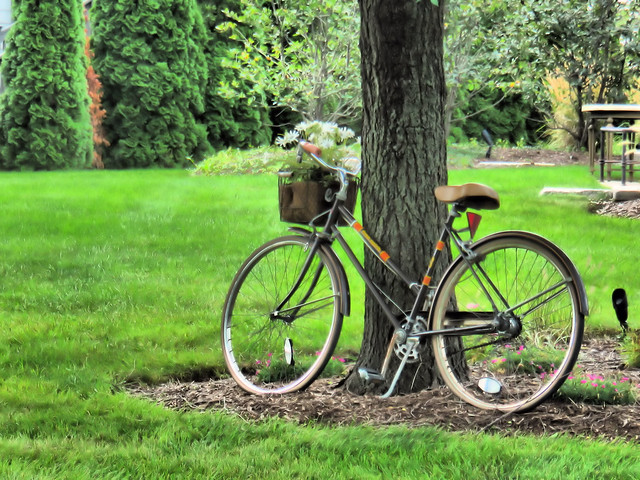
Visiting local Jones Meadow Park in North Aurora on July 31, I loved the way a neighbor had filled this bicycle's basket with flowers:
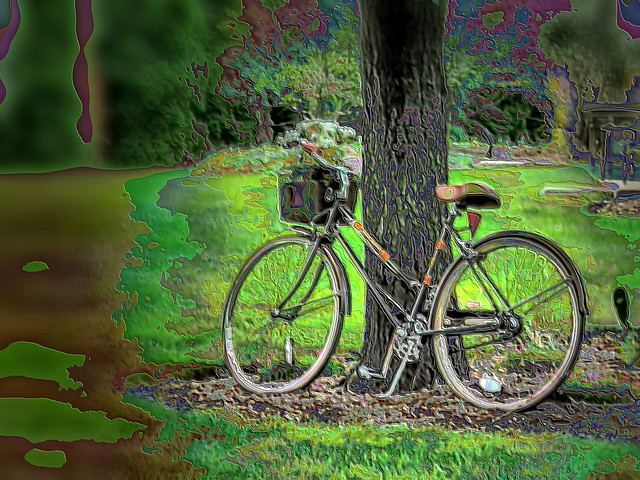
In fact, I textured the image with enamal:
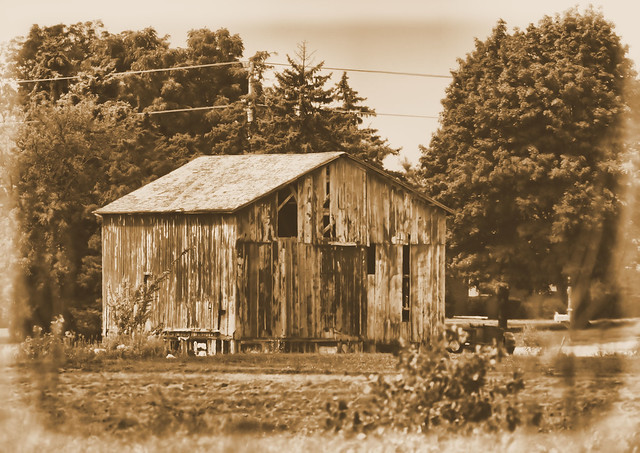
Also on the last day of the month, I took the final photo of one of my favorite subjects. Days later, this barn was torn down to make way for a prefabricated one made of metal and vinyl:
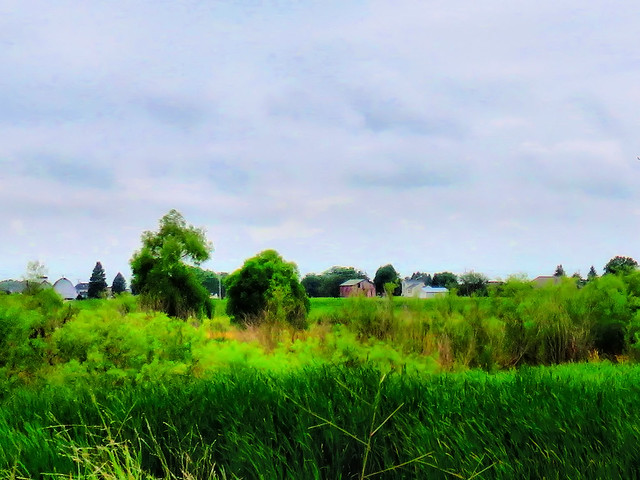
This barn was the focal point of a landscape I photographed only the month before, through the same opening in the trees at Jones Meadow Park. It lives in memory:
= = = = = = = = = = = = = = = Linking to Misty's CAMERA CRITTERS,