Wednesday, February 9, 2022

Bluebird brightens snowy scene

Three major snow events have kept the ground mostly covered by the white stuff since Christmas. My newly-placed feeders quickly became popular with the common winter birds. Most numerous were the Dark-eyed Juncos (aka "Snowbirds"), which breed in the far northern expanse and high mountains of North America. The species winters over the entire USA with the exception of southern Florida and coastal Louisiana and Mississippi. 

Four morphologically distinct subspecies or "groups" (formerly considered as separate species) occupy Canada and the USA. The local representative of the species is known as Slate-colored Junco. Here a male junco shares the platform feeder with a male Northern Cardinal. Note its flesh-colored bill:

The female Slate-colored Junco is paler and tinted brownish:

Juncos have distinctive white outer tailfeathers:

The plumage of Slate-colored Juncos can vary, sometimes suggestive of the other groups. This individual, probably a male, exhibits chestnut chest and flanks slightly similar to the western "Oregon" race:

My list of bird species seen in our yard has grown to 25, of which I have photographed 19 through the windows of the front door of our suite. The latest included---

Mourning Doves:


A Carolina Wren:


Two Song Sparrows, fluffed up against the cold:


A White-breasted Nuthatch:


One male House Finch:

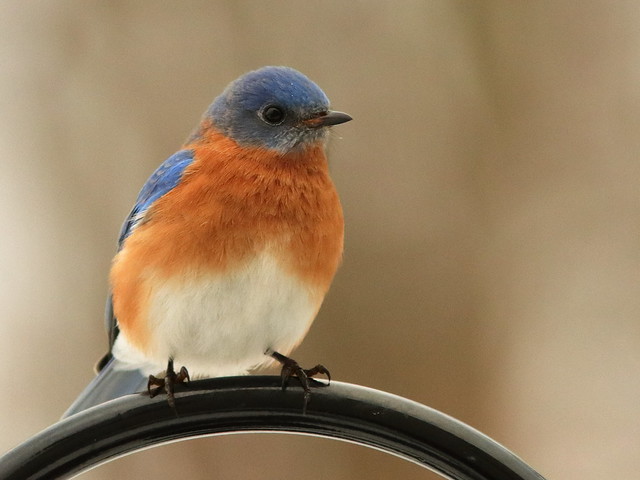
And, to our delight, a male Eastern Bluebird appeared briefly:

A blizzard dumped over a foot of snow on January 29. High winds sculpted the surface of the snow in the back yard:

Sunrise and the bird feeders as seen from the front door or our suite on January 30:

MaryLou walking up the long driveway to the house on January 31. It is almost 100 feet long and has two hairpin curves to surmount the 45 degree slope from the road to the house. Heaters underneath the pavement help keep it free of ice but are ineffective in heavy snow cover: 

View from the top of the driveway:
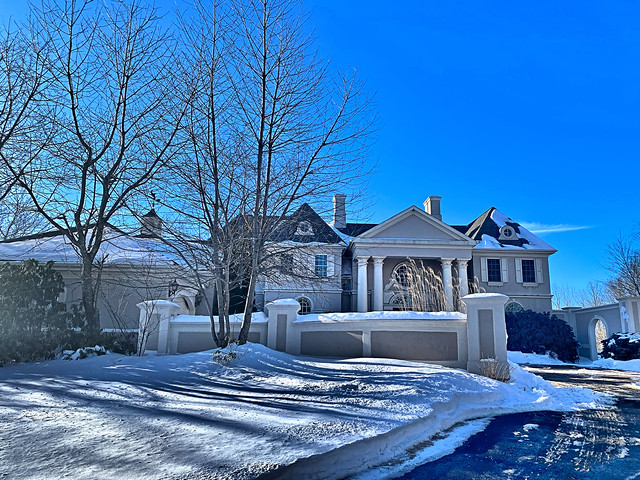
We enjoyed watching a beautiful sunset on February 2 from the Great Room on the main floor of the house:

Moncada, the three year old  (140 lb) Tibetan Mastiff ignored the vista:

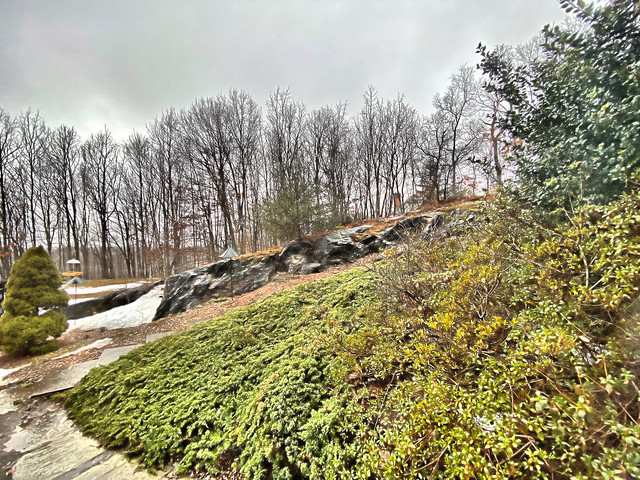
Rain and above-freezing temperatures on February 4 melted much of the snow:

= = =  = = =  = = = =  = = = = =

Linking to:


Fences Around the World

Nature Thursday

Skywatch Friday

Weekend Reflections

Saturday's Critters

BirdD'Pot

All Seasons

Wordless Wednesday (on Tuesday)

Natasha Musing

Our World Tuesday

________________________________________________

Please visit the links to all these posts to see some excellent photos on display
________________________________________________








Thursday, February 3, 2022

Crops & Clips: Flashback to February, 2019

Each month I enjoy looking back over my archived photos, taken three years previously, to remember how things were then and what I now am missing this month in our new Connecticut  home.  As usual, I searched for images which reflected favorite memes: critters of all kinds (especially birds), skies and clouds, reflections, flowers and fences, as well as scenes which speak for themselves. We spent the entire month of February at home in south Florida. 

On February 2, a male Northern Cardinal posed amid sun-dappled foliage:

A Palm Warbler struggled with a very large caterpillar:

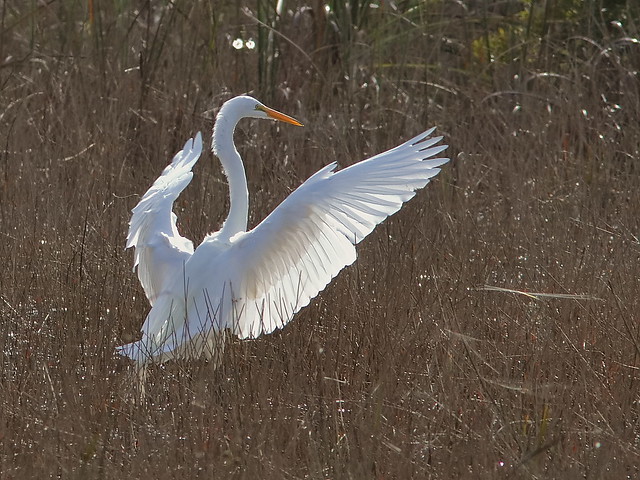
This Great Egret  was just landing in the wet prairie:

A male Pileated Woodpecker was drumming on a utility pole:

A Ruby-throated Hummingbird claimed this blooming Firebush (Hamelia patens) as its own and drove off any visitors:

The larger male of this pair of Mottled Ducks, in the foreground, has darker plumage and a bright greenish-yellow bill. That of the female is more orange and smudged with dark areas.

This Black-and-White Warbler is a male, as evidenced by bolder marking with dark mask and cheeks:

On February 9 at the local Bald Eagle nest, one of the two eaglets begs from the male parent (Pride) while the female (Jewel) is feeding the other:

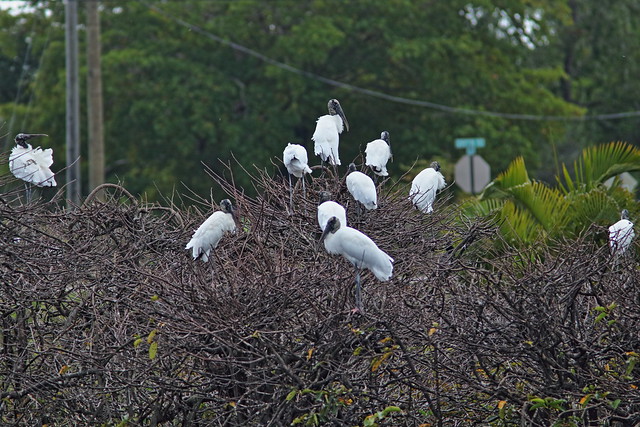
The Wood Storks had returned for their third breeding season at  the Orange Road Rookery in Weston, Florida:

A Loggerhead Shrike permitted a fairly close approach. They can be skittish:

Killdeer in a grassy roadside spot::

Virginia Opossum crossed the path up ahead:

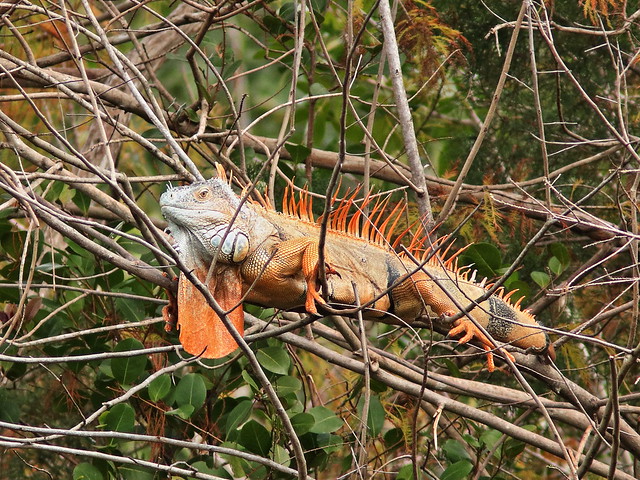
This large Green Iguana turns orange during breeding season:

A male Yellow-throated Warbler shows off his namesake field mark:

Monarch Butterfly on Bidens alba. Remarkably, this tiny flower is the greatest wild source of nectar in Florida (Cultivated citrus is #1 overall):

The eaglet picked up a lump of sod from the nest lining. The adult male seemed displeased and retrieved it:


An adult Yellow-bellied Sapsucker tended its sap wells on our back yard Mahogany tree:

Cattle Egret with Longhorn calf. Cattle have since been removed from this pasture and it is being turned into a parking lot for boats and RVs:

Nuptial  display of Yellow-crowned Night-Heron:

This one was looking for sticks. He found one and presented it to his mate at the nest:


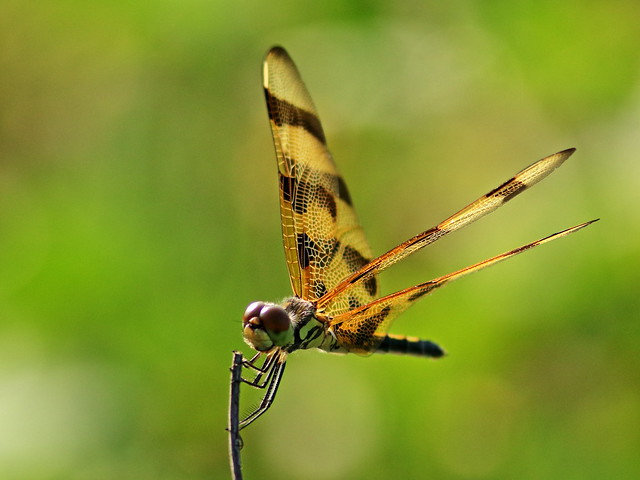
Halloween Pennant:

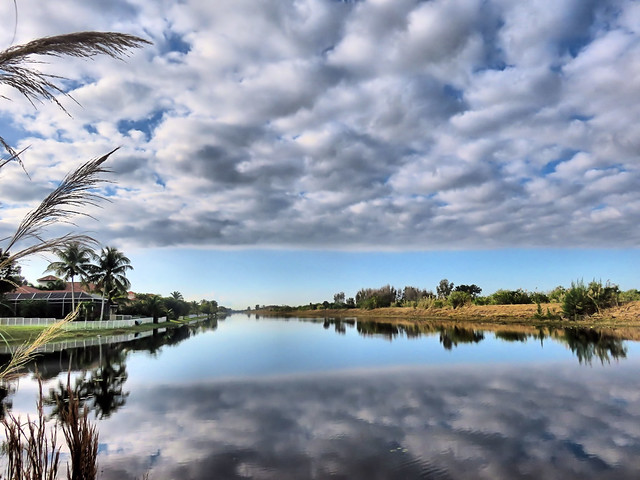
Clouds and their reflections framed this view of the canal:


The setting Snow Moon was twice reflected on the still surface of the lake:


Linking to:


Skywatch Friday

Weekend Reflections

Saturday's Critters

BirdD'Pot

All Seasons

Wordless Wednesday (on Tuesday)

Natasha Musing

Our World Tuesday

________________________________________________

Please visit the links to all these posts to see some excellent photos on display
________________________________________________