Too often, I strive for "bird guide" photos, side-on, in perfect light and showing every plumage detail. These views don't usually happen in real life. So many of my shots show nothing but leaves and twigs or empty sky.
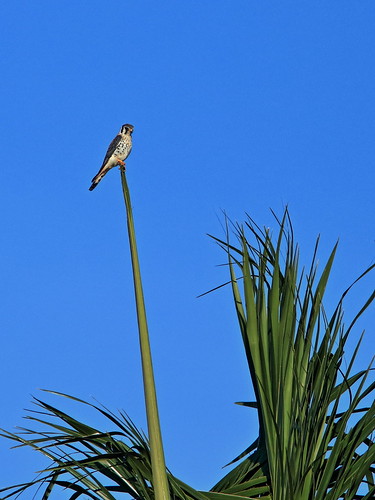
An American Kestrel was so far away that its cropped image would not merit publication on glossy paper, but the original illustrates its habit of selecting a high perch atop a Royal Palm:
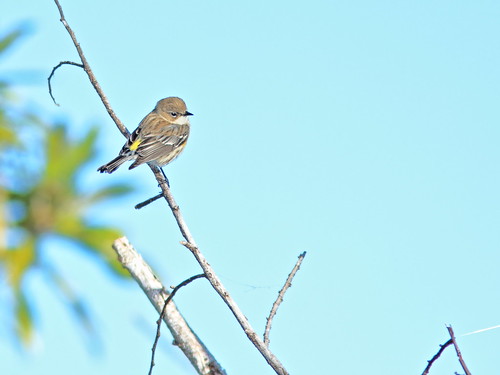
Seeing a Yellow-rumped Warbler perched out in the open lets us better appreciate its small size as well as its namesake field mark:
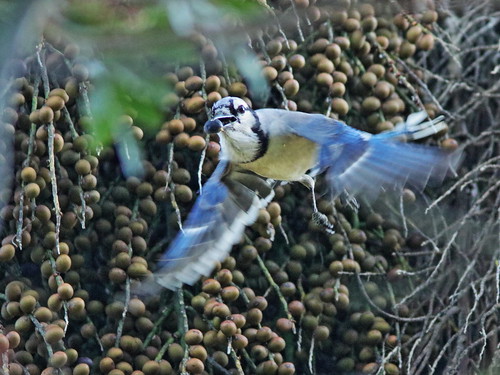
Blurred wings provide action as a Blue Jay snatches fruit from a Royal Palm:
This male Northern Parula warbler is at home in mid-winter, among the emerging leaves of a Red Maple:

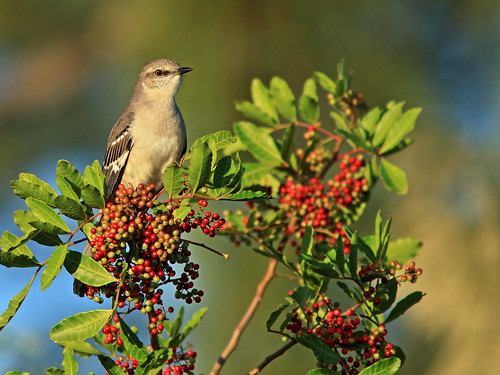
Northern Mockingbird on Brazilian Pepper-- Birds and berries go together...
...as do butterflies and blossoms-- Giant Swallowtail and Lantana flowers:
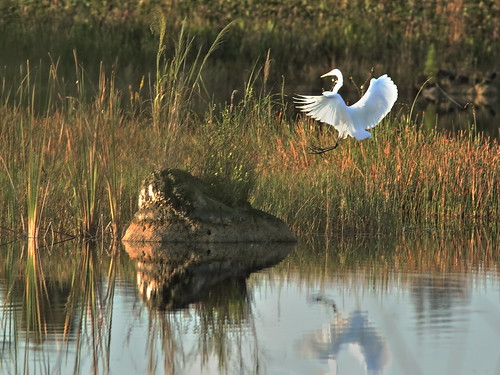
 Is this a picture of the bird or the background? Great Egret:
A tight crop would keep us from learning something about the food preferences of a tiny Barred Yellow butterfly on Largeflower Mexican Clover (Richardia grandiflora):

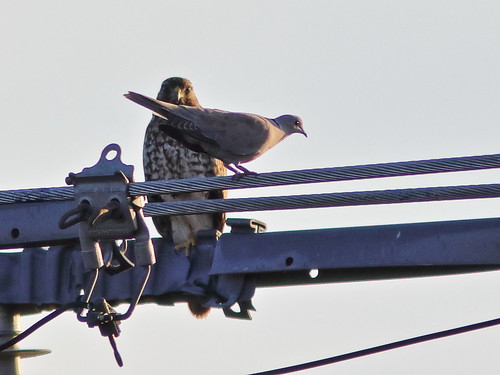
The aesthetics are horrible, but can a hawk and a dove tell a story? Red-shouldered Hawk watching a Eurasian Collared-Dove:
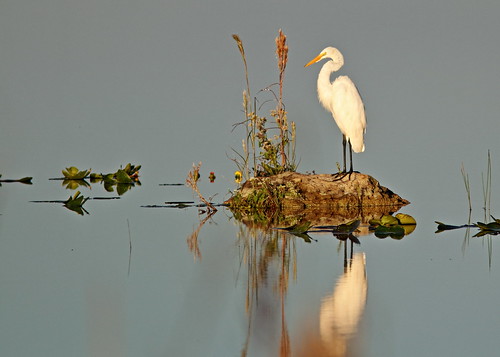
A "field guide" view would eliminate the reflection of this Great Egret:
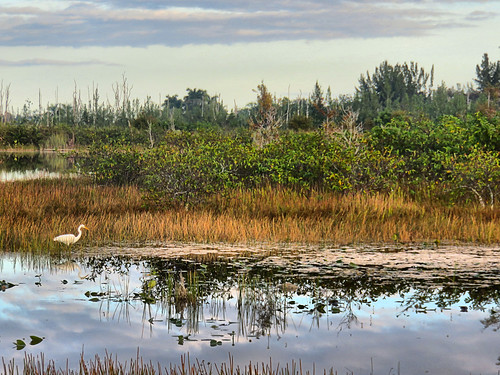
Another messy egret photo, not fit for publication:

An egret hunts in unsightly periphyton* which blankets the surface of a cove. It is a rich source of food and hiding places for prey species:
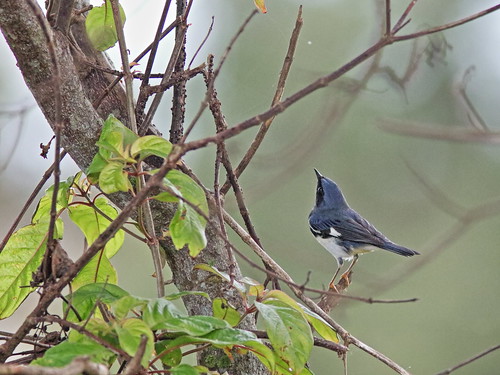
Its back is to the camera and the light does not catch the eye of this Black-throated Blue Warbler, at home in a Firebush (Hamelia patens):
The Eastern Phoebe is primarily a flycatcher. Not a great shot, but it is eating a large cutworm caterpillar!

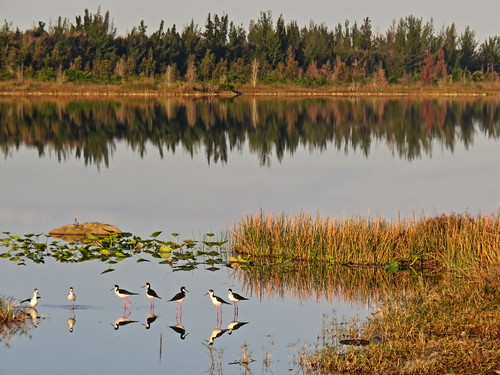
Black-necked Stilts on still water:
What is most important here, the Bald Eagle or the golden sky at sunrise? What is one without the other?

= = = = = = = = = = = = = = =
*Periphyton is a complex mixture of algae, cyanobacteria, heterotrophic microbes, and detritus that is attached to submerged surfaces in most aquatic ecosystems... Periphyton serves as an important food source for invertebrates, tadpoles, and some fish. It can also absorb contaminants, removing them from the water column and limiting their movement through the environment. The periphyton is also an important indicator of water quality... REFERENCE
= = = = = = = = = = = = = = =
Linking to
Fences Around the World
Skywatch Friday
Weekend Reflections
Saturday's Critters
BirdD'Pot
Camera Critters
All Seasons
Wordless Wednesday (on Tuesday)
Our World Tuesday
________________________________________________
Please visit the links to all these memes to see some excellent photos on display
________________________________________________
My weekly potpourri gathered from the archives features... meme themes featuring
CRITTERS: Doves!
The Mourning Dove is an abundant breeding resident of all 48 lower states and parts of southern Canada. Avidly hunted, the biomass of Mourning Doves harvested each year is said to exceed that of all other game birds combined. The US Fish & Wildlife Service estimated their US population to be 274 million in 2003, and that 14.5 million were taken by hunters that year.

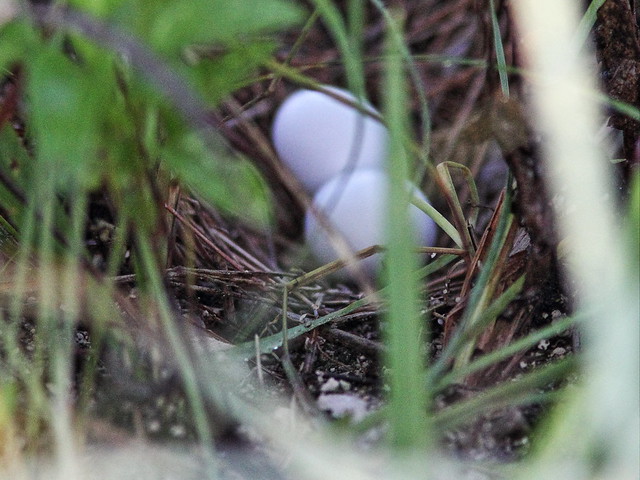
The Common Ground-Dove is fairly restricted to the southern third of the continental 48 states, with scattered reports of sightings up the coasts and into the Great Lakes area. I found its nest with two eggs near our south Florida home this fall. Although it is known to be an established breeding bird here, it was the first such finding in Broward County.

Unfortunately the eggs and its well-concealed ground nest were destroyed, probably by a flash flood along the side of the road where they were located.
Until about the 1980s, the White-winged Dove's US range was restricted to the far southern reaches of states along the US-Mexico border. Since then it has spread into most of the southern states, with Increasing numbers being reported as far north as southern Canada.
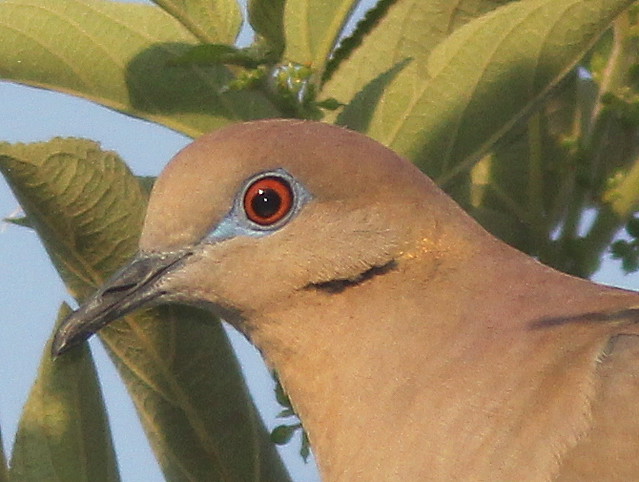
The Eurasian Collared-Dove ranges all over Europe, Asia and into the Middle East and North Africa. It was introduced into the Bahamas only forty years ago and now has spread over nearly the entire continental US and even into Canada. Most Eurasian Collared-Doves appear rather dark, as this individual:
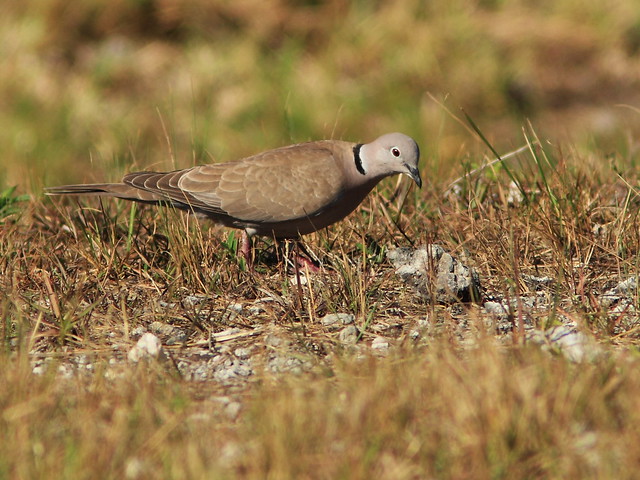 The Eurasian Collared-Dove below is particularly light in color. Its darker under-tail coverts help distinguish it from the smaller African Collared-Dove (also called Ringed Turtle-dove, common in captivity and sometimes released at weddings and other celebrations but rarely seen in the wild).
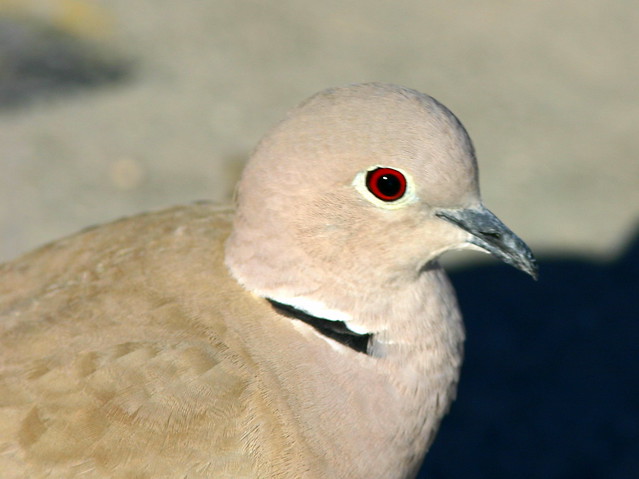
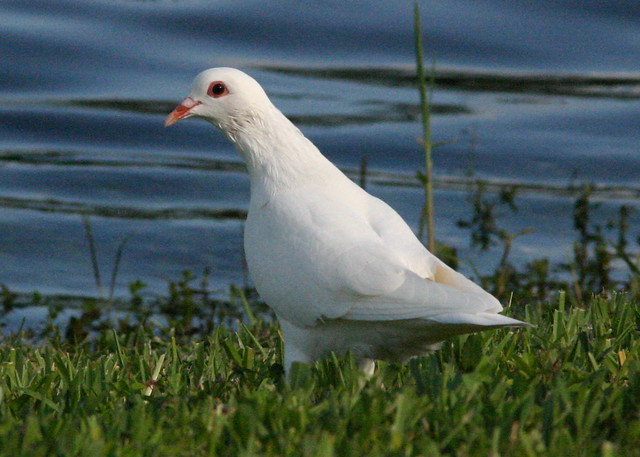
This collared-dove is almost white, and appears to have white under-tail coverts and strongly contrasting black flight feathers, possibly descended from hybrids with domesticated African Collared-Doves. Note the limited black base of its middle tail feathers:
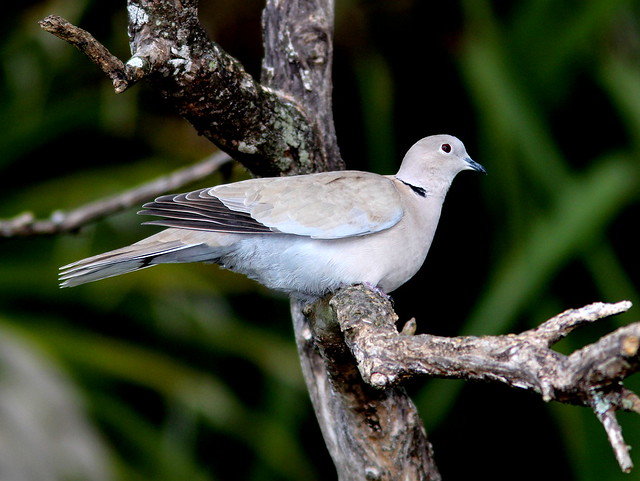
The Rock Dove was renamed Rock Pigeon in 2002 to conform with that used by the British Ornithologists' Union. True, their common name in the US was simply "pigeon." This Rock Pigeon displays a plumage pattern close to that of the original European stock:
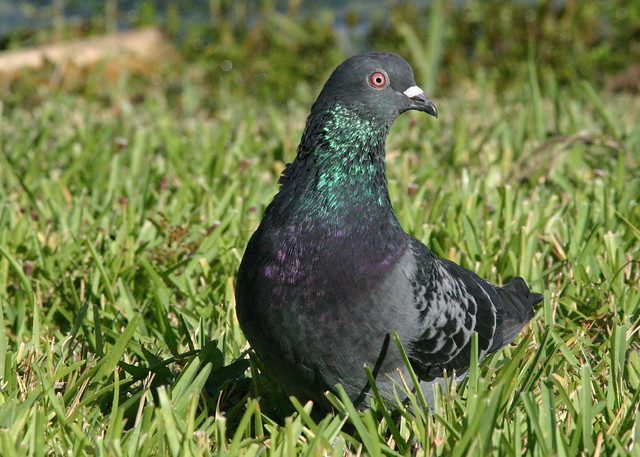
We see Rock Pigeons in many shades, from pure white...
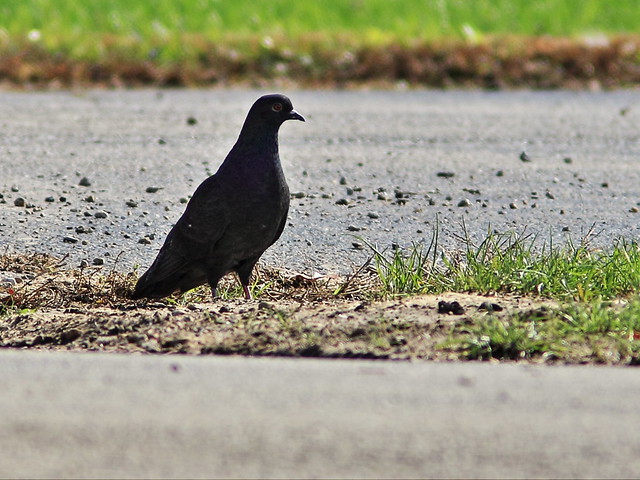
...to nearly black:
Linking to Misty's CAMERA CRITTERS, and to Eileen's SATURDAY'S CRITTERS,
________________________________________________
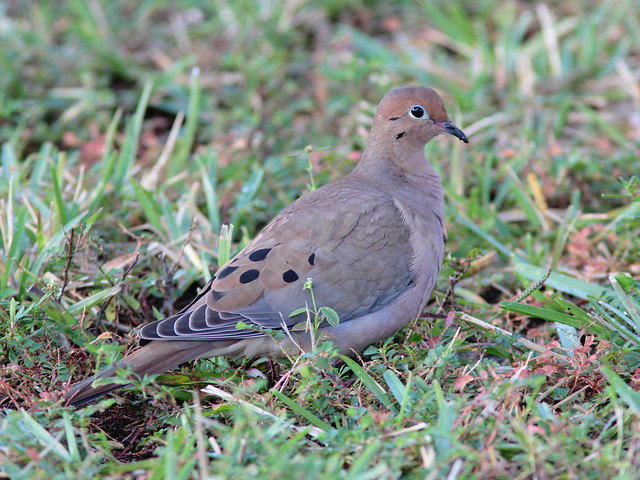
FENCE: Mourning Dove at Chapel Trail Nature Preserve:


Linking to GOOD FENCES by Tex (Theresa).
________________________________________________
SKYWATCH:
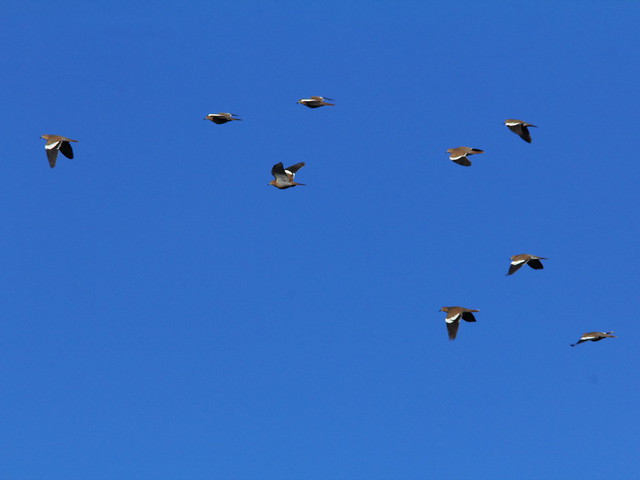
A flock of White-winged Doves:
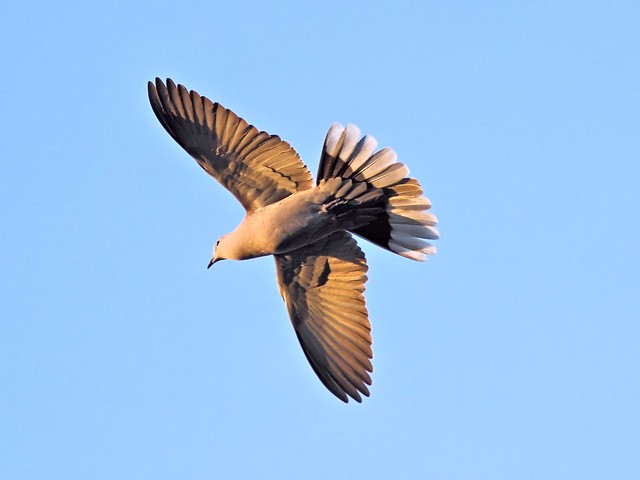
This Eurasian Collared-Dove demonstrates the extensive white tips of its tail feathers, almost half way from their ends, with the black on the central feathers extending 2/3 of the length of its tail.
Linking to SKYWATCH FRIDAY by Yogi, Sylvia and Sandy
________________________________________________
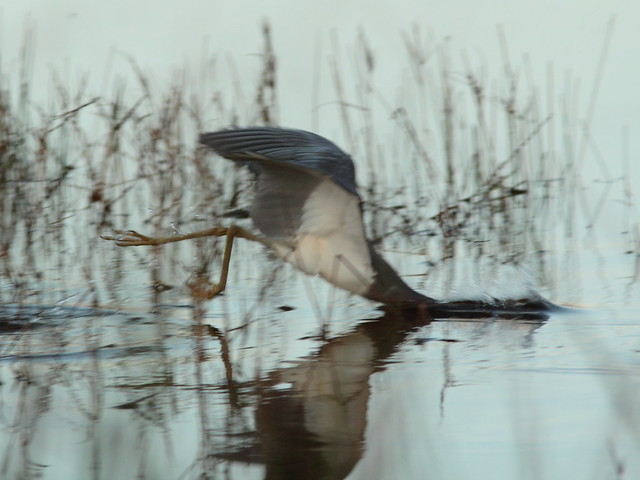
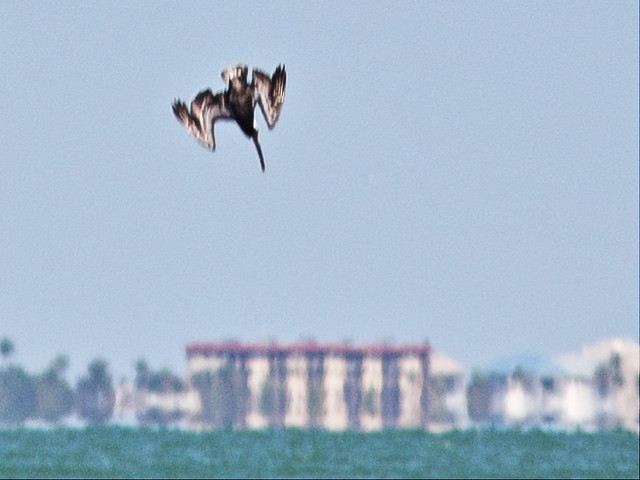
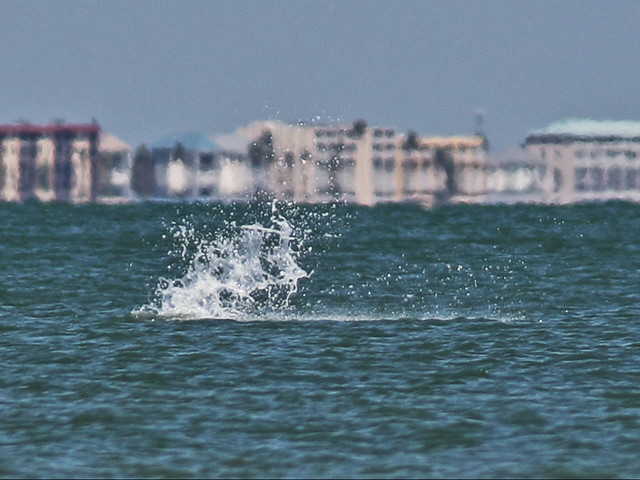
REFLECTION: I couldn't find any reflections of doves, but while I searched my archives for photos marked "dove" I found one, and just missed another.
This Tricolored Heron "dove" after a fish...
...and I just missed the reflection as this Brown Pelican "dove" into the ocean off Fort Lauderdale, Florida. You must imagine it between these two photos:
Linking to WEEKEND REFLECTIONS by James
________________________________________________
Please visit the links to all these memes to see some excellent photos on display
________________________________________________