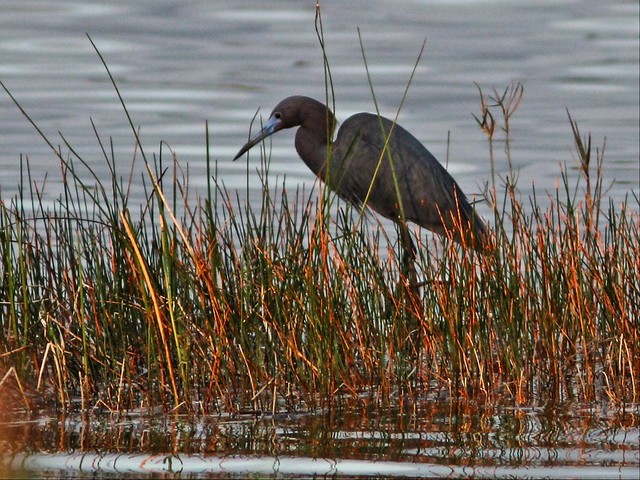
This photo of a Little Blue Heron had to be tweaked to bring out the details under the poor lighting conditions.
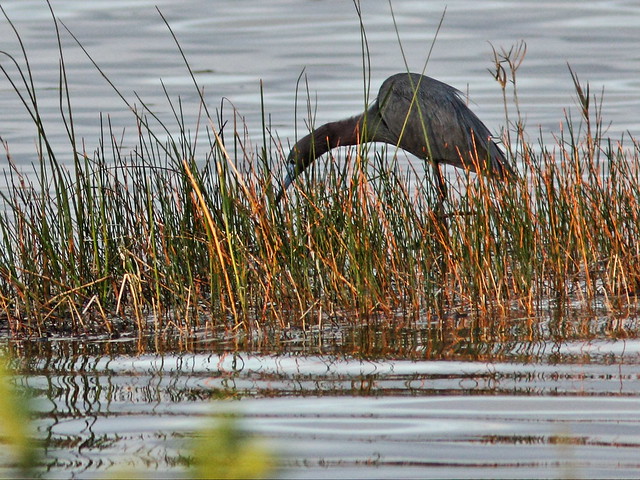
The heron assumed this typical foraging posture that makes it easy to identify, even from far away.
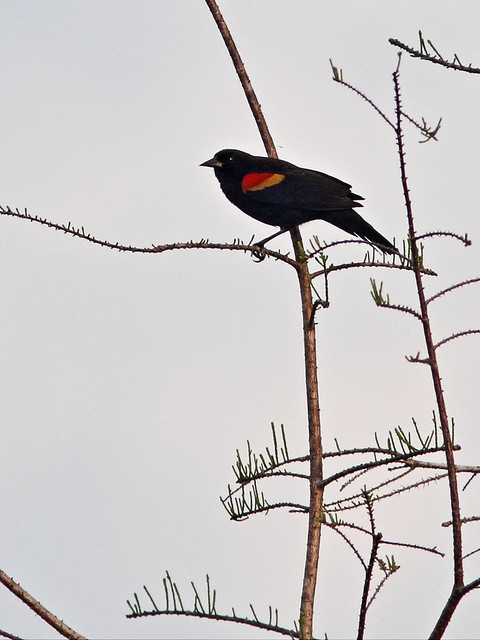
The red and yellow epaulet of this male Red-winged Blackbird glowed through the darkness.
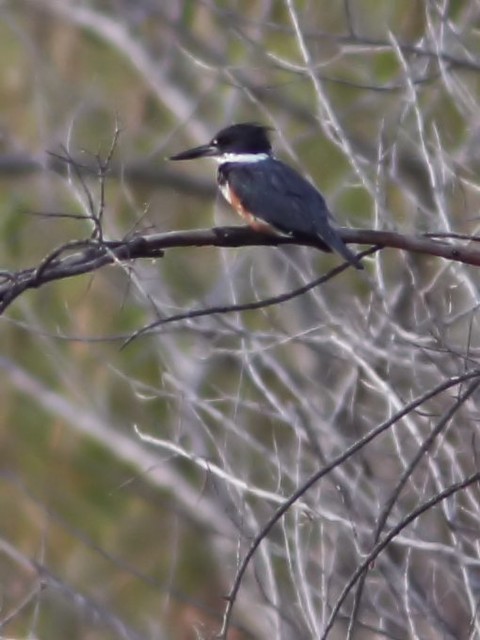
After processing this photo of a Belted Kingfisher, taken at some distance, I realized that it was a female. The male would lack the rufous belly band.
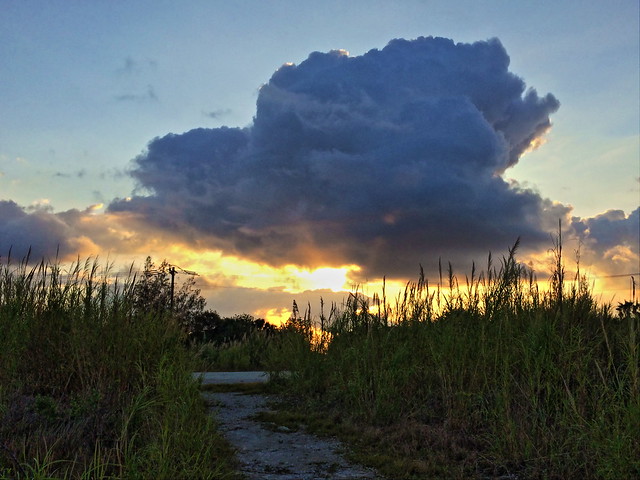
The sun rose due east as expected on the vernal equinox, under a menacing and quickly building cumulus cloud.
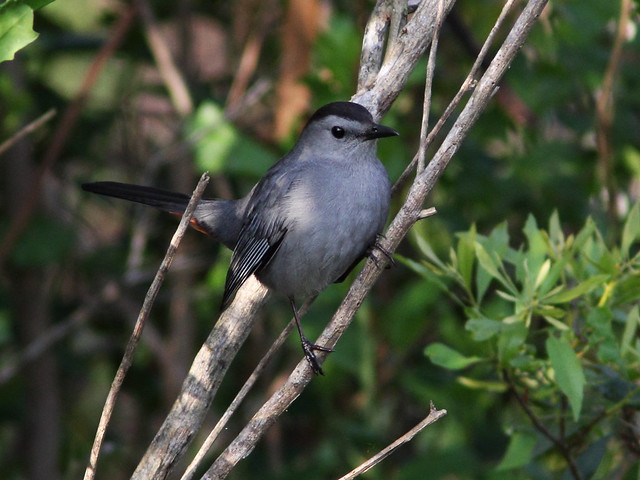
Gray Catbirds were still numerous. This one posed nicely as sunlight burst forth.
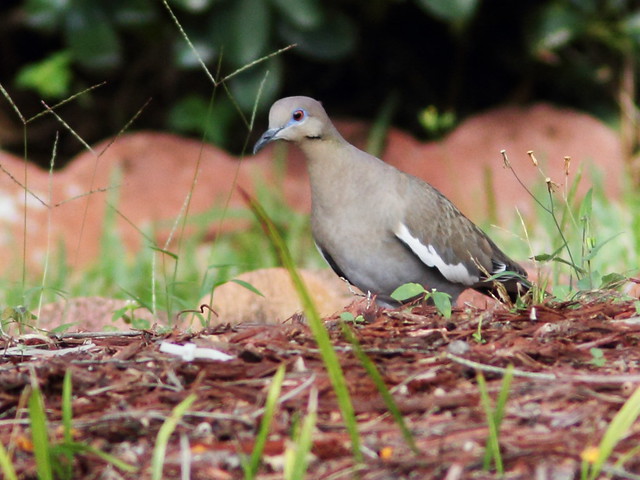
We did not see a single warbler. With rain threatening we hurried back home after walking the mandatory two miles in and out of the wetlands. A couple of doors from our home, this White-winged Dove was collecting nesting materials in a neighbor's yard.
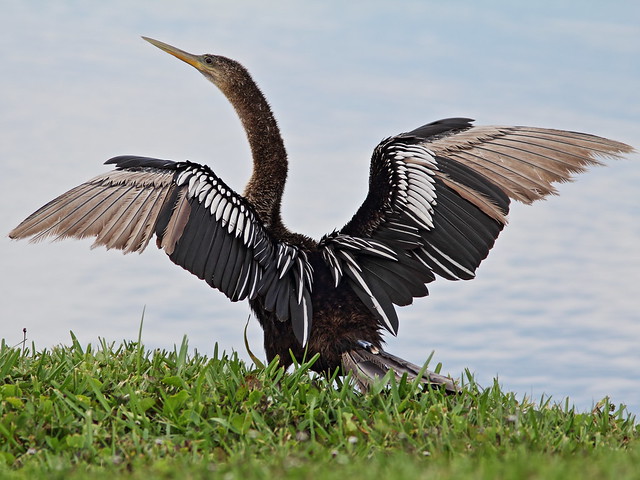
It clouded over but the precipitation actually held off, so I checked our back yard for photo opportunities. An Anhinga was drying its wings at the edge of our lake.
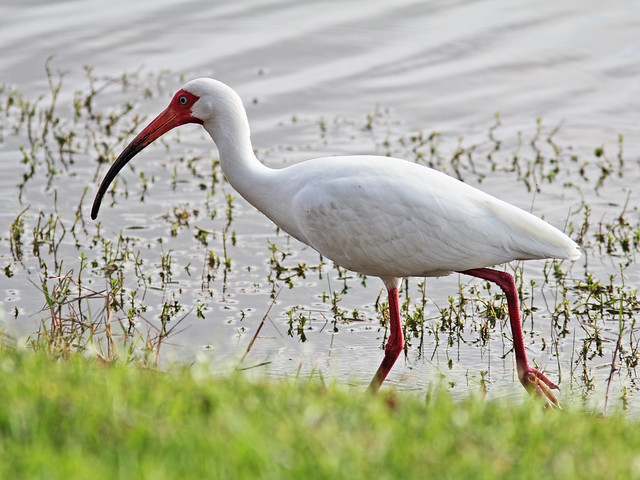
A flock of White Ibises probed the water's edge.
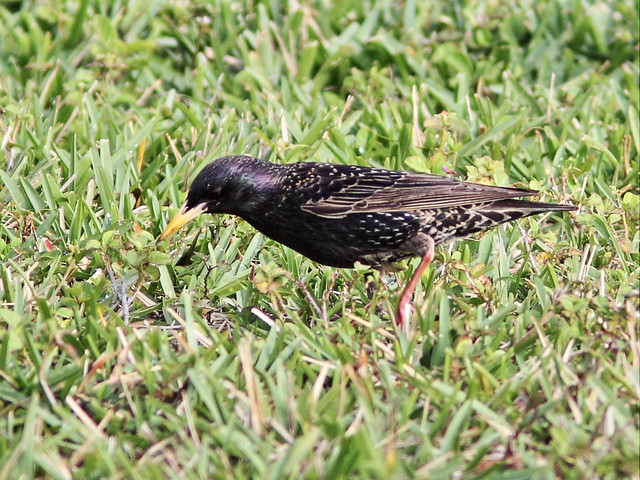
A European Starling hunted for insects on the lawn.
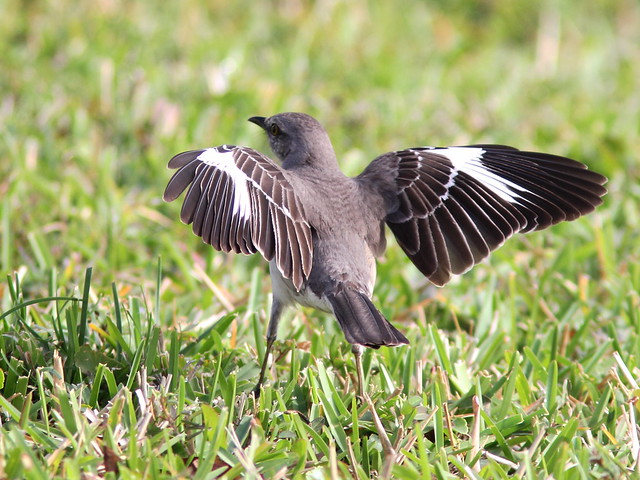
Nearby, a Northern Mockingbird demonstrated its hunting technique...
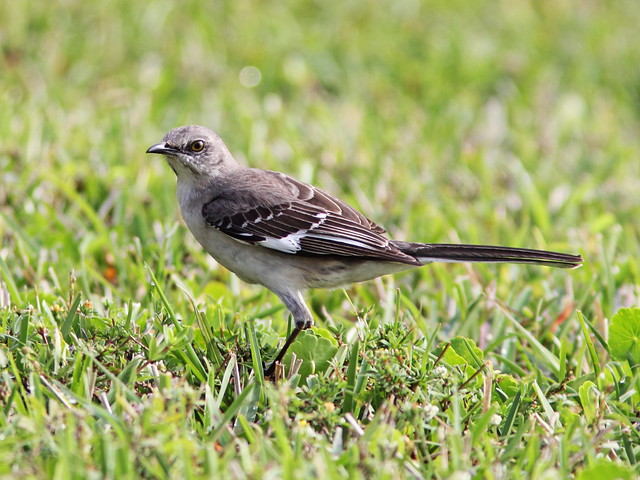
...flashing its wings to startle prey items.

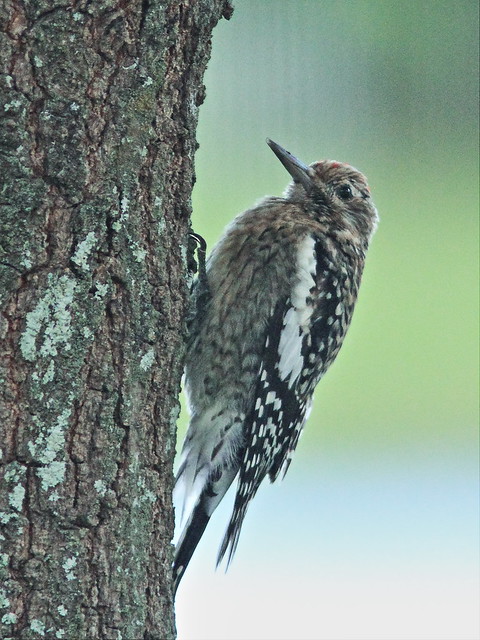
The female Yellow-bellied Sapsucker that caused us so much concern has abandoned our ailing Mahogany tree and now has adopted the same type of tree in our neighbor's yard. Over a three months period of observation, her plumage has transformed from juvenile to nearly full adult. Here she was on December 24:
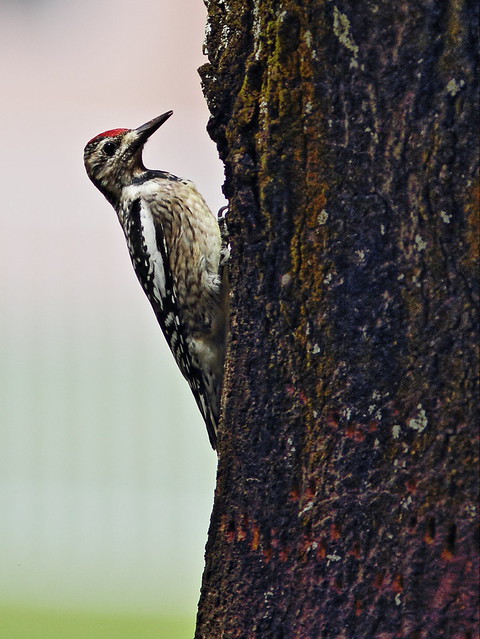
Now she is quite nicely adorned with full red cap and eponymous yellow belly.
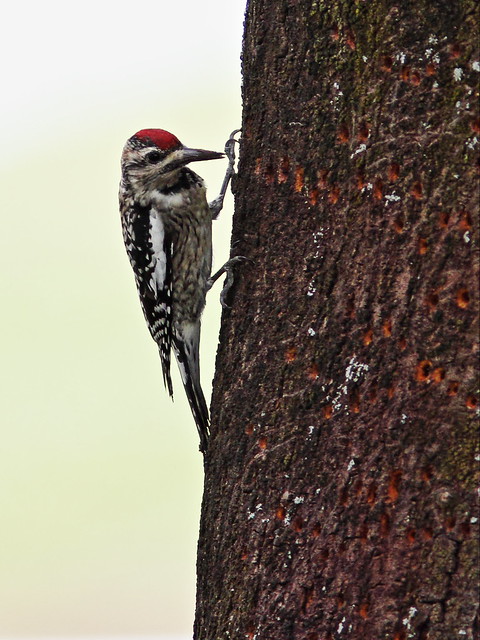
From the number of sap wells in our neighbor's tree I assume she had been busy here for some time before we banished her from our yard.
Gray skies continued with rain for the next few days, and finally a cold front blew through to chase away the clouds. This is the view from our back patio.