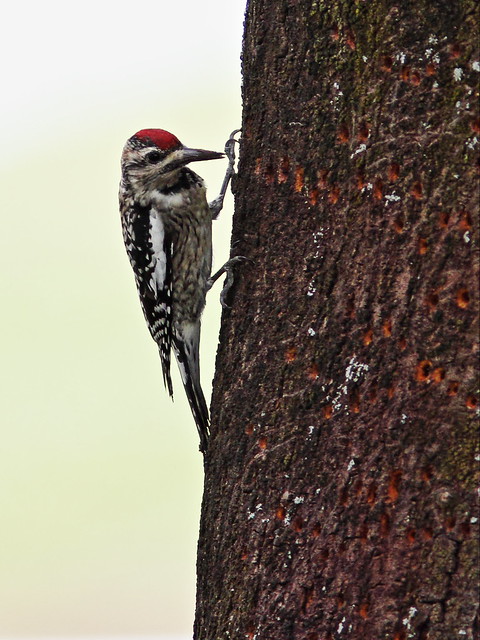
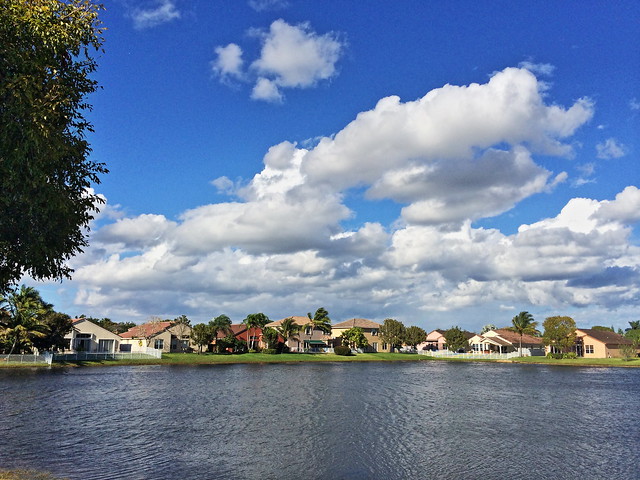
Showing posts with label European Starling. Show all posts

Thursday, May 21, 2020

Crops & Clips: Latest clicks

The rainy season is settling in. Several weeks before the "official" Atlantic hurricane season we were visited by a weather disturbance which developed near The Bahamas and threatened to develop into a tropical storm. This curtailed our morning walks for a few days. Just before the skies turned cloudy and the winds and rain started, I looked up over the wetlands to see...

...White Ibises in flight...
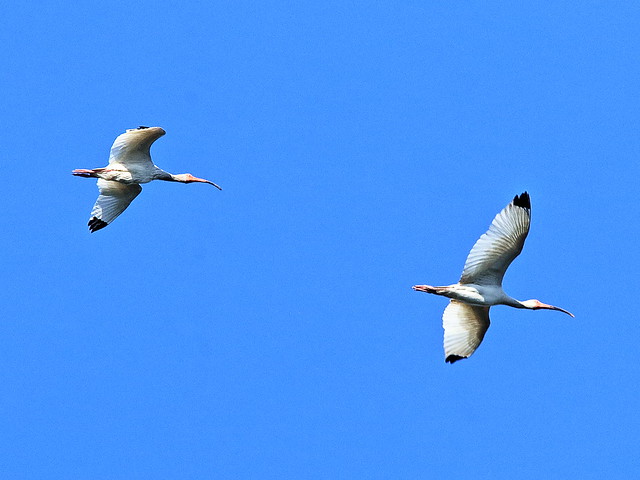
White Ibises 01-20200506

White Ibis 02-20200506

...a Bald Eagle, which appears to be "Pride," the male member of the pair which nests about 1 1/2 miles from our home...
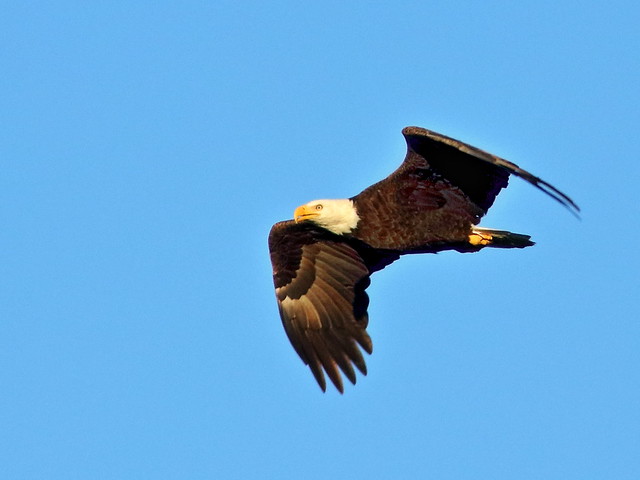
Bald Eagle male Pride 01-20200428

...Mottled Ducks...

Mottled Ducks 01-20200513

...Wood Storks...

Wood Storks 1-20200511

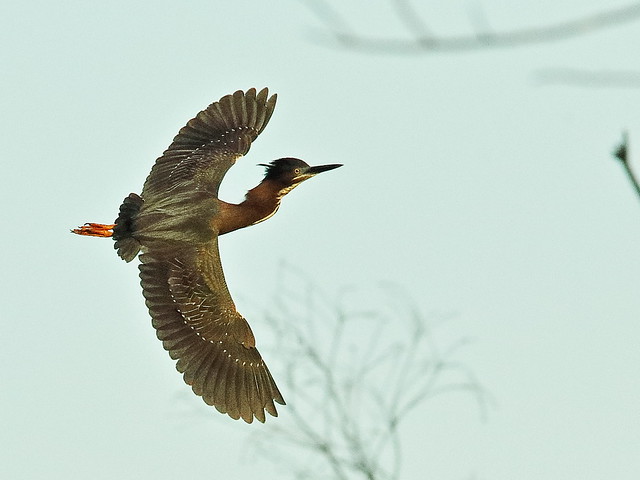
...Green Heron...

Green Heron 01a-20200509

...Common Nighthawk...

Common Nighthawk 01-20200504

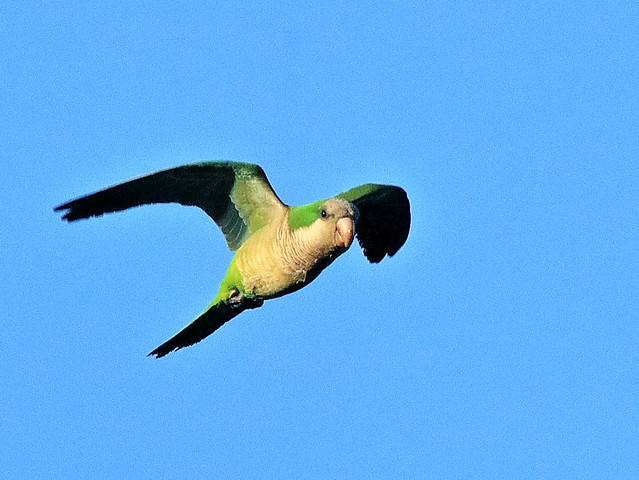
...and Monk Parakeet.

Monk Parakeet  06-20200504

Before sunrise, a poor image of a female Anhinga...:

Anhinga before sunrise 20200503

...which rested on a rock in the lake:
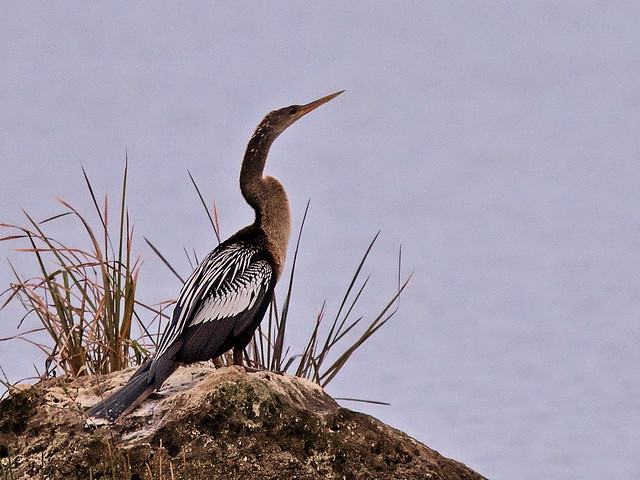
Anhinga 03- 20200511

Earlier, the Flower Moon had waned to gibbous...

Moon waning gibbous 20200512

...and Eastern Screech-Owls were active along the trail (notice that this one has caught a lizard):

Eastern Screech-Owl 01-20200511

Eastern Screech-Owl 05-20200511

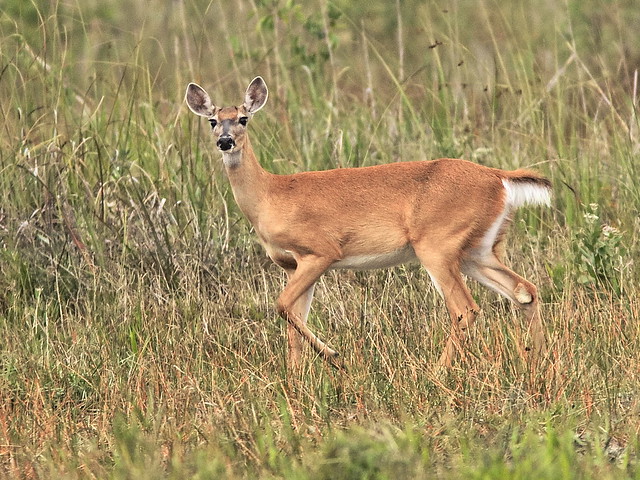
Out in the dimly-lit wet prairie, I startled a White-tailed buck and doe:
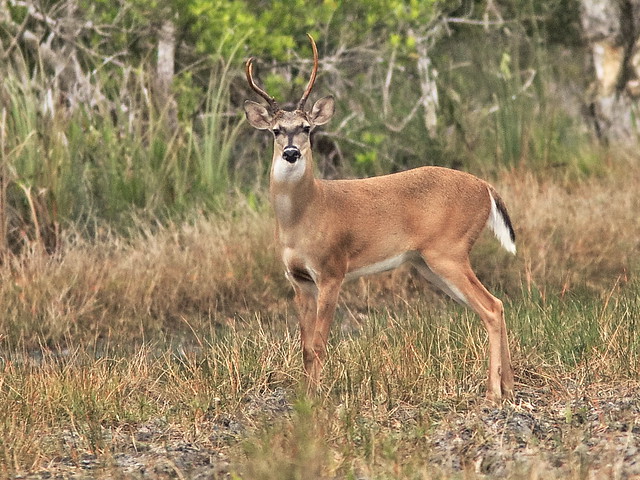
White-tail buck 02-20200511

White-tail doe 04-20200511

Spending most of the day at home, confined to COVID-19 lockdown, I took advantage of the spare time to create a couple of composite photos--

A flock of ibises traversing the full Flower Moon before sunrise:

Moon Ibis Composite 20200507

Moon Ibises composite 2-20200508

A Tricolored Heron partially eclipsing the Moon:
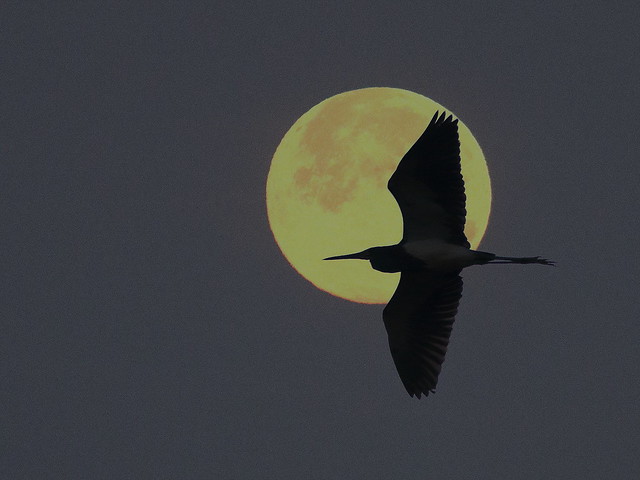
Moon Tricolored Composite CROP 20200507

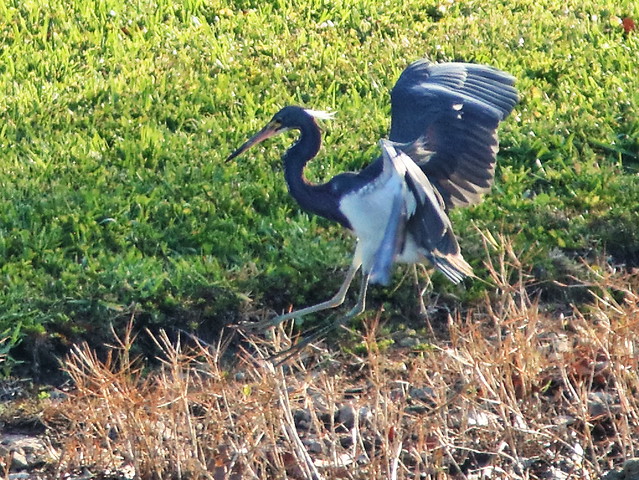
Back to reality, the back yard  birds provided a diversion. A Tricolored Heron caught sight of me and flew across the lake:

Tricolored Heron 03-20200506

Tricolored Heron 04-20200506

Through the back window, I watched a hungry European Starling youngster beg for grubs from Mom. I am glad that we do not use insecticides on our lawn: 
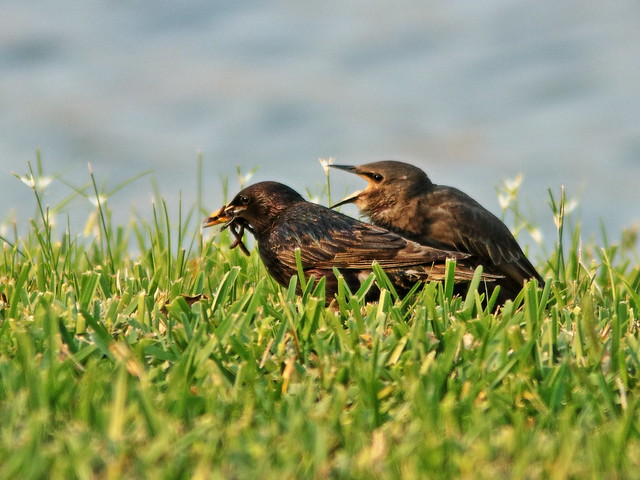
European Starlings 01-20200508

European Starlings 02-20200508

The day-old Full Flower Moon setting on May 7, before sunrise...

Full Flower Moon 05-20200507

...and after sunrise:

Full Flower Moon 06-20200507

Neighborhood kids enjoying a bit of freedom under watchful eyes of their Labradoodle:

Gone fishin'01- 20200515

= = =  = = =  = = = =  = = = = =

Linking to:

Fences Around the World

Skywatch Friday

Weekend Reflections

Saturday's Critters

BirdD'Pot

Camera Critters

All Seasons

Wordless Wednesday (on Tuesday)

Our World Tuesday

________________________________________________

Please visit the links to all these posts to see some excellent photos on display
________________________________________________
Thursday, January 11, 2018

Egret in morning light and a Bobcat

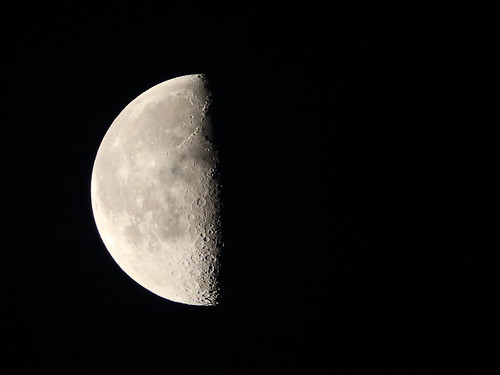
Mary Lou and I like to get out about a half hour before sunrise. It is usually cool and the winds are calm. On January 8 the morning weather report caused us some concern, but the radar looked clear and we set out with an eye on the sky. The third-quarter Super-moon was almost directly overhead.

SuperMoon third quarter 20180108

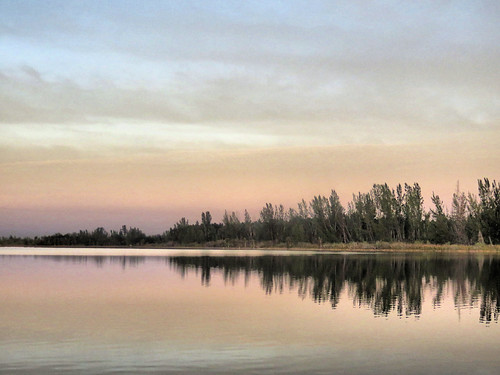
About ten minutes before sunrise we reached the lake. The sky had lightened up a bit but the opposite shore was still quite dark:

 Before Sunrise 07-20180108

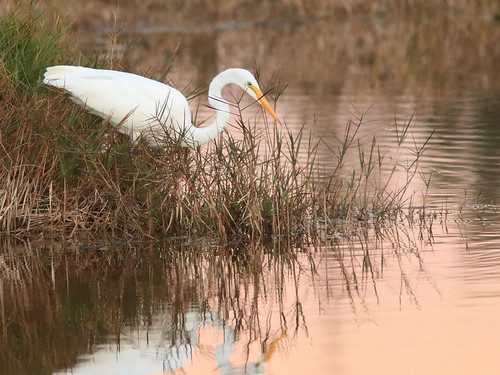
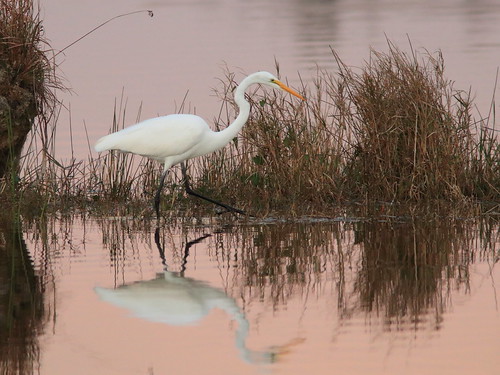
The diffuse light reflected on the still water as a Great Egret explored along the shore:

Great Egret 01-20180108

Great Egret 03-20180108

The sun reflected on a backdrop of high clouds to the west:

Before Sunrise 04-20180108

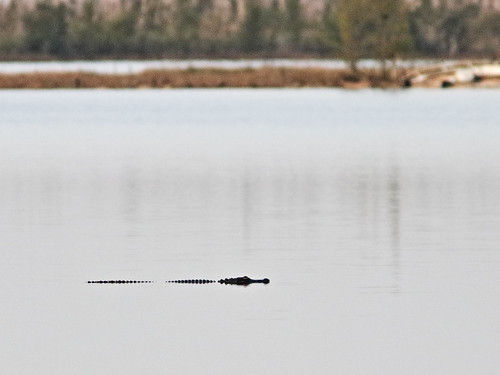
A large alligator moved lazily along, barely creating a wake:

Big alligator 20180108

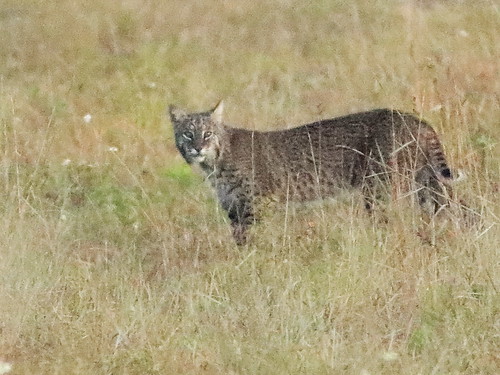
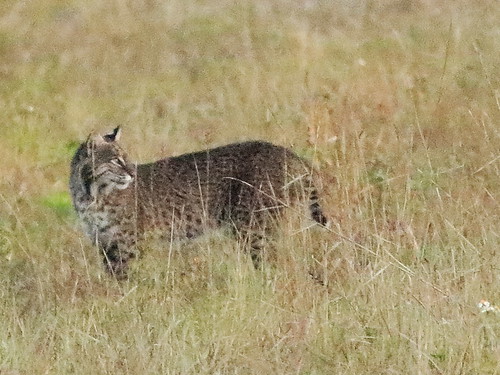
Preoccupied with the alligator, I must have missed seeing a Bobcat as it crossed the road about 100 yards to the north. I snapped a few shots before it disappeared in the brush to the left:

Bobcat 04-20180108

Bobcat 06-20180108

I started to move quietly along in hopes of seeing the cat as it proceeded towards the lake, but it surprised me by suddenly running back across the road at a full gallop. In the space of only two seconds I shot a volley of 6 photos. All were poorly focused, so to make up for the lack of clarity I stitched them together to impart a sense of motion (click on image to enlarge):

Bobcat running HDR 20181208

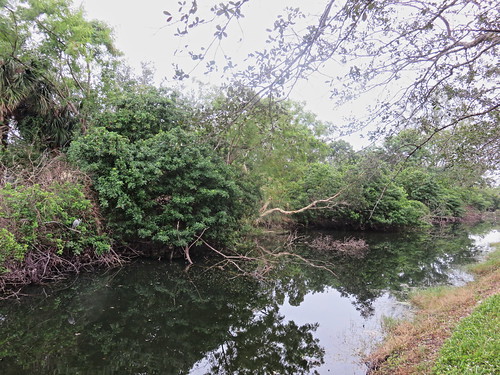
I proceeded to the heron rookery, which is about another half mile beyond the lake. Hurricane Irma had pushed down nearly all the larger trees along the canal. Many were still alive and leafed out, their crowns protruding into the canal. 


 Hurricane damage to rookery 20180110

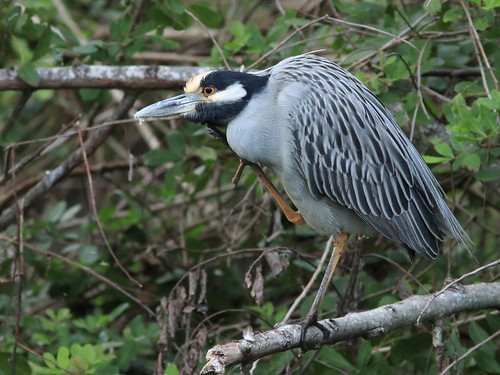
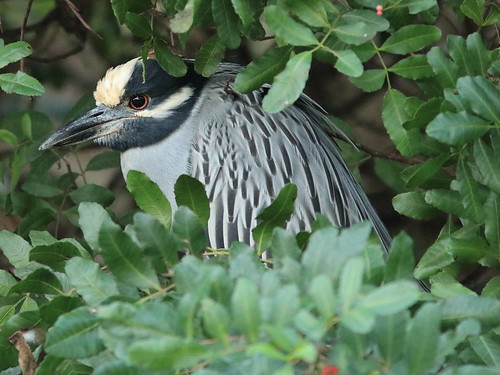
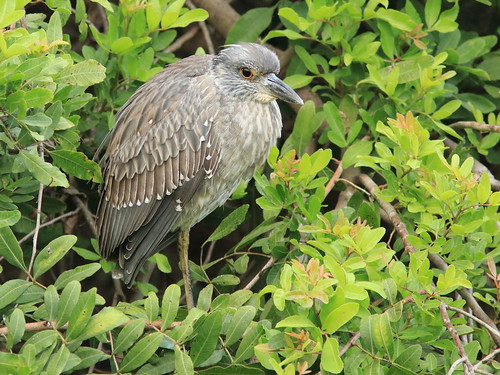
This seemed to be favorable for the herons, as the count has climbed from one to a dozen in the past few weeks. This morning I counted 7 adult and 2 immature Yellow-crowned Night-Herons. Some were already developing breeding plumage-- the top of their heads had lost the streaks and were turning to gold, their black legs showed brighter yellow color, and their nuptial plumes had emerged:

Yellow-crowned Night-Heron 04-20180108

Yellow-crowned Night-Heron 02-20180108

Yellow-crowned Night-Heron 01-20180108

Immature Yellow-crowned Night-Heron:

Yellow-crowned Night-Heron immature 06-20180108

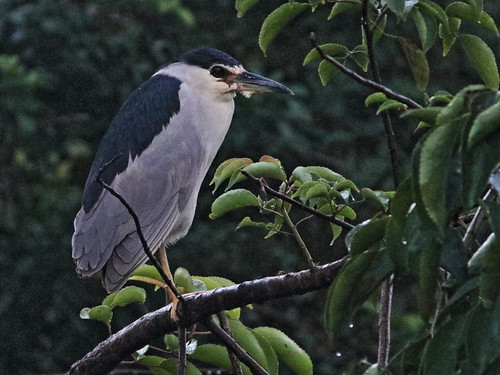
At least two Black-crowned Night-Herons have also been present, though they are more secretive and I did not find them this morning. This is the adult:

Black-crowned Night-Heron 01-20171219

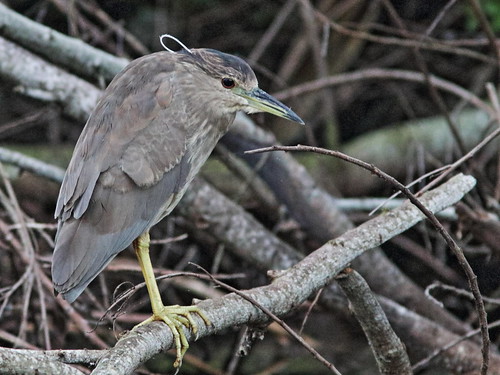
At least one immature Black-crowned Night-Heron often roosted with the adult. Note that its bill is partly yellow and it lacks the fine spotting of the immature Yellow-crowned species:

Black-crowned Night-Heron 20171228

The sky to the north indicated that the predicted storm front was approaching, but it seemed to be moving slowly, so I started back at a leisurely pace. Mary Lou was already home.


 Rain threatens 20180108

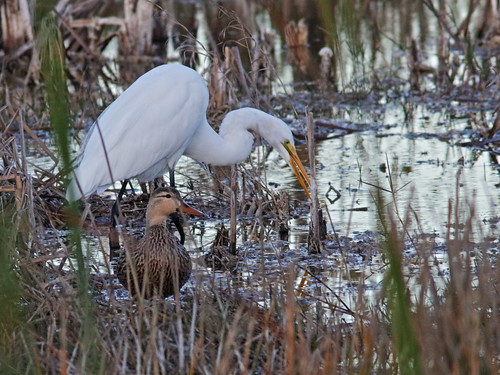
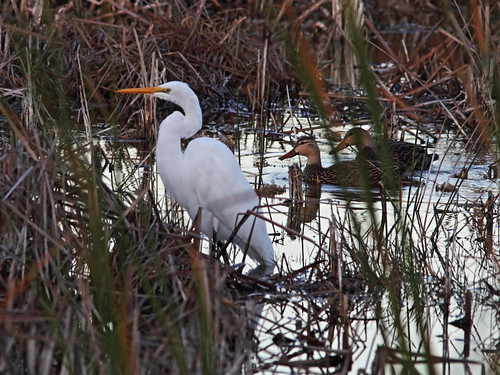
I stopped to photograph another Great Egret as it foraged in a lakeside marsh along with a pair of Mottled Ducks. Fish are trapped in the marsh as it dries up, and it becomes a rich food source. The female Mottled Duck subsists largely on fish and crustaceans during breeding season, so it must benefit from its association with the egret:

Great Egret with Mottled Duck 01-20180107

Great Egret with Mottled Ducks 02-20180107

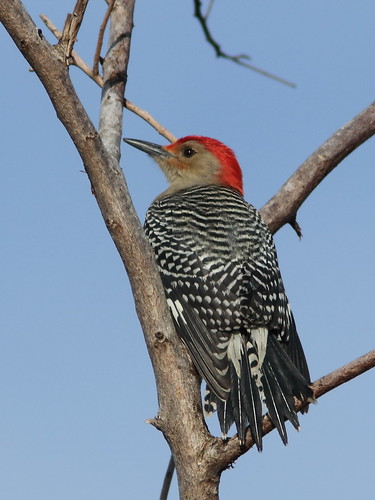
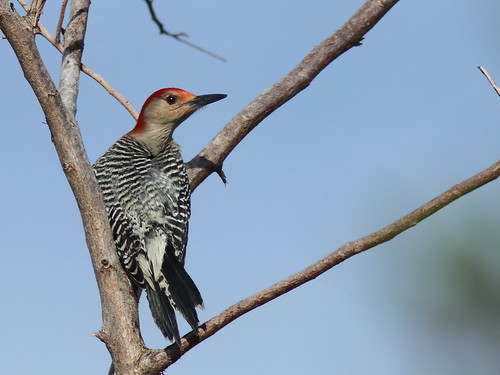
Other subjects along the way home were a Red-bellied Woodpecker...

Red-bellied Woodpecker 01-20180108

Red-bellied Woodpecker 02-20180108

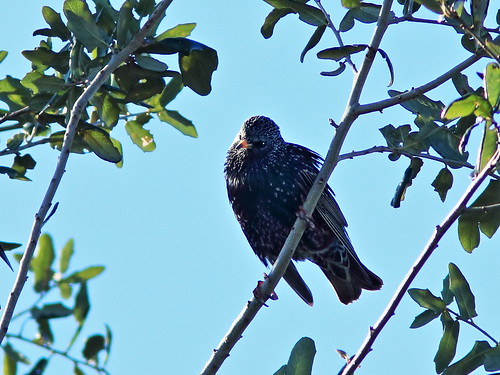
...a European Starling...

European Starling 01-20180107

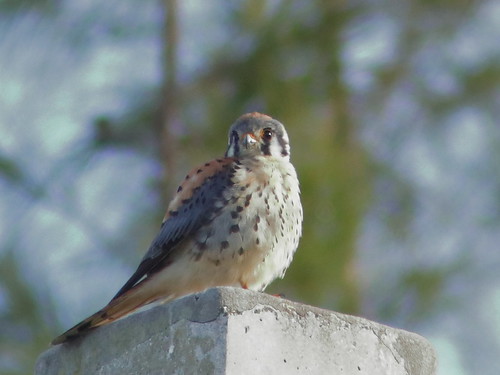
...and an American Kestrel:

American Kestrel 04-20180108

Light rain started falling and I had to cover my camera and hurry back to the house!


= = =  = = =  = = = =  = = = = =

Linking to Misty's  CAMERA CRITTERS,

Linking to Eileen's SATURDAY'S CRITTERS,

Linking to SKYWATCH FRIDAY by Yogi, Sylvia and Sandy

Linking to WEEKEND REFLECTIONS by James

Linking to BirdD'Pot by Anni

Linking to Our World Tuesday by Lady Fi 

Linking to Wild Bird Wednesday by Stewart

Linking to Wordless Wednesday (on Tuesday) by NC Sue

Linking to ALL SEASONS by Jesh

________________________________________________
Please visit the links to all these memes to see some excellent photos on display

________________________________________________
Saturday, March 29, 2014

Spring arrived but birding was slow

We got out on our local wetlands patch early, about 20 minutes before sunrise. Rain was forecast for later in the day so we kept a wary eye on the skies. It was too dark for photos when, while walking in, we saw a raccoon and a Gray Fox. 

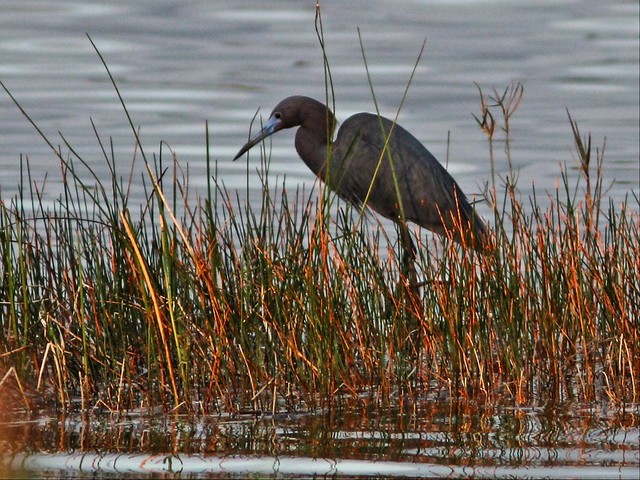
This photo of a Little Blue Heron had to be tweaked to bring out the details under the poor lighting conditions.

 Little Blue Heron 20140320 
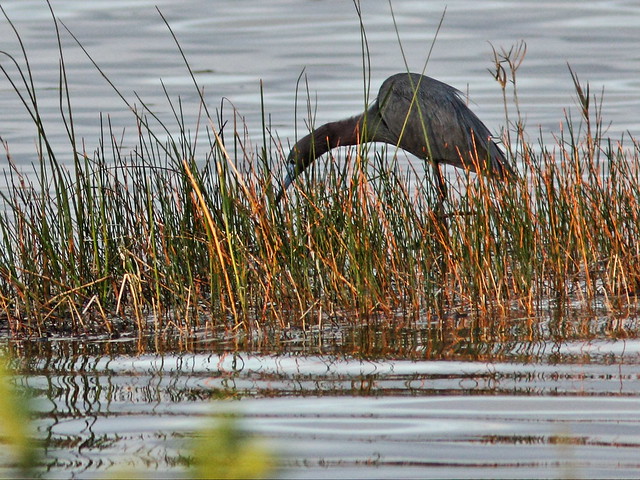
The heron assumed this typical foraging posture that makes it easy to identify, even from far away.

Little Blue Heron 2-20140320

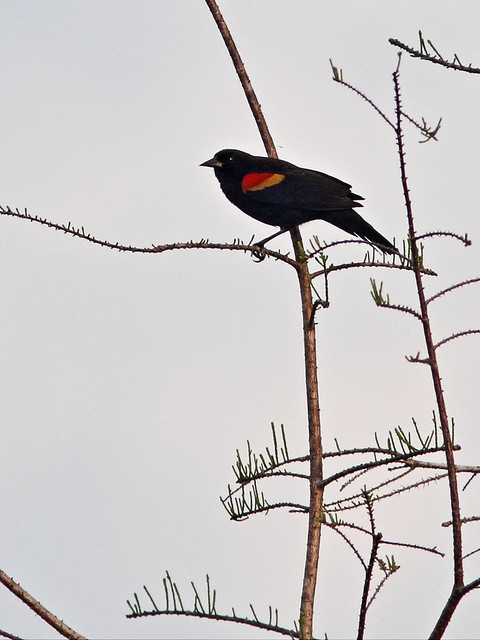
The red and yellow epaulet of this male Red-winged Blackbird glowed through the darkness.

Red-winged Blackbird 20140320

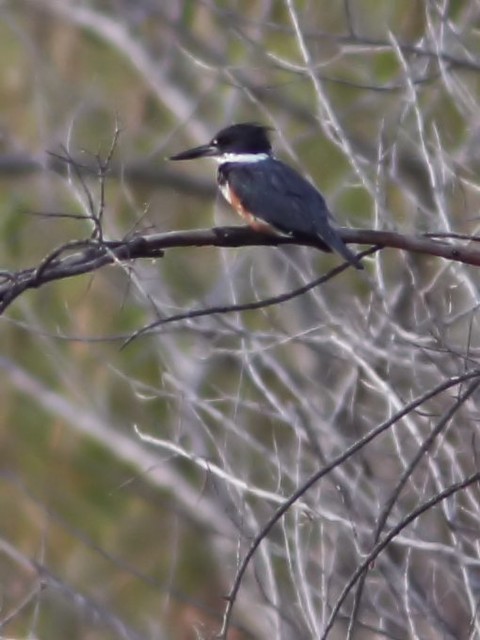
After processing this photo of a Belted Kingfisher, taken at some distance, I realized that it was a female. The male would lack the rufous belly band.

Belted Kingfisher female 2-20140320

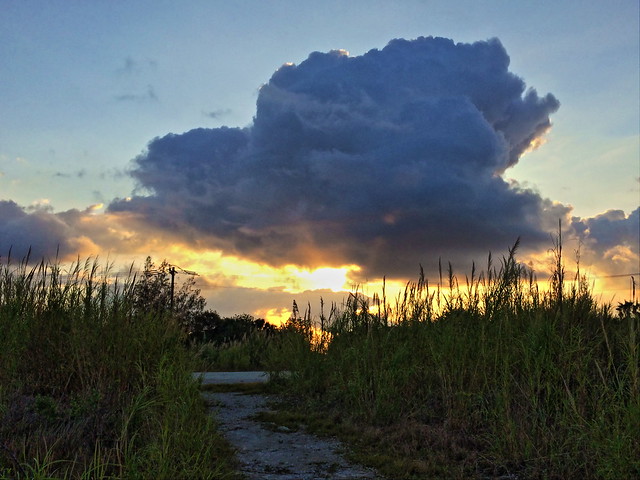
The sun rose due east as expected on the vernal equinox, under a menacing and quickly building cumulus cloud. 

Sunrise and clouds on first day of spring 20140320

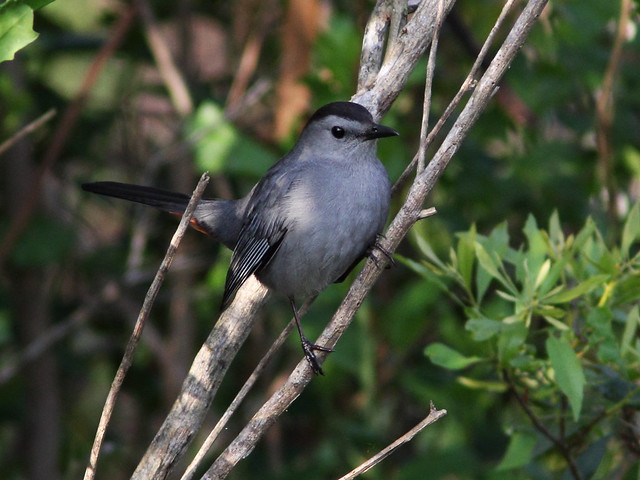
Gray Catbirds were still numerous. This one posed nicely as sunlight burst forth.

Gray Catbird 20140320

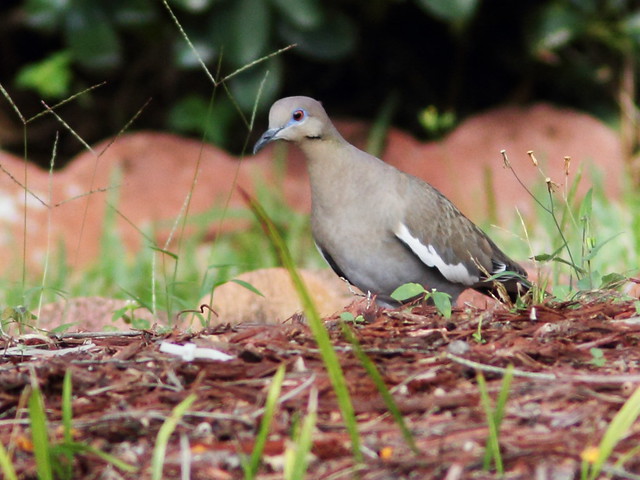
We did not see a single warbler. With rain threatening we hurried back home after walking the mandatory two miles in and out of the wetlands. A couple of doors from our home, this White-winged Dove was collecting nesting materials in a neighbor's yard.

White-winged Dove gathering twigs 2-20140320

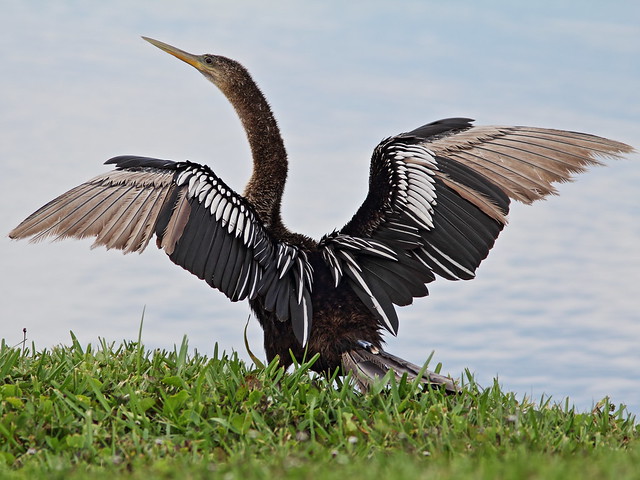
It clouded over but the precipitation actually held off, so I checked our back yard for photo opportunities. An Anhinga was drying its wings at the edge of our lake.

Anhing in back yard 20140320

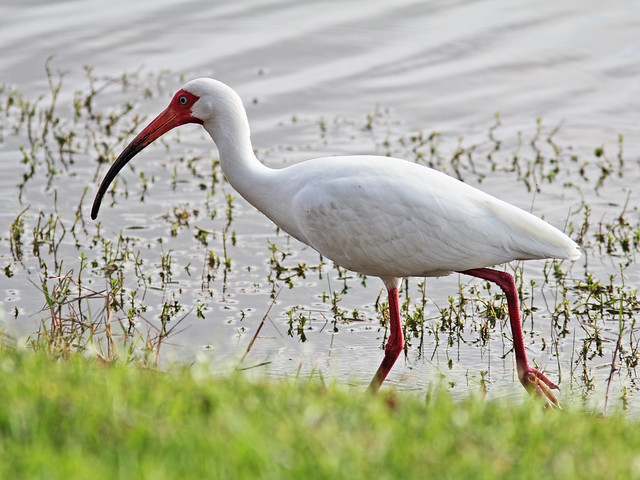
A flock of White Ibises probed the water's edge.

White Ibis in yard 20140320

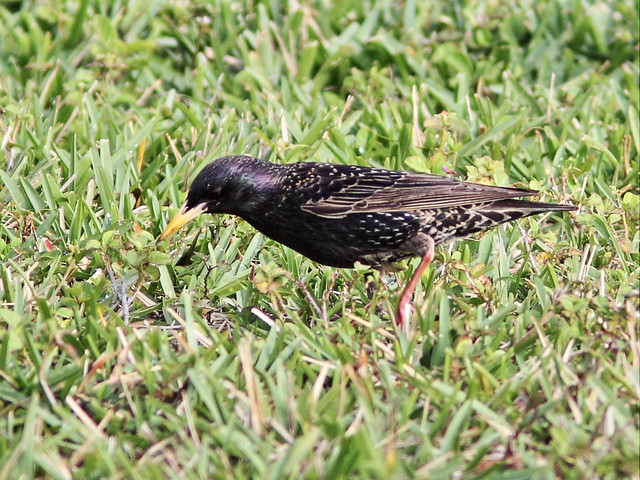
A European Starling hunted for insects on the lawn.

European Starling 20140320

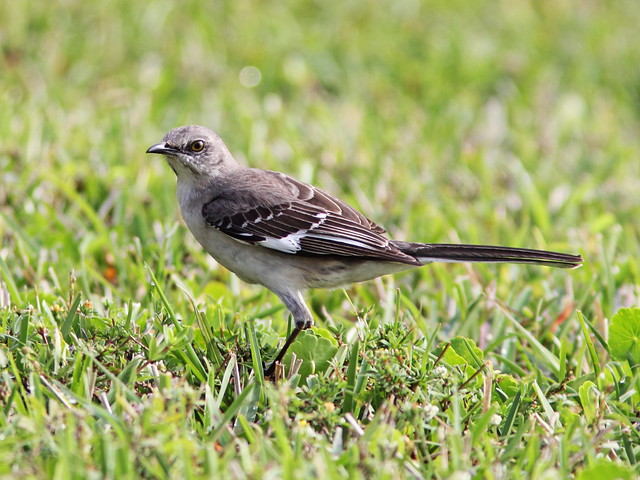
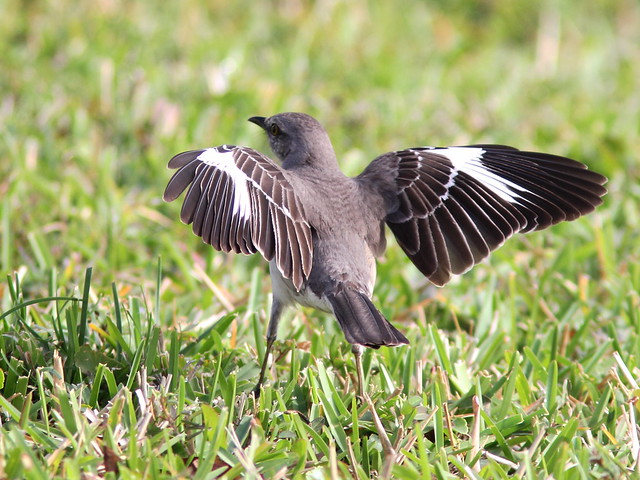
Nearby, a Northern Mockingbird demonstrated its hunting technique...

Northern Mockingbird 20140320

...flashing its wings to startle prey items.

Northern Mockingbird flashing wings 20140320

Northern Mockingbird flashing wings 2-20140320

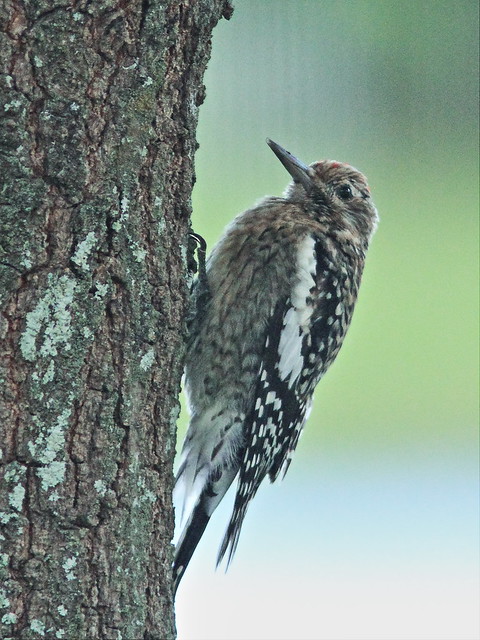
The female Yellow-bellied Sapsucker that caused us so much concern has abandoned our ailing Mahogany tree and now has adopted the same type of tree in our neighbor's yard. Over a three months period of observation, her plumage has transformed from juvenile to nearly full adult. Here she was on December 24:

Yellow-bellied Sapsucker 2-20131224

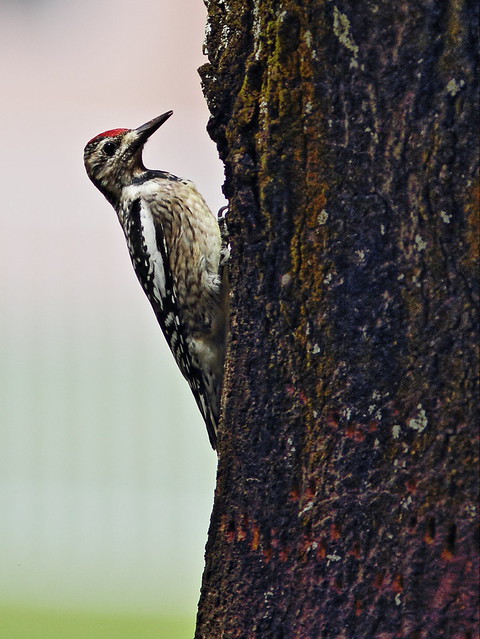
Now she is quite nicely adorned with full red cap and eponymous yellow belly.

Yellow-bellied Sapsucker 20140320

From the number of sap wells in our neighbor's tree I assume she had been busy here for some time before we banished her from our yard.

Yellow-bellied Sapsucker 2-20140320

Gray skies continued with rain for the next few days, and finally a cold front blew through to chase away the clouds. This is the view from our back patio.

View from patio 20140325