Showing posts with label American Coot Common Gallinule Anhinga Rainbow Little Blue Heron. Show all posts

Thursday, December 24, 2020

Crops & Clips: 2020 Yard Birds

The Coronavirus lockdown has now been going on for nearly eight months. We have not seen our children and grandchildren (and great-grandchildren) in more than a year. Of course we have not seen the inside of a restaurant and usually order our groceries online for curbside pickup. 

Visits with family have been virtual, as have most of our medical encounters. The only human outsiders who have entered our home this year have been: a plumber, an electrician and a barber (or should I sound uppity and call her a hair stylist or beautician, which of course she is), all masked and so much appreciated.  

Our back yard has been another story. Over the years we have hosted crowds of visitors, feathered and furred. 

A distinguished visitor was a Wood Stork, twice this past week. This immature bird still has feathers on its head and upper neck, lacking in older birds:

Egyptian Geese have invaded in recent years:

Herons include this Tricolored...

...an adult Little Blue Heron, photographed through the window of the back sliding glass door...

...and an immature Little Blue Heron, far across the lake. Its characteristic bill-down "nearsighted" hunting posture made it easy to spot:

Flocks of Ring-billed Gulls will linger if the fishing is good:

Some Ring-bills flew in before sunrise on December 21

The adult male Ruby-throated Hummingbirds abandon their young to the care of their mates and migrate early. One appeared in November:
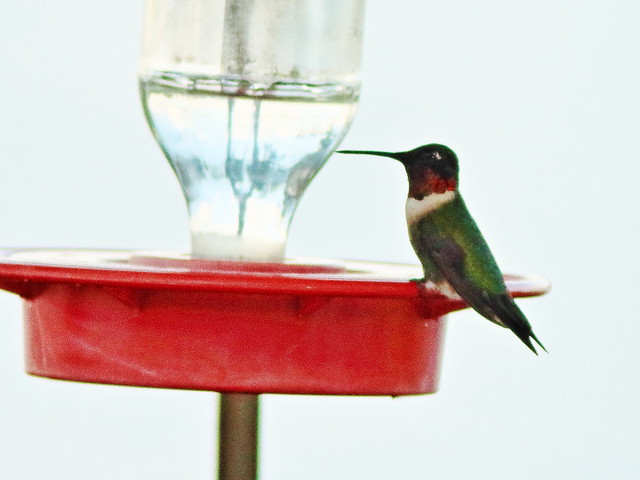
An immature male replaced the adult this past week. He has a speckled throat, while that of the female is clear white:

An Osprey swooped low over our back patio:

A Great Blue Heron posed for a moment before flying off:

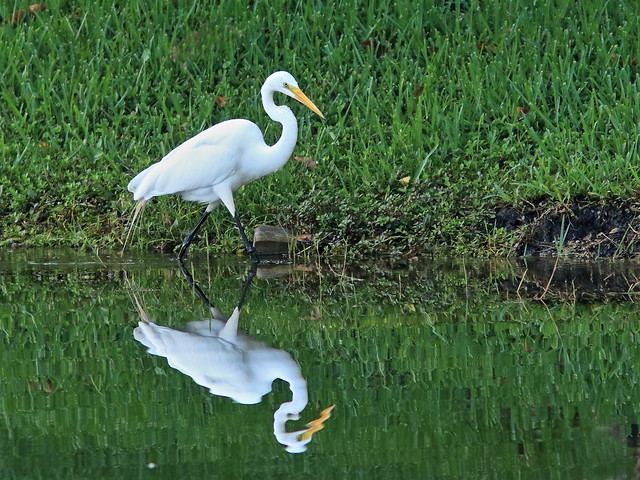
A Great Egret foraged across the lake:
Our most numerous long-legged wader species has been the White Ibis:


Almost as common are the established feral Muscovy Ducks. We can't fly out, but they they can fly in:


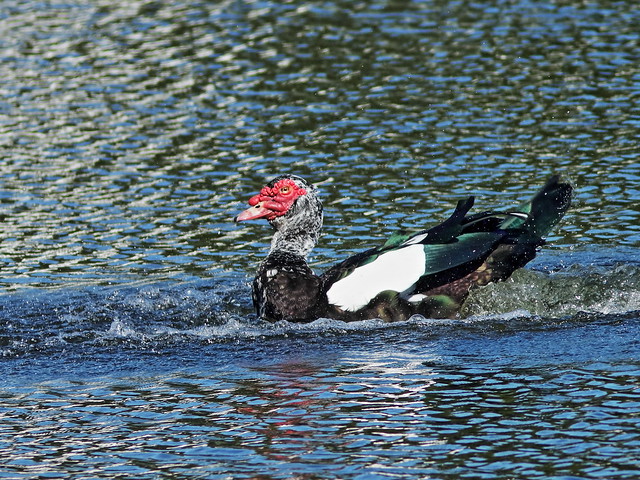
Mama Muscovy rests on our goose decoy:

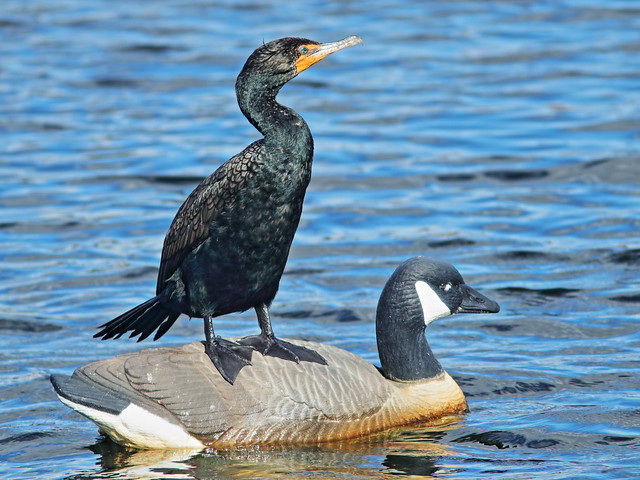
The goose seems not to mind all these critters riding on his back--

...a Double-crested Cormorant adult, showing off his double "crests:"

...a Mottled Duck hen, whose drake was reluctant to join her:

...Anhingas, recently a youngster, and back in 2014 before our duck decoy "drowned," a spread-winged adult female:


...in 2016, a Spotted Sandpiper:

...and way back in 2012, a Great Blue Heron:

Our only (visible) furry creature this year has been a Gray Squirrel:

The view at sunrise, December 21 from our "wildlife viewing platform:"


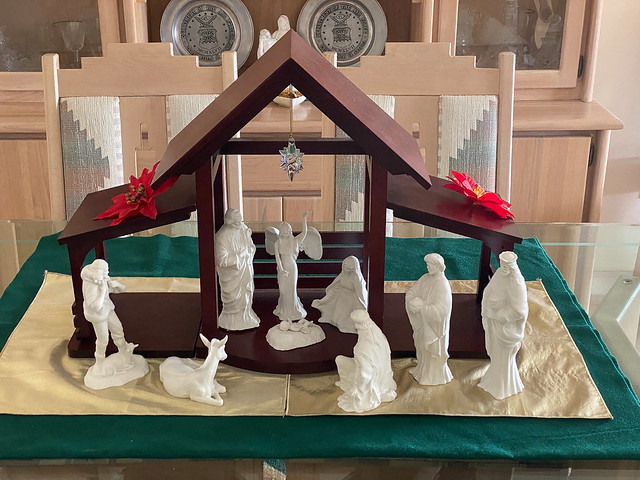
Our tabletop Nativity scene. Merry Christmas!


= = =  = = =  = = = =  = = = = =

Linking to:

Fences Around the World

Nature Thursday

Skywatch Friday

Weekend Reflections

Saturday's Critters

BirdD'Pot

Camera Critters

All Seasons

Wordless Wednesday (on Tuesday)

Natasha Musing

Our World Tuesday

________________________________________________

Please visit the links to all these posts to see some excellent photos on display
________________________________________________

Thursday, December 17, 2020

Chapel Trail Nature Preserve

Although I have been unable to lead the "First Saturday" wetland walks at Chapel Trail Nature Preserve in nearby Pembroke Pines, I try to get out there at least once every week. I go early and only on weekdays. This affords less contact with other visitors so that social distancing is not a problem. 

The extensive wet prairies in the preserve have suffered from high water conditions due to unusually heavy rain which included a visit from Tropical  Storm Eta. High water disperses fish and other prey items, so the herons and other wading birds must search widely and are not as concentrated as is usually the case as the winter dry season advances. 

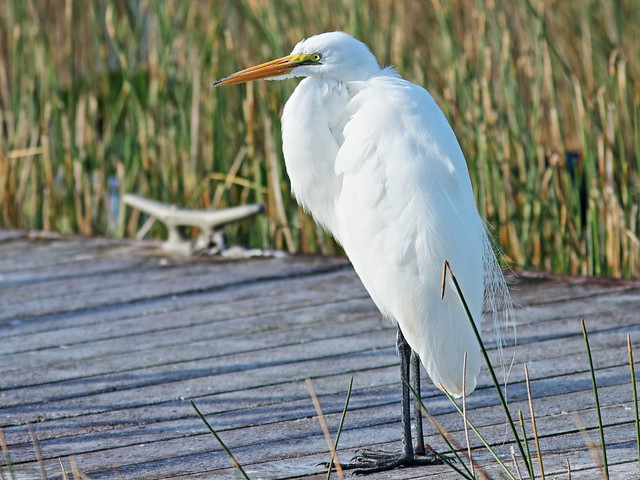
Last week I saw only sixteen bird species. This time of year, twenty or more would be the norm. The second of two Great Egrets flew in and settled in the spikerush (actually, technically classified as a sedge and not a rush) which blankets the prairie:


The other Great Egret, resting on the canoe dock, showed signs that it was approaching breeding condition: trailing plumes,  green lores and brightened yellow beak with darkening tip: 

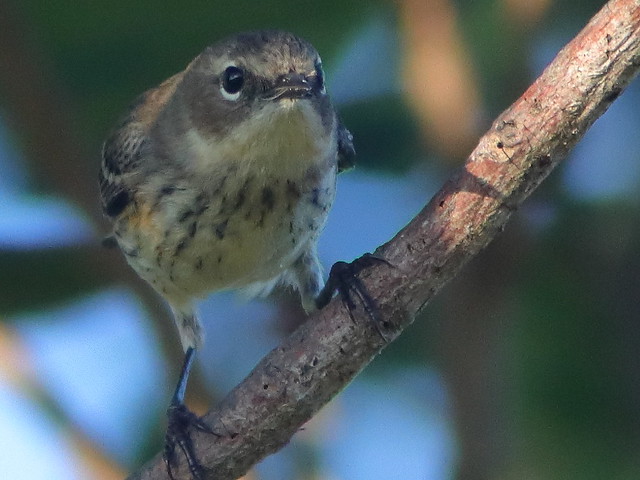
The most common bird species seen was the Yellow-rumped (Myrtle) Warbler. Flocks of five or six and up to 10 or 12 individuals moved together from tree to tree in the upland areas. Their winter plumage is greatly subdued as compared to their bold black, white and yellow breeding colors. Females have brown backs during winter, and first year birds have dull plumage. Some are very pale, like this specimen:


Others are dark brown, like this female. The intensity of their yellow rump and lateral breast patches also varies:


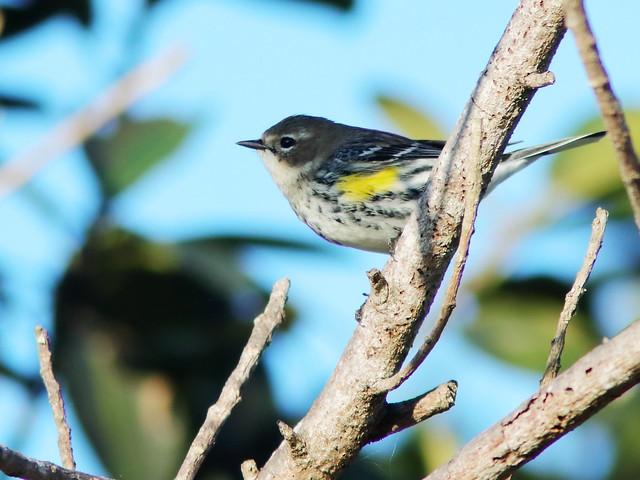
Winter male:


Immature, sex undetermined:

In any plumage, their namesake "butter-butt" rump patch is usually obvious:


This is a spring male Yellow-rump which I encountered in Illinois:


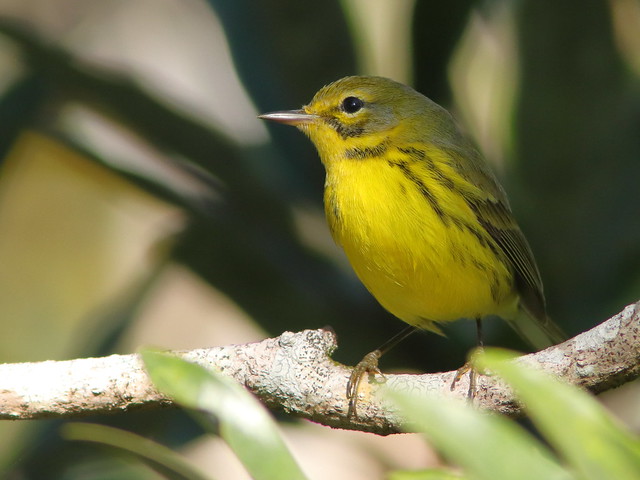
Three other warbler species were present--

Northern Parula male...:


...Prairie Warbler...

...and Palm Warbler:

Through the brush, I obtained a clear view of a Brown Thrasher which eyed me apprehensively: 

Exotic Gray-headed Swamphens foraged on the roots and tender stems  of the spikerush. They were persecuted and subjected to an eradication campaign in which over 3,000 were shot because it was feared that they would decimate this plant, which is a mainstay in the ecology of the Everglades. In fact, the sedge appears to be flourishing, as are the swamphens:

They habitually flick their tails upward to reveal the white under-tail coverts. Like a flashing taillight, this can make them easy to find amid the spikerush:

One swamphen took flight and provided a blurry image:

I remembered this photo of a pair of Gray-headed Swamphens reflecting in still water at Chapel Trail, back in October, 2014. Yes, there are only two birds here:

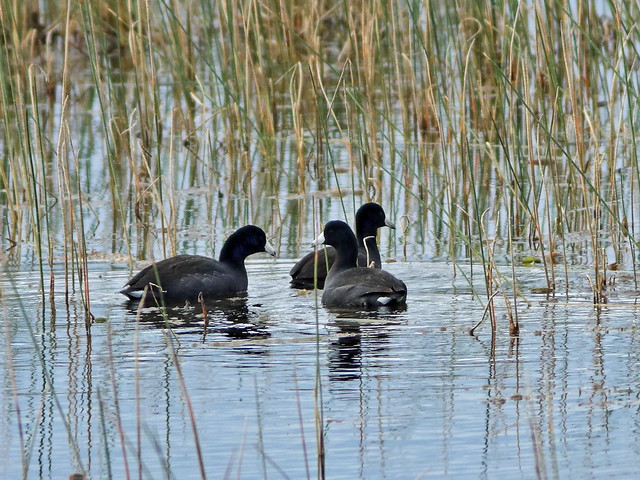
Native relatives of the alien swamphens, American Coots took turns diving:

Another member of the rail, moorhen and coot family (Family Rallidae), a Common Gallinule (formerly called Moorhen) retreated through the sedges:

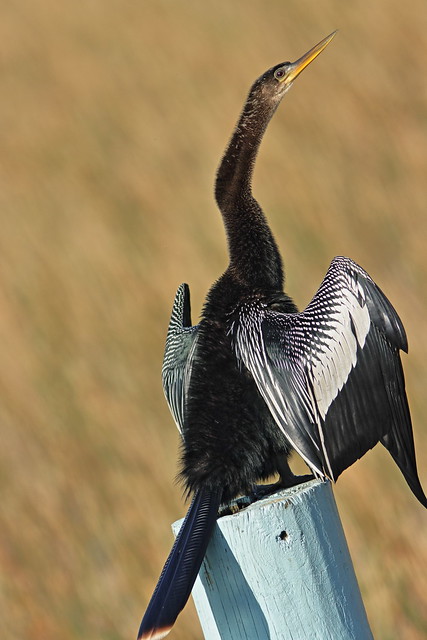
An Anhinga spread its wings as it occupied a post near the dock:

Soon the male Anhinga will develop green breeding-season "goggles," as modeled by one I photographed in early January:

In the adjacent dry pasture, my favorite Longhorn cow grazed. I assumed that the white heron nearby was a Cattle Egret, but close inspection on my computer screen revealed it has a bluish gray bill with a black tip, characteristics of an immature Little Blue Heron:

Nearby, her calf is starting to sprout horns:

On the way out of the preserve, a passing shower spawned a rainbow, visible from the parking lot:


= = =  = = =  = = = =  = = = = =

Linking to:

Fences Around the World


Skywatch Friday

Weekend Reflections

Saturday's Critters

BirdD'Pot

Camera Critters

All Seasons

Wordless Wednesday (on Tuesday)

Natasha Musing

Our World Tuesday

________________________________________________

Please visit the links to all these posts to see some excellent photos on display
________________________________________________