Out on a trail which traverses the north prairie of Nelson Lake (Dick Young/Nelson Lake Marsh Forest Preserve) in Batavia, Illinois, a passerby stopped to watch me as I was intently focusing my camera into the high grass. I turned to say hello and he asked me what I was seeing. "A Henslow's Sparrow," I replied. His response was "Oh, only a sparrow," and he moved on his way.
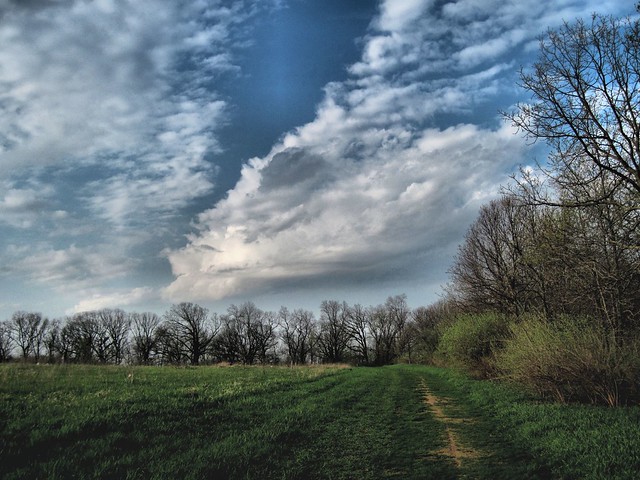
A dramatic sky over the southwest prairie at Nelson Lake preserve:
True, most sparrows are unobtrusive LBJ's (Little Brown Jobs). They can sometimes be difficult to identify or even find as they move around near the ground or perch on a distant shrub. Yet they are an interesting lot and, on closer inspection, quite varied and beautiful.
The most common sparrows of my childhood were called "Chippies" by my grandmother, who fed them bread scraps in the back yard we shared. Only after I found them pictured in my first bird book did I realize their proper name was English Sparrow, and that it was introduced from Europe. Later I learned that they were the only "true sparrows" I was ever likely to see in the US.
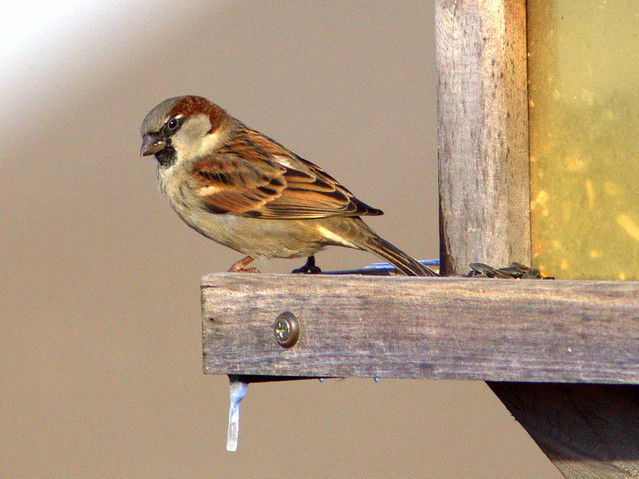
Renamed "House Sparrow," they populate most of the urban areas of North America including Mexico but not the high mountains or northern Canada. Although they are present in shopping centers less than a mile from our south Florida home, I have never seen one in our back yard or the wetlands near our home.This male is enjoying a meal in our daughter's feeder in Batavia:
Closely related to weaver finches, the Old World "True" Sparrows (Family Passeridae) deserved naming rights before the LBJ's of the USA were ever discovered. I have yet to see a European Tree Sparrow, the other immigrant from this family, although it is quite common in St. Louis, Missouri and is also seen southwestern Illinois. The native sparrows in the Americas belong to a distinct family, Emberizidae, related to the Old World buntings.
Probably the best known representative of the American sparrow family is the Song Sparrow, which breeds all across the northern USA, up the Pacific Coast into southern Alaska and in much of the southern 2/3 of Canada. It migrates into all of the lower 48 States but does not reach southern Florida. It is appropriately named for its exhuberant melodic song (Nelson Lake, June 5, 2016) :

The Savannah Sparrow resembles it but is smaller, with a proportionately shorter tail. It may have yellow "eyebrows" which vary in intensity among its several subspecies:

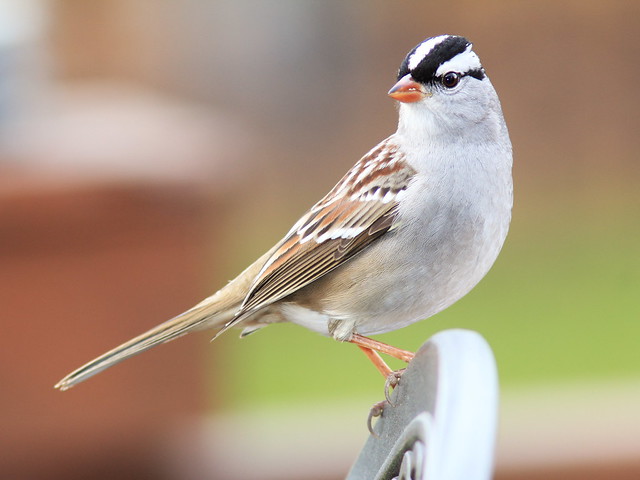
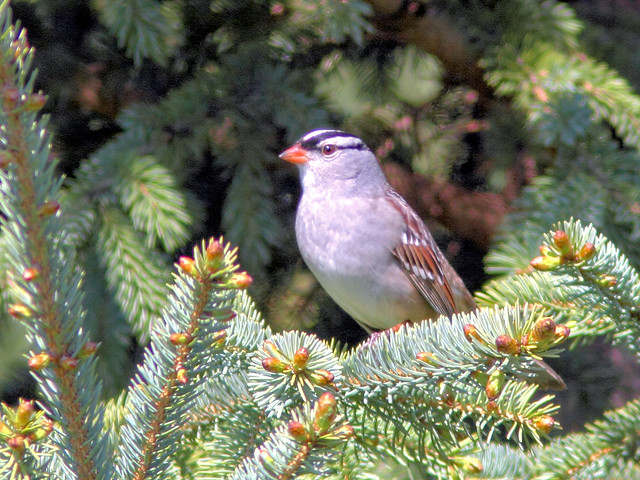
During the winter, White-crowned Sparrows invade the lower half of the 48 States after breeding in northern Canada and the Rocky Mountains. They are large and quite handsome birds. This one was in our daughter's back yard:
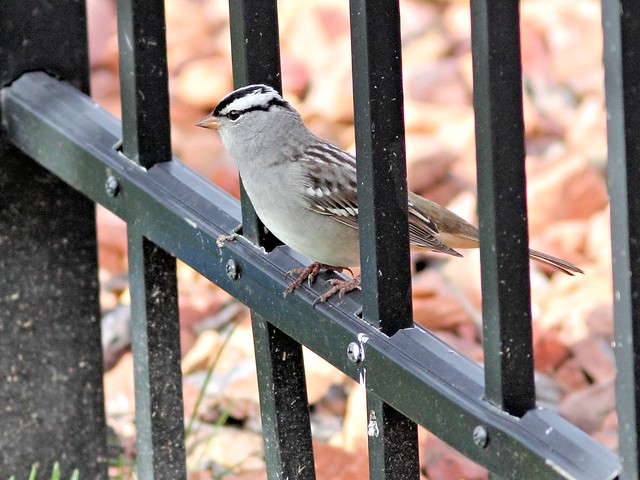
White-crowned Sparrow on our daughter's fence:
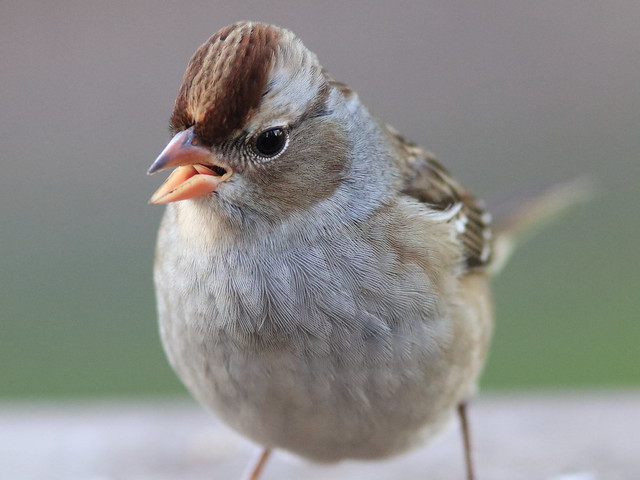
The immature White-crowned Sparrow has dull brown stripes on its crown before they are replaced by white:
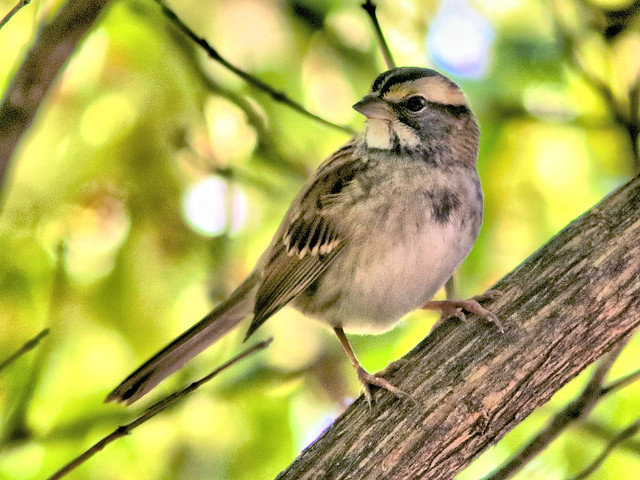
Somewhat similar but more compact is the White-throated Sparrow, another winter visitor to the lower forty-eight:
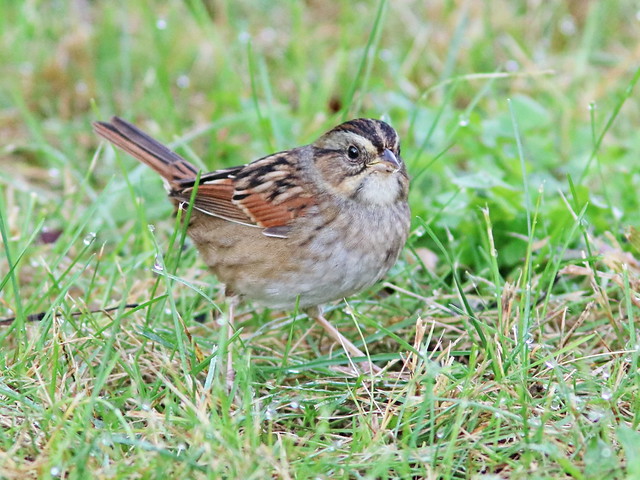
The Swamp Sparrow also has a white throat but its back is rufous and its head and breast are grayish. It breeds in wetlands of Canada and the north central and northeast portions of the US, migrating into the southeastern states and Mexico. We often see them in south Florida during winter:
I could go on, but my archives include over 1600 photos of most of the 37-40 species of sparrows (and related towhees and juncos) which I have seen. Here is a scattering of favorite sightings.
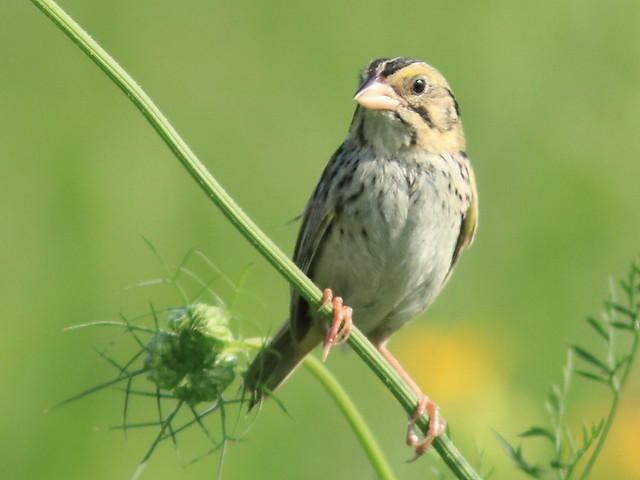
Henslow's Sparrow is threatened by loss of habitat. It is a tiny reclusive and quite rare breeder at Nelson Lake:
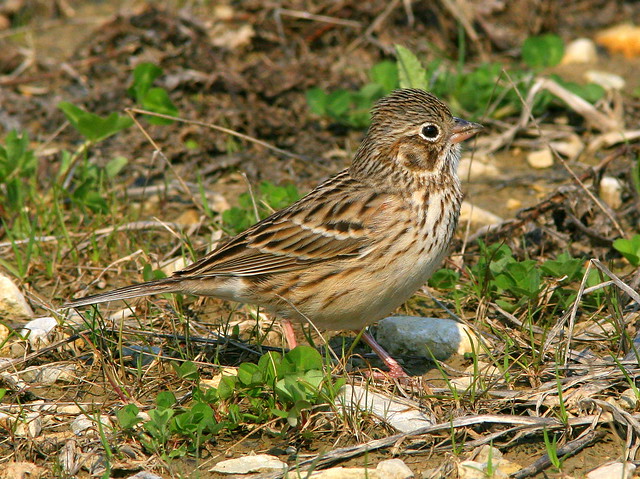
Vesper Sparrow, known for its beautiful evening song. One sang on the roof of our Illinois condo until the entire surrounding area was developed:
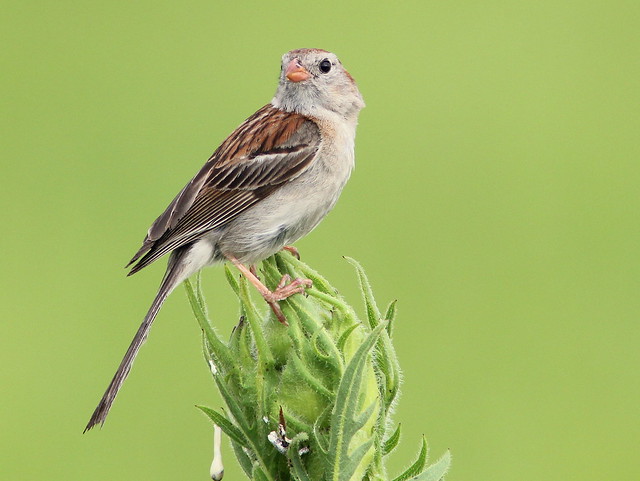
Field Sparrow, a persistent singer on the open prairie and wooded edges. Its pink bill and clear breast are distinctive:
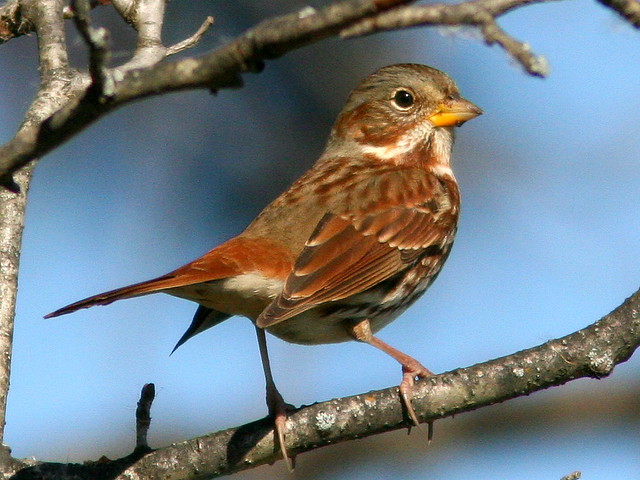
Fox Sparrow, quite a large sparrow, which breeds in the northwestern US and into northern Canada, is a common winter visitor to the woodlands of NE Illinois:
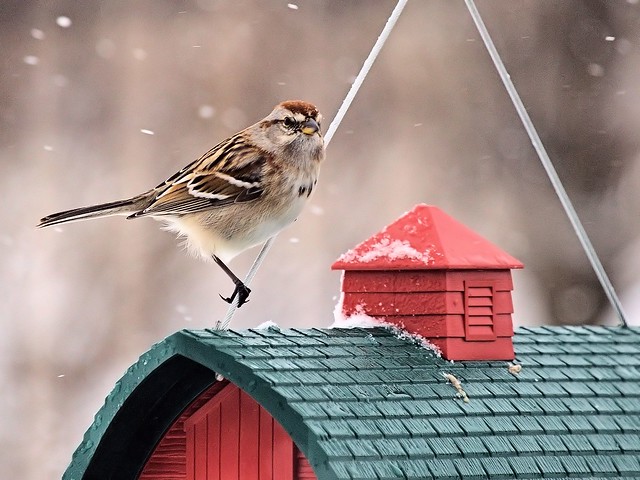
American Tree Sparrow, another visitor from the north, at our daughter's feeder:
Grasshopper Sparrow, fairly common breeder near our Illinois home, which even visited our south Florida neighborhood one winter (Illinois, July 24, 2017):

Grasshopper Sparrow (SE Florida, February 1, 2011):

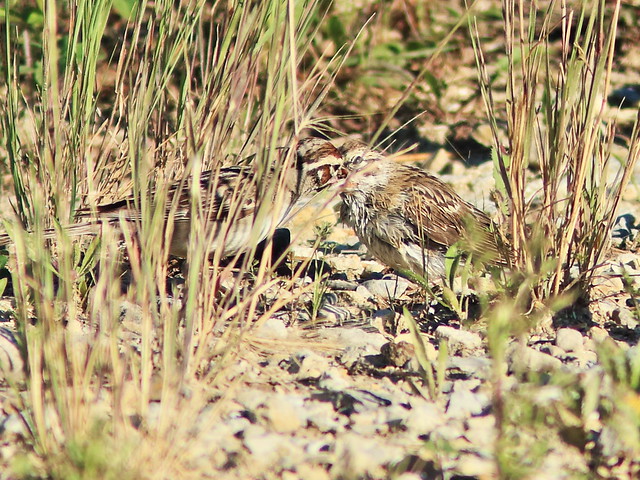
Finally, a rare find in a vacant lot near our home were 2 or 3 pairs of Lark Sparrows, at least one of which raised a family. They persisted from mid-May through late July, 2017. There were very few historic records of them breeding in our county:

Lark Sparrow feeding fledgling (July 2, 2017):
When you read this I should be nearing the conclusion of several weeks of travel between Florida, Illinois, Wisconsin, the Texas Panhandle and the Gulf Coast off Corpus Christi, Texas. Therefore I prepared this post in advance. This has limited my computer face time and I have had to depend upon my iPhone. I will try to catch up upon my return home to Florida before going back to Illinois.
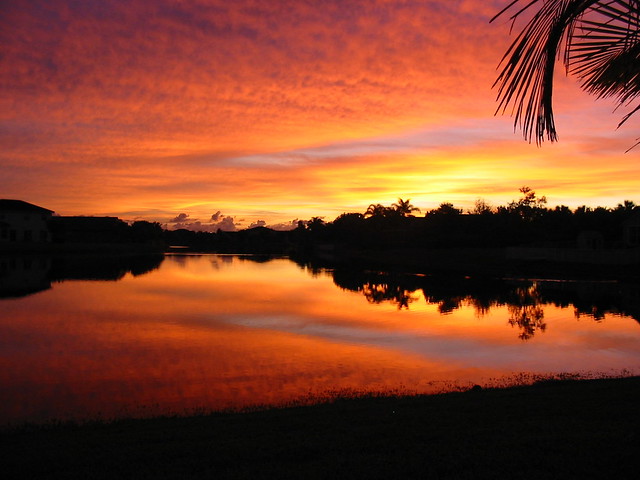
Here is a view of sunrise from our south Florida back patio to satisfy my urge to publish some nice reflections:
= = = = = = = = = = = = = = =
Linking to Misty's CAMERA CRITTERS,
Linking to Eileen's SATURDAY'S CRITTERS,
Linking to FENCES AROUND THE WORLD by Gosia
Linking to SKYWATCH FRIDAY by Yogi, Sylvia and Sandy
Linking to WEEKEND REFLECTIONS by James
Linking to BirdD'Pot by Anni
Linking to Wild Bird Wednesday by Stewart
Linking to Wordless Wednesday (on Tuesday) by NC Sue
Linking to ALL SEASONS by Jesh
This post is about birds seen in our dooryards this year, both in Florida as well as in our daughter's yard in northeastern Illinois.
In early May, during our stay in Illinois, I tended to a slow-cooking roast in the barbeque on the back deck of our daughter's home. Since we lost all the undeveloped land near our condo, I relished the opportunity to just sit and enjoy their bird feeders. I set a goal of seeing 20 species during the hour or so, and actually counted 21 (including a couple of flyovers).
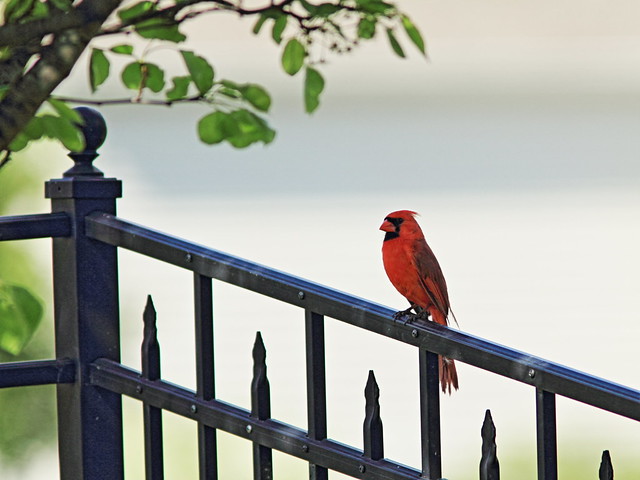
A Cardinal stopped at the feeder and then perched on the back fence...

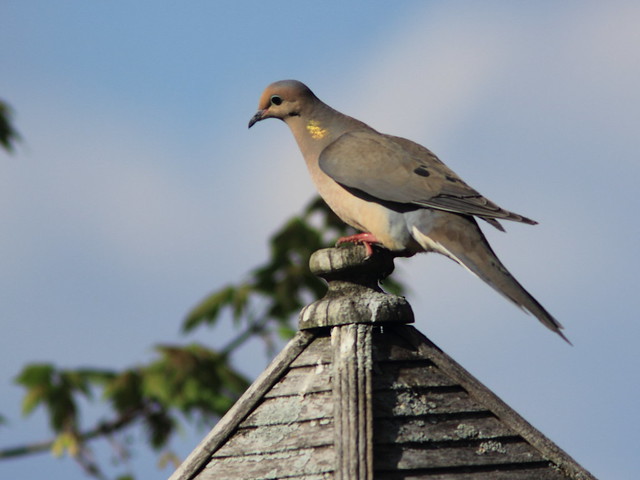
...as did a Mourning Dove:

The dove rested atop the feeder:
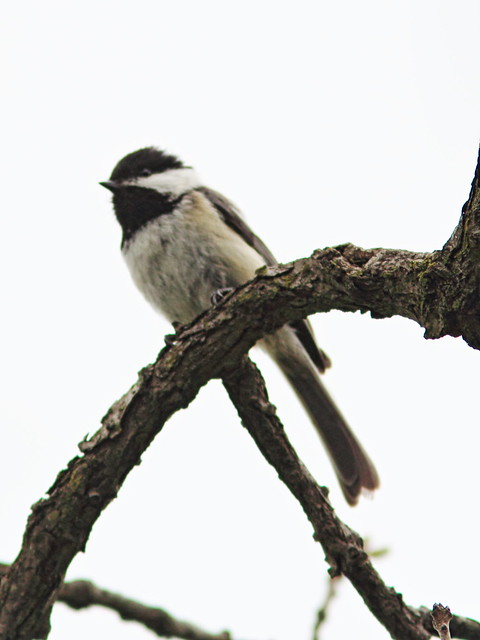
Black-capped Chickadees picked up seeds one at a time and ate them up in the trees:
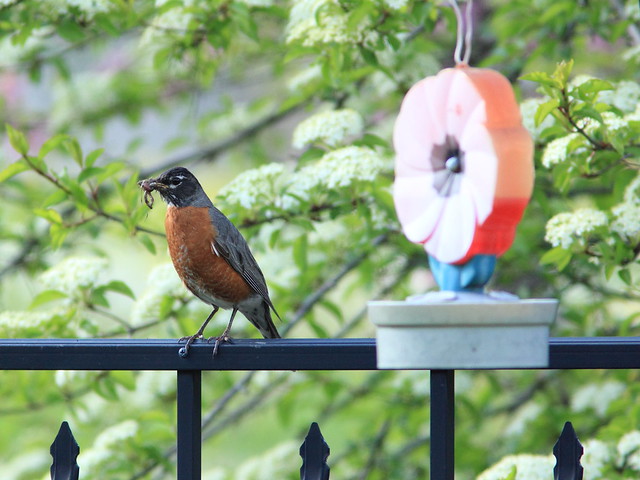
An American Robin caught a worm for its newly hatched chicks:
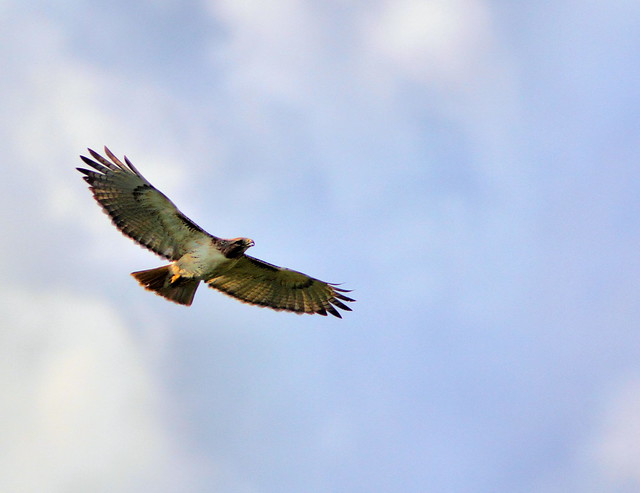
A Red-tailed hawk flew over, one of the "bonus birds:"
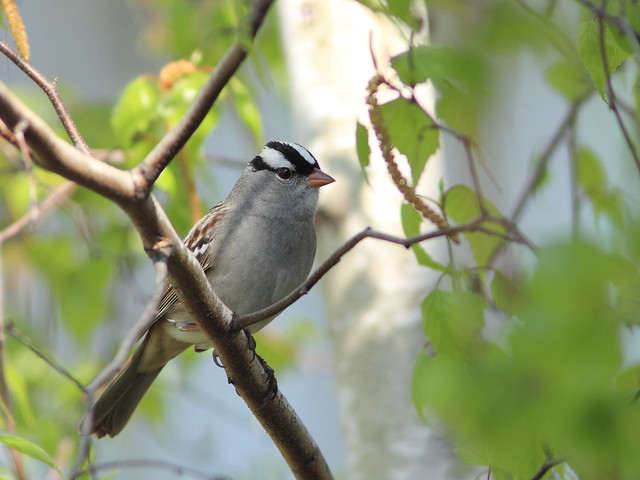
White-crowned Sparrows were abundant:
A Chipping Sparrow peered shyly from the other side of a feeder...

...but later gave me an open shot:

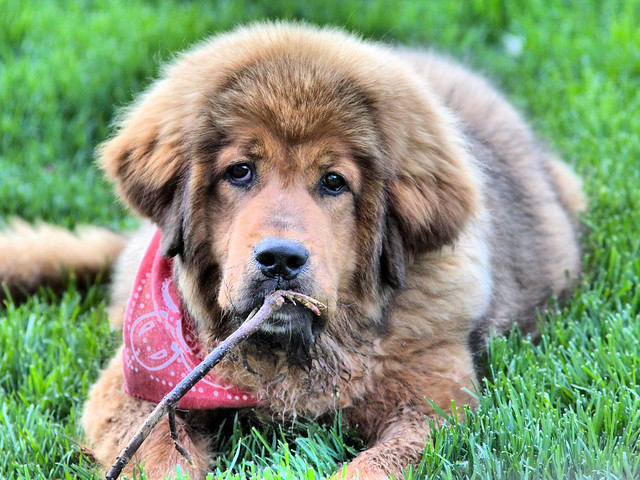
Siboney, their 5 1/2 month old Tibetan Mastiff, already weighed 50 pounds. He chewed on a stick and watched the birds with me:
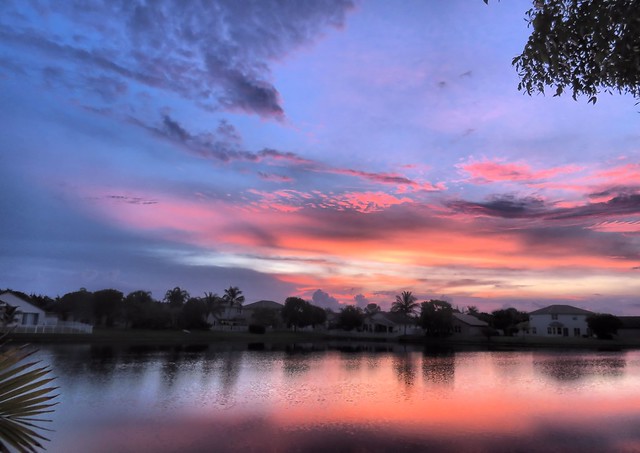
A colorful sunrise greeted us upon our return to Florida in mid-May:
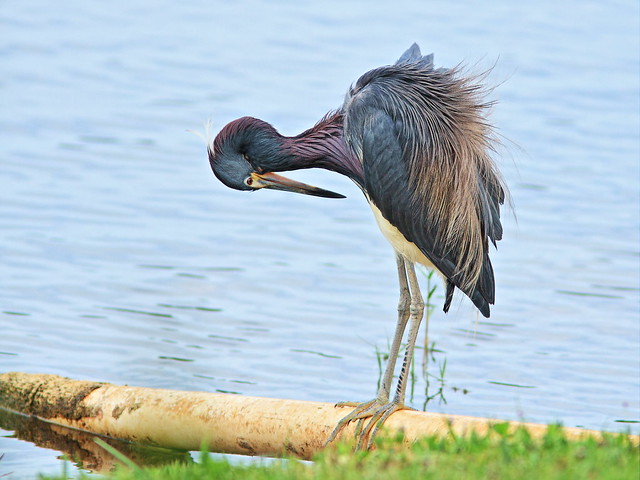
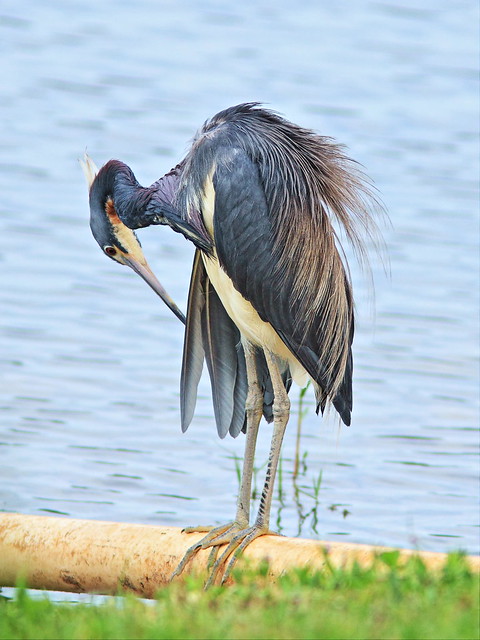
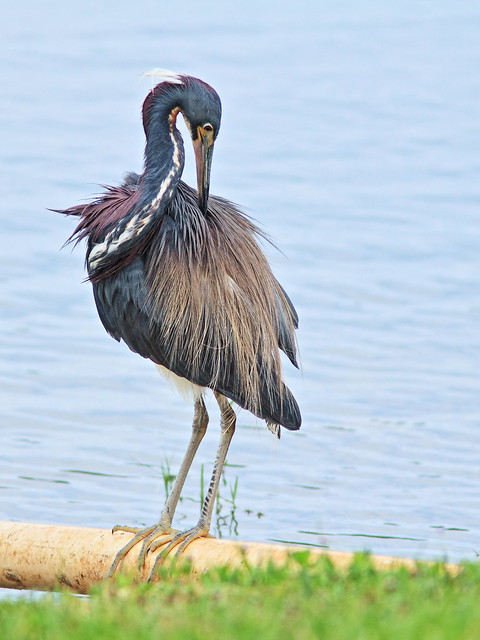
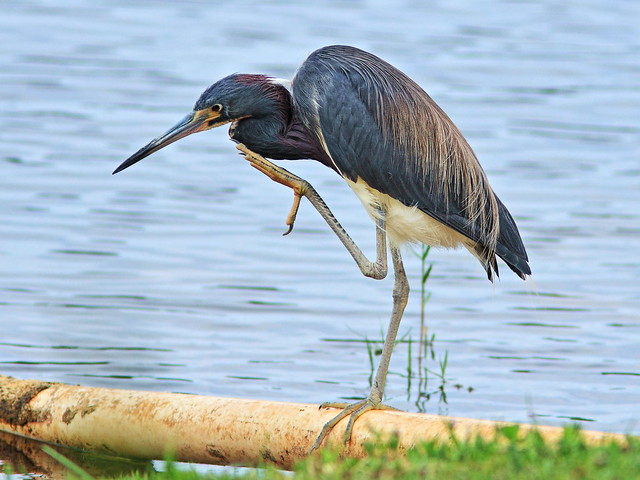
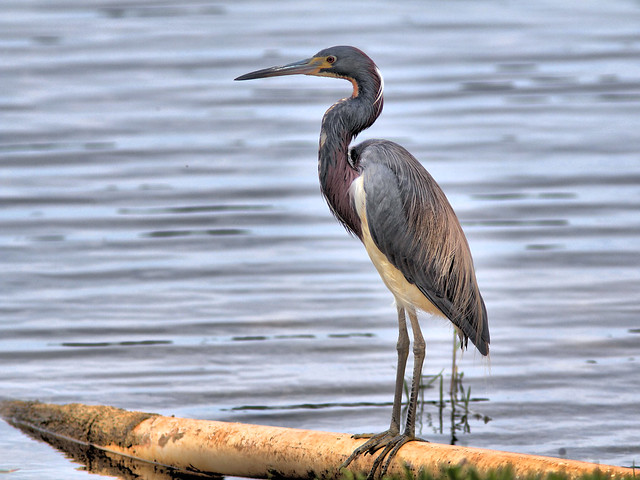
Shortly after returning home to Florida I saw a Tricolored Heron which was busy tending to its feathers. I crept out onto the patio and obtained a series of photos as it preened at the lake's edge. Click on the photos for larger images which show its plumage in greater detail:
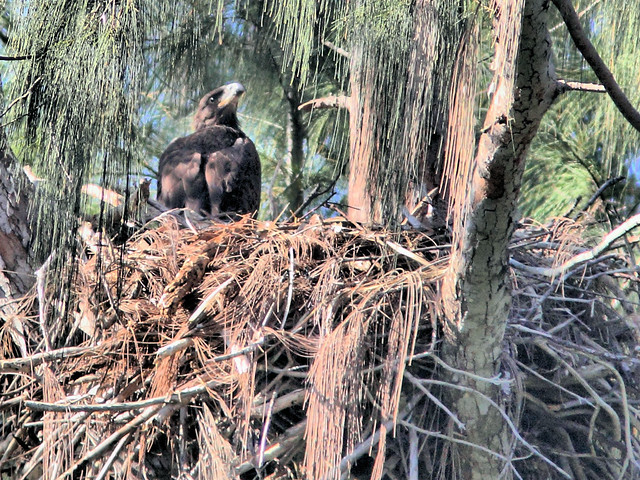
The younger of the two eaglets in the local Bald Eagle nest indeed perished, either from injuries in fights with its older sibling or because it could not compete with her for food. The first-hatched was about 65 days old when I took this photo on May 20, 2016. It would be expected to fledge within a week or two:
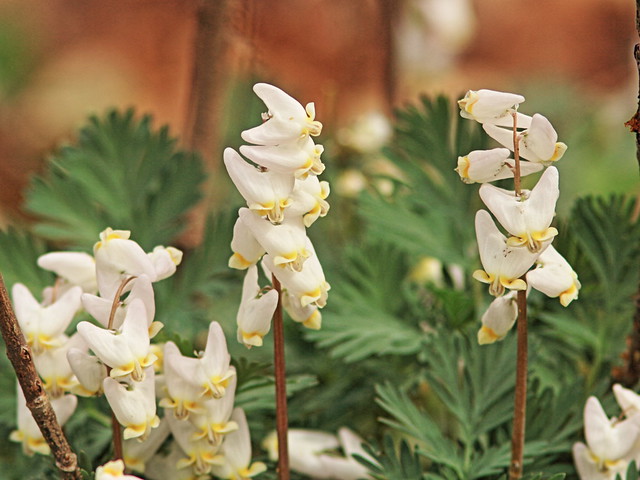
For this week's wildflower, here are Dicentra cucullaria (Dutchman's breeches) growing at Bliss Woods, Kane County, Illinois:
Thanks so much for visiting! I will be on the road for the next couple of weeks and often away from WiFi and even out of cellular range. Mary Lou and I are celebrating our 56th Wedding Anniversary! Tending to my blog from a cellphone does not work out very well, so I have put my posts on "autopilot" in the interim, but promise to visit you as soon as possible when I get back to my PC.
________________________________________________
= = = = = = = = = = = = = = =
Linking to Misty's CAMERA CRITTERS,
Linking to Eileen's SATURDAY'S CRITTERS,
Linking to GOOD FENCES by Tex (Theresa).
Linking to SKYWATCH FRIDAY by Yogi, Sylvia and Sandy
Linking to WEEKEND REFLECTIONS by James
Linking to BirdD'Pot by Anni
Linking to Wild Bird Wednesday by Stewart
Linking to Today's Flowers Friday by Denise
Linking to Wordless Wednesday (on Tuesday) by NC Sue
________________________________________________
Please visit the links to all these memes to see some excellent photos on display
________________________________________________
During the eight years we have occupied our second home in NE Illinois, urbanization has finally caught up with us.Today I am sharing some bittersweet memories of the humble dooryard prairie that once surrounded us, now extinct.
This is the view from the front steps of our NE Illinois condominium on March 20, 2010. The slowing economy had stalled completion of the 144 town-home living units that were to occupy the entirety of the three block area around our building. My comments at the time are italicized:
Snow on the first day of Spring! The Horned Larks have just started nesting in this field.
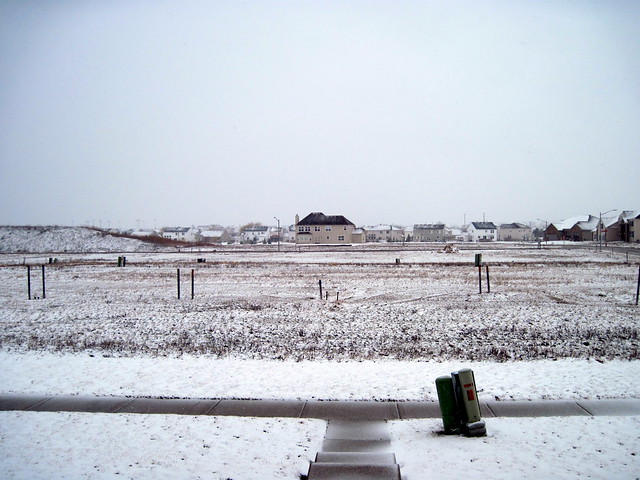
August 20, 2010
Development has been stalled due to the poor housing market, allowing the disturbed land around our condo to return to grass. (The patch of taller grass and shrubs conceals the small pond which contained water much of the year)
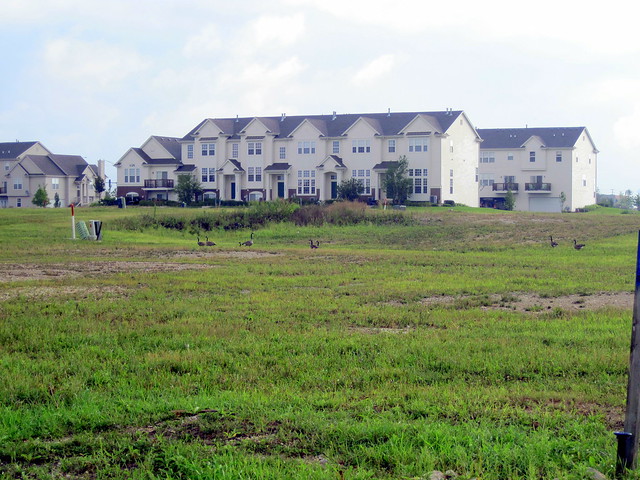
May 8, 2011:
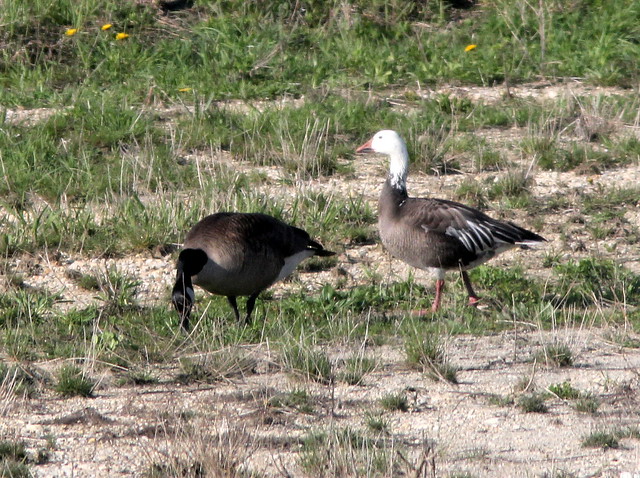
Taken through window pane. I happened to look out the upstairs bedroom window of our condo in North Aurora (Illinois) and saw the white head of a "Blue" morph Snow Goose among the 9 Canada Geese that were foraging in and around a fluddle in the undeveloped lot in front of our home. The Snow Goose tended to associate with one of the Canada geese, and the two spent much of their time apart from the rest of the flock... The far northern edge of the breeding range of Canada geese overlaps with that of the Snow Goose. The latter species is known for "dumping" its eggs in neighboring nests. Is it possible that this Canada Goose raised this particular bird?
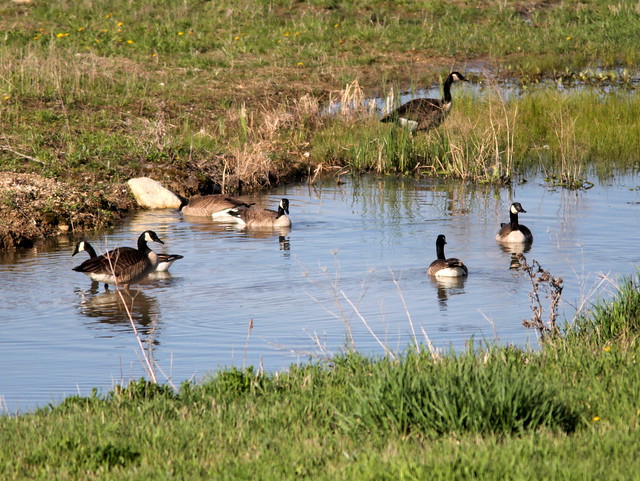
That same day, Canada Geese swam in the small pond in the open space:
May 22, 2011:
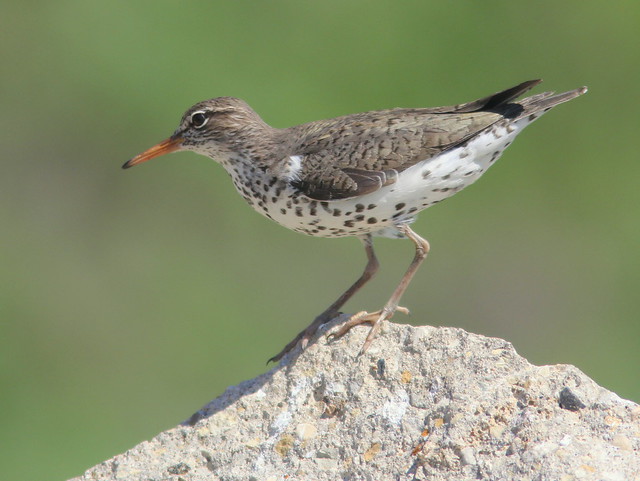
All this week Spotted Sandpipers have been singing in the vacant lot in front of our Illinois condo. Yesterday I saw one atop a pile of rubble near the edge of our street, so I stopped there this morning, using the car as a blind, hoping to photograph them from only about 20 feet... After about 10 minutes a Spotted Sandpiper began moving between rock piles and suddenly was right in front of me.
August 3, 2011:
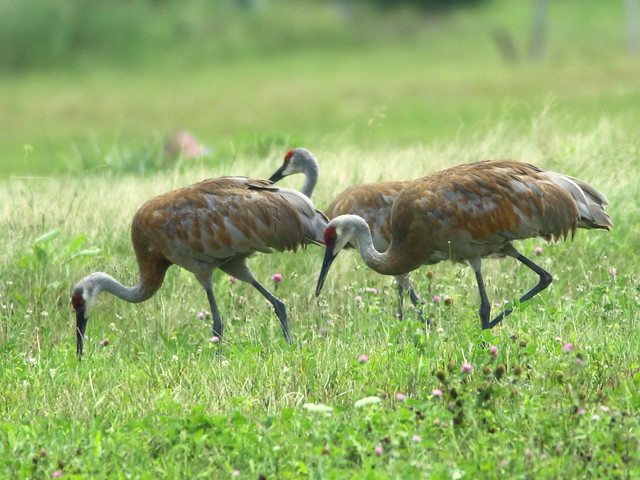
This afternoon, the three Sandhill Cranes that we saw here yesterday returned to the disturbed block surrounding our Illinois condo. Since the builder went bankrupt, this area has gone back to grass and weeds. There is one fairly constant pond in the center, and other "fluddles" that appear and may persist for several weeks when it rains.
August 21, 2011:
A new yard bird, I saw this Solitary Sandpiper in the vacant lots in front of our Illinois condo this morning, just after driving out on the way to Nelson Lake. It was in a puddle caused by the heavy rainstorm yesterday. Returning home, we found these two of the same species in another puddle right outside our front door...

June 29, 2012:
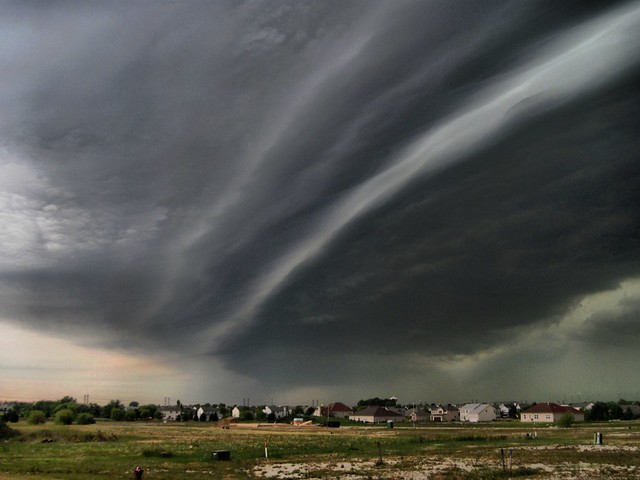
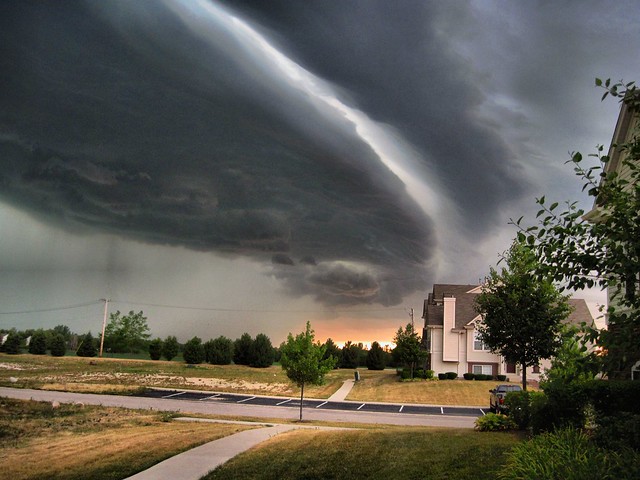
Views of the shelf clouds that preceded the severe thunderstorms on June 29, 2012, North Aurora, Illinois. The spaces between the cloud layers created white ribbons that stretched 180 degrees across the sky from north to south. Taken from the front door of our condo. (Sadly, we are now hemmed in by 2-story buildings and no longer have a view of the horizon)
This is the opposite (north) end of that same cloud, which extended between both horizons:
April 21, 2013:
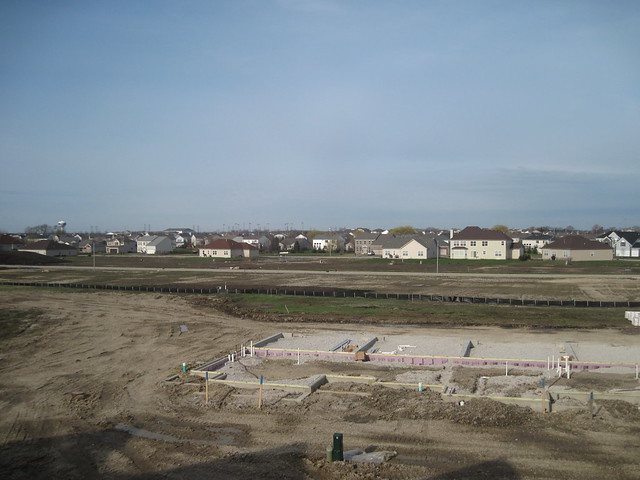
View from our front door steps. Change is inevitable, from the destruction of my quiet "Fake Hammock," (in Florida, as it appeared in 2011 and as seen in 2013) now in full sunlight overgrown with grasses, to the clearing of the prairie in front of our Illinois condo...
May 16, 2013:
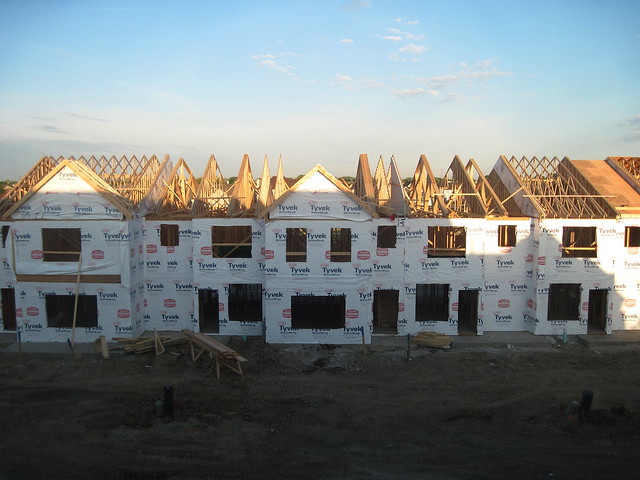
This unit, one of 29 new buildings under construction, occupies the open space in front of our condo (taken from our upstairs bedroom window).
September 13, 2015:
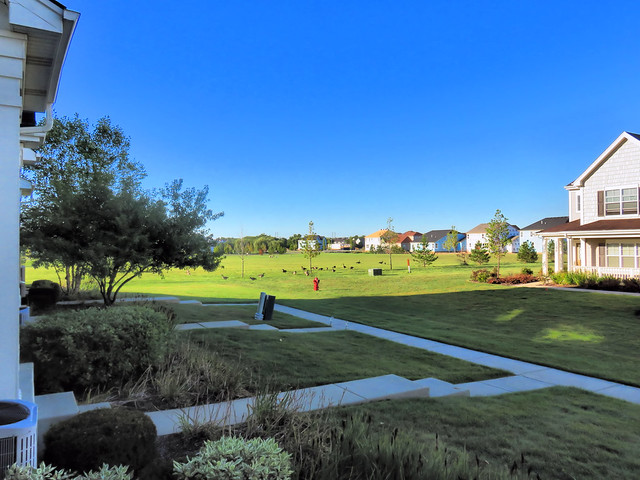
The latest view from our front steps. Construction of the entire 3 city block development has been completed. Although the prairie which surrounded our condo has been completely developed and landscaped, a flock of Canada Geese and three Sandhill Cranes (barely visible in center of this photo at the distant end of the groomed "park" area) still find reason to rest and forage here.
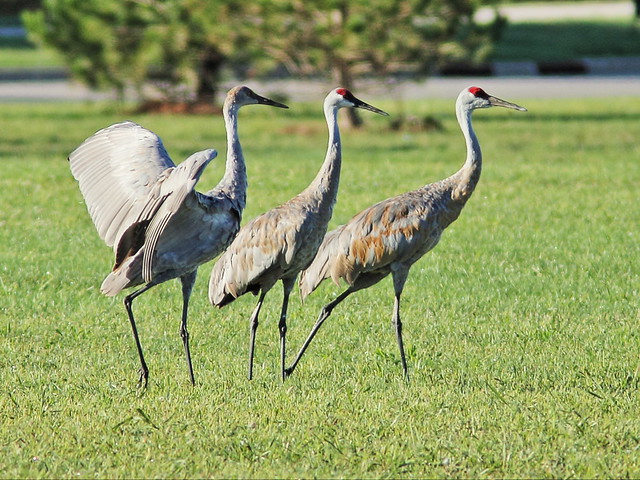
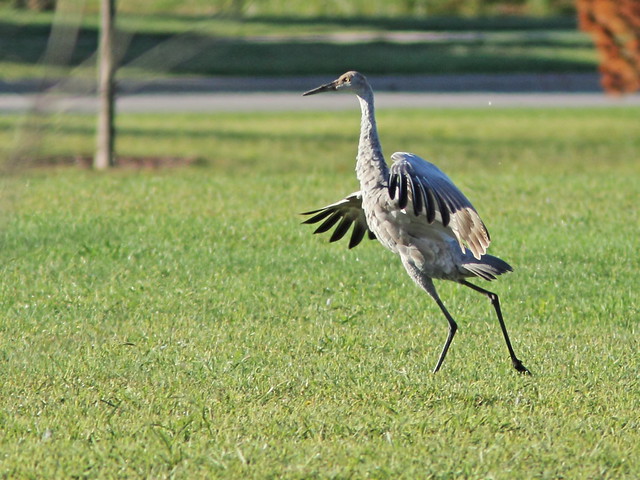
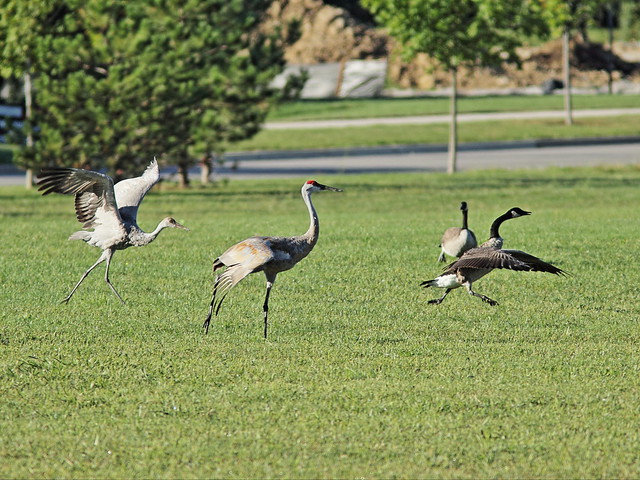
My telephoto lens provides a closer look at those Sandhill Cranes, a family unit, which will normally remain together through the fall migration. They usually lay two eggs, but in most cases only one (or neither) hatchling survives. The adults have bright red foreheads, lacking in the juvenile bird ("colt") to the left in this photo. The adults' plumage is stained brown by the minerals in the mud they use in preening, while that of the colt is mostly clean gray. It has been playfully chasing any Canada Goose which ventures close by.
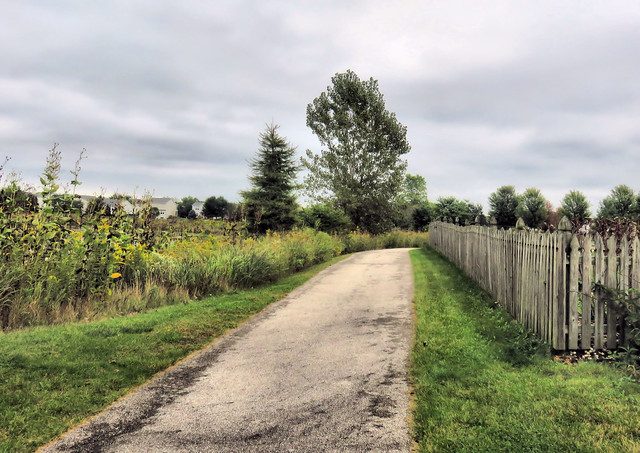
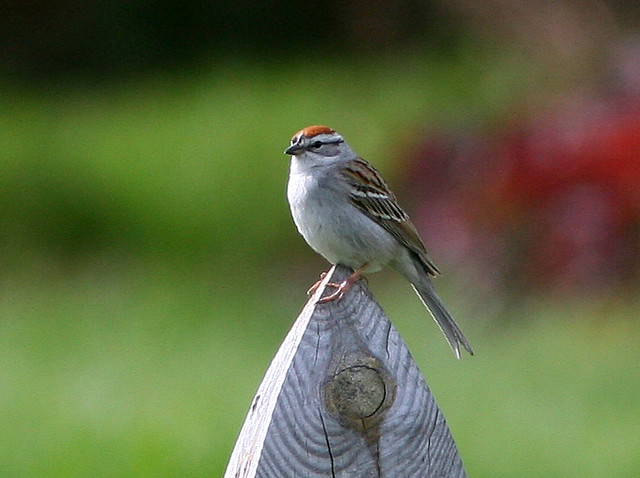
Presently there is a patch of relatively undisturbed open space only a few blocks away, at Jones Meadow Park. Here is a fence along the boundary of this small park, showing signs of age and weathering. It has provided perches for some memorable avian subjects,...
...among them, this Chipping Sparrow, when the posts were new, back in May of 2009:
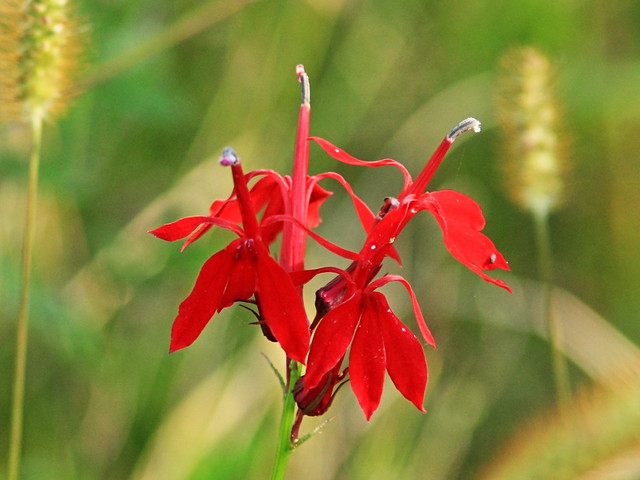
Brilliant red Cardinal Flowers, such as these next to a pond in nearby Lippold Park, are indeed shaped like birds. Their stamens look like heads with beaks, and each has two narrow wing-like sepals and a three-lobed sepal serves as a tail. One of the few truly bright red wildflowers, they add a splash of color to the fall landscape in wet areas, and attract migrating hummingbirds. To my eye, these flowers appear to be dancing gracefully in a circle:
= = = = = = = = = = = = = = =
Linking to Misty's CAMERA CRITTERS,
Linking to Eileen's SATURDAY'S CRITTERS,
Linking to GOOD FENCES by Tex (Theresa).
Linking to SKYWATCH FRIDAY by Yogi, Sylvia and Sandy
Linking to WEEKEND REFLECTIONS by James
Linking to BirdD'Pot by Anni
Linking to Wild Bird Wednesday by Stewart
Linking to I Heart Macro by Laura
________________________________________________
Please visit the links to all these memes to see some excellent photos on display
________________________________________________