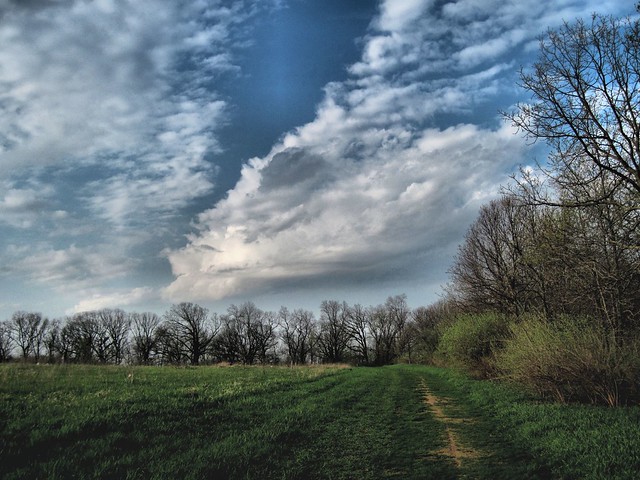
A dramatic sky over the southwest prairie at Nelson Lake preserve:
True, most sparrows are unobtrusive LBJ's (Little Brown Jobs). They can sometimes be difficult to identify or even find as they move around near the ground or perch on a distant shrub. Yet they are an interesting lot and, on closer inspection, quite varied and beautiful.
The most common sparrows of my childhood were called "Chippies" by my grandmother, who fed them bread scraps in the back yard we shared. Only after I found them pictured in my first bird book did I realize their proper name was English Sparrow, and that it was introduced from Europe. Later I learned that they were the only "true sparrows" I was ever likely to see in the US.
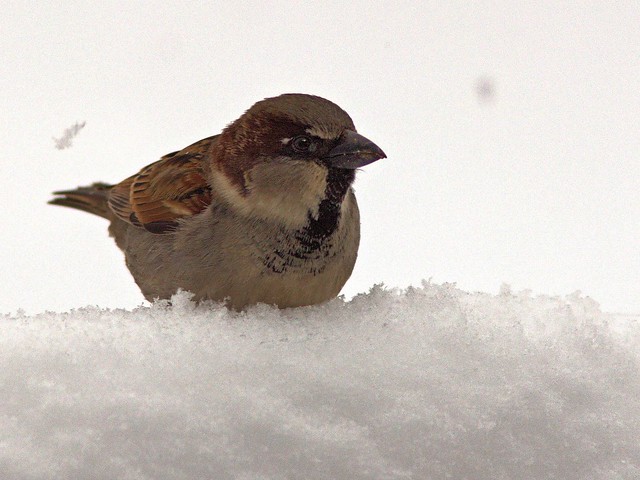
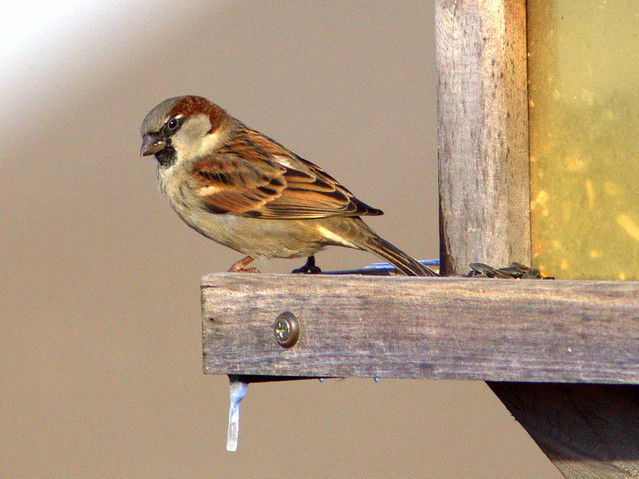
Renamed "House Sparrow," they populate most of the urban areas of North America including Mexico but not the high mountains or northern Canada. Although they are present in shopping centers less than a mile from our south Florida home, I have never seen one in our back yard or the wetlands near our home.This male is enjoying a meal in our daughter's feeder in Batavia:
Closely related to weaver finches, the Old World "True" Sparrows (Family Passeridae) deserved naming rights before the LBJ's of the USA were ever discovered. I have yet to see a European Tree Sparrow, the other immigrant from this family, although it is quite common in St. Louis, Missouri and is also seen southwestern Illinois. The native sparrows in the Americas belong to a distinct family, Emberizidae, related to the Old World buntings.
Probably the best known representative of the American sparrow family is the Song Sparrow, which breeds all across the northern USA, up the Pacific Coast into southern Alaska and in much of the southern 2/3 of Canada. It migrates into all of the lower 48 States but does not reach southern Florida. It is appropriately named for its exhuberant melodic song (Nelson Lake, June 5, 2016) :

The Savannah Sparrow resembles it but is smaller, with a proportionately shorter tail. It may have yellow "eyebrows" which vary in intensity among its several subspecies:

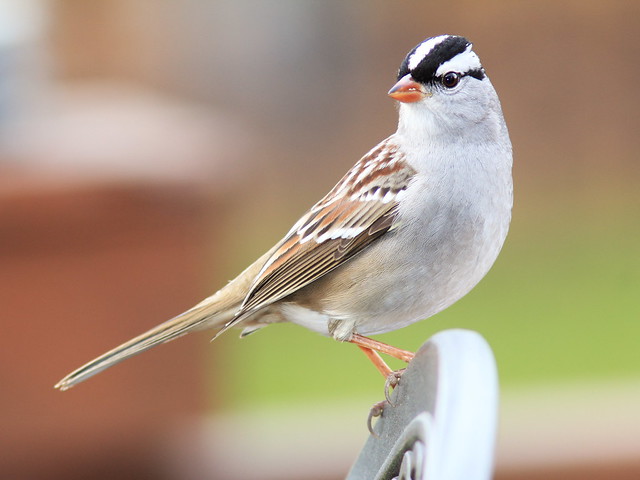
During the winter, White-crowned Sparrows invade the lower half of the 48 States after breeding in northern Canada and the Rocky Mountains. They are large and quite handsome birds. This one was in our daughter's back yard:
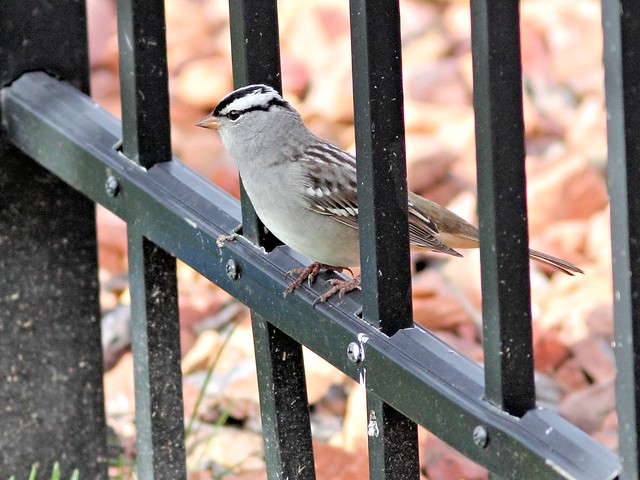
White-crowned Sparrow on our daughter's fence:
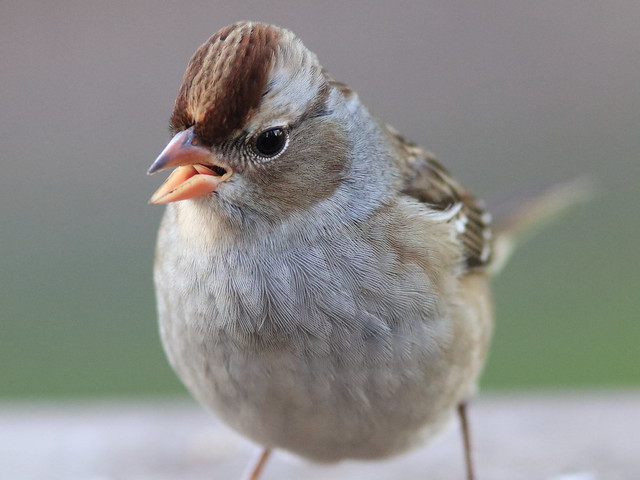
The immature White-crowned Sparrow has dull brown stripes on its crown before they are replaced by white:
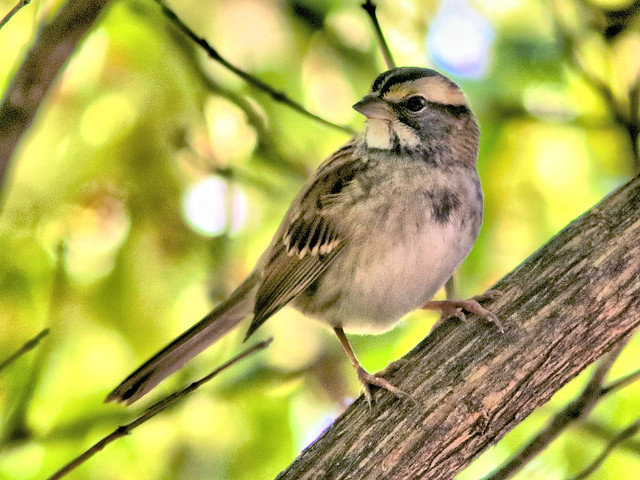
Somewhat similar but more compact is the White-throated Sparrow, another winter visitor to the lower forty-eight:
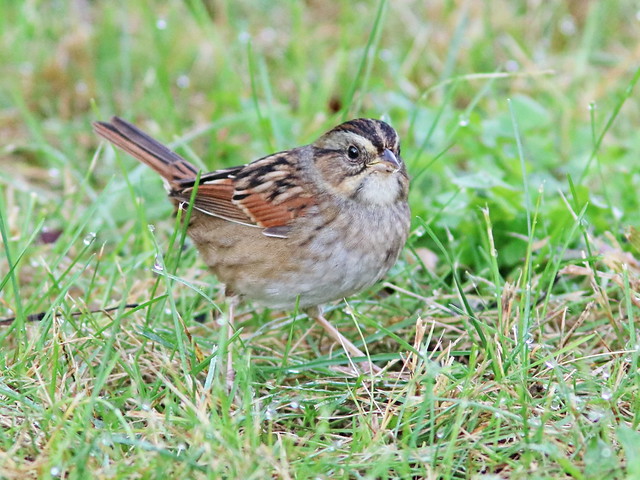
The Swamp Sparrow also has a white throat but its back is rufous and its head and breast are grayish. It breeds in wetlands of Canada and the north central and northeast portions of the US, migrating into the southeastern states and Mexico. We often see them in south Florida during winter:
I could go on, but my archives include over 1600 photos of most of the 37-40 species of sparrows (and related towhees and juncos) which I have seen. Here is a scattering of favorite sightings.
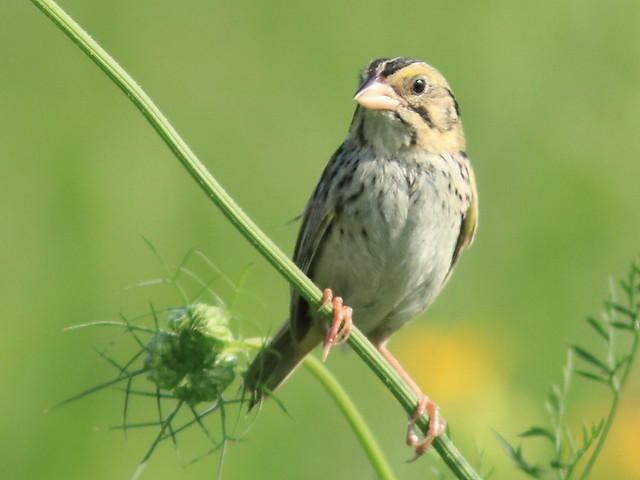
Henslow's Sparrow is threatened by loss of habitat. It is a tiny reclusive and quite rare breeder at Nelson Lake:
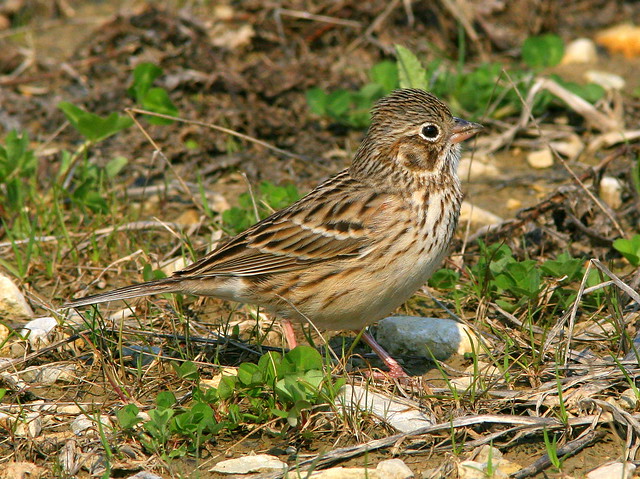
Vesper Sparrow, known for its beautiful evening song. One sang on the roof of our Illinois condo until the entire surrounding area was developed:
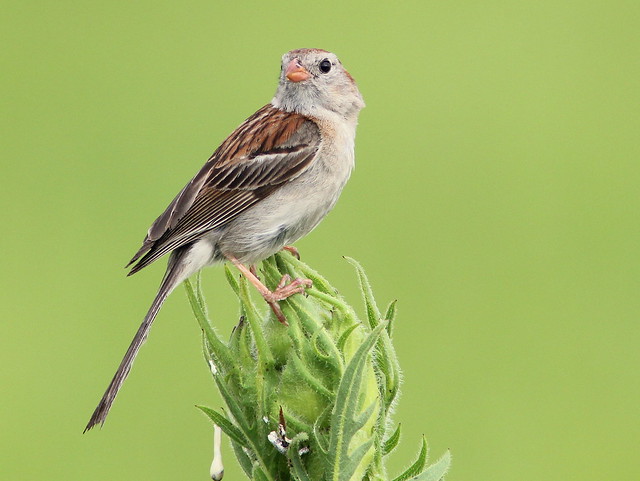
Field Sparrow, a persistent singer on the open prairie and wooded edges. Its pink bill and clear breast are distinctive:
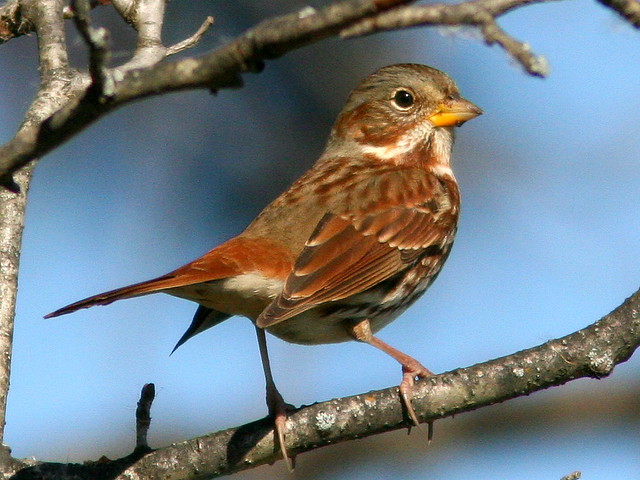
Fox Sparrow, quite a large sparrow, which breeds in the northwestern US and into northern Canada, is a common winter visitor to the woodlands of NE Illinois:
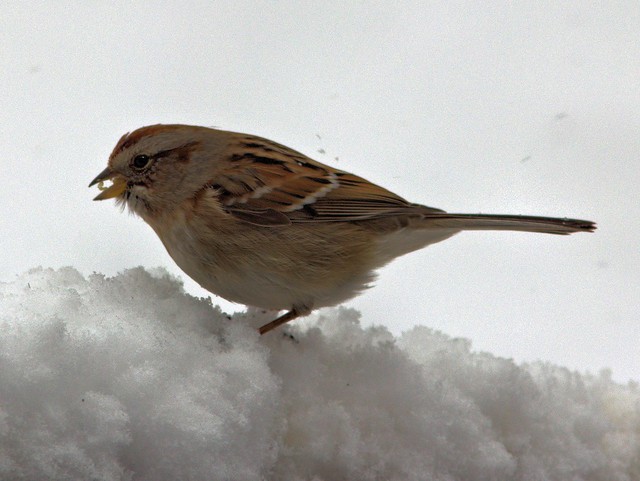
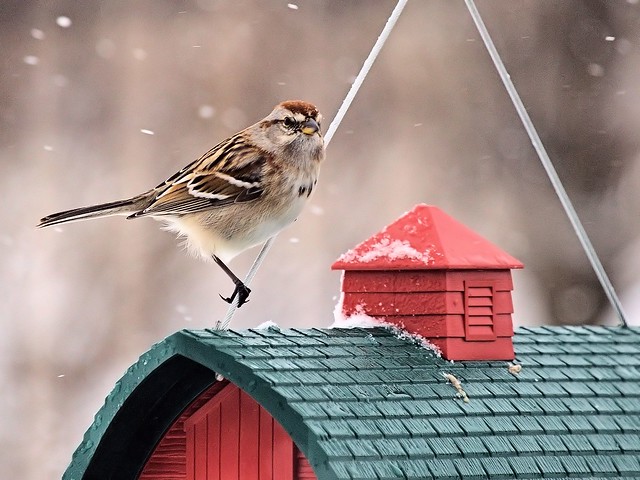
American Tree Sparrow, another visitor from the north, at our daughter's feeder:
Grasshopper Sparrow, fairly common breeder near our Illinois home, which even visited our south Florida neighborhood one winter (Illinois, July 24, 2017):

Grasshopper Sparrow (SE Florida, February 1, 2011):

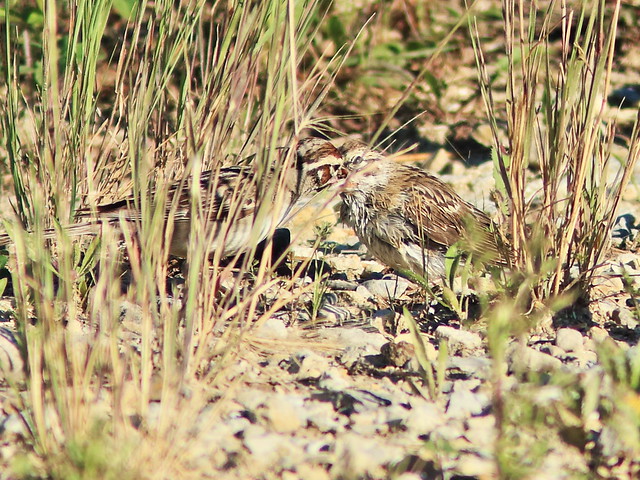
Finally, a rare find in a vacant lot near our home were 2 or 3 pairs of Lark Sparrows, at least one of which raised a family. They persisted from mid-May through late July, 2017. There were very few historic records of them breeding in our county:

Lark Sparrow feeding fledgling (July 2, 2017):
When you read this I should be nearing the conclusion of several weeks of travel between Florida, Illinois, Wisconsin, the Texas Panhandle and the Gulf Coast off Corpus Christi, Texas. Therefore I prepared this post in advance. This has limited my computer face time and I have had to depend upon my iPhone. I will try to catch up upon my return home to Florida before going back to Illinois.
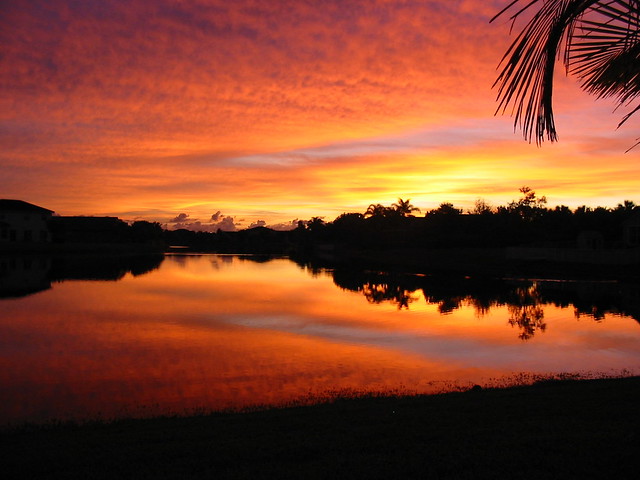
Here is a view of sunrise from our south Florida back patio to satisfy my urge to publish some nice reflections:
= = = = = = = = = = = = = = =
Linking to Misty's CAMERA CRITTERS,
Linking to Eileen's SATURDAY'S CRITTERS,
Linking to FENCES AROUND THE WORLD by Gosia
Linking to WEEKEND REFLECTIONS by James
Linking to BirdD'Pot by Anni
Linking to Wild Bird Wednesday by Stewart
Linking to Wordless Wednesday (on Tuesday) by NC Sue
Linking to ALL SEASONS by Jesh