This winter we are looking forward to a series of monthly nature walks at Chapel Trail Nature Preserve in neighboring Pembroke Pines.
Before Mary Lou and I moved from New Mexico to south Florida in 2004 we learned about the planned opening of this wetland preserve. During visits prior to our relocation we had visited the site, watched the construction of a boardwalk and anticipated its imminent debut.
Unfortunately, vandals set a fire which caused extensive damage and the area remained closed for repairs. A hurricane hit only a couple of years later and turned over almost half of the boardwalk structure, necessitating another closure. Since then we have made many visits and often found it to be hospitable to a nice variety of resident and migratory birds.
These are views of the boardwalk last November:
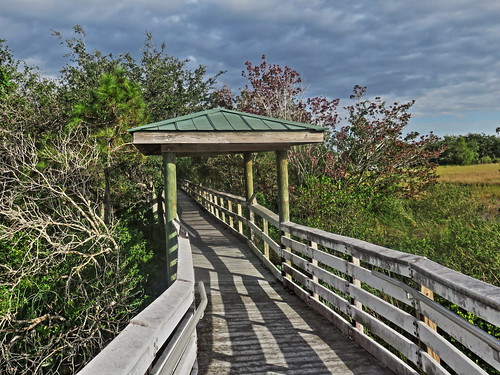
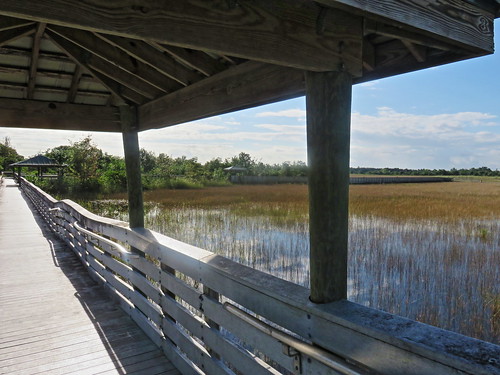
To anticipate what we might see this year, a few of last year's November sightings from the boardwalk vantage points follow.
Blue-gray Gnatcatcher:

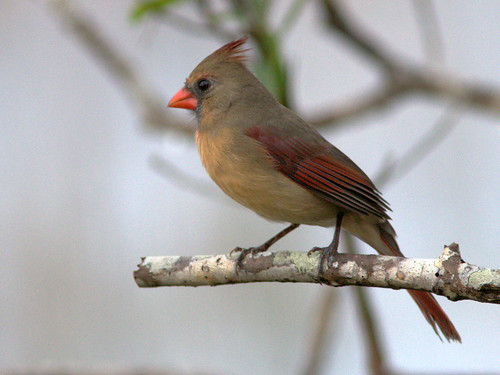
Female Northern Cardinal:
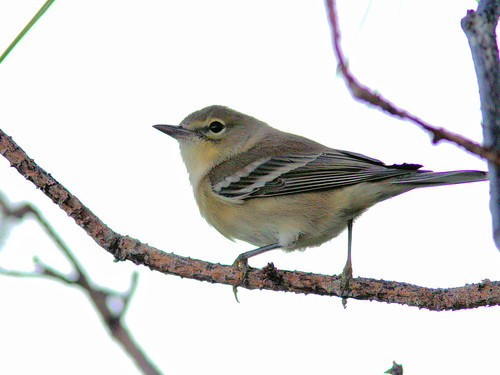
Pine Warbler:
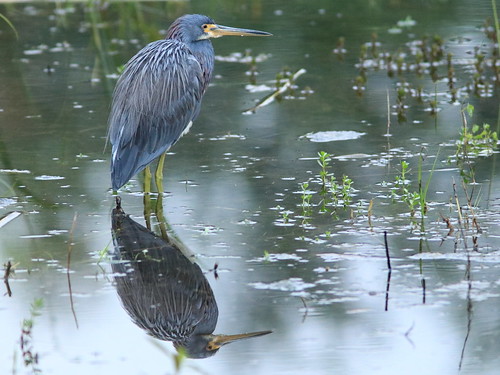
Tricolored Heron:
From earlier years--
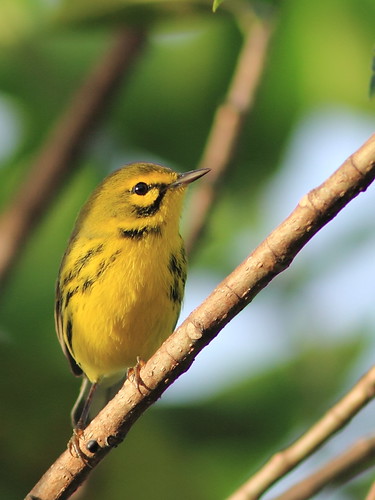
Prairie Warbler:
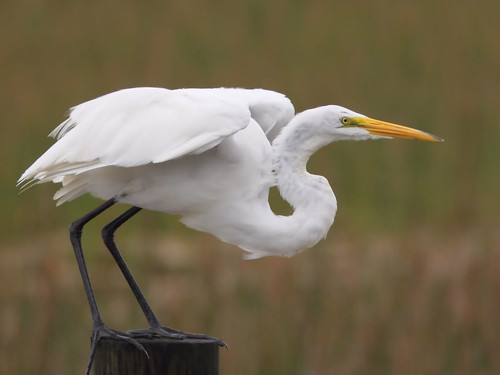
Great Egret:
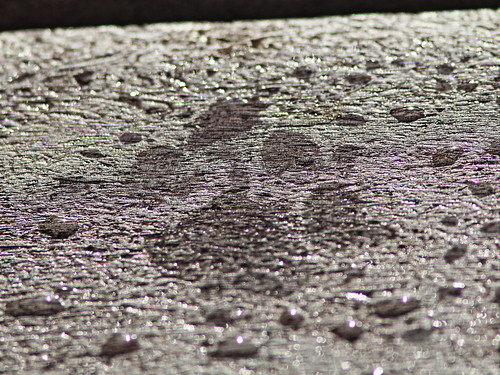
A Bobcat track in the dew on the boardwalk (Mary Lou saw it, but this is all I have to remember it by):
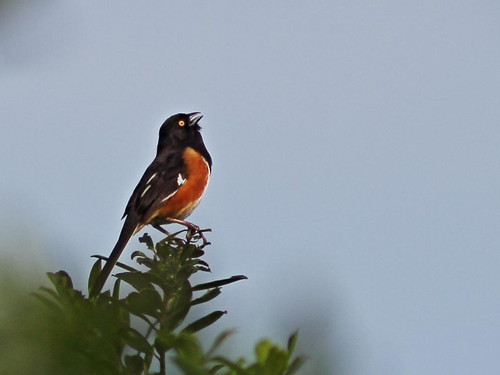
An Eastern Towhee with yellow eyes, a Florida specialty as this species has red eyes in its northern range:
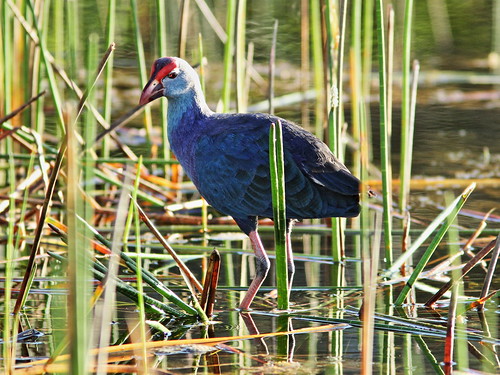
Gray-headed (formerly called "Purple") Swamphen:
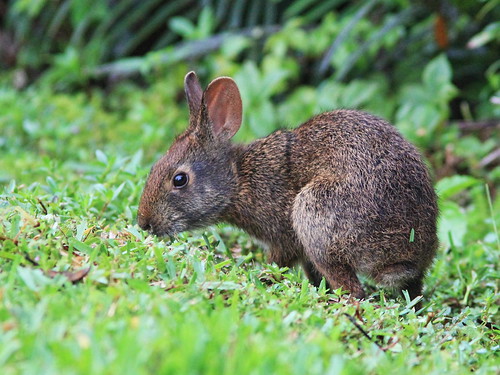
A young Marsh Rabbit:
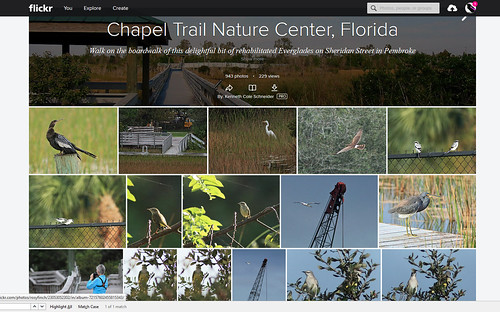
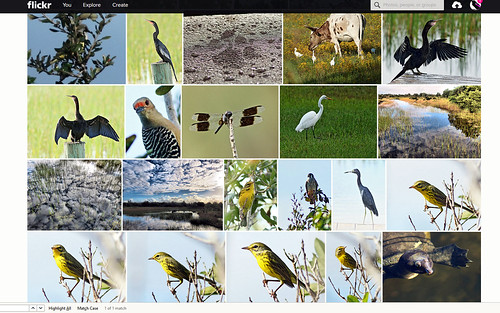
These are the first two pages of my Chapel Trail photo album from back in 2015. I now have processed over 1000 photos from this location:
Although it is cut off from the Everglades and fed by rainwater and drainage canals which can cause unusual fluctuation of its water levels, the hydrology of this wetlands roughly mirrors that of the River of Grass-- flooded during spring and summer and gradually drying out as winter advances.
This year, an extremely wet month of May and the need to reduce the water level in Lake Okeechobee in preparation for the hurricane season placed a burden on the canal system and water backed up into the wetlands. This dispersed aquatic prey, and resulted in a lower concentration of herons and egrets throughout the summer. Water conditions should be more favorable this November.
A prominent plant in the flooded areas is Spikerush, which favors longer periods of flooding (hydroperiod), quite the opposite of Sawgrass which declines if its roots remain submerged over several seasons. At Chapel Trail, the Sawgress flourishes on the higher ground, but areas of Spikerush provide habitat for microorganisms and invertebrates which attract fish and wading birds. Swamphens and other wildlife eat their nourishing seeds, shoots, roots and tubers.
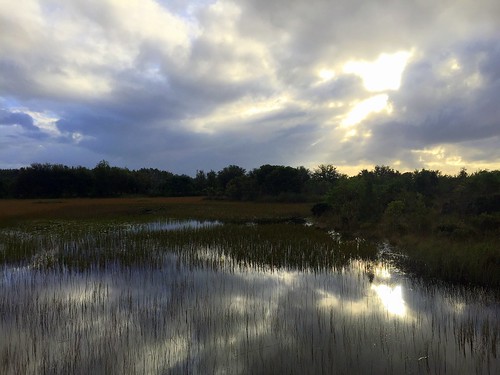
Spikerush in a flooded prairie on a rainy morning in November, 2017:
We normally visit Chapel Trail Nature Preserve in order to observe wildlife FROM its 1/4 mile boardwalk. I started thinking about what we might have seen ON rather than FROM this structure, so I searched my photo archives and turned up quite a few creatures!
Click here to see critters ON (not FROM) the boardwalk at Chapel Trail
= = = = = = = = = = = = = = =
Linking to Misty's CAMERA CRITTERS,
Linking to Eileen's SATURDAY'S CRITTERS,
Linking to SKYWATCH FRIDAY by Yogi, Sylvia and Sandy
Linking to WEEKEND REFLECTIONS by James
Linking to BirdD'Pot by Anni
Linking to Our World Tuesday by Lady Fi
Linking to Wild Bird Wednesday by Stewart
Linking to Wordless Wednesday (on Tuesday) by NC Sue
Linking to ALL SEASONS by Jesh
Linking to Fences Around the World by Gosia
________________________________________________
Please visit the links to all these memes to see some excellent photos on display
________________________________________________
To some, our early morning walks in the local "Wounded Wetlands" might seem to be a dreadful waste of time. We usually start out on the three mile route about a half hour before sunrise. Mary Lou and I walk together briskly the first half mile. It is too dark to see any birds, but I usually can identify a handful by their calls and songs-- mockingbirds, cardinals, catbirds, jays and doves.
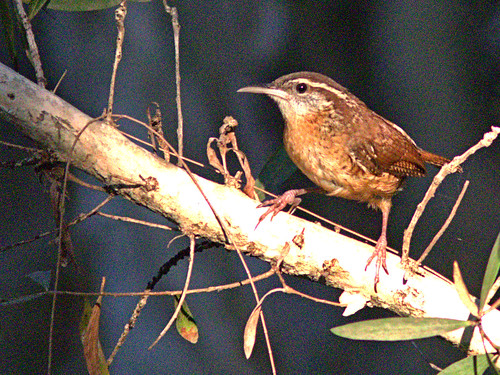
The sky lightens up and I fall behind as Mary Lou continues her pace. I may hear the song of a Carolina Wren...
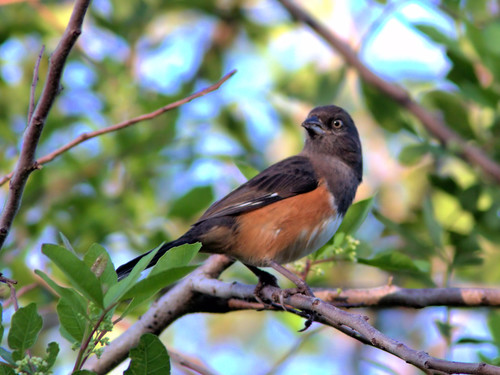
...or the calls of an Eastern Towhee:
However, on the morning of January 31, I covered the first half mile in quite a hurry, not wanting to repeat my experience only 2 moons ago on December 3, when I tarried and nearly missed the setting of the SuperMoon.
The night before, from our back yard, I had watched it rise over the lake:
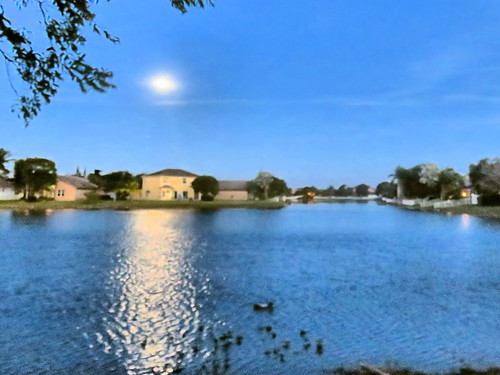
The sky was dark but crystal clear. It was a perfect morning to see the third consecutive Super Moon and the second to appear in January-- a Blue Super Moon! But there is more-- it will also be in partial eclipse and its penumbra will turn red as it approaches the horizon-- a Blood Moon.
At 6:38 AM the deepening penumbra mostly involves the upper left edge of the full Moon, and exhibits no color:
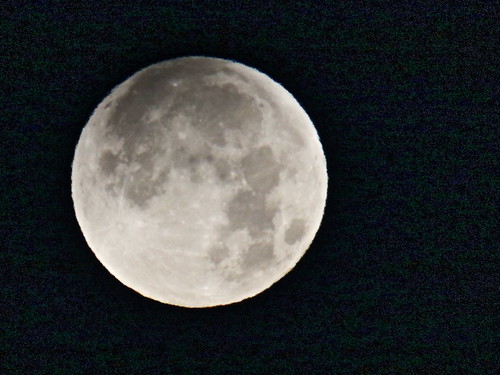
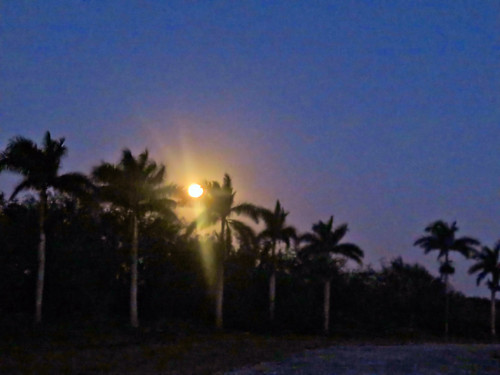
The Moon was scheduled to set at 7:06 AM, only one minute after sunrise. Half way to the lake, the sky was already lightening and the rays of the Moon were taking on a yellowish hue. My pace quickened:
The view from the lake shore:
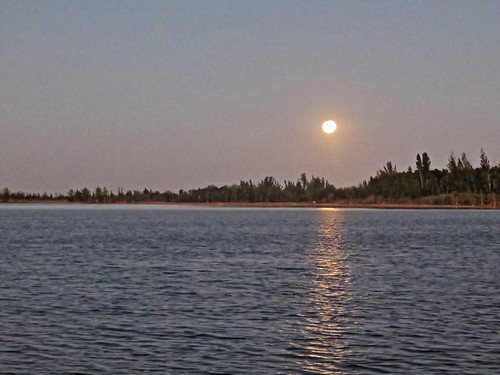
By 6:59 AM the penumbra covered the Moon and the umbra had progressed to about 20%:
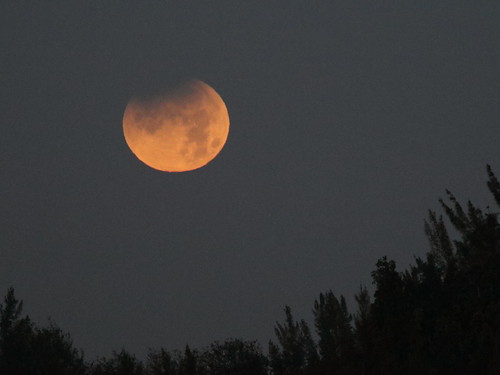
Bt 7:02 AM over a third of the Moon's surface was in darkness:
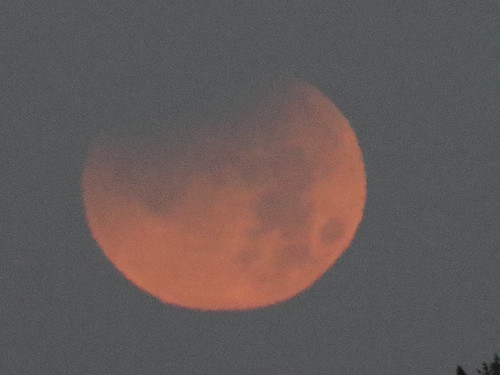
Within two minutes it sunk out of sight as the sun rose:
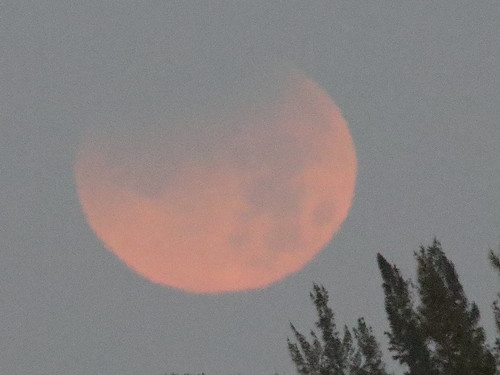
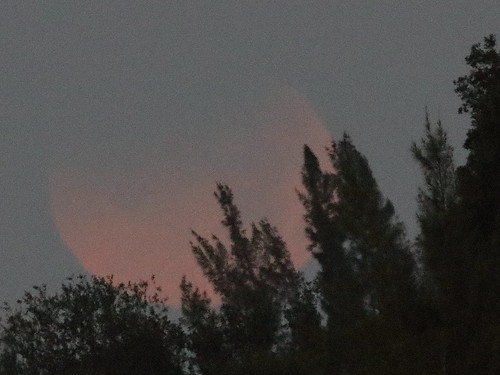
Later that morning I checked on the local Bald Eagle nest. Their first egg presumably hatched on January 11, based upon ground observations that it had been laid 35 days previously, on or about December 7.
The adults were seen feeding one or more eaglets over the next two weeks, but the rim of the nest is very high and one chick did not become visible until January 28. I watched the nest from about 9:00 AM until 9:45. When I arrived the female (Jewel) was sitting rather deep in the nest:
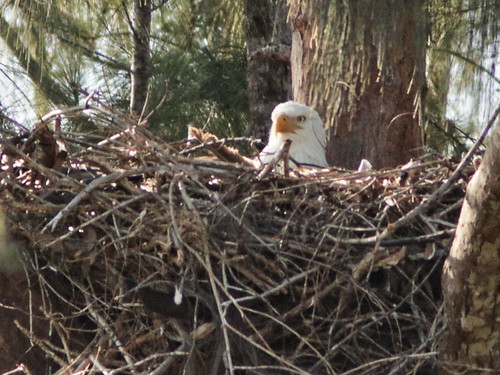
She never looked down to tend or feed any offspring. so I thought they had just been fed and were probably sleeping. After about 20 minutes I walked back to the car and was ready to attend to other chores. No sooner had I closed the car door when the male (Pride) flew in, carrying a large white bird (an adult White Ibis).
I reached for the camera but was too late to get a photo before he landed on the nest. Pride is on the right:
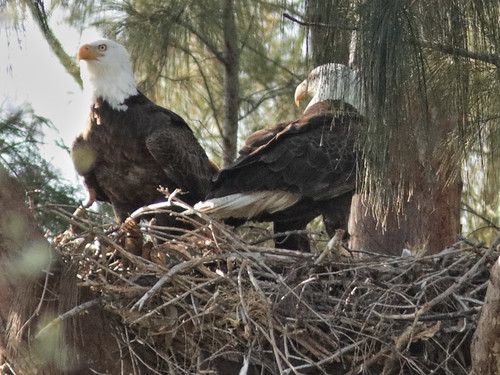
Jewel promptly flew up to roost just above the nest:
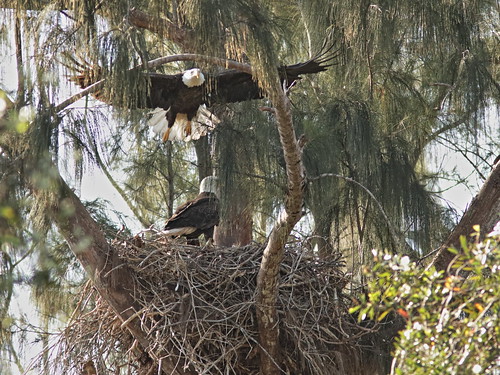
Pride got right to work, tearing at and "butchering" the prey. Very soon a curious little fuzzy "Bobble-head" appeared...
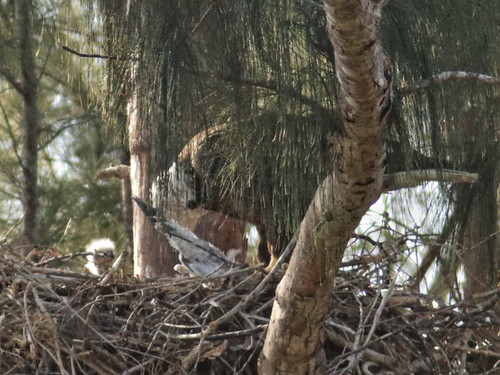
...and waited patiently to be fed something which does not appear to be a tasty morsel:
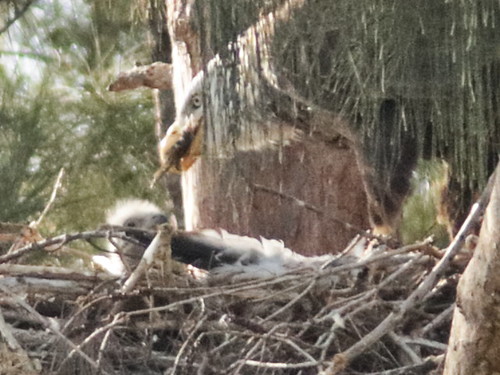
To date, the suspected second eaglet has not been seen, and I saw no evidence that another was being fed.
= = = = = = = = = = = = = = =
Linking to Misty's CAMERA CRITTERS,
Linking to Eileen's SATURDAY'S CRITTERS,
Linking to SKYWATCH FRIDAY by Yogi, Sylvia and Sandy
Linking to WEEKEND REFLECTIONS by James
Linking to BirdD'Pot by Anni
Linking to Our World Tuesday by Lady Fi
Linking to Wild Bird Wednesday by Stewart
Linking to Wordless Wednesday (on Tuesday) by NC Sue
Linking to ALL SEASONS by Jesh
________________________________________________
Please visit the links to all these memes to see some excellent photos on display
________________________________________________
Category 4 Hurricane Irma made landfall in Florida on Sunday morning, September 11. Expecting it to pass directly over our home, we had decided not to ride out the storm and instead escaped to New Mexico. Although the eye passed about 80 miles to the west, our neighborhood experienced hurricane-force winds which felled trees and knocked out power. We returned home on September 13 just as power was restored and were gratified to find that our home was undamaged and we had only lost a few limbs from our mango trees.
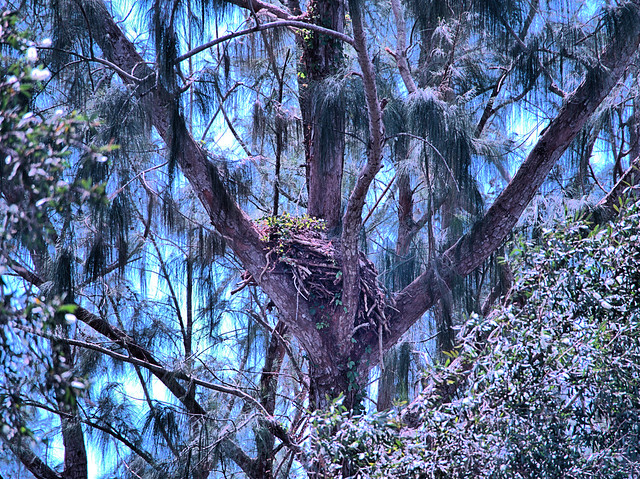
We checked on the welfare of the local Bald Eagles and found the nest standing and minor damage to the right side of the nest, in addition to earlier loss of material which had occurred during a severe wind storm in late August. No adults were present:
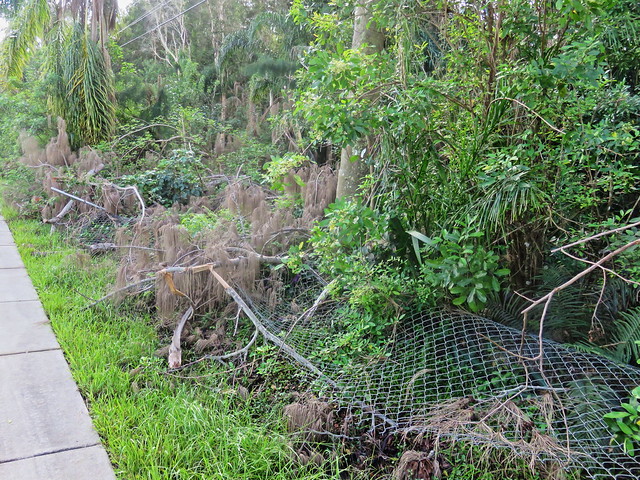
The fence which separated the eagle nest tree from the roadway was mostly leveled by fallen trees and branches which had been removed to clear the sidewalk:
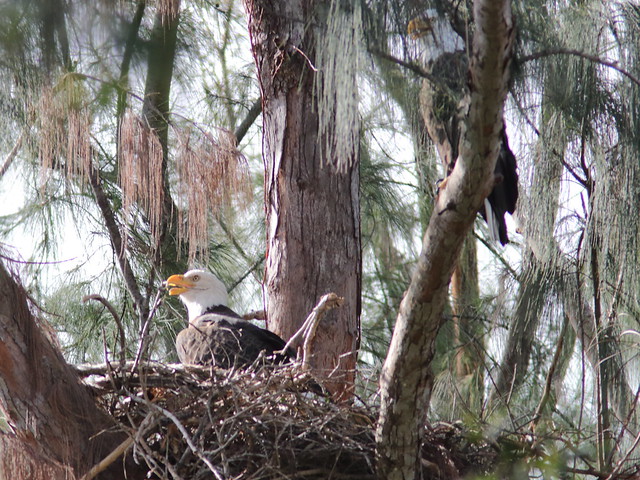
We did not venture out into our local birding patch before departing on our previously scheduled month-long stay at our second home Illinois. We returned to Florida on October 15 and the next morning found both adults at the nest. The female, partly obscured, was roosting above the nest to the right while the male was rearranging sticks on the nest:
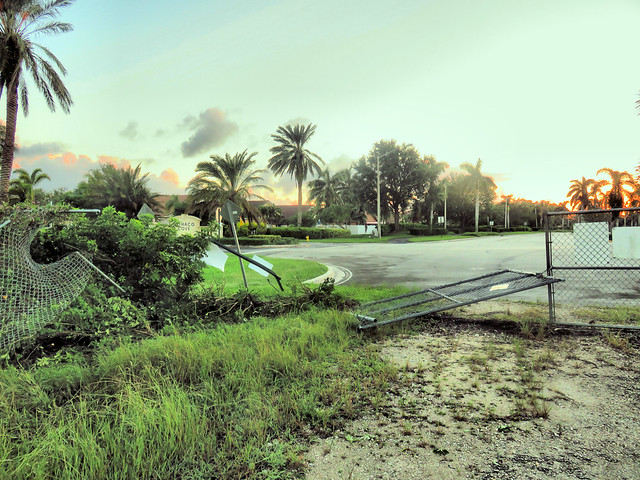
We finally got out into the wetlands and found the landscape greatly altered by the hurricane. To add human-caused insult to natural injury, a vehicle crashed into the entrance gate on the day we arrived home. I am not sure of the circumstances but it happened in broad daylight and there were no skid marks:
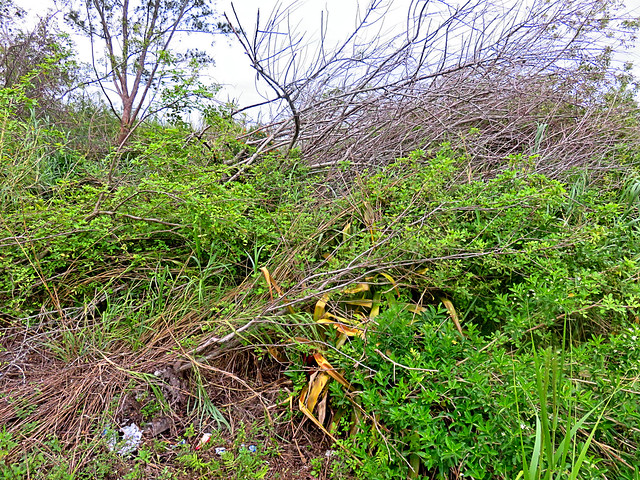
Many Trema trees, so attractive to migrating and wintering birds, were uprooted. The few left standing were stripped of fruit and leaves. This is just one example of an area which was one of my favorite "sit spots," now quite impenetrable:
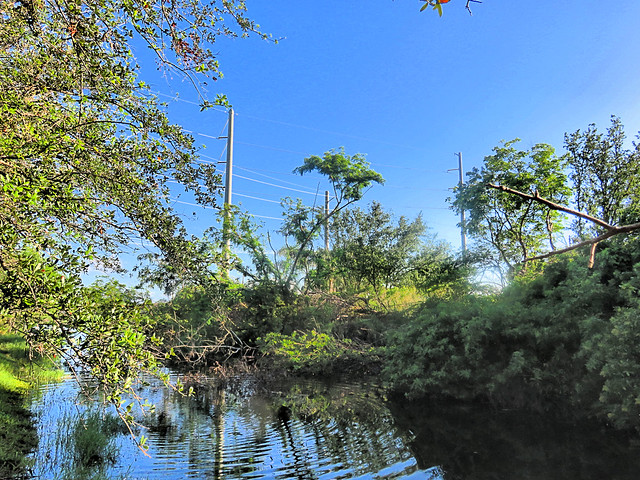
At the heron rookery, many of the nesting trees had been pushed over into the canal. The power distribution lines were no longer hidden by tall trees:
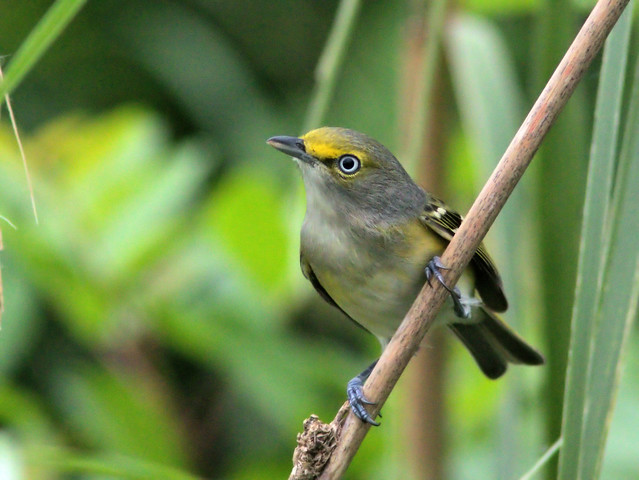
OK, enough of the doom and gloom. Nature has a way of healing, and Florida's flora and fauna have survived many hurricanes. Even the gate has been fixed. A white-eyed Vireo peered out of the rubble:
First of the season for me, a female Painted Bunting, perhaps disappointed at not finding any Trema berries, perched on a denuded branch:

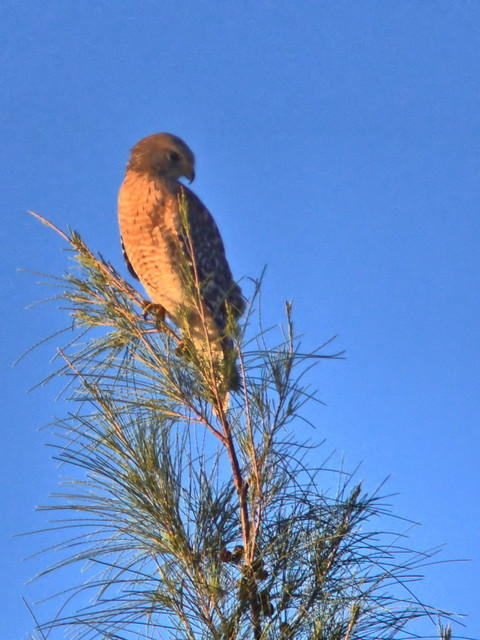
A Red-shouldered Hawk surveyed the ravaged wetlands...
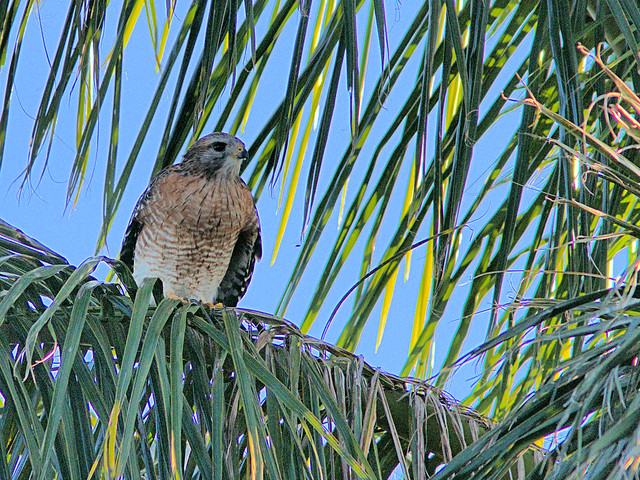
...and flew to the top of a Royal Palm:
Gray Catbirds have arrived in huge numbers:

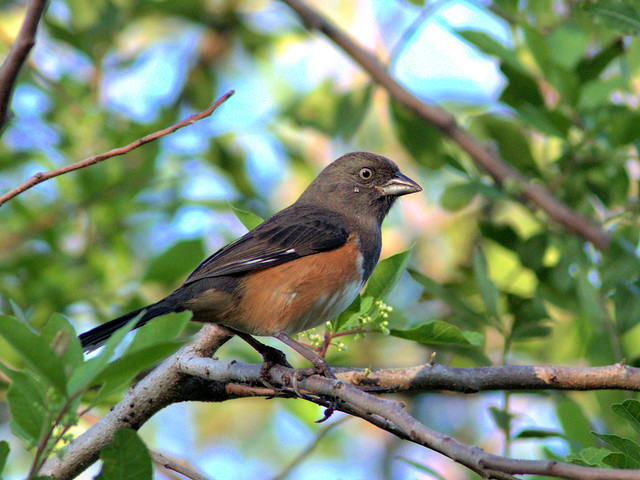
Female Eastern Towhee-- its whitish iris is characteristic of local subspecies, while more northern birds have red eyes:
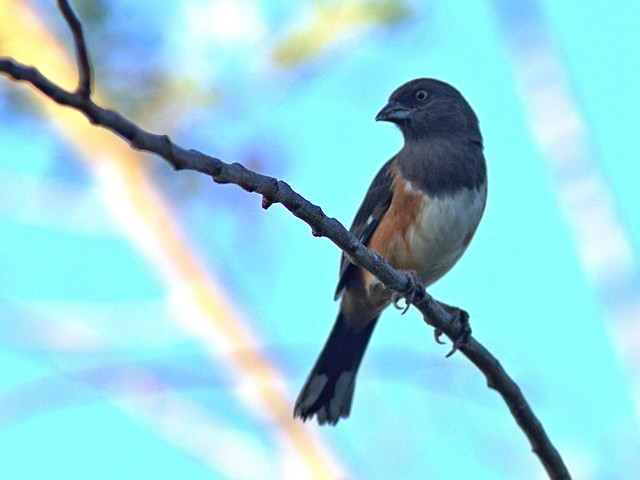
The male towhee has black plumage where that of female is "milk chocolate" brown:
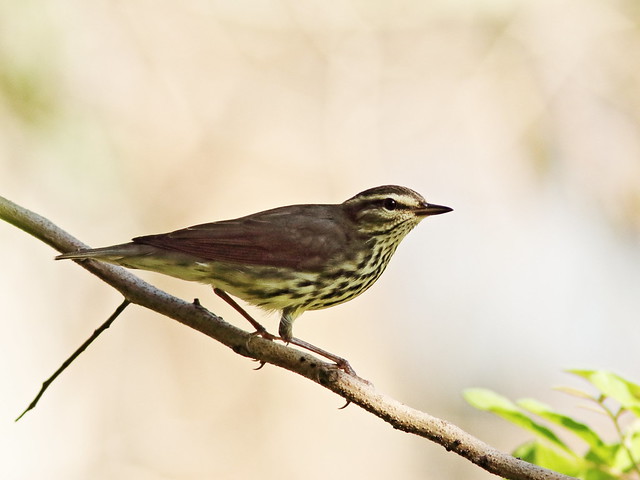
Northern Waterthrush near the heron rookery:
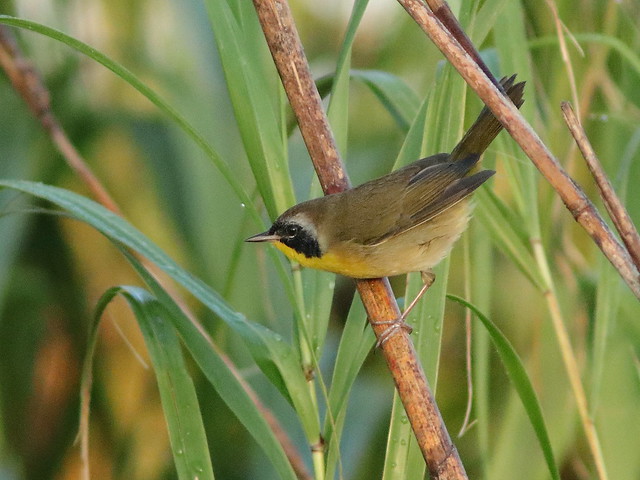
Male Common Yellowthroat along the path:
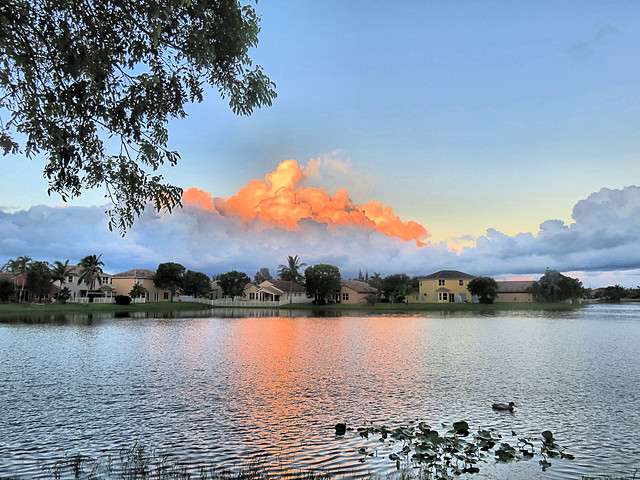
On the home front, a late afternoon storm rolled in from the ocean:
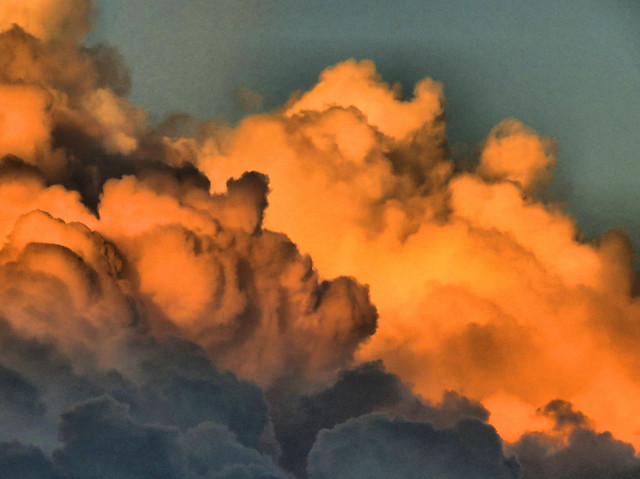
One area of the cloud caught my attention. Maybe just a rugged old man, or-- is there a crying baby with hand extended next to the face of another man who seems to be in distress?
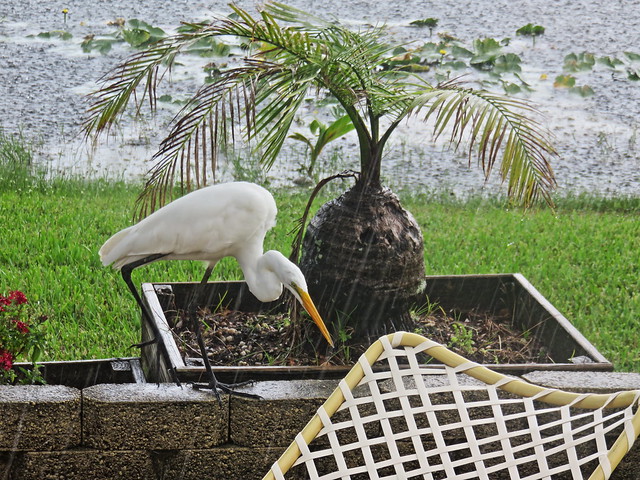
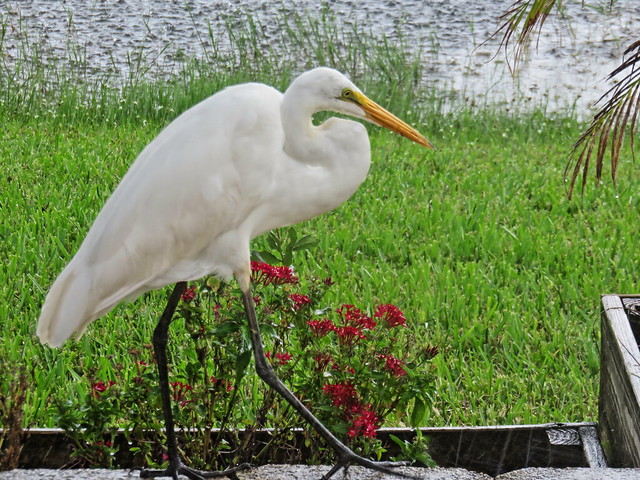
In pouring rain, a Great Egret hunted for lizards on our back patio. Taken through the glass door:
 = = = = = = = = = = = = = = =
Linking to Misty's CAMERA CRITTERS,
Linking to Eileen's SATURDAY'S CRITTERS,
Linking to FENCES AROUND THE WORLD by Gosia
Linking to SKYWATCH FRIDAY by Yogi, Sylvia and Sandy
Linking to WEEKEND REFLECTIONS by James
Linking to BirdD'Pot by Anni
Linking to Wild Bird Wednesday by Stewart
Linking to Wordless Wednesday (on Tuesday) by NC Sue
Linking to ALL SEASONS by Jesh
________________________________________________
Please visit the links to all these memes to see some excellent photos on display
________________________________________________
While remembering events in February, three years ago, I was able to find photos depicting some favorite memes: Critters, Wild Birds, Fences, Sky, Reflections, Flowers, Seasons, and wordless beauty. Nary a cloud in any of my sky shots. It was a very dry month.
Flashing forward and hoping this month in 2017 will be less stressful than last. It is starting out beautifully!
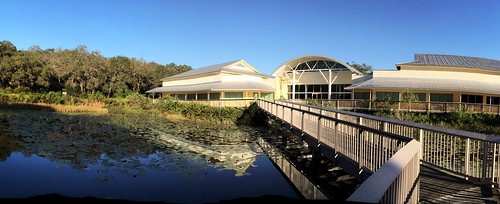
Visit to Long Key Nature Center, February 20, 2014:
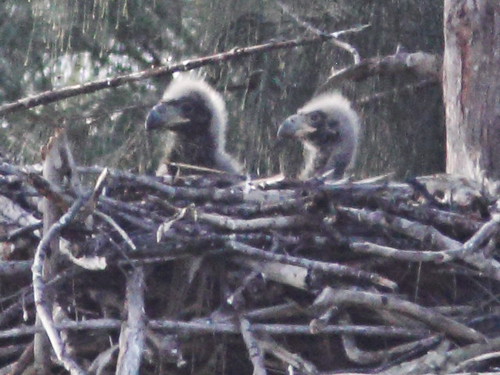
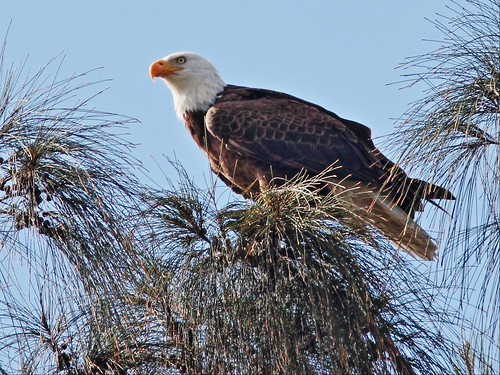
"Glory" and "Honor," the 12th and 13th eaglets known to have hatched in the nest we have been monitoring since 2007, and the last progeny of Joy, the first female, who suddenly disappeared that autumn. Photo taken on February 1, 2014:
Male Bald Eagle (Pride) roosting in adjacent tree:
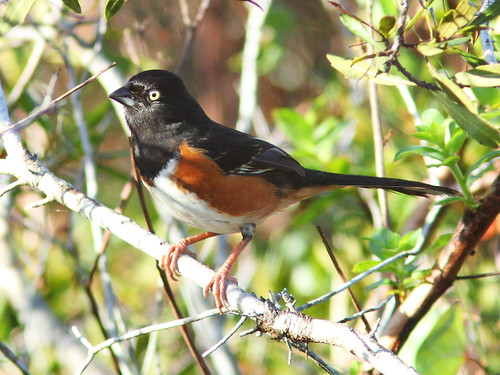
Eastern Towhee with yellow eyes, at Chapel Trail Preserve in Pembroke PInes on February 2, 2014:
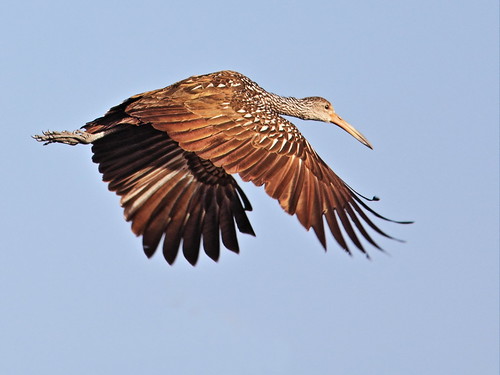
Limpkin in flight at Chapel Trail, February 3:
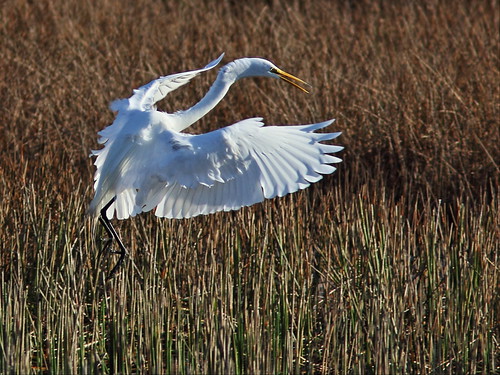
Great Egret, also at Chapel Trail, February 3:
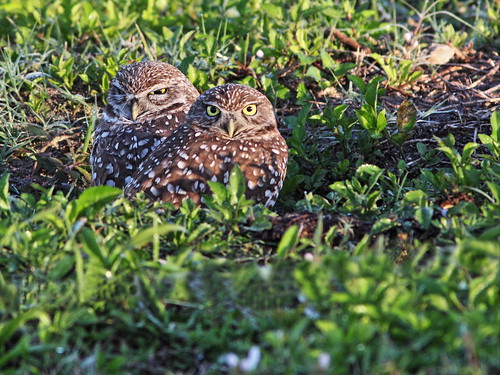
 Pair of Burrowing Owls at Vista View Park, February 18:
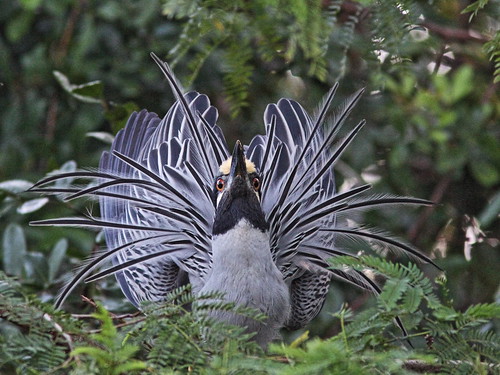
Yellow-crowned Night-Heron display in our local rookery, February 24:
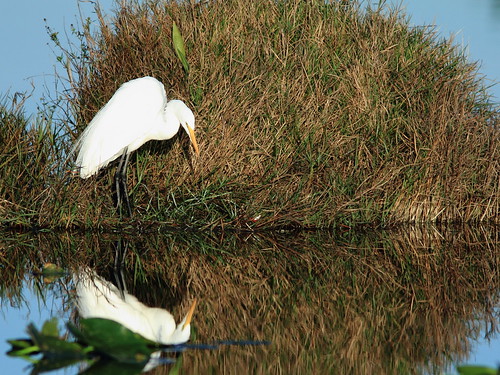
Great Egret reflection, February 17:
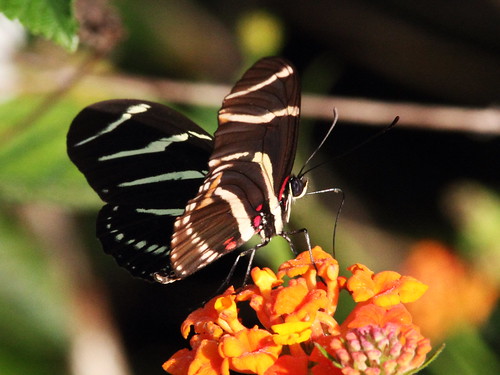
Zebra heliconian on Lantana bloom:
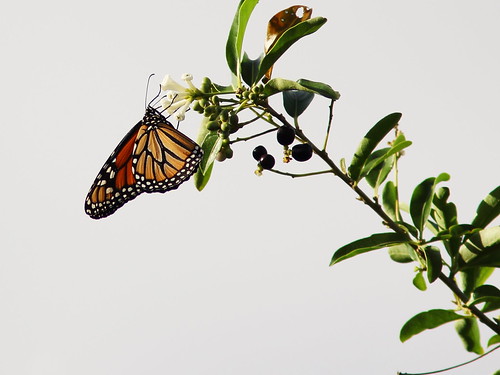
Monarch on Ligustrum:
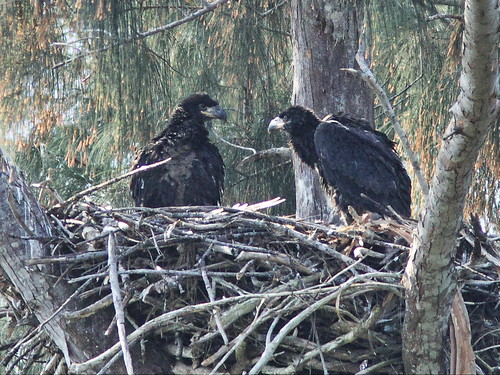
 Glory and Honor on February 25 at age of 45 days:
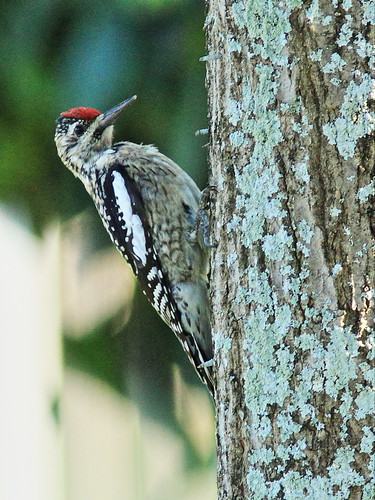
Yellow-bellied Sapsucker in our back yard Mahogany tree, February 28:
Sapsucker damage to the tree, February 28. Happily, the tree recovered in spring:
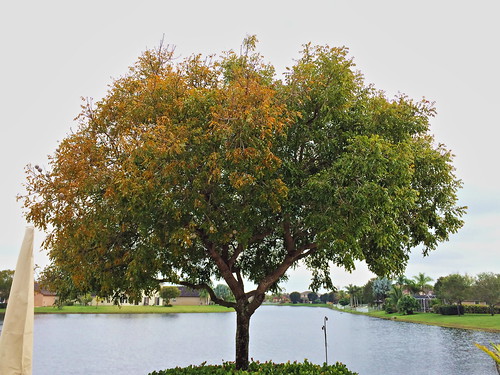
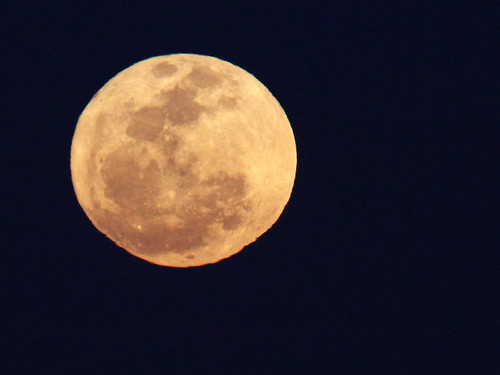
Valentine's Day moon, February 14:
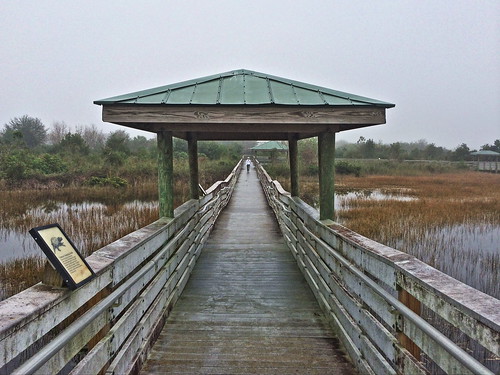
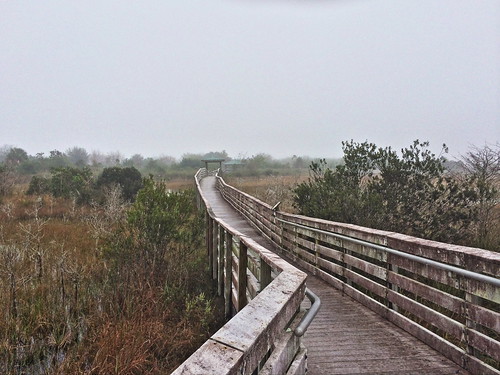
 Views of the boardwalk at nearby Chapel Trail Preserve on February 9:
 = = = = = = = = = = = = = = =
Linking to Misty's CAMERA CRITTERS,
Linking to Eileen's SATURDAY'S CRITTERS,
Linking to GOOD FENCES by Gosia
Linking to SKYWATCH FRIDAY by Yogi, Sylvia and Sandy
Linking to WEEKEND REFLECTIONS by James
Linking to BirdD'Pot by Anni
Linking to Wild Bird Wednesday by Stewart
Linking to Today's Flowers Friday by Denise
Linking to Wordless Wednesday (on Tuesday) by NC Sue
Linking to ALL SEASONS by Jesh
________________________________________________
Please visit the links to all these memes to see some excellent photos on display
________________________________________________