Photographing birds in flight has always been a challenge for me. Slow-moving targets are not too difficult to keep in sight, but framing them in the viewfinder is only the first step in the process. They must also be kept in focus and the exposure must compensate for the brightness of the subject and the intensity of light in the background.
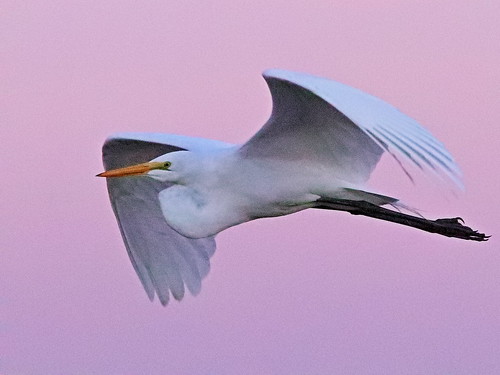
The pink sky is bright, causing the camera to "squint," so the exposure must be manually increased to keep the Great Egret from being darkly shadowed:
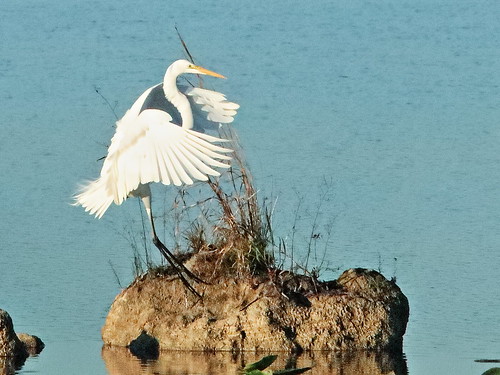
The blue water is darker, and the camera tries to compensate by increasing the exposure. This tendency must be reigned in to keep from over-exposing the white bird:
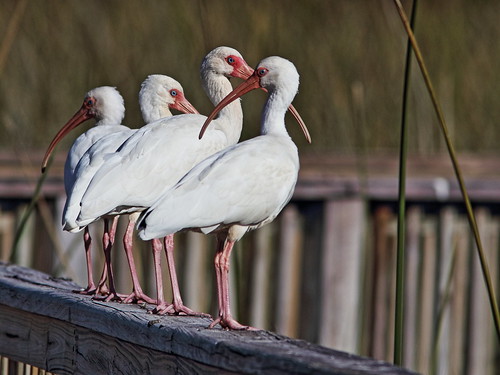
With small birds perched in the foliage, the camera tends to take care of all this automatically. I usually just set the aperture as wide as possible, to isolate the subject from distracting objects in the background. Birds in groups or in flight are not as accommodating, so the aperture must be narrowed to allow a greater depth of sharp focus, as was necessary with these White Ibises:
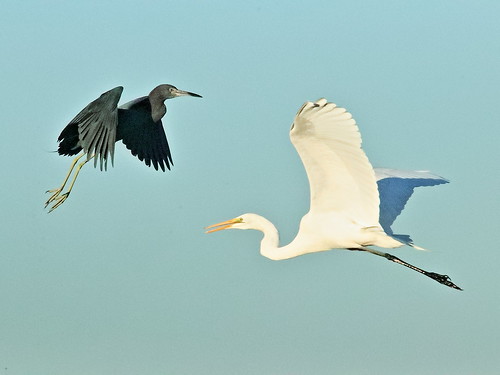
A dark and a white bird against the morning sky-- a Little Blue Heron had a close encounter with a Great Egret:
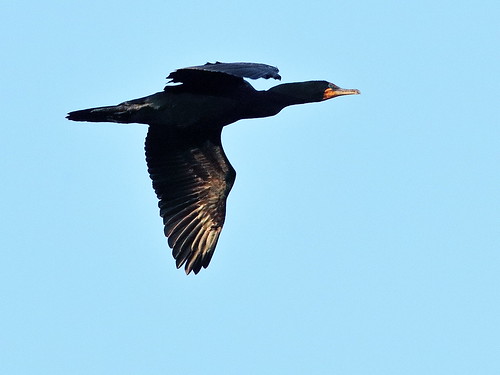
Black birds in flight are particularly troublesome, as their plumage provides little contrast to show off their feather patterns. Reflected sunshine and pure luck allowed me this shot of a Double-crested Cormorant:
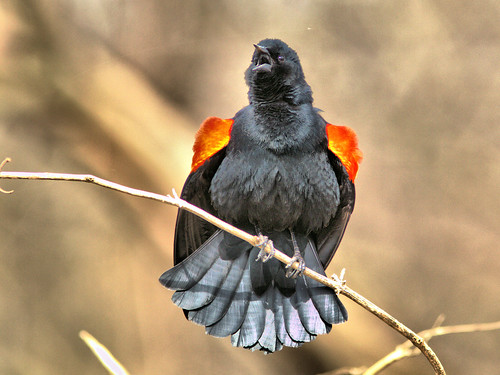
A Red-winged Blackbird puffed up his feathers to catch the light:
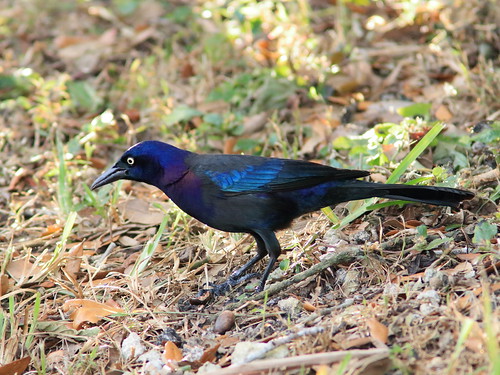
Direct sunlight reveals the iridescence of a Common Grackle...
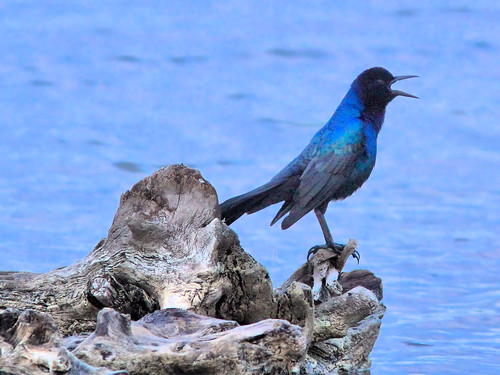
...and a Boat-tailed Grackle:
White birds sometimes show up best when they are illuminated from the side or even slightly from behind:
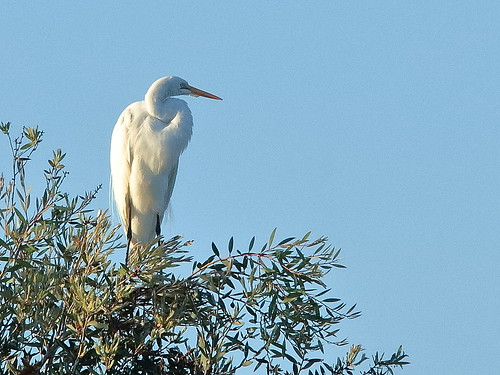
The sky has presented some interesting sights this month. Since we walk out into the wetlands in pre-dawn darkness, we are aware of the movements of celestial objects-- the Moon, planets and bright stars.
Lately we have watched Venus move towards the eastern horizon. On the morning of January 2, the waning crescent Moon was aligned with Venus and Jupiter.
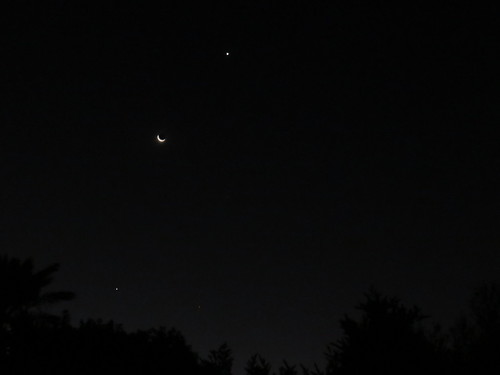
Both planets brightened up as they moved away behind the sun, appearing to move closer together. Actually, the distance between them is never less than 365 million miles. Venus is much closer to the sun and moves along its 422.5 million mile orbit at 78,337 mph (35.02 km/second). Jupiter moves more slowly, at 29,236 mph (13.07 km/second), along its huge 3 billion mile orbit and takes 4331 days to circle the sun.
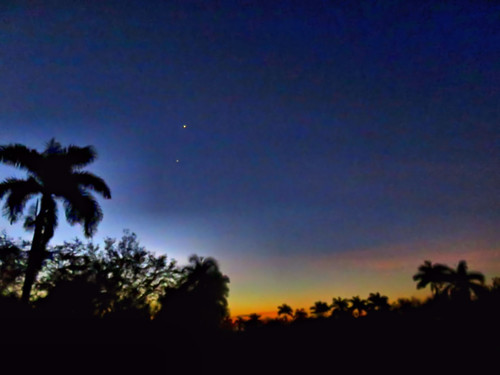
On January 17, they shone brightly before sunrise:
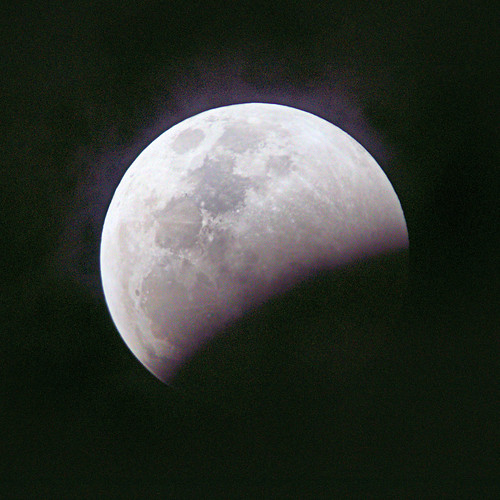
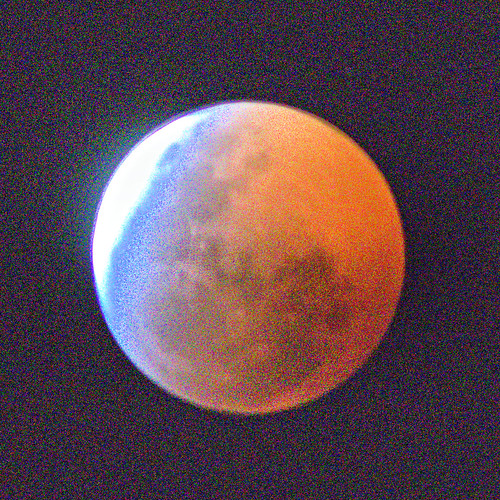
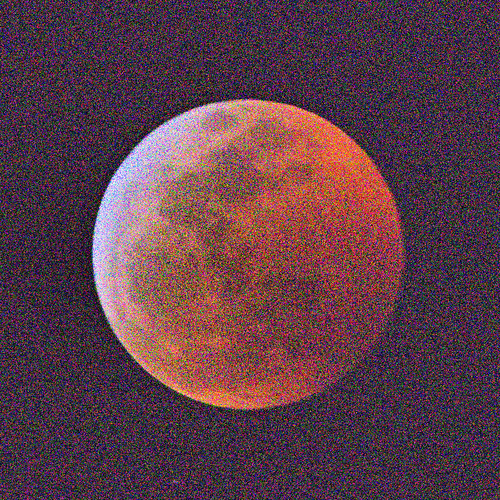
This week we witnessed a "double feature," first a full eclipse of the Moon on January 20. The Wolf Moon rose over our back yard:
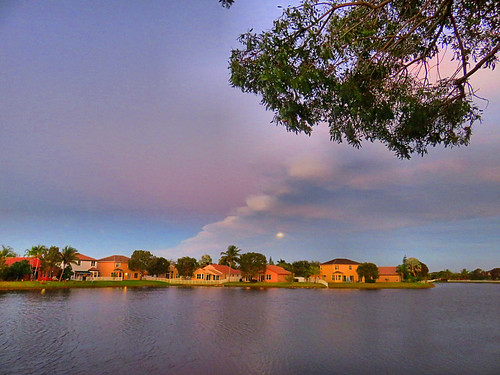 My hand-held images are not very crisp:
Then, stormy skies caused us to miss the conjunction of Venus and Jupiter, when they would be horizontally aligned. Their conjunction on January 22 would bring them almost 2 degrees apart, about the width of 5 full Moons. Here they were on January 21:
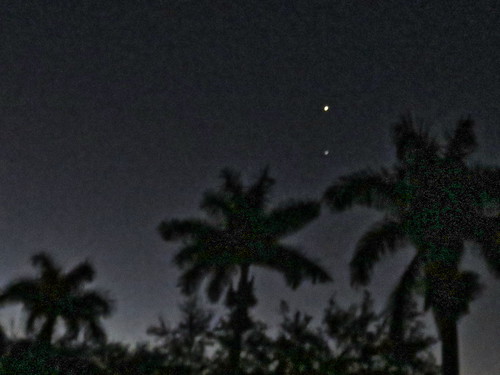
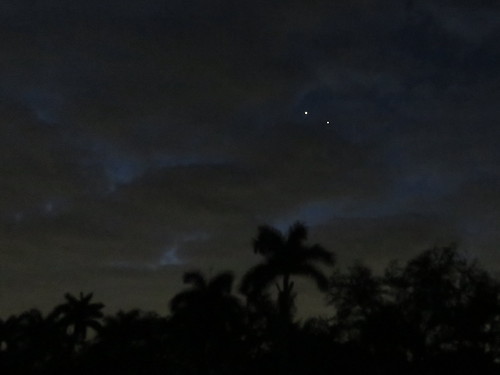
The morning after the conjunction (January 23) was also overcast, and they briefly peeked out from behind the clouds. Now Venus had moved beneath Jupiter:
= = = = = = = = = = = = = = =
Linking to Misty's CAMERA CRITTERS,
Linking to Eileen's SATURDAY'S CRITTERS,
Linking to SKYWATCH FRIDAY by Yogi, Sylvia and Sandy
Linking to WEEKEND REFLECTIONS by James
Linking to BirdD'Pot by Anni
Linking to Our World Tuesday by Lady Fi
Linking to Wild Bird Wednesday by Stewart
Linking to Wordless Wednesday (on Tuesday) by NC Sue
Linking to ALL SEASONS by Jesh
________________________________________________
Please visit the links to all these memes to see some excellent photos on display
________________________________________________
To some, our early morning walks in the local "Wounded Wetlands" might seem to be a dreadful waste of time. We usually start out on the three mile route about a half hour before sunrise. Mary Lou and I walk together briskly the first half mile. It is too dark to see any birds, but I usually can identify a handful by their calls and songs-- mockingbirds, cardinals, catbirds, jays and doves.
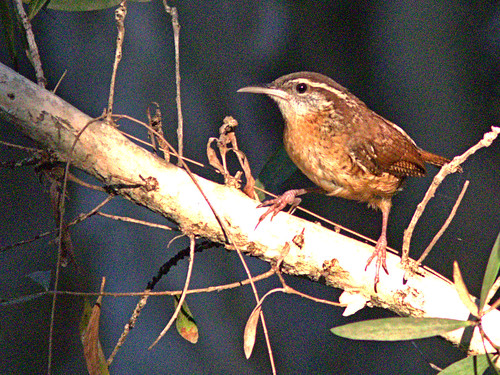
The sky lightens up and I fall behind as Mary Lou continues her pace. I may hear the song of a Carolina Wren...
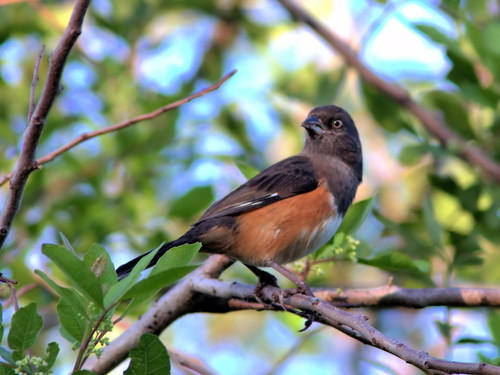
...or the calls of an Eastern Towhee:
However, on the morning of January 31, I covered the first half mile in quite a hurry, not wanting to repeat my experience only 2 moons ago on December 3, when I tarried and nearly missed the setting of the SuperMoon.
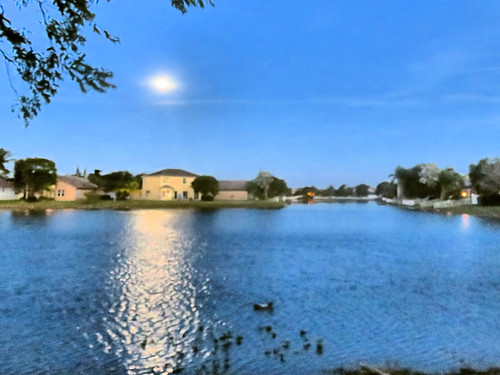
The night before, from our back yard, I had watched it rise over the lake:
The sky was dark but crystal clear. It was a perfect morning to see the third consecutive Super Moon and the second to appear in January-- a Blue Super Moon! But there is more-- it will also be in partial eclipse and its penumbra will turn red as it approaches the horizon-- a Blood Moon.
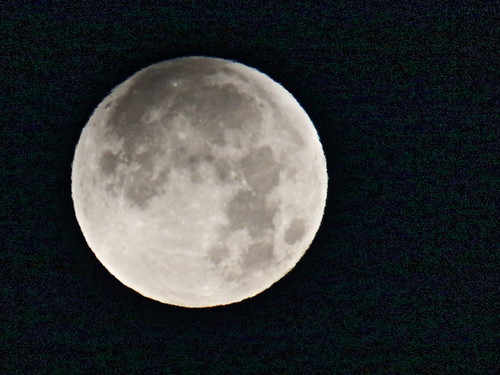
At 6:38 AM the deepening penumbra mostly involves the upper left edge of the full Moon, and exhibits no color:
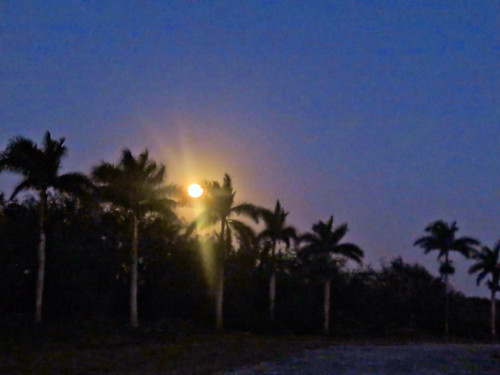
The Moon was scheduled to set at 7:06 AM, only one minute after sunrise. Half way to the lake, the sky was already lightening and the rays of the Moon were taking on a yellowish hue. My pace quickened:
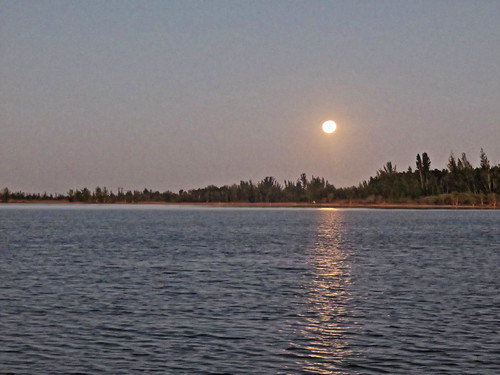
The view from the lake shore:
By 6:59 AM the penumbra covered the Moon and the umbra had progressed to about 20%:
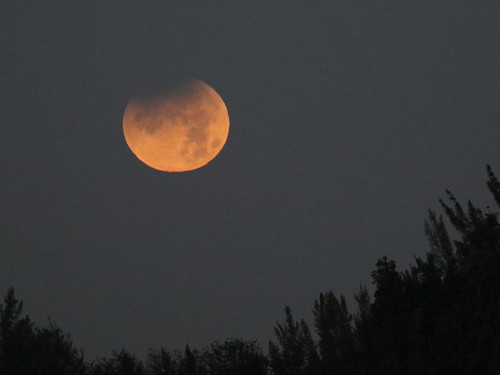
Bt 7:02 AM over a third of the Moon's surface was in darkness:
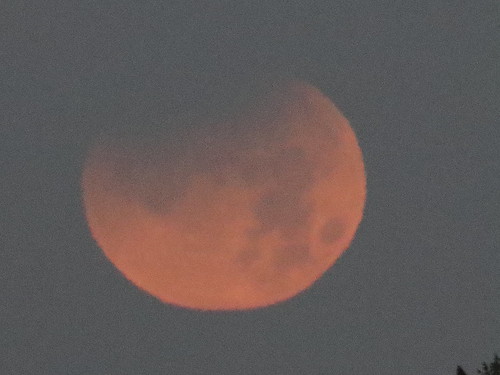
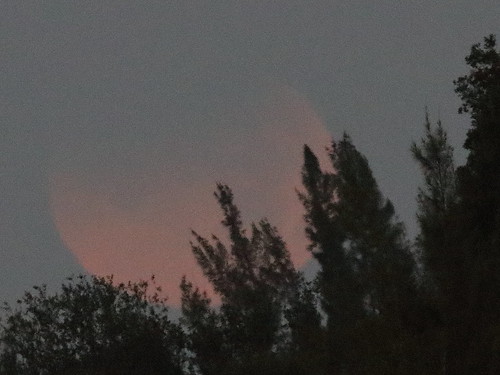
Within two minutes it sunk out of sight as the sun rose:
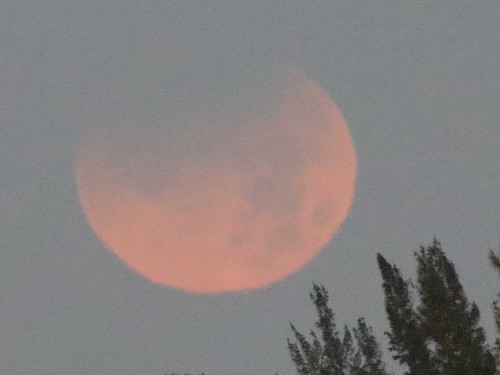
Later that morning I checked on the local Bald Eagle nest. Their first egg presumably hatched on January 11, based upon ground observations that it had been laid 35 days previously, on or about December 7.
The adults were seen feeding one or more eaglets over the next two weeks, but the rim of the nest is very high and one chick did not become visible until January 28. I watched the nest from about 9:00 AM until 9:45. When I arrived the female (Jewel) was sitting rather deep in the nest:
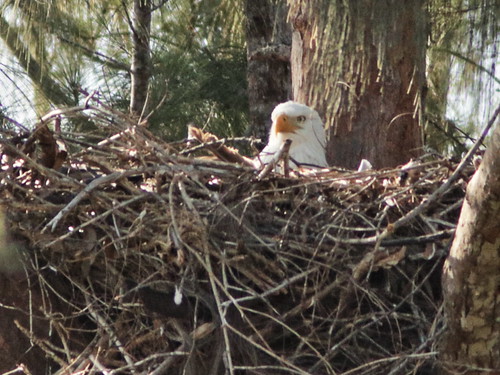
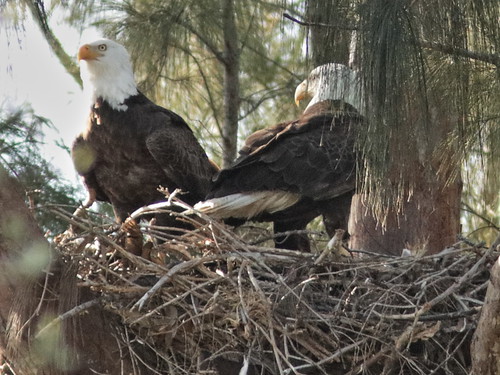
She never looked down to tend or feed any offspring. so I thought they had just been fed and were probably sleeping. After about 20 minutes I walked back to the car and was ready to attend to other chores. No sooner had I closed the car door when the male (Pride) flew in, carrying a large white bird (an adult White Ibis).
I reached for the camera but was too late to get a photo before he landed on the nest. Pride is on the right:
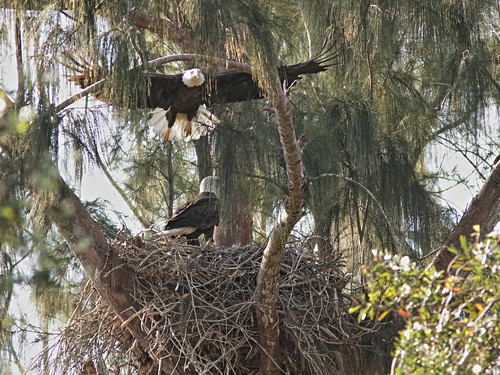
Jewel promptly flew up to roost just above the nest:
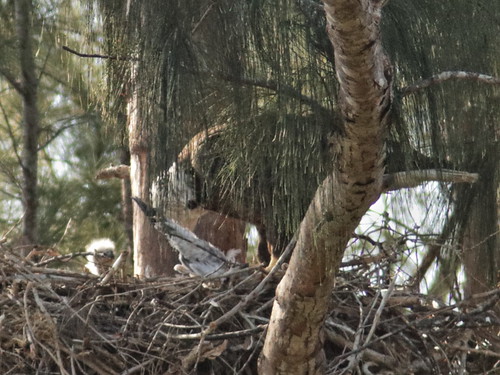
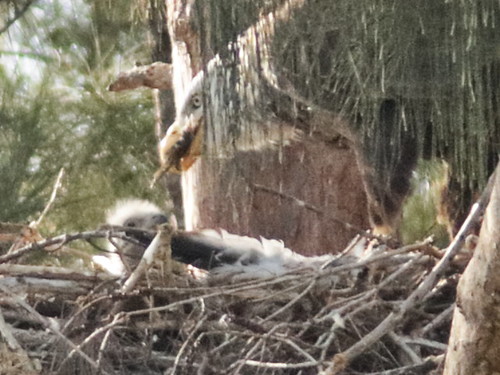
Pride got right to work, tearing at and "butchering" the prey. Very soon a curious little fuzzy "Bobble-head" appeared...
...and waited patiently to be fed something which does not appear to be a tasty morsel:
To date, the suspected second eaglet has not been seen, and I saw no evidence that another was being fed.
= = = = = = = = = = = = = = =
Linking to Misty's CAMERA CRITTERS,
Linking to Eileen's SATURDAY'S CRITTERS,
Linking to SKYWATCH FRIDAY by Yogi, Sylvia and Sandy
Linking to WEEKEND REFLECTIONS by James
Linking to BirdD'Pot by Anni
Linking to Our World Tuesday by Lady Fi
Linking to Wild Bird Wednesday by Stewart
Linking to Wordless Wednesday (on Tuesday) by NC Sue
Linking to ALL SEASONS by Jesh
________________________________________________
Please visit the links to all these memes to see some excellent photos on display
________________________________________________
Although the song reminds us that "April showers bring May flowers, " we have enjoyed clear skies most of past month. I got up early to watch the partial eclipse of the Moon on the morning of April 4. If video does not display, try this link.
Eclipsed moon setting over our local wetlands on the morning of April 4:

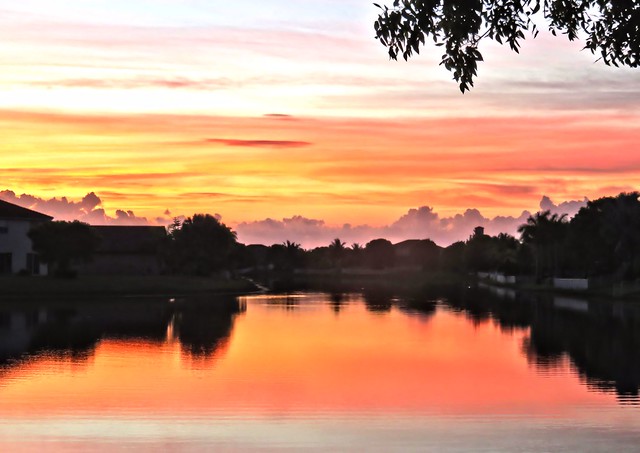
Many mornings the sun rose into a cloudless sky, and the "dawn came up like thunder," with skies already bright and blue a half hour before official sunrise. However, on April 13 the combination of a line of thunderstorms far off in the Atlantic Ocean and a layer of high clouds produced a particularly vivid panorama from our back patio:
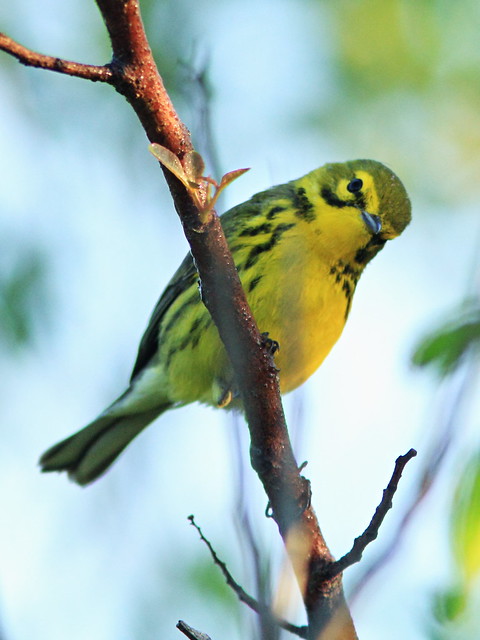
The warm morning light softened many of my photos of common critters, such as this Prairie Warbler...
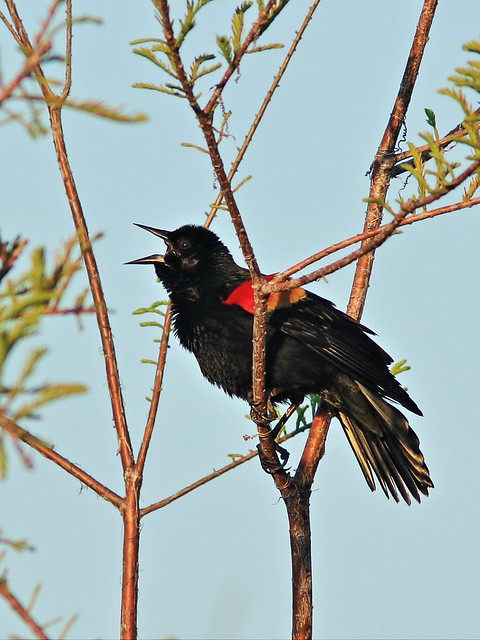
...a singing Red-winged Blackbird...
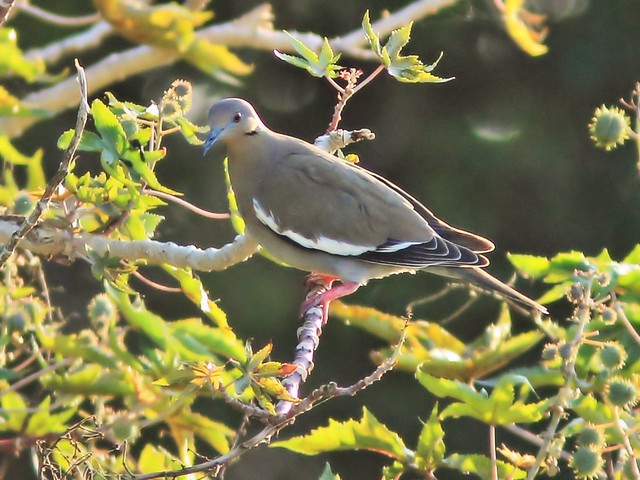
...a White-winged Dove roosting in a Castor Oil bean (Ricin) tree...
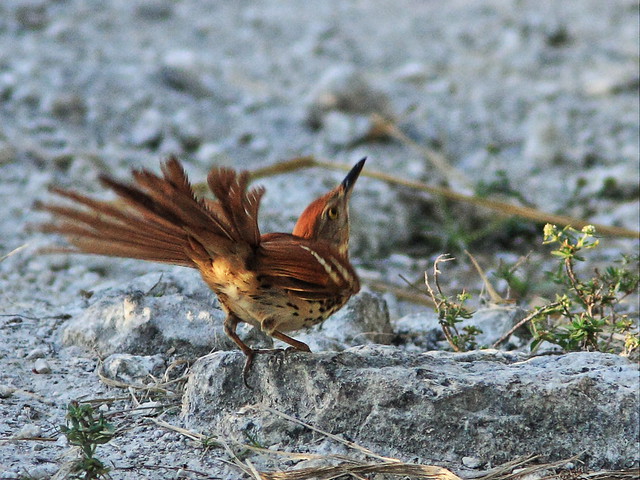
...a Brown Thrasher on the path ahead...
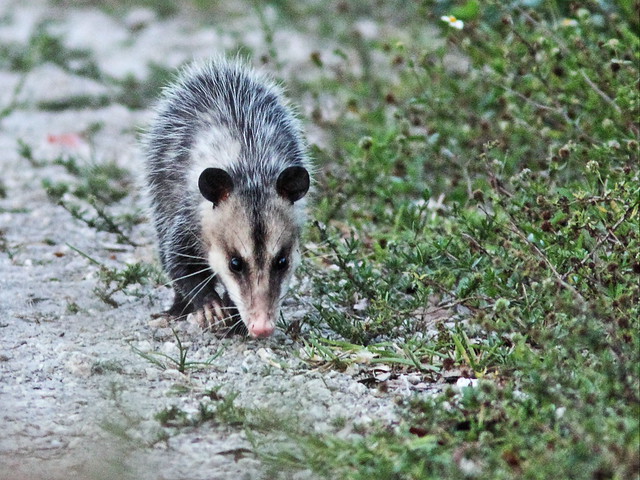
...a nearsighted Opossum ambling towards me...
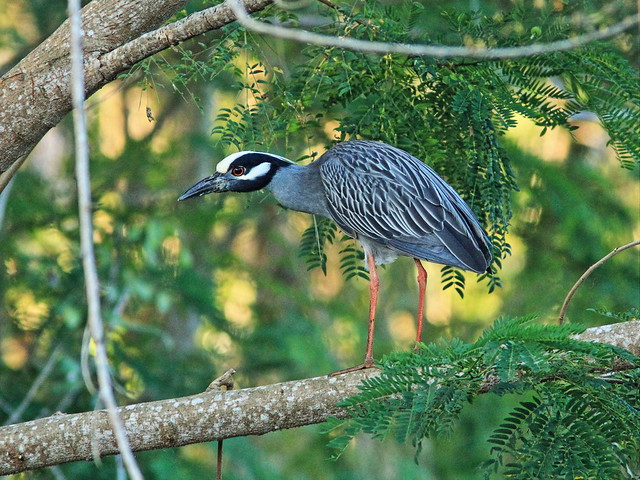
...a Yellow-crowned Night-Heron alone in the remains of the herbicide-ravaged rookery...
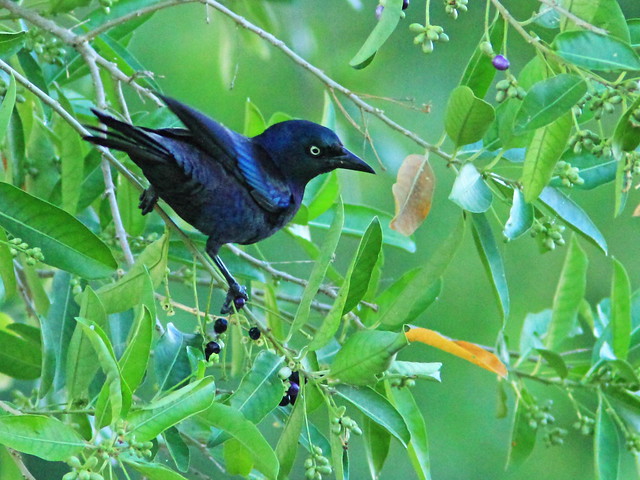
...a Common Grackle whose iridescent coat is enhanced by the morning light...
...and a female Northern Cardinal, ready to flee upon my arrival.

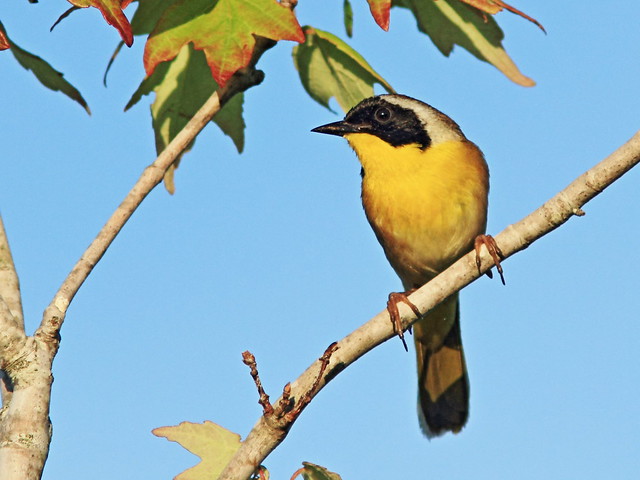
As I approached the lake, a Common Yellowthroat was perched near the shore:
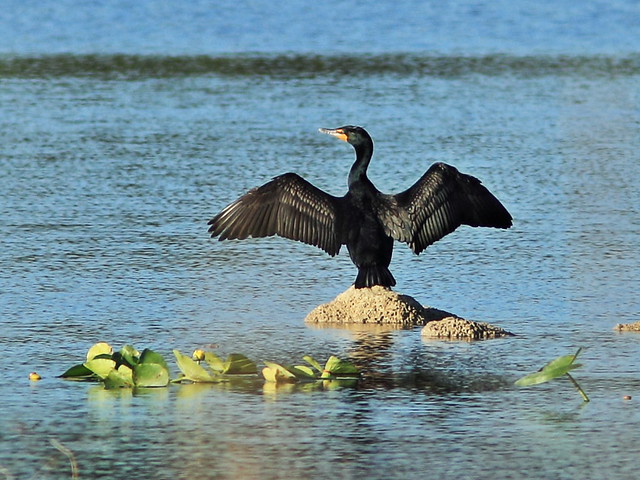
A Double-crested Cormorant dried its wings:
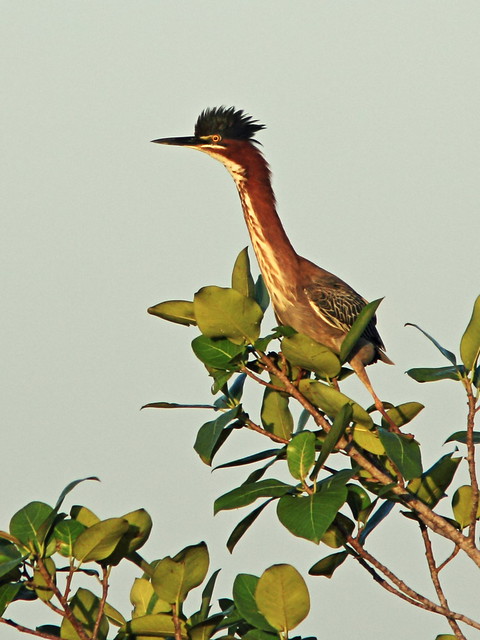
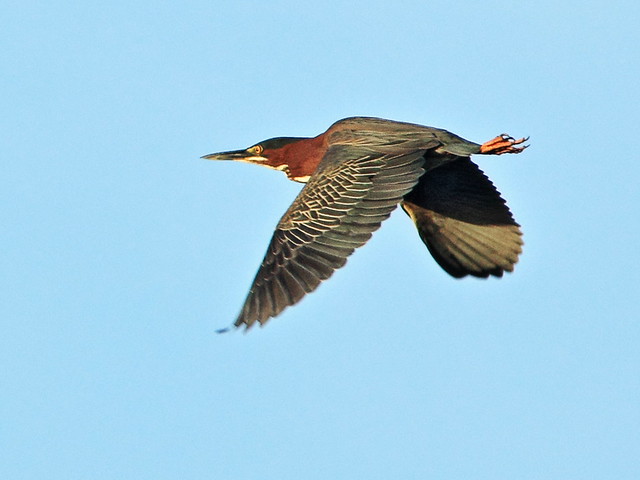
Remarkably, I almost missed seeing this Green Heron before it moved to the top of a small Red Maple:

Alarmed at my presence, the heron moved to another tree, raised its crown and tried to get a better look at me...

...allowing one of my favorite compositions...
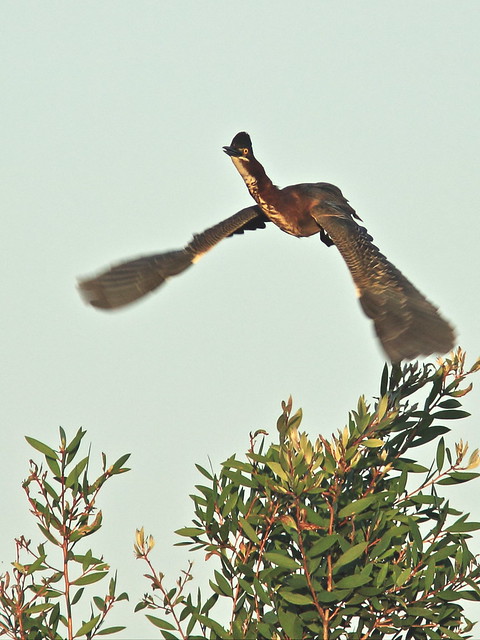
...before flying off:
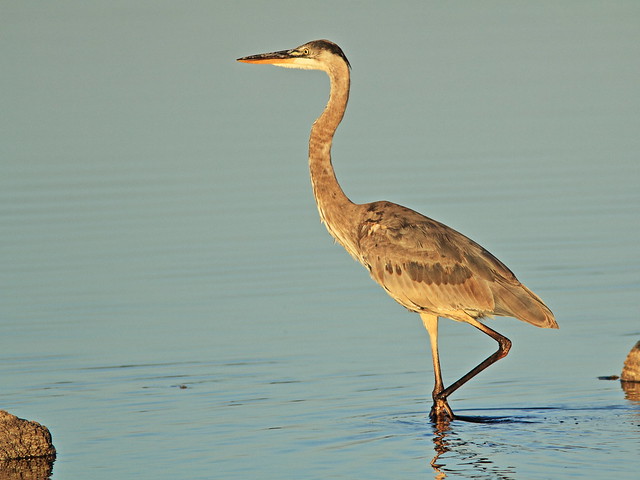
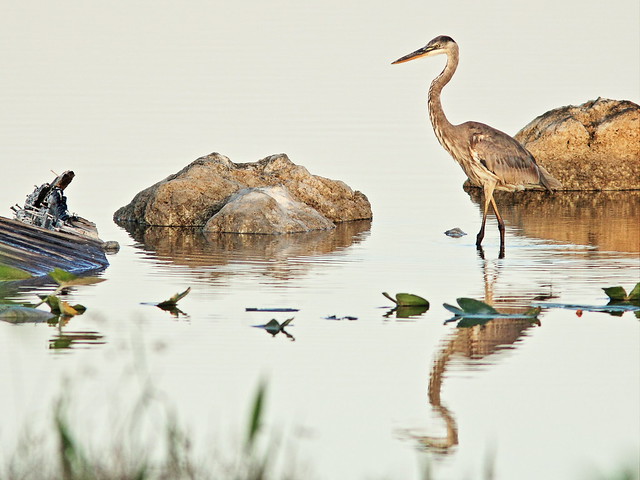
Just after sunrise on April 14 an immature Great Blue Heron permitted me to approach rather closely:

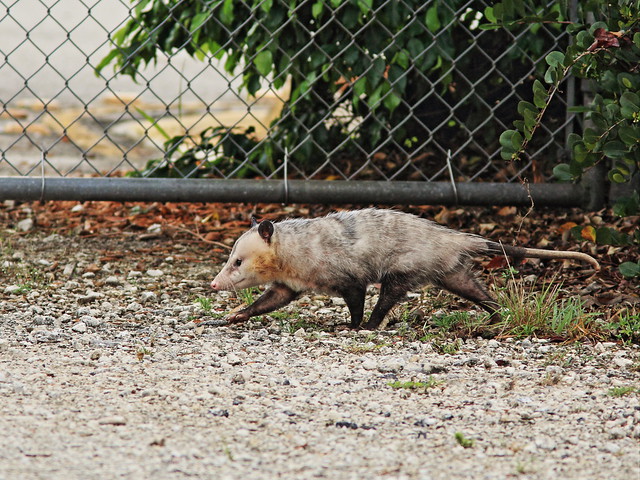
On my way back home I encountered another Opossum at the entrance gate:
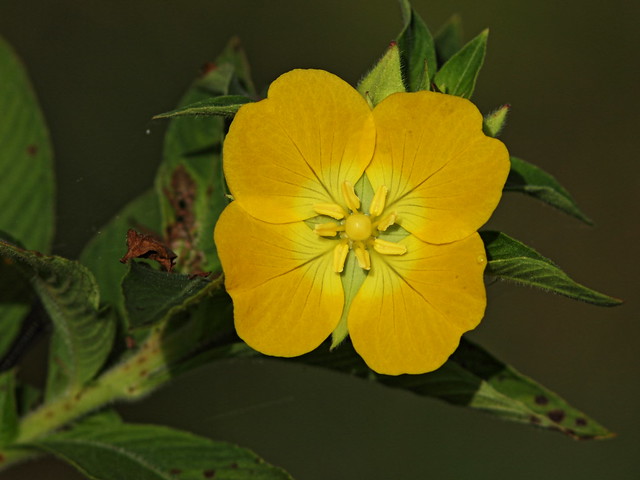
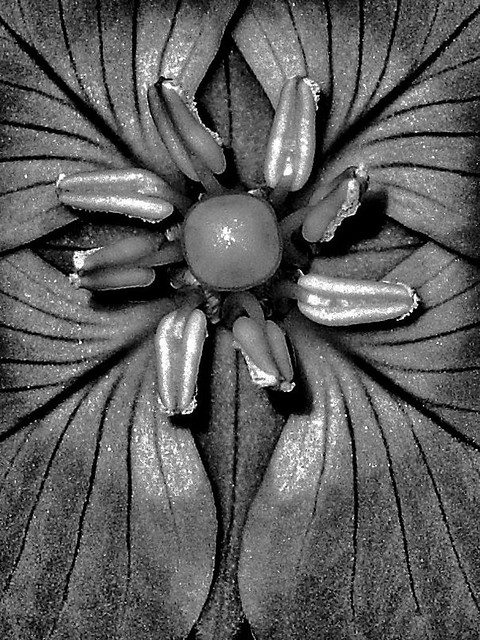
It's only an invasive exotic weed alongside the wet prairie, but sepals of the flower of this Peruvian Water Primrose form a perfect Easter cross:
 I could not pass up another macro shot, this time of a little (2.4 cm) Monk Skipper on an Ixora blossom:
 As I arrived home, a young squirrel watched me from the trunk of a palm tree in our front yard:

= = = = = = = = = = = = = = =
Linking to Misty's CAMERA CRITTERS,
Linking to Eileen's SATURDAY'S CRITTERS,
Linking to GOOD FENCES by Tex (Theresa).
Linking to SKYWATCH FRIDAY by Yogi, Sylvia and Sandy
Linking to WEEKEND REFLECTIONS by James
Linking to BirdD'Pot by Anni
Linking to Wild Bird Wednesday by Stewart
________________________________________________
Please visit the links to all these memes to see some excellent photos on display
________________________________________________