Boat-tailed Grackles range along the northern Gulf and Atlantic coasts but seem to be everywhere in south Florida. These big blackbirds populate the parking lots of shopping centers, looking for handouts, and paint our cars with their droppings. We hear their persistent raucous calls from the rooftops and treetops. Their noises can only be described as a highly variable jumble of whistles, squeaks, crackles, rattles and non-vocal bill-snapping and rustling of wings.
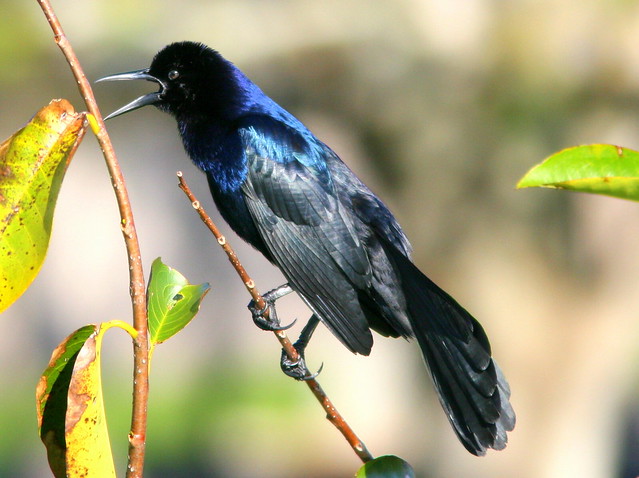
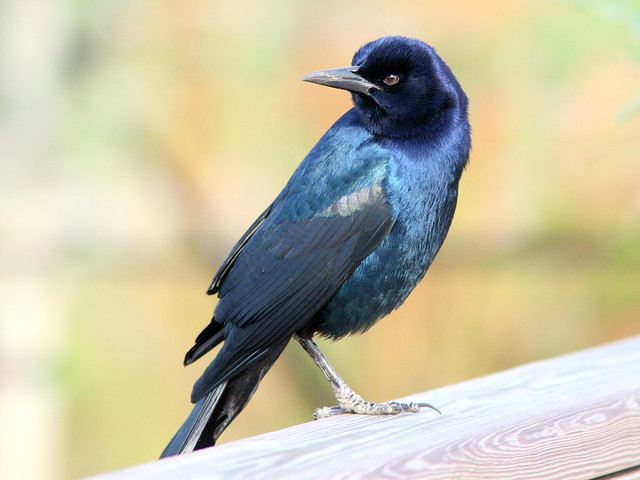
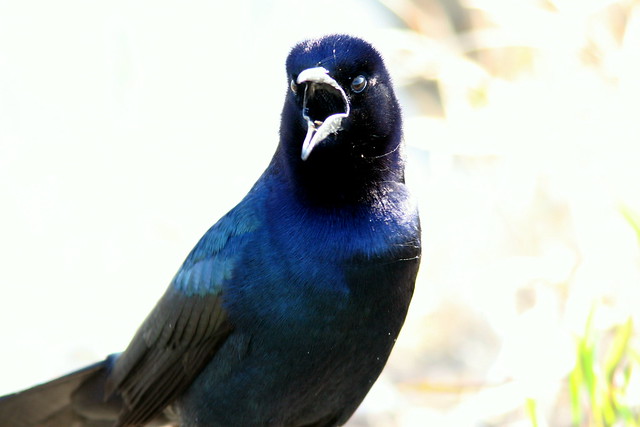
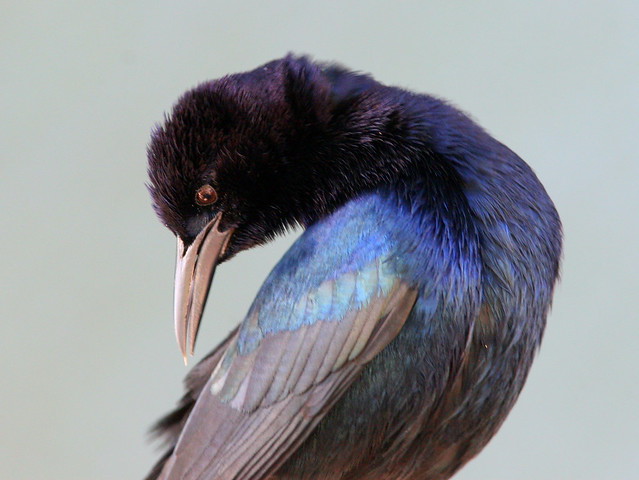
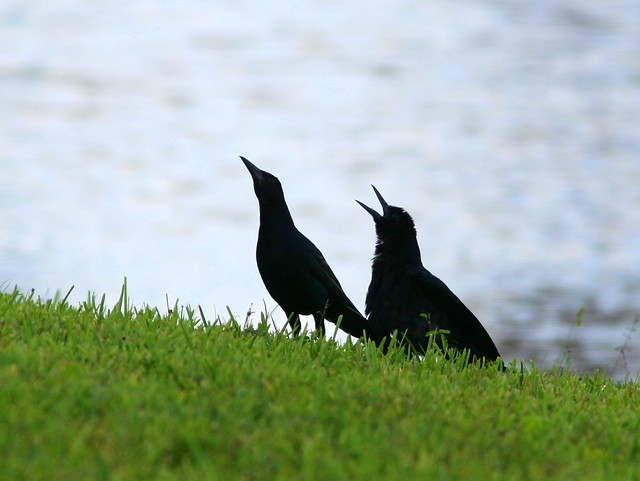
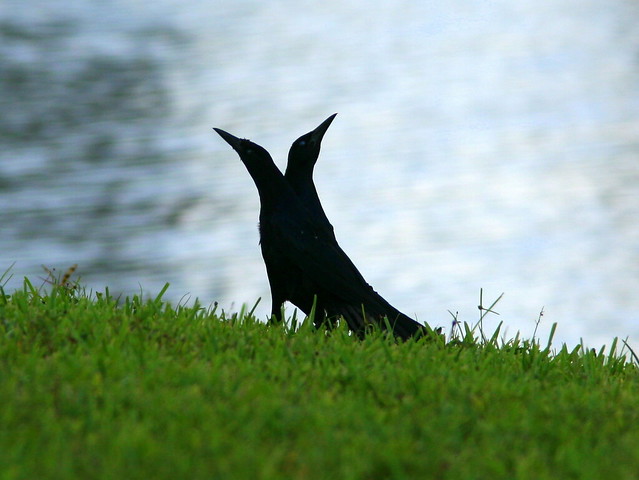
Although they are birds of the marshes and Everglades, Boat-tailed Grackles adapt well to the suburban environment and set up colonies of females dominated by a single male who may defend a "harem" of several dozen females, permitting only a few other older ranking males to mate with them. Dominance between the males is maintained by an elaborate display which involves confrontation, alternate vocalizing, fluttering and posturing. This seems to ward off most violent struggles. Eye color varies from dark brown or black in south Florida to yellowish or straw-colored to the north and along Atlantic seaboard and the Gulf coast.
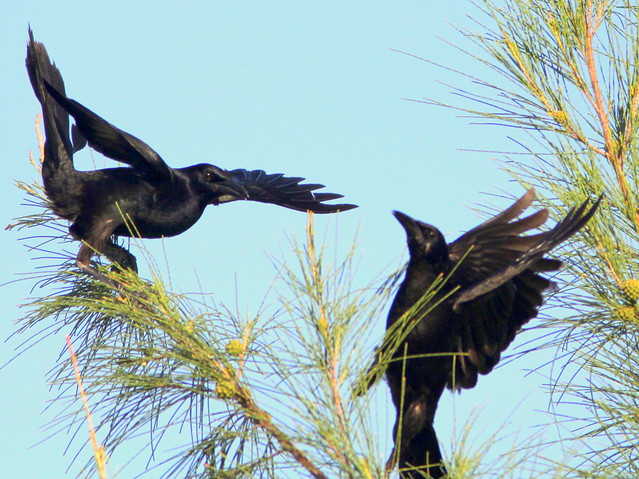
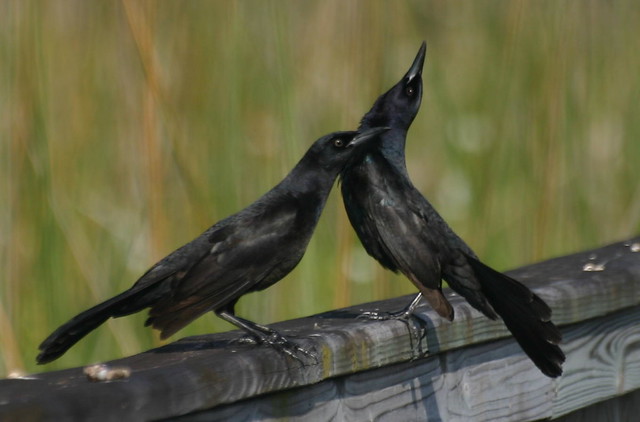
This display took place on our south Florida lawn. The males each took turns calling and fluttering as the other froze in a bill-up posture:



Linking to WEEKEND REFLECTIONS:
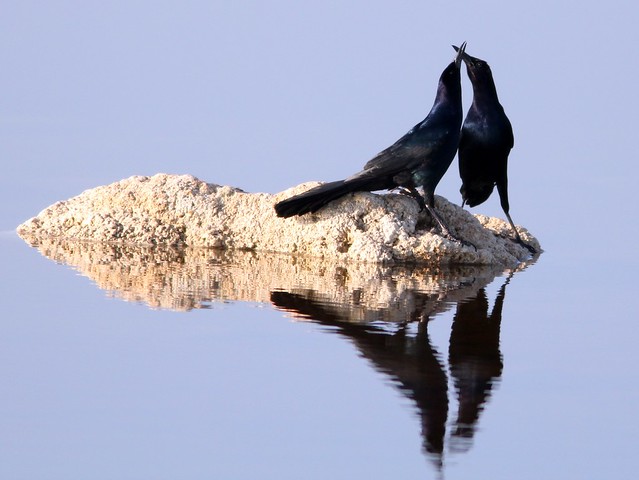
If VIDEO does not appear in the space below, VISIT THIS LINK
Female Boat-tailed Grackles are smaller and quite different in appearance from the males. For much of the year they gather in same-sex flocks away from the males, whose displays intensify as the breeding season approaches. Younger males and females often passively watch the competition between the dominant older males.
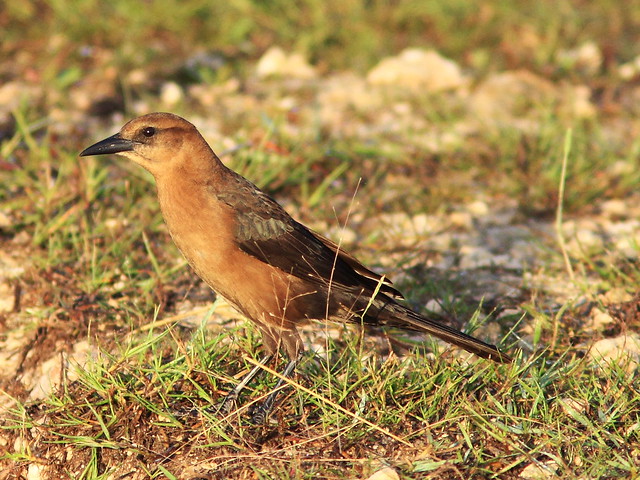
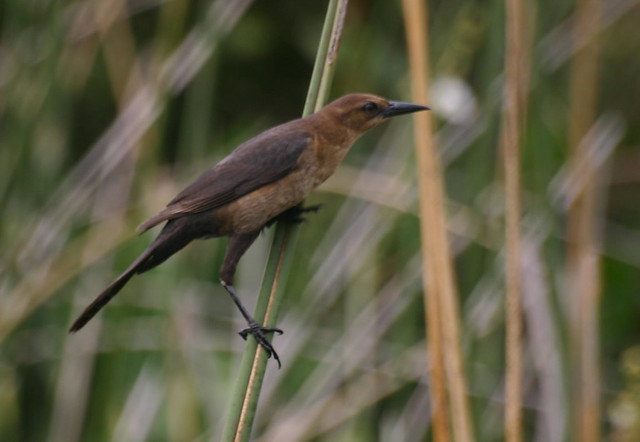
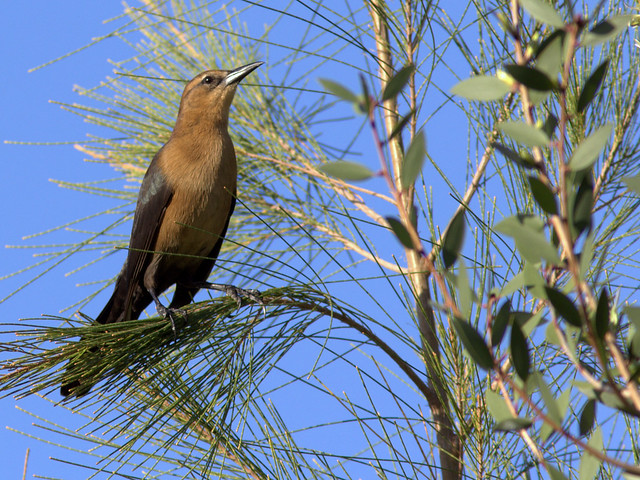
Our local population is essentially non-migratory but in winter is supplemented by visitors from the north. At dawn and dusk we may see large flocks moving back and forth between communal roosts. They are opportunitic omnivores, seeming to eat anything from linsects and lizards on our lawns to seeds, grain and garbage. Their long legs are an adaptation to feeding in shallow water, where they capture small aquatic organisms by sight, almost like miniature herons.
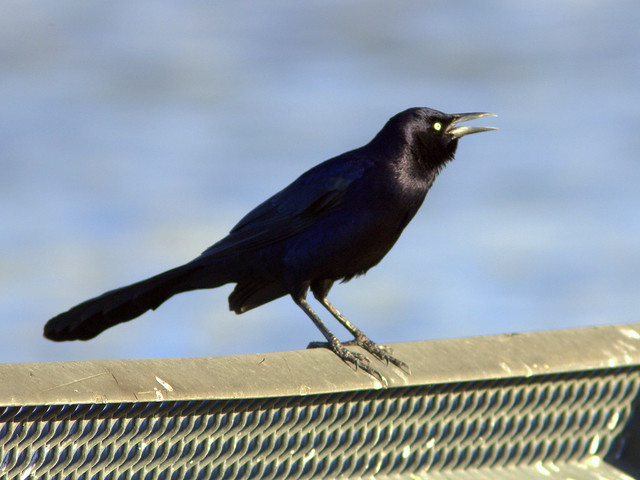
To the west, the similar Great-tailed Grackle species replaces the Boat-tailed. The former have bright yellow eyes.
Great-tailed Grackle:

Linking to GOOD FENCES:
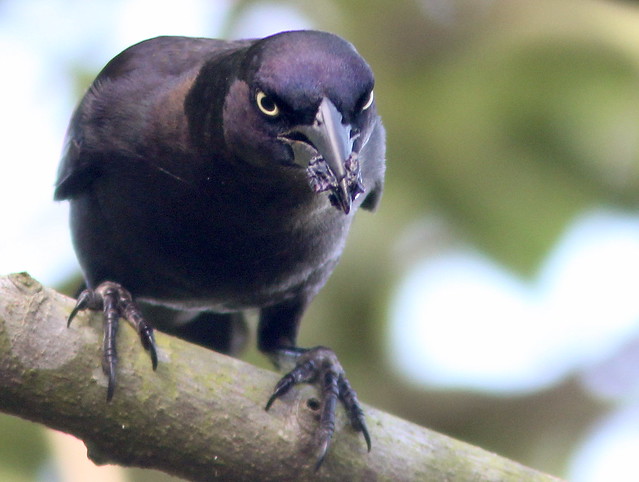
The smaller Common Grackle also has yellow eyes:

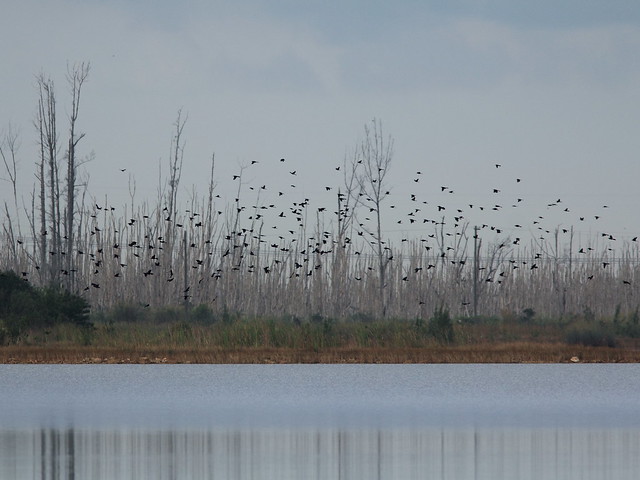
A winter gathering of a mixed flock of grackles against a gray sky, Linking to SKYWATCH FRIDAY :
Linking to BirdD'Pot
Linking to Wild Bird Wednesday
Linking to CAMERA CRITTERS,
Linking to SATURDAY'S CRITTERS
________________________________________________
Please visit the links to all these memes to see some excellent photos on display
________________________________________________
We continued our twelve day multi-generational journey in a 31 foot RV from Sedona to the south rim of the Grand Canyon, an easy 120 mile drive that took less than three hours. Near the entrance to the National Park, our granddaughters were excited to see an Elk grazing along the road.
After securing our rig in an ideal location at the north end of Grand Canyon Trailer Village, we wasted no time taking the ten minute walk to the Visitor Center at the very edge of the Canyon. The children wanted to see the IMax introductory film, but the projector was broken. We talked to a Park Ranger who told us that California Condors had been reported at Hopi Point, so we planned a visit for the next day. We lingered at the South Rim to observe sunset from nearby Mather Point.

The ever-changing play of colors on the rocks to the east was beautiful, but the clear sky to the west plunged the foreground into shadow and lacked the interest that would have been provided by a few clouds. When the sun went down it was as if someone had simply turned off the lights.
In my haste to eliminate the large number of 25,000 KB RAW outtakes among those that had filled two 32 GB compact flash cards, I inadvertently deleted that day's only bird photos, of two Scrub Jays that posed in a dead tree near the Visitor Center.
The next morning I set out on my first walk in the woods adjacent to our RV. The first bird I saw bears a close resemblance to the Boat-tailed Grackle, a Florida species. It is a Great-tailed Grackle, feasting on a pine nut.

I walked a more few yards, passing a staff parking lot when I realized that a very large (12-point) bull Elk was staring me right in the face. A second smaller one was just behind him. I froze and snapped a few shots, then they both ignored me, moved along the edge of the lot and resumed browsing on tree branches. Soon, a third bull joined them.


I continued down a dirt path through the mixed pinyon-juniper and Ponderosa Pine woodland, keeping an eye on the Elk who followed me erratically among the trees along the path.
 Our camp was at about 7000 feet elevation. Although nighttime temperatures had dropped into the high 30s (F), the sun was quickly warming me up, and I stood silently for a while in the shade of a thicket of Pinyon Pines. Suddenly, I was surrounded by the wheezy squeeze-toy calls of a flock of a dozen or more Pygmy Nuthatches.


The nuthatch calls seemed to attract a few hummingbirds. From the cricket-chirp sound of their wingbeats I could tell that one or more were Broad-tailed Hummingbirds. However I think this one represented the Black-chinned species.

An Ash-throated Flycatcher also responded to the commotion.
 A harsh, strident call revealed the presence of a Steller's Jay.

The pattern of white stripes on the Steller Jay's head varies gradually, being more sharply defined in the eastern part of its range and absent from birds in the northwestern US.

Mountain Chickadees appeared, as if out of nowhere.

On the way back to the RV, I did not see the Elk again, but a Violet-green Swallow roosted in a tree just long enough for me to take its picture.

A shadow of a large bird passed overhead and I looked up casually, ready to dismiss it as a Turkey Vulture. But no-- it had a white band on its tail. It was a Zone-tailed Hawk, known for its ability to hide in a flock of Turkey Vultures, making it easier to surprise smaller birds, mammals and lizards that constitute its prey.


Our granddaughter Graciela has already stolen my thunder by writing about what happened just a bit later that morning, so I will stop here!