Showing posts with label Henslow's Sparrow. Show all posts

Thursday, July 2, 2020

Crops & Clips: Flashback to July, 2017

At the beginning of each month I enjoy looking back at photos from three years previously, to refresh old memories and perhaps anticipate what beauty awaits this year. Especially, I look for favorite dreams, memes and themes-- critters of all kinds (especially birds and butterflies), flowers, clouds, skies, reflections, fences... and images which speak for themselves. This month's harvest makes me miss our summers in Illinois (or anywhere besides being locked down at home).

We spent the entire month of July at our (then) second home in northeastern Illinois. We watched our favorite grassland birds, and mourned the continuing loss of  their habitat. A family of Sandhill Cranes climbed on a pile of dirt where their prairie home was being converted into a housing complex. An unruly blackbird added to their discomfort, but only the colt paid attention to the attacker:

Sandhill Crane adults and colt 20170702 

A Lark Sparrow perched on a sign advertising a home site. These birds had not been verified as nesting in Kane County until MaryLou first sighted them and we saw their fledgling. Later the nest was discovered and photographed by others. This entire area was staked out for development:

 Lark Sparrow 02-20170707

Documentation photo of young Lark Sparrow being fed by parent:

Lark Sparrow juvenile and adult 01-20170710

Lark Sparrow juvenile fed by adult SHARP 04-20170710

We visited Nelson Lake preserve as often as possible. This is a path through the prairie:

Nelson Lake north entrance 20170727

Wildflowers were abundant. These are Purple Coneflowers:

Purple Coneflowers 20170711

That's MaryLou beyond the mass of wildflowers:

Wildflowers and MaryLou 20170714

Cedar Waxwing on a sapling in the prairie at Nelson Lake preserve:

Cedar Waxwing 20170707

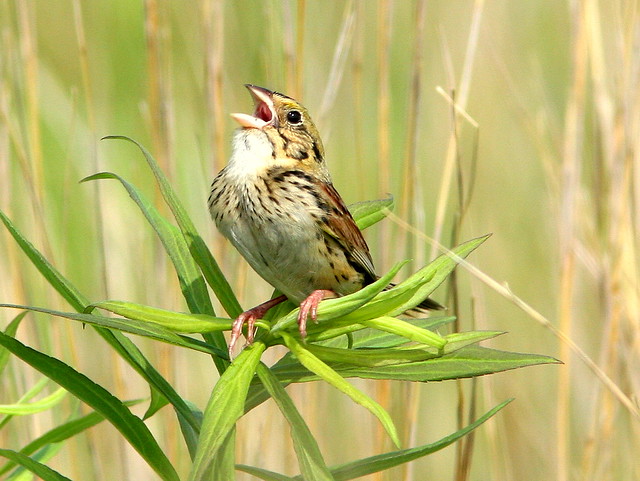
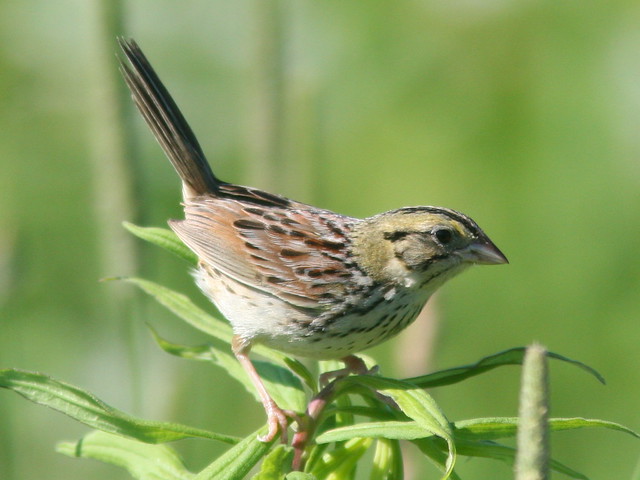
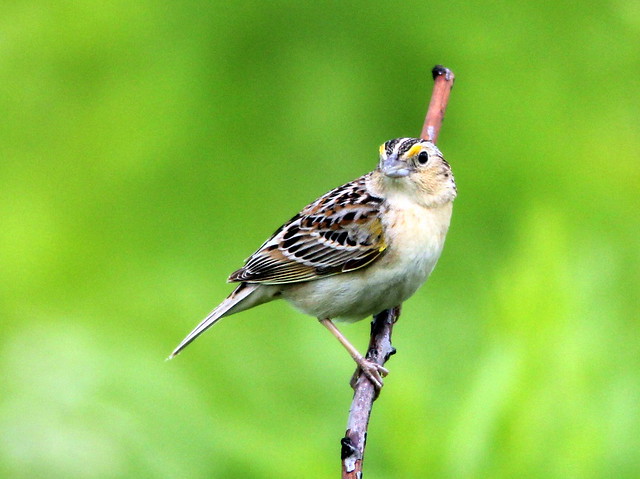
The diminutive Henslow's Sparrow finds refuge here, where controlled burns are rotated to provide its exacting habitat needs. It usually nests two years after a fire, in the layer of dry grass which is packed down by the second winter's snow. They have greenish heads and are tiny and elusive:

Henslow's Sparrow 02-20170725

Henslow's Sparrow portrait 094-20170725

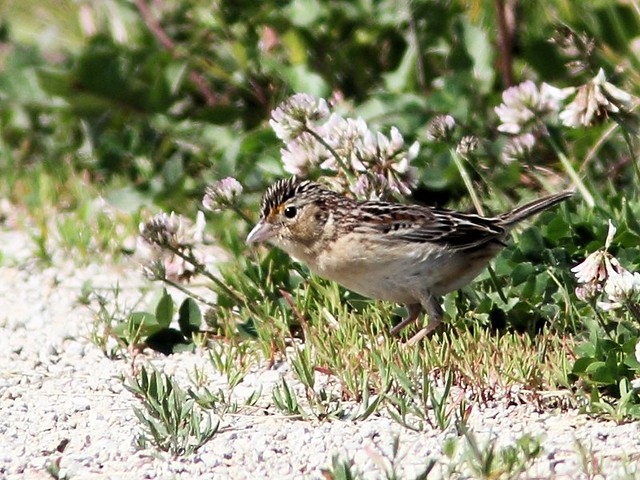
Other small sparrows which nest more widely at Nelson's Lake are the Grasshopper Sparrow...

Grasshopper Sparrow 02-20170724

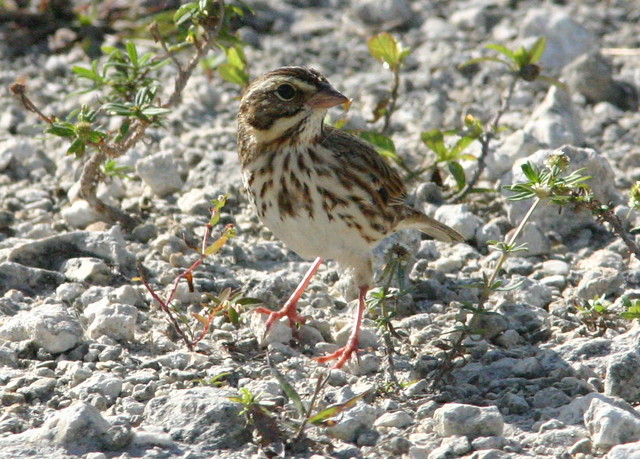
...Savannah Sparrow...

Savannah Sparrow 04-20170723

...and the rather plain-looking Field Sparrow which has a pink bill:

 Field Sparrow 01-20170709

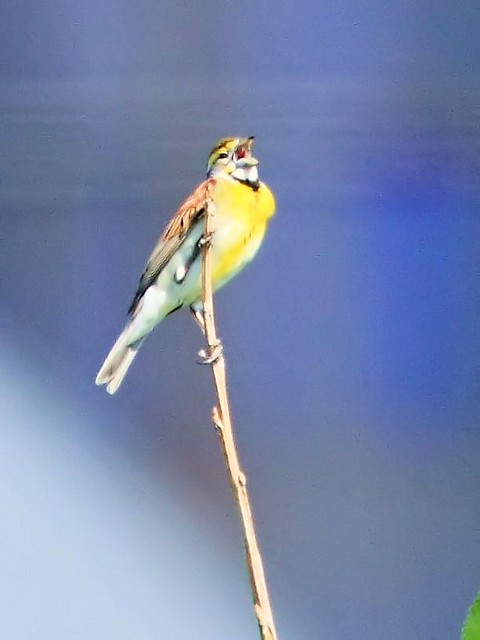
Dickcissels were abundant. This pair were tending a nest and the female was waiting for me to depart before delivering a meal for their chick:

Dickcissel male and female 02-20170702

Male Dickcissel:

Dickcissel 02-20170714

American Goldfinches brightened the scene:

American Goldfinch 02-20170709

American Goldfinch 08-20170728

Common Yellowthroats sang along the trail:
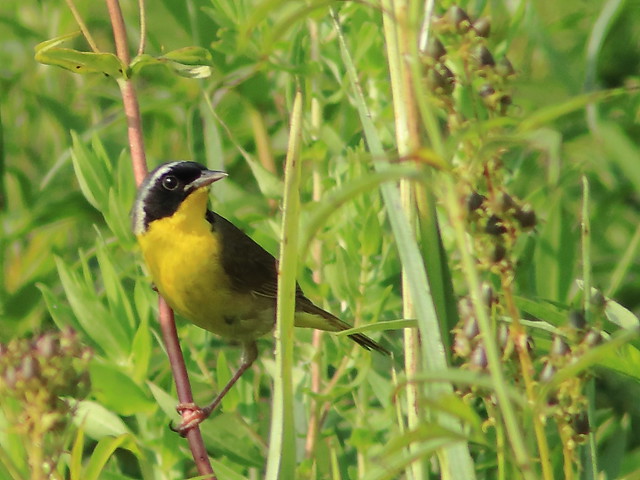
Common Yellowthroat 04-20170727

The boardwalk and pavilion at Lippold Park:
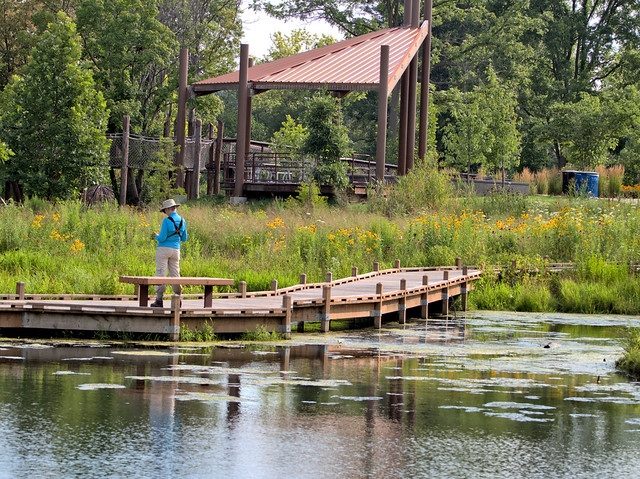
Lippold Park pavillion 20170728

Mallards preening:

Mallards 20170711

We checked the Bald Eagle nest near our condo. The two juveniles had fledged, and one flew by:
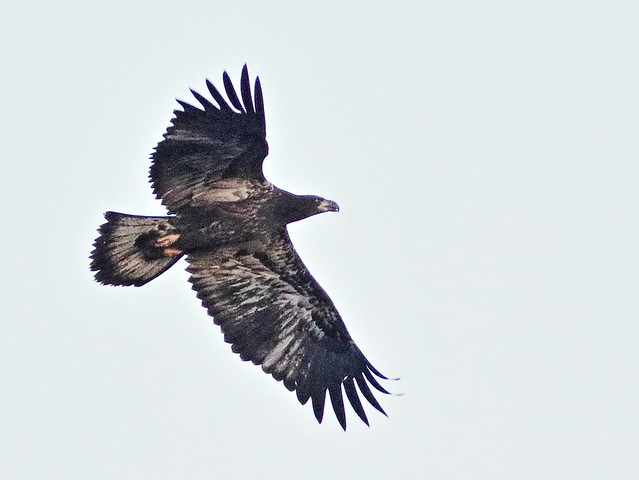
Bald Eagle juvenile 02-20170701

One of the parents stood guard:

Bald Eagle 05-20170701

Fox River floodplain:

Fox River flood plain 03-20170724

Common Buckeye butterfly:

Common Buckeye butterfly 20170721

American Lady butterfly:

American Lady NOT Painted Lady butterfly 02-20170724

A Painted Lady "attacked" me:

Painted Lady butterfly 05-20170725

Agramonte, our Granddaughters' beloved Tibetan Mastiff, now 13 1/2 years old, is not doing well this year. He can barely climb the stairs. The girls hold out hope but must face the fact that he is failing. Three years ago he was sleeping on the cool floor as usual:

Agramonte 20170730


= = =  = = =  = = = =  = = = = =

Linking to:

Fences Around the World

Skywatch Friday

Weekend Reflections

Saturday's Critters

BirdD'Pot

Camera Critters

All Seasons

Wordless Wednesday (on Tuesday)

Our World Tuesday


________________________________________________

Please visit the links to all these posts to see some excellent photos on display
________________________________________________

Thursday, August 17, 2017

Crops & Clips: It's only a sparrow

Out on a trail which traverses the north prairie of Nelson Lake (Dick Young/Nelson Lake Marsh Forest Preserve) in Batavia, Illinois, a passerby stopped to watch me as I was intently focusing my camera into the high grass. I turned to say hello and he asked me what I was seeing. "A Henslow's Sparrow," I replied. His response was "Oh, only a sparrow," and he moved on his way.

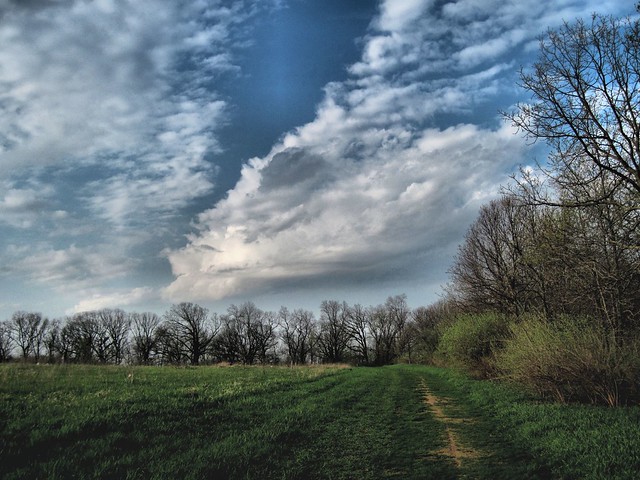
A dramatic sky over the southwest prairie at Nelson Lake preserve:

Nelson Lake SW prairie looking south HDR 20130502

True, most sparrows are unobtrusive LBJ's (Little Brown Jobs). They can sometimes be difficult to identify or even find as they move around near the ground or perch on a distant shrub. Yet they are an interesting lot and, on closer inspection, quite varied and beautiful.

The most common sparrows of my childhood were called "Chippies" by my grandmother, who fed them bread scraps in the back yard we shared. Only after I found them pictured in my first bird book did I realize their proper name was English Sparrow, and that it was introduced from Europe. Later I learned that they were the only "true sparrows" I was ever likely to see in the US.

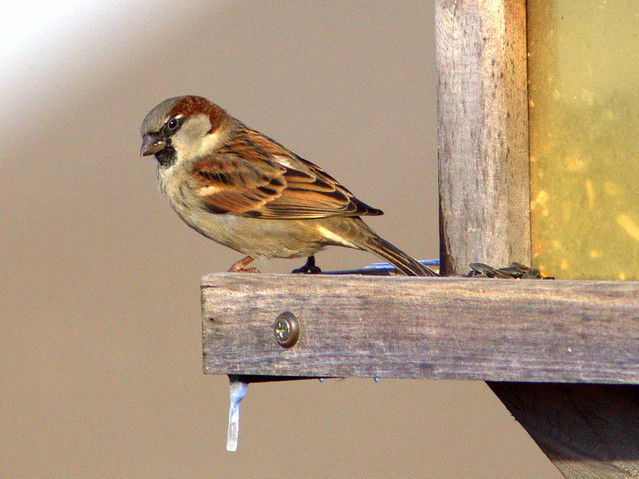
Renamed "House Sparrow," they populate most of the urban areas of North America including Mexico but not the high mountains or northern Canada. Although they are present in shopping centers less than a mile from our south Florida home, I have never seen one in our back yard or the wetlands near our home.This male is enjoying a meal in our daughter's feeder in Batavia:

 House Sparrow male 2-20130115

Closely related to weaver finches, the Old World "True" Sparrows (Family Passeridae) deserved naming rights before the LBJ's of the USA were ever discovered. I have yet to see a European Tree Sparrow, the other immigrant from this family, although it is quite common in St. Louis, Missouri and is also seen southwestern Illinois. The native sparrows in the Americas belong to a distinct family, Emberizidae, related to the Old World buntings.

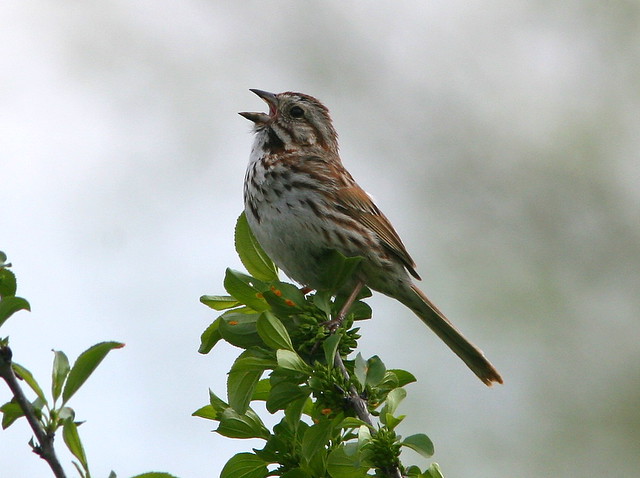
Probably the best known representative of the American sparrow family is the Song Sparrow, which breeds all across the northern USA, up the Pacific Coast into southern Alaska and in much of the southern 2/3 of Canada. It migrates into all of the lower 48 States but does not reach southern Florida. It is appropriately named for its exhuberant melodic song (Nelson Lake, June 5, 2016) :

Song Sparrow HDR 20160605

The Savannah Sparrow resembles it but is smaller, with a proportionately shorter tail. It may have yellow "eyebrows" which vary in intensity among its several subspecies:

Savannah Sparrow 06-20170723

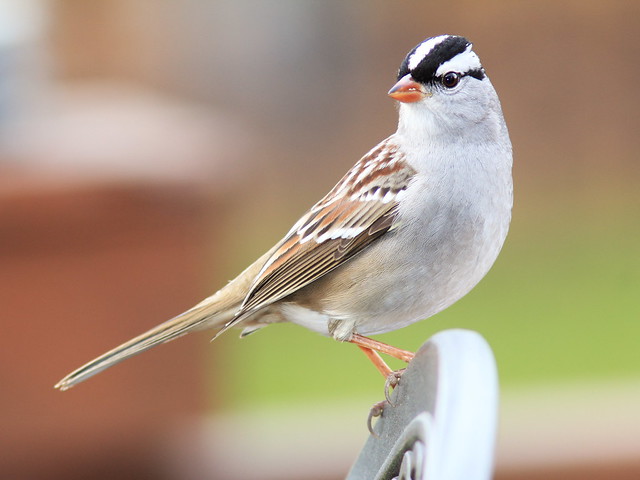
During the winter, White-crowned Sparrows invade the lower half of the 48 States after breeding in northern Canada and the Rocky Mountains. They are large and quite handsome birds. This one was in our daughter's back yard:

White-crowned Sparrow 05-20141010

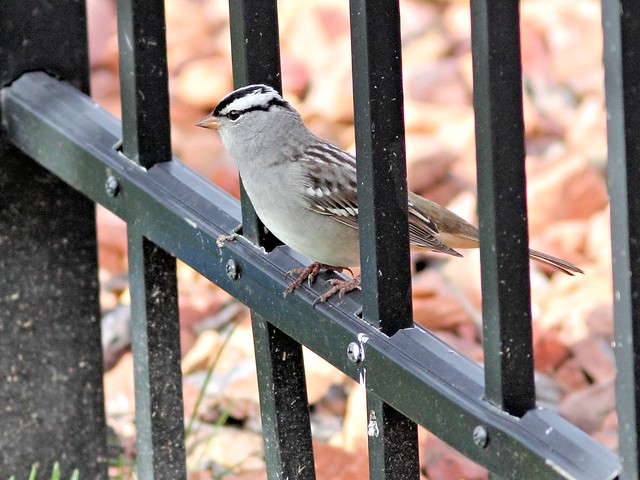
White-crowned Sparrow on our daughter's fence:

White-crowned Sparrow 5-20130505

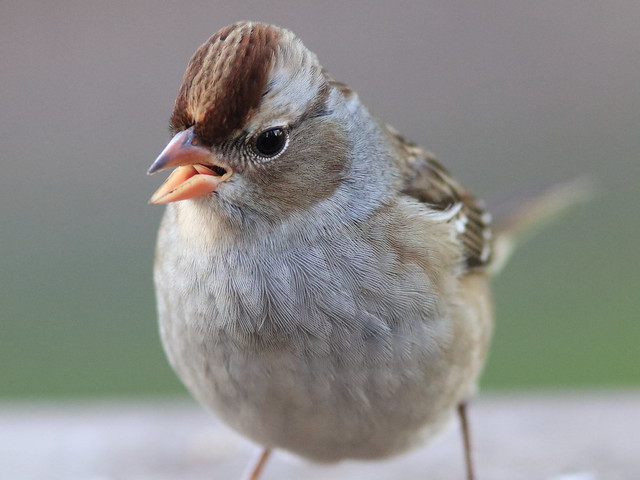
The immature White-crowned Sparrow has dull brown stripes on its crown before they are replaced by white:

White-crowned Sparrow portrait 01-20161014

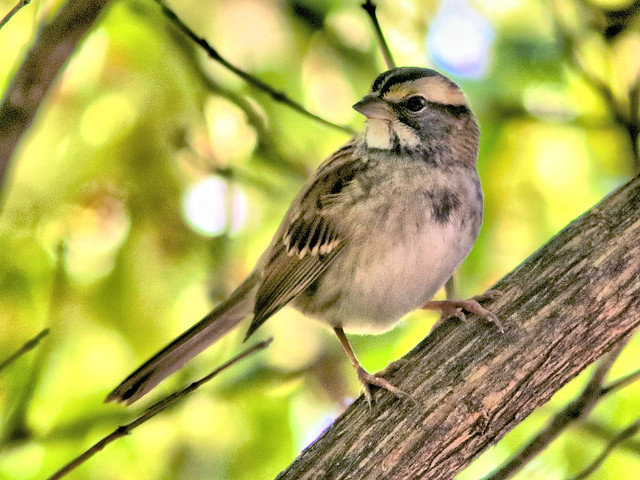
Somewhat similar but more compact is the White-throated Sparrow, another winter visitor to the lower forty-eight:

White-throated Sparrow HDR 3-20161020

The Swamp Sparrow also has a white throat but its back is rufous and its head and breast are grayish. It breeds in wetlands of Canada and the north central and northeast portions of the US, migrating into the southeastern states and Mexico. We often see them in south Florida during winter:

Swamp Sparrow 03-20161007

I could go on, but my archives include over 1600 photos of most of the 37-40 species of sparrows (and related towhees and juncos) which I have seen.  Here is a scattering of favorite sightings.

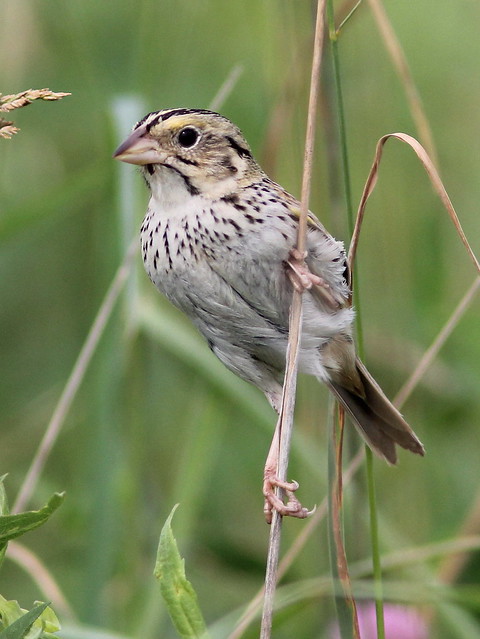
Henslow's Sparrow is threatened by loss of habitat. It is a tiny reclusive and quite rare breeder at Nelson Lake:

Henslow's Sparrow 06-20170727

Vesper Sparrow, known for its beautiful evening song. One sang on the roof of our Illinois condo until the entire surrounding area was developed:

Vesper Sparrow (Pooecetes gramineus) 3- 20100410

Field Sparrow, a persistent singer on the open prairie and wooded edges. Its pink bill and clear breast are distinctive:

 Field Sparrow 2-20110707

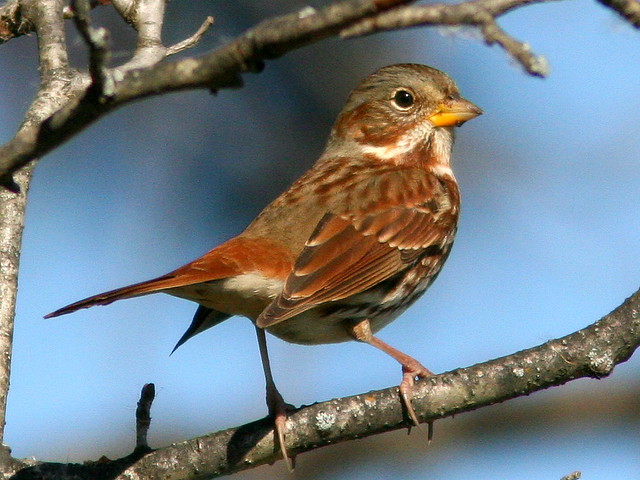
Fox Sparrow, quite a large sparrow, which breeds in the northwestern US and into northern Canada, is a common winter visitor to the woodlands of NE Illinois:

Fox Sparrow 2-20101017

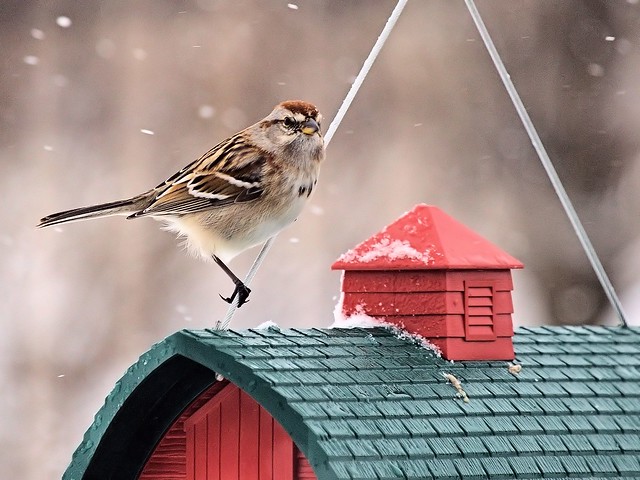
American Tree Sparrow, another visitor from the north, at our daughter's feeder:

American Tree Sparrow 2-20130227

Grasshopper Sparrow, fairly common breeder near our Illinois home, which even visited our south Florida neighborhood one winter (Illinois, July 24, 2017):

Grasshopper Sparrow 02-20170724

Grasshopper Sparrow (SE Florida, February 1, 2011):

Grasshopper Sparrow 3-20110201

Finally, a rare find in a vacant lot near our home were 2 or 3 pairs of Lark Sparrows, at least one of which raised a family. They persisted from mid-May through late July, 2017. There were very few historic records of them breeding in our county:

Lark Sparrow 002-20170524

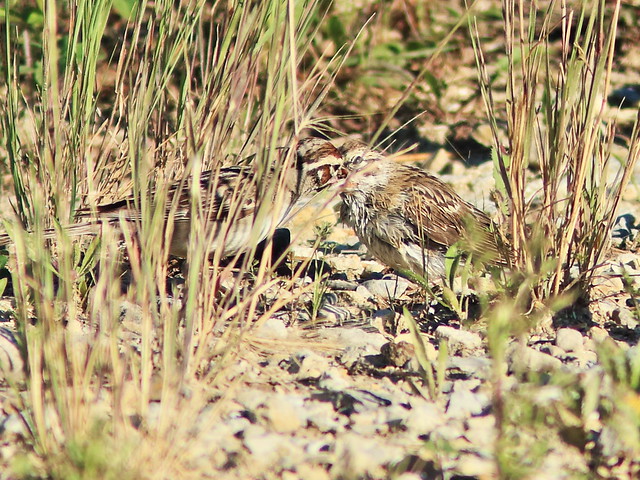
Lark Sparrow feeding fledgling (July 2, 2017):

Lark Sparrow adult feeding fledgling HD 02-20170702

When you read this I should be nearing the conclusion of several weeks of travel between Florida, Illinois, Wisconsin, the Texas Panhandle and the Gulf Coast off Corpus Christi, Texas. Therefore I prepared this post in advance. This has limited my computer face time and I have had to depend upon my iPhone. I will try to catch up upon my return home to Florida before going  back to Illinois.

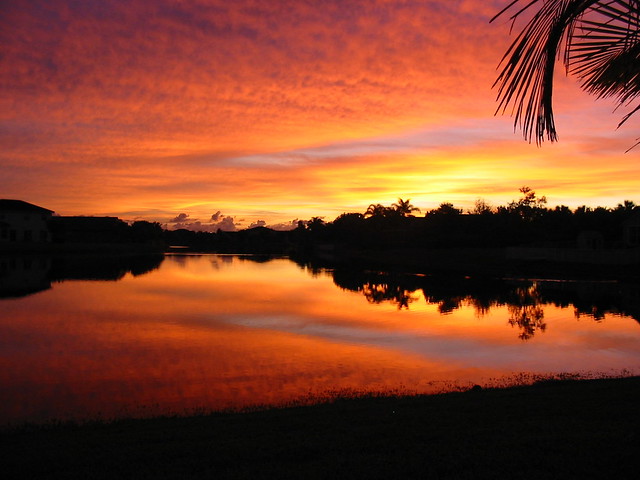
Here is a view of sunrise from our south Florida back patio to satisfy my urge to publish some nice reflections:


Sunrise SOOC 2-20091122


= = =  = = =  = = = =  = = = = =

Linking to Misty's  CAMERA CRITTERS,

Linking to Eileen's SATURDAY'S CRITTERS,

Linking to FENCES AROUND THE WORLD by Gosia

Linking to SKYWATCH FRIDAY by Yogi, Sylvia and Sandy

Linking to WEEKEND REFLECTIONS by James

Linking to BirdD'Pot by Anni

Linking to Wild Bird Wednesday by Stewart

Linking to Wordless Wednesday (on Tuesday) by NC Sue

Linking to ALL SEASONS by Jesh

Saturday, June 14, 2014

Grassland birds at Nelson Lake

In an earlier post I discussed the interesting geology of the prairies of northeastern Illinois and how pollen studies at Nelson Lake/Dick Young Forest Preserve revealed a great deal about the evolution of the grasslands.  Following the retreat of the glaciers 16,000 years ago, lush evergreens were succeeded by hardwood forests which then retreated as the climate warmed and rainfall diminished. The tallgrass prairies that greeted the first European settlers had reached their full extent only 3,500 years before Europeans arrived. During the past century the hand of man has rendered the prairies mostly extinct, their lush soil nourishing corn and soybean crops. 

Nelson Lake and the surrounding woodlands, prairies and marshland are actively managed by the Kane County Forest Preserve District. A program of controlled burns, removal of exotic vegetation and planting of native trees and shrubs  is returning this 1,285 acre (2 square miles) sanctuary to a semblance of its original condition.

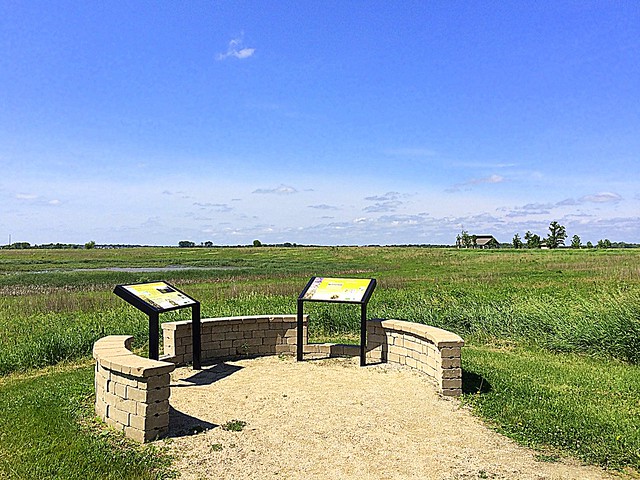
The most extensive prairies occupy the northern and western portions of the preserve. This observation area is along the trail near the north entrance:

Nelson Lake north entrance

In early June, during our brief stay at our second home in northeastern Illinois I got out to Nelson Lake in hopes of seeing three particular bird species that I missed on my last trip here a few weeks ago. These were Henslow's Sparrow, Sedge Wren and Dickcissel. 

The Dickcissels were fairly abundant, so I spent most of my time looking and listening for the endangered Henslow's Sparrows. This bird is extremely selective in choosing nesting areas and its loose colonies must relocate frequently. They require a layer of two or three years' accumulation of dead grass and will not build their nests an area that has been recently burned. The pattern of controlled burns assures a variety of habitats to accomodate the needs of different species. I thought I found one such area where the Henslow's Sparrows might nest, but was obviously wrong (I returned the next morning and heard at least 4 males singing but never caught sight of a single one).

Here are some images of Henslow's Sparrows (Ammodramus henslowii, 5 inches in length) from previous years. They are tiny sprites who put great effort into their songs which come out as little squeaky "s-lip," uttered at intervals of several seconds.

Henslows Sparrow 4-20090618

In good light the head of a Henslow's Sparrow appears greenish:

Henslow's Sparrow SOOC crop 2-20100630

Moving furtively through the grass, it is difficult to keep one in focus.

Henslow's Sparrow (Ammodramus_ henslowii ) 2-20120529

Several other sparrow species nest in the prairies of Nelson Lake. In size and habits, the Grasshopper Sparrow (Ammodramus savannarum, 5 inches) most resembles the Henslow's but is more common. Individuals vary somewhat in plumage, but note its clear breast and lack of malar (mustache) stripe. This individual is brightly colored:

 Grasshopper Sparrow 20110610

Another Grasshopper Sparrow appears more somber:

Grasshopper Sparrow 6-20140608

Savannah Sparrows are heavily streaked and a bit larger (5 1/2 inches):

Savannah Sparrow 2-20110707

Savannahs often sport a central breast spot and a bit of yellow in front of the eye, but these features are not always evident.

Savannah Sparrow 20081107

The even larger Song Sparrow (6 inches) has a longer tail is the most common sparrow on the prairie.

Song Sparrow 20090510

Field Sparrows (5 3/4 inches) breed in the brushy margins of the grasslands:

Field Sparrow 2-20110707

Sedge Wrens (4 1/2 inches) are fairly common but also change their breeding locations, as they prefer shorter grass and sedges, usually within sight of water. Actually I did not seek them out this time as I had spent at least two hours searching for Henslow's Sparrows. Sedge Wrens give away their location by their distinctive chattering song. They can be extremely elusive, singling along the trails, loudly but unseen. (I heard several Sedge Wrens the next day and caught sight of one but did not succeed in photographing any. These photos were taken during prior seasons at Nelson Lake).

Sedge Wren 3-20090615

Typically, their tiny tails are bent forward over their backs.

Sedge Wren 20090519

I missed the Dickcissels earlier because they are very late migrants, usually not arriving at Nelson's Lake until early June. This time I found several males singing on their nesting territories.

Dickcissel 7-20140608

This Dickcissel chose a blue silo as a backdrop:

Dickcissel and silo 20140608

It burst into song:

Dickcissel and silo 2-20140608

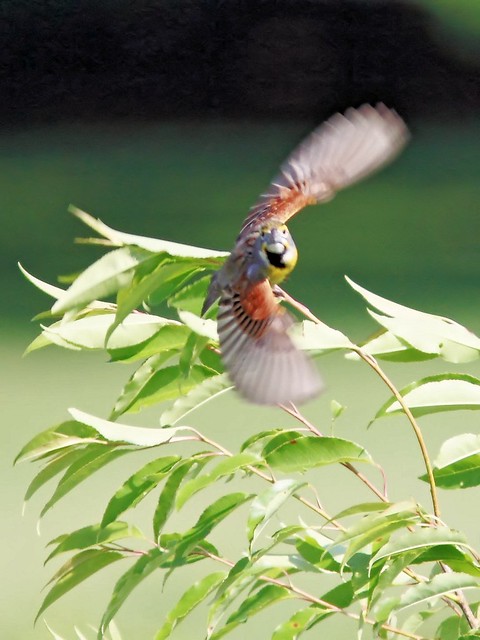
I accidentally caught this Dickcissel  in flight, revealing its stunning bright chestnut wing coverts.

Dickcissel in flight 20140608

I will be away from Internet and cell phone service for much of these two weeks and prepared several posts in advance, but plan to get back with a "live" report as soon as possible.