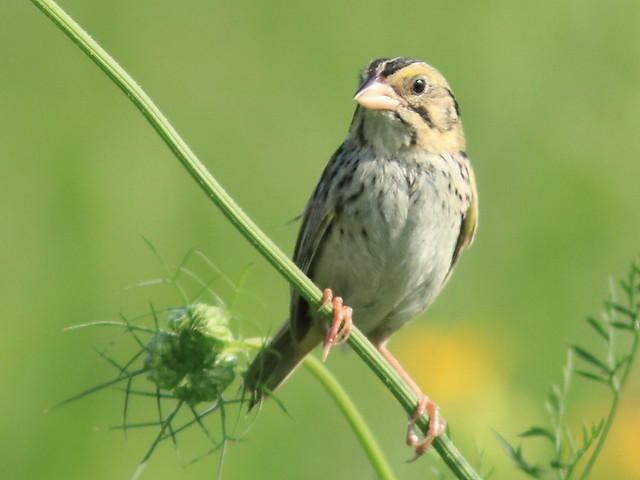
Out on a trail which traverses the north prairie of Nelson Lake (Dick Young/Nelson Lake Marsh Forest Preserve) in Batavia, Illinois, a passerby stopped to watch me as I was intently focusing my camera into the high grass. I turned to say hello and he asked me what I was seeing. "A Henslow's Sparrow," I replied. His response was "Oh, only a sparrow," and he moved on his way.
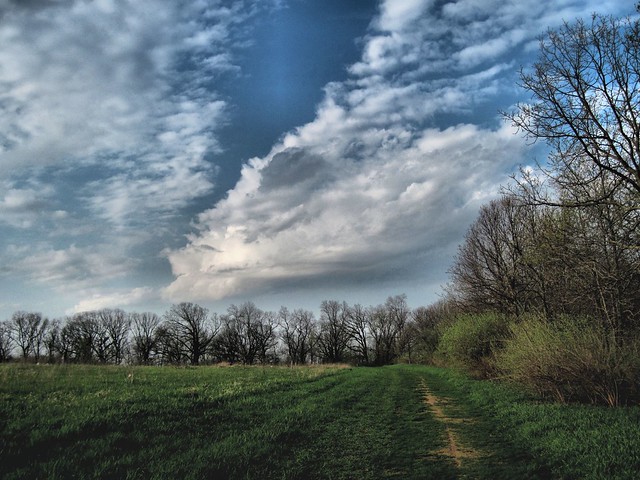
A dramatic sky over the southwest prairie at Nelson Lake preserve:
True, most sparrows are unobtrusive LBJ's (Little Brown Jobs). They can sometimes be difficult to identify or even find as they move around near the ground or perch on a distant shrub. Yet they are an interesting lot and, on closer inspection, quite varied and beautiful.
The most common sparrows of my childhood were called "Chippies" by my grandmother, who fed them bread scraps in the back yard we shared. Only after I found them pictured in my first bird book did I realize their proper name was English Sparrow, and that it was introduced from Europe. Later I learned that they were the only "true sparrows" I was ever likely to see in the US.
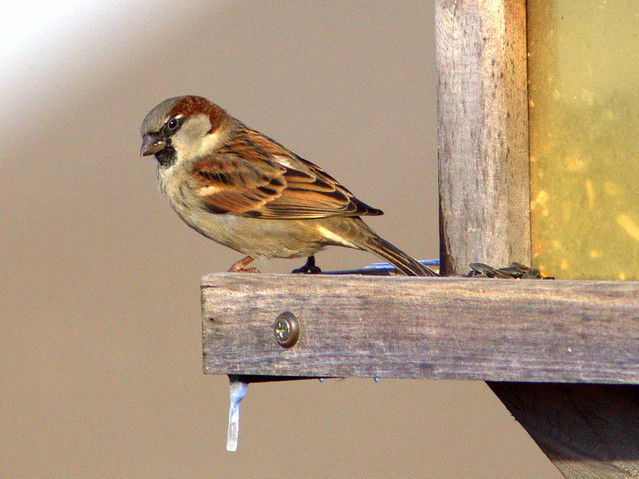
Renamed "House Sparrow," they populate most of the urban areas of North America including Mexico but not the high mountains or northern Canada. Although they are present in shopping centers less than a mile from our south Florida home, I have never seen one in our back yard or the wetlands near our home.This male is enjoying a meal in our daughter's feeder in Batavia:
Closely related to weaver finches, the Old World "True" Sparrows (Family Passeridae) deserved naming rights before the LBJ's of the USA were ever discovered. I have yet to see a European Tree Sparrow, the other immigrant from this family, although it is quite common in St. Louis, Missouri and is also seen southwestern Illinois. The native sparrows in the Americas belong to a distinct family, Emberizidae, related to the Old World buntings.
Probably the best known representative of the American sparrow family is the Song Sparrow, which breeds all across the northern USA, up the Pacific Coast into southern Alaska and in much of the southern 2/3 of Canada. It migrates into all of the lower 48 States but does not reach southern Florida. It is appropriately named for its exhuberant melodic song (Nelson Lake, June 5, 2016) :

The Savannah Sparrow resembles it but is smaller, with a proportionately shorter tail. It may have yellow "eyebrows" which vary in intensity among its several subspecies:

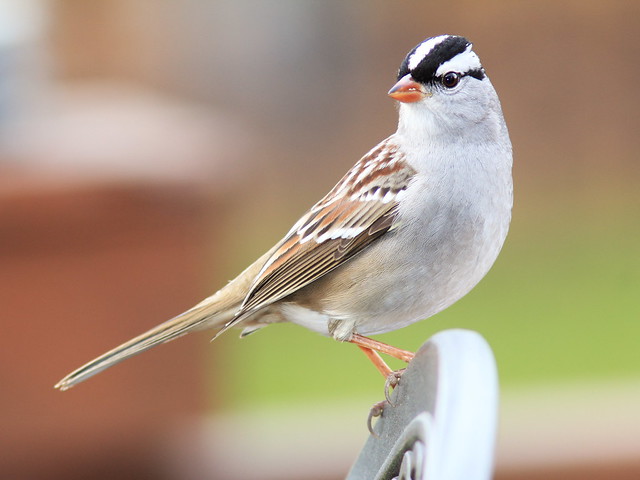
During the winter, White-crowned Sparrows invade the lower half of the 48 States after breeding in northern Canada and the Rocky Mountains. They are large and quite handsome birds. This one was in our daughter's back yard:
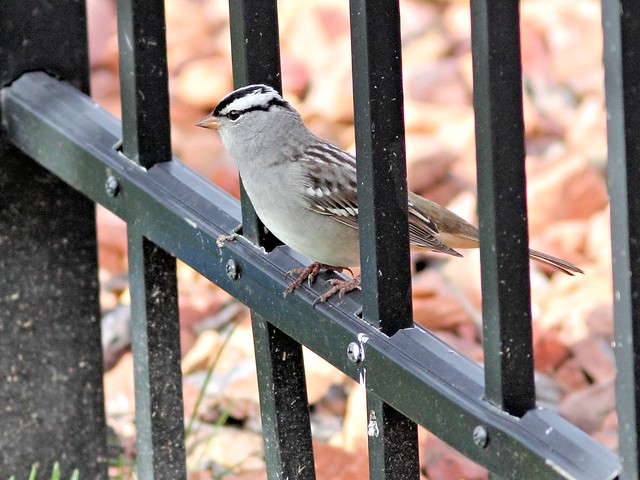
White-crowned Sparrow on our daughter's fence:
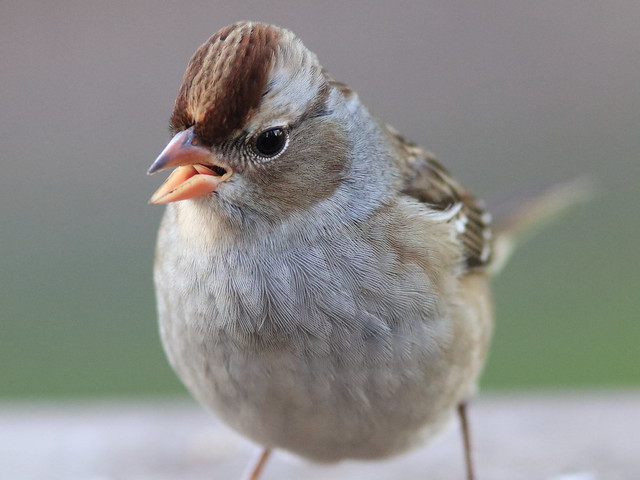
The immature White-crowned Sparrow has dull brown stripes on its crown before they are replaced by white:
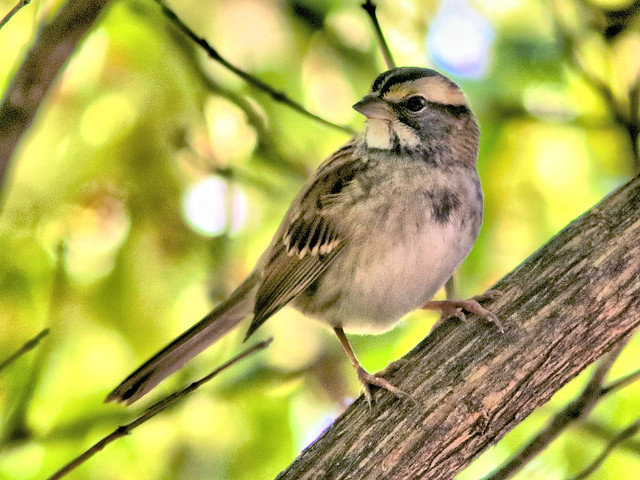
Somewhat similar but more compact is the White-throated Sparrow, another winter visitor to the lower forty-eight:
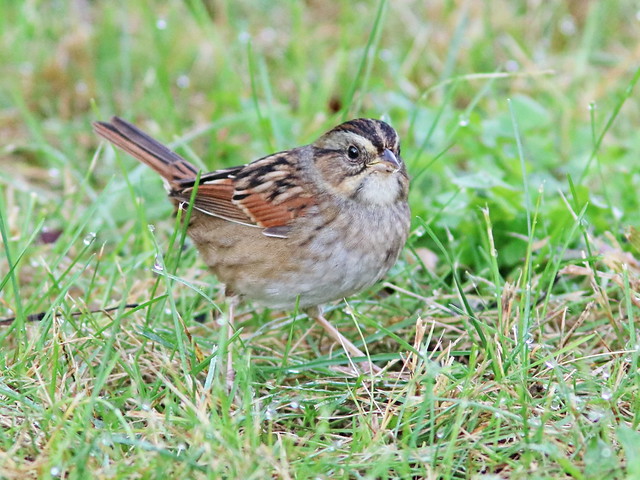
The Swamp Sparrow also has a white throat but its back is rufous and its head and breast are grayish. It breeds in wetlands of Canada and the north central and northeast portions of the US, migrating into the southeastern states and Mexico. We often see them in south Florida during winter:
I could go on, but my archives include over 1600 photos of most of the 37-40 species of sparrows (and related towhees and juncos) which I have seen. Here is a scattering of favorite sightings.
Henslow's Sparrow is threatened by loss of habitat. It is a tiny reclusive and quite rare breeder at Nelson Lake:
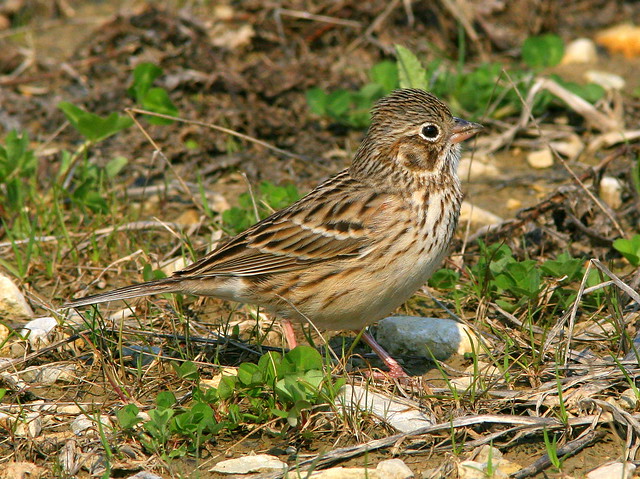
Vesper Sparrow, known for its beautiful evening song. One sang on the roof of our Illinois condo until the entire surrounding area was developed:
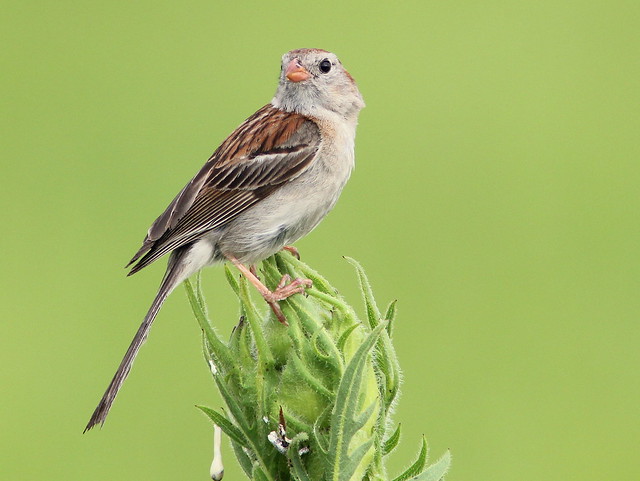
Field Sparrow, a persistent singer on the open prairie and wooded edges. Its pink bill and clear breast are distinctive:
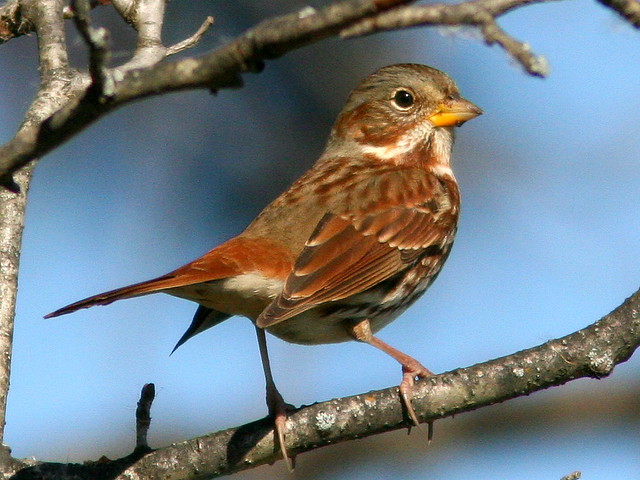
Fox Sparrow, quite a large sparrow, which breeds in the northwestern US and into northern Canada, is a common winter visitor to the woodlands of NE Illinois:
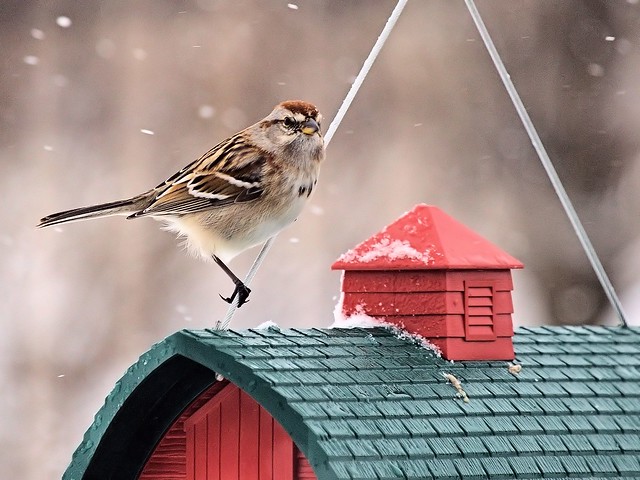
American Tree Sparrow, another visitor from the north, at our daughter's feeder:
Grasshopper Sparrow, fairly common breeder near our Illinois home, which even visited our south Florida neighborhood one winter (Illinois, July 24, 2017):

Grasshopper Sparrow (SE Florida, February 1, 2011):

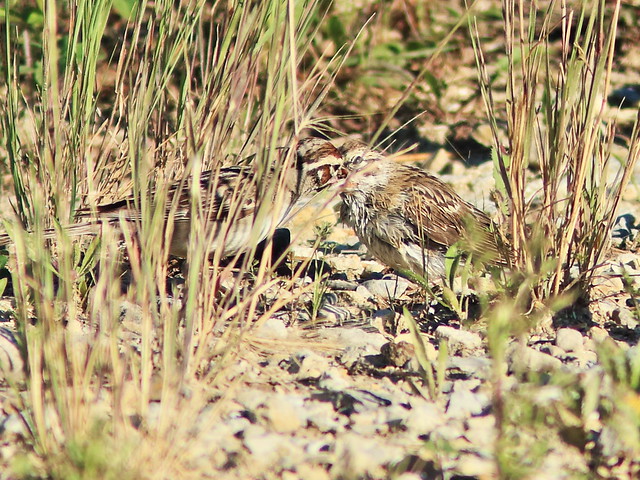
Finally, a rare find in a vacant lot near our home were 2 or 3 pairs of Lark Sparrows, at least one of which raised a family. They persisted from mid-May through late July, 2017. There were very few historic records of them breeding in our county:

Lark Sparrow feeding fledgling (July 2, 2017):
When you read this I should be nearing the conclusion of several weeks of travel between Florida, Illinois, Wisconsin, the Texas Panhandle and the Gulf Coast off Corpus Christi, Texas. Therefore I prepared this post in advance. This has limited my computer face time and I have had to depend upon my iPhone. I will try to catch up upon my return home to Florida before going back to Illinois.
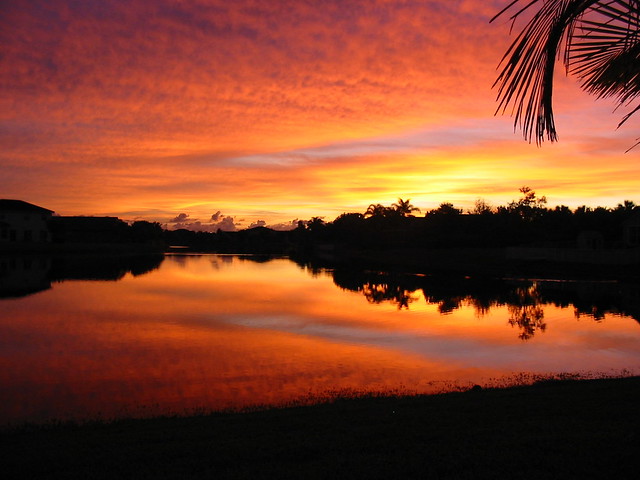
Here is a view of sunrise from our south Florida back patio to satisfy my urge to publish some nice reflections:
= = = = = = = = = = = = = = =
Linking to Misty's CAMERA CRITTERS,
Linking to Eileen's SATURDAY'S CRITTERS,
Linking to FENCES AROUND THE WORLD by Gosia
Linking to SKYWATCH FRIDAY by Yogi, Sylvia and Sandy
Linking to WEEKEND REFLECTIONS by James
Linking to BirdD'Pot by Anni
Linking to Wild Bird Wednesday by Stewart
Linking to Wordless Wednesday (on Tuesday) by NC Sue
Linking to ALL SEASONS by Jesh
Each month I search my archives for images which match the themes of critters, fences, skies, flowers, macros and reflections. This is a peek through the retroscope at photos taken three years ago, in October, 2013.
I am reminded of creatures and sights I might expect to see again at this time of year. Let's see how far I need to go into the month to find at least one for each meme. I accomplished this goal rather easily and have won the game twenty-two months in a row since starting in January, 2015. As usual, finding fences was my most difficult task, and for some reason very few of my photos included flowers.
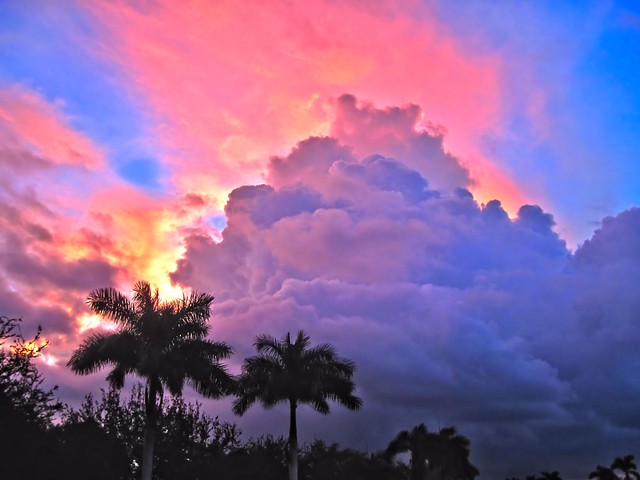
After watching migration in Illinois, we spent the entire month of October at our home in south Florida. On October 3, storm clouds cut short our morning walk:
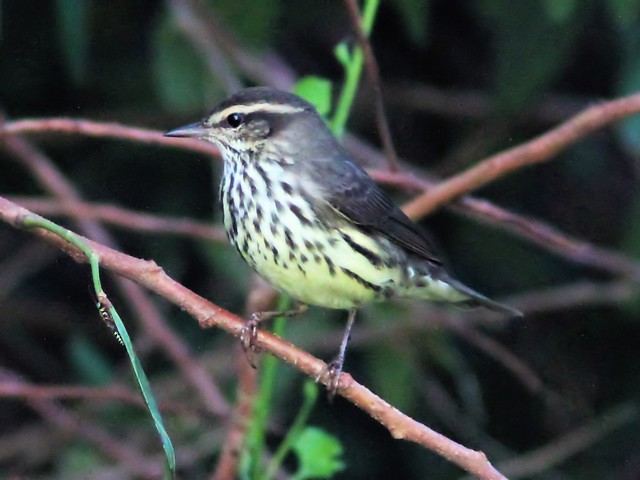
Fall warblers were passing through, among them this Northern Waterthrush:
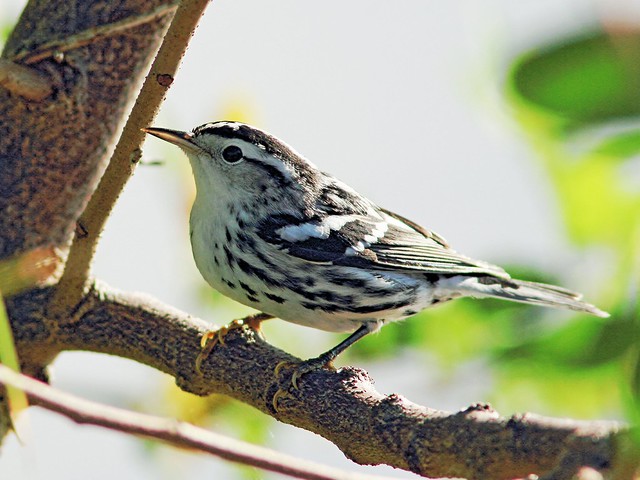
Black-and-White Warbler:
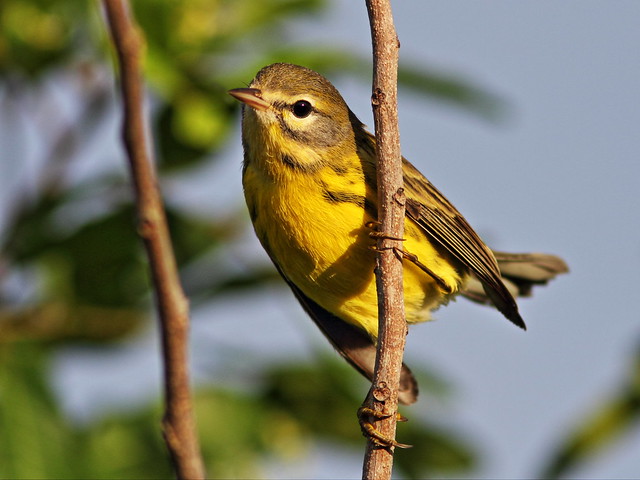
Prairie Warbler:
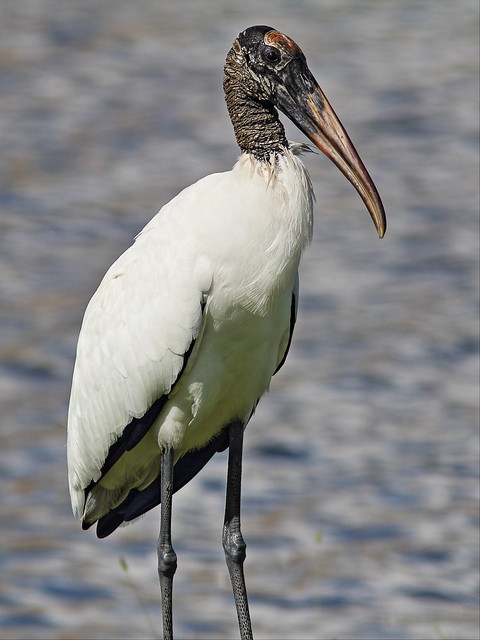
Wood Storks were locally decreasing in number still relatively common visitors to our back yard lake. Since then, due to habitat loss and excessive rainfall, nearly all have moved northward to breed:
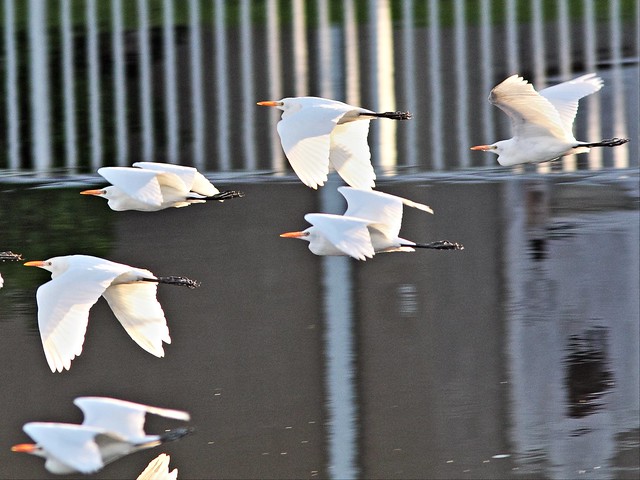
Flock of Cattle Egrets with reflection of neighbor's fence on October 16:
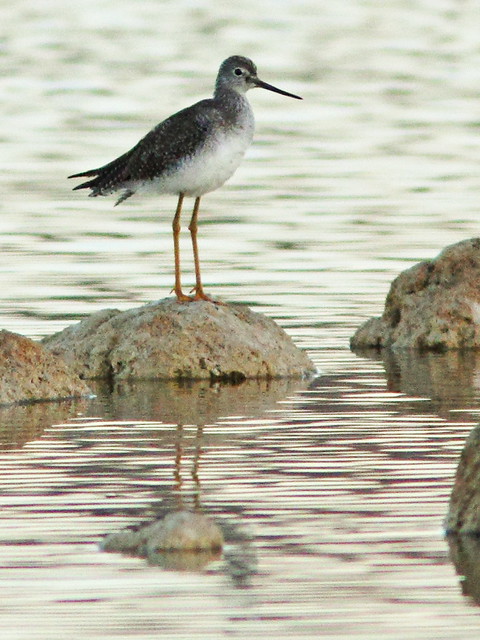
My only other reflections this month were cast by a Greater Yellowlegs...
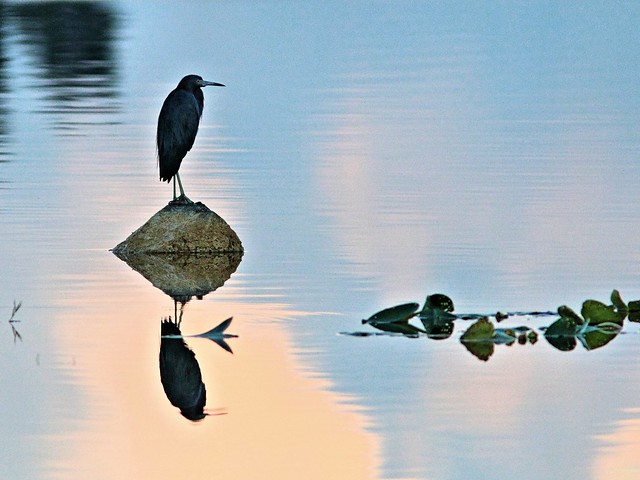
...and, when the wind stopped blowing, that of a Little Blue Heron
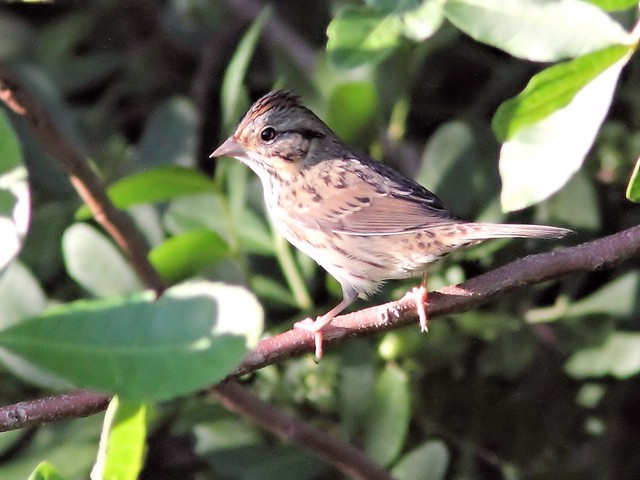
 A Lincoln's Sparrow appeared. An unusual winter visitor, this was the first one of this species ever reported as being seen in our county (Interestingly, I later photographed one again nearby in November, 2014):
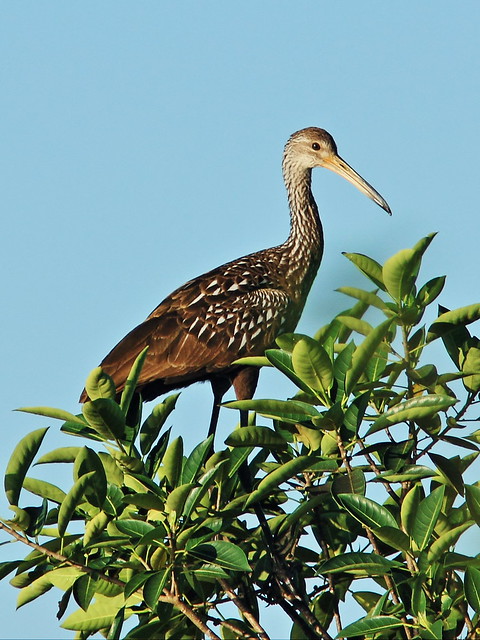
Limpkins nest locally but are also scarce in our birding patch. This was my first photo of one in our neighboring wetlands:
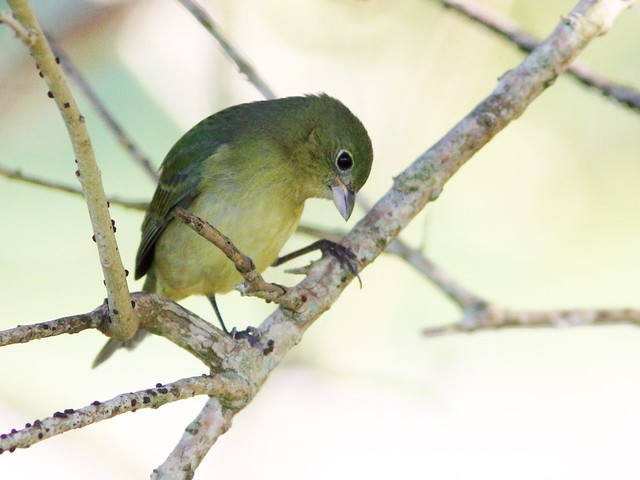
Female Painted Bunting:
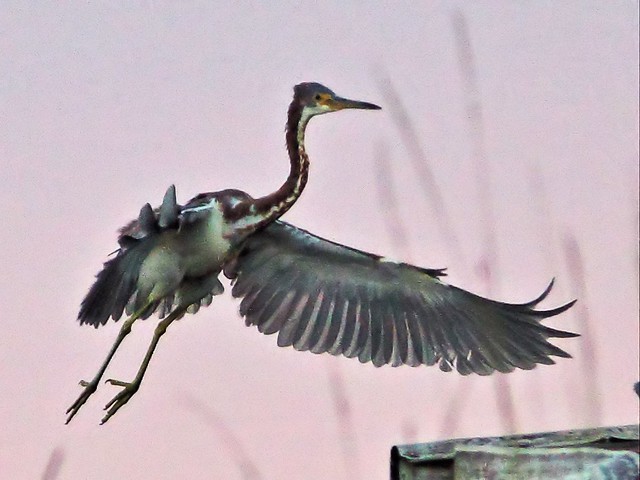
Tricolored Heron coming in for a landing:
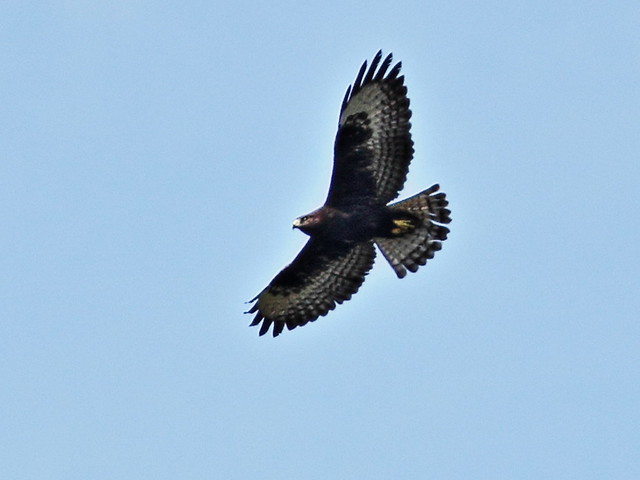
Dark morph of Short-tailed Hawk:
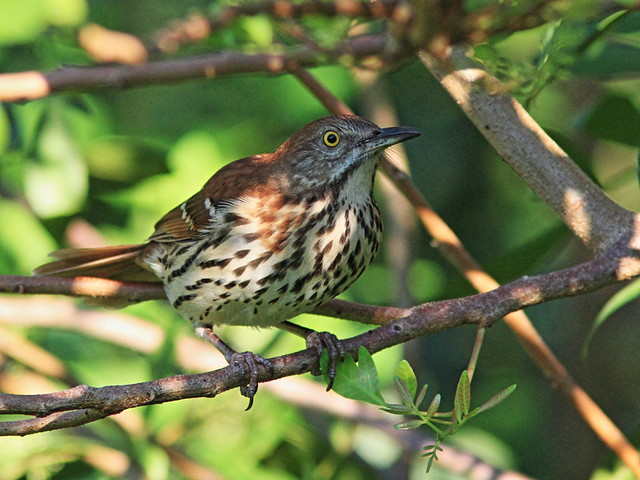
Brown Thrasher:
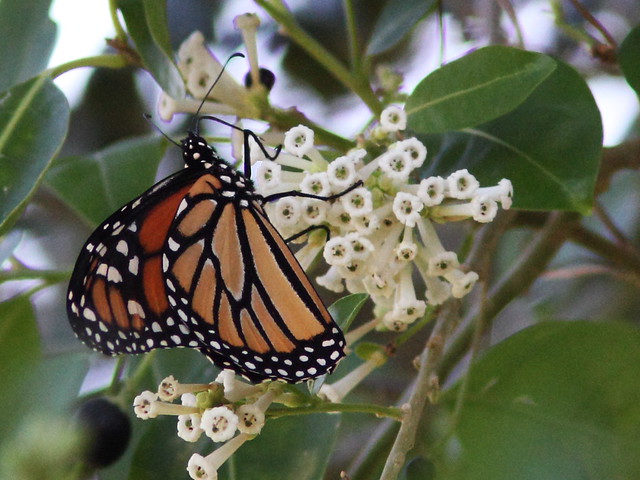
Monarch on Ligustrum blossoms:
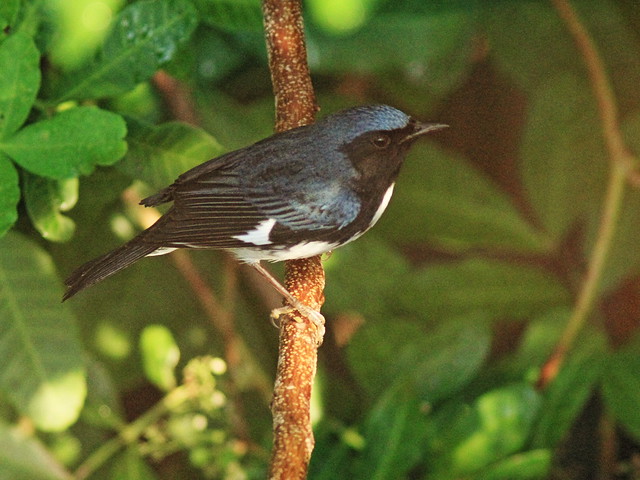
Black-throated Blue Warbler:
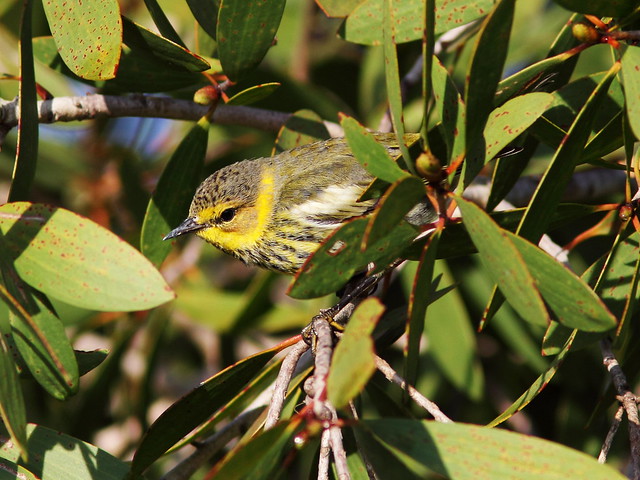
Cape May Warbler:
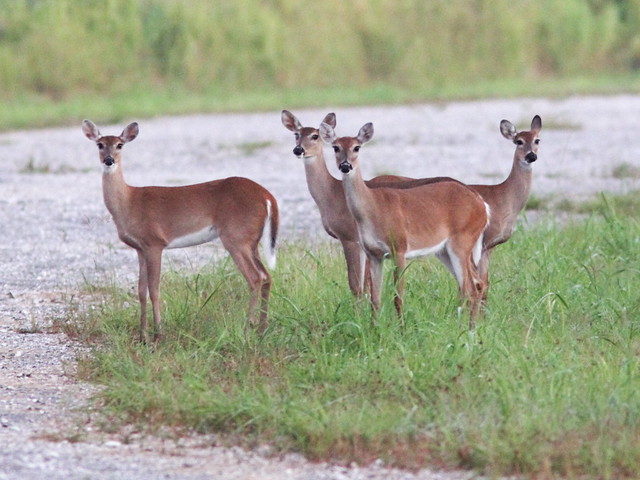
White-tailed Deer -- doe and yearlings:
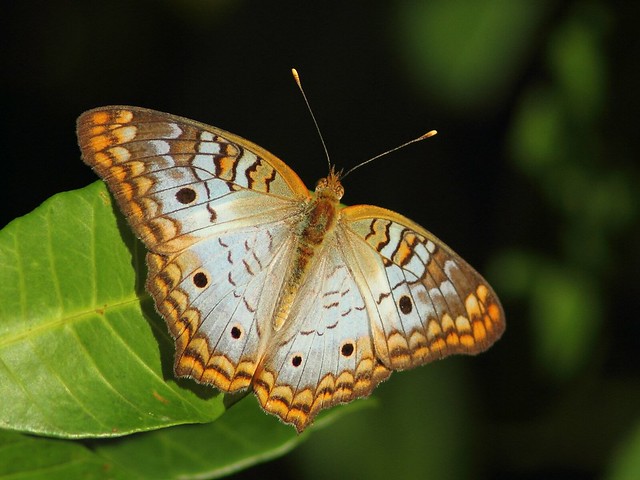
White Peacock in our local wetlands:
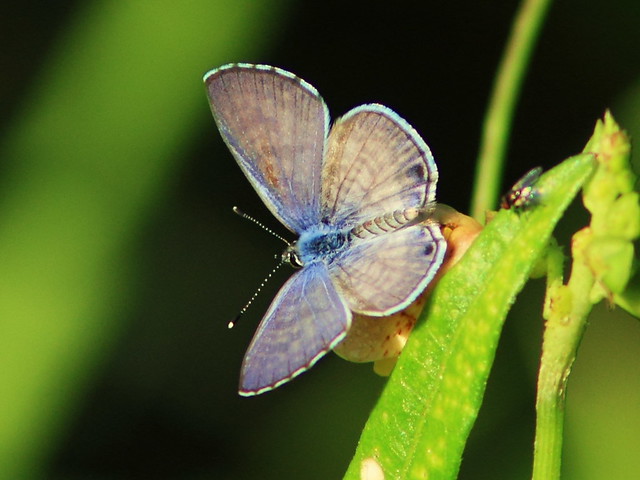
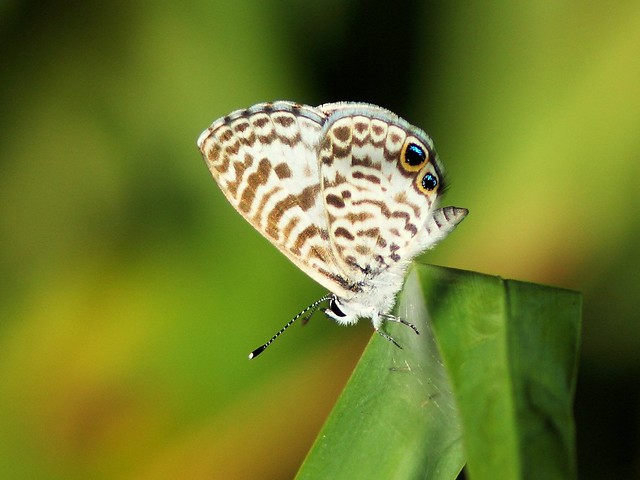
I captured nice views of both the top and undersides of this Cassius Blue butterfly:
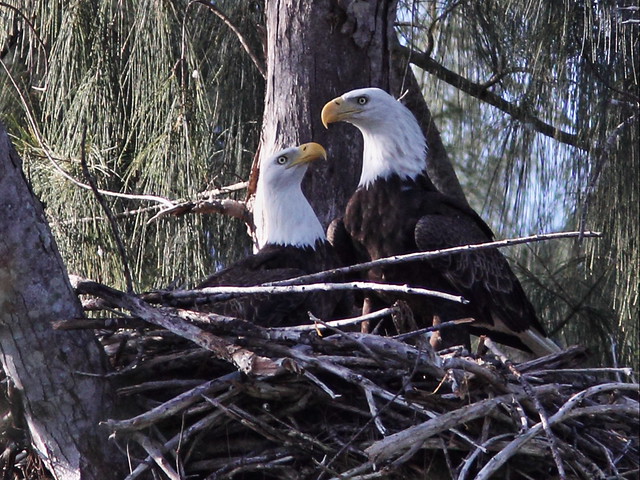
 By the end of the month, our local pair of Bald Eagles had begun to refurbish their nest. The female (Joy), on the right, is about 25% larger than her mate (Pride).
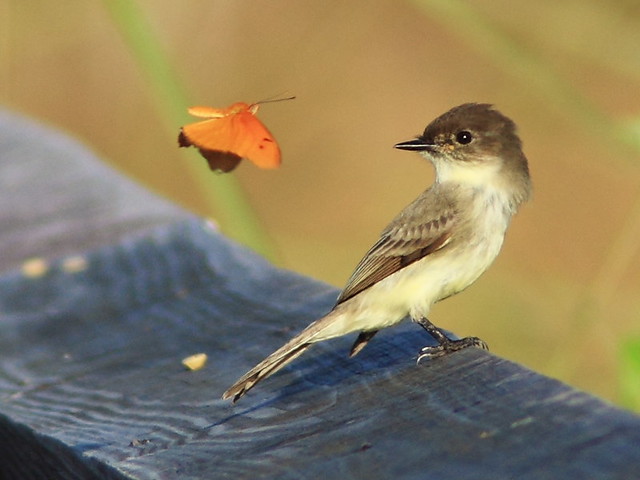
On October 31, I closed out the month with one of my favorite photos, that of an Eastern Phoebe watching a male Julia butterfly:
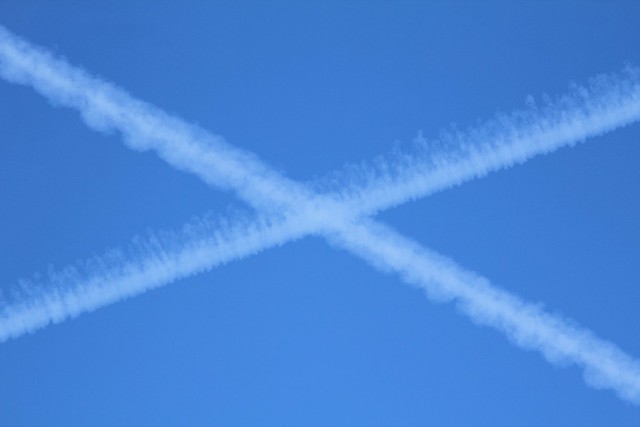
Intersecting contrails, in anticipation of the next day's trip to the Texas Panhandle and New Mexico:
= = = = = = = = = = = = = = =
Linking to Misty's CAMERA CRITTERS,
Linking to Eileen's SATURDAY'S CRITTERS,
Linking to GOOD FENCES by Tex (Theresa).
Linking to SKYWATCH FRIDAY by Yogi, Sylvia and Sandy
Linking to WEEKEND REFLECTIONS by James
Linking to BirdD'Pot by Anni
Linking to Wild Bird Wednesday by Stewart
Linking to Today's Flowers Friday by Denise
Linking to Wordless Wednesday (on Tuesday) by NC Sue
________________________________________________
Please visit the links to all these memes to see some excellent photos on display
________________________________________________
Winter has arrived in south Florida. The sun will continue to rise after 7:00 AM for a few more days, making it easy for us to beat the sun as we look for deer and Bobcats in the wetlands next to our south Florida home.
Clear and cool weather promised to persist until Christmas. Sunrise on a cloudless sky is less than spectacular. This view from our back patio, on December 19, showed a bank of low clouds over the ocean, reminding me of the mountains we could see from our front windows when we lived in New Mexico.
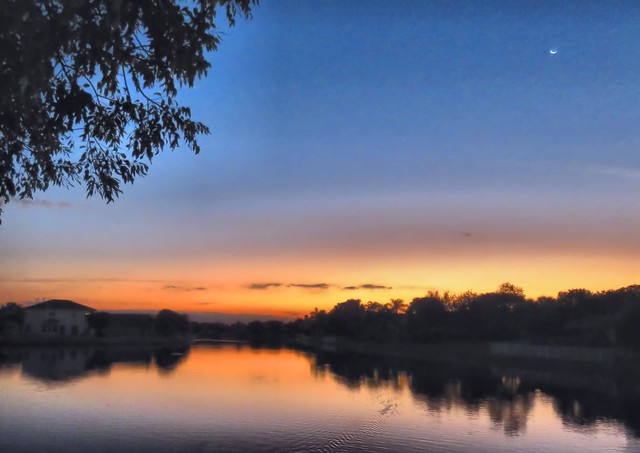
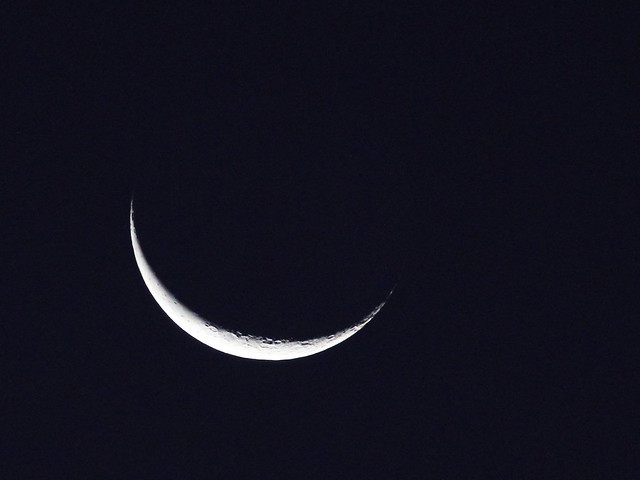
The waning crescent moon can be seen in the upper right corner of the above photo. In winter it is lit from the bottom, pointing up, a "wet moon" that traps the rain in its cup, heralding the dry season.
In a recent post I lamented the lack of little birds, the "dicky-birds" the few species present when the days are long, warm and wet. I define "winter" as that period between fall and spring migration, loosely from October through February. During winter we can see more of the little tykes, sparrow-sized or smaller.
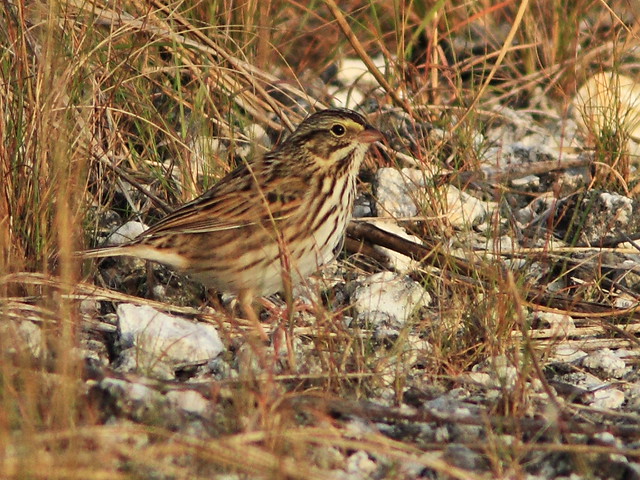
Although Florida's big birds are relatively easy to find and photograph, I enjoy the challenge of capturing these evasive creatures. Some northern sparrows have now arrived, including this Savannah Sparrow, first seen on November 4:
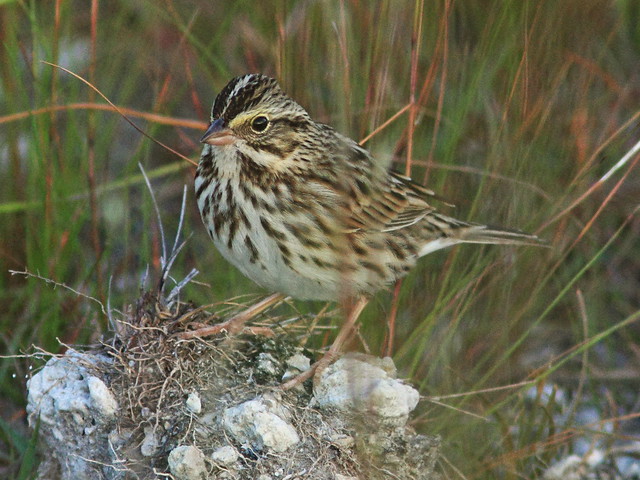
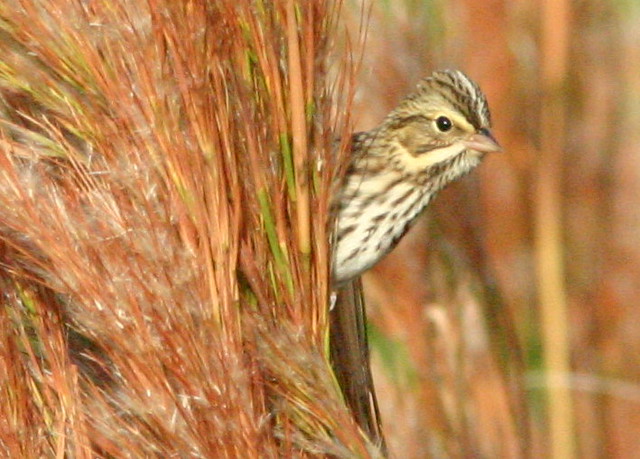
When just learning to use my first DSLR camera (the first Canon EOS Digital Rebel) I took my favorite photo of a local Savannah Sparrow back on October 31, 2008:
About a week later after the first Savannah Sparrow, I caught this quick glimpse of a Swamp Sparrow through the brush, on November 13:
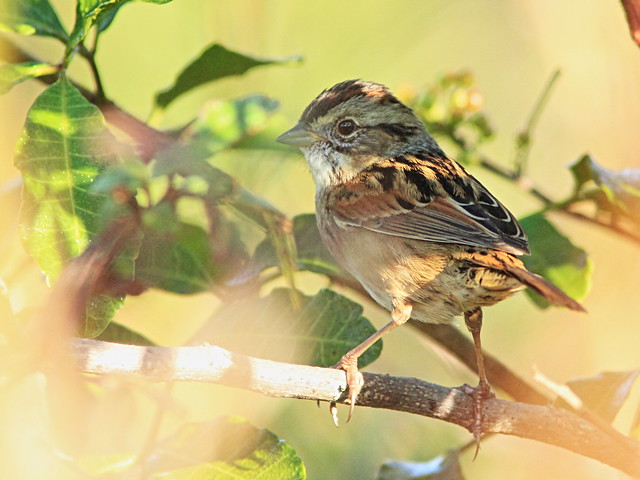
After a few near misses, this one came out into the open on December 19:

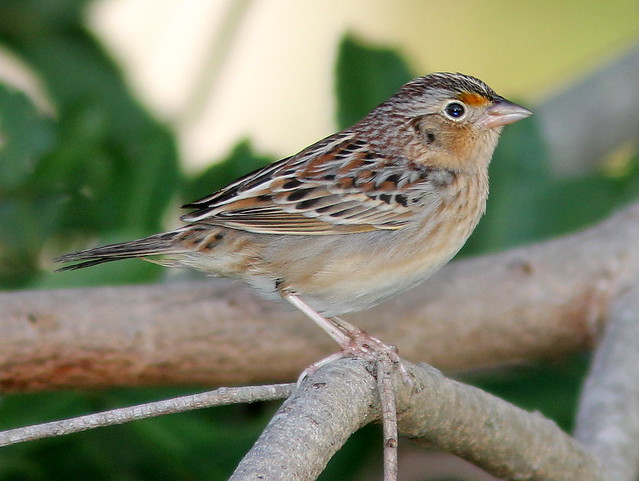
I hope to find other winter sparrows that have appeared rather irregularly over the years, Among them, the Grasshopper Sparrow, photographed here on February 1, 2011. Loss of grassland habitat in our patch makes this species less likely to appear locally in the future:
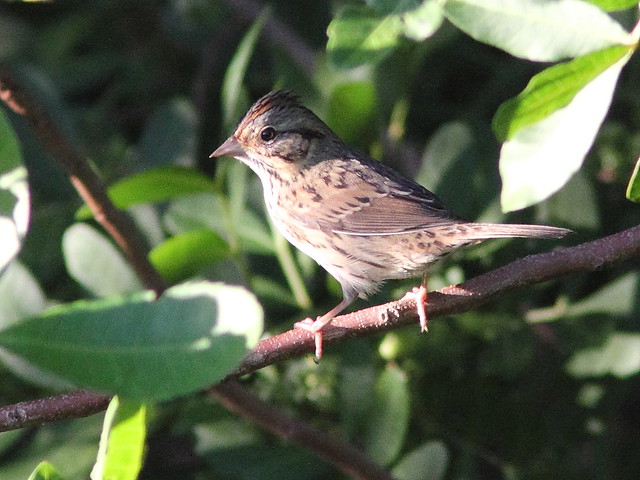
A Lincoln's Sparrow showed up only once, on October 16, 2013:
I sighted my first local White-crowned Sparrow on October 18, 2012:
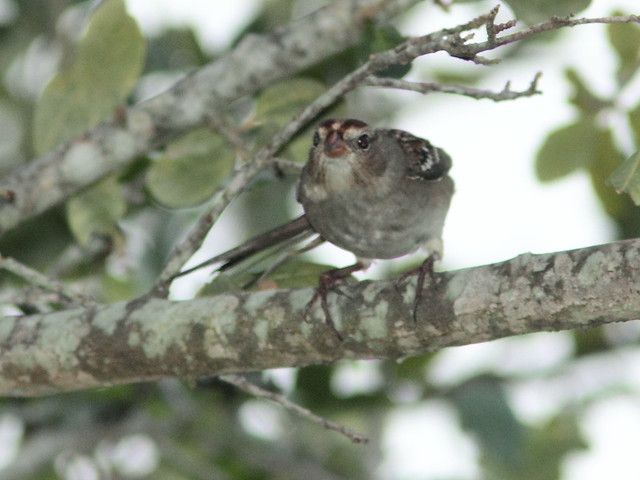
At least two White-crowned Sparrows were present the next year in the same tree, first on October 23,...
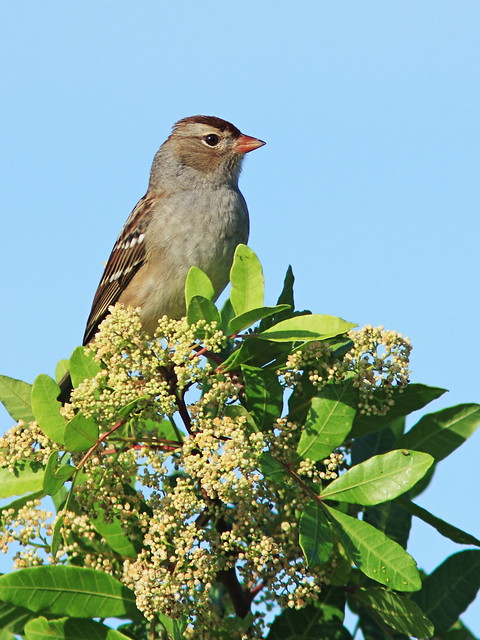
...and again on October 26, 2013:

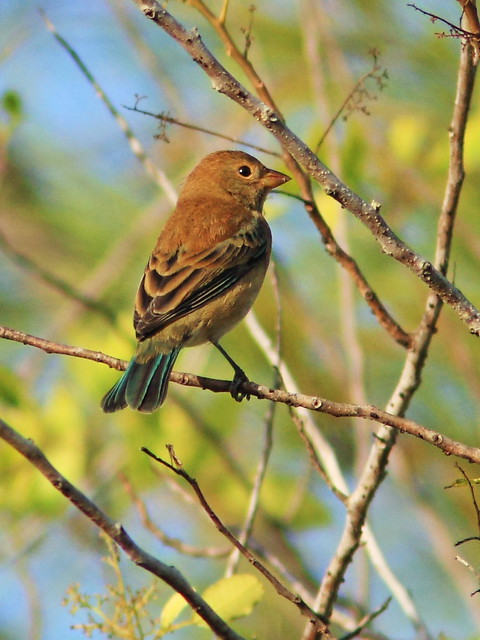
Two visiting species of bunting qualify as "dicky-birds, less than 6 inches long. The Indigo Bunting is seen irregularly all winter. The males show very little of their summer blue plumage (November 7, 2014):
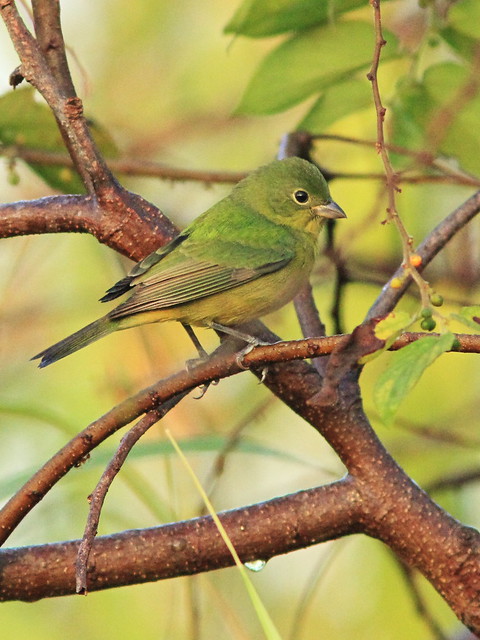
While male Painted Buntings retain their colorful plumage all year around, we see mostly green immature and female birds (this one also on November 7):
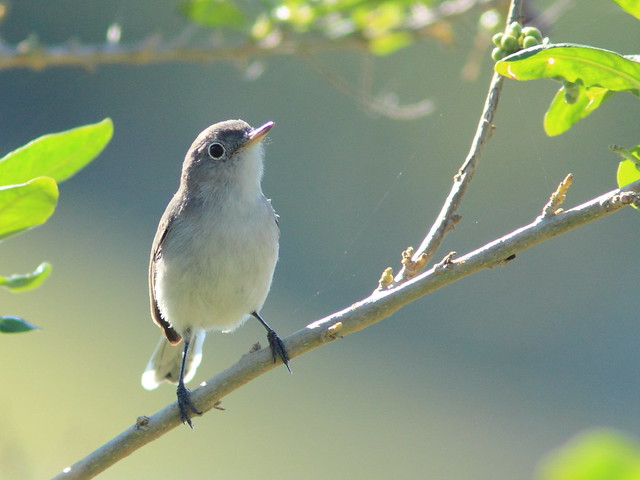
Other non-breeding migratory "dicky-birds" (sparrow-size or smaller) that stay here all winter and are relatively common include the Blue-gray Gnatcatcher (November 11, 2014).
Tiny House Wrens breed widely over the northern part of the US and are fairly abundant all winter long (November 7, 2014):

A few warblers are seen only during the winter-- the Palm Warbler (December 10, 2014),...

...and Yellow-rumped Warbler, giving me an inquiring look,...

...and suspended in mid-air on November 30, 2014:

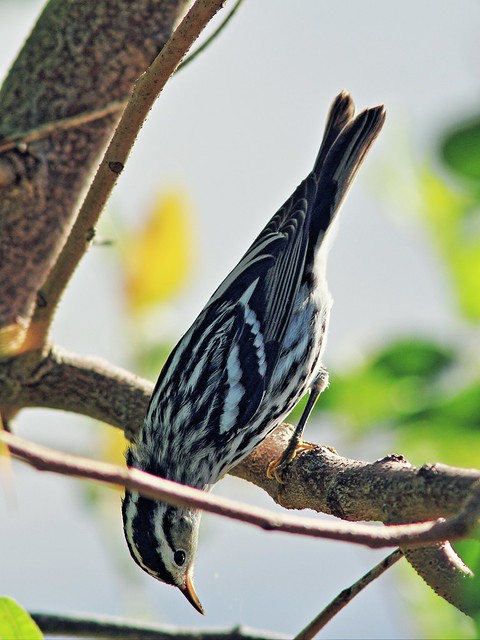
Although I have not photographed one this winter, Black-and White Warblers are fairly reliably present (October 17, 2013):
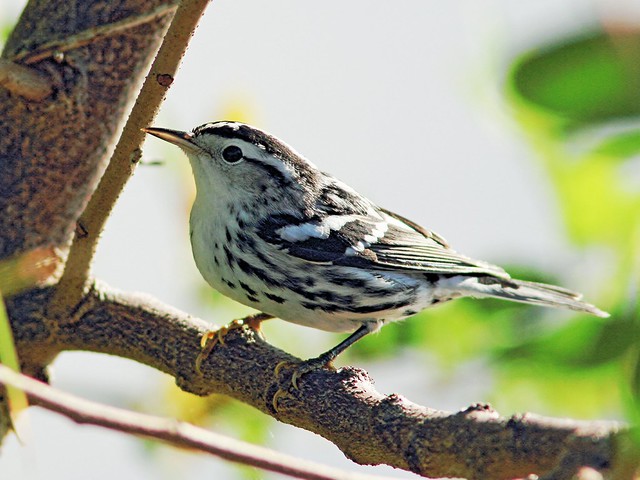
Their plumage is striking and they are amusing acrobats:
Orange-crowned Warblers, though reclusive and hard to find, are also here all winter (November 20, 2014):

Many other warbler species spend the winter nearer the coast and in richer habitats than our wounded and deteriorating local wetlands, but so far I have not found them locally except during migration.