Midsummer days in Illinois have often reached higher temperatures than those back home in south Florida, but the humidity is not quite as uncomfortable.
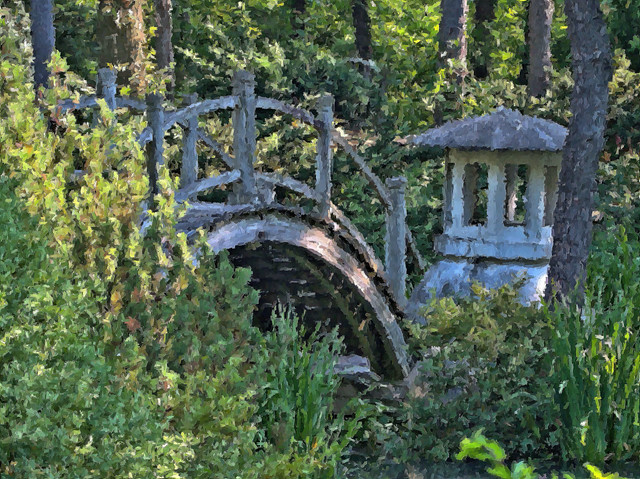
We sought out the shade in nearby Fabyan Preserve, Geneva, Illinois. I so enjoyed this sun-dappled spot in the Japanese Garden, a photo of which I rendered as an oil painting:
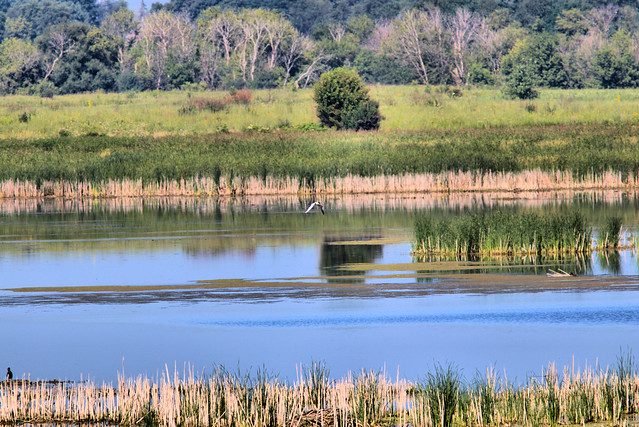
Nelson Lake in Batavia, Illinois reflects the blue sky as a Caspian Tern flies over:
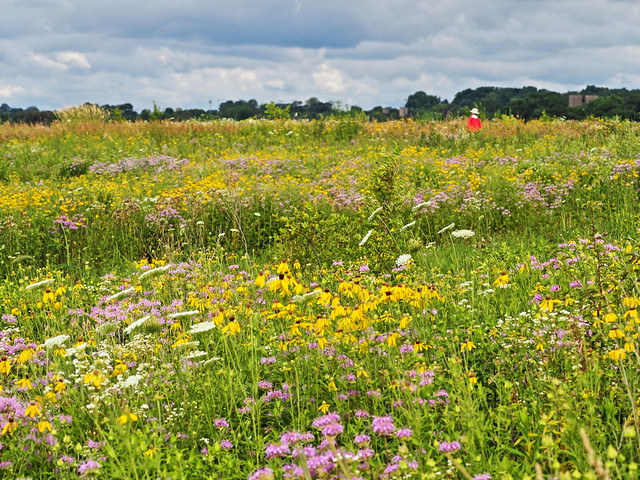
Mary Lou appears lost in a sea of wildflowers in the Nelson Lake prairie preserve:
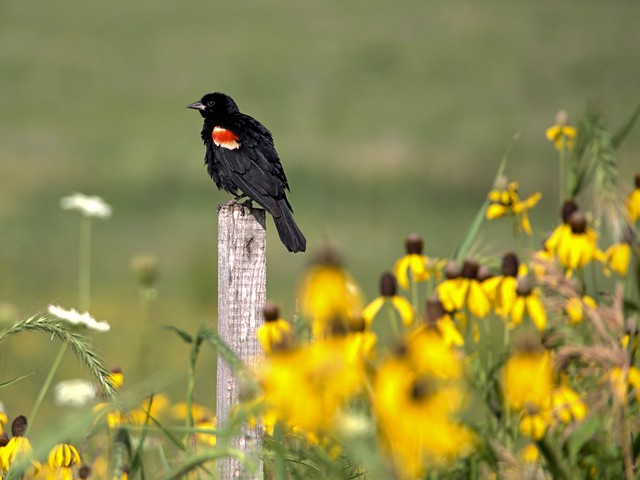
A Red-winged Blackbird calls from a post:
A diminutive Sage Wren is back-lit by the bright sun as it sings cheerfully:
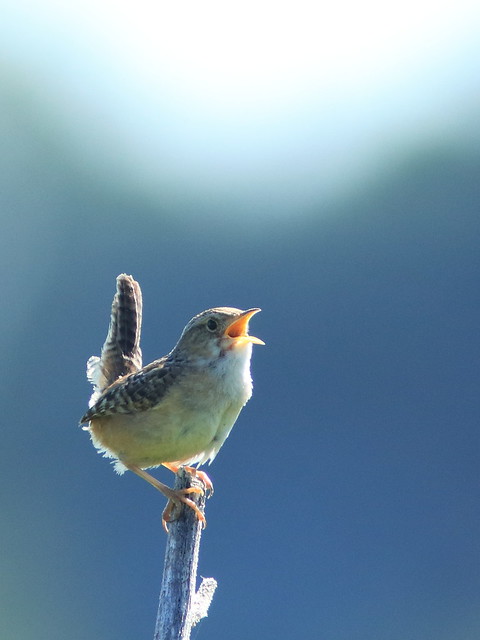
The Sage Wren often closes his eyes while singing, as if truly enjoying the sound of his voice:
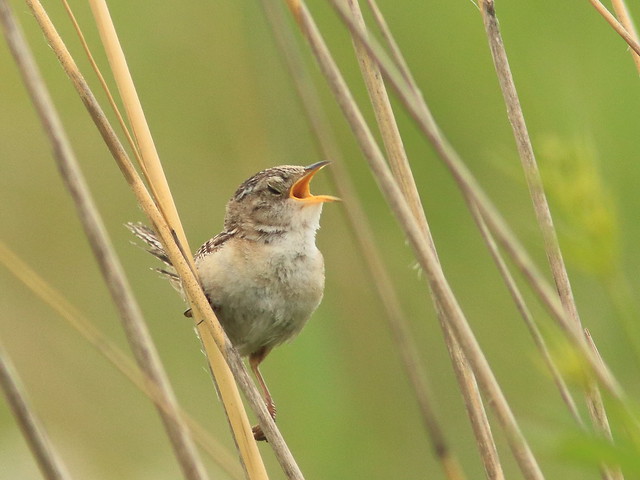
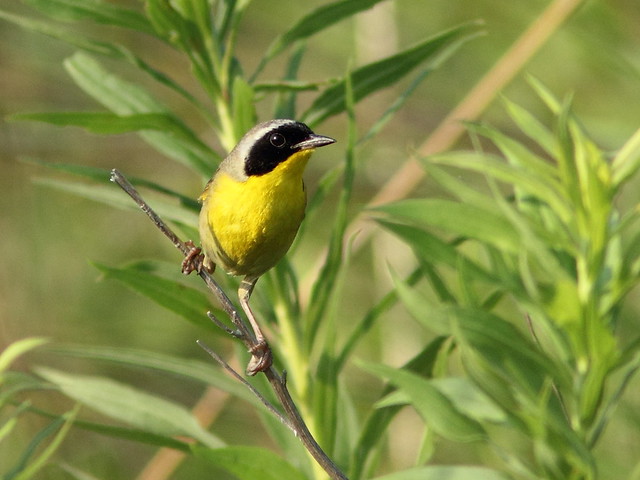
Common Yellowthroats sing "witchity-witchity..."
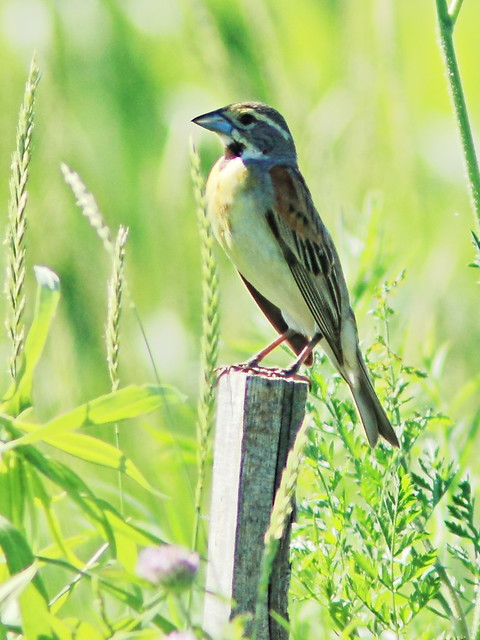
A common summer inhabitant of the grasslands of the central US, the Dickcissel is uncommonly beautiful. Its song is a cheerful iteration of its name, repeated from the tops of shrubs and fence posts. Their abundance in the prairies near our second home in northeastern Illinois may vary from one season to another.
Dickcissels spend the winter in southern Mexico south into northern South America, where they can be agricultural pests, feasting on seed crops and inviting measures to eradicate them. They tend to arrive north later in Spring than many other neotropical migrants, sometimes not appearing in numbers until rather late in May. During breeding season their diet shifts from grain to predominately insects.
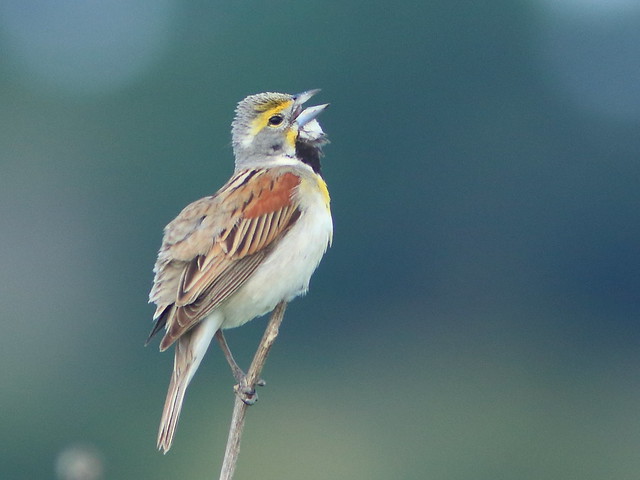
I've processed over 200 photos of Dickcissels and have hundreds more RAW images which I am reluctant to discard. Just this past week I re-visited this summer's collection and found an out-take which is now one of my favorites. Taken on July 2, it depicts a male Dickcissel perched above his mate, who is carrying a grasshopper for her fledglings, hidden in the high grass:
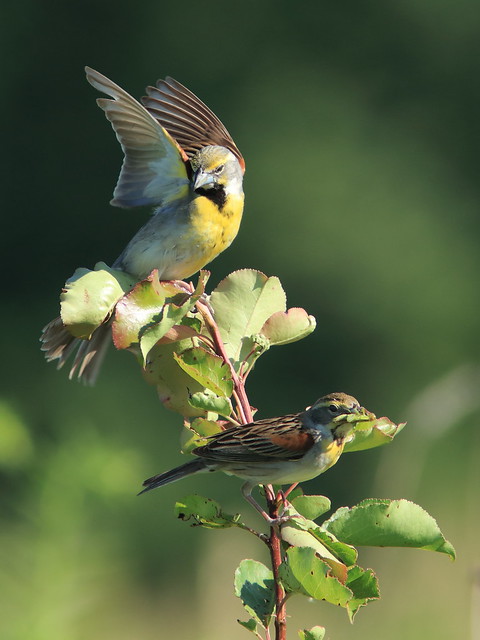
Another in the overlooked series, I passed over the following one because the bright sun cast annoying shadows on the subjects:
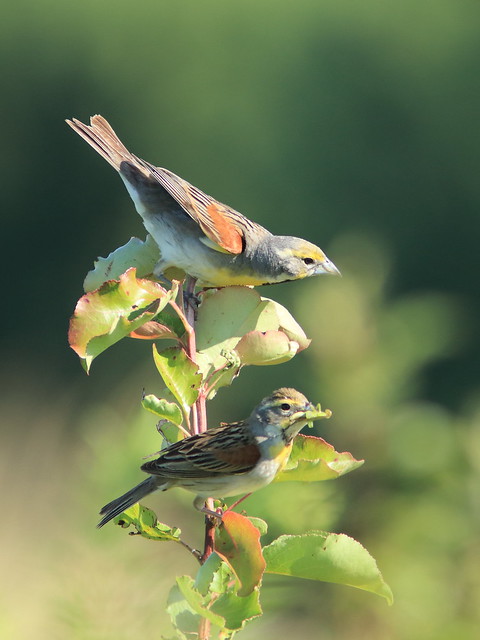
More recent photos from our walks at Nelson Lake:
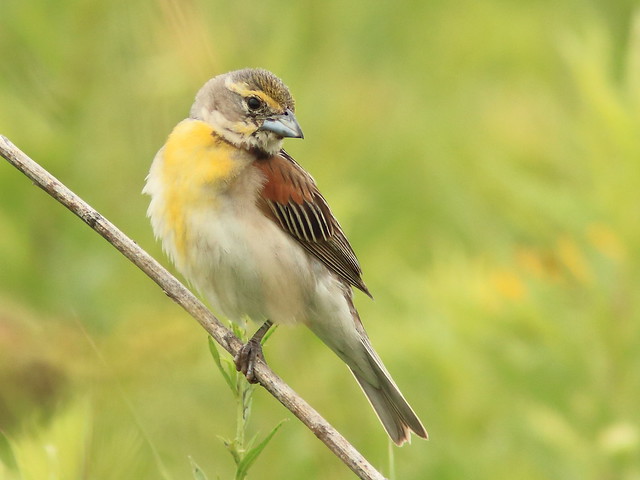
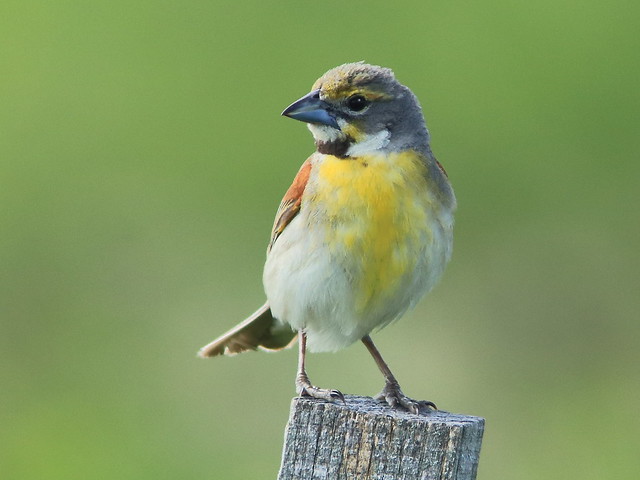
This is one of the first photos I took with my new mirrorless digital camera (Olympus OM-D E-M10 Mk II), fully zoomed to 300 mm:
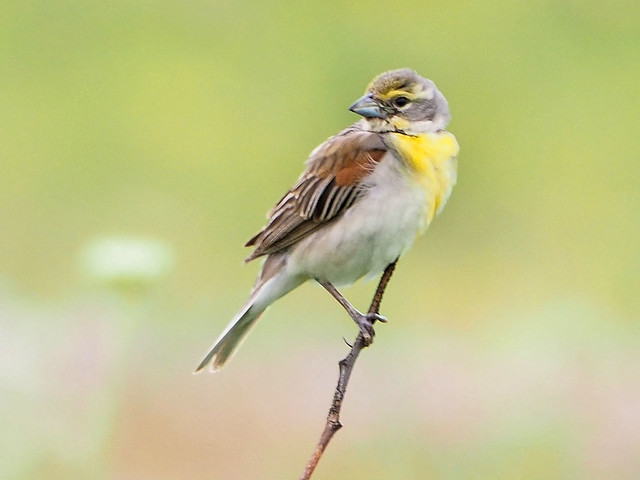
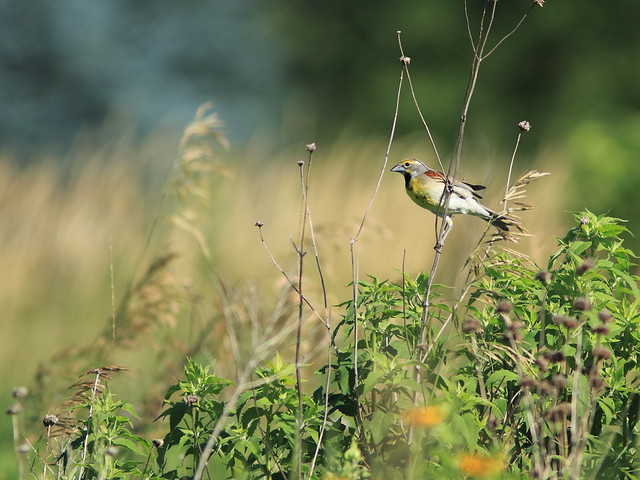
Dickcissels and prairie flowers make a nice combination:
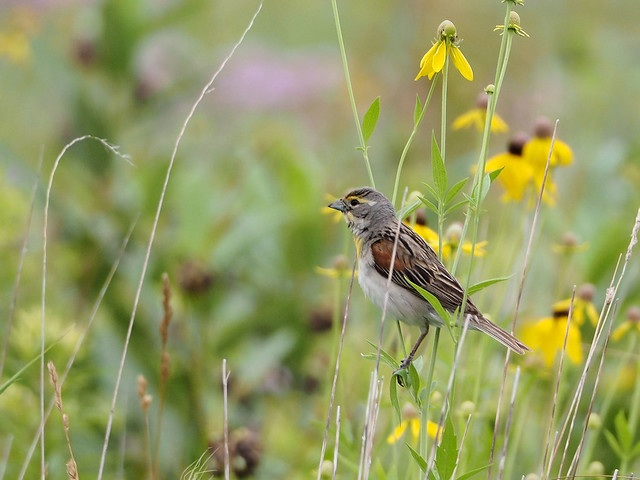
Bee Balm and Black-eyed Susan:
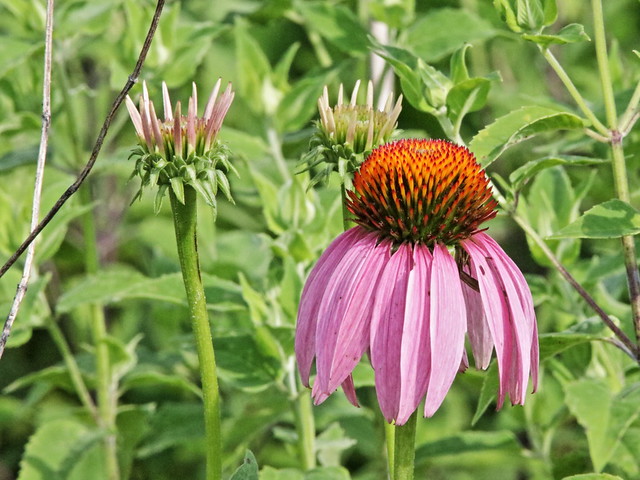
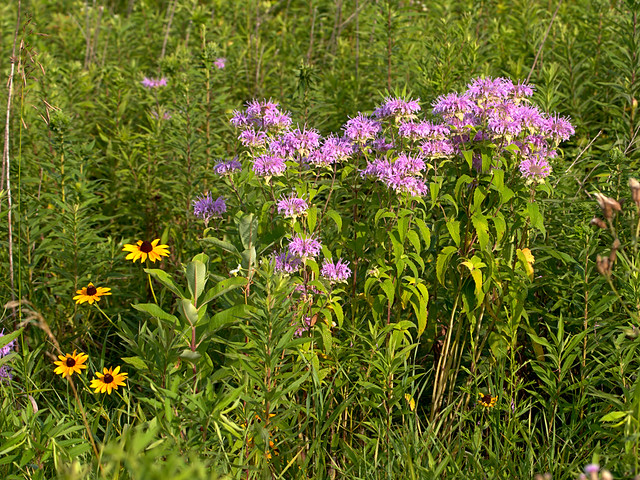 Purple Coneflower:
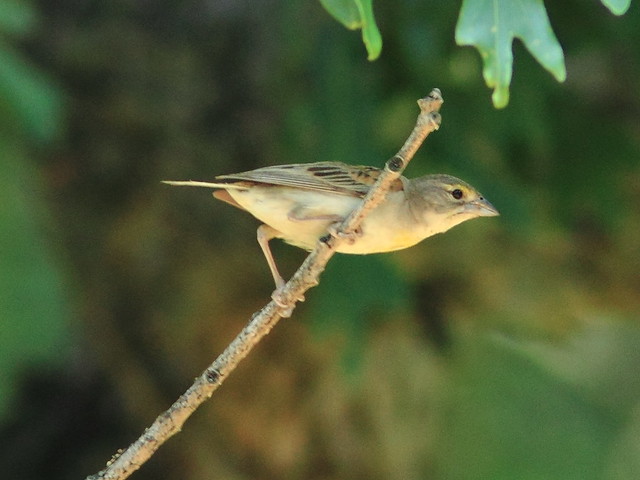
 The female Dickcissel is smaller and more softly colored:
By mid-July they usually have completed nesting and may begin departing to their wintering grounds as early as mid-August.
Dickcissels often wander erratically during migration and also may suddenly shift breeding locations. Some trickle through Florida and reach their wintering grounds by way of Cuba. Small flocks sometimes show up in south Florida during the winter months.
= = = = = = = = = = = = = = =
Linking to Misty's CAMERA CRITTERS,
Linking to Eileen's SATURDAY'S CRITTERS,
Linking to FENCES AROUND THE WORLD by Gosia
Linking to SKYWATCH FRIDAY by Yogi, Sylvia and Sandy
Linking to WEEKEND REFLECTIONS by James
Linking to BirdD'Pot by Anni
Linking to Wild Bird Wednesday by Stewart
Linking to Wordless Wednesday (on Tuesday) by NC Sue
Linking to ALL SEASONS by Jesh
________________________________________________
Please visit the links to all these memes to see some excellent photos on display
________________________________________________
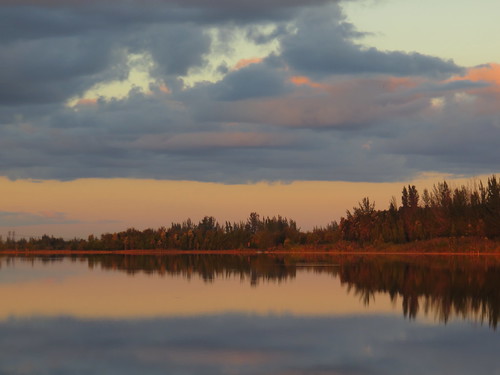
Back home in Florida, we were treated to a very colorful sky about 7 minutes after sunrise on November 23. The sun had just touched the opposite shore. This is straight out of the camera. The image is not cropped or processed:
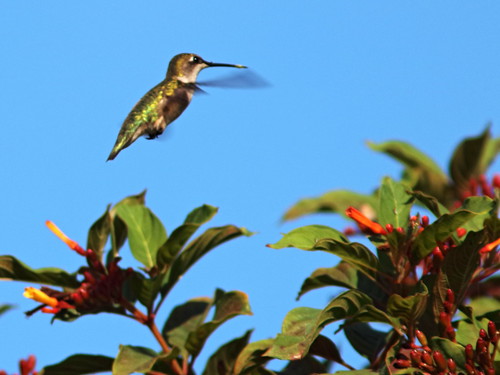
Ruby-throated Hummingbird hovering over Firebush (Hamelia patens):
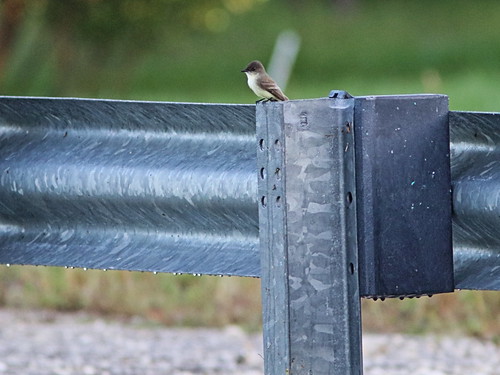
Eastern Phoebe perching on a guard rail:
I enjoy the challenge of photographing LBBs (little brown birds), the smallest of which are the wrens. Seeing them requires patience and often long periods of watchful waiting.
I first sighted a Marsh Wren in Troy Meadows, New Jersey as a teenager back in May of 1949, when I participated in a "Big Day" with the Hackensack Audubon Society. It was then called "Long-billed Marsh Wren" to distinguish it from the diminutive prairie-dwelling "Short-billed Marsh Wren," which since 1982 has been known as the Sedge Wren. I would not see the latter species until November, 1951 when, at Moriches Bay and Inlet in Long Island, I joined a group of birders from Long Island, New York, led energetically by Allan Cruickshank. (He passed away in 1974. Here is his obituary in American Birds).
Group outings can produce large numbers of sightings. For a relatively new birder this can be quite overwhelming. The single day at Troy Meadows and environs yielded 23 new birds species to my life list, and the trip to Long Island added 15 species. I must admit that I do not have indelible memories of either of these wren sightings. Although the trips and places are still relatively fresh in my mind, some of the individual birds seem now to have been lost in the sea of discoveries.
My more recent encounters with these species have been at a more personal level. Finding them took individual effort. With only two eyes to look for them instead of scores, and delightful long looks to enjoy not only their plumage and anatomical features as well as their habits, habitats and vocalizations, the experience is more meaningful and memorable.
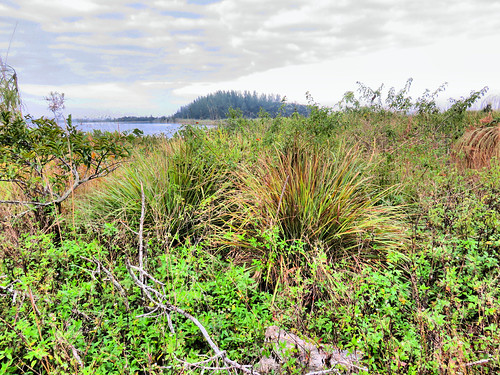
This is my Marsh Wren "sit spot" in our local birding patch. It is conveniently situated near the lake next to a Pond Cypress. A young Pond Apple tree is visible to the left and the "Pine Bank" (a dense stand of Australian Pine) is in the distance across the lake. Two large clumps of Sawgrass are directly in front, and a large area of cattails, just to the right, extends out to the shoreline:
While waiting for the wren, other wetland-associated birds may pop up, such as this Swamp Sparrow:
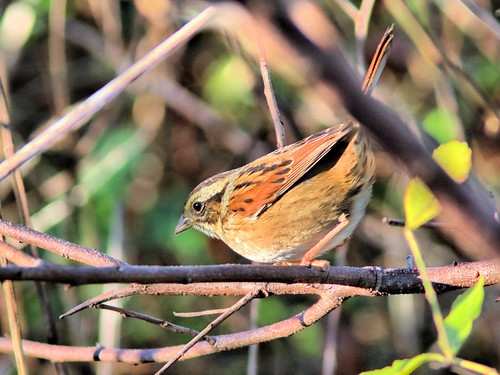
It climbs a reed to get a better look at me..
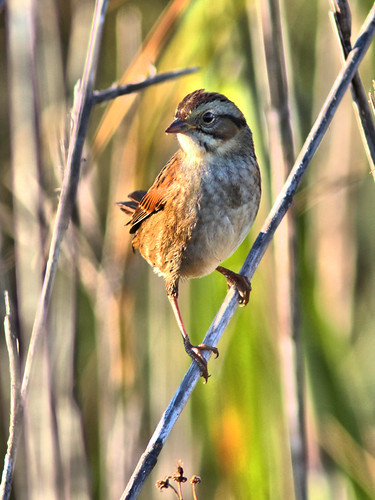
...and quickly exits:
In Illinois, I often caught snippets of the Marsh Wren's song or saw one weave in and out of the cattails in the distance. After taking up bird photography about 8 years ago I set a goal of capturing an image of every bird species I saw.
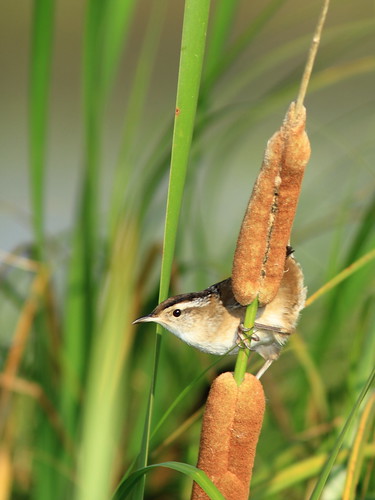
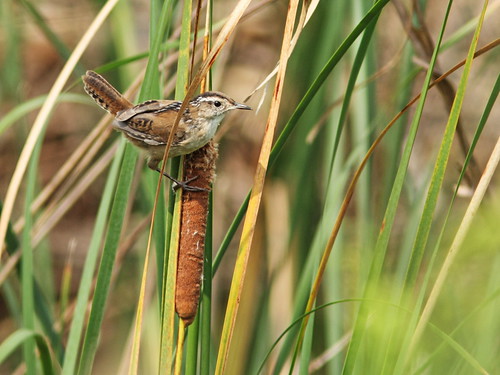
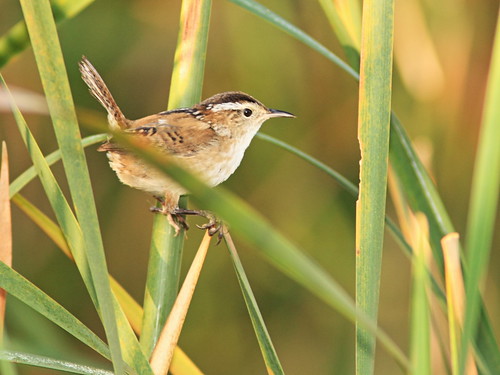
My first close encounter with a Marsh Wren with camera at the ready occurred in September, 2014 in a cattail marsh in Geneva, Illinois. My photos aptly illustrate the connection between this species and its preferred habitat:
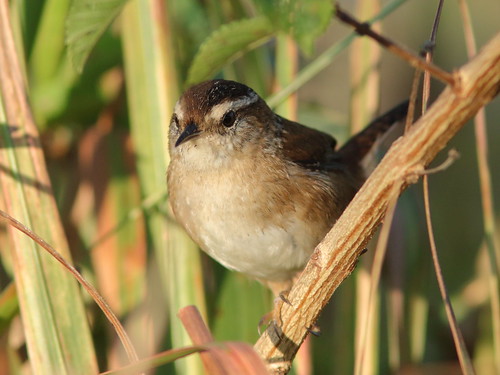
This week I added the 169th species to the bird list for my neighborhood birding patch. Of these I have seen 162, and a few of the species reported by other observers are a bit suspect. This is the first photo of my local Marsh Wren (November 18, 2016):
I obtained better views the next day:
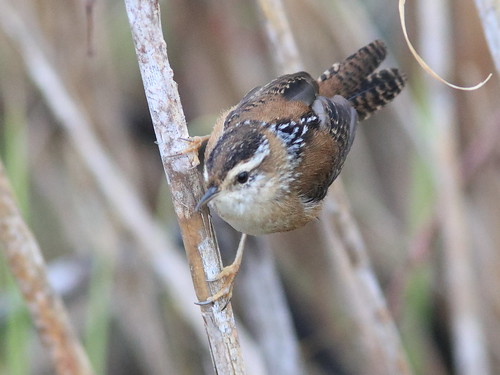
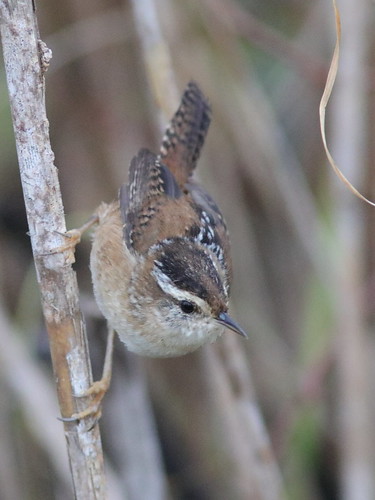
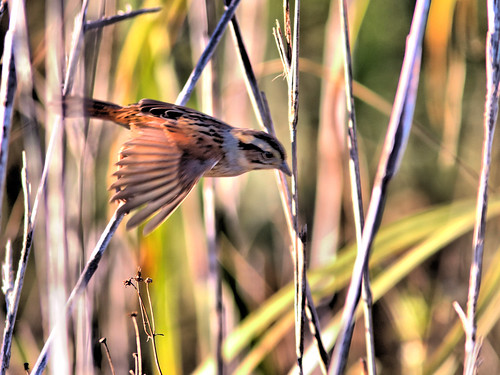
The Sedge Wren (11 cm long) is a half inch shorter than the Marsh Wren, which is 5 inches (13 cm) long. While I have seen a wintering Sedge Wren in Florida, it is a fairly common breeder near our second home in Illinois. It is usually found on dry ground such as a prairie, often next to or within sight of water.
Very elusive, this little creature will not sit still for a photo. Here are a few of my favorite Sedge Wren portraits, all from Nelson Lake in Kane County, Illinois:
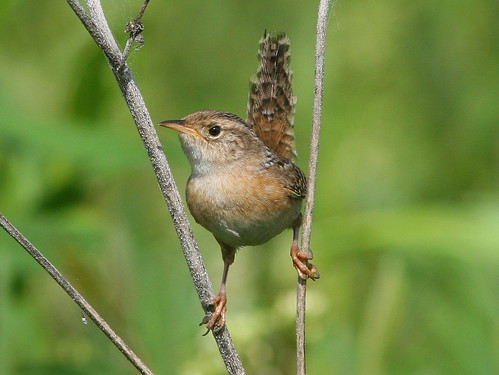
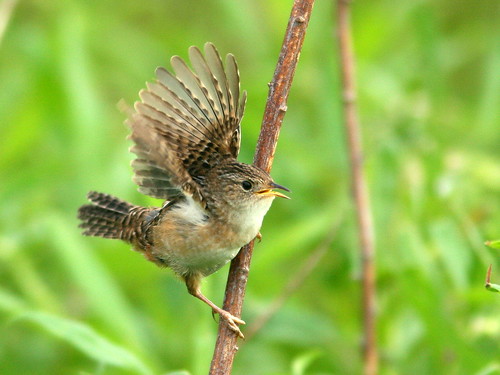
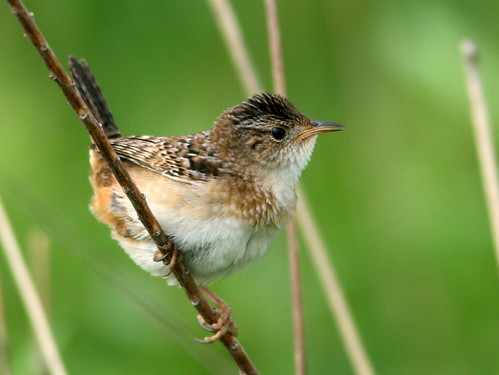
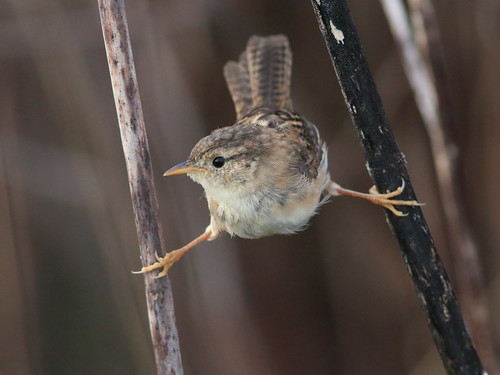
My latest image is a favorite as it best illustrates the wren's imitation of an Olympic parallel bar gymnast (Oct 18, 2016):
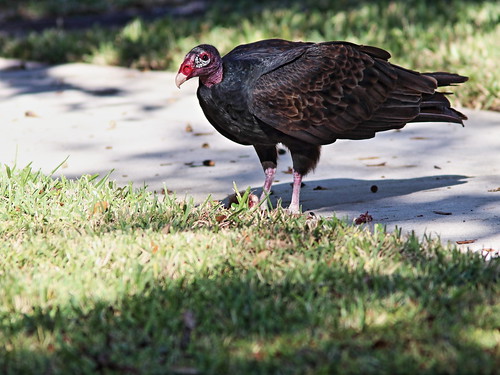
Happy Thanksgiving, everyone in the USA (and belated good wishes to our Canadian friends). I do not have a good turkey photo, but this week a Turkey Vulture obliged me by finding a dead squirrel on the sidewalk in front of our next door neighbor's home. I guess this bird was named because of its strong (?) resemblance to the real thing. (Click on the photo to navigate to some more rather explicit images of his feast):
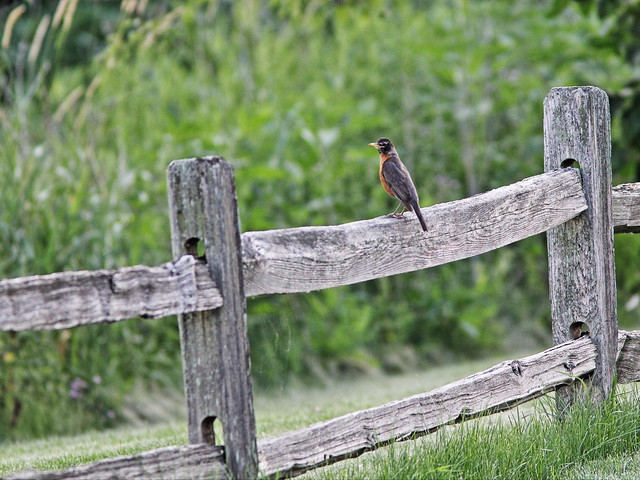
We rarely see American Robins near our south Florida home, so they are a welcome sight when we return to Illinois:
Spring migration is over. Most of the local breeding birds have finished nesting and as July approaches the woodlands fall silent. Now is the time to retreat from the cool shade and visit the prairie, where the calendar appears to have been turned back.
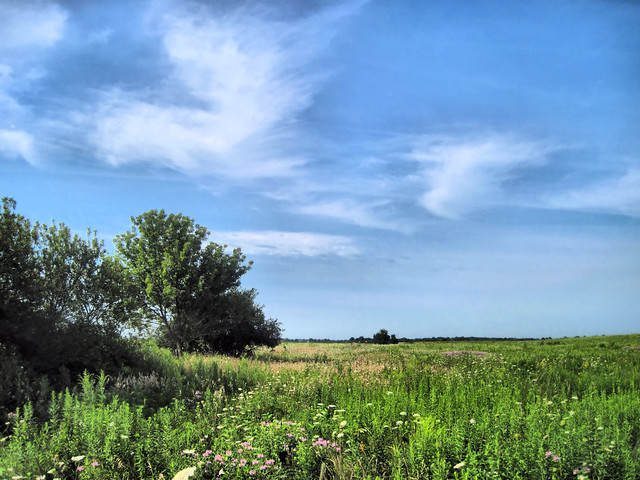
In a sense, the forest is the enemy of the Midwestern prairie. After the last of the glaciers retreated some 14,000 years ago, the bare land progressed from soggy tundra to evergreen woodland. As the climate warmed and dried, hardwoods such as hickory and oak invaded and eventually blanketed the land.
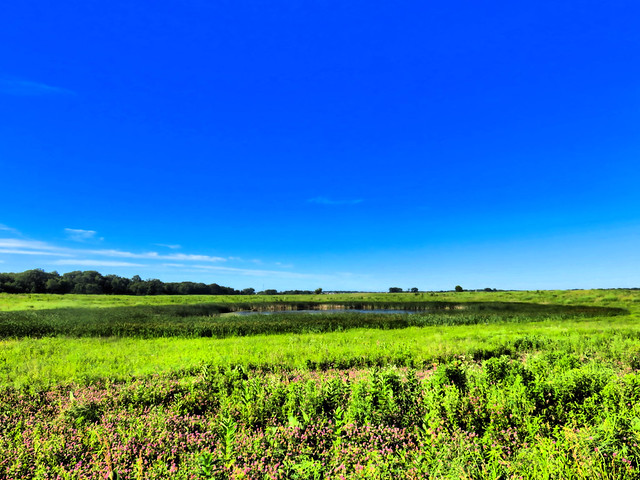
Drought and lightning combined to cause wildfires which produced huge swaths of grassland, and herds of bison helped to keep the prairie open. Prairie plants developed extensive underground roots which resisted destruction from fires and grazing until human settlement turned most of their habitat into rich cropland. Water-filled depressions (potholes) were left behind by the glaciers. These provided places for bison to wallow and waterfowl to find refuge. They often resisted cultivation.
Restored prairie pothole at Nelson Lake Marsh/Dick Young Prairie preserve, near our second home in Kane County, Illinois:
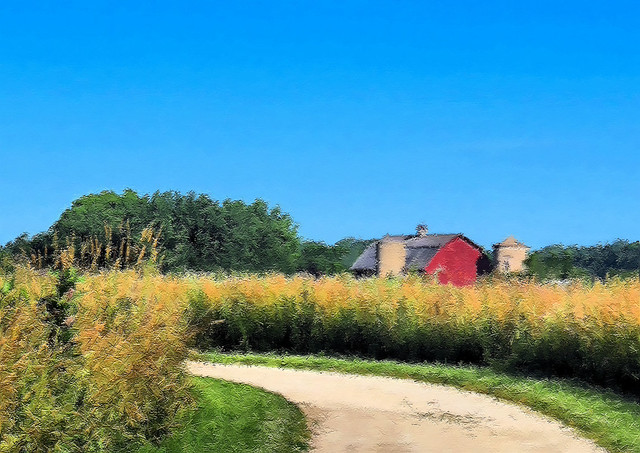
Now the remnants of the prairie require human intervention in order to prosper. The grasslands survive because of controlled burns and selective removal of invasive shrubs, trees and other vegetation, both native and exotic. At Nelson Lake preserve the grass is tall and seed heads are golden, inviting me to render my photo as an oil painting (click on photo for enlarged views):
Song Sparrows and Common Yellowthroats have started second and even third broods, and are singing vigorously.
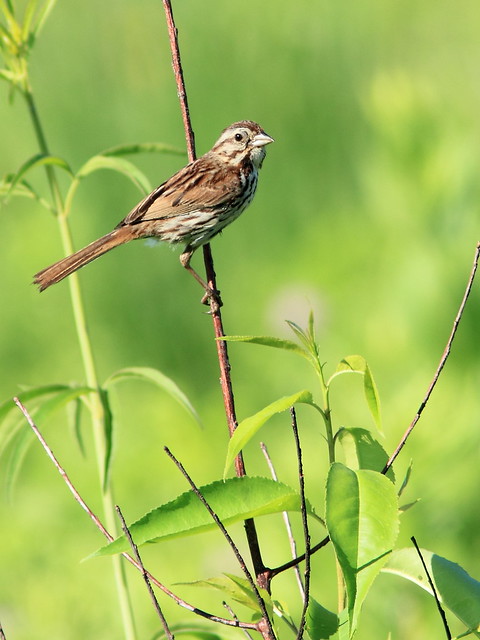
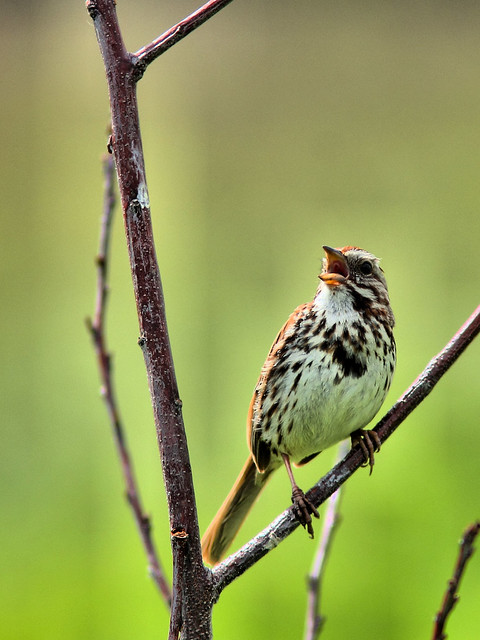
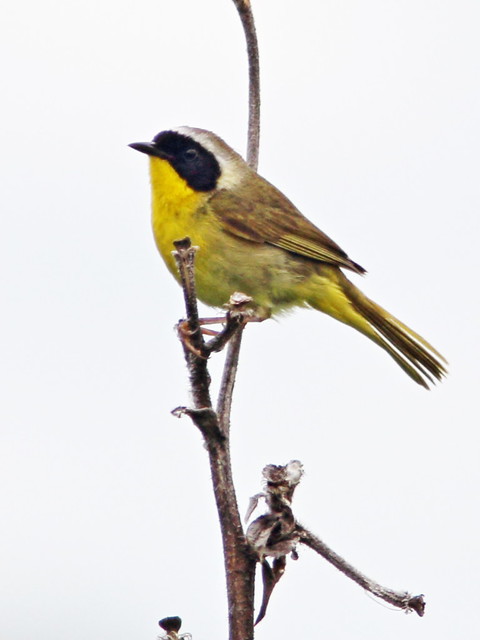
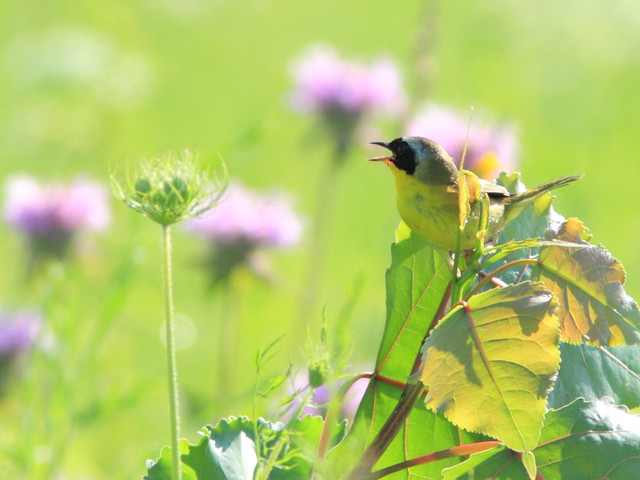
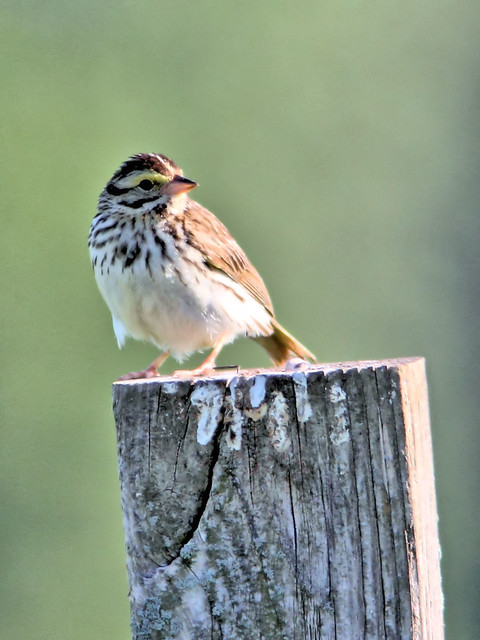
Old fence posts are the tallest roosting places in the grasslands, and a Savannah Sparrow keeps watch from one:
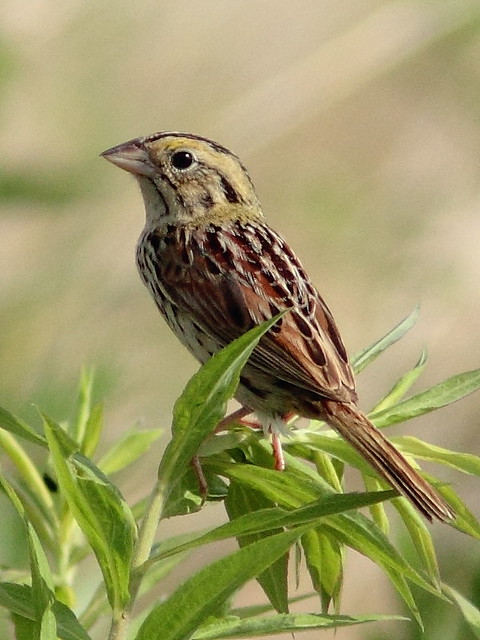
Tiny Henslow's Sparrows are hard to find in the tall grass. Note the greenish tint on its head:
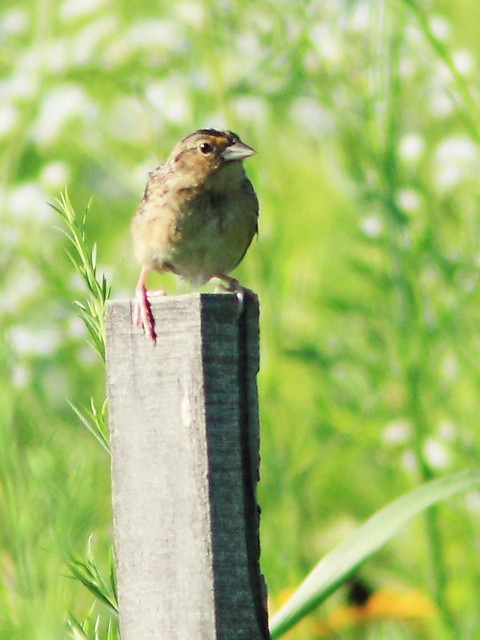
Grasshopper Sparrows prefer areas with shorter grass:
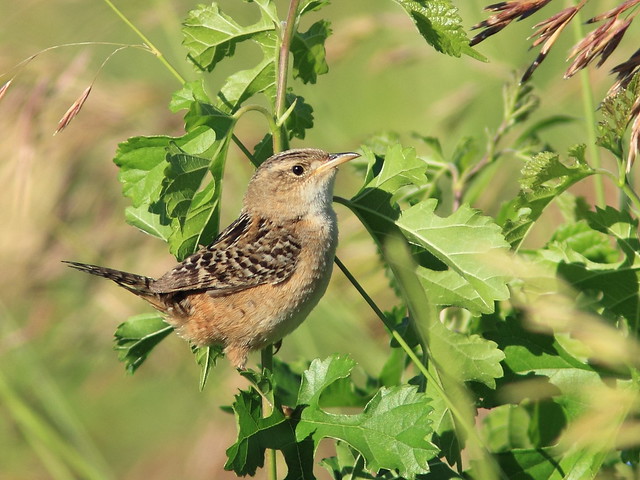
Sedge Wrens rattle their songs along the path:
Bobolinks are still feeding their young. Their upside-down plumage pattern makes them favorite subjects as I try to obtain a perfect pose:
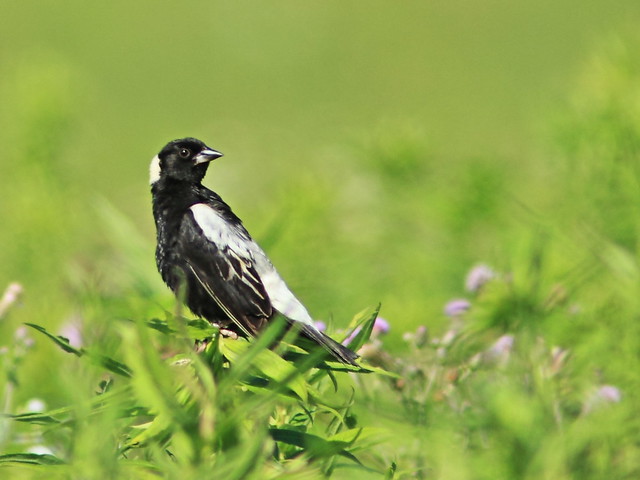
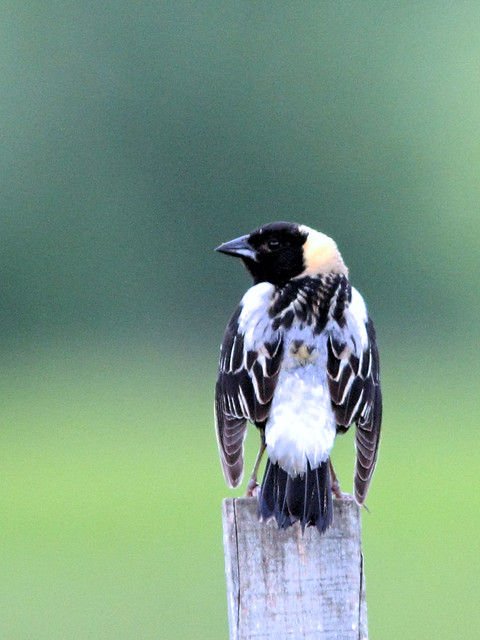
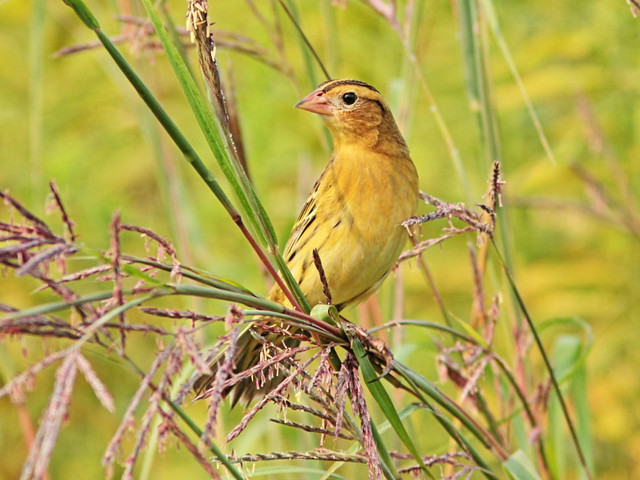
The demure female Bobolink is nonetheless beautiful:
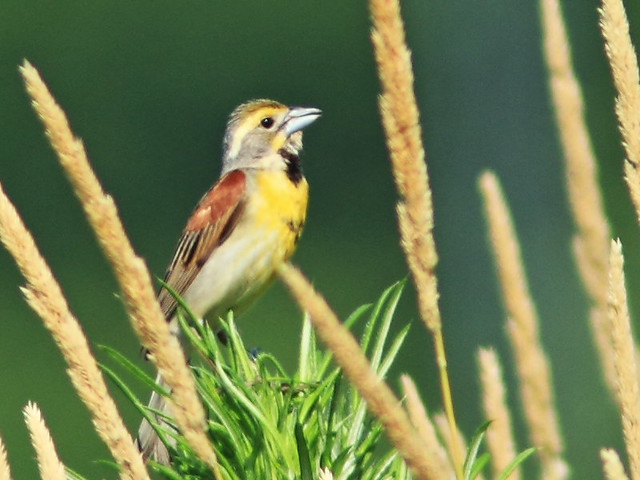
Colorful Dickcissels do not arrive in any great numbers until mid- to late June.
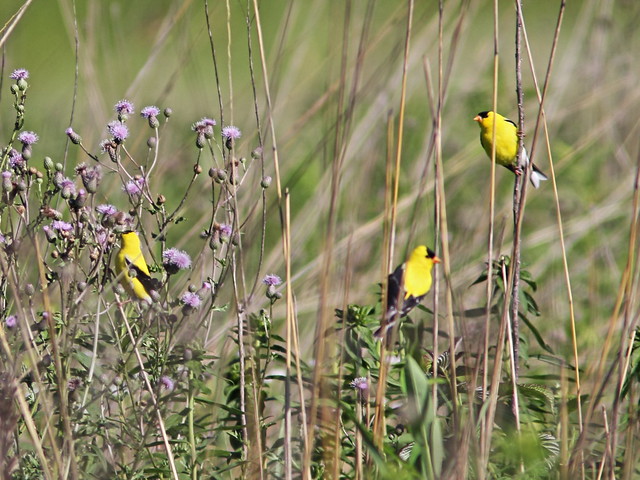
American Goldfinches wait for thistle and milkweed to produce the down for their nests and seeds for their vegetarian babies:
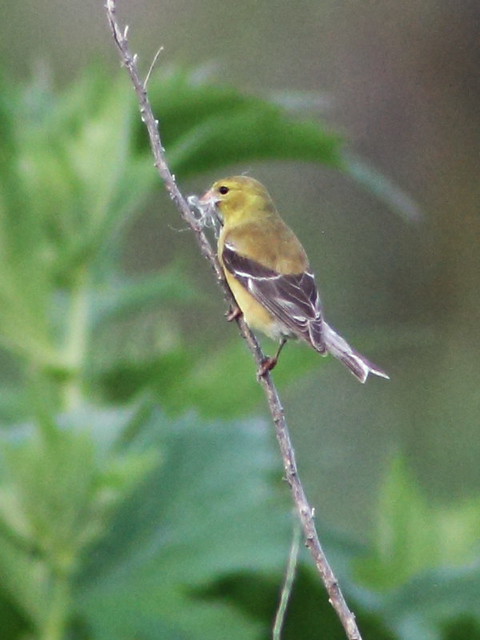
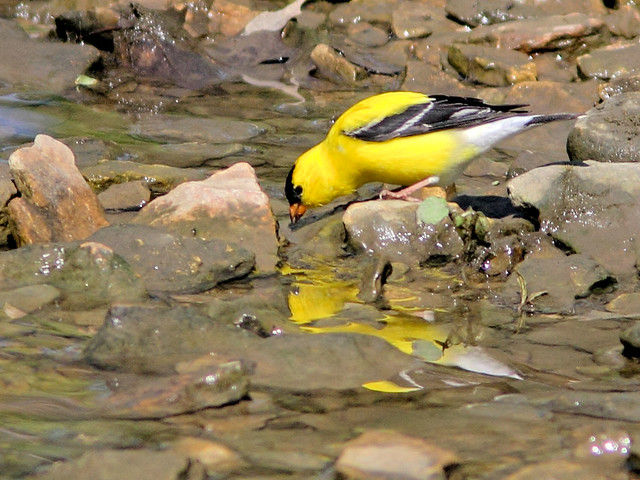
I catch the reflection of a goldfinch as it sips at a nearby creek:
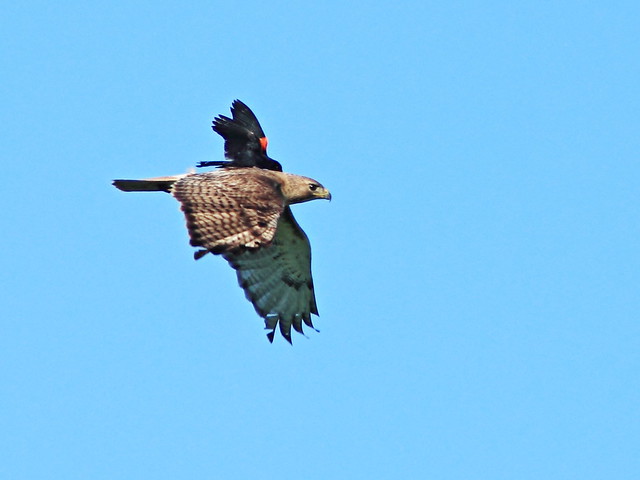
Red-winged Blackbirds defend their territories with song...
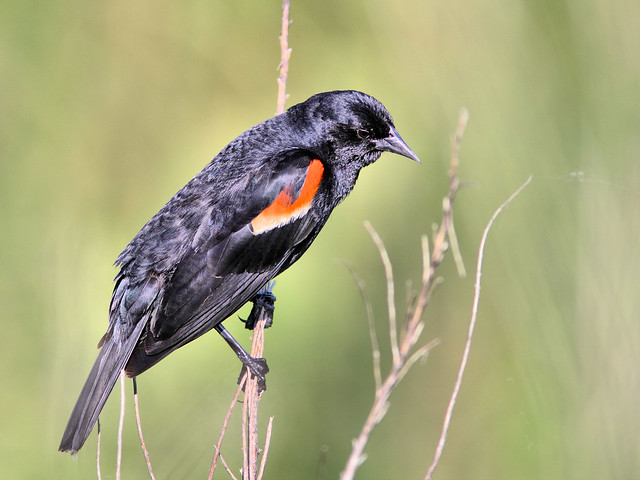
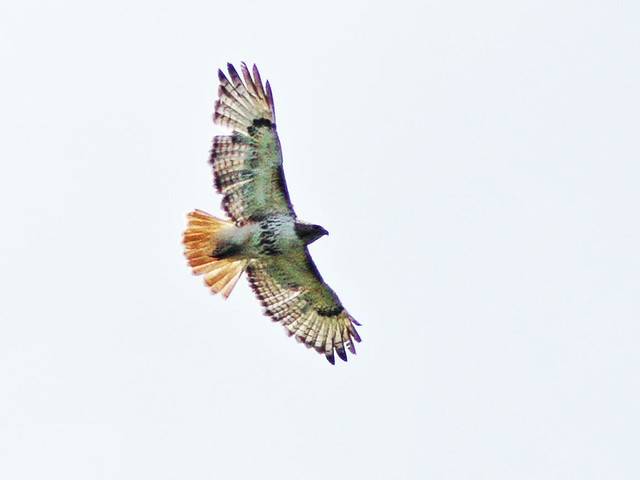
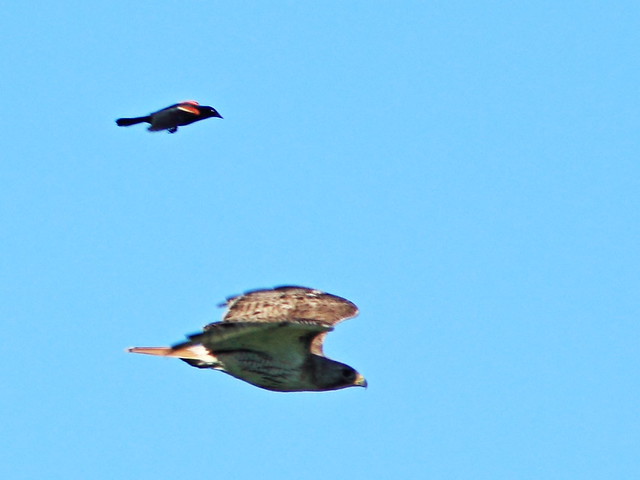
...and action, as one takes on a Red-tailed Hawk:
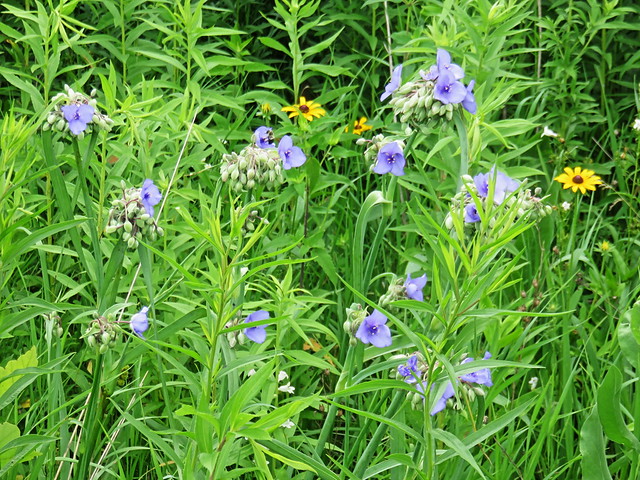
Spiderwort and Black-eyed Susan are common summer flowers in the prairie:
= = = = = = = = = = = = = = =
Linking to Misty's CAMERA CRITTERS,
Linking to Eileen's SATURDAY'S CRITTERS,
Linking to GOOD FENCES by Tex (Theresa).
Linking to SKYWATCH FRIDAY by Yogi, Sylvia and Sandy
Linking to WEEKEND REFLECTIONS by James
Linking to BirdD'Pot by Anni
Linking to Wild Bird Wednesday by Stewart
Linking to Today's Flowers Friday by Denise
Linking to Wordless Wednesday (on Tuesday) by NC Sue
________________________________________________
Please visit the links to all these memes to see some excellent photos on display
________________________________________________