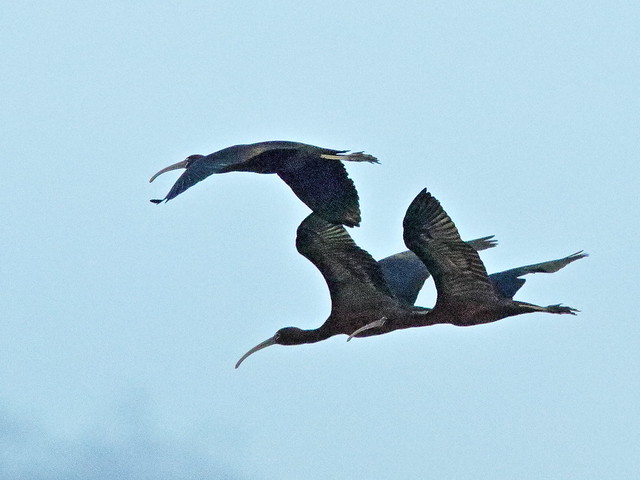
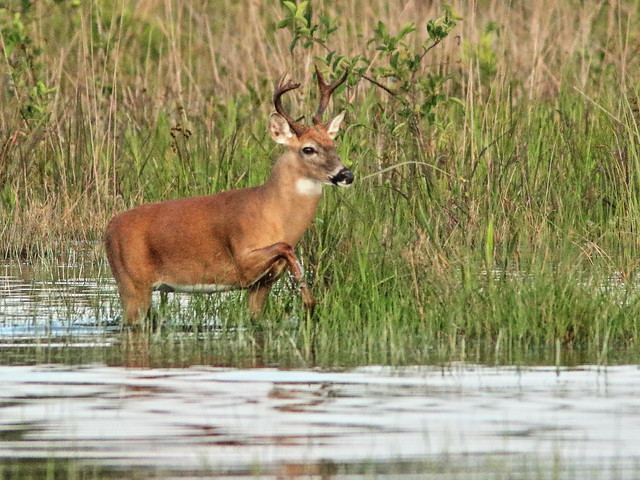
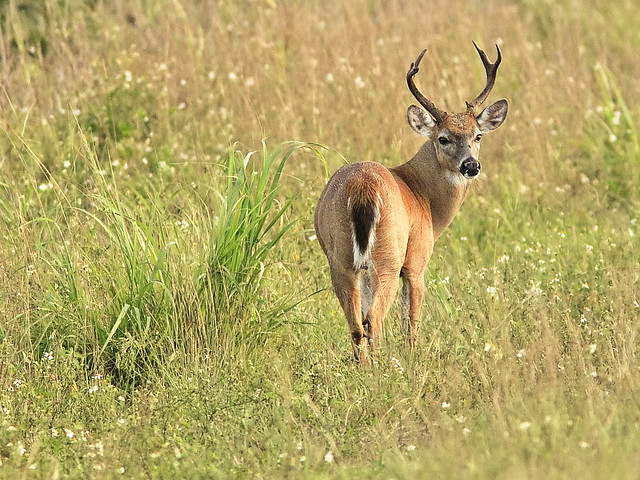
Showing posts with label deer. Show all posts

Thursday, June 3, 2021

Crops & Clips: Flashback to June, 2018

To kick off the month of June, I have once again turned to my photo archives, bringing back memories of three years ago, searching for favorite memes: birds and butterflies, flowers, reflections, colorful skies and scenes which speak for themselves.

We spent June, 2018 entirely in Florida. Early in the month, our Texas family visited and we drove to Shark Valley Visitor Center in Everglades National Park.

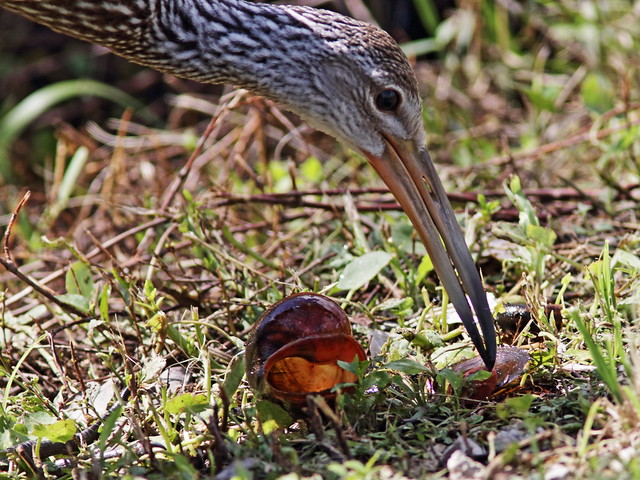
The range of Limpkins is nearly confined to Florida, so they are much sought after by visiting birders. Although they look somewhat like herons, they are more closely related to rails and cranes. Limpkins were abundant, as were Apple Snails, their favorite food:


"The Limpkin's bill is uniquely adapted to foraging on apple snails. The closed bill has a gap just before the tip that makes the bill act like tweezers. The tip itself is often curved slightly to the right so it can be slipped into the right-handed curve of the snail’s shell." (All About Birds, The Cornell Lab)  
Next to the parking lot at the entrance to the Visitor Center, an immature Red-shouldered Hawk cried out incessantly:

Alligators inhabited the canals, thrilling the many tourists:

At the local Bald Eagle nest, only one of the two eaglets survived to fledge. P Piney 19 was 5 months old, ready to leave the care of parents and likely migrate to the north where fish are easier to catch as the water is cooler and they are closer to the surface.

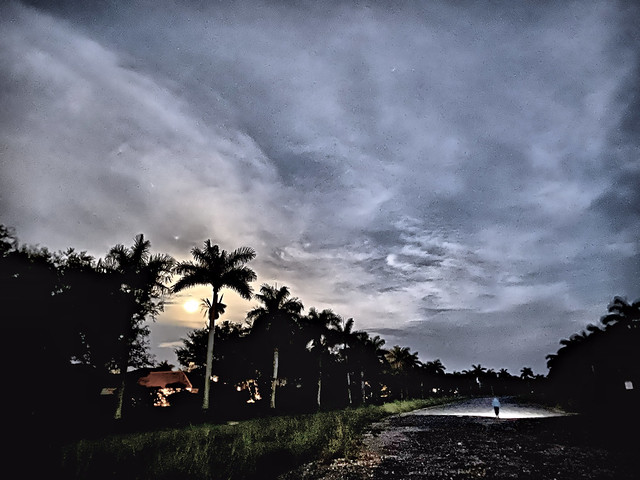
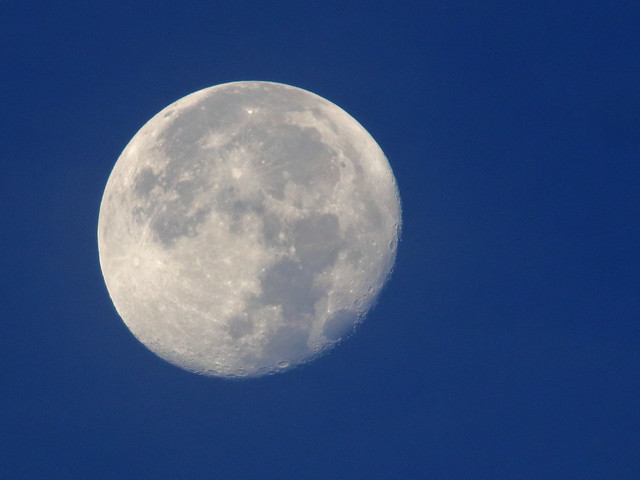
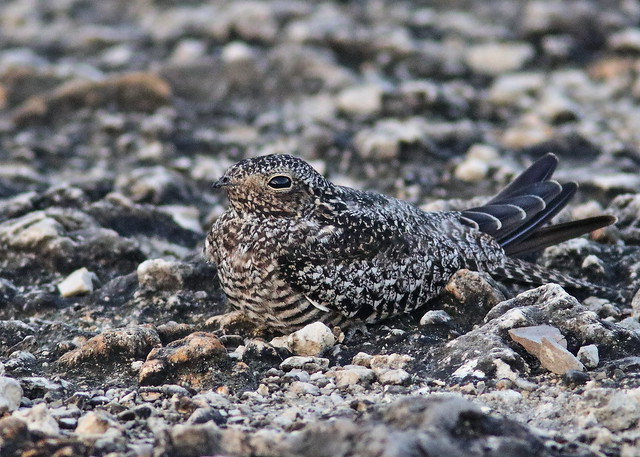
Out in the neighborhood wetlands, male Common Nighthawks patrolled nesting territories along the path. I accidentally captured the waning Strawberry Moon in this photo:

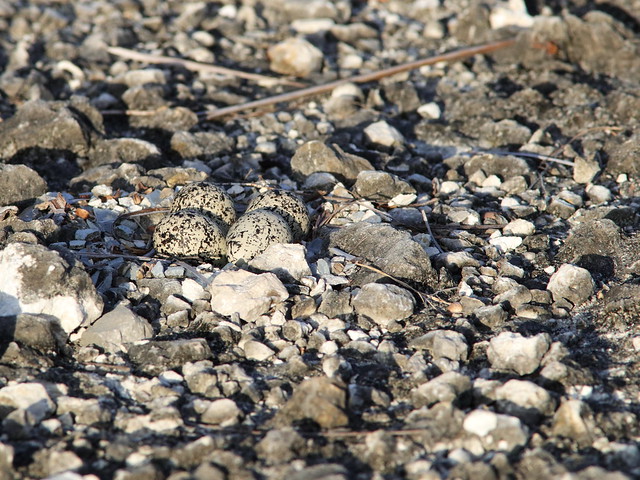
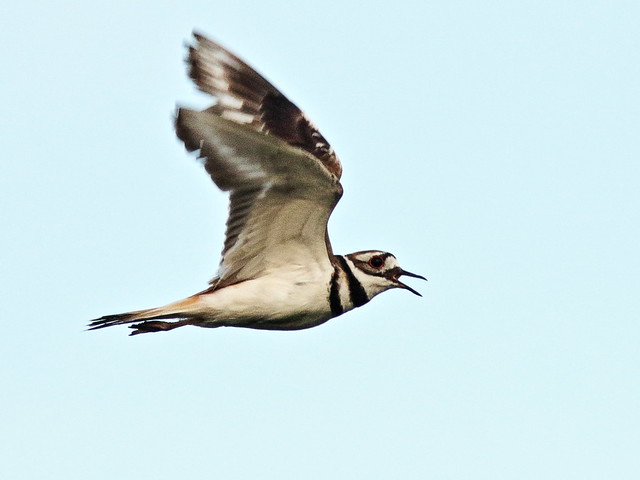
Killdeers also protested as we walked past their nests:

A Raccoon walked out into the open and looked at me before fleeing:

In the marsh, Pickerelweed thrust up their blue flowers...

...intermingling with the white blooms of Broadleaf Arrowhead (aka "Duck Potato" for its edible root tubers)...
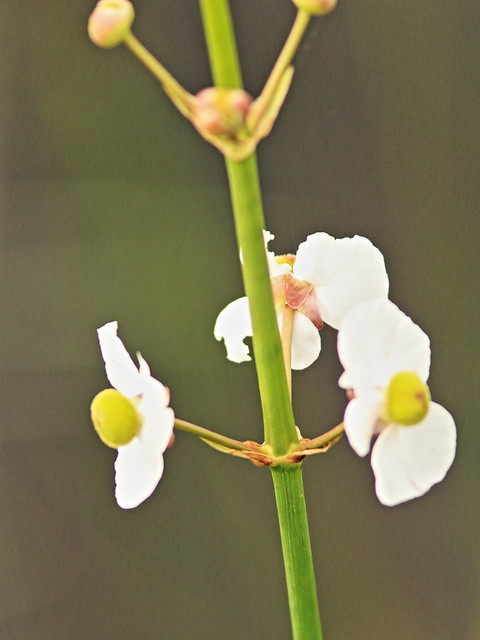
...and Swamp Lily:

A "piebald" Little Blue Heron was molting from white juvenile to dark blue adult plumage:

A White-tailed Deer doe thrust up her tail as an alarm as she bolted for cover:

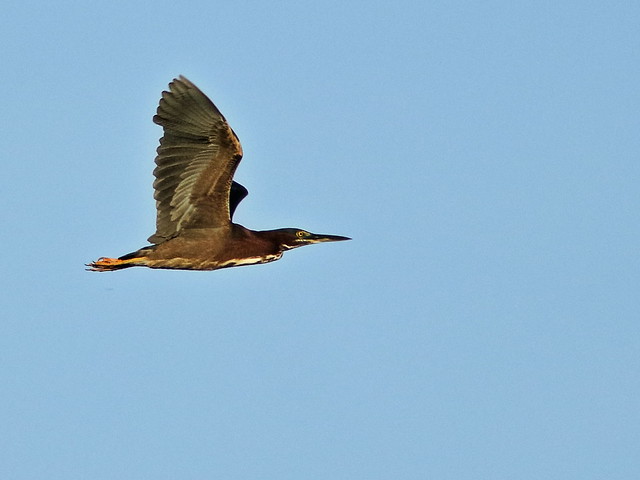
An immature Green Heron rested in a small Pond Cypress tree before flying off:

Young Wood Storks awaited to be fed at the rookery about 10 miles north of our home:

Along the path I encountered a Florida Box Turtle. Unfortunately, many people bring them home as pets, often not knowing that they do not live in the water or what to feed them:

Among the insects, A white Peacock...

...a Halloween Pennant...

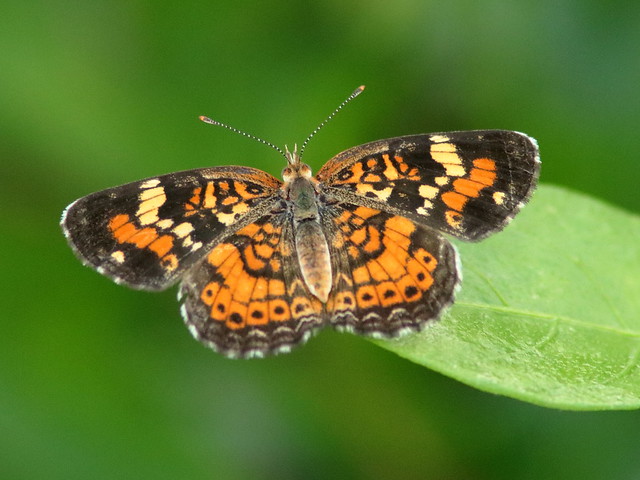
...a Phaon Crescent...
...and a bee-like hoverfly:

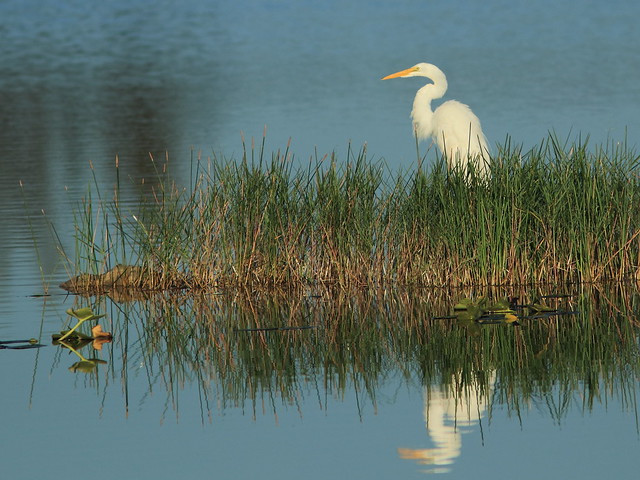
A Great Egret reflected on June 27:
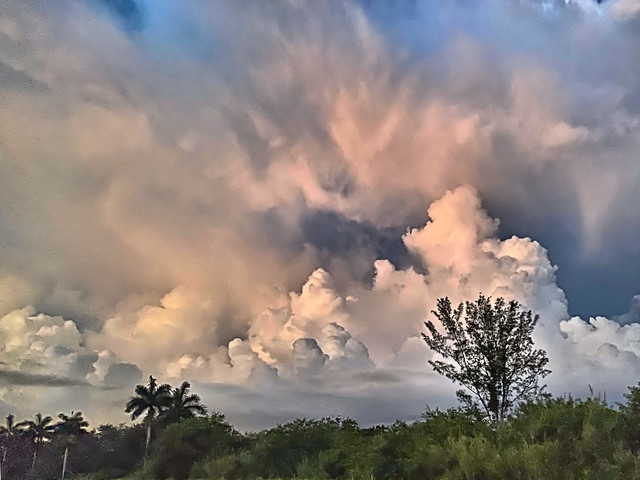
A foggy sunrise on June 29:

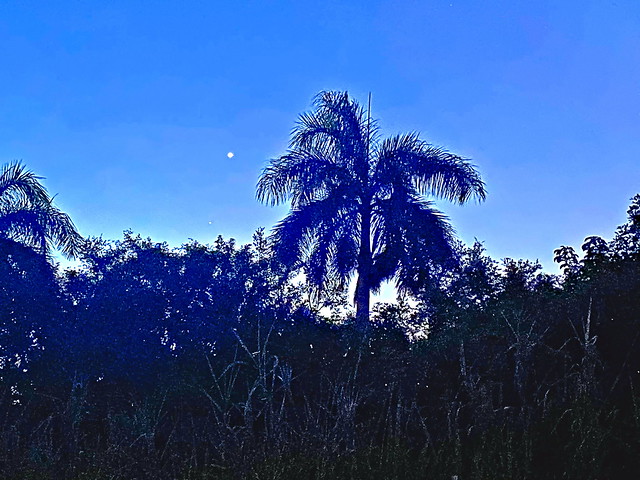
Along the path at 20 minutes before sunrise on June 30:


= = =  = = =  = = = =  = = = = =

Linking to:


Skywatch Friday

Weekend Reflections

Saturday's Critters

BirdD'Pot

Camera Critters

All Seasons

Wordless Wednesday (on Tuesday)

Natasha Musing

Our World Tuesday

________________________________________________

Please visit the links to all these posts to see some excellent photos on display
________________________________________________

Thursday, July 9, 2020

Crops & Clips: Early summer clicks

For the past two weeks we have had record and near-record heat and humidiity almost every day. Heat index "feels like" temperatures often reached into the low 100's F (~38-40 C). 

As usual, MaryLou and I walked out about 45-50 minutes before sunrise to avoid enduring full sunlight. This practice has limited my ability to capture decent photos. For several mornings, dust blown over from the Sahara Desert tinted the morning skies an amber color. Fog over the lake added to the challenge.

Great Egret:

Great Egret in fog COREL 20200630  

Green Heron foraging in semi-darkness:

Green Heron 01-20200628

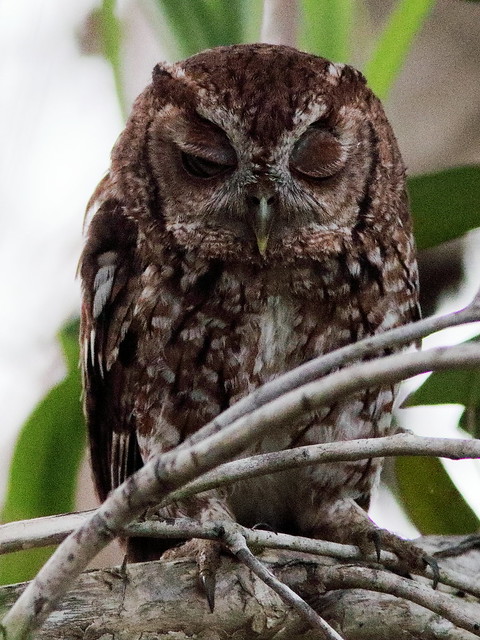
The pair of Eastern Screech-Owls stayed up late and I was again able to get images in natural light just around sunrise. This one seemed to be indifferent to my presence:

Eastern Screech-Owl 06-20200628

Eastern Screech-Owl 05-20200628

The plumage of a juvenile Mourning Dove had a textured "scaly" appearance due to the white edges on its wing coverts:

Mourning Dove juvenile 01-20200629

An adult Mourning Dove rested on a resident's fence:

Mourning Dove on fence 20200705

An advantage of going out early is that we pay more attention to celestial bodies. Venus has been climbing higher in the eastern sky. It shines brightly on July 1:

Venus 35 min before sunrise 01-20200701

Every four weeks, we hope to see the full moon set over the lake. The "Buck Moon" is so named because it is said to occur when the deer develop velvet-covered antlers.

The sky was cloudy on July 5 when we walked out, hoping to view the Moonset:

Buck Moon setting 0554AM 20200705

However, this was our last look as the Moon disappeared, almost an hour before setting:

Buck Moon setting 0611 AM 20200705

Appropriately, on July 5, this young White-tailed Buck showed his emerging velvet antlers:

White-tail spike buck in velvet 02-20200704

The next morning the Buck Moon was one day old in a hazy sky:

Buck Moon 1 day old 20200706

 It was 2 days old on July 7:


Buck Moon 2 days old 20200707


The first two mornings after a full Moon provide opportunities for superimposed images. I have found it impossible to get both a bird and the Moon in clear focus. This female Boat-tailed Grackle posed long enough for me to get a few shots:

Boat-tailed Grackle and Buck Moon COREL 05-20200706 

For the past two weeks, while walking out along the grassy edge of the gravel road, we startled a Killdeer which flew up in the dark and called excitedly. We assumed that it had a nest nearby in the grass. 

One morning the Killdeer confronted me as I walked towards it, fluffing up its feathers and refusing to fly from a spot out on the open path. (I almost said "her," but the Killdeer pair exchanges incubating duties. The male is more likely to spend the night on the eggs than the female). 

I trained my flashlight on it and snapped a poor photo. To my surprise, an egg protruded out from underneath the bird:

Killdeer on nest 01-20200627 

On the way back, the Killdeer flew off as soon as it saw me. Without getting too close, I could see that the nest held four eggs:


Killdeer nest 20200702

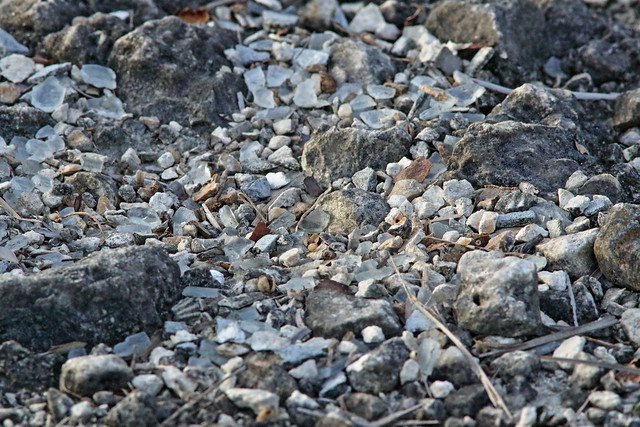
The "nest" is actually a slight depression surrounded by many small whitish objects-- pebbles, shells, even pottery chips which are added continuously all during the ~25 day incubation period. They form an irregular pattern which may help conceal the nest:

Killdeer nest 01-20200628

Yesterday morning (July 8) as I walked in I avoided the nest area as usual and checked it on my way home. It is out in the open, away from the grassy area. Even in good light it is hard to find the nest and I use visual clues such as lining up the trunks of certain trees when I am standing on a particular stone which is directly across the road from the nest. 

I was surprised to find it contained three babies, three egg shells and one apparently intact egg. One of the chicks had just hatched and was still wet.  "Where's Waldo?" Can you see the nest with its chicks and eggs? (Look for it before reading the answer under the photo -- click to enlarge):  

Killdeer chicks and egg 05-20200708

See the three chicks and one unhatched egg in the upper left quarter of the above photo, just to the left of the biggest white stone? 

Even when viewed closer up, the nest and its contents blend in with the surroundings:

Killdeer chicks and egg 03-20200708

One chick is on left of the intact egg and two are on the right. Hard to see the third chick, which is still wet. It has either hatched or is in the process. Its head and part of its eye are visible behind the head of the older "dry" chick:

Killdeer chicks and egg 04-20200708

This is the vacant Killdeer nest on the morning of July 9th. Quite a remarkable collection of small whitish objects:

Killdeer nest 20200709

Adult Killdeer (July 1):

Killdeer 3-20200701

Afternoon thunderstorms often cooled us down a bit. This one, on July 7, blocked the rising sun but stayed out over the ocean:

Storm brewing 3-20200707

I exercised my "creative license" to get both subjects in sharp focus in this composite (aka "Fake") image :

Bald Eagle Buck Moon composite 20200706


= = =  = = =  = = = =  = = = = =

Linking to:

Fences Around the World

Skywatch Friday

Weekend Reflections

Saturday's Critters

BirdD'Pot

Camera Critters

All Seasons

Wordless Wednesday (on Tuesday)

Natasha Musing

Our World Tuesday


________________________________________________

Please visit the links to all these posts to see some excellent photos on display
_______________________________________________
Thursday, June 18, 2020

Crops & Clips: Birding Doldrums

On rainy days our back yard lake has attracted a few birds which brighten my COVID-induced social seclusion. Shooting through the window produces poor photos, but the behavior of some of our visitors can be interesting.

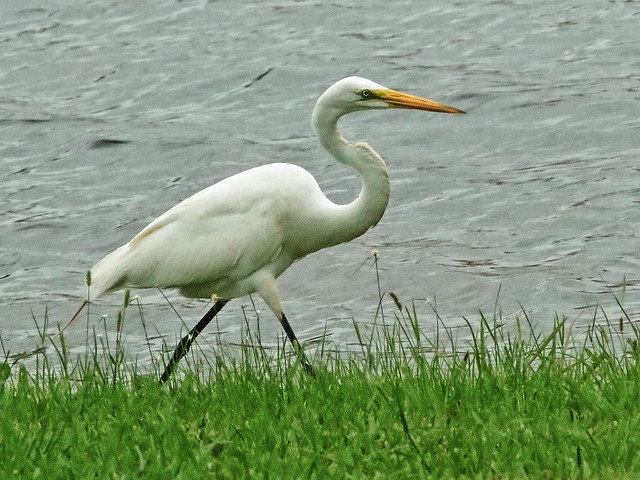
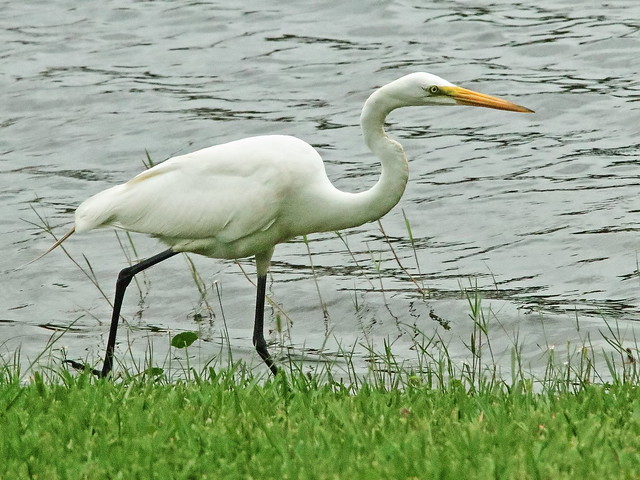
A Great Egret suddenly appeared, dashing from left to right along the lake margin as if late for dinner:

Great Egret running 01-20200606

Great Egret running 02-20200606

Great Egret running 04-20200606

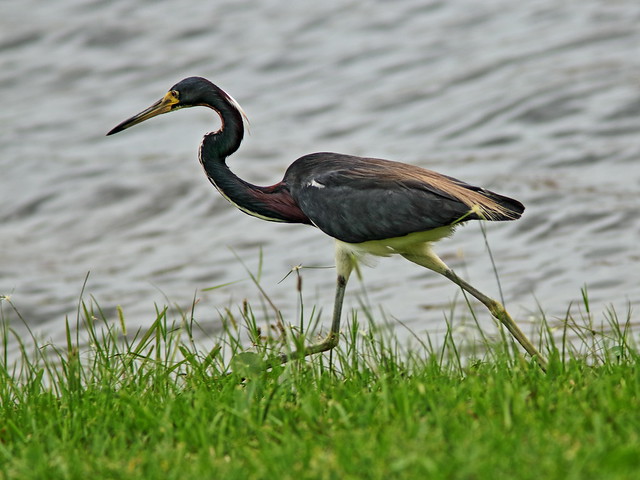
At the same time, my peripheral vision caught motion to my right. A Tricolored Heron was likewise speeding into an imminent head-on collision with the egret:

Tricolored Heron 01-20200606

Tricolored Heron 02-20200606

Tricolored Heron 03-20200606

Neither changed course and it was only a near-miss. The Tricolored Heron just kept running along until out of sight to my left. The egret simply flew off to the right. What compelled them to move so purposefully in opposite directions? Beats me!

Now that spring migration is over and our local birds are quietly tending to nests and youngsters, the number and variety of birds is way down. I am a big believer in Bird Chaser's Recommended Daily Allowance of Birds (RDA-B).

The day just doesn't start off right unless I see at least my RDA of 20 species on a morning walk. Sometimes I get stuck at 19 and decide to hang around a little longer "just in case" one more shows up. During migration I sometimes hit the target before half way through my route, making me feel so "well nourished" that I do not even think about numbers.

Wintering Gray Catbirds were so numerous that they became a distraction. Then they suddenly disappeared:

Gray Catbird 20200322

Least Terns appeared just as the catbirds were departing:

Least Tern 02-20200423

In any season I can predict with certainty that I will see 10 species without even trying. The species mix will vary by season. Now that summer is arriving, the list will usually include a cardinal, mockingbird, two or three woodpecker species, blackbirds, grackles and an assortment of crows, ibises, herons and egrets. 

Some of the usually common birds may decide not to show up. I have had heron-free mornings and the reliable flickers or shrikes may suddenly become scarce. Three species of doves are locally common, but sometimes I may hear or see only one. 

Or, the normally predictable afternoon rainstorm may pop up early and cut my walk short, leaving me nutritionally deficient (and a bit frightened): 

Storms moving in 02-20200523

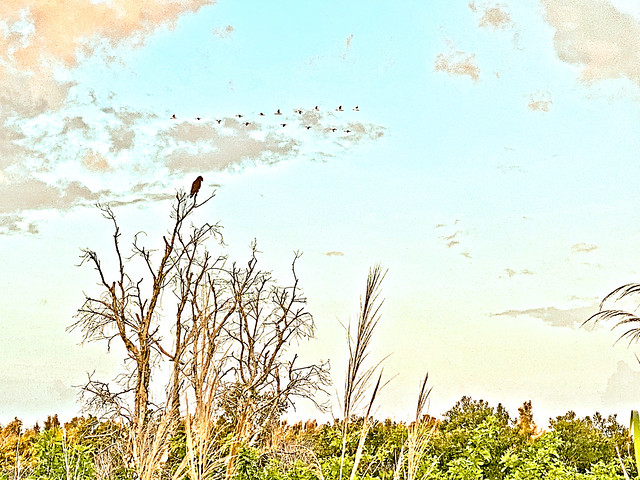
One morning I obtained a nice "two-fer," bagging a Red-shouldered Hawk and a V-shaped flock of ibises in one peaceful setting:

Hawk and ibises 20200522

A closer look at the hawk:

Red-shouldered Hawk 03-20200522

Common Nighthawks are laying their eggs on the bare gravel along the trail. The female often flies out and rests in front of me to attract me away from her nest.

Female Common Nighthawk:

Common Nighthawk female 20190815

For comparison, the male has larger white patches on his throat, wings and tail:

Common Nighthawk 01-20200527

The male nighthawk swoops low over my head, pulling up sharply to create a startling "boom:"

Common Nighthawk 01-20200520 

Killdeer are also patrolling their nesting territories:

Killdeer 02-20200529

A Green Heron passes overhead...

Green Heron 20200530

...along with Glossy Ibises...

Glossy Ibises 01-20200531

...and a White Ibis:

White and Glossy Ibises 2-20200529

Heavy rains have caused the lake to extend into the lakeside marsh...

Flooded Lakeside marsh 20200531

...and spill over into the wet prairie. Seeking dry footing, the deer are moving in from the Everglades preserve. I encountered a White-tailed buck with a pregnant doe and her yearling fawn. They stopped and stared at me...

White-tail buck doe yearling 01-20200529 
...before wading through a deeper slough:

White-tail buck doe  03-20200529

The buck lagged behind them:

White-tail buck 06-20200529

Once on dry land, the buck looked back at me:

White-tail buck 092-20200529

They grazed along the dry path:

White-tail buck doe yearling 09-20200529

The doe had long eyelashes:

White-tail buck doe porrtrait 093-20200529

Before sunrise, a line of thunderstorms over the ocean created a regular series of parallel shadows which coursed overhead and appeared to converge on the western horizon, creating a mirrored "second sunrise:" 

Antisolar rays opposite sunrise 3-20200602

Gulf Fritillary:

Gulf Fritillary 20200605


= = =  = = =  = = = =  = = = = =

Linking to:

Skywatch Friday

Weekend Reflections

Saturday's Critters

BirdD'Pot

Camera Critters

All Seasons

Wordless Wednesday (on Tuesday)

Our World Tuesday

________________________________________________

Please visit the links to all these posts to see some excellent photos on display

________________________________________________