When I am out in the Wounded Wetlands of western Broward County, Florida, I do not have high expectations that some rare bird will suddenly brighten my day.
Actually, working a "patch" might seem boring, yet I have recorded ("officially" per eBird) 171 bird species here since I started regularly posting trip reports in October, 2009. All but a handful were also photographed on-site. A number of species were seen rarely or sometimes only once.
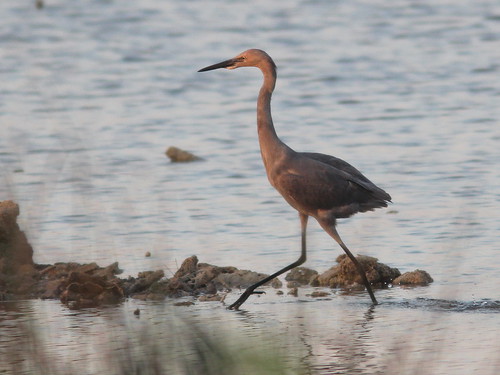
An immature Reddish Egret appeared in the spring of 2011 and remained for only two weeks. This species prefers brackish estuaries and rarely wanders inland:
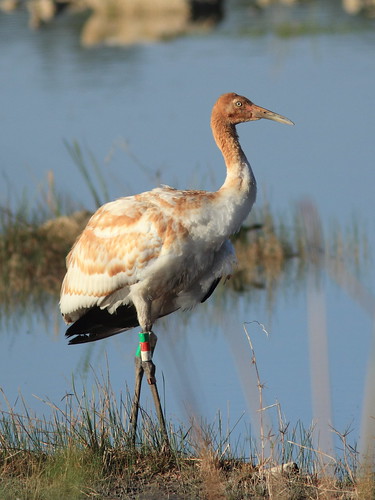
Another "one-off" species was actually represented by two captive-reared juvenile Whooping Cranes from Wisconsin which overshot their normal wintering grounds in northern Florida:
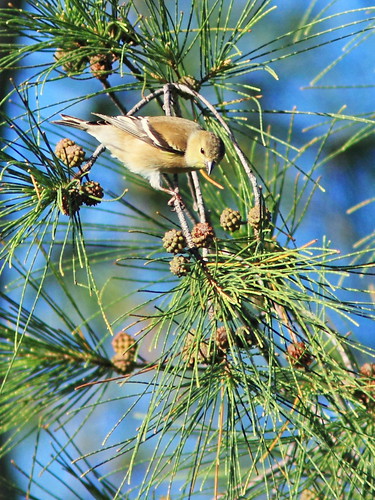
A flock of 15 American Goldfinches, a species which winters in south Florida irregularly, arrived once on December 9, 2015 and departed the same day:
To date I have submitted a total of 1,307 eBird checklists, of which 860 have been from my local patch, a hotspot officially known as the West Miramar Water Conservation Area (WCA). My eBird West Miramar WCA Life List
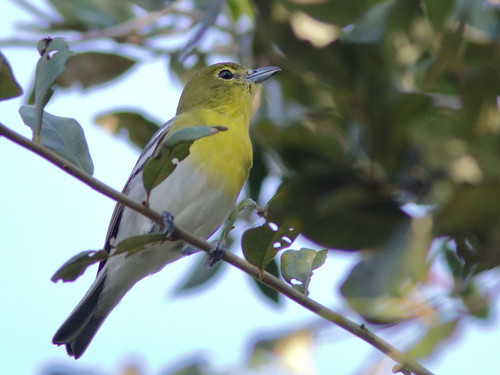
New additions to the list have decreased over time. I had seen a total of 80 species by the end of 2010, added 27 more in 2011, 13 in 2012, 14 in 2013. 8 in 2014, 15 in 2015, 6 in 2016, 3 in 2017, and only four species (Gray Kingbird, Royal Tern, Chipping Sparrow and Yellow-throated Vireo) this year to date. ADDENDUM (December 13) Only an hour after posting this I added a fifth new species at 6:30 AM, when we heard an Eastern Whip-poor-will calling just as we started our walk!
Am I succumbing to the Law of Diminishing Returns? Is the "gain not worth the pain?" Time to quit and stop wasting energy?
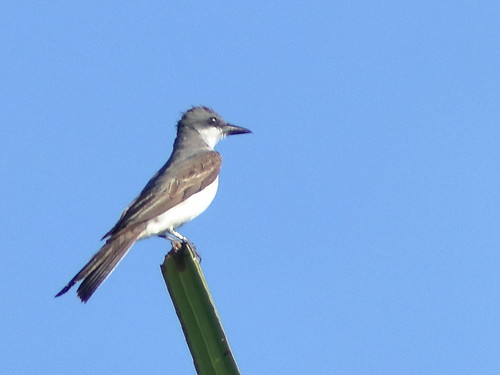
Gray Kingbird (August 23, 2018):
Yellow-throated Vireo (November 23, 2018):
 If my walks were only about counting birds I might certainly get bored. More importantly, they are a time to observe and enjoy the beauty and mystery of nature.
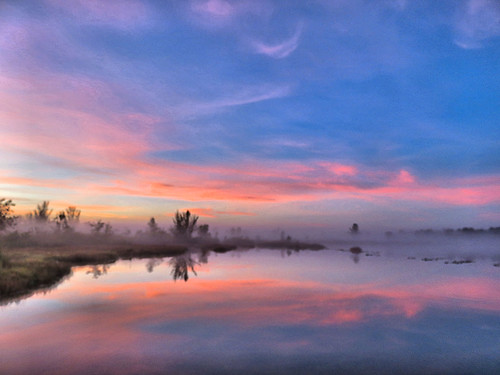
No two sunrises are alike... Pink clouds and fog on November 25, 2018:
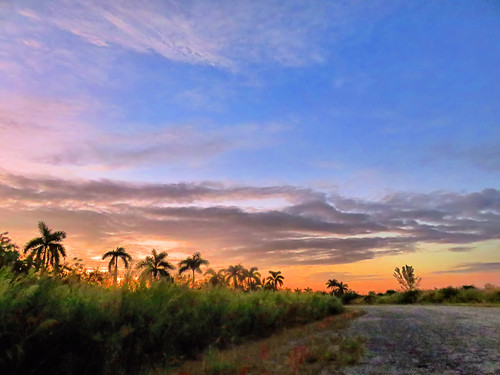
 An unsettled sky a half hour before sunrise on December 5, 2018:
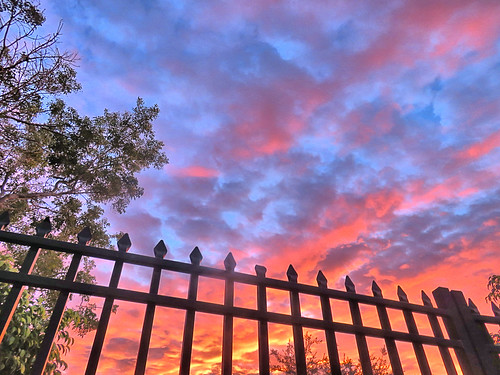
 Sun rising behind the east gate to our patch (November 29, 2018):
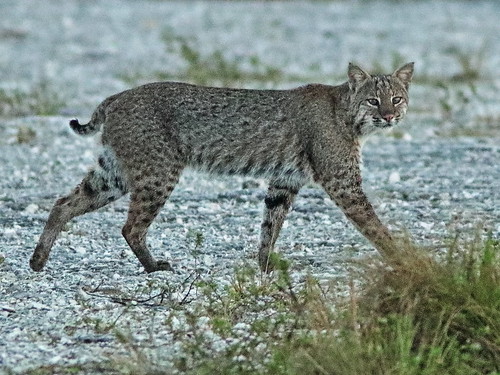
 Behaviors are interesting and sometimes unexpected. There is the thrill of the sudden appearance of a Bobcat, deer or even a Coyote...
Male Bobcat on November 19, 2018:
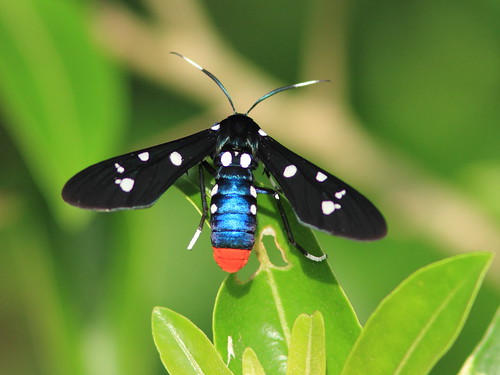
 ...and of finding beauty in the commonplace and the smallest of things.
Who would have known that there is a moth which resembles a wasp? Polka-Dot Wasp Moth-Syntomeida epilais:
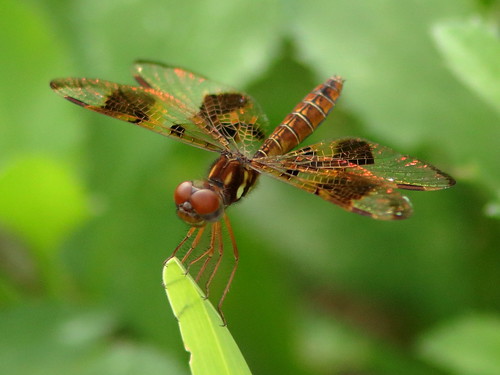
The smallest of our dragonflies also imitates a wasp, waving its wings slowly in a very menacing manner. Eastern Amberwing - Perithemis tenera:
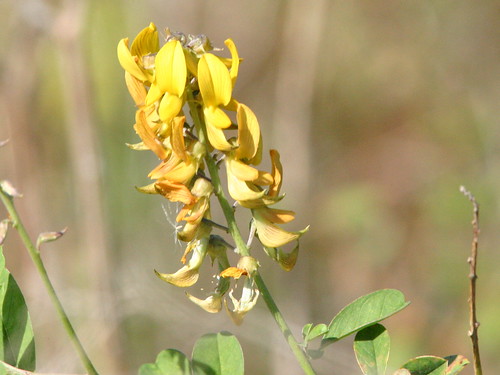
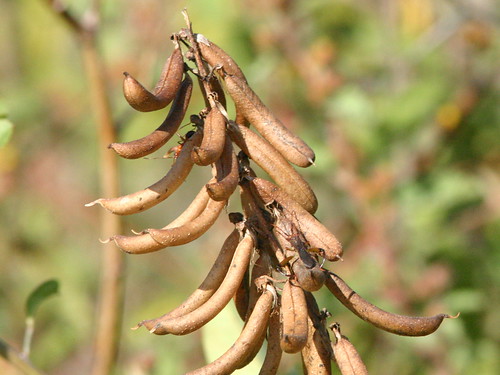
I bumped into a wild pea plant with seed pods which rattled with a sound like pebbles rolling in a paper cup. I learned that is is quite poisonous. Flowers and fruit of Smooth Rattlebox, Crotalaria pallida:
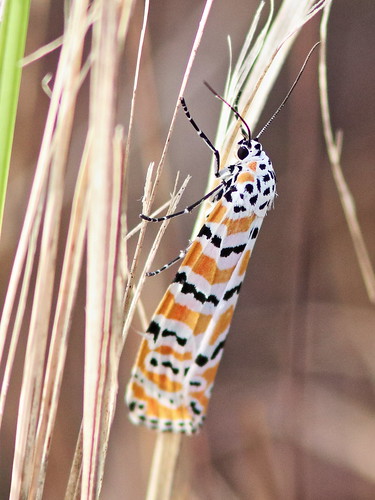
Later I found an unusually beautiful red patterned moth which requires that same plant to host its larvae, which themselves are protected by the noxious substances they ingest. Bella or Rattlebox Tiger Moth -Utetheisa bella:
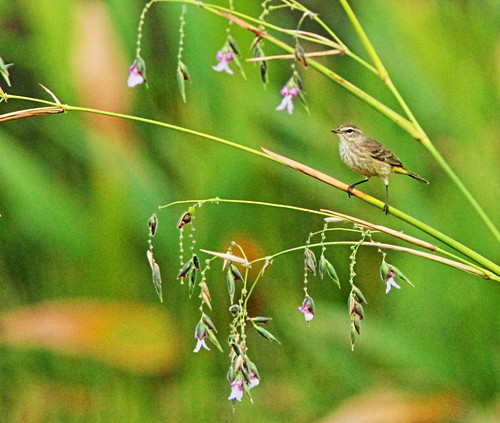
 I admire the delicate beauty of the flowers of the Bent Alligator Flag, a plant related to members of the Arrowroot family: bananas, cannas and the Bird of Paradise. Their zig-zag stems reach up as high as 8 feet.
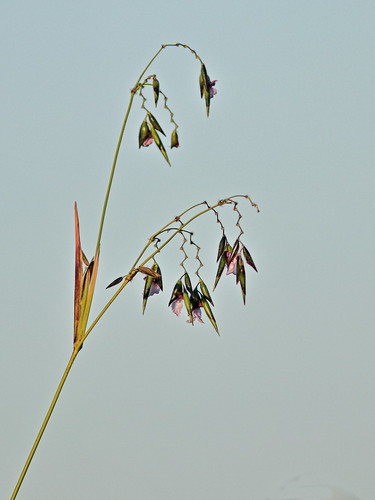
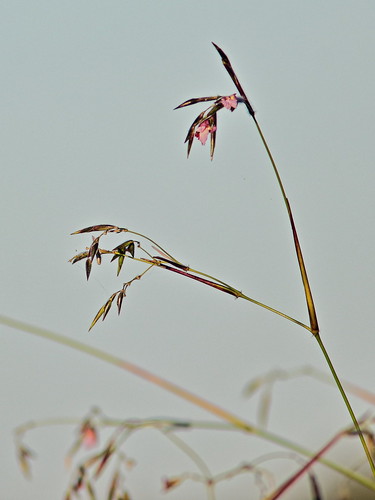 Tiny insects are lured to their blossoms and are momentarily trapped and dabbed with pollen before being released so they may cross-fertilize other flowers.
The insects attract Palm Warblers:
 Purple Gallinules eat the flowers and seeds:
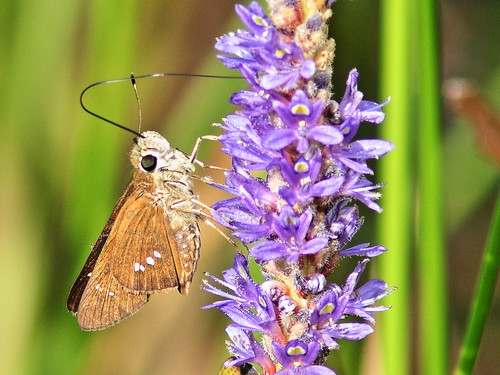
 I learned that this plant serves as host to a particular butterfly species, the Brazilian Skipper, whose leaf-rolling caterpillars also inflict great damage to cultivated cannas and other members of the Arrowroot family:
 = = = = = = = = = = = = = = =
Linking to Misty's CAMERA CRITTERS,
Linking to Eileen's SATURDAY'S CRITTERS,
Linking to SKYWATCH FRIDAY by Yogi, Sylvia and Sandy
Linking to WEEKEND REFLECTIONS by James
Linking to BirdD'Pot by Anni
Linking to Our World Tuesday by Lady Fi
Linking to Wild Bird Wednesday by Stewart
Linking to Wordless Wednesday (on Tuesday) by NC Sue
Linking to ALL SEASONS by Jesh
Linking to Fences Around the World by Gosia
________________________________________________
Please visit the links to all these memes to see some excellent photos on display
________________________________________________
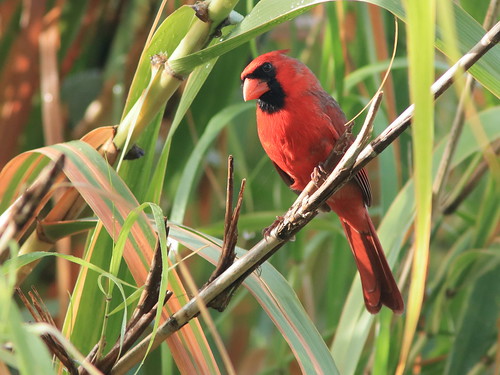
It has been a rather quiet fall migration in the local Wounded Wetlands. Resident birds, such as this male Northern Cardinal, seem to be stealing the spotlight:
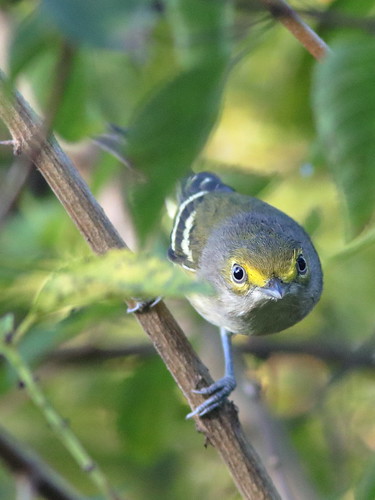
 A White-eyed Vireo was feeding on Lantana berries and approached so closely to my secluded "sit-spot" that I could barely fit it into my viewfinder:
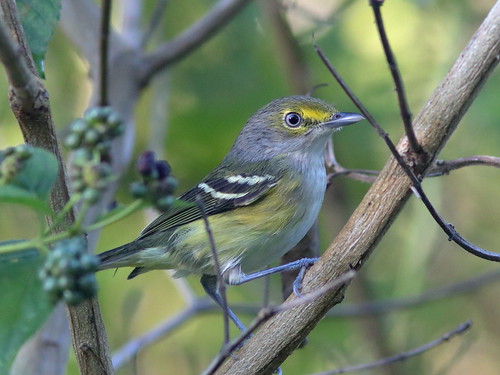 It suddenly detected my presence. One look and it fled:
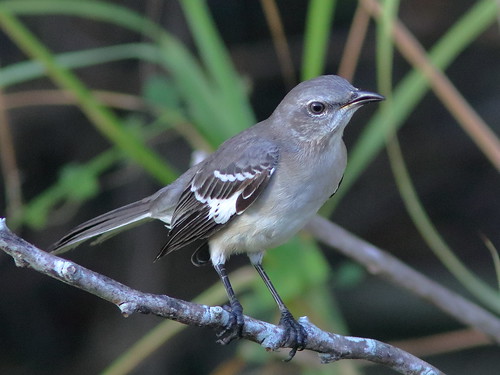
 A vigilant Northern Mockingbird kept me in sight:
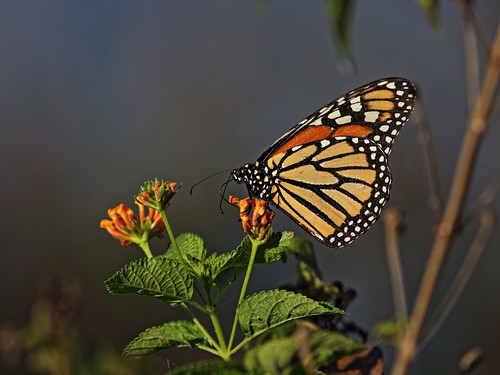
 Monarch butterflies are attracted to Lantana blossoms:
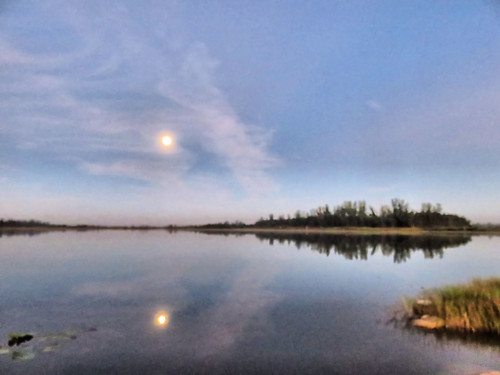
 On October 25 the Hunter's Moon was setting across the lake as I was birding in that patch of Lantana...
...and was amazed to find a Monarch butterfly wearing a numbered tag:
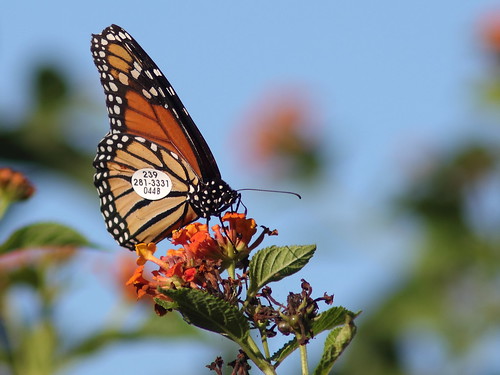
This led me to call the telephone number on the tag. The call opened a whole new world of knowledge about the ecology of this species. Of course I knew that Monarchs migrate south in the fall to gather in huge winter swarms and then progress northward in a multi-generational spring migration. I will not forget the cloud of these butterflies which, one autumn in the 1970s, surrounded the windows of my 17th floor office in downtown Dallas, Texas.
Texas serves as a geographic "funnel" which concentrates the southbound Monarchs on their way to overwinter in Mexico in huge aggregations. Some also stream down the east coast through Florida. Western populations may end their journey in California. What I learned when I placed that call to report the tagged butterfly was that the Monarchs of south Florida are non-migratory, and that well-intended human activity to help them may have adverse effects. The key is their dependence upon Milkweed.
Generally, the northbound Monarchs progressively follow the sprouting of Milkweed, and 3-5 successive generations may be produced during spring and summer. Their progeny fly to the northern US and southern Canada, compensating for the relatively short life span of the individual insects. Those which move into frigid climes may be doomed to freeze, but those who approach winter under milder conditions build up body fat, stop breeding, and turn around to migrate south nonstop to distant wintering grounds. In the meantime, the native Milkweed dies back, not to re-emerge until the next spring.
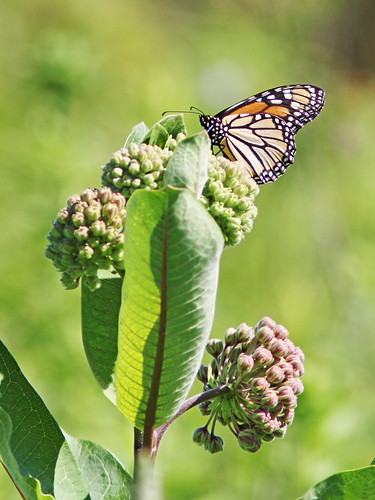
My photos of native Milkweed were taken in northeastern Illinois-- Monarch on common Milkweed (Asclepias syriaca):

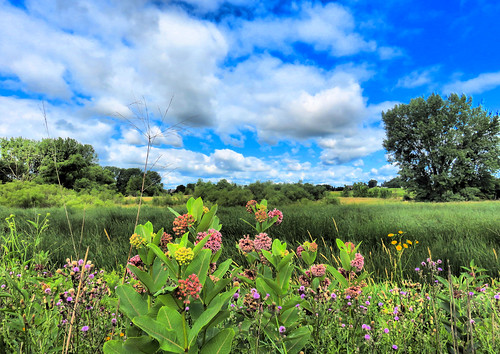
Milkweed patch:
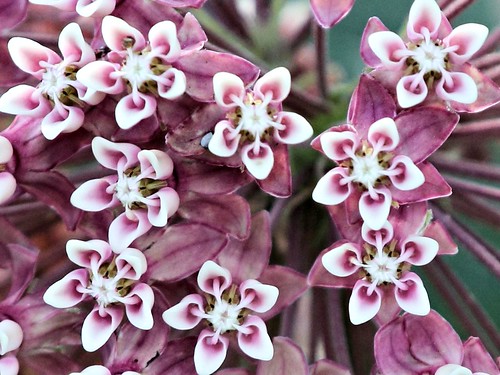
Closeup of Common Milkweed flower:
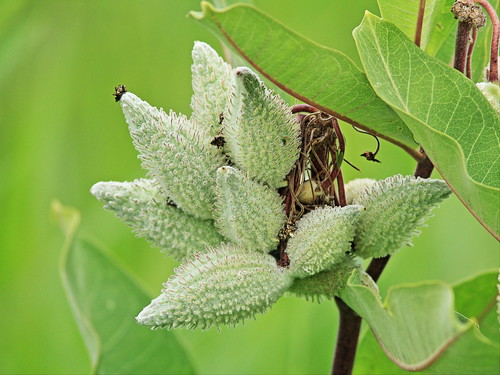
Green milkweed pods:
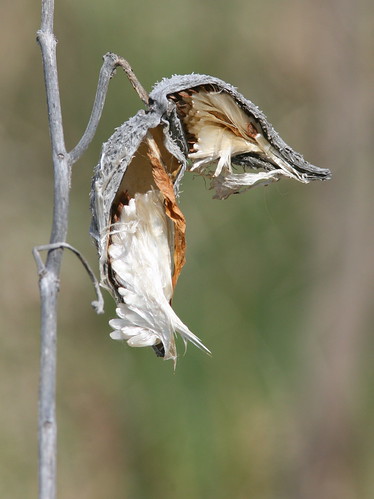
Dried up milkweed pods in late autumn:
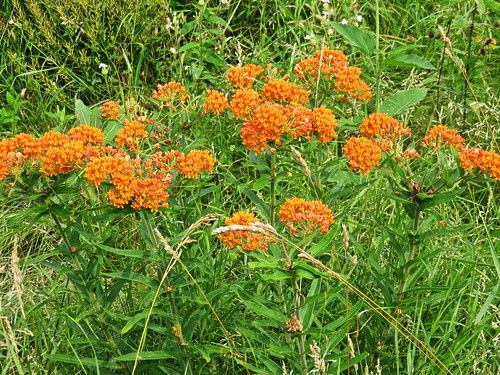
Butterfly Weed (Asclepias tuberosa) is a species of milkweed native to eastern North America:
Since Monarchs depend upon Milkweed as a host plant for their eggs and caterpillars, their numbers are adversely affected by widespread conversion of land into cultivation and housing developments. Farmers certainly do not want this "weed" among their crops, and suburbanites do not regard them as attractive foundation plantings. Powerful herbicides target them.
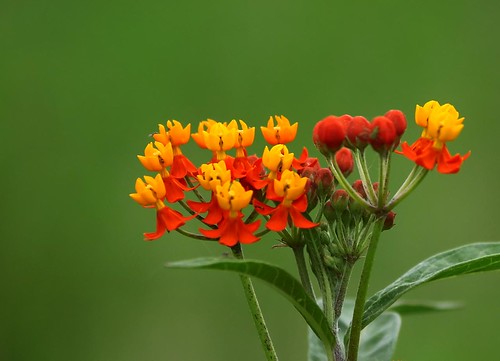
Conservationists urge people to plant Milkweed for the Monarchs, and many people do this. So here's the paradox-- the easiest and most accessible nursery-grown Milkweed in southern US is non-native Tropical Milkweed (Asclepias curassavica). It blooms all year and is an attractive garden plant. Monarchs love it. However, it serves as the reservoir for a parasitic disease which is nearly confined to a single butterfly species (related Queen butterflies may also become infected to some extent).
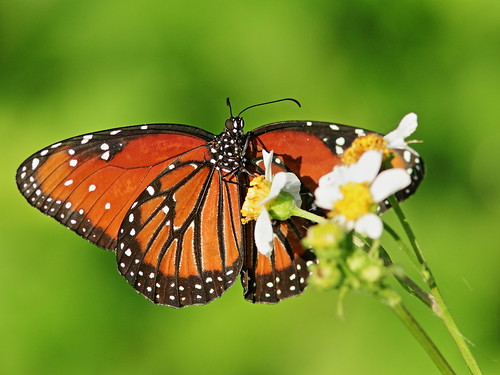
Queen Butterfly on Shepherd's Needle (Bidens alba):
Ophryocystis elektroscirrha (OE for short) is an amoeba that invades the cells of Monarchs. They ingest their spores as larvae while feeding on Milkweed leaves. Tropical Milkweed is like a restaurant which never sweeps up its tables or launders the tablecloths.
Monarch caterpillars eat the OE spores which emerge through their skin after they undergo metamorphosis into adult butterflies. In turn, the adults visit to lay their eggs, each of which may be covered with many spores.The leaves, which are not renewed each season as are those of native Milkweed, concentrate the spores as multiple generations of Monarchs visit and reproduce on them.
OE has adverse effects on the health of some Monarchs, weakening them, causing wing deformities, smaller size and often premature death. There is some dispute as to whether the overall population benefits from the greater availability of Tropical Milkweed, thus outweighing the adverse health effects on some individual butterflies.
My tagged butterfly was one of the subjects of a study of the south Florida population which has lost the instinct to migrate, This probably evolved because Florida has native Milkweed species which are available all year round.
Researchers raise the caterpillars and sample the emergent adult Monarchs for the presence of OE spores before tagging and releasing them. Recaptured adults are also tested. A strip of sticky tape is touched to their bodies, providing an indicator of the presence and number of spores. Field reports, like mine, are compiled to gauge their longevity and wanderings.
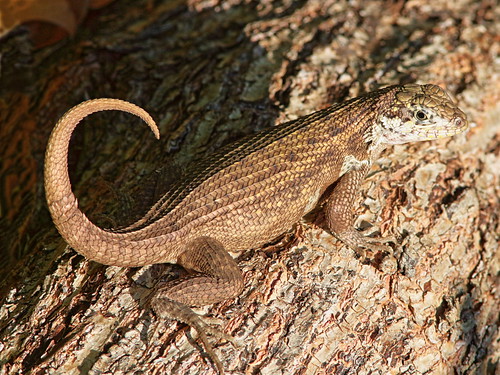
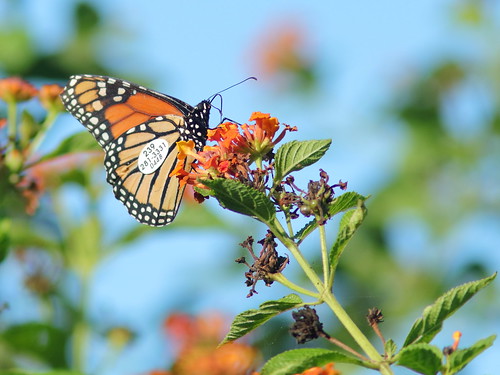 This week I received a call from the person who raised and released my tagged Monarch on October 12, thirteen days previously. She lives only about two miles east of our home. Interestingly, she raises her caterpillars on Tropical Milkweed and must bring the newly emerged ones inside to protect them from hungry exotic Curly-tailed Lizards until they build up enough toxin from the milkweed to make them repulsive to the reptiles.
Curly-tailed Lizard near our home:
 Tropical Milkweed (Asclepias curassavica):
Photo by Pablo Leautard protected by copyright under the FLICKR Creative Commons license. (You may share it for non-commercial educational or non-profit purposes with attribution to owner.)
References:
Project Monarch Health is a citizen science project based at the University of Georgia in which volunteers from across North America sample wild monarch butterflies to help track the spread of the OE protozoan pathogen over space and time.
Plan to save monarch butterflies backfires- It started with the best of intentions. When evidence emerged that monarch butterflies were losing the milkweed they depend on due to the spread of herbicide-resistant crops in the United States, people across the country took action, planting milkweed in their own gardens. But a new paper shows that well-meaning gardeners might actually be endangering the butterflies’ iconic migration to Mexico.
What is OE (Ophryocystis elektroscirrha)? Why am I seeing adult monarchs with deformed wings?
Save our Monarchs -- Plant Native Milkweed
Fact Sheet about Tropical Milkweed and OE -- With a note about the non-migratory population in south Florida
= = = = = = = = = = = = = = =
Linking to Misty's CAMERA CRITTERS,
Linking to Eileen's SATURDAY'S CRITTERS,
Linking to SKYWATCH FRIDAY by Yogi, Sylvia and Sandy
Linking to WEEKEND REFLECTIONS by James
Linking to BirdD'Pot by Anni
Linking to Our World Tuesday by Lady Fi
Linking to Wild Bird Wednesday by Stewart
Linking to Wordless Wednesday (on Tuesday) by NC Sue
Linking to ALL SEASONS by Jesh
________________________________________________
Please visit the links to all these memes to see some excellent photos on display
________________________________________________