Showing posts with label Monarch. Show all posts

Thursday, August 26, 2021

Dusty Blue Moon

Last weekend we celebrated a rare  Seasonal Blue Moon. The usual Blue Moon occurs when there is a second full Moon in a single month. The second during any one of the four seasons is called a Seasonal Blue Moon. The latter is a bit less frequent, but both happen about every two or three years. Both may rarely occur in a single year, as happened in 2018, but this will not be seen again until 2037, a few days before my 102nd Birthday. 

When there is a full Moon, we enjoy getting out early to watch it set into the lake from a vantage point about a 15 minute walk from our home. Best viewing occurs during the half hour before moonset, but on Saturday morning it was too early for us. The  nearly-full Moon set around 6:00 AM and disappeared from the clear sky just as we started out on our walk. 

Steven, a friend and very accomplished birder, accompanied me. As usual, MaryLou broke ranks and power-walked a mile out and we were only about halfway in when, on her way back home, she blew past us in the dark. Steven sought three target birds. The first was the Barn Owl, which we encountered very soon. A pair have been breeding in the hollow tops of dead Royal Palms. I "discovered" them in 2015, but did not find nest #1 until 2019. They occupied nest #2 this past breeding season, raising one owlet which fledged in February. For the past month the pair have been roosting on a third dead palm just to the north of nest #2. This was where we heard and then saw it on Saturday. Much too dark for photos.

A Chuck-wills-widow, the second of Steven's target species, treated us to a nocturnal fly-by. Again, no photos.

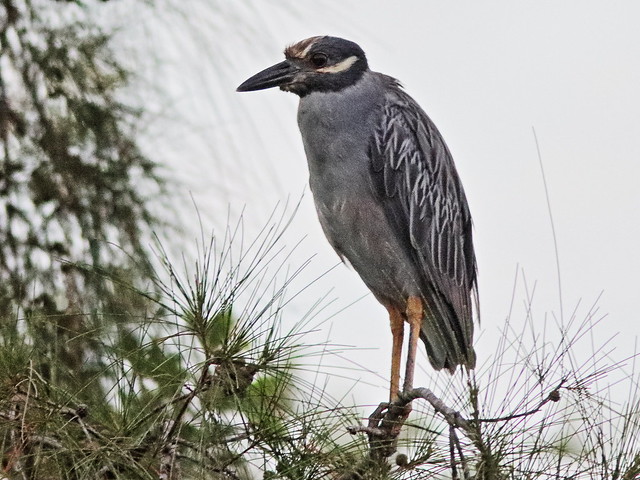
We reached the extinct heron rookery before sunrise. An unseen Green Heron called out. Steven caught sight of a cluster of three Yellow-crowned Night-Herons high in a tree and silhouetted against the brightening eastern sky. My best photos were horrible:


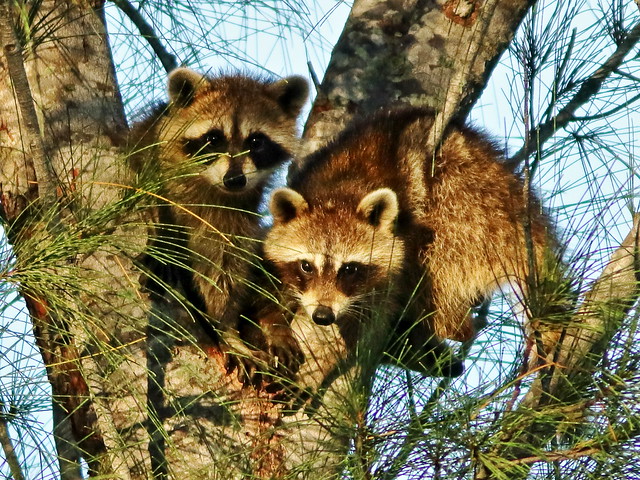
As the sky brightened, Steven's eagle eyes spotted (yes, an immature Bald Eagle, but also) what, at first, appeared to be a large nest. On closer inspection, it was a family of Raccoons. As their parents remained curled up asleep in the branches above them, two youngsters stared back intensely:
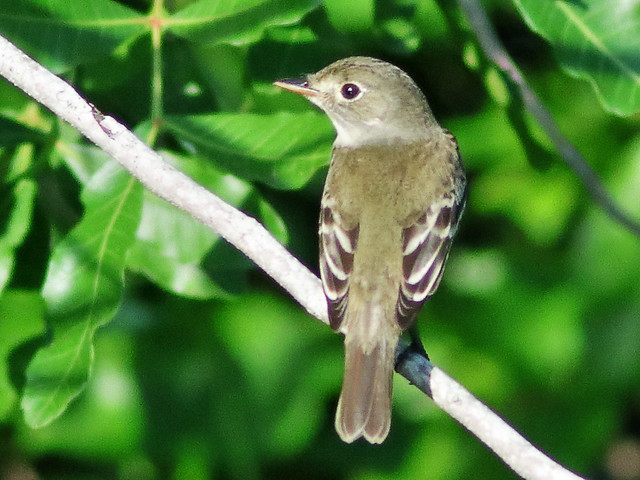
A few days earlier, on August 16th I had located an Alder Flycatcher near the entrance to the Wounded Wetlands. This was the priority bird for Steven, but it failed to appear this morning:

Steven did locate a Great Crested Flycatcher which I had overlooked:

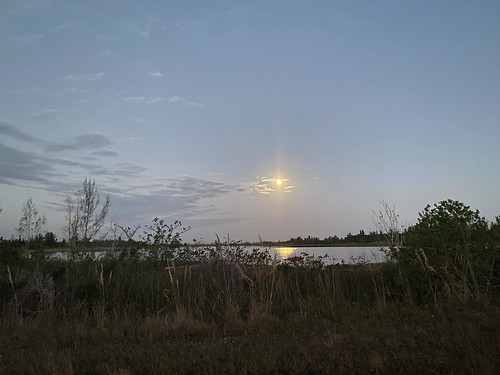
The next morning I hoped to photograph the setting of the Blue Moon just before sunrise. However, it was barely visible through the murky sky, tinged brown by a huge cloud of Saharan dust:

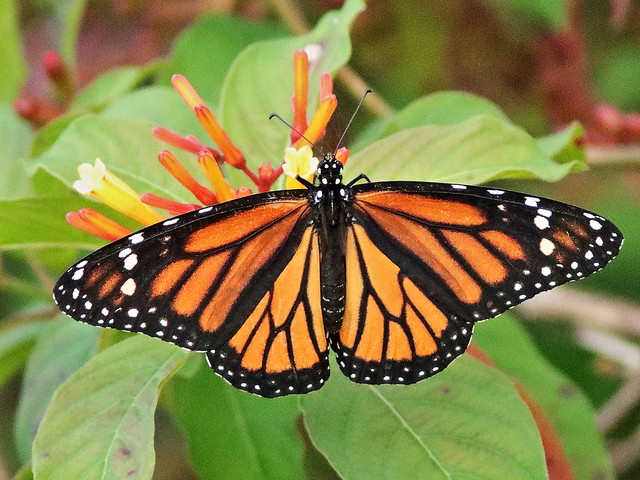
Other sightings this past week have been a Monarch butterfly on the flowers of Firebush:

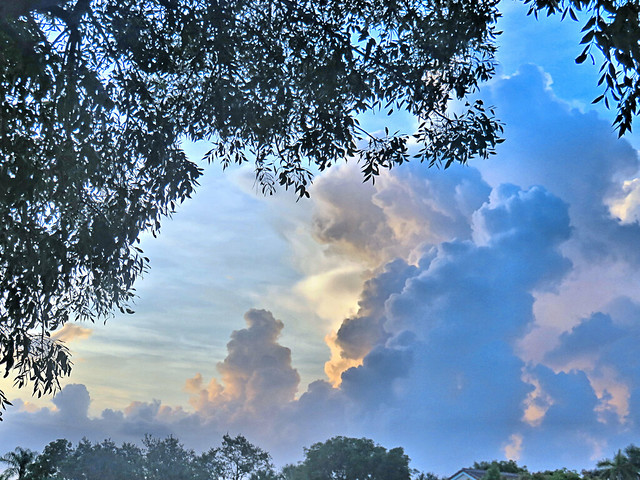
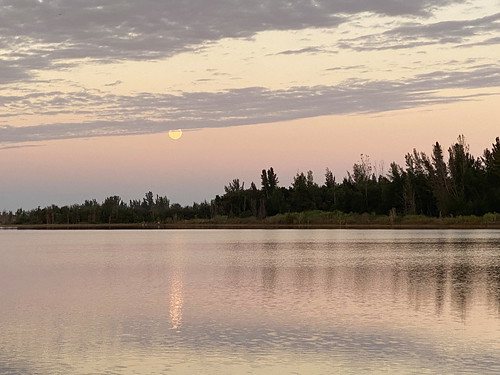
On August 16, before the dust storm, we enjoyed a pastel sunrise:

= = =  = = =  = = = =  = = = = =

Linking to:


Nature Thursday

Skywatch Friday

Weekend Reflections

Saturday's Critters

BirdD'Pot

Camera Critters

All Seasons

Wordless Wednesday (on Tuesday)

Natasha Musing

Our World Tuesday

________________________________________________

Please visit the links to all these posts to see some excellent photos on display
________________________________________________

Thursday, July 1, 2021

Crops & Clips: Flashback to July, 2018

As I do each month, I enjoyed looking back over my archived photos, taken three years previously, to remember how things were then and maybe get some idea of what to expect this year.  

As usual, I searched for images which reflected favorite memes: critters of all kinds (especially birds), skies and clouds, reflections, flowers and fences, as well as scenes which speak for themselves. We spent the entire month in Florida, having just completed sale of our Illinois condominium. 

My first bird photos of the month, on July 1, were of a female Red-bellied Woodpecker on the paper bark of a Melaleuca tree...

...and a Common Nighthawk in flight:

The next morning a male Red-bellied Woodpecker exhibited the more extensive red on his crown:

A Red-winged Blackbird looked down from his perch in a Swamp (Red) Maple:

The streaked breast of this Green Heron indicates that it is an immature bird:

A Great  Egret flew over against the dawn sky:

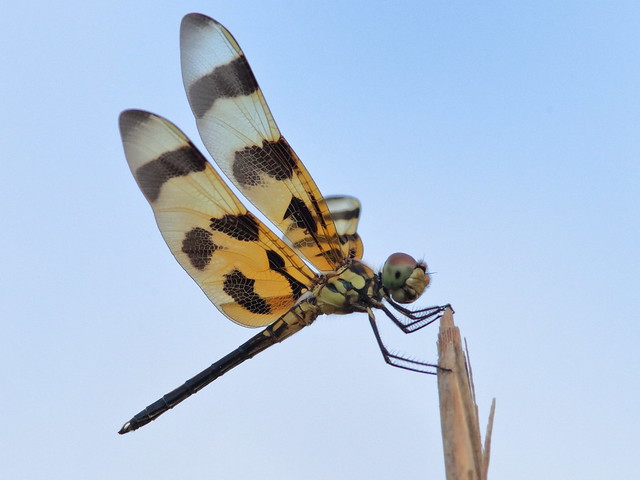
A Halloween Pennant, true to its name, faced  the wind like a flag atop a grass stalk: 

Quite a distance ahead, a Bobcat strolled across the gravel path. I captured a burst of photos and later stitched them together to form a composite image:

A Killdeer posed in warm morning sunlight:

West Indies natives descended from escaped pets, Curley-tailed Lizards were becoming more common:

A Yellow-crowned Night-Heron roosted in the rookery:

The adult Bald Eagle from the local nest flew over the Wounded Wetlands, followed by the juvenile:


The tail of this male Anhinga is corrugated, a feature which reduces drag while it is swimming underwater:


A Great Egret reflected nicely:

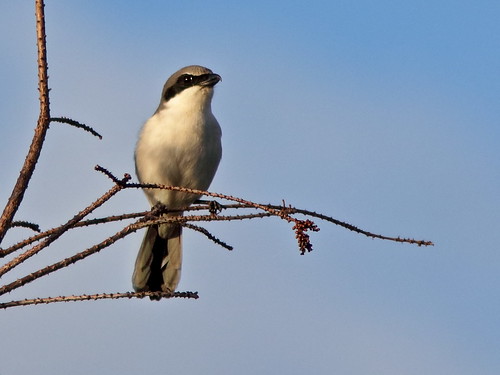
Loggerhead Shrike against the full Moon:

Monarch Butterfly on Lantana:

White Peacock:

Phaon Crescent:

The Blood Buck Moon of July set behind the trees on July 27:

Sunrise from our back patio on a typical rainy season morning, July 28:


= = =  = = =  = = = =  = = = = =

Linking to:


Skywatch Friday

Weekend Reflections

Saturday's Critters

BirdD'Pot

Camera Critters

All Seasons

Wordless Wednesday (on Tuesday)

Natasha Musing

Our World Tuesday

________________________________________________

Please visit the links to all these posts to see some excellent photos on display
________________________________________________

Thursday, February 13, 2020

Birding under a Snow Moon

On February 8 the Moon was not quite full as it disappeared into the clouds when we walked into the Wounded Wetlands. At the rookery site I found two Yellow-crowned Night-Herons. One was an adult approaching breeding condition as evidenced by its bright orange legs, clear yellowish white cap and occipital and scapular (head and shoulder) plumes:

Yellow-crowned Night-Heron 01-20200208

The other night-heron was an immature bird, approaching one year of age:

Yellow-crowned Night-Heron immature 02-20200208

My camera was set for night-flying birds with flash, and I forgot to turn off the flash when I snapped the first photo, that of the  juvenile Yellow-crowned Night-Heron. It looks like an alien creature!

Yellow-crowned Night-Heron immature 05-20200208

On February 9, we reached the lake before the full Snow Moon settled into the horizon. On the way in I had stopped to record the song of an Eastern Whip-Poor-Will. In addition to its namesake phrase, the bird uttered an assortment of "whip" and "wheel" calls. (My recording of its song may be heard at this linkbut listen carefully as the bird was not very close by.)

A cold front had passed through with morning temperatures dipping into the high 40s and low 50s (~10C), grounding the insects and requiring the whip-poor-will to rest and conserve energy. Some of its Nightjar (Caprimulgidaeaka Goatsuckers)  relatives, notably the Common Poorwill, actually "hibernate," entering into a prolonged state of torpor in which their heart rate slows dramatically and body temperature drops. Hummingbirds also may become torpid and may survive periods of cold weather. 

The Snow Moon in a black sky, an hour before sunrise:

Full Snow Moon 01-20200209

That's MaryLou with her flashlight, walking in about 55 minutes before sunrise. My new iPhone 11 Pro Max really  brightened up the night with help of moonlight and a tall street lamp about 100 yards behind me!

 Snow Moon at sunrise minus 55 minutes 20200209 

Opposite the Moon, at 26 minutes before sunrise, the eastern sky  was starting to lighten up :

Sunrise minus 26 minutes 20200209

At 23 minutes before sunrise, I had almost reached the lake:

Snow Moon at sunrise minus 23  minutes 20200209

A flock of blackbirds flew across the face of the Moon:

Full Snow Moon and birds 02-20200209

We watched as the Moon settled into the lake, four minutes after sunrise:


Snow Moon at sunrise plus 04  minutes 20200209

Full Snow Moon 03-20200209

Six minutes after sunrise:

Snow Moon at sunrise plus 06  minutes 20200209

A male American Kestrel flew into a lakeside tree...

American Kestrel 01-20200209 

...then, surprisingly, foraged for insects on the gravel track:

American Kestrel 03-20200209

American Kestrel 04-20200209

A Loggerhead Shrike then drove the kestrel away. I did not capture the actual encounter. Here is the kestrel as the shrike attacked:

American Kestrel 06-20200209

American Kestrel 07-20200209

The shrike then occupied the high perch:

Loggerhead Shrike 20200209

Monarch butterflies have been very scarce. There is a local non-migratory population, but because of Hurricane Irma which devastated their host plants, their numbers have been down for the past two years. This is a bad photo, but it was the first one I have seen this year:

Monarch in Phragmites head 20200209

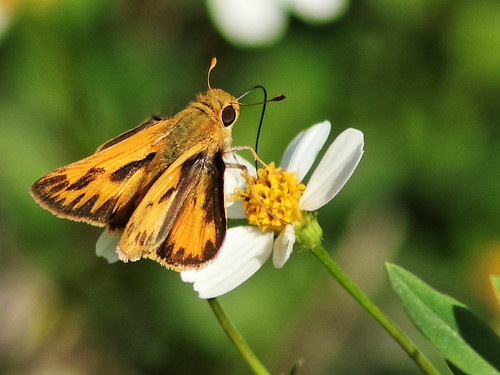
Other  butterflies on the morning of the Full Snow Moon included a tiny Fiery Skipper, here taking nectar from a Shepherd's Nettle (Bidens alba) flower:

Fiery Skipper on Bidens alba 01-20200209

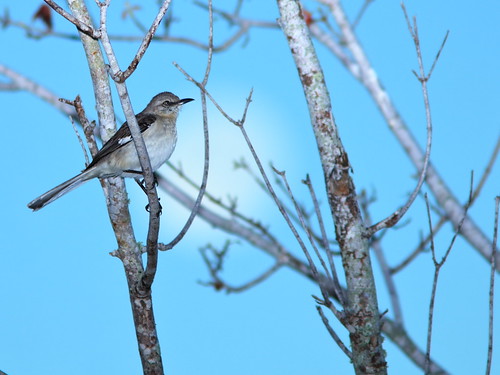
I always hope for a clear day after a full Moon, as it sets later and provides a nice backdrop for early morning photos. My  telephoto camera does not have much depth of field, so I cannot get the Moon in sharp focus, as shown in this image of a Northern Mockingbird...

 Northern Mockingbird Snow Moon 20200210

...until it decided to fly up and rest on the Moon! (Only fooling--- this is a finial atop a concrete fence post):

Northern Mockingbird 2-20200210

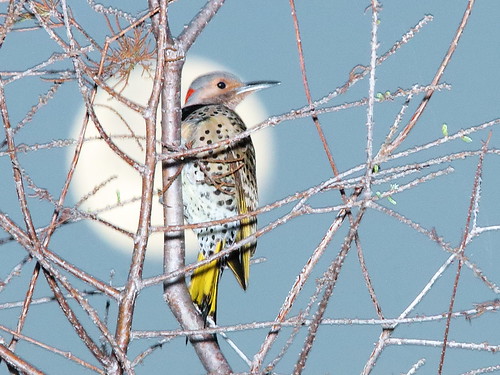
The Moon stood still long enough to provide a backdrop for a female Northern Flicker:

Northern Flicker female 02-20200210

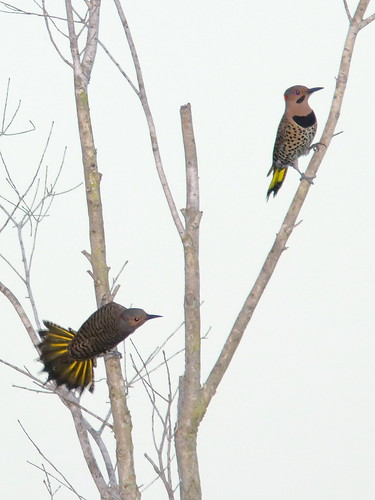
The mustachioed male flicker perched by patiently, but never posed in front of the Moon:

Northern Flicker male 04-20200210

The female flicker joined him and began to fan her tail. I have noted that the female often initiates the courtship display:

Northern Flicker female 05-20200210

I had to back away to fit both in a single frame. Although the quality of the photo is poor, I liked the action and thought it looked "painterly:':

Northern Flicker pair 06-20200210

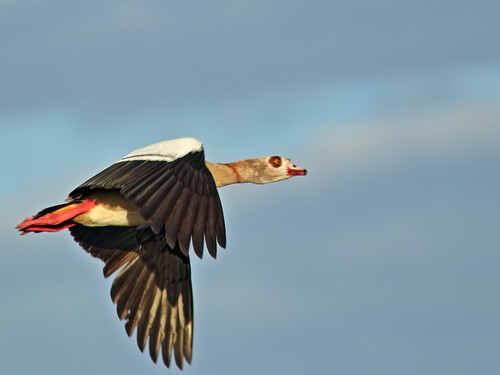
An Egyptian Goose flew over, his mate following:

Egyptian Goose 01-20200209

As I was returning home, a yearling male White-tailed Deer emerged from the brush and walked towards me. The wind was in my favor and at first he seemed to think I was another deer:

White-tailed button buck 02-20200209

The "button buck" finally recognized me and bounded off:

White-tailed button buck 04-20200209

White-tailed button buck 07-20200209

Two rival male Julia heliconian butterflies stopped sparring for a moment and rested near each other on a Lantana:

Two male Julia heliconians 20200209

A note about our local Bald Eagles. It appears that they may have lost their eggs or newly hatched eaglets in an early January wind storm which damaged their nest. They could have started a second brood. Follow them in my Bald Eagle FORUM. 

Here is the female, Jewel, roosting near the nest while the male is sitting deep in the nest, possibly sitting on eggs (February 10):

Bald Eagle female 03-20200208
= = =  = = =  = = = =  = = = = =

Linking to :

My Corner of the World

Fences Around the World    

Skywatch Friday

Weekend Reflections

Saturday's Critters

BirdD'Pot

Camera Critters

All Seasons

Wordless Wednesday (on Tuesday)

Our World Tuesday

________________________________________________

Please visit the links to all these posts to see some excellent photos on display

________________________________________________