An advantage of walking in the same old patch, day after day, is that you get to know so many features of the landscape-- the clump of leaves which resemble a roosting hawk, the shaggy stump which can be mistaken for a deer, the old woodpecker holes... You notice when there is something new-- a discarded soft drink can, a broken tree limb, fresh tracks or scat...
One morning I saw the unmistakable form of an American Bittern hiding in the sedges of the wet prairie:

The next day, to my surprise, it was still hiding in nearly the same spot:

Not wishing to disturb it, I casually took its picture and walked on. However, an hour later the bittern was there again! Now look at the second photo more closely. This little clump of reeds will not fool me again!
Another day a small mammal (or maybe an owl?), was out in the open, watching me. It looked exotic, resembling a cross between a fox and a squirrel:
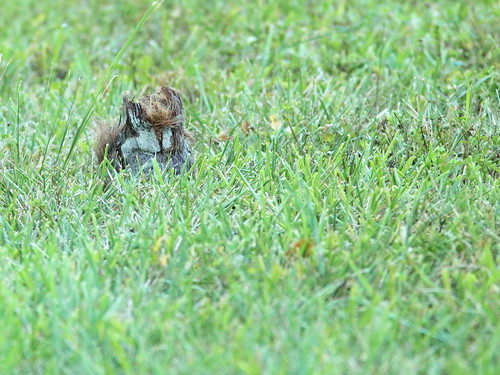
I cautiously crept closer, and this is what I saw, a coconut!:

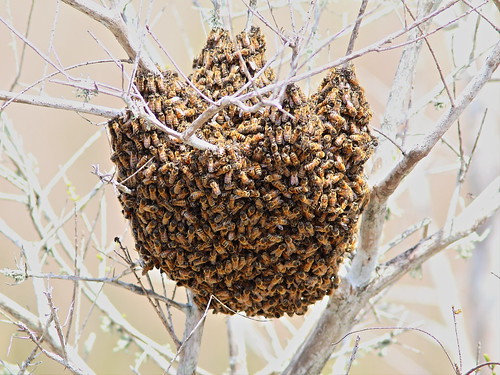
You are sensitive to changes in the soundscape-- the order in which various birds first call or sing in the morning and the seasonal variations in the mix and character of their sounds, the roar of flies crowded on the carcass of a dead animal or fresh scat, the hum of a swarm of bees:
Your nose detects the opening of the flowers-- the sweet honeysuckle scent of Ligustrum, the strong camphor smell of Melaleuca flowers, the turpentine-like odor when you brush against the Brazilian Pepper shrubs, the citrus smell of Lantana flowers which seems to be somewhat more or less pleasant depending upon their color... As a kid I could detect the musky odor when the Garter Snakes emerged from their dens in early spring to gather in squirming copulatory masses, and the lemony sweetness of a colony of yellow Citronella ants in mid-summer (they smelled so good that I even tasted one-- to my surprise it was disgustingly bitter!).
Honeybees and ants on fresh Ligustrum flowers:

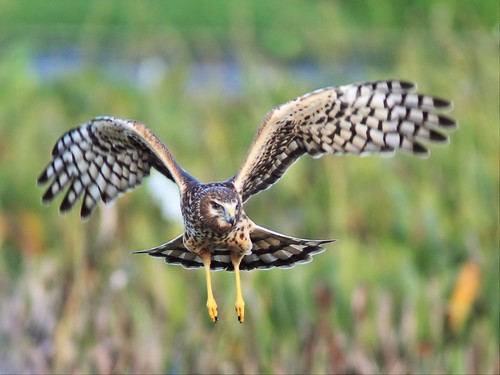
Northern Harriers use their acute vision and hearing to pinpoint prey hidden in the grass. They sweep back and forth over a grassy area almost as if they are following a planned GPS grid. They have been said to notice even minor changes in the areas they scan, implying they have excellent spatial memory.
This reminds me of digital subtraction technology which superimposes two images separated by a time interval and subtracts all the identical overlapping background areas to display only objects which are new, moved or have changed. It is useful in aerial photography to allow the tax assessor to easily find alterations in structures which may modify their size or shape, in astronomy to detect new or moving heavenly bodies, for armed forces to discover recently placed weapons or fortifications, and in medicine, when using the same technique, serial digital X-rays or scans may track changes in blood vessels, the progression of tumors or healing of fractures.
Northern Harrier:
Is the harrier's small brain capable of such a feat? In a certain sense, walking a patch resembles this phenomenon. Humans have the power to ignore the familiar-- the cracks in the sidewalk, cooking and tobacco odors at home, even the voice of a spouse! While I plead no contest to the latter, one winter morning I was guilty of not hearing the distinct calls of an American Robin in our local south Florida wetlands. Since it is a bird which I heard so often back in Illinois, my brain was slow to alert me to the fact that the bird was misplaced, as robins are infrequent and unpredictable visitors. Luckily I became aware and I even obtained photos.
American Robin:

Some of the changes in the landscape are unwelcome. These are often noted on Monday morning, after weekend trespassers on "wreckreational " vehicles (ATVs, ORVs, mud bikes, swamp buggies and jeeps) have violated the pristine areas of the preserve:
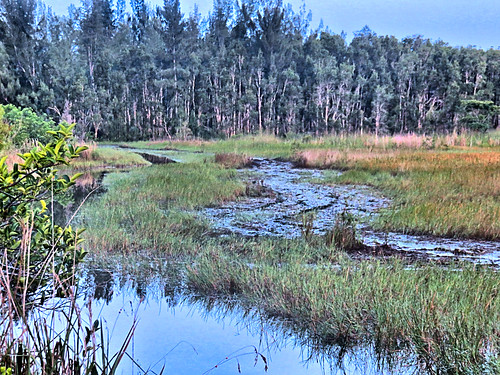
This is all that was left of my dark and shady sit-spot under the canopy of the "Fake Hammock" after trees were cut and bonfires roared, thanks to the ATV crowd. Since this photo was taken back in 2013, tall Phragmites grass has completely invaded the sun-drenched spot:


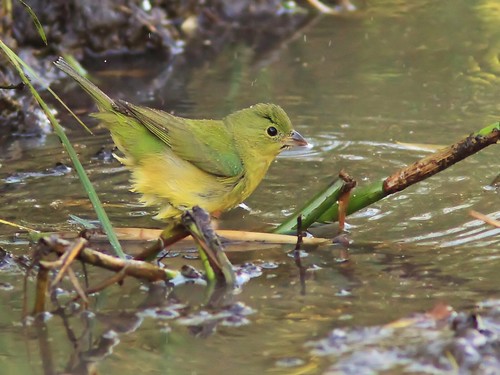
Sometimes ugly spots can be beautified, as when Painted Buntings bathe in fresh Mud Buggy tracks:

A Killdeer forages at a muddy rut:

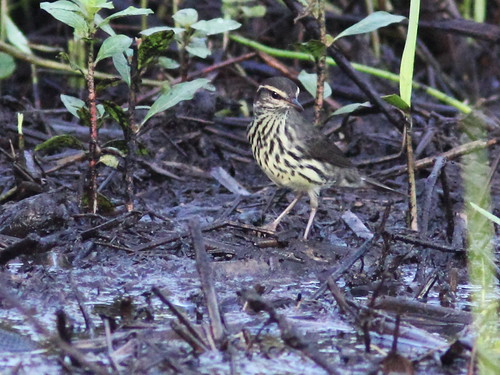
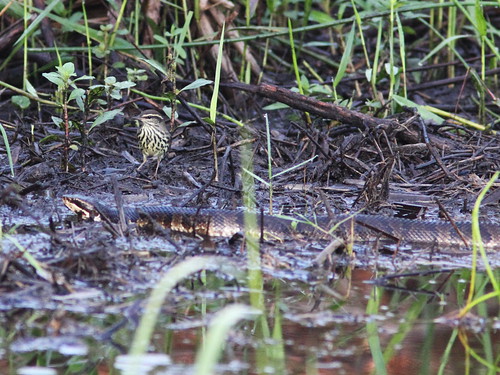
The antics of the partying off-road drivers can actually be welcomed when they practice doing "donuts" in the marsh. They create artificial "alligator holes" which retain water and attract wildlife, such as this Northern Waterthrush which is following a venomous Water Moccasin along the "shore" of just such a depression (Ophidiophobia warning):

Hurricane Irma struck in October, 2017. It decimated flowering plants and killed almost an entire generation of local butterflies, adults, larvae and eggs. Before the storm they flocked to the Lantana patch. At times one could not distinguish between flowers and butterflies:
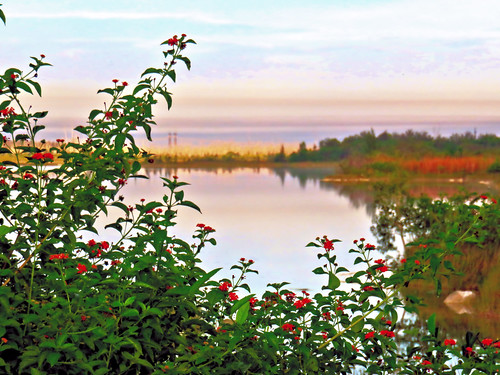
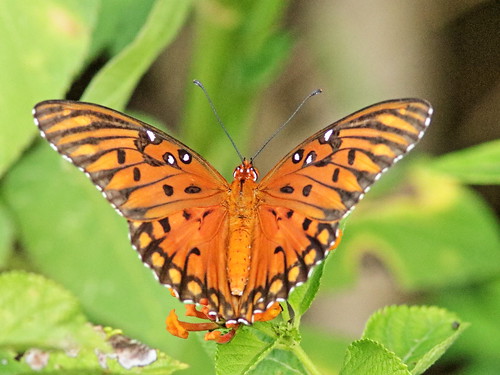
The Lantanas recovered slowly and some bloomed about six months later, but few butterflies visited. This past summer I could go a week without seeing more than one or two Gulf Fritillaries...
:
... or Julia heliconians. This was the first female Julia I saw in over a month (September 4, 2019):
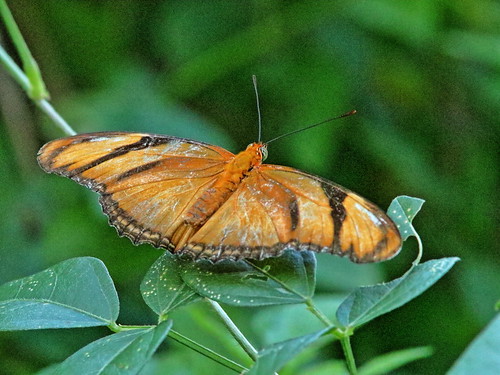
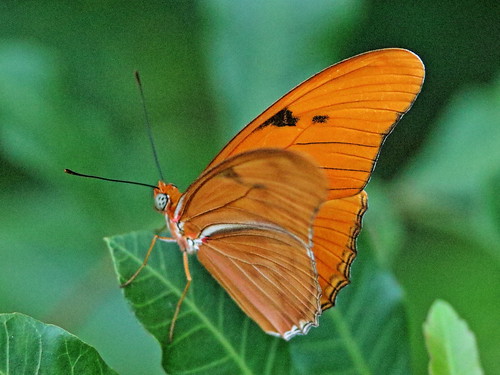
Julias are now becoming more common this is a male visiting the Lantanas on September 21, 2019: :
As if the fury of Hurricane Irma's wind were not enough, vandals set fire to wind-felled trees (February, 2018):
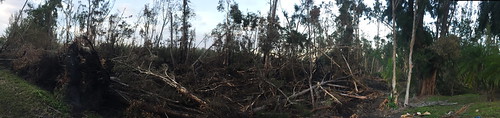
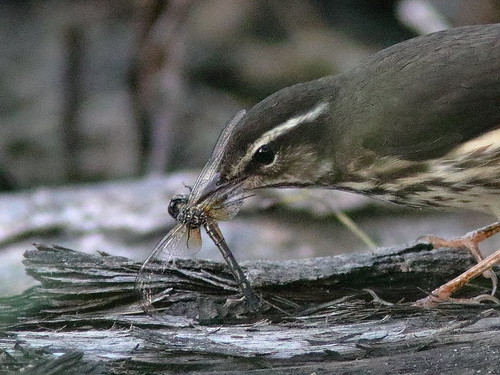
Paradoxically, the fire created a new but temporary habitat. The opening in the wetlands attracted prey for a Louisiana Waterthrush which remained there last autumn for an unprecedented three month stay as it probed among charred tree trunks and branches (October, 2018):


The fire improved sight distance, making it easier to see and photograph wildlife, such as this Gray Squirrel...

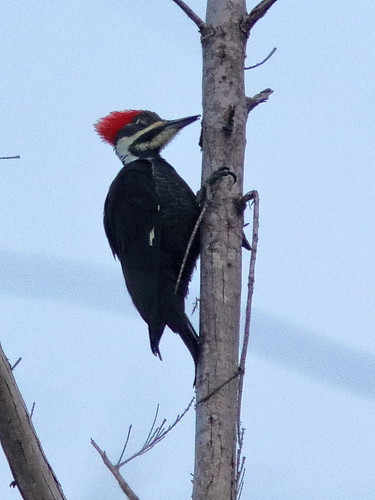
...and a Pileated Woodpecker which was attracted to the dead and dying trees:
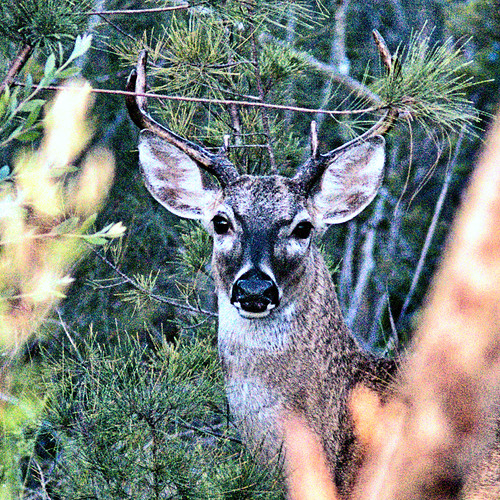
This White-tailed Deer buck failed to notice me as he entered the edge of the burned area:
The burned area is quickly recovering as invasive Melaleuca and Australian Pines sprout and flourish. Some have thrust up more than 15 feet during the two years since the fire. This photo shows the area about one year later (August 28, 2018):
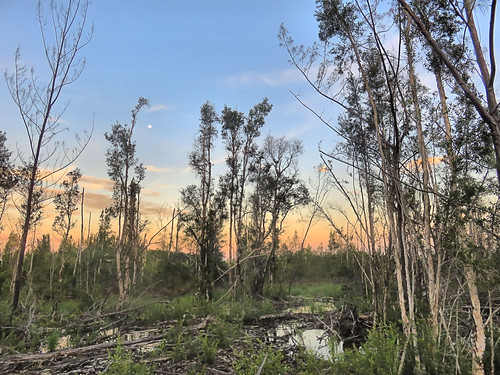
Here is the scene on October 24, 2019. Open water is already obscured by dense vegetation:
 = = = = = = = = = = = = = = =
Linking to Misty's CAMERA CRITTERS,
Linking to Eileen's SATURDAY'S CRITTERS,
Linking to SKYWATCH FRIDAY by Yogi, Sylvia and Sandy
Linking to WEEKEND REFLECTIONS by James
Linking to BirdD'Pot by Anni
Linking to Our World Tuesday by Lady Fi
Linking to Wild Bird Wednesday by Stewart
Linking to Wordless Wednesday (on Tuesday) by NC Sue
Linking to ALL SEASONS by Jesh
___________________________________________
Please visit the links to all these memes to see some excellent photos on display
________________________________________________
Category 4 Hurricane Irma made landfall in Florida on Sunday morning, September 11. Expecting it to pass directly over our home, we had decided not to ride out the storm and instead escaped to New Mexico. Although the eye passed about 80 miles to the west, our neighborhood experienced hurricane-force winds which felled trees and knocked out power. We returned home on September 13 just as power was restored and were gratified to find that our home was undamaged and we had only lost a few limbs from our mango trees.
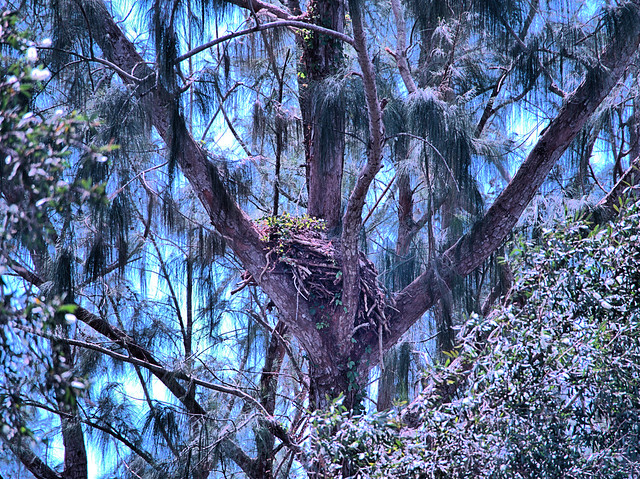
We checked on the welfare of the local Bald Eagles and found the nest standing and minor damage to the right side of the nest, in addition to earlier loss of material which had occurred during a severe wind storm in late August. No adults were present:
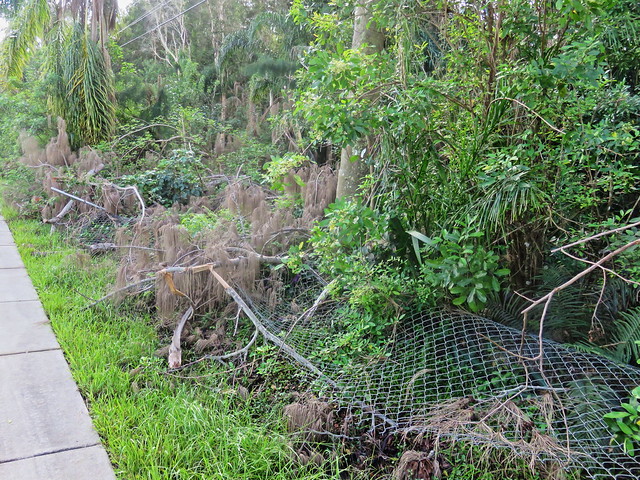
The fence which separated the eagle nest tree from the roadway was mostly leveled by fallen trees and branches which had been removed to clear the sidewalk:
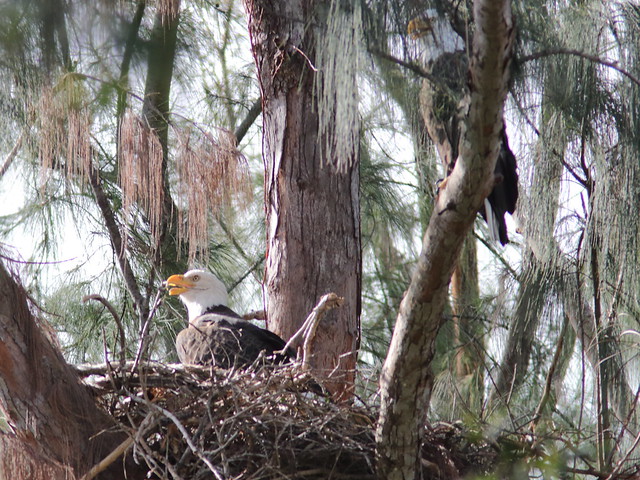
We did not venture out into our local birding patch before departing on our previously scheduled month-long stay at our second home Illinois. We returned to Florida on October 15 and the next morning found both adults at the nest. The female, partly obscured, was roosting above the nest to the right while the male was rearranging sticks on the nest:
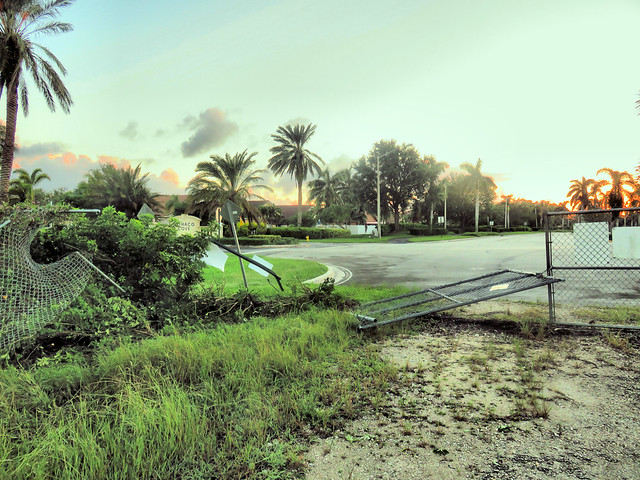
We finally got out into the wetlands and found the landscape greatly altered by the hurricane. To add human-caused insult to natural injury, a vehicle crashed into the entrance gate on the day we arrived home. I am not sure of the circumstances but it happened in broad daylight and there were no skid marks:
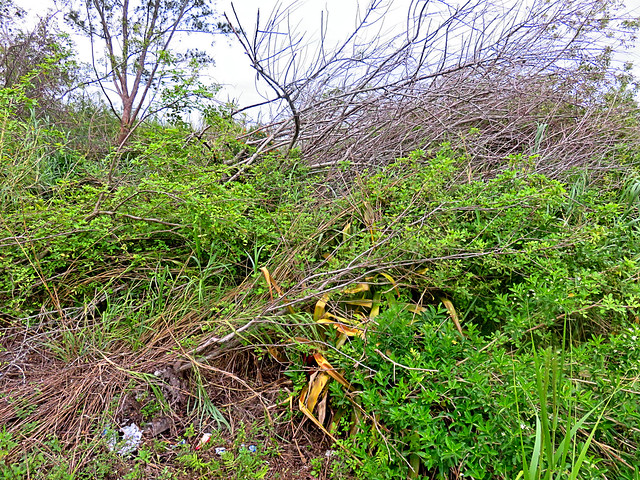
Many Trema trees, so attractive to migrating and wintering birds, were uprooted. The few left standing were stripped of fruit and leaves. This is just one example of an area which was one of my favorite "sit spots," now quite impenetrable:
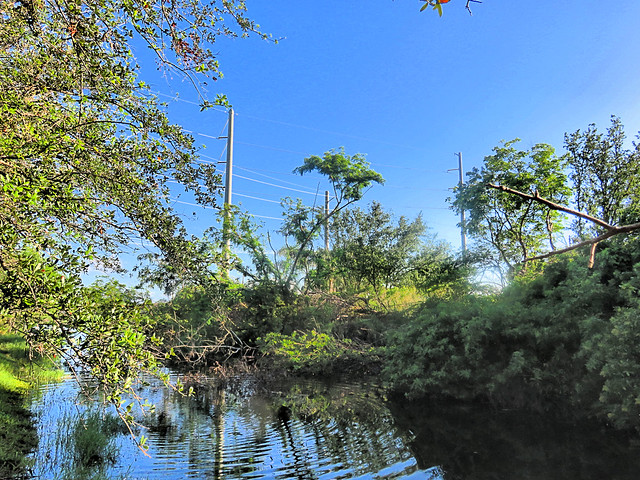
At the heron rookery, many of the nesting trees had been pushed over into the canal. The power distribution lines were no longer hidden by tall trees:
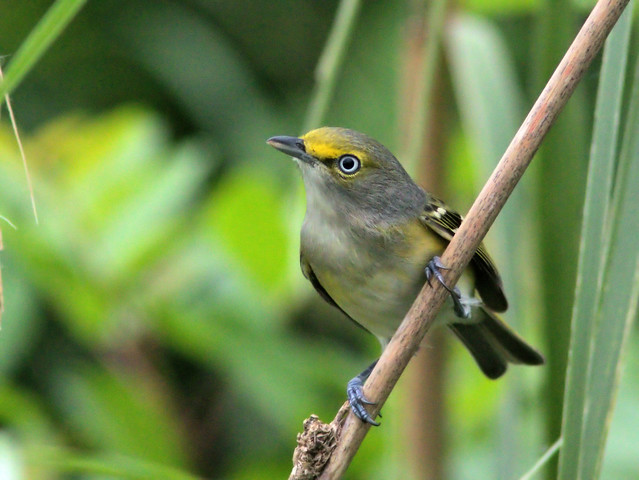
OK, enough of the doom and gloom. Nature has a way of healing, and Florida's flora and fauna have survived many hurricanes. Even the gate has been fixed. A white-eyed Vireo peered out of the rubble:
First of the season for me, a female Painted Bunting, perhaps disappointed at not finding any Trema berries, perched on a denuded branch:

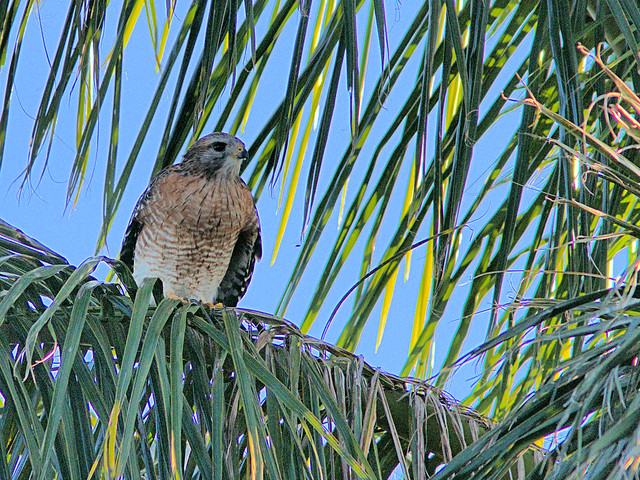
A Red-shouldered Hawk surveyed the ravaged wetlands...
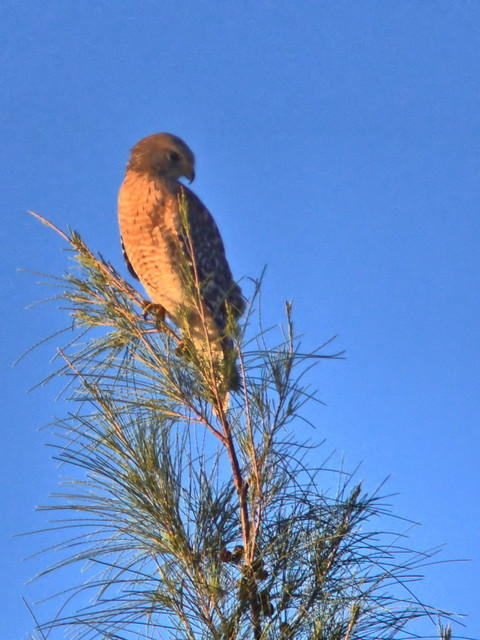
...and flew to the top of a Royal Palm:
Gray Catbirds have arrived in huge numbers:

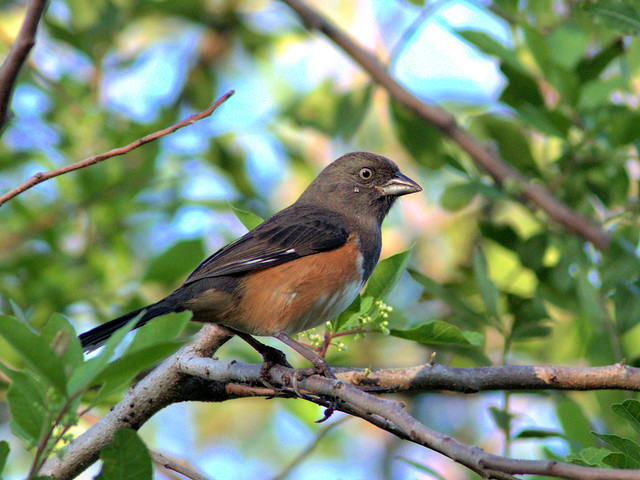
Female Eastern Towhee-- its whitish iris is characteristic of local subspecies, while more northern birds have red eyes:
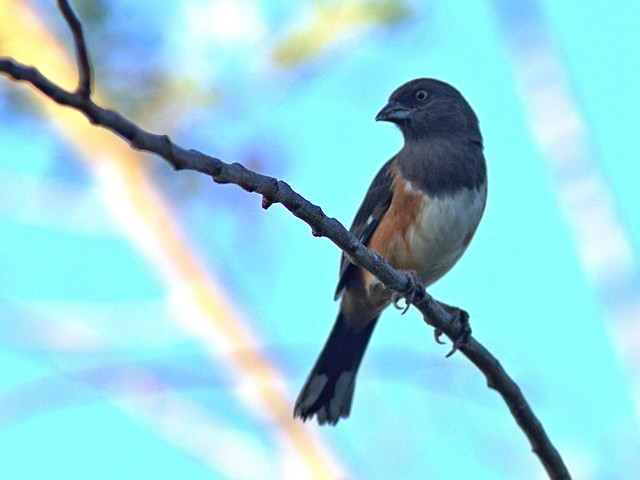
The male towhee has black plumage where that of female is "milk chocolate" brown:
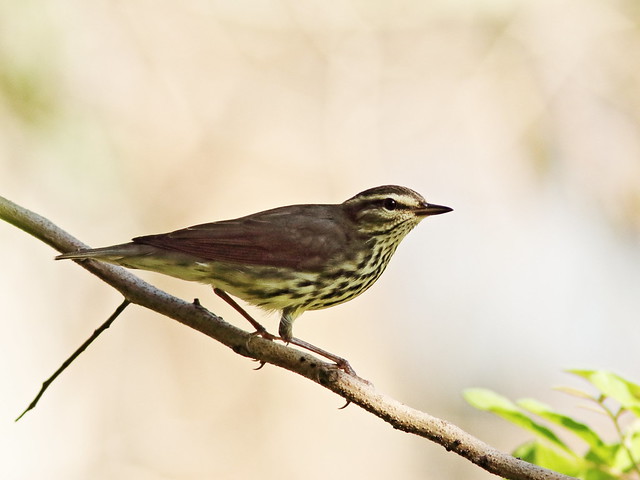
Northern Waterthrush near the heron rookery:
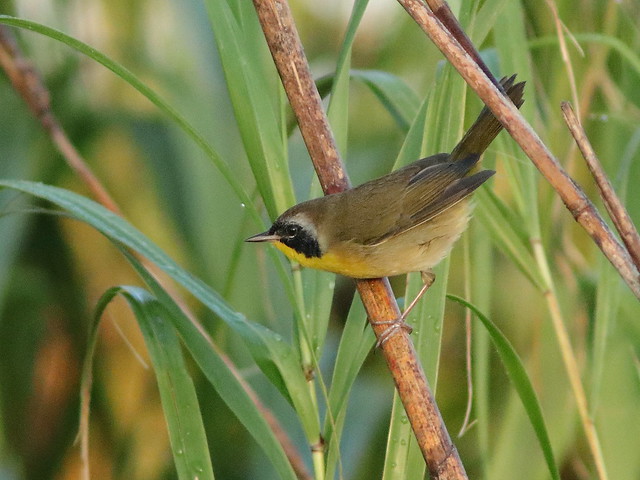
Male Common Yellowthroat along the path:
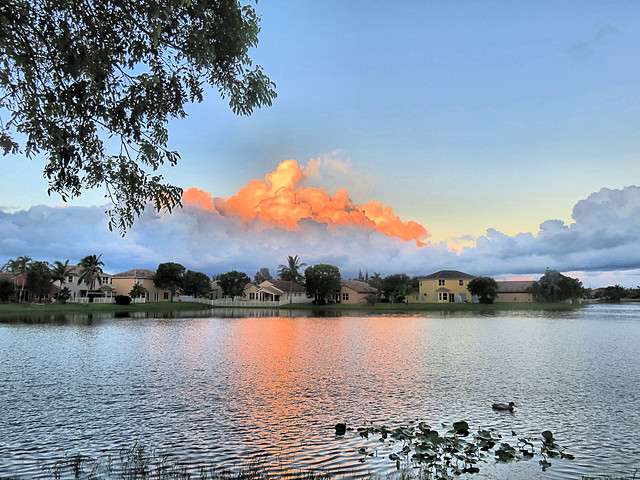
On the home front, a late afternoon storm rolled in from the ocean:
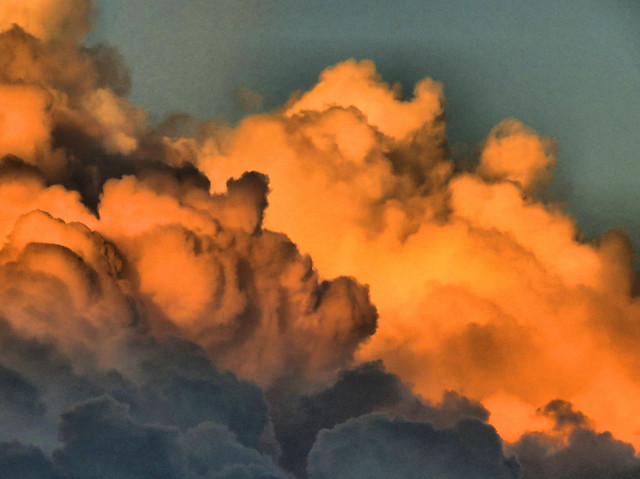
One area of the cloud caught my attention. Maybe just a rugged old man, or-- is there a crying baby with hand extended next to the face of another man who seems to be in distress?
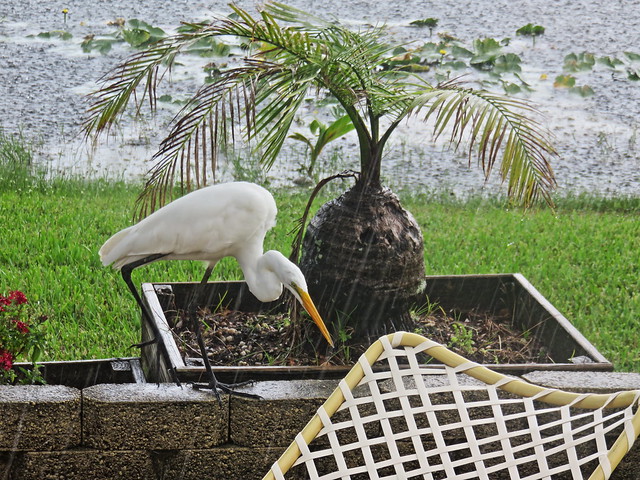
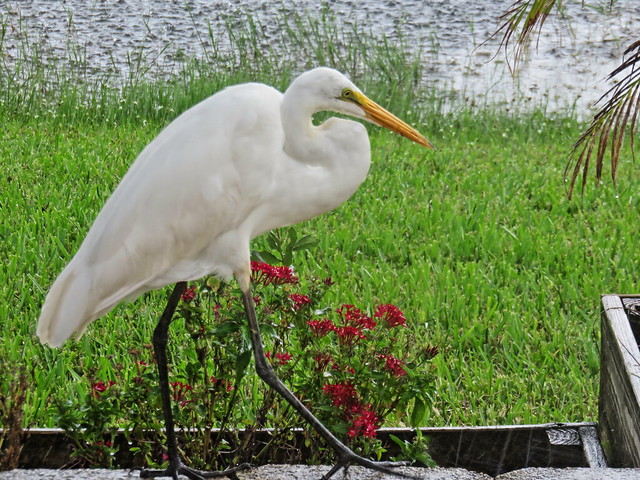
In pouring rain, a Great Egret hunted for lizards on our back patio. Taken through the glass door:
 = = = = = = = = = = = = = = =
Linking to Misty's CAMERA CRITTERS,
Linking to Eileen's SATURDAY'S CRITTERS,
Linking to FENCES AROUND THE WORLD by Gosia
Linking to SKYWATCH FRIDAY by Yogi, Sylvia and Sandy
Linking to WEEKEND REFLECTIONS by James
Linking to BirdD'Pot by Anni
Linking to Wild Bird Wednesday by Stewart
Linking to Wordless Wednesday (on Tuesday) by NC Sue
Linking to ALL SEASONS by Jesh
________________________________________________
Please visit the links to all these memes to see some excellent photos on display
________________________________________________
We returned to Florida from Illinois on August 5, flew to Amarillo only six days later, then on to Corpus Christi, Texas on August 16 and returned to Florida on August 20. Hurricane Harvey struck Corpus Christi on August 26. As Hurricane Irma approached our Florida home we escaped to New Mexico on September 6, came back to Florida on September 12, then departed for Illinois on September 16. This adds up to seven flights over a six week period.
A pre-dawn view of cruise ships in Port Everglades as we took off from the Fort Lauderdale-Hollywood International Airport (the airplane cabin was dark but my iPad turned on and caused a reflection):

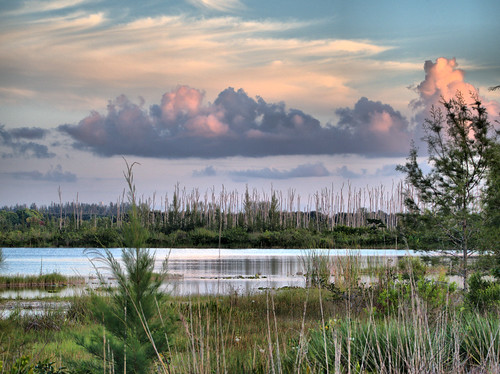
In betwen trips we enjoyed a few rain-free days which allowed us to go birding in our local Florida wetlands. This was the scene just 5 minutes after sunrise on August 9:
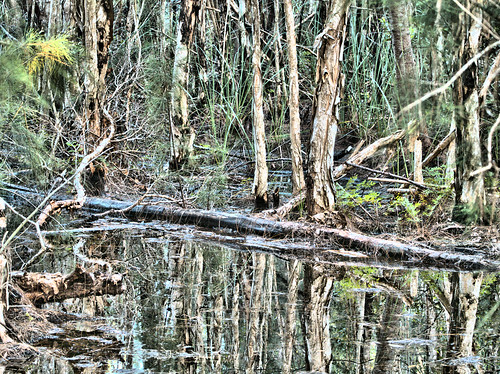
Int the flooded woodlands, Melaleucas and Australian Pines had wet feet and cast weird reflectons:
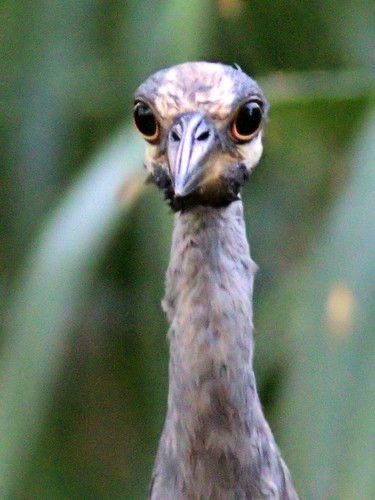
The herons in the rookery had raised their broods and most abandoned the site. Among the stragglers were an adult Yellow-crowned Night-Heron:
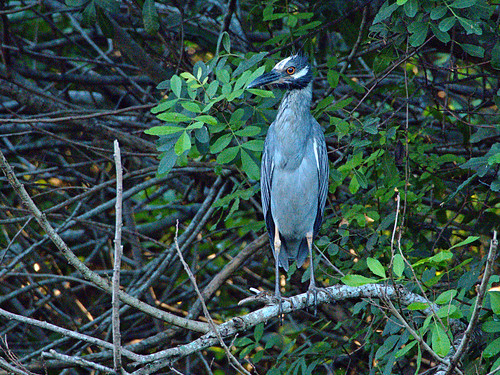
It posed for a portrait, demonstrating its binocular vision:
A well-hidden juvenile Yellow-crowned Night-Heron:

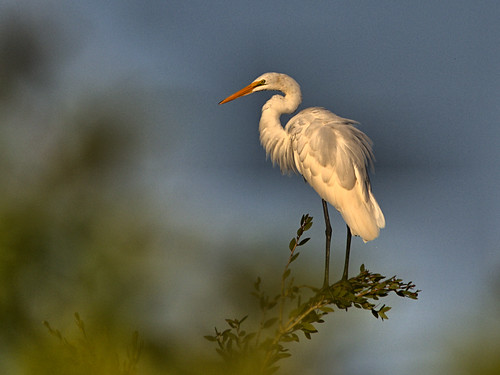
I captured this photo of a Great Egret preening its feathers through a hole between the branches. This produced a natural vignette:
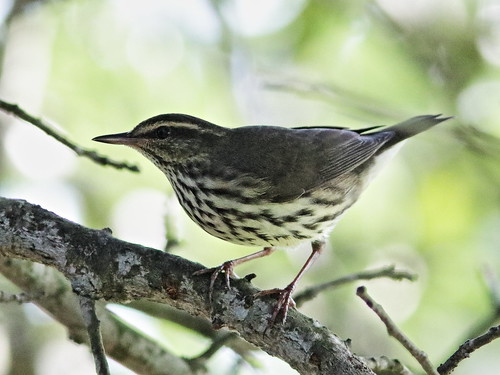
The appearance of a Northern Waterthrush was a sign that land bird migration was underway:
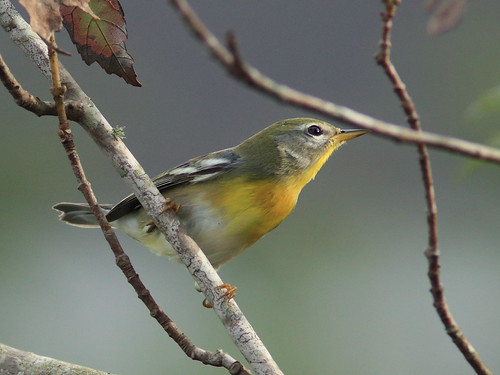
Northern Parula warblers are early migrants:
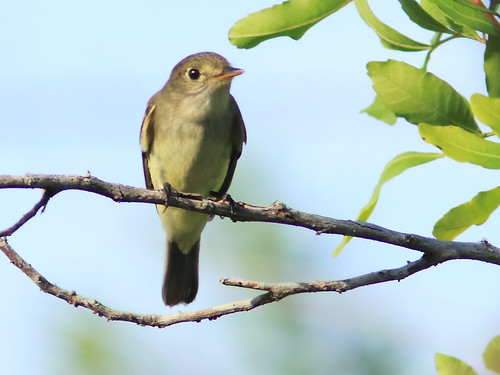
Last year we had a tiny Alder Flycatcher stay well into autumn. Perhaps this is the same one, as it appeared in the same fruiting Trema tree. Since it is best distinguished from the nearly identical Willow Flycatcher by its call, I must wait to hear it to be sure of my identification. However its olive plumage and its habit of foraging along the branches like a vireo appear more consistent with an Alder Flycatcher:
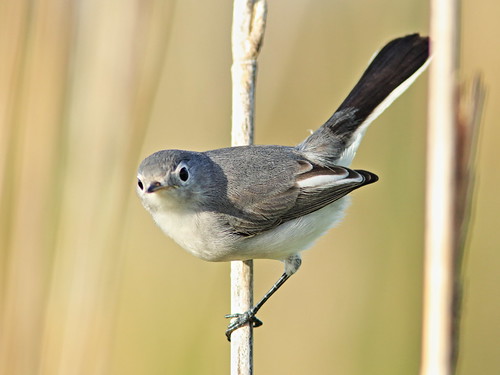
Blue-gray Gnatcatchers may breed down into southern Florida, but I have never seen them during summer until late August:
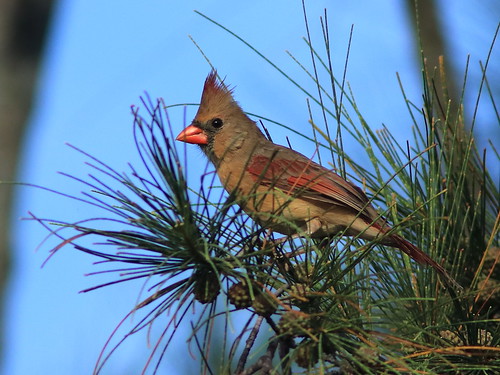
Northern Cardinals are present year around. This is a female:
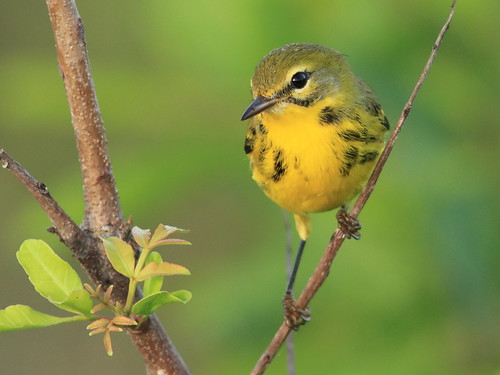
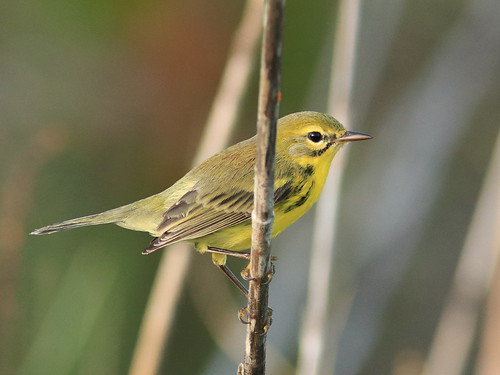
Prairie Warblers breed locally but their numbers are augmented by arrivals from the north:
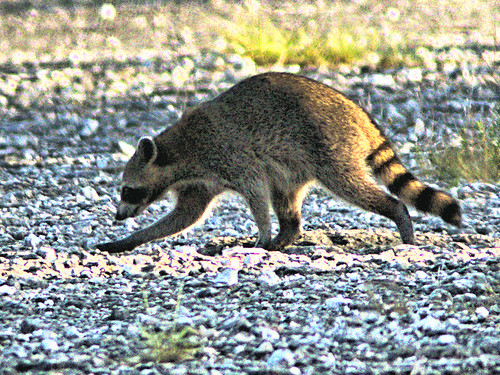
Raccoons commute between their homes and those of humans who fail to secure their garbage:
A feral boar appeared about a year ago. They can be dangerous and we try to avoid them:

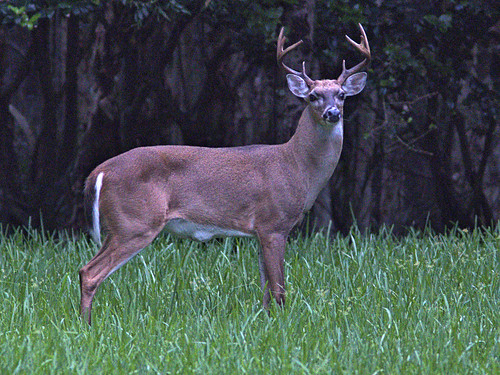
Unusually wet conditions in the Everglades drive the White-tailed Deer onto high ground nearer to civilization. This is a magnificent eight-point buck:
This is an earlier photo of a doe jumping over the guard rail of the unfinished roadway:

= = = = = = = = = = = = = = =
Linking to Misty's CAMERA CRITTERS,
Linking to Eileen's SATURDAY'S CRITTERS,
Linking to FENCES AROUND THE WORLD by Gosia
Linking to SKYWATCH FRIDAY by Yogi, Sylvia and Sandy
Linking to WEEKEND REFLECTIONS by James
Linking to BirdD'Pot by Anni
Linking to Wild Bird Wednesday by Stewart
Linking to Wordless Wednesday (on Tuesday) by NC Sue
Linking to ALL SEASONS by Jesh
________________________________________________
Please visit the links to all these memes to see some excellent photos on display
________________________________________________