Showing posts with label Orange-crowned Warbler. Show all posts

Thursday, April 9, 2020

Bobcat on the Bar Ditch Trail

I have pet names for some of the features of our local Wounded Wetlands preserve. 

Places like the Fake Hammock, the Lantana Patch, the Maple Grove and The Peninsula will not be found on any map. It had been more than four years since I last explored an old farm road which I called the "Bar Ditch Trail" that crosses the wild area west of the Big Levee. 

The trail runs along beside the "borrow" or "bar" ditch that provided the rocks and gravel to raise it slightly higher than the surrounding land which is at the level of the historic Everglades. Unusually high water and overgrowth of exotic vegetation due to a lack of maintenance limited my ability to explore the trail. 

Then, Hurricane Irma dealt a crushing blow by felling many trees which completely blocked entry at the trail head. Only this past month, the tree trunks and branches were cleared away by none other than my nemeses, the Off-Road "Wreckreational" Vehicle crowd. They used chain saws to restore access, which returned to them an old way to wreak havoc in the area. 

My first walks along Bar Ditch Trail have provided me images of, among others...

Northern Cardinal:

Northern Cardinal 01-20200314

Blue-headed Vireo:

Blue-headed Vireo 02-20200313

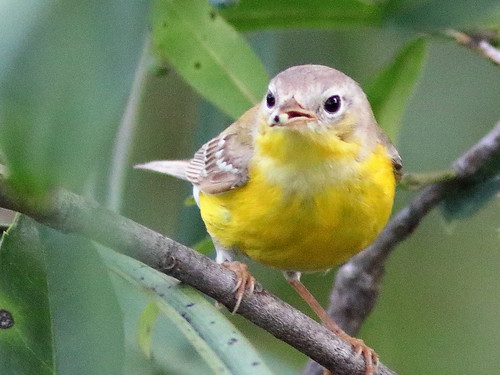
Orange-crowned Warbler:

  Orange-crowned Warbler 01-20200313 

Northern Waterthrush:

Northern Waterthrush01- 20200313

A pair of Common Ground-Doves:

Common Ground-Doves 20200303

We follow the Big Levee trail for about 0.3 miles (~0.5 km)...

Levee Trailhead 20200316

...to the Bar Ditch trail head:

Bar Ditch Trailhead 06-202000313

Fog lifting at sunrise over the Bar Ditch Trail:
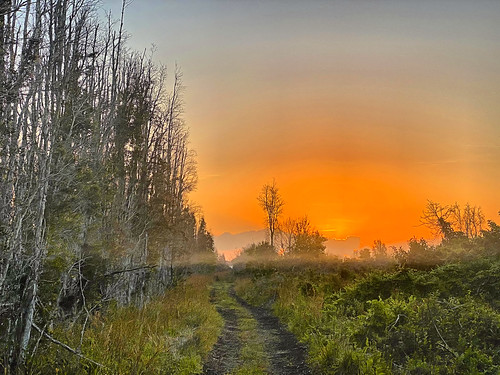
Fog lifting at sunrise over the Bar Ditch trail 02-20200303

The trail runs directly to the west, so my shadow falls directly in front of me on the first day of Spring:

Bar Ditch Trail long shadow 20200320

The bar ditch is on the right (north) of its namesake trail:

Bar Ditch Trail 01-202000313

About 1/3 mile along the trail, a patch of cattails harbored a singing Marsh Wren which was heard but not seen:


Bar Ditch Trail 04-202000313

Just beyond Cattail Patch I had a brief, but  exciting encounter with a Bobcat. It was very early and the rising sun was shining brightly behind me. I was photographing a Gray Catbird...  

Gray Catbird 20200328

...and detected motion in my peripheral field of vision. It was an adult female Bobcat running full tilt down the path, straight towards me! I swung my camera around and captured a burst of over 50 photos.

Crop IMG_4003

Crop IMG_4013

Crop IMG_4015

She was probably blinded by the sunlight and did not see me until she pulled up about 30 feet / 9 meters away:

Crop IMG_4023

IMG_4034

Portrait IMG_4033

Then, acting aloof and nonchalant, she slowly turned and walked away:
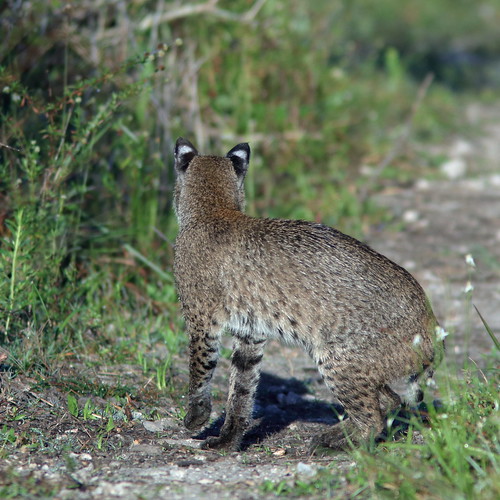
IMG_4037

IMG_4040

This slide show video includes the entire sequence of my encounter with the Bobcat:


= = =  = = =  = = = =  = = = = =

Linking to:

Skywatch Friday

Weekend Reflections

Saturday's Critters

BirdD'Pot

Camera Critters

All Seasons

Wordless Wednesday (on Tuesday)

Our World Tuesday

Wild Bird Wednesday
________________________________________________

Please visit the links to all these posts to see some excellent photos on display
________________________________________________

Thursday, January 30, 2020

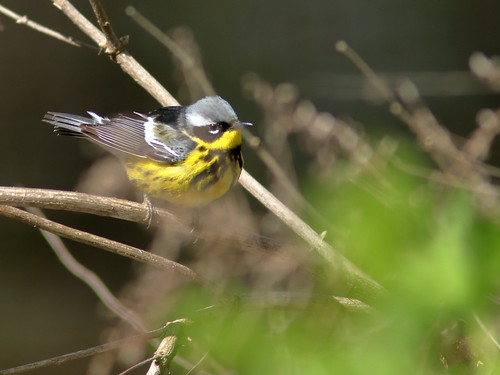
A very pale Magnolia Warbler

The Magnolia Warbler is a colorful little bird which breeds in the far northern reaches of North America. In south Florida we see it when on its way to its winter range, which includes the Caribbean islands, far southern Mexico and Central America. A few commonly spend the winter with us. 

Although this warbler nests far north of any Magnolia tree, it was named for the location in which it was first "discovered." American ornithologist Alexander Wilson found this species in magnolias near Fort Adams, Mississippi  The adults are brightly patterned in yellow, black, blue-gray and white. 

I photographed this northbound male in bold breeding colors at Nelson Lake preserve in northeastern Illinois on May 10, 2011:

Magnolia Warbler 2-20110510

Exactly eight years later, on May 10, 2019 I found this adult male in almost the same spot:

Magnolia Warbler 20190510

Also in Illinois, I obtained an underside view of another male back in May, 2014. Note the distinctive and unique undertail pattern with two terminal black spots:

Magnolia Warbler 20140518

This is a fall female (Illinois, September, 2017):

Magnolia Warbler 02-20170925

Most of the fall Magnolia Warblers we see here in Florida are first year birds. Their colors are subdued. These were present at Chapel Trail Preserve near our home during December, 2019--

Magnolia Warbler 01-20191227

Magnolia Warbler 03-20191220

In early January, while leading a nature walk at Chapel Trail I spotted an unusual Magnolia Warbler. It was a very bright yellow female, probably a first year immature bird. Its legs and bill were very pale. Its back was bright yellow without the normal dark streaking, and its head, wings and tail were light tan rather than dark gray. The spots under its tail were brown rather than black. Likewise, its eyes seemed not to be pitch black, but rather were brownish. During the following week I obtained a series of photos to document its plumage:

Magnolia Warbler type 4 albinism 091-20200111

Magnolia Warbler type 4 albinism 08-20200111

Magnolia Warbler type 4 albinism 09-20200111

Although I was willing to describe this bird as having "dilute" plumage or possibly as being "leucistic," experts had a more specific name for its faded appearance. They classified it as exhibiting Type 4 oculo-cutaneous albinism. It lacks a specific black melanin pigment, but does produce other lighter melanin. A "pure" albino (Type 1A) would have no melanin and its plumage would be all white with pink eyes. Such a bird would probably not survive in the wild. This Magnolia Warbler may be relatively easy for a predator to locate and capture. (I enjoyed the thrill of discovery, but this may be more than you ever wanted to know!*) 

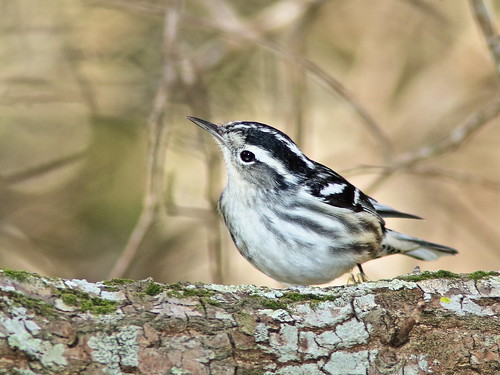
Other warblers present at Chapel Trail were a Black-and-White Warbler...

Black-and-White Warbler 02-20200118

Black-and-White Warbler 04-20200118

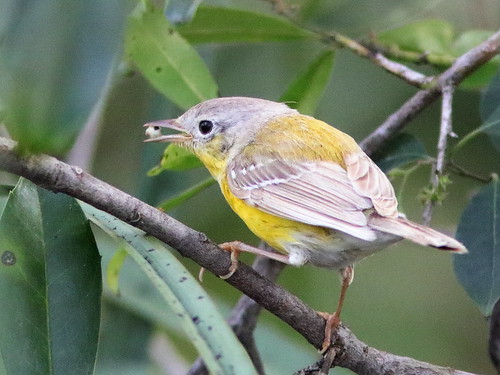
...an Orange-crowned Warbler:

Orange-crowned Warbler 01-20200111

...and many Yellow-rumped Warblers:

Yellow-rumped Warbler 20200111

The boardwalk at Chapel Trail Nature Preserve:

Chapel Trail boardwalk 01-20200118

Common Gallinule reflection:

Common Gallinule 20190701

*REF: Melanins are the ubiquitous pigments distributed in nature. They are one of the main pigments responsible for colors in living cells. Birds are among the most diverse animals regarding melanin-based coloration, especially in the plumage, although they also pigment bare parts of the integument. This review is devoted to the main characteristics of bird melanins... (LINK to EVEN MORE THAN YOU EVER WANTED TO KNOW)


= = =  = = =  = = = =  = = = = =

Linking to :

Camera Critters

Saturday's Critters

Skywatch Friday

Weekend Reflections

BirdD'Pot

Our World Tuesday

Wild Bird Wednesday

Wordless Wednesday (on Tuesday)

All Seasons

Fences Around the World
______________________________________________

Please visit the links to all these posts to see some excellent photos on display
________________________________________________

Thursday, October 12, 2017

Illinois birds and landscapes

With our stay in NE Illinois drawing to a close, we have spent limited time in the field. Badly needed rain showers also "dampened" our plans. 

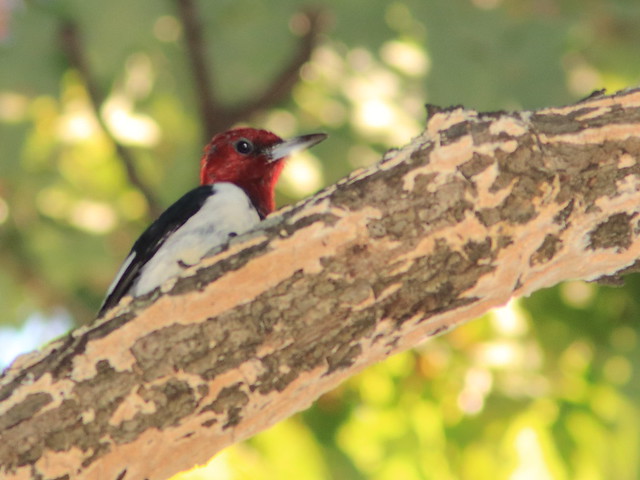
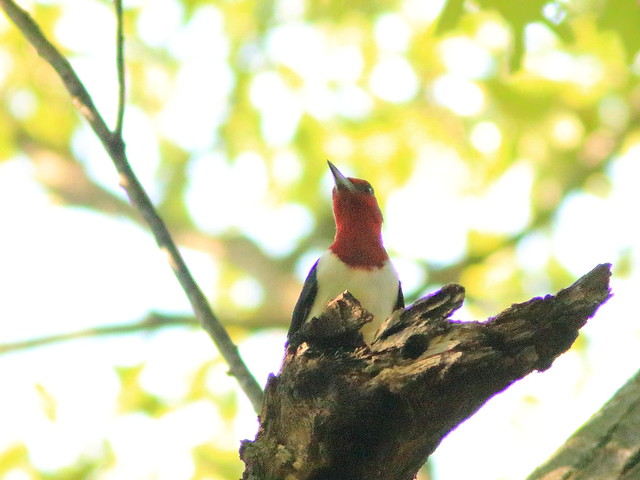
A visit to Hannaford Woods preserve in Sugar Grove yielded a sought-after Red-headed Woodpecker, though it was not very cooperative. It spent all its time high in the treetops looking down at us:

Red-headed Woodpecker 03-20170925

Red-headed Woodpecker 04-20170925

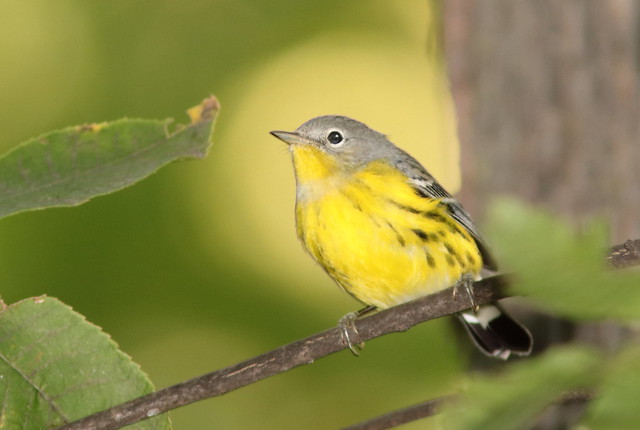
A Magnolia Warbler posed nicely in a natural halo of bokeh created by a break in the canopy:

Magnolia Warbler 04-20170925

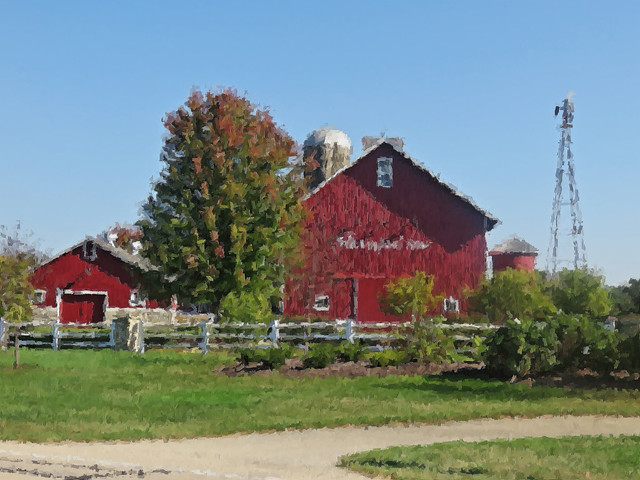
The barn at Hannaford is such an interesting subject. I rendered its image as an oil painting (Click on image for more detail):

Hannaford Barn OIL 01-20170925

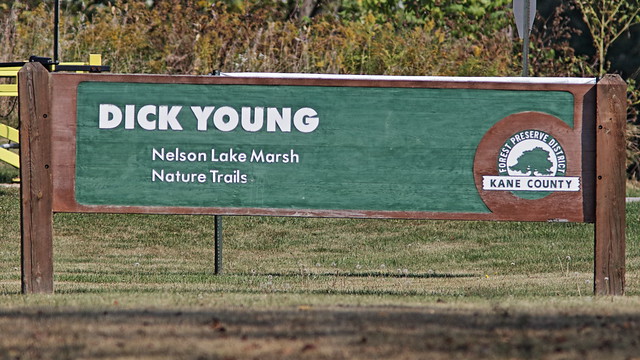
At nearby Nelson Lake preserve... 

Nelson Lake east entry sign 20170926

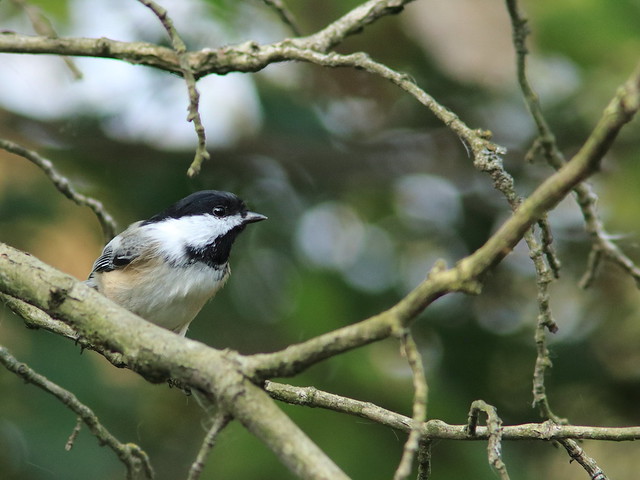
...a Black-capped Chickadee welcomed us:

Black-capped Chickadee 01-20170926

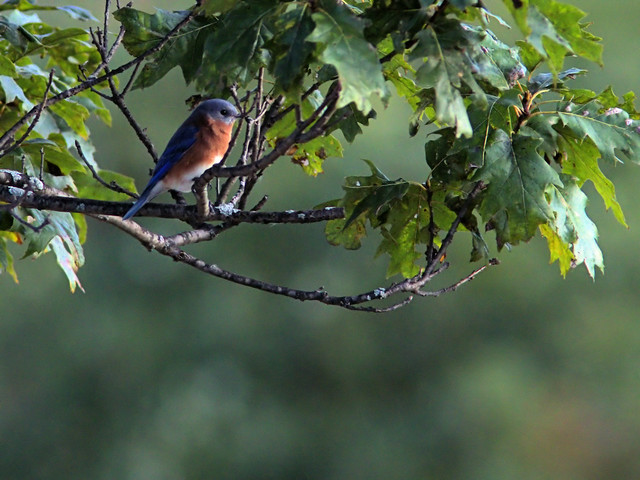
A male Eastern Bluebird stood guard near the entrance path:

Eastern Bluebird 20171005

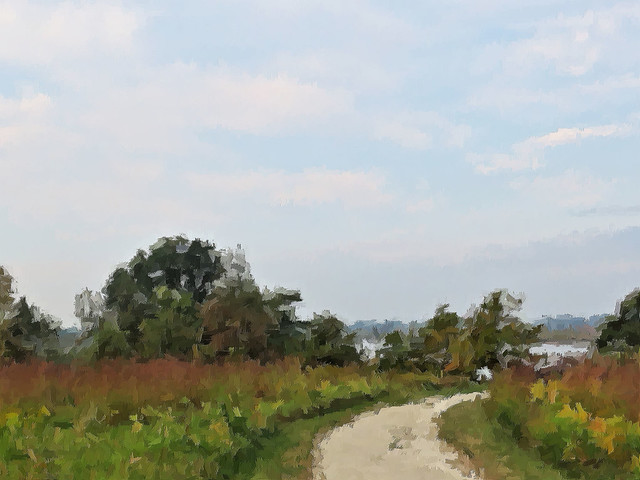
Autumn colors were subdued, but the play of shapes and colors along the entrance path begged for an impressionistic interpretation (Again, click to see the painterly effect)...

Nelson Lake east entry OIL 20170917

...as did a bright patch of goldenrod under a lone tree on the prairie:

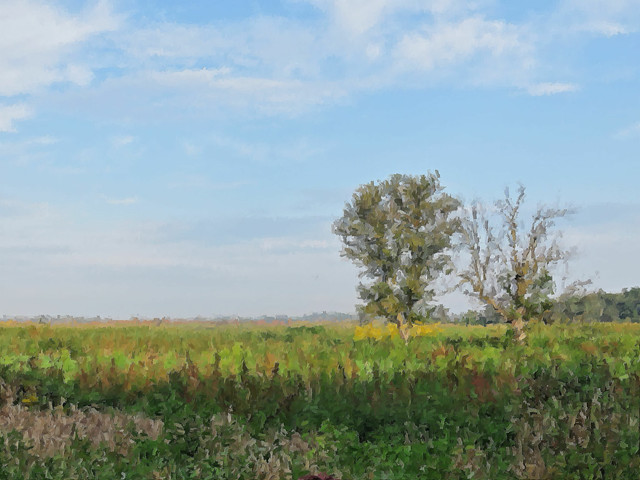
Nelson Lake prairie OIL 20170917

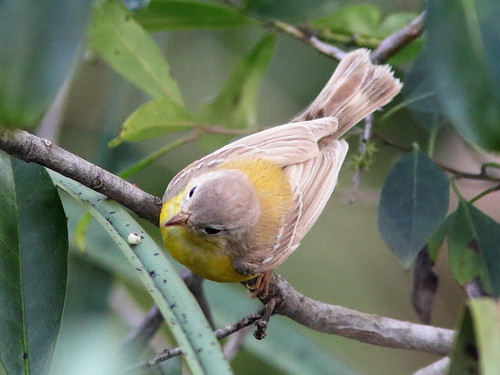
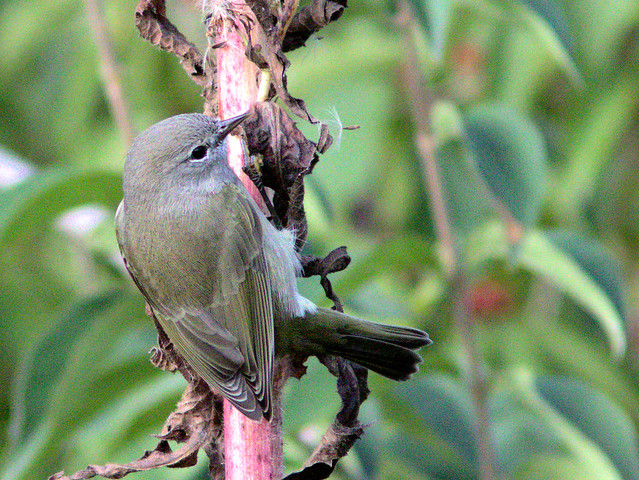
An Orange-crowned Warbler foraged among weed stems...

Orange-crowned Warbler 04-20171005

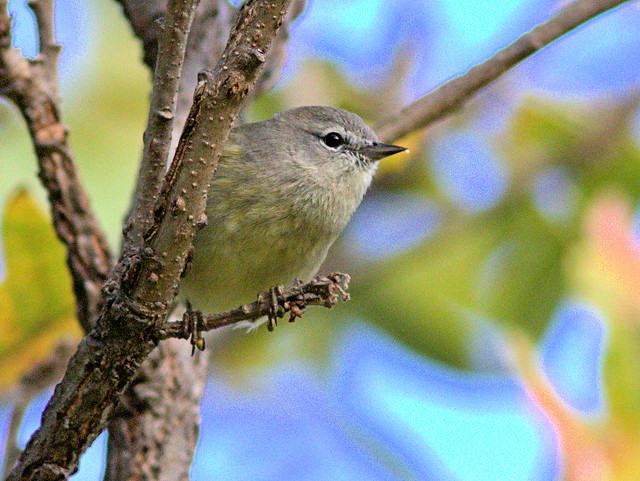
...and then flew to a small tree to get a better look at us:

Orange-crowned Warbler 07-20171005

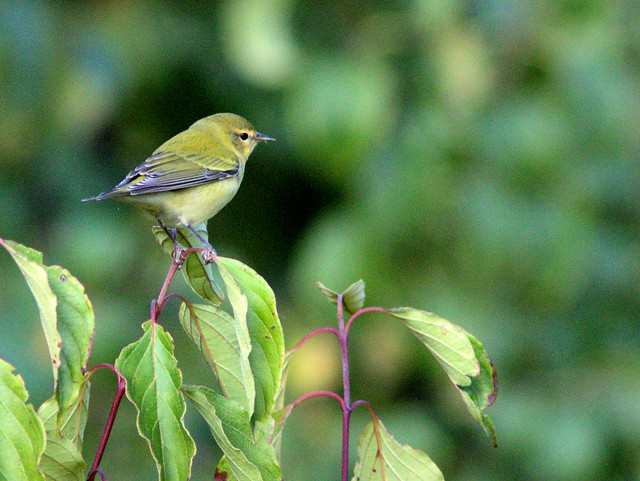
A Tennessee Warbler posed in good light:

Tennessee Warbler 01-20171005

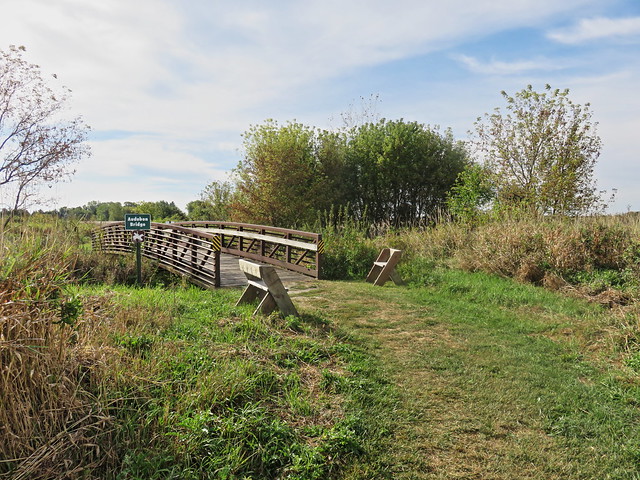
A  foot bridge, dedicated to Audubon, spans the creek at Nelson Lake...

Audubon Bridge 03-20171001

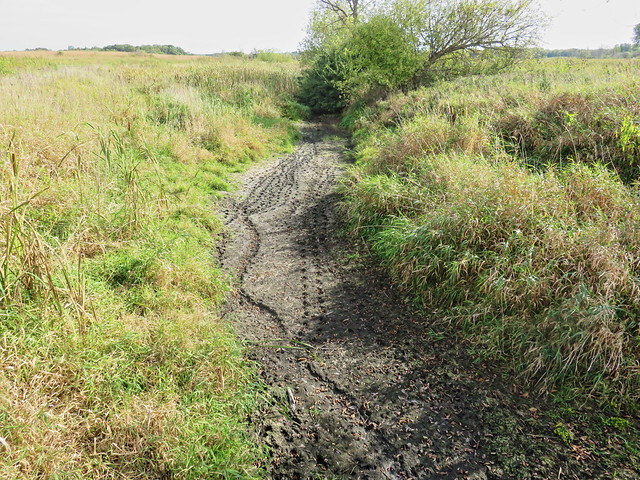
...but two months without rainfall have left it dry. Animal tracks punctuate the muddy course:

Dry creek with deer tracks 06-20171001

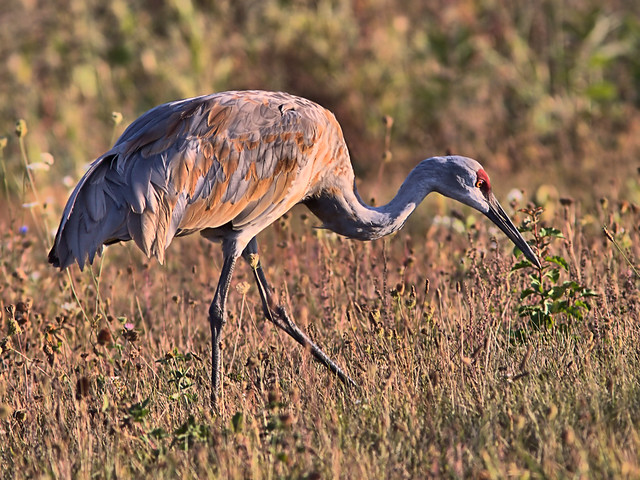
A Sandhill Crane hunted in a field near the preserve:

Sandhill Crane 01-20171005

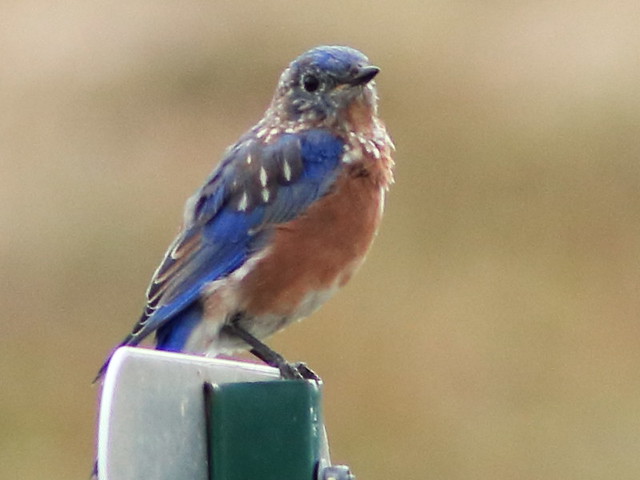
A small flock of bluebirds included this young male, not quite adorned in full adult plumage:

Eastern Bluebird 03-20171001

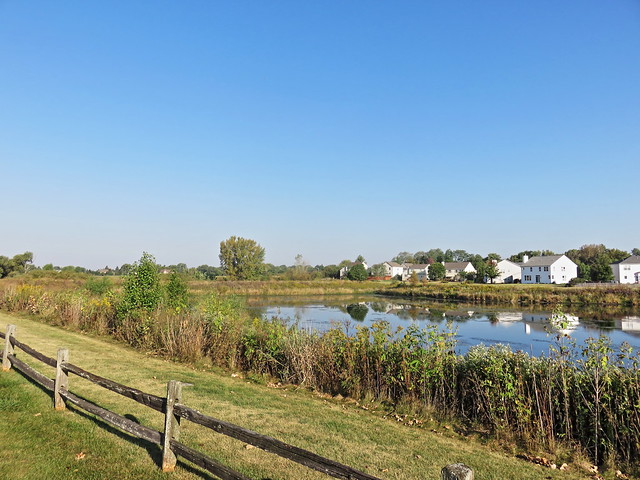
We walked in Jones Meadow, the "pocket park" only a few blocks from our condo in North Aurora. Homes reflect on the surface of its pond:

Jones Meadow Park pond reflections 20170924

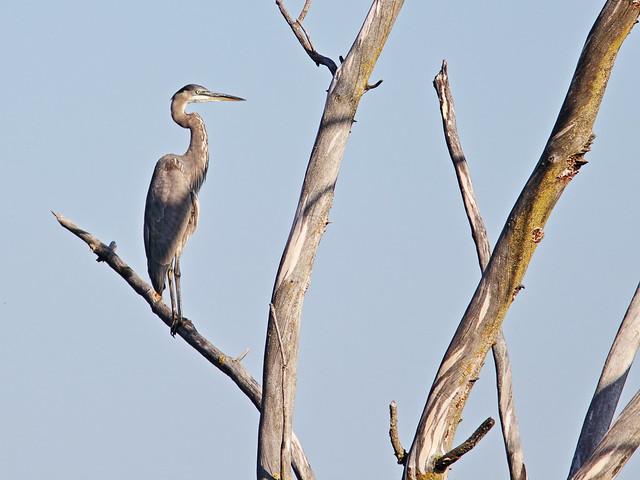
A Great Blue Heron roosted in a tree nearby:

Great Blue Heron 20170924

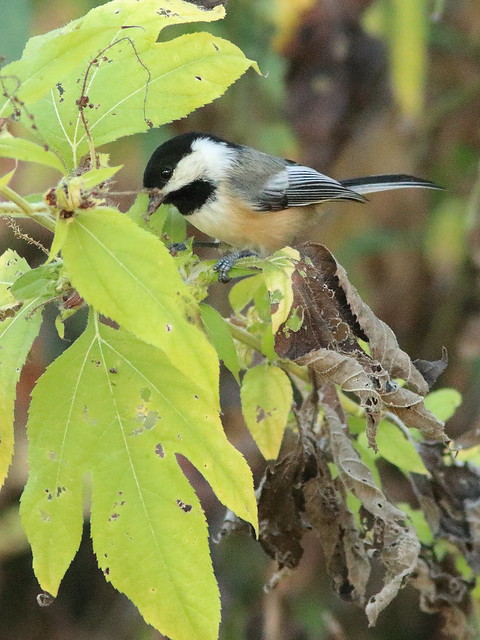
At Hawk's Bluff, another small park just doors from our daughter's home in Batavia, we found more chickadees:

Black-capped Chickadee 3-20170928

Black-capped Chickadee 2-20170928

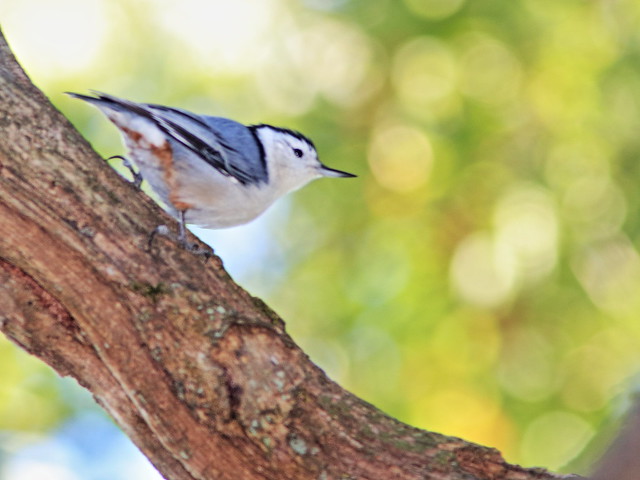
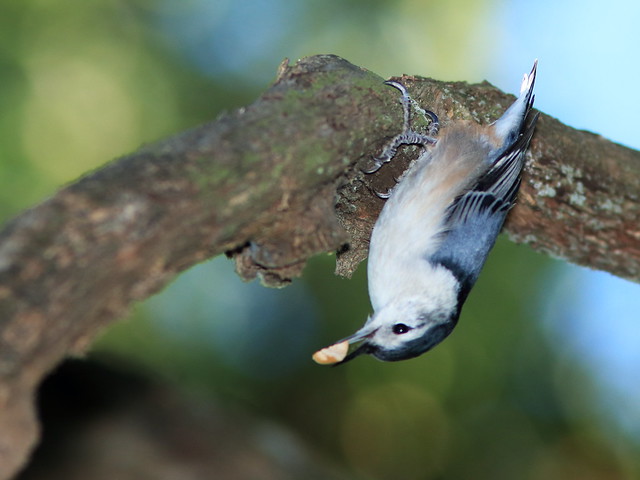
A White-breasted Nuthatch followed its upside-down instincts:

White-breasted Nuthatch 01-20170928

It was rewarded with a juicy titbit hidden in the bark under a crooked branch-- maybe it was a nut stored there by a squirrel or jay:

White-breasted Nuthatch 03-20170928

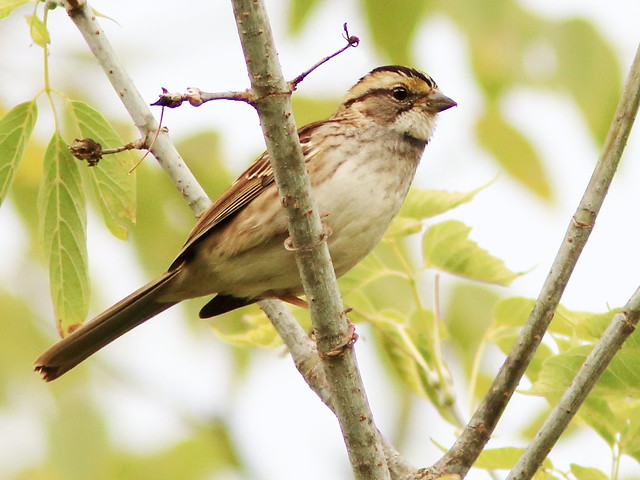
White-throated Sparrows had arrived from northern breeding grounds:

White-throated Sparrow 20171002

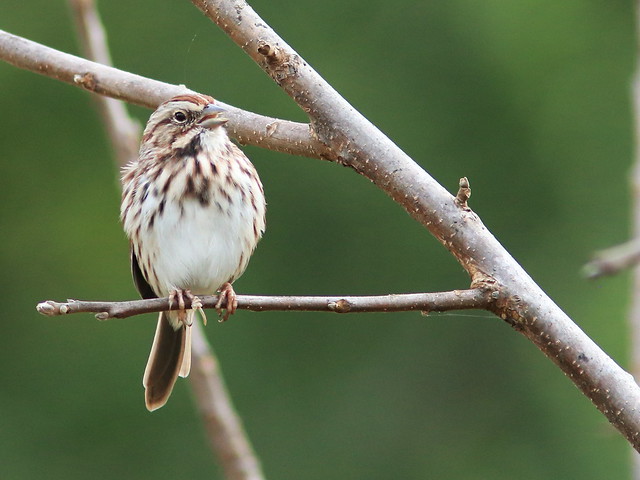
A resident Song Sparrow even sang a few notes:

Song Sparrow 01-20171002

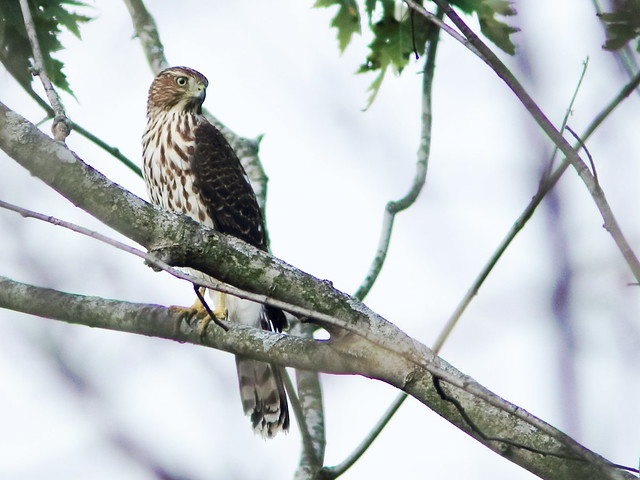
A Cooper's Hawk kept the small birds in hiding at Lippold Park in Batavia:

Cooper's Hawk 01-20171002

Gathering clouds cluttered the sky over the twin oaks at Nelson Lake. Much-needed rain was indeed on the way!

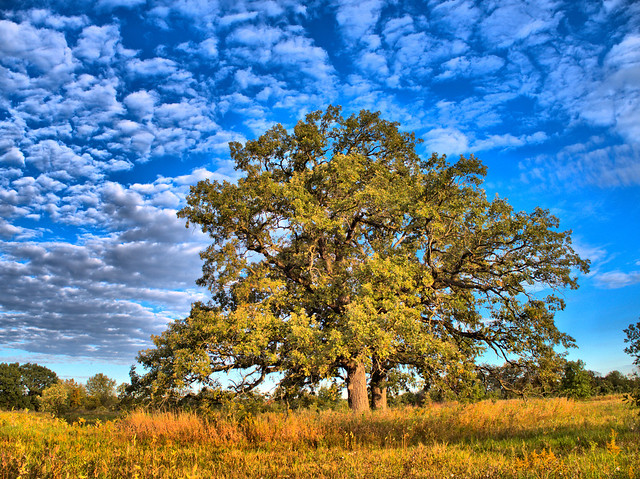
Twin Oaks at Nelson Lake 20171005

= = =  = = =  = = = =  = = = = =

Linking to Misty's  CAMERA CRITTERS,

Linking to Eileen's SATURDAY'S CRITTERS,

Linking to FENCES AROUND THE WORLD by Gosia

Linking to SKYWATCH FRIDAY by Yogi, Sylvia and Sandy

Linking to WEEKEND REFLECTIONS by James

Linking to BirdD'Pot by Anni

Linking to Wild Bird Wednesday by Stewart

Linking to Wordless Wednesday (on Tuesday) by NC Sue

Linking to ALL SEASONS by Jesh

________________________________________________

Please visit the links to all these memes to see some excellent photos on display


________________________________________________