This week I am refreshing memories of events three years ago, looking for favorite memes: critters of all kinds (especially birds), skies, reflections, fences, butterflies and flowers... and tranquil scenes which speak for themselves.
We began the month with a rather unusual sighting in our local south Florida Wounded Wetlands. An American White Pelican startled me as it flew in directly overhead:
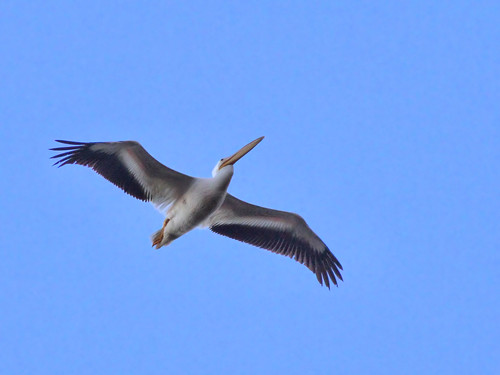
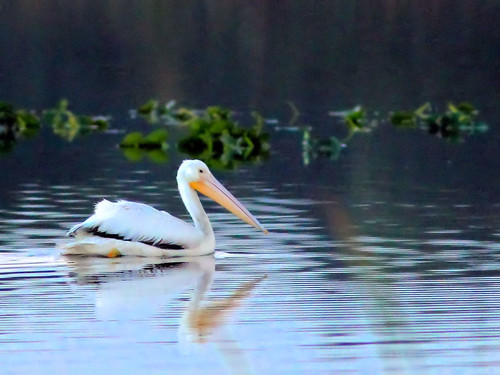
This species usually travels in fairly large flocks, as they are cooperative feeders. Typically they swim in a line and circle in on schools of fish, herding them together in shallow water for a feast. This one settled on the lake, alone. It was present for one day only, on February 2:
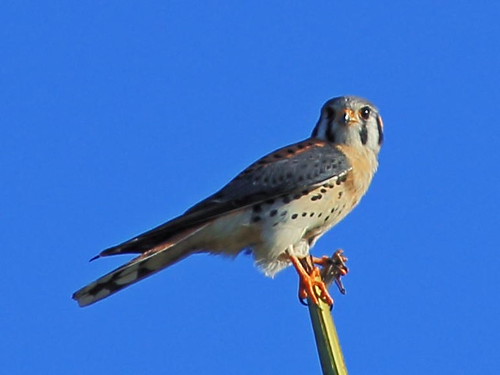
That same morning, a roadside American Kestrel was grasping a prey item as it perched on the top shoot of a Royal Palm:
I tried out my pocket camera, a Canon PowerShot SX700 HS, on a rather distant Merlin which was eating a little bird. With the optical zoom fully extended to 30X it produced a fairly decent image of the small falcon:
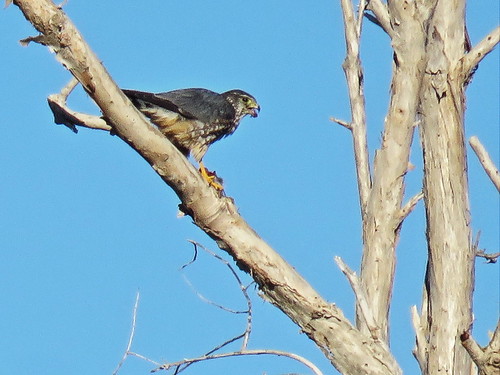
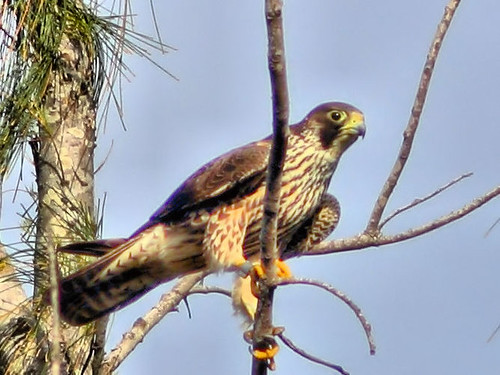
As if to help me round out my falcon images for the month, a Peregrine showed up:
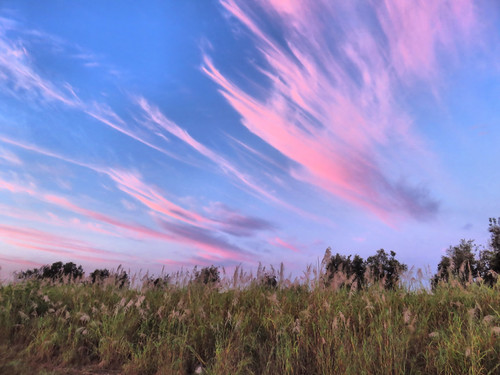
Wispy pink clouds appeared over the wetlands:
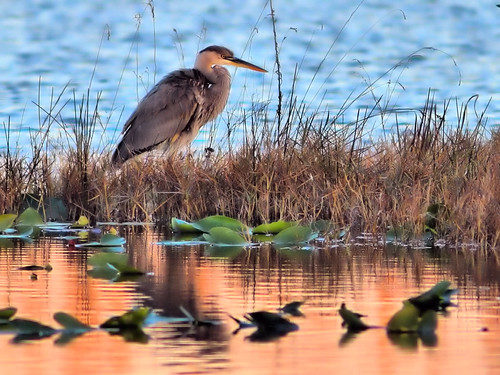
I liked the glow of sunrise on the sheltered still water. Its reflection illuminated the Great Blue Heron against the lake, its surface stirred by waves which picked up the blue sky:
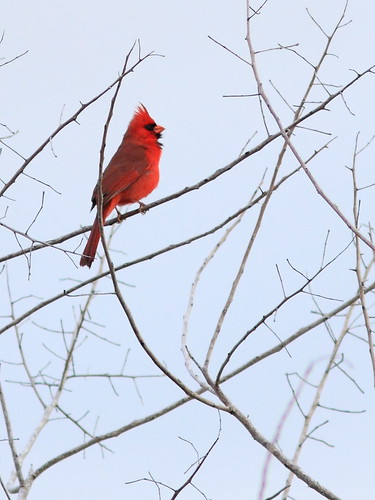
A male Northern Cardinal stood out against a gray sky:
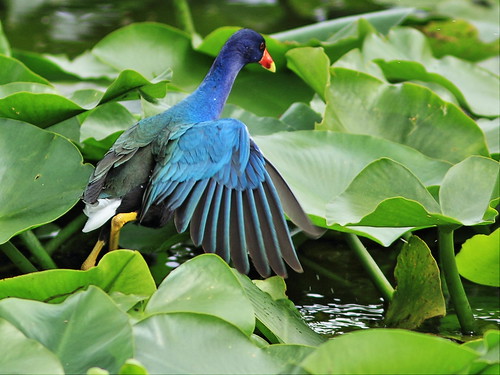
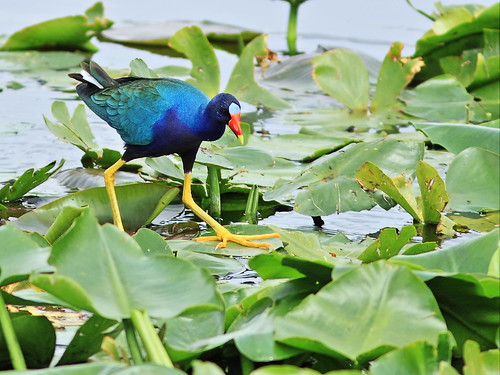
A visit to Peaceful Waters Park wetlands in Wellington, Palm Beach County provided intimate views of Purple Gallinules...
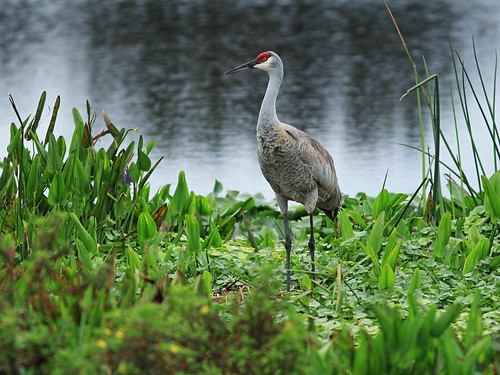
...a Sandhill Crane at its nest...
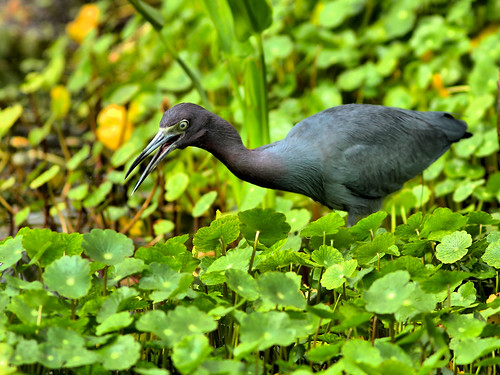
...a Little Blue Heron on the prowl...
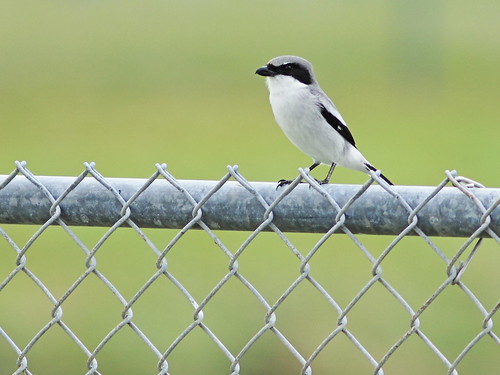
...and a Loggerhead Shrike:
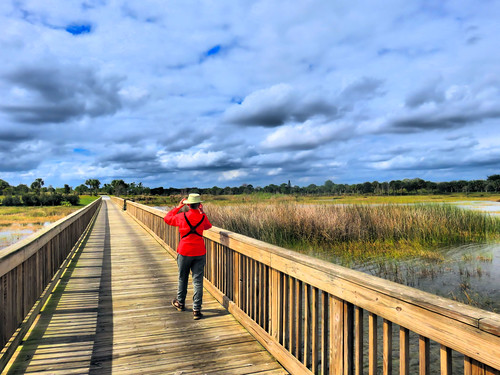
At Wellington Environmental Preserve, Mary Lou walked along the marvelous boardwalk...
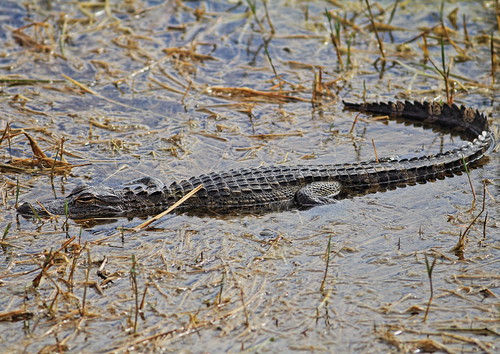
...with an American Alligator in open view...
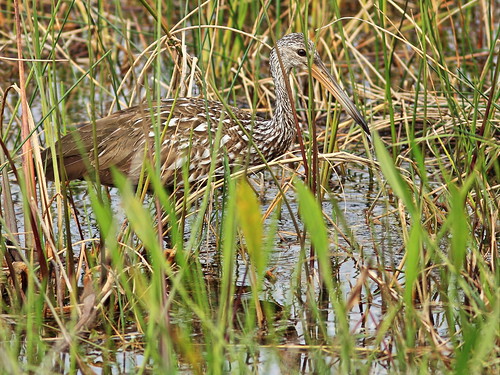
...a well-hidden Limpkin...
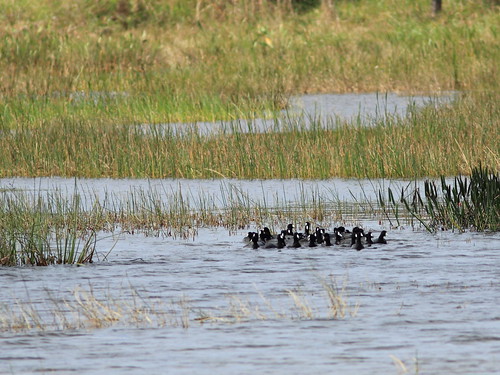
...and a cluster of American Coots:
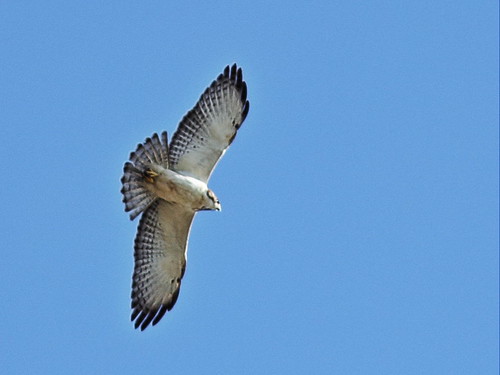
More images from the wild lands back home in south Florida; a light morph Short-tailed Hawk soared :
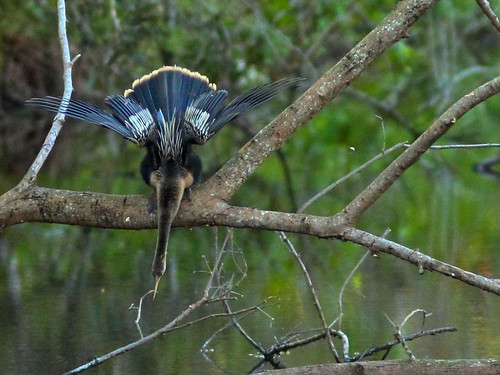
A female Anhinga showed off her "turkey tail:"
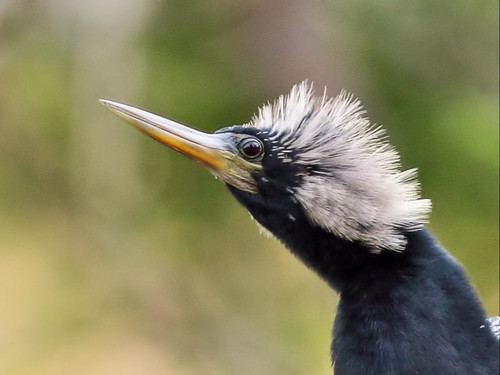
This male Anhinga developed a fancy "hairdo" as breeding season approached:
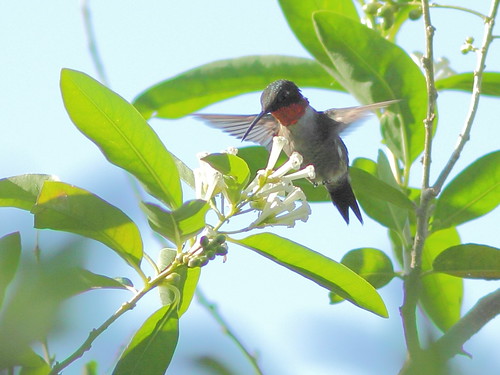
A male Ruby-throated Hummingbird sipped nectar from a Ligustrum flower:
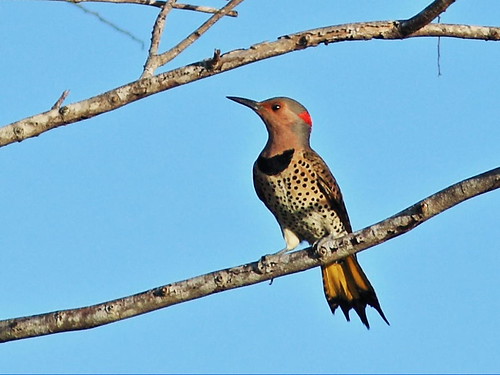
Northern Flicker female:
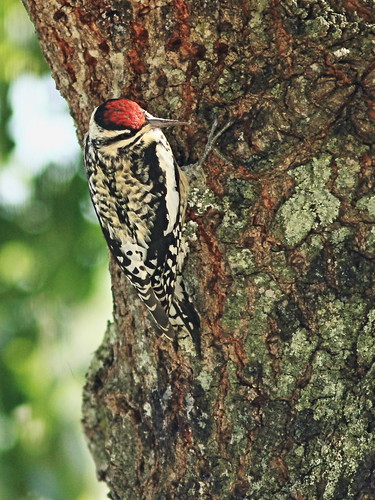
Female Yellow-bellied Sapsucker on our back yard Mahogany tree:
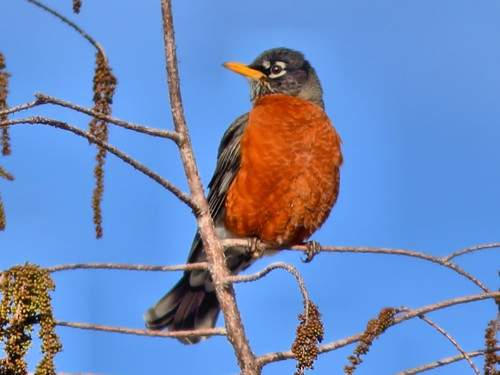
Most winters we are lucky to see even a single American Robin. This one appeared on February 11:
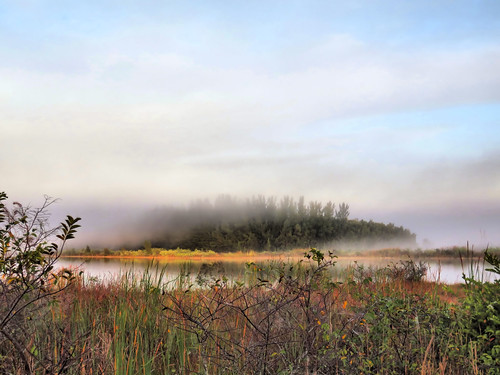
View from the lakeside marsh on a foggy February morning as the sun touched the Pine Bank:
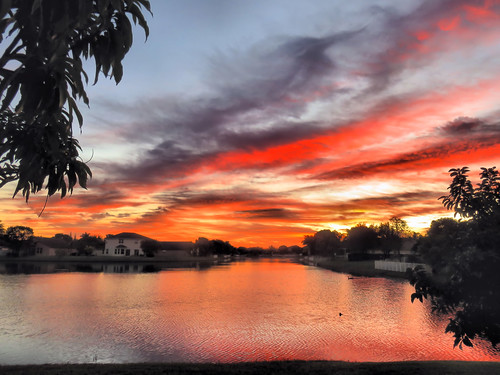
Back yard sunrise on February 11:
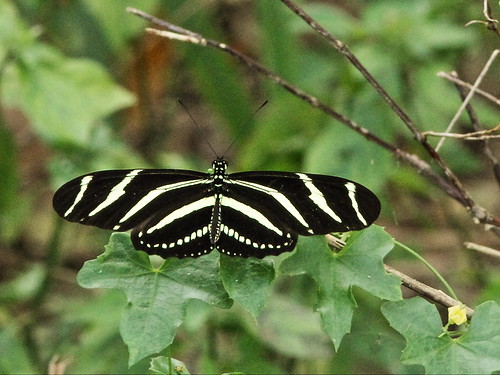
Zebra heliconian on Balsam Pear:
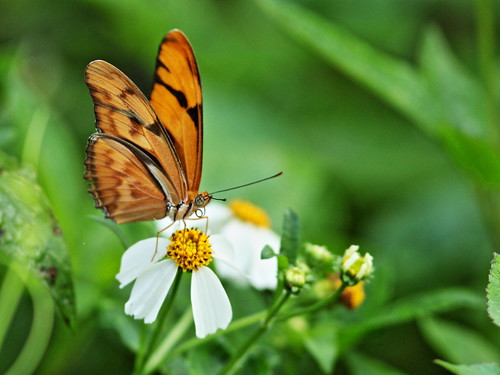
Female Julia heliconian on Bidens alba (Shepherd's Nettle):
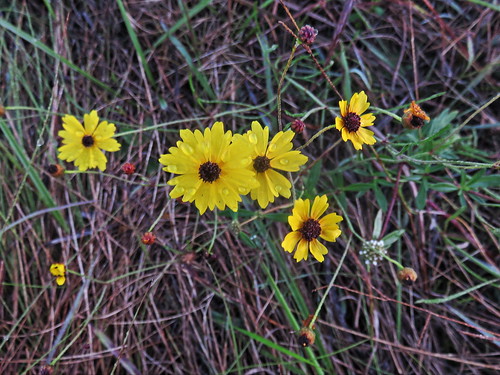
A "weed" with tiny yellow composite flowers:
 = = = = = = = = = = = = = = =
Linking to Misty's CAMERA CRITTERS,
Linking to Eileen's SATURDAY'S CRITTERS,
Linking to SKYWATCH FRIDAY by Yogi, Sylvia and Sandy
Linking to WEEKEND REFLECTIONS by James
Linking to BirdD'Pot by Anni
Linking to Our World Tuesday by Lady Fi
Linking to Wild Bird Wednesday by Stewart
Linking to Wordless Wednesday (on Tuesday) by NC Sue
Linking to ALL SEASONS by Jesh
Linking to Fences Around the World by Gosia
________________________________________________
Please visit the links to all these memes to see some excellent photos on display
________________________________________________
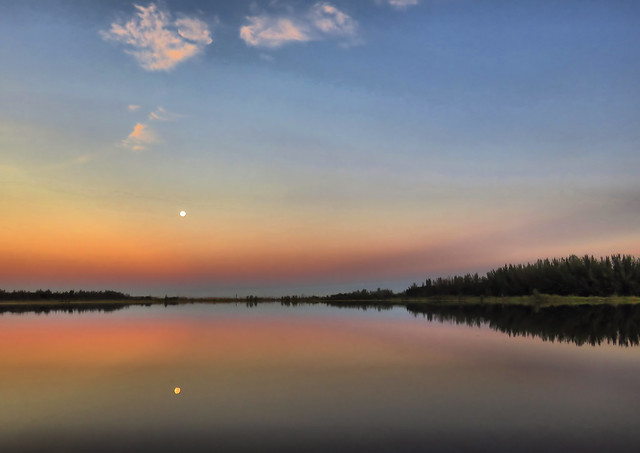
Being out early in the open nearly every day over the years has attuned us to astronomical events-- the oppressive heat of mid-morning Sun, the phases of the Moon, the shifting length of days, and even the angle cast by our shadows. Commonly at dawn, not a ripple mars the surface of the lake. On September 17 the Harvest Moon set on such a morning:
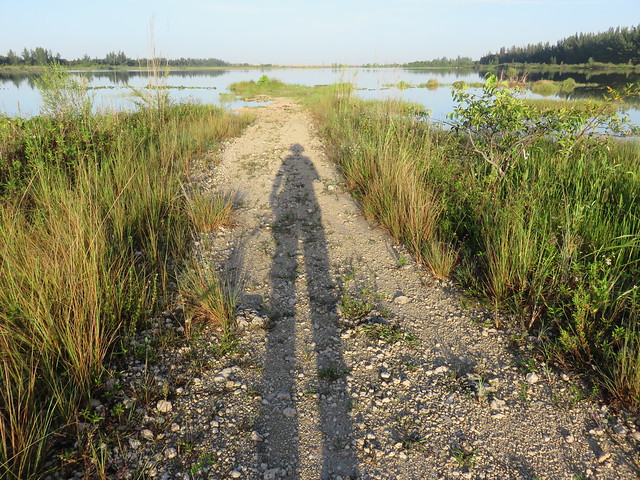
We start our walks facing due west, and follow a gradual 90 degree curve to true north. My first stop is at a small peninsula which juts out westward into the lake. Just after sunrise, it acts as a sort of sundial of the seasons. With the Autumnal Equinox approaching my shadow falls full on the path ahead.
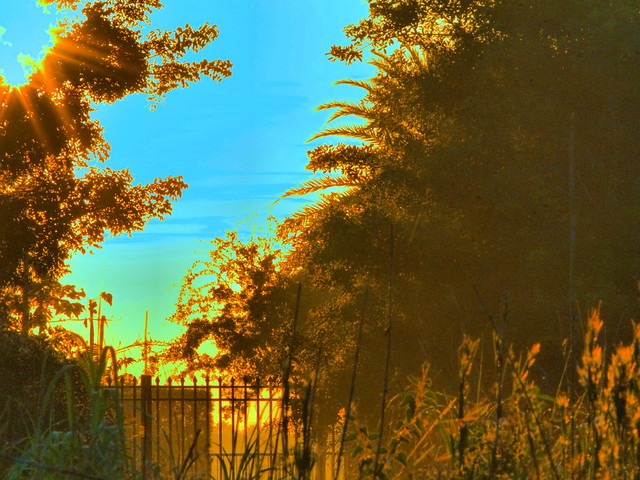
The sun will soon rise within the frame created by the back gate of the adjoining subdivision directly east of this location:
Migratory birds began appearing a few weeks ago, providing a departure from the uniformity of the summer bird population. Shorebirds are often the earliest arrivals. This year we saw few, as there are no extensive mud flats because of the high water levels. The little peninsula path has sometimes been under ankle-deep water.
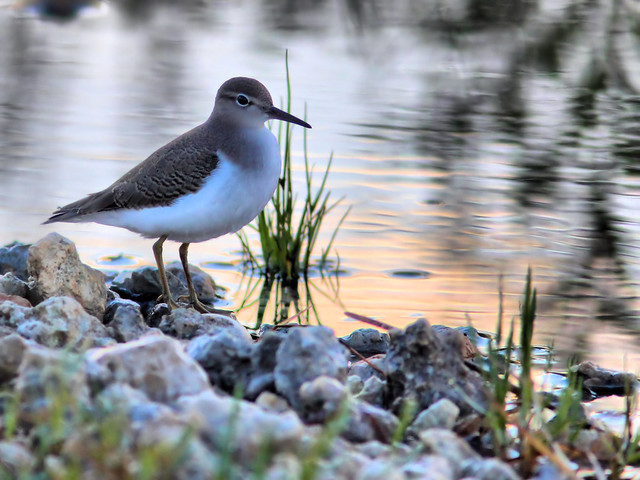
Spotted Sandpiper showed up first, on September 12. Note its pronounced eyebrow line and how the white of its breast extends up in front of the shoulder:
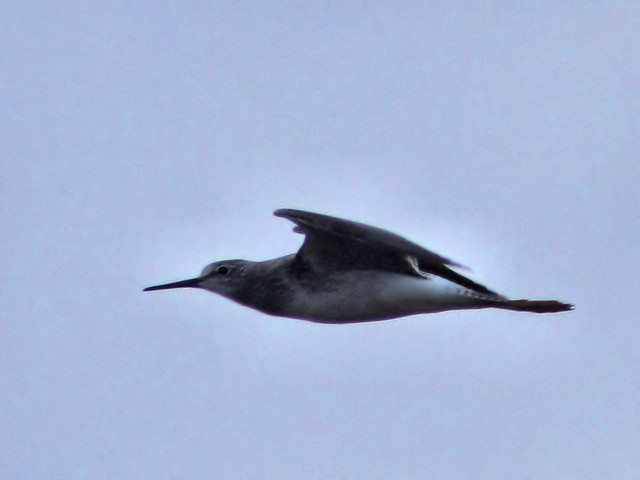
I heard the distinctive call of a Lesser Yellowlegs a few days earlier, but finally saw one flying over, on September 13:
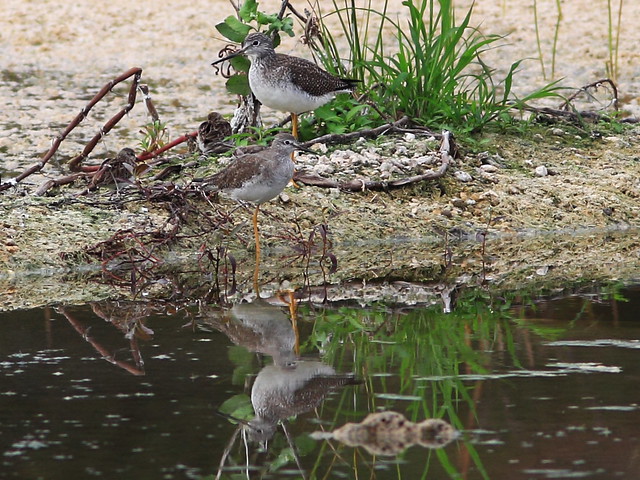
Here is a side-by-side comparison of Greater and Lesser Yellowlegs, taken back in 2014. In addition to its larger body size, the bill of the Greater Yellowlegs (in background) is longer and curves slightly upwards. Two Least Sandpipers may also be seen, to the left in this photo:
Least Sandpipers followed on September 15:
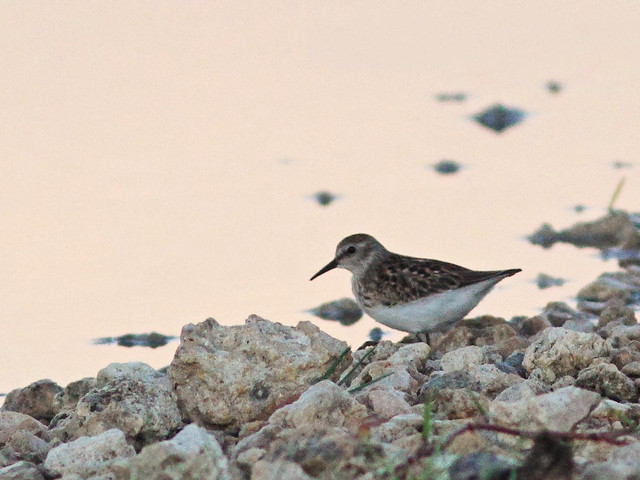
A Solitary Sandpiper appeared on September 17:

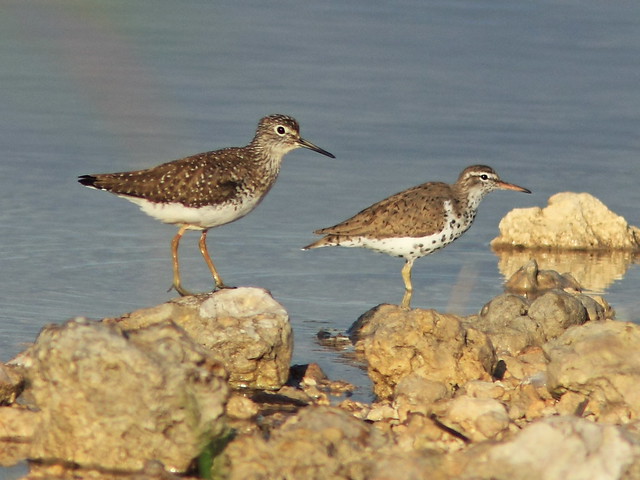
The Spotted and Solitary Sandpipers are rather similar in appearance during the winter, when the former species loses its breast spots. They are present in this unusual side-by-side comparison of the two species, back in the spring of 2015:
We have only two regular resident warbler species, the Common Yellowthroat and the Prairie Warbler. As fall approached, their populations were gradually augmented by arrivals from the north.
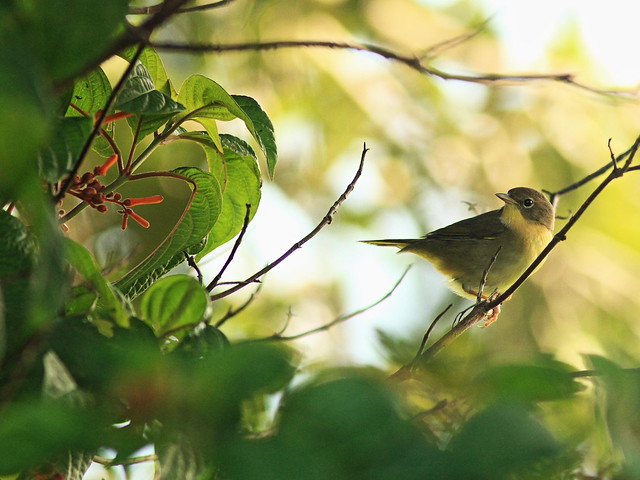
This is a female Common Yellowthroat in a Firebush (Hamelia patens) on September 17. The male has a striking black mask:
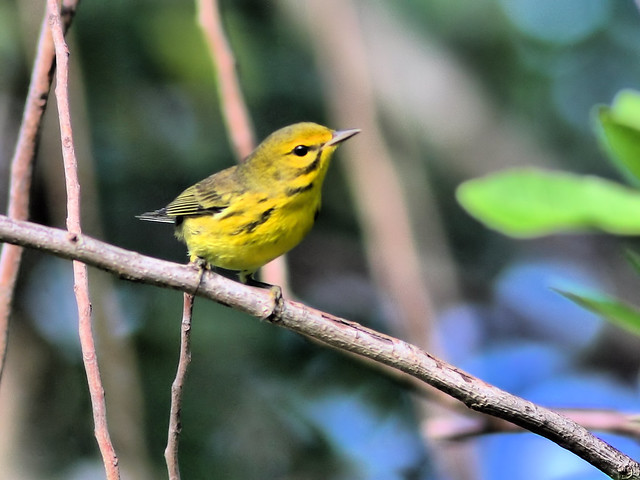
Prairie Warbler, also photographed on September 17:
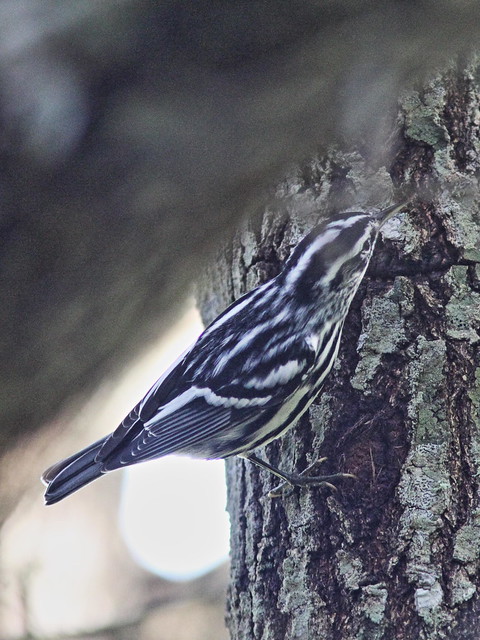
Other arriving warblers included the Black-and White Warbler (September 7)...
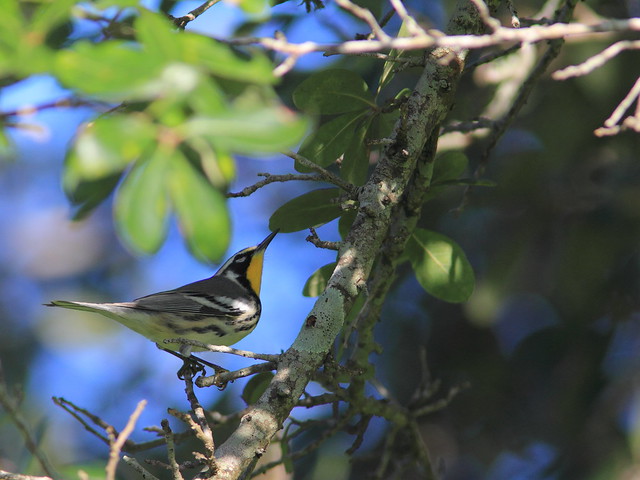
...Yellow-throated Warbler (August 20)...
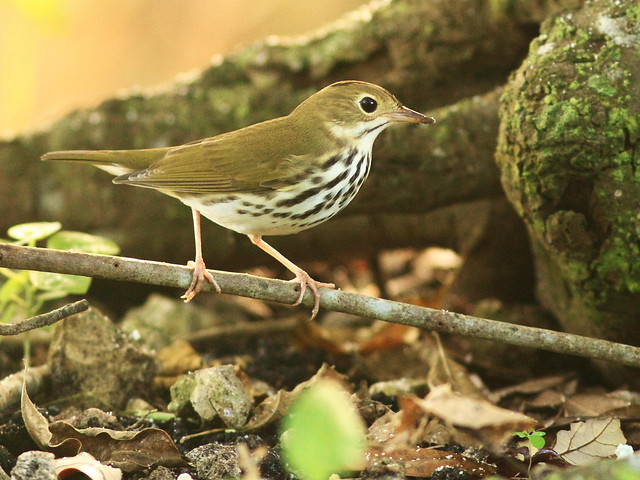
...an Ovenbird (September 17)...
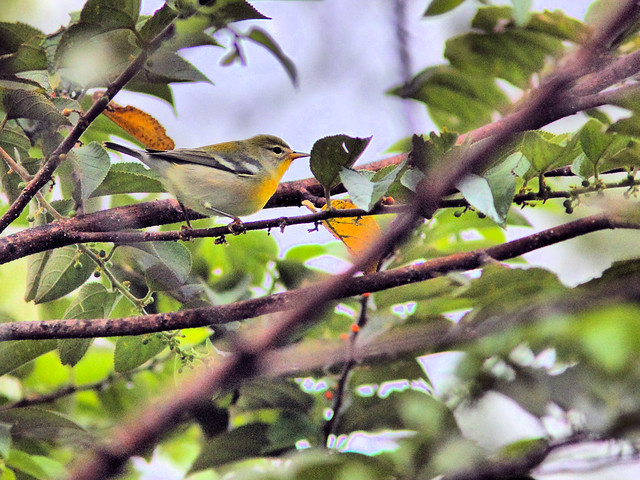
...Northern Parula (September 13)...
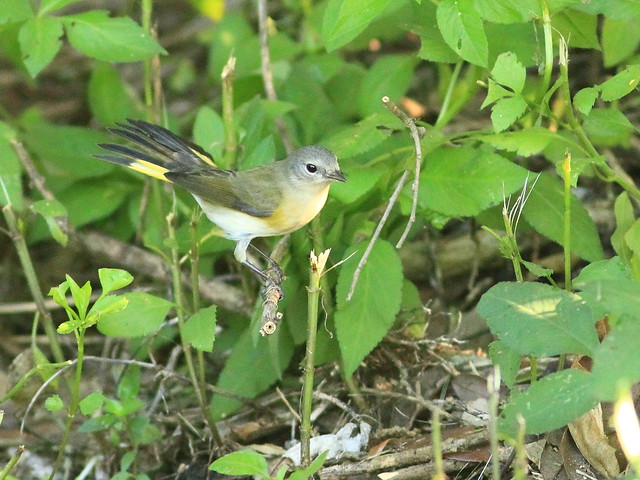
...and, among other warbler species, the American Redstart. This is an adult female, in which yellow replaces the fiery red in the adult male's plumage (September 16):
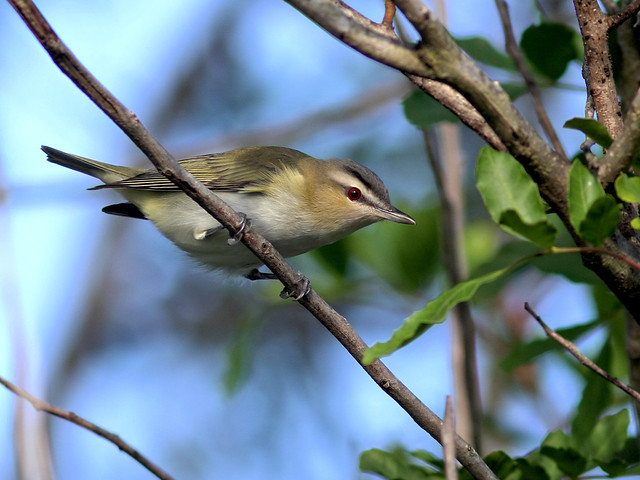
A Red-eyed Vireo provided a pleasant photo-op on September 17):
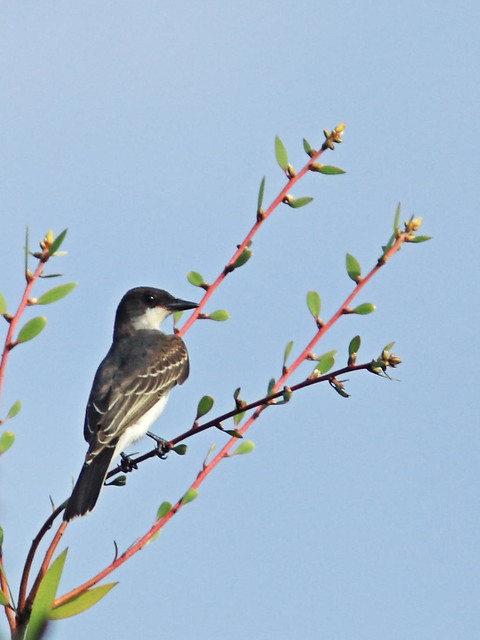
Some flycatcher species came in early, notably the Eastern Kingbird (September 5):
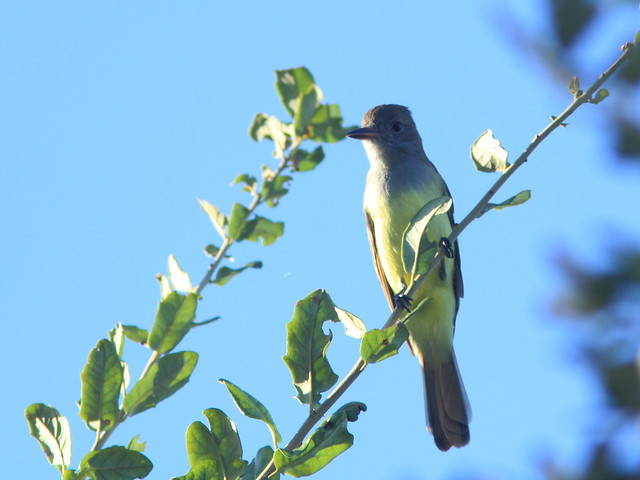
We are within the Great Crested Flycatcher's breeding range but do not see them until they wander after nesting (August 20):
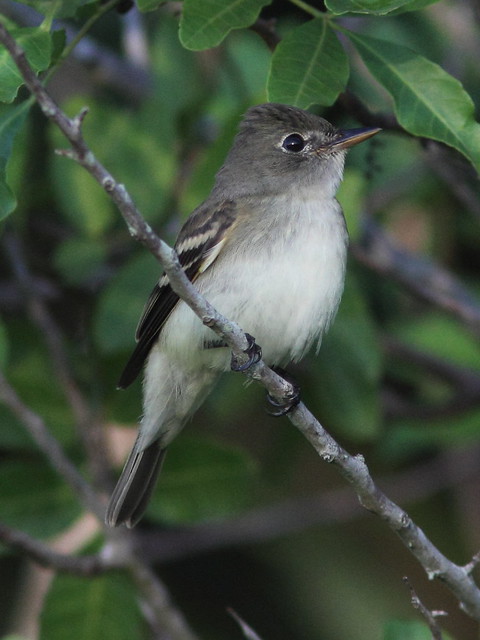
This is a diminutive member of the Alder/Willow Flycatcher complex in the Empidonax family. These two species can be distinguished from each other by their calls. Unfortunately, this specimen was silent (to my ears) but over a 7 day period readily responded to the recorded call of the Alder Flycatcher and ignored that of the Willow. Finally I obtained a recording of its voice, which clinched the identification as an Alder Flycatcher (September 9):
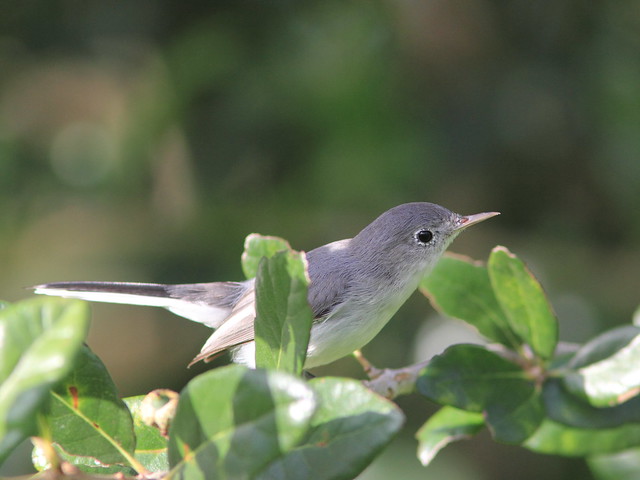
Blue-gray Gnatcatchers can become so numerous as to be a distraction, but their antics are fun to watch and they often are accompanied by other migrants (September 6):
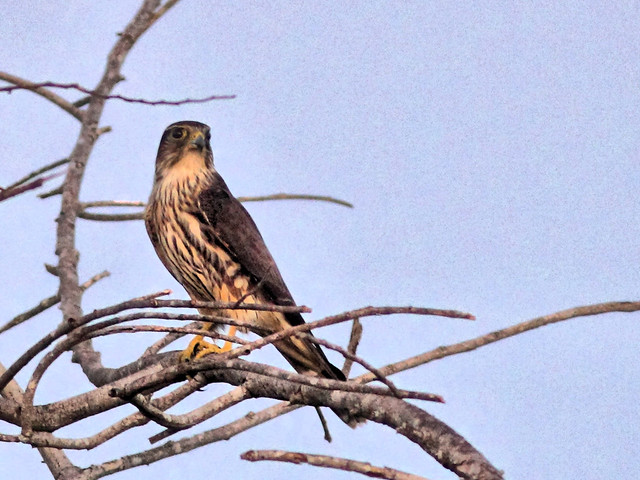
Other migratory treats so far have been a Merlin which I spotted as it roosted along the path in semi-darkness about 20 minutes before sunrise on September 18.
Because of the poor light (Camera settings were 300 mm lens at f/4.0, ISO 3200, exposure 1/40 sec, exposure compensation +2/3) my hand-held image of this small falcon is a bit soft :
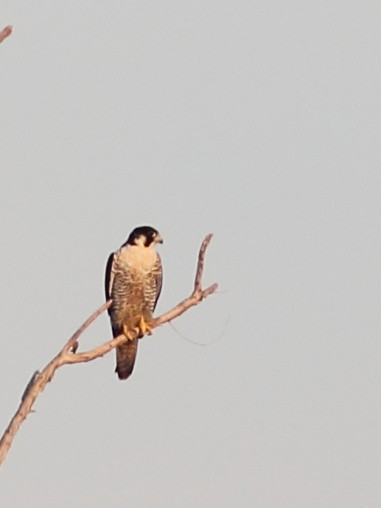
A Peregrine Falcon was an even more challenging subject, as it was nearly a quarter of a mile away (September 14):
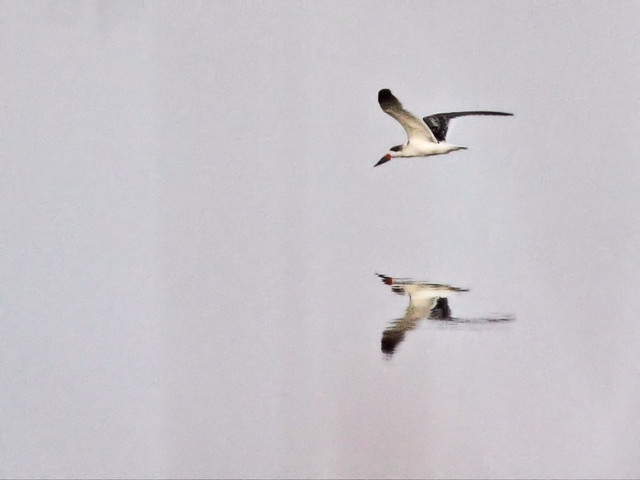
An immature Black Skimmer flew in on September 15, the first ever reported in our birding patch:
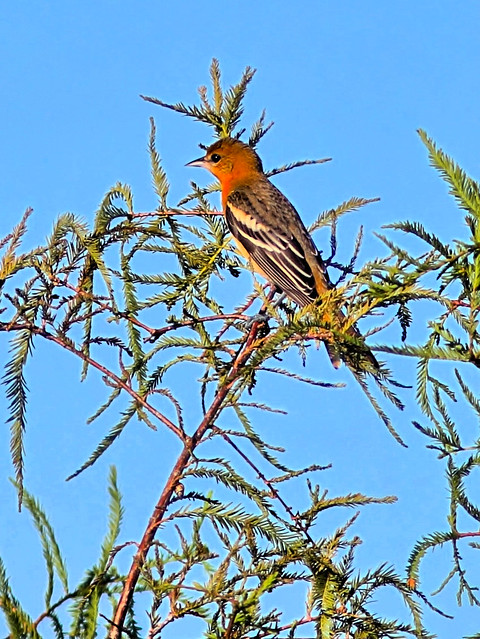
Mockingbirds alerted me to the presence of an immature Baltimore Oriole by chasing it out into the open on September 16:
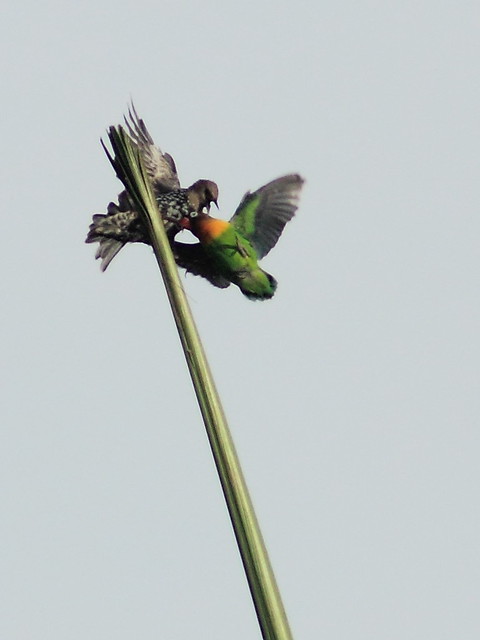
A European Starling had a vociferous confrontation with an exotic bird that probably "migrated" from its cage (September 3):
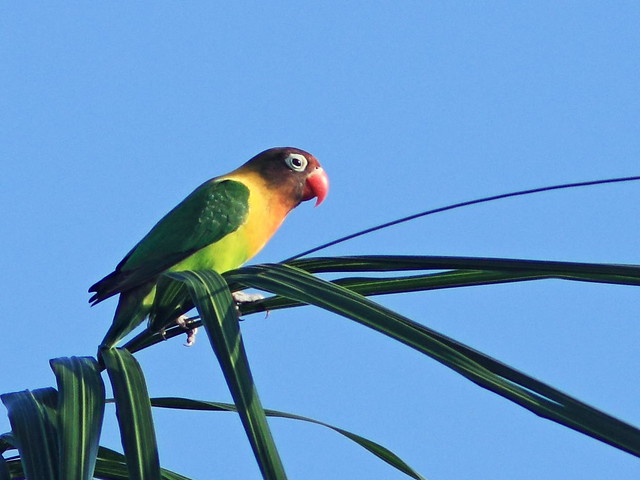
It was a Yellow-collared Lovebird, native of east Africa (also known by a variety of other names in the pet trade):
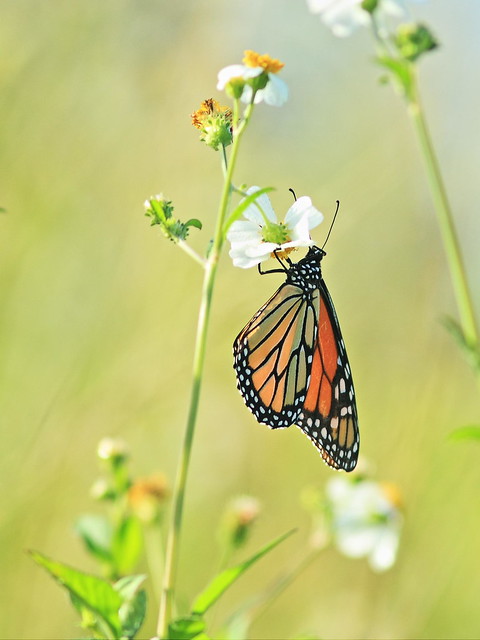
Not to be overlooked, Monarch butterflies are passing through on their multi-generational pilgrimage to Mexico. This one poses on a Duck Potato flower (September 17):
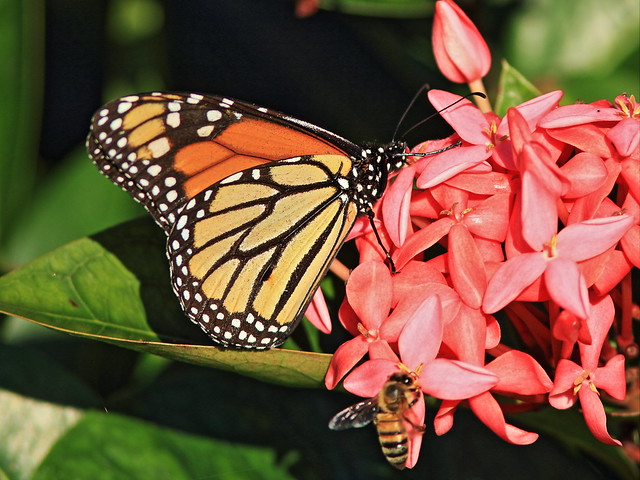
Here is an earlier photo of a Monarch, accompanied by a honeybee, on Ixora blossoms (January, 2015):