The final week of our "warm season" stay in Illinois drew to a close a bit earlier than in most years. We missed the peak of autumn color. It was forecast to be much more subdued this year because of the late-summer drought.
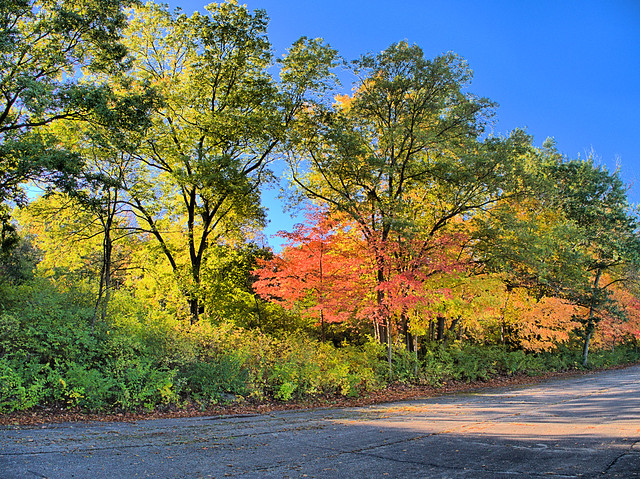
A few maples, at nearby Lippold Park in Batavia, stood out among the oaks...
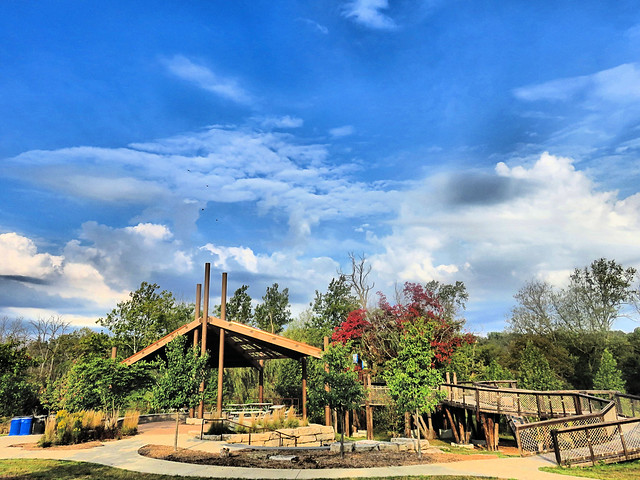
...and one accented the pavillion:
Usually our schedule permits us the opportunity, not only to witness the end of fall migration, but to see a variety of other northern "target" land bird species which spend their winters in NE Illinois.
I hoped to see Fox Sparrows which usually arrive late in October, but which have posed for photos as early as October 7. Slate-colored Juncos and Purple Finches become abundant after mid-October. Red-breasted Nuthatches are irregular migrants and may suddenly show up as early as August. American Tree Sparrows, Lapland Longspurs and Snow Buntings usually wait until November, although any of these birds might appear a month or more earlier. So far I had not seen any of the aforementioned species.
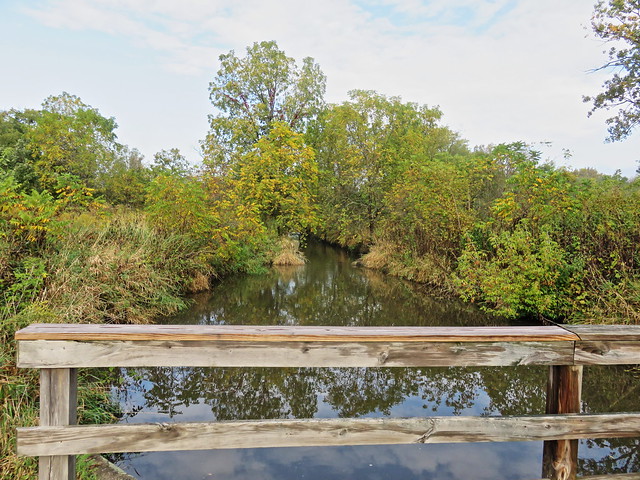
We had a lovely walk at Bliss Woods preserve in Sugar Grove, but saw few birds. Blackberry Creek provided a nice fence and reflection:
Rain and family committments limited the opportunities for birding as our departure approached. Rather than focus on failure, let's talk about what we did see in early October. Among the warblers were...
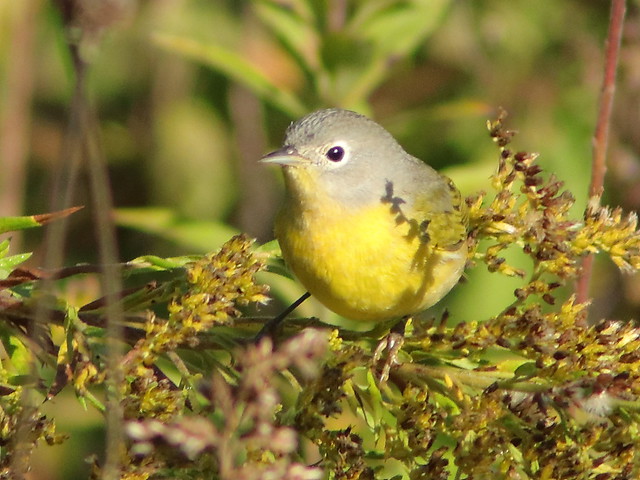
Nashville Warbler:
Black-throated Green Warbler:
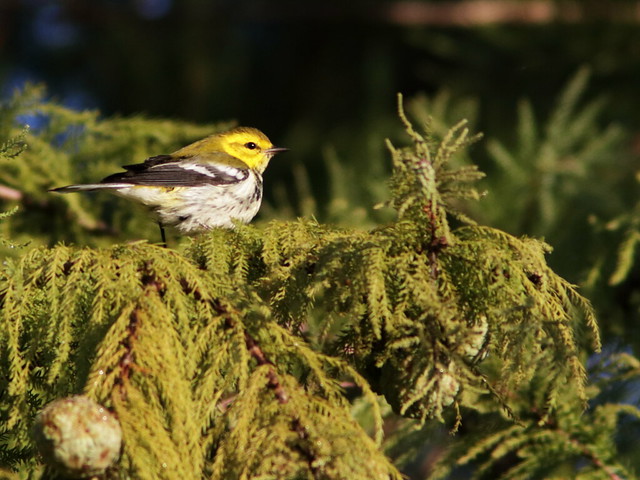
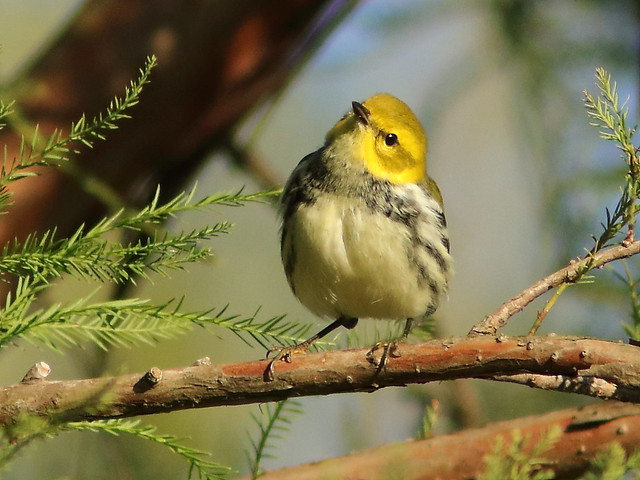
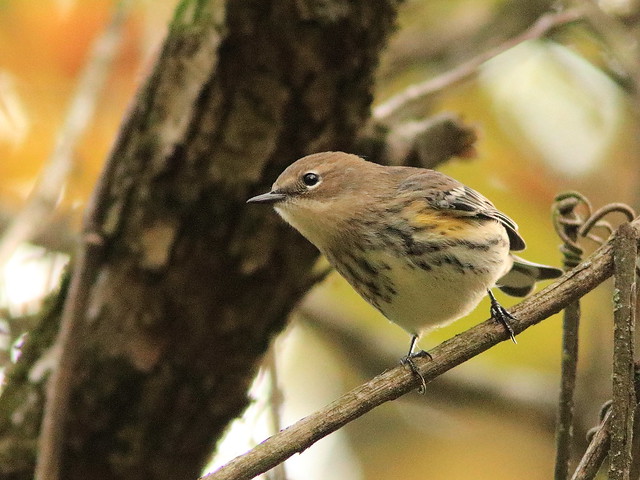
The arrival of Yellow-rumped Warblers signals that the end of migration is approaching:
As expected, some of the earlier-arriving northern sparrows were present, including the White-throated Sparrow...
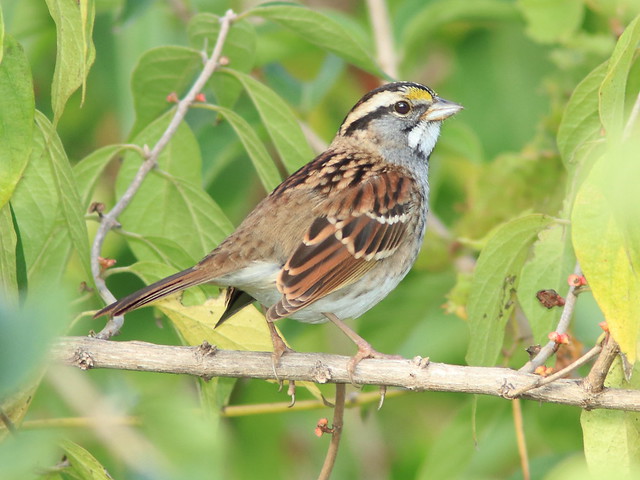
...and White-crowned Sparrow. This is an immature:

Speaking of crowns, the highlights of our final week were flocks of two kinglet species. They are very active and tiny and difficult to photograph as they flit among the leaves.
The female Golden-crowned Kinglet has a yellow cap:
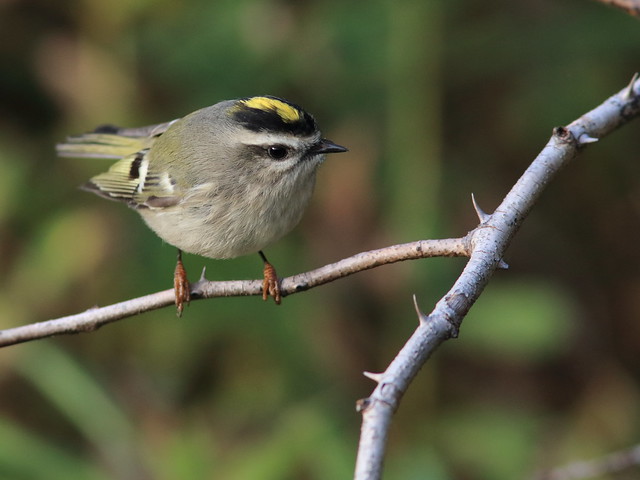
Male Golden-crowned Kinglets have varying amounts of red in the center of the patch:

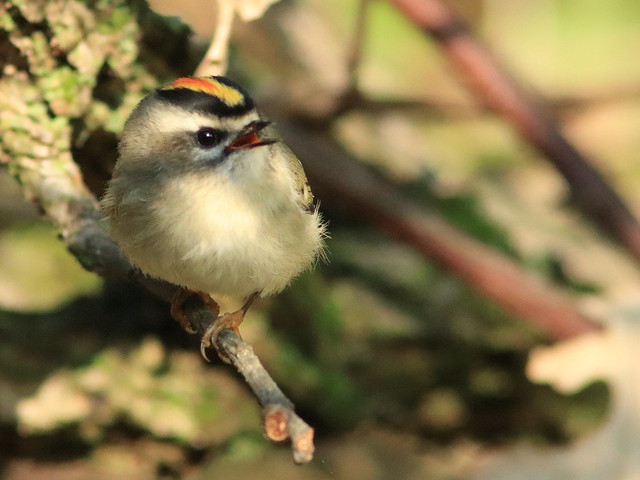
The red feathers may be retracted and become barely visible, as in this male:
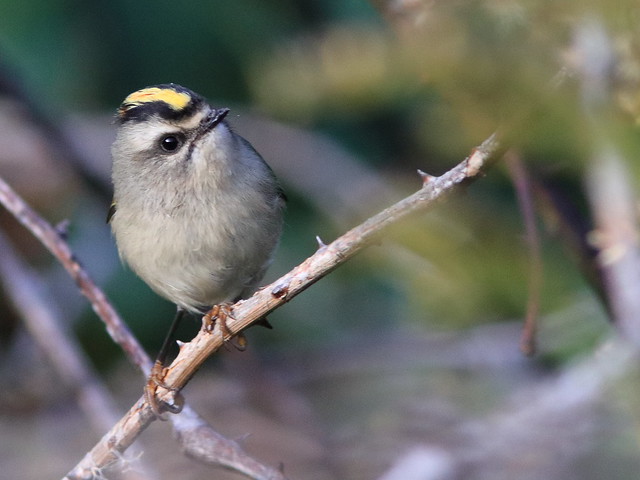
Ruby-crowned Kinglets were present among the Golden-crowns. The males erect a red crest when excited or displaying to females or rivals, but they seem to be more placid during fall migration:
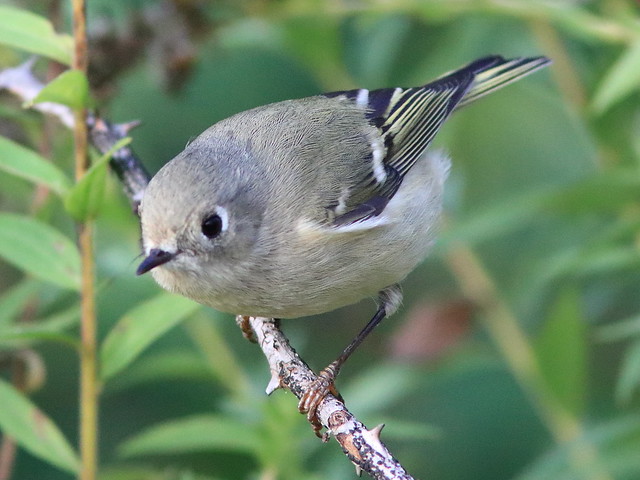
Here is a Ruby-crowned Kinglet displaying this May, at almost the same spot in Nelson Lake preserve:
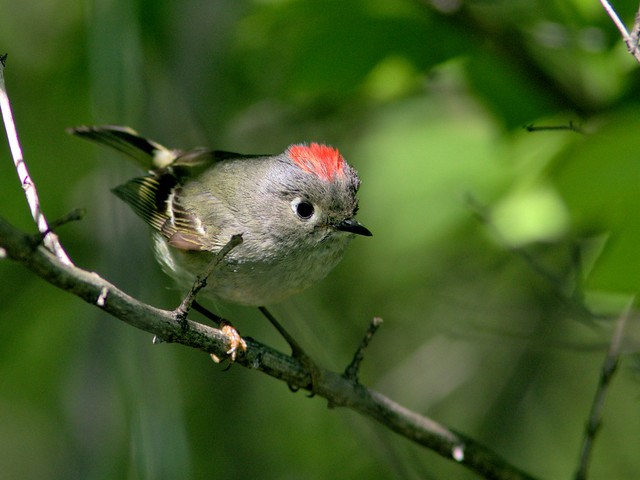
My first photo of the precious ruby crown was taken at Lippold Park in April, 2010:

= = = = = = = = = = = = = = =
Linking to Misty's CAMERA CRITTERS,
Linking to Eileen's SATURDAY'S CRITTERS,
Linking to FENCES AROUND THE WORLD by Gosia
Linking to SKYWATCH FRIDAY by Yogi, Sylvia and Sandy
Linking to WEEKEND REFLECTIONS by James
Linking to BirdD'Pot by Anni
Linking to Wild Bird Wednesday by Stewart
Linking to Wordless Wednesday (on Tuesday) by NC Sue
Linking to ALL SEASONS by Jesh
________________________________________________
Please visit the links to all these memes to see some excellent photos on display
________________________________________________
With our stay in NE Illinois drawing to a close, we have spent limited time in the field. Badly needed rain showers also "dampened" our plans.
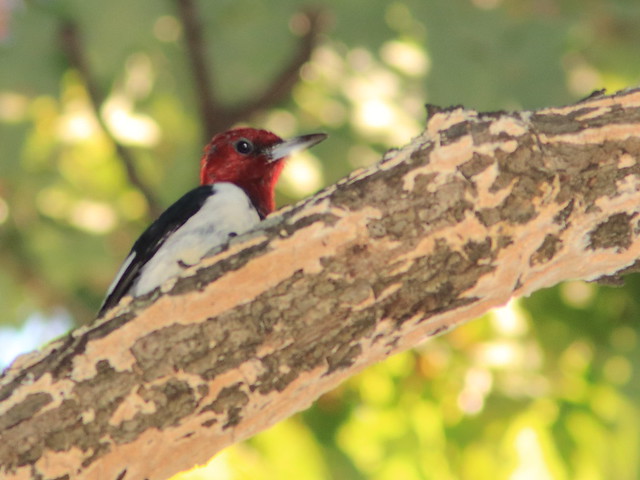
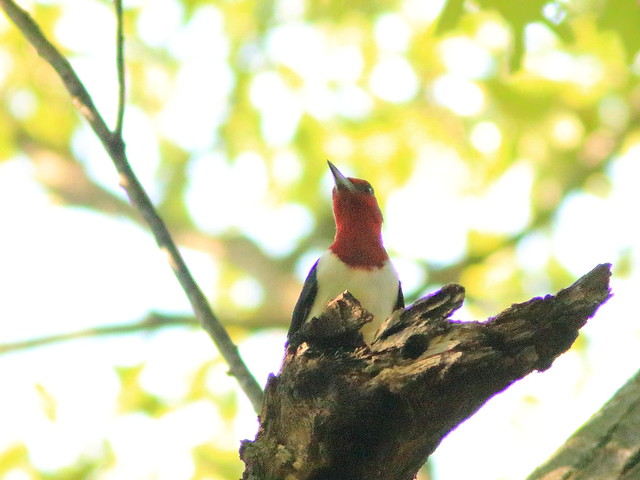
A visit to Hannaford Woods preserve in Sugar Grove yielded a sought-after Red-headed Woodpecker, though it was not very cooperative. It spent all its time high in the treetops looking down at us:
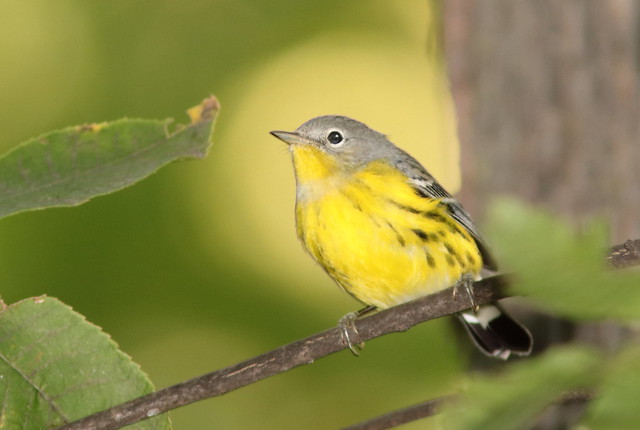
A Magnolia Warbler posed nicely in a natural halo of bokeh created by a break in the canopy:
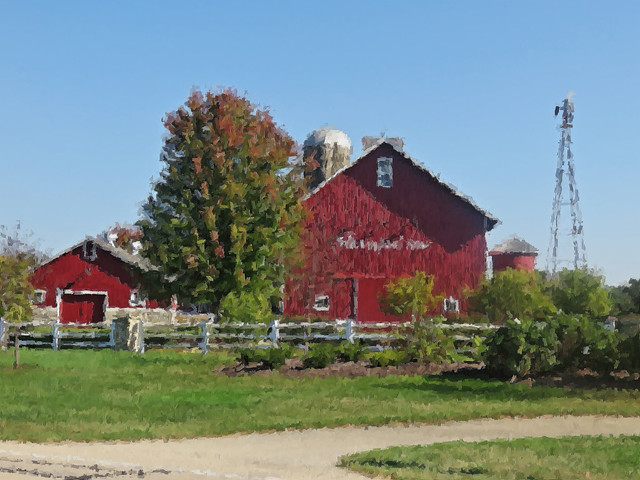
The barn at Hannaford is such an interesting subject. I rendered its image as an oil painting (Click on image for more detail):
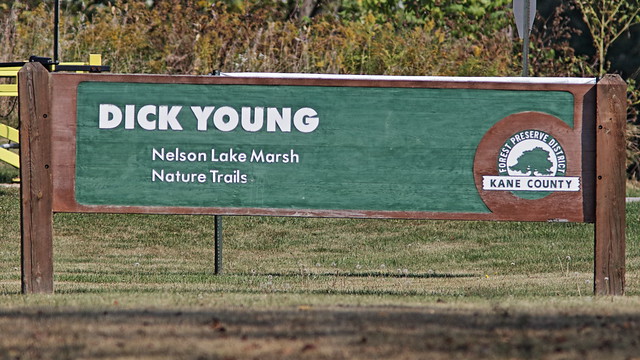
At nearby Nelson Lake preserve...
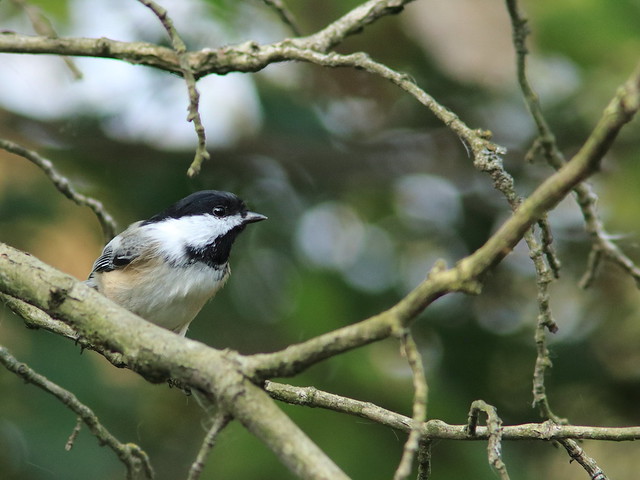
...a Black-capped Chickadee welcomed us:
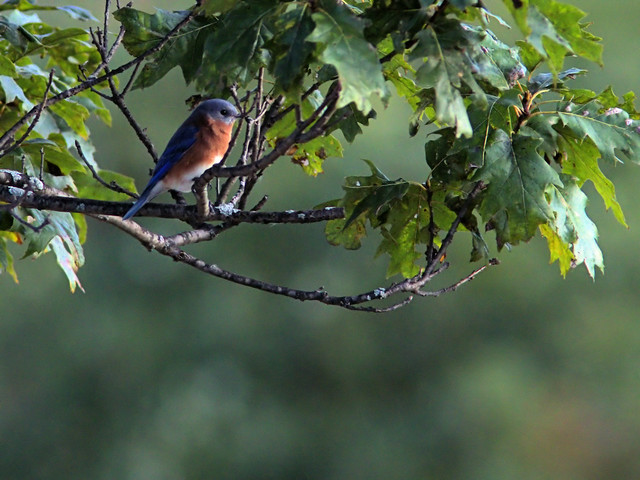
A male Eastern Bluebird stood guard near the entrance path:
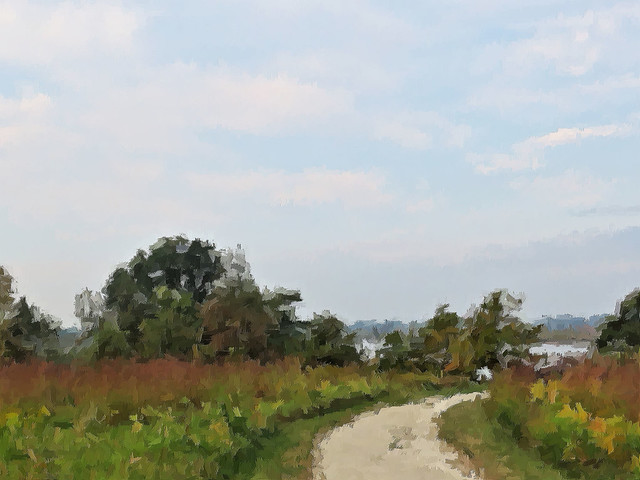
Autumn colors were subdued, but the play of shapes and colors along the entrance path begged for an impressionistic interpretation (Again, click to see the painterly effect)...
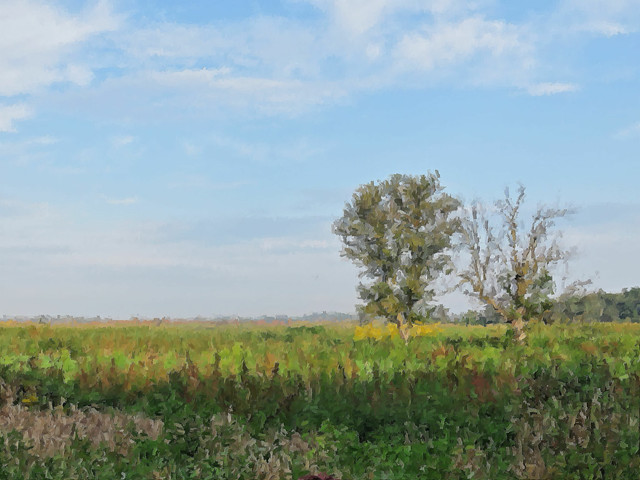
...as did a bright patch of goldenrod under a lone tree on the prairie:
An Orange-crowned Warbler foraged among weed stems...
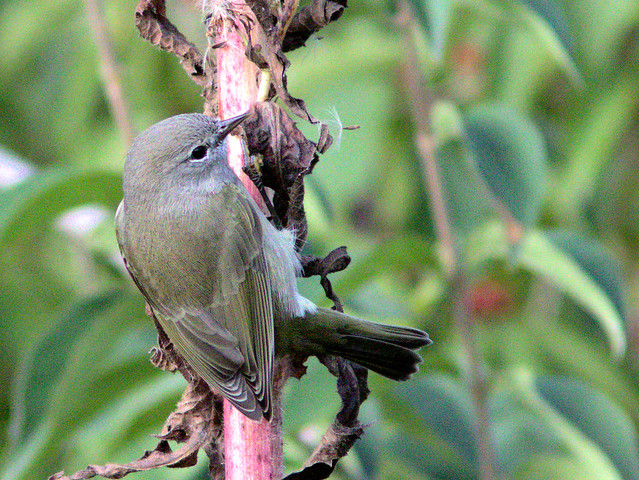
...and then flew to a small tree to get a better look at us:
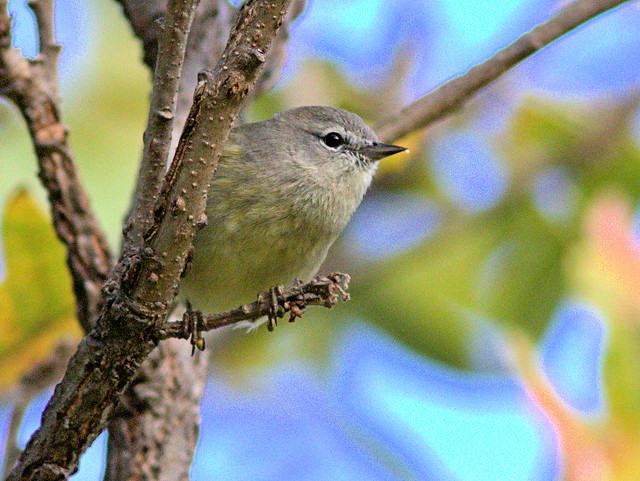
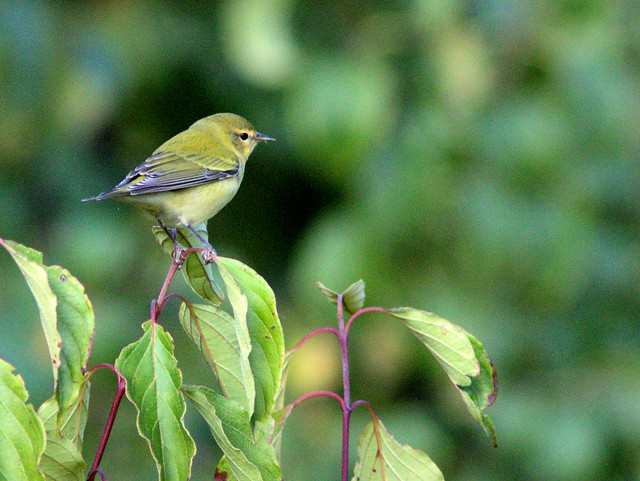
A Tennessee Warbler posed in good light:
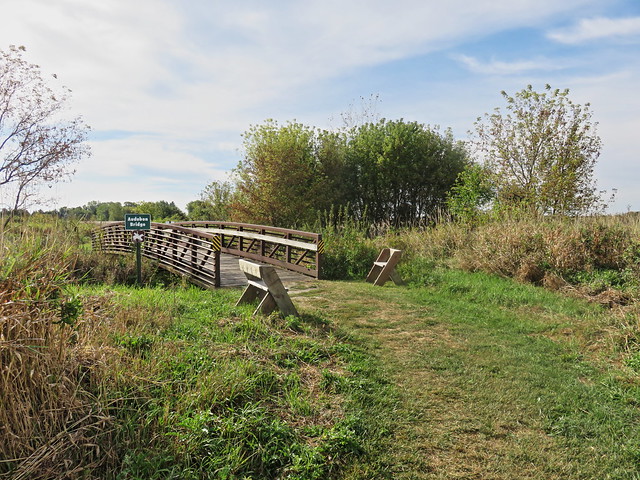
A foot bridge, dedicated to Audubon, spans the creek at Nelson Lake...
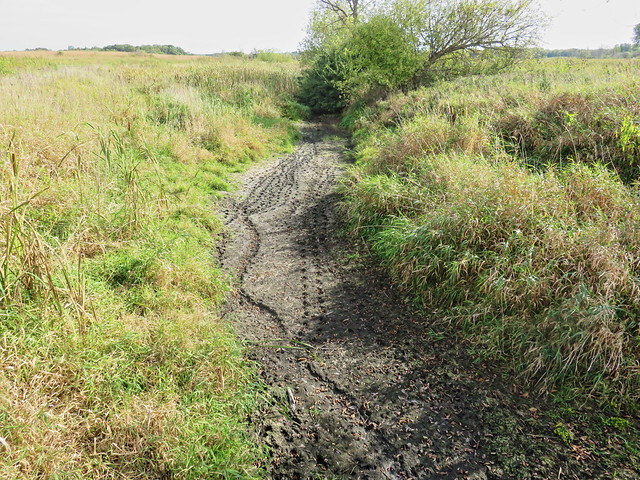
...but two months without rainfall have left it dry. Animal tracks punctuate the muddy course:
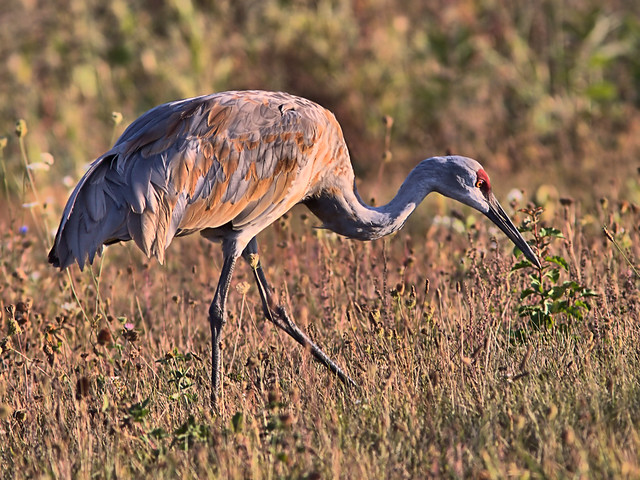
A Sandhill Crane hunted in a field near the preserve:
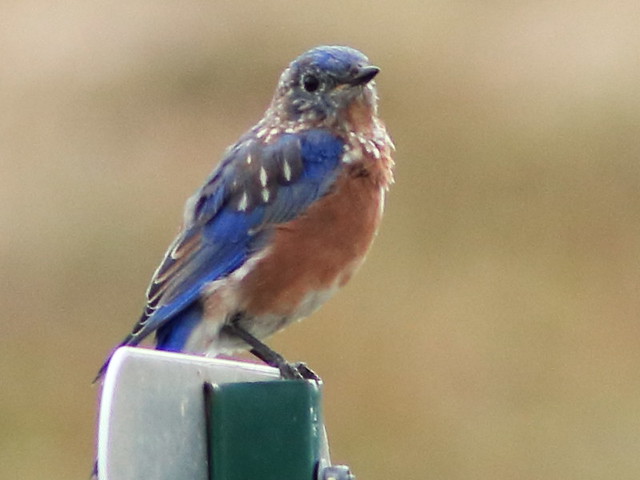
A small flock of bluebirds included this young male, not quite adorned in full adult plumage:
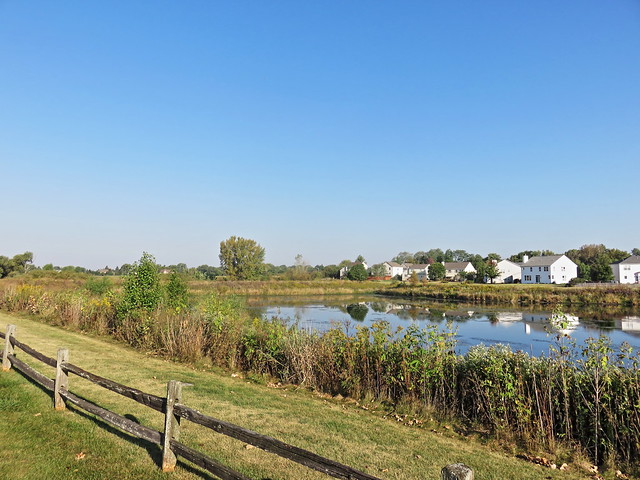
We walked in Jones Meadow, the "pocket park" only a few blocks from our condo in North Aurora. Homes reflect on the surface of its pond:
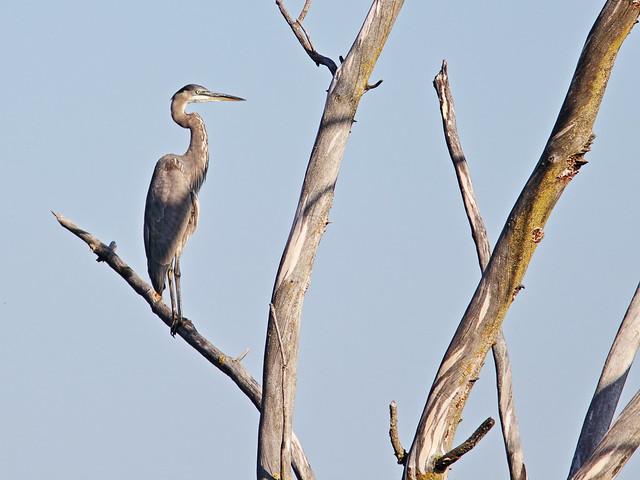
A Great Blue Heron roosted in a tree nearby:
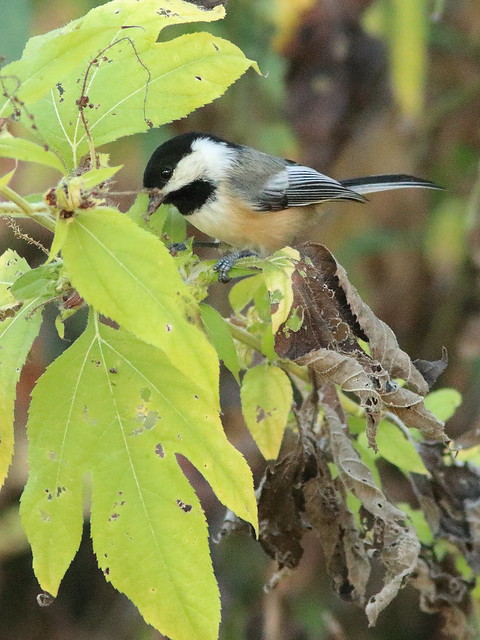
At Hawk's Bluff, another small park just doors from our daughter's home in Batavia, we found more chickadees:

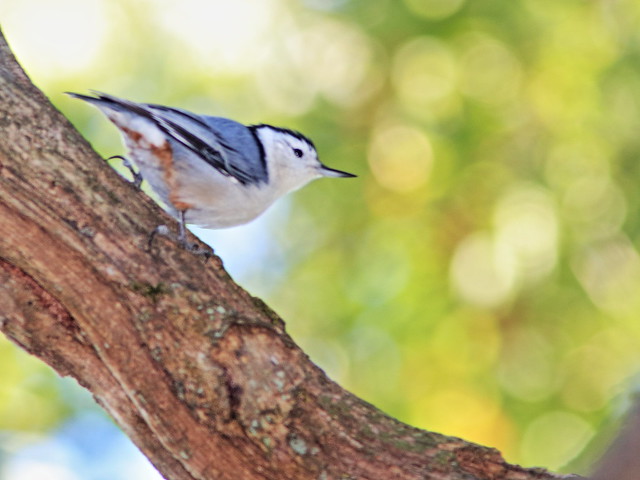
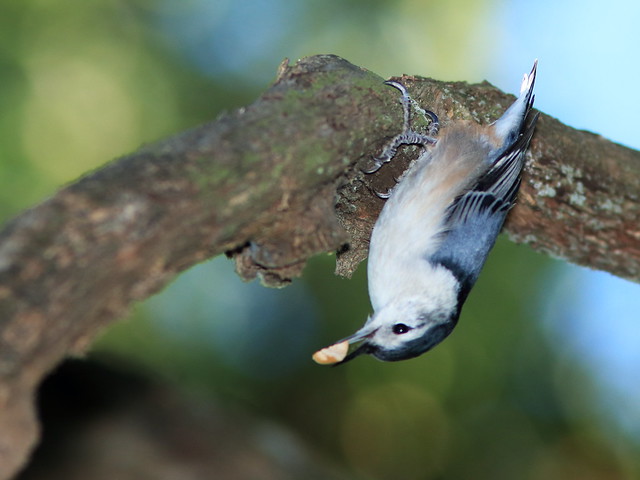
A White-breasted Nuthatch followed its upside-down instincts:
It was rewarded with a juicy titbit hidden in the bark under a crooked branch-- maybe it was a nut stored there by a squirrel or jay:
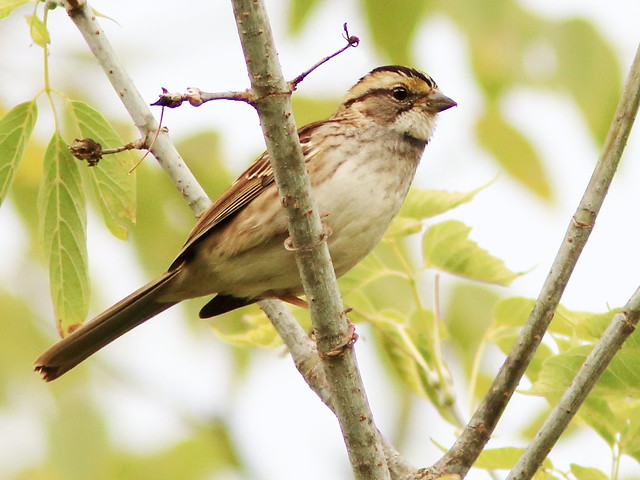
White-throated Sparrows had arrived from northern breeding grounds:
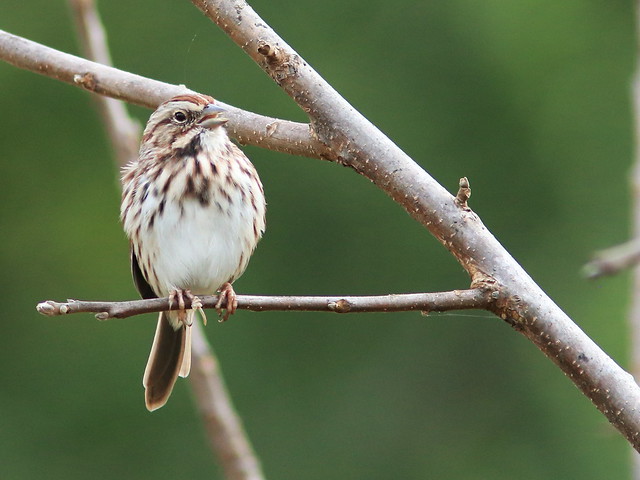
A resident Song Sparrow even sang a few notes:
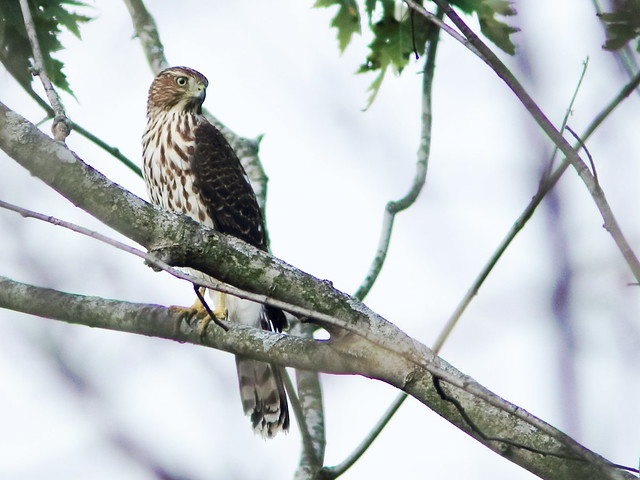
A Cooper's Hawk kept the small birds in hiding at Lippold Park in Batavia:
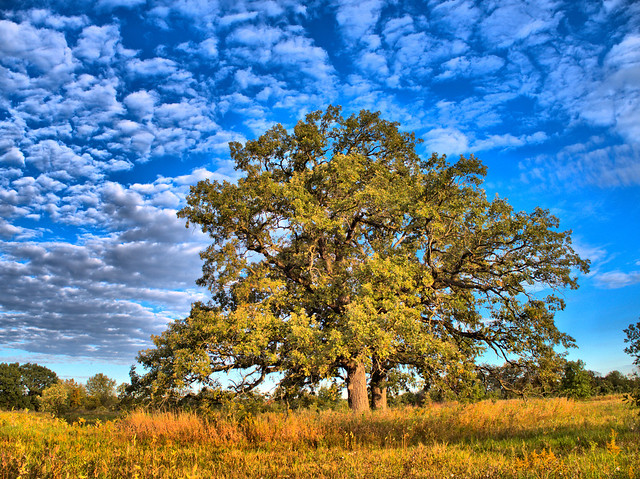
Gathering clouds cluttered the sky over the twin oaks at Nelson Lake. Much-needed rain was indeed on the way!
= = = = = = = = = = = = = = =
Linking to Misty's CAMERA CRITTERS,
Linking to Eileen's SATURDAY'S CRITTERS,
Linking to FENCES AROUND THE WORLD by Gosia
Linking to SKYWATCH FRIDAY by Yogi, Sylvia and Sandy
Linking to WEEKEND REFLECTIONS by James
Linking to BirdD'Pot by Anni
Linking to Wild Bird Wednesday by Stewart
Linking to Wordless Wednesday (on Tuesday) by NC Sue
Linking to ALL SEASONS by Jesh
________________________________________________
Please visit the links to all these memes to see some excellent photos on display
________________________________________________
During our last two weeks in Illinois we endured a heat spell. Daily temperatures exceeded those in Florida, and the humidity was almost as high.
There were warnings about high ozone levels and a haze permeated the atmosphere. Most days the sky was fairly bright but generally lightly overcast, whether from the smog or clouds. This produced low light conditions requiring me to use a flash, but most of my latest Illinois photos turned out soft or harsh and grainy and were assigned to the recycle bin. Happily, there were some exceptions.
A huge flock of Brown-headed Cowbirds (and a few European Starlings) settled down on the roof of this old barn at the sod farm where we saw the American Golden-Plovers.


The water tank has seen better days.

A cold front rolled in just before we left and the skies turned blue, so all was not lost. Some parting shots from Illinois included an immature male Common Yellowthroat.

Migratory Tennessee Warblers had moved south in good numbers.

Palm Warblers came in on the front. The eastern form, they are much brighter than the western race we have in Florida all winter.

American Redstarts moved erratically through the branches, and the poor light made it impossible to stop their action.

Swainson's Thrushes hid in the dark lower canopy, but I could not throw away this poor shot because I loved the bird's pose.

Sandhill Cranes, restless to start their southward journey, flew overhead.

This immature male Rose-breasted Grosbeak was either lingering locally or transiting from the north.

Back home in Florida there was rain every morning for six days. It was too risky to walk the mile or two into our local wetland preserve. One morning we drove out to Chapel Trail Nature Preserve in the neighboring City of Pembroke Pines.
We were able to walk the boardwalk for almost an hour before the clouds rolled in and we made a hasty retreat to our auto before the skies opened up again.
This is usually a good place to find long-legged waders, but the exceptionally high water levels have dispersed the schools of fish, causing the herons and egrets to hunt far and wide.
Indeed, we saw only a single Tricolored Heron, some distance away.

A lone Great Egret roosted in a tree on a small island in the middle of the greatly expanded lake.

There was evidence of migration, as small flocks of Eastern Kingbirds had gathered in the treetops.

This is an immature kingbird, as evidenced by its yellow gape and gray on its upper chest.

The biggest treat before the rains came was a male Prairie Warbler right next to the boardwalk. The light was just perfect!


Then, on the morning of the Harvest Moon the forecast improved. Some of the stars were still shining as we walked out on the nearby wetlands, a quarter of an hour before sunrise. We watched the huge moon sink into the Everglades. There must be some magic in Florida's early morning light, at least when the sun is rising in a cloudless sky.

Brown Thrashers had moved in, probably beginning migration,...

... as had Red-eyed Vireos.

The local birds were done with their post-breeding molt, and that scraggly look was gone. This Blue Jay was in splendid fresh plumage.

Loggerhead Shrikes were still on their territories. And, oh, what wonderful light!

While we were absent, the Common Ground-Doves finished raising their families.

The butterflies were there, waiting for us, the Zebra heliconians...

...this male Julia heliconian...

... the White Peacocks...

...and of course the Morning Glories.
