Although the song reminds us that "April showers bring May flowers, " we have enjoyed clear skies most of past month. I got up early to watch the partial eclipse of the Moon on the morning of April 4. If video does not display, try this link.
Eclipsed moon setting over our local wetlands on the morning of April 4:

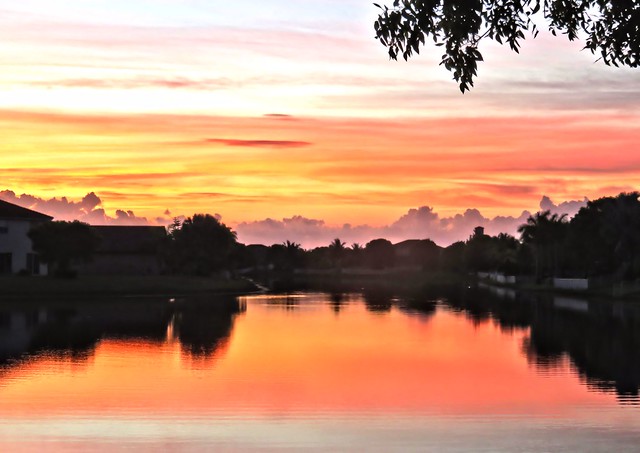
Many mornings the sun rose into a cloudless sky, and the "dawn came up like thunder," with skies already bright and blue a half hour before official sunrise. However, on April 13 the combination of a line of thunderstorms far off in the Atlantic Ocean and a layer of high clouds produced a particularly vivid panorama from our back patio:
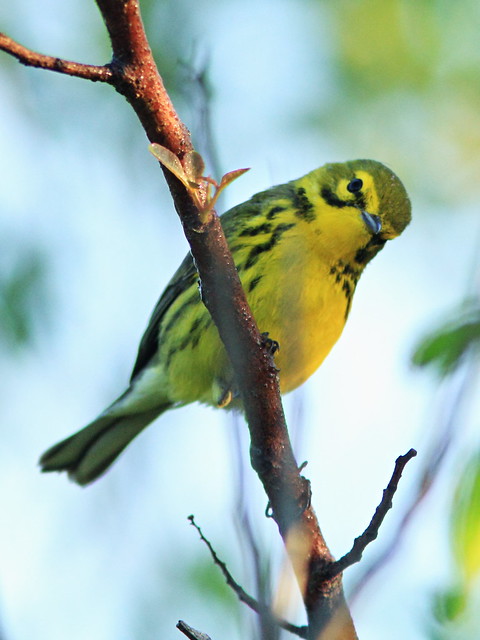
The warm morning light softened many of my photos of common critters, such as this Prairie Warbler...
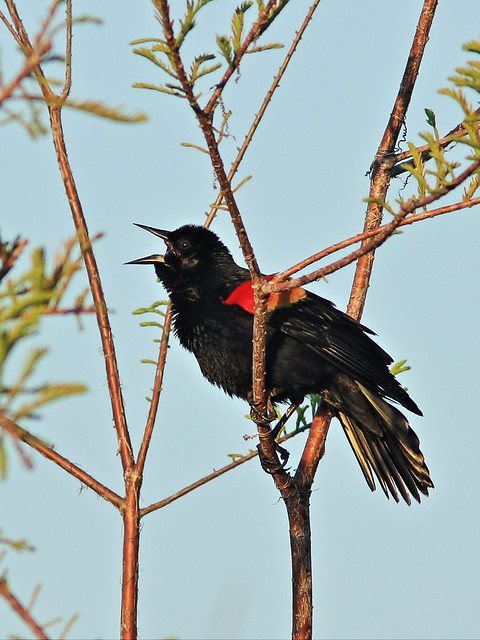
...a singing Red-winged Blackbird...
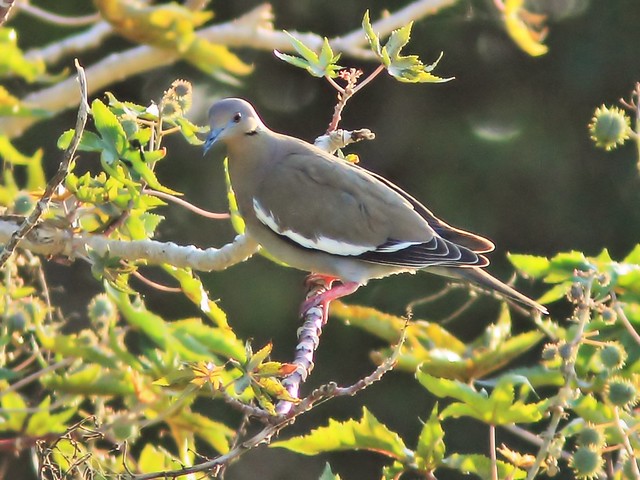
...a White-winged Dove roosting in a Castor Oil bean (Ricin) tree...
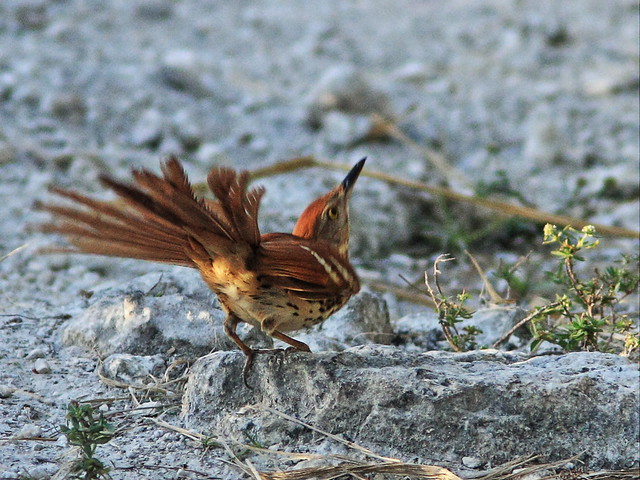
...a Brown Thrasher on the path ahead...
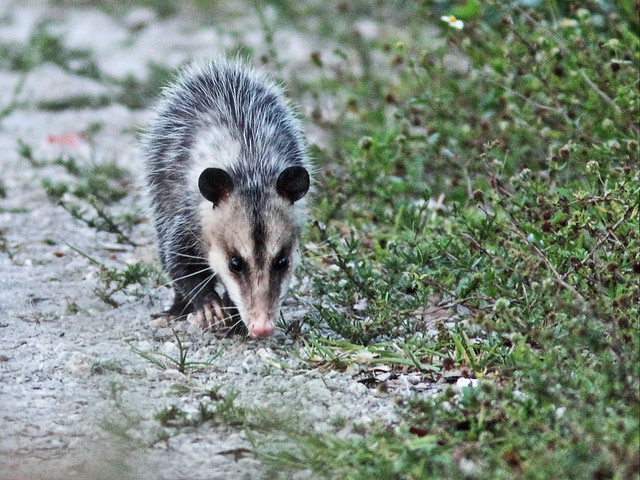
...a nearsighted Opossum ambling towards me...
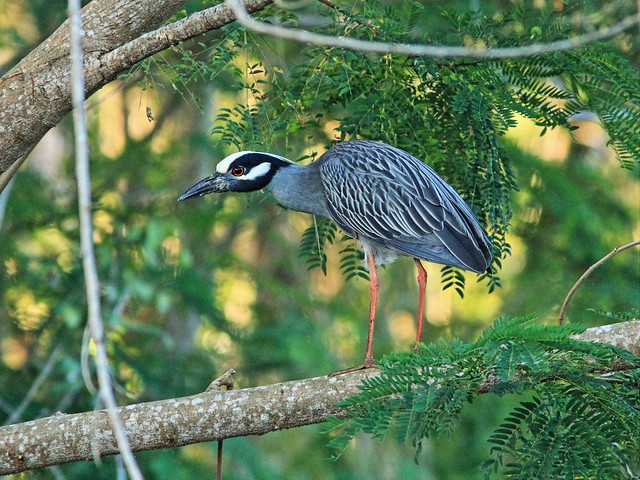
...a Yellow-crowned Night-Heron alone in the remains of the herbicide-ravaged rookery...
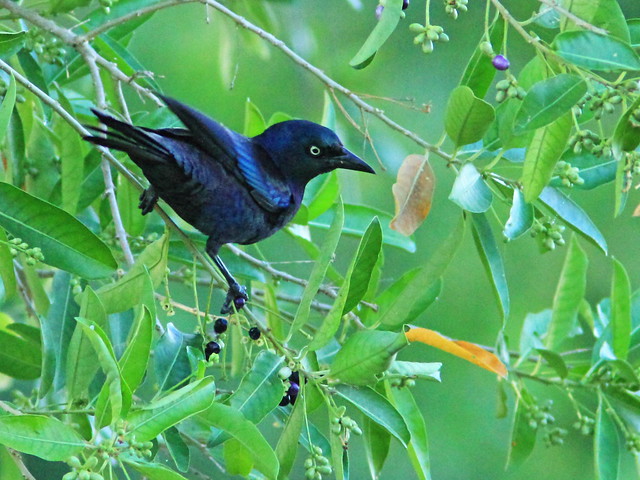
...a Common Grackle whose iridescent coat is enhanced by the morning light...
...and a female Northern Cardinal, ready to flee upon my arrival.

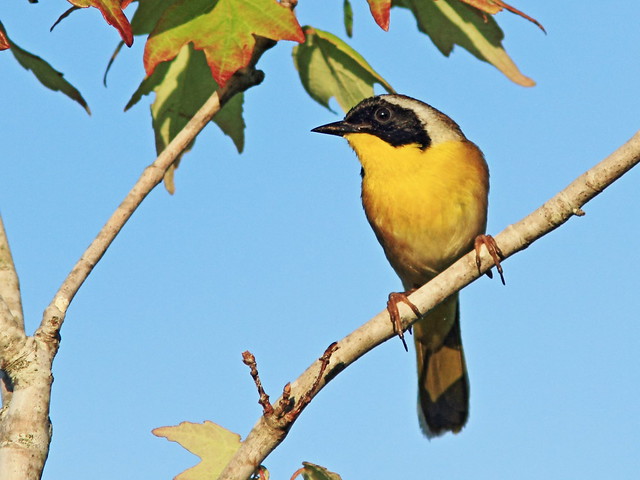
As I approached the lake, a Common Yellowthroat was perched near the shore:
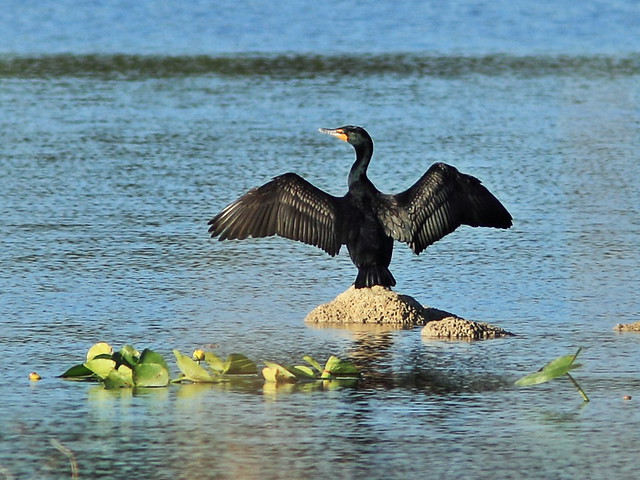
A Double-crested Cormorant dried its wings:
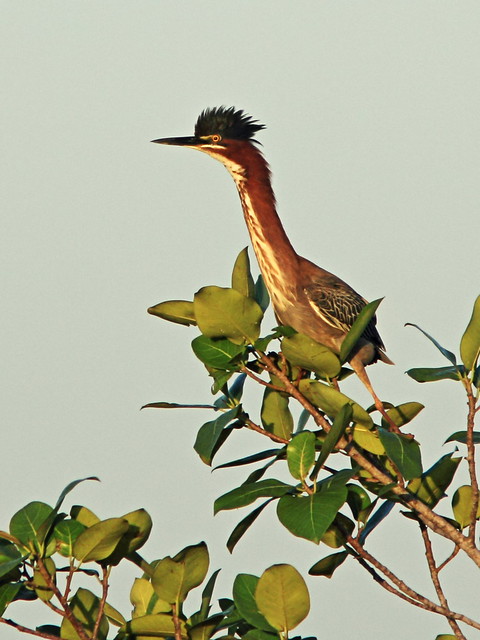
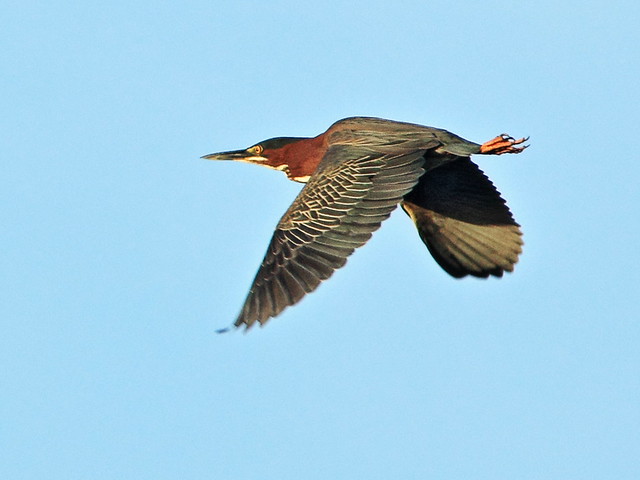
Remarkably, I almost missed seeing this Green Heron before it moved to the top of a small Red Maple:

Alarmed at my presence, the heron moved to another tree, raised its crown and tried to get a better look at me...

...allowing one of my favorite compositions...
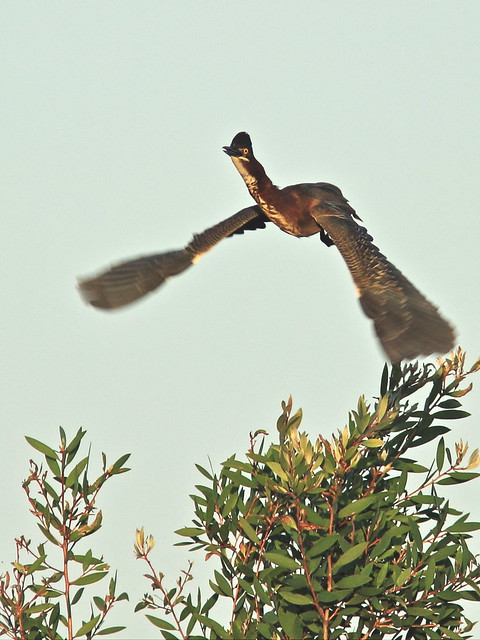
...before flying off:
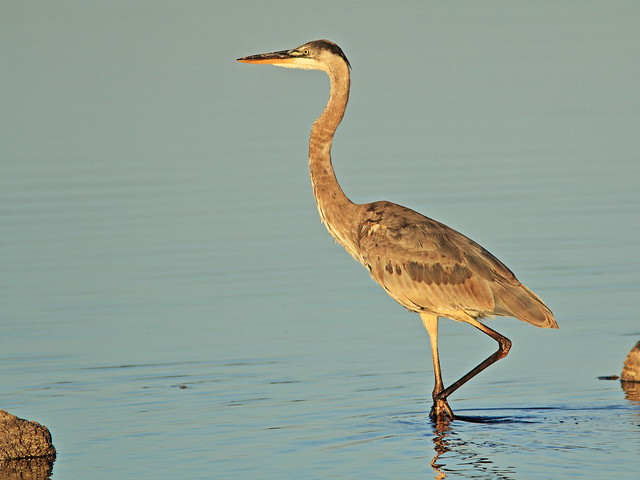
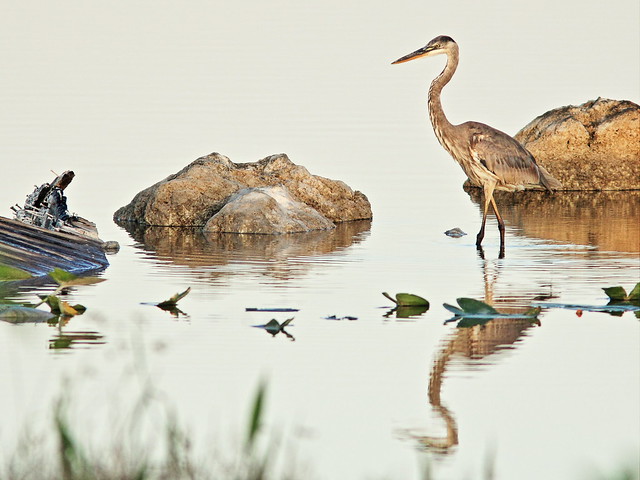
Just after sunrise on April 14 an immature Great Blue Heron permitted me to approach rather closely:

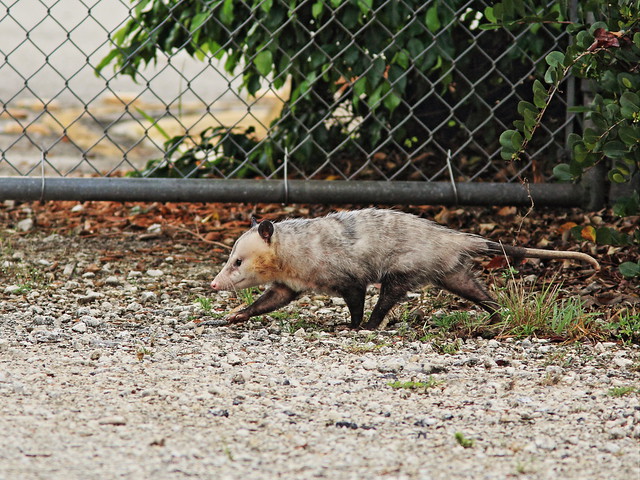
On my way back home I encountered another Opossum at the entrance gate:
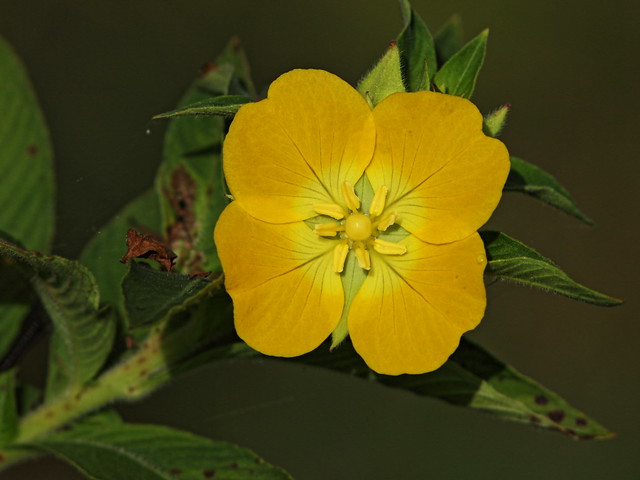
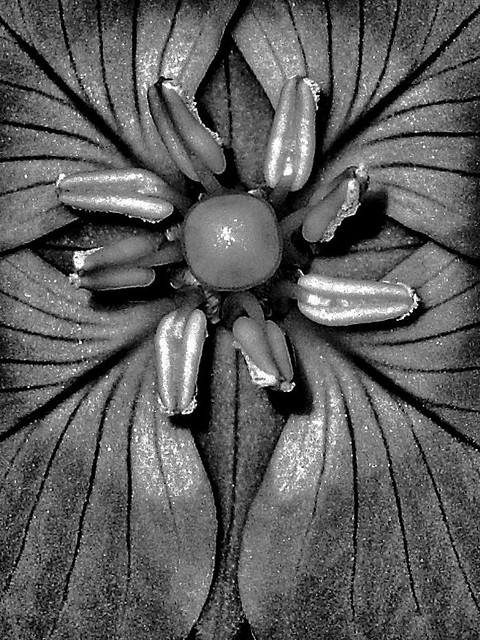
It's only an invasive exotic weed alongside the wet prairie, but sepals of the flower of this Peruvian Water Primrose form a perfect Easter cross:
 I could not pass up another macro shot, this time of a little (2.4 cm) Monk Skipper on an Ixora blossom:
 As I arrived home, a young squirrel watched me from the trunk of a palm tree in our front yard:

= = = = = = = = = = = = = = =
Linking to Misty's CAMERA CRITTERS,
Linking to Eileen's SATURDAY'S CRITTERS,
Linking to GOOD FENCES by Tex (Theresa).
Linking to SKYWATCH FRIDAY by Yogi, Sylvia and Sandy
Linking to WEEKEND REFLECTIONS by James
Linking to BirdD'Pot by Anni
Linking to Wild Bird Wednesday by Stewart
________________________________________________
Please visit the links to all these memes to see some excellent photos on display
________________________________________________
During our last two weeks in Illinois we endured a heat spell. Daily temperatures exceeded those in Florida, and the humidity was almost as high.
There were warnings about high ozone levels and a haze permeated the atmosphere. Most days the sky was fairly bright but generally lightly overcast, whether from the smog or clouds. This produced low light conditions requiring me to use a flash, but most of my latest Illinois photos turned out soft or harsh and grainy and were assigned to the recycle bin. Happily, there were some exceptions.
A huge flock of Brown-headed Cowbirds (and a few European Starlings) settled down on the roof of this old barn at the sod farm where we saw the American Golden-Plovers.


The water tank has seen better days.

A cold front rolled in just before we left and the skies turned blue, so all was not lost. Some parting shots from Illinois included an immature male Common Yellowthroat.

Migratory Tennessee Warblers had moved south in good numbers.

Palm Warblers came in on the front. The eastern form, they are much brighter than the western race we have in Florida all winter.

American Redstarts moved erratically through the branches, and the poor light made it impossible to stop their action.

Swainson's Thrushes hid in the dark lower canopy, but I could not throw away this poor shot because I loved the bird's pose.

Sandhill Cranes, restless to start their southward journey, flew overhead.

This immature male Rose-breasted Grosbeak was either lingering locally or transiting from the north.

Back home in Florida there was rain every morning for six days. It was too risky to walk the mile or two into our local wetland preserve. One morning we drove out to Chapel Trail Nature Preserve in the neighboring City of Pembroke Pines.
We were able to walk the boardwalk for almost an hour before the clouds rolled in and we made a hasty retreat to our auto before the skies opened up again.
This is usually a good place to find long-legged waders, but the exceptionally high water levels have dispersed the schools of fish, causing the herons and egrets to hunt far and wide.
Indeed, we saw only a single Tricolored Heron, some distance away.

A lone Great Egret roosted in a tree on a small island in the middle of the greatly expanded lake.

There was evidence of migration, as small flocks of Eastern Kingbirds had gathered in the treetops.

This is an immature kingbird, as evidenced by its yellow gape and gray on its upper chest.

The biggest treat before the rains came was a male Prairie Warbler right next to the boardwalk. The light was just perfect!


Then, on the morning of the Harvest Moon the forecast improved. Some of the stars were still shining as we walked out on the nearby wetlands, a quarter of an hour before sunrise. We watched the huge moon sink into the Everglades. There must be some magic in Florida's early morning light, at least when the sun is rising in a cloudless sky.

Brown Thrashers had moved in, probably beginning migration,...

... as had Red-eyed Vireos.

The local birds were done with their post-breeding molt, and that scraggly look was gone. This Blue Jay was in splendid fresh plumage.

Loggerhead Shrikes were still on their territories. And, oh, what wonderful light!

While we were absent, the Common Ground-Doves finished raising their families.

The butterflies were there, waiting for us, the Zebra heliconians...

...this male Julia heliconian...

... the White Peacocks...

...and of course the Morning Glories.
