According to Cornell University's global eBird database, this species has never before been reported to breed anywhere in southern Broward County. The nearest historical sightings occurred in undeveloped areas in Miami-Dade County about 4 miles / 6.4 kilometers to the south.and in Broward County 10.5 miles / 17 kilometers to the north. I never saw another until I photographed one in flight near this location in February, 2019.
Since then they have been present consistently. These are earlier photos:

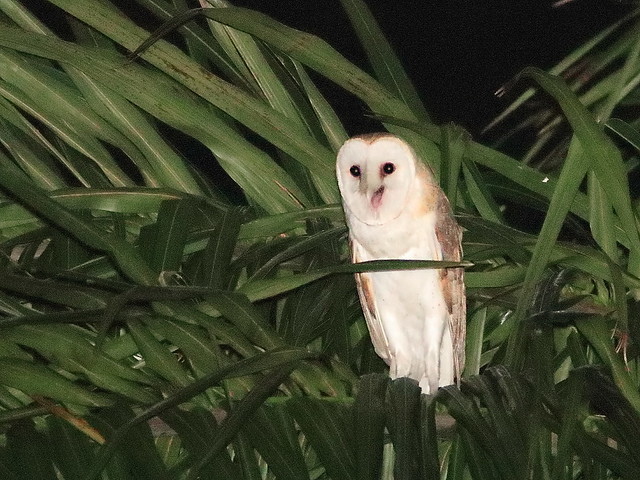
Here is the topless palm tree in an undeveloped spot where I first saw a Barn Owl, in August, 2015:

Although I never saw them again until 2019, I was encouraged when I found this wing feather in October, 2018, very close to the old tree:

I suspected that they may have been nesting on the top of another Royal Palm behind a home across the gravel road. This tree had also died and lost its foliage. I heard and recorded a young owl nearby only a few weeks ago (Link to eBird checklist).
This species nests all year round. This week there were two Barn Owls occupying the top of this second tree, too dark for my camera, so here is the daytime view (along with our neighbor's regulation-compliant fence):


Our homeowners association contracts with landscapers to maintain the area along the berm where the nest tree is located. Many people cannot stand the sight of an old dead tree and I feared they may be planning to remove and replace it with a more "fitting" representative of our refined community. The Barn Owl does not see it this way.
Therefore, I worked with the homeowners association on a plan to to protect the nest tree. A pair of Barn Owls and their brood can eat as many as 3,000 rodents in a single nesting season, so they are much more efficient than a pest control company. While they are protected by the Federal Migratory Bird Treaty Act and they are the least numerous among Florida's 5 owl species, they are not threatened or endangered.
Happy to say that my mobility and energy have vastly improved since starting on Prednisone. MaryLou and I have been out about an hour before sunrise almost every morning. We arranged for Juan, a fellow birder to meet us on the way in and he was treated to seeing both Barn Owls as they emerged from the palm trunk and flew overhead, their pure white undersides reflecting the glare of our flashlights.
As we were observing the Barn Owls we heard an Eastern Screech-Owl calling nearby. Juan located it and I obtained poor photos with the help of his flashlight:


That day I logged over 10,000 steps for the first time in almost a month as we trekked into a more primitive area of the preserve on the Bar Ditch Trail. As we walked westward, Juan turned around to capture the rising sun:
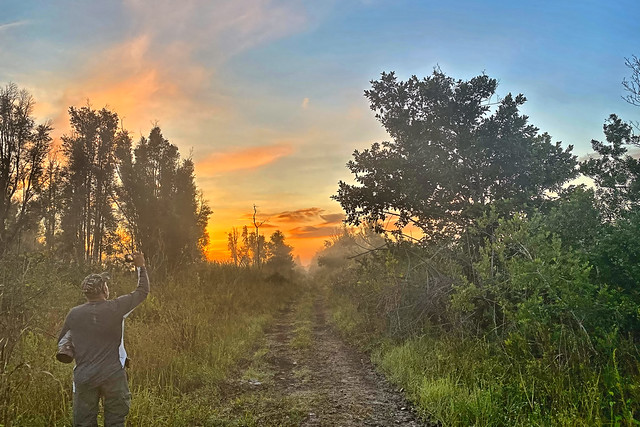
Were it not for the sound of airplanes and distant traffic, we could have been lost, deep in the wilderness:

A motley molting Blue Jay was missing his splendid head-dress:

Later we spotted one almost completely feathered:

A female Prairie Warbler appeared against the blue sky:
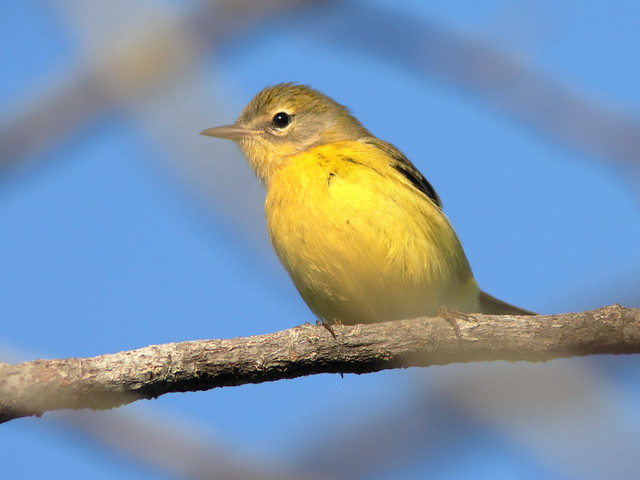
The male Prairie Warbler was partially obscured in the brush:

Blue-gray Gnatcatchers flitted about actively:

Northern Cardinals were numerous, a male...

...and female posed for photos:

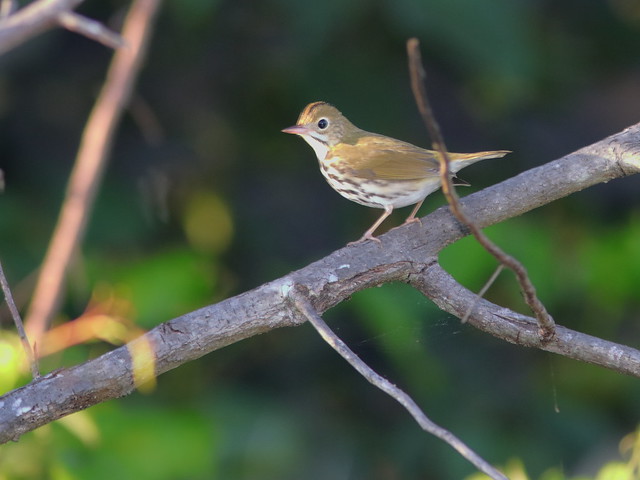
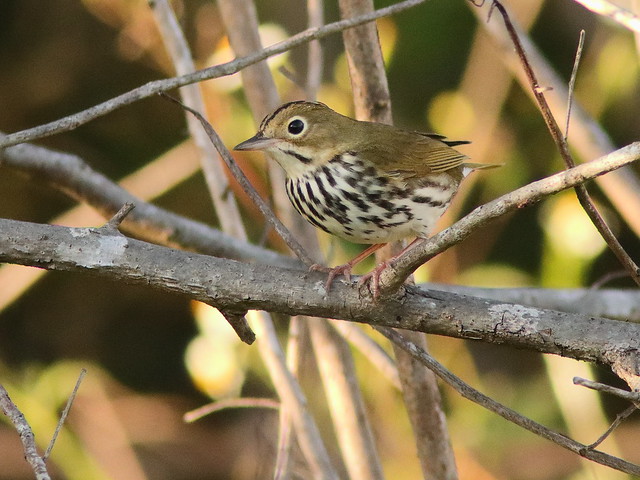
An Ovenbird appeared briefly:
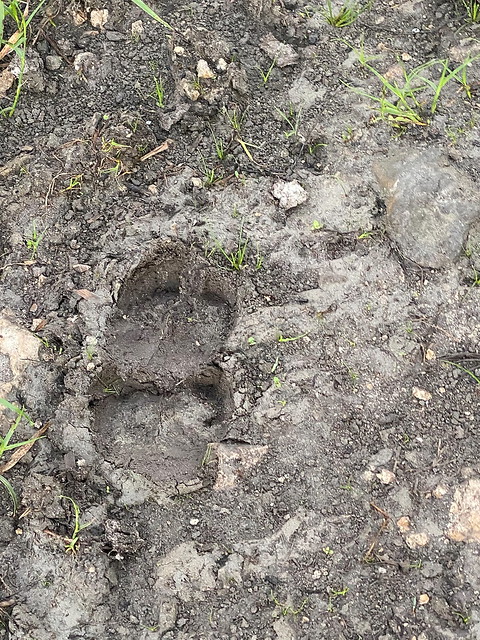
There were fresh Bobcat tracks...

...Raccoon hand-prints...

...and evidence of a large feral hog:
A White-tailed Deer with deformed antlers stepped out into the path in front of us:

A pair of Loggerhead Shrikes rested together in a treetop:

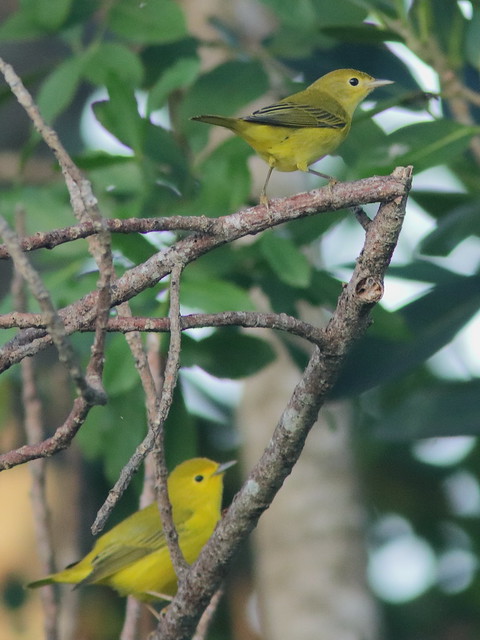
Two Yellow Warblers were passing through, southbound:

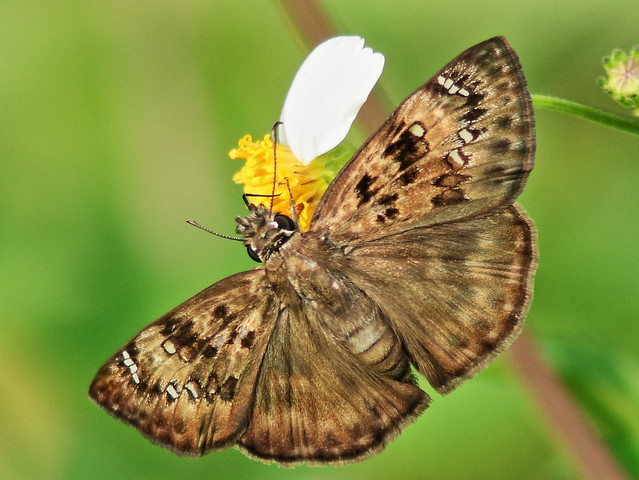
Among the insects, a richly patterned Horace's Duskywing...
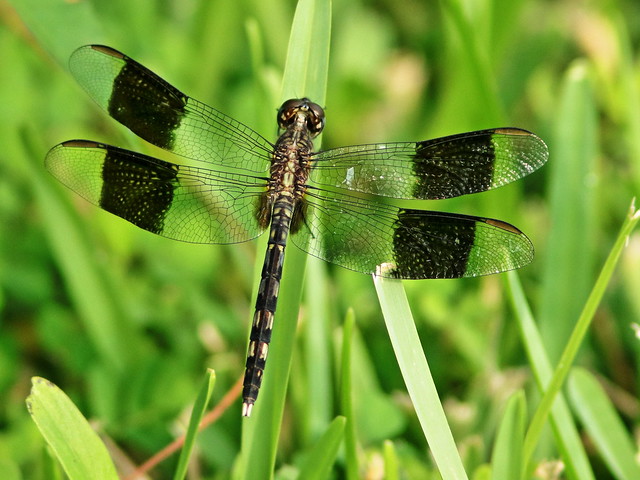
...and a Band-winged Dragonlet (Erythrodyplax umbrata):
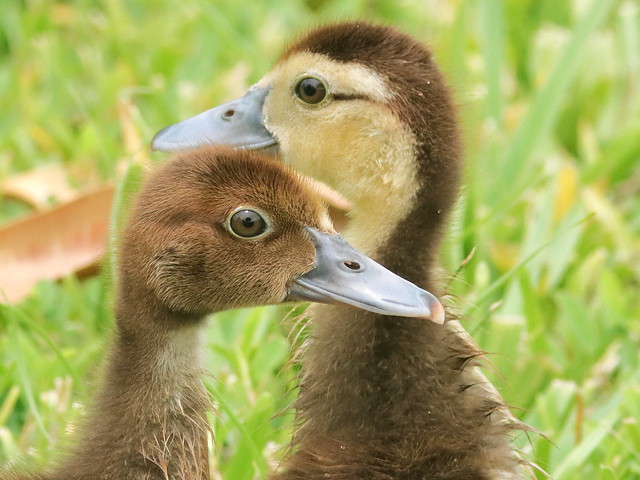
Back home and in seclusion, we enjoyed a visit from the mamma Muscovy Duck, who hatched out 15 ducklings in our back yard. She now was guarding the last four survivors of her brood. Turtles, bass, cats, herons and hawks are not kind to baby ducks:


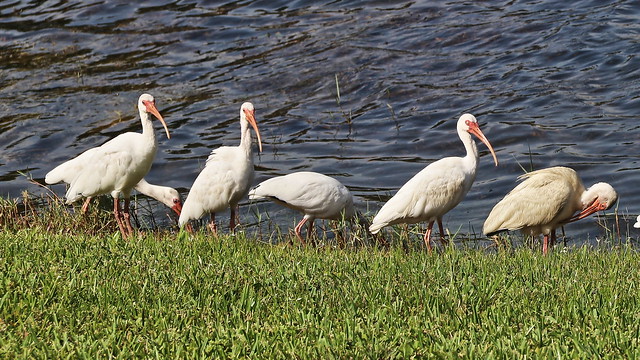
White Ibises gathered along the shore:
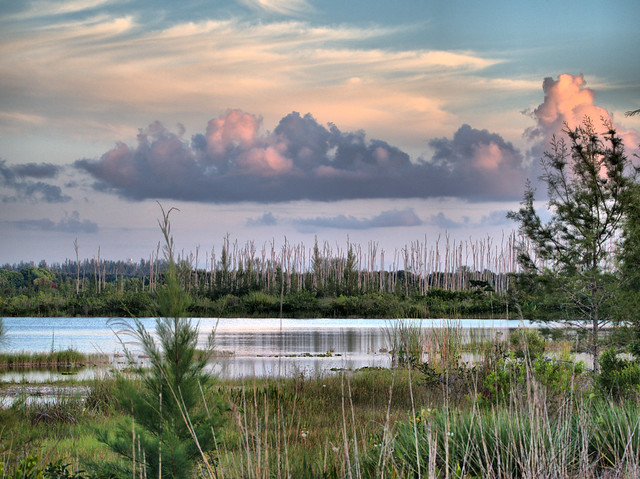
Opposite to the sunrise, the anti-solar rays reflected on dust blown in from the Sahara Desert and the shadows of clouds intersected over the Everglades:

Morning sun touched the south wet prairie:

Great Egret in morning light:

The egret cast a meager reflection on the breeze-dimpled lake surface:

= = = = = = = = = = = = = = =
Linking to:
Fences Around the World
Skywatch Friday
Weekend Reflections
Saturday's Critters
BirdD'Pot
Camera Critters
All Seasons
Wordless Wednesday (on Tuesday)
Natasha Musing
Our World Tuesday
________________________________________________
Please visit the links to all these posts to see some excellent photos on display
________________________________________________