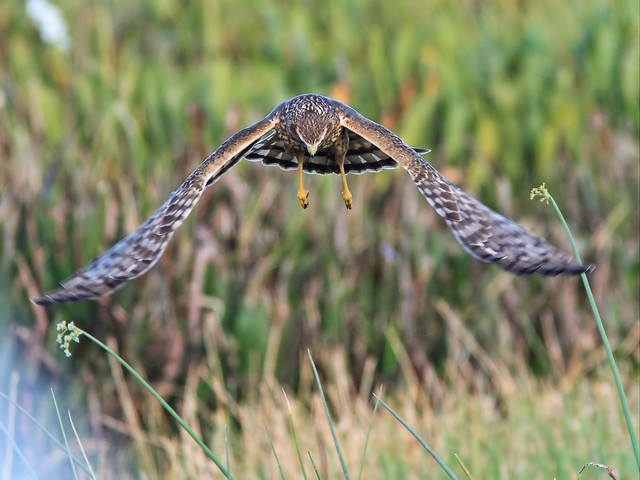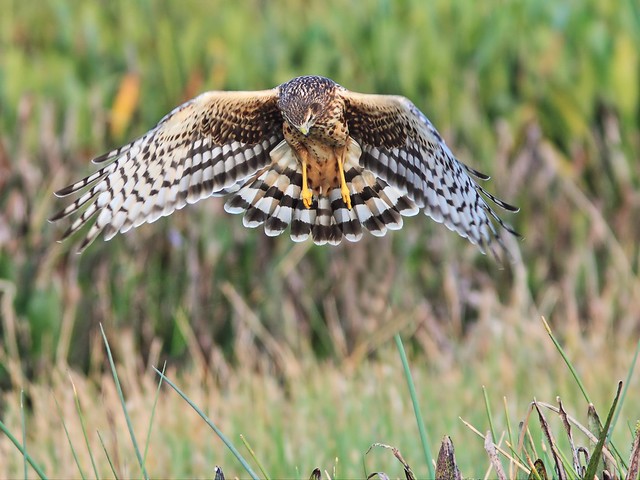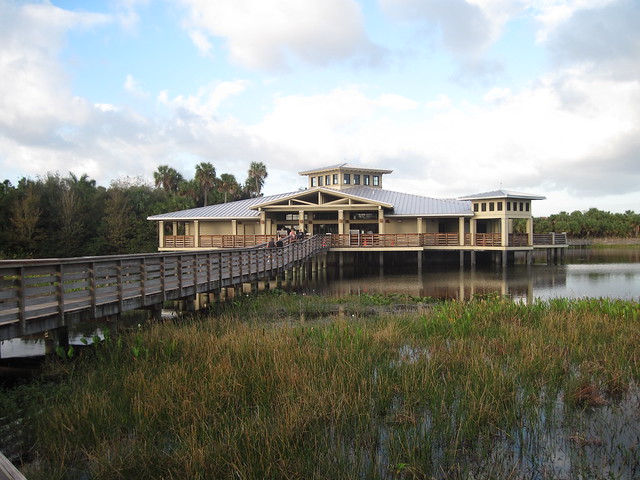
As we walked a mile and a half along the boardwalk, a Northern Harrier made several passes over the area, but I failed to get very good images.
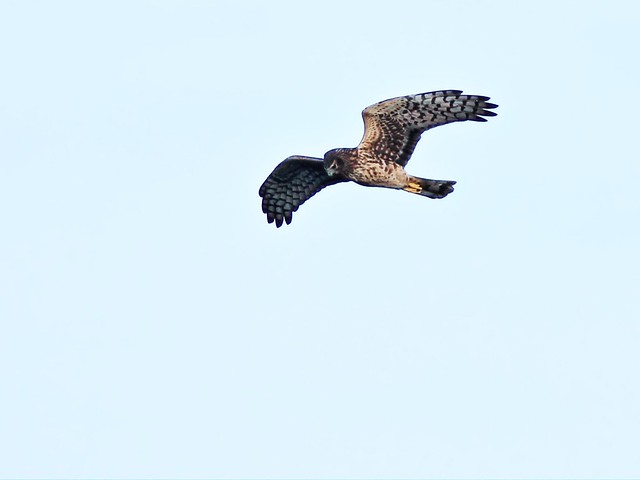
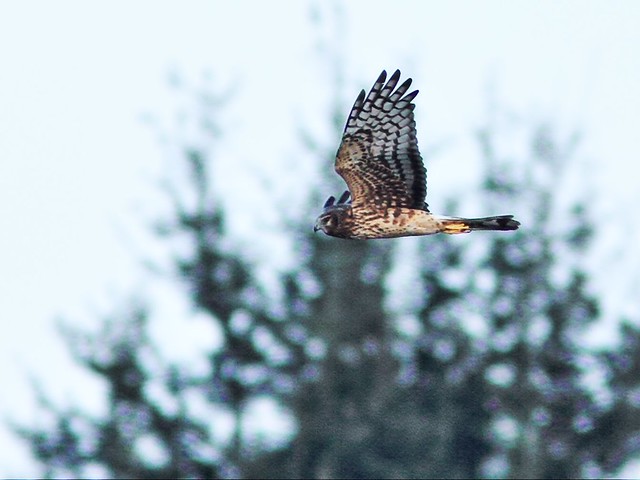
Then, just before we departed, it flew right towards us, into the wind.
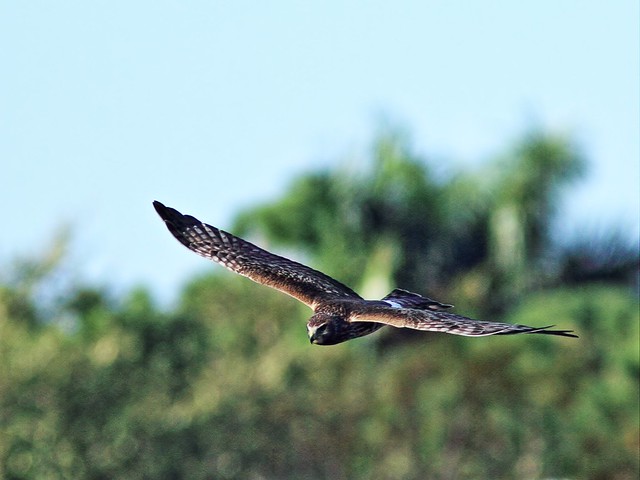
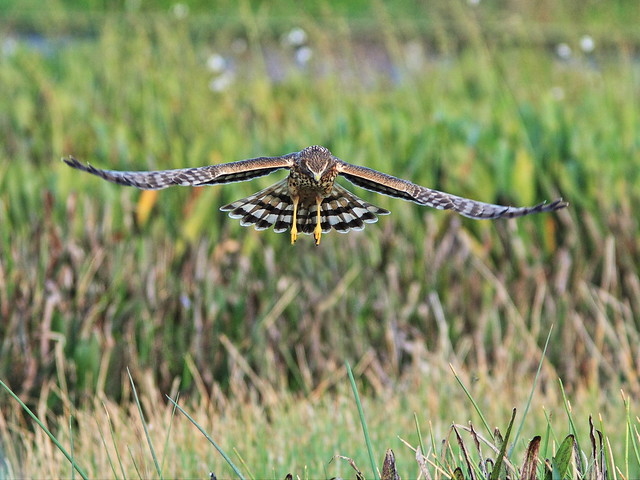
The harrier performed a series of low-level stalling maneuvers-- gliding upward and then suddenly falling almost to the ground before it regained lift.
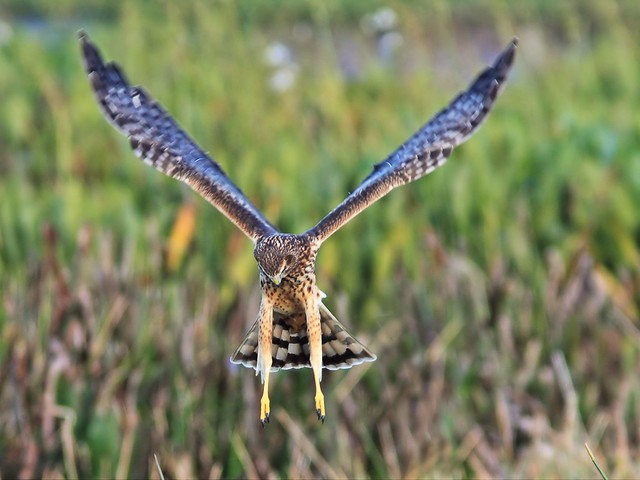
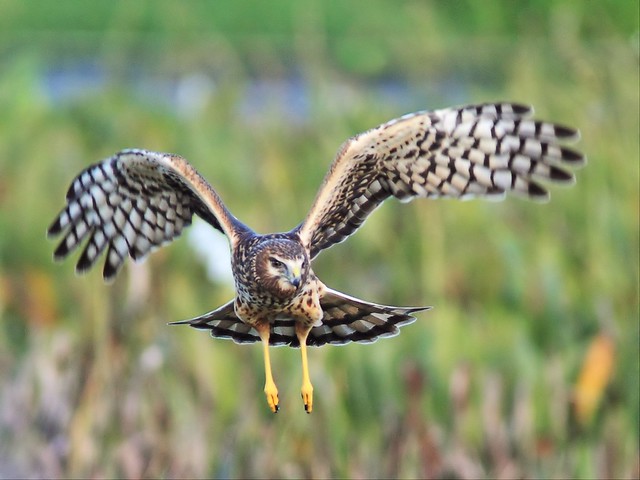
Since the harrier glides with its wings configured in a strong dihedral angle (V-shape), it can safely regain lift at slow speeds because only one wing stalls at a time. The high dihedral angle increases the rolling motion of the bird, so the opposite wing quickly regains lift, restoring stability. Turkey Vultures, Golden Eagles, and many seabirds also position their wings in this manner as it permits much greater stability in slow low-level flight. The alternating stall and recovery of each wing causes the vulture's wings to tilt back and forth while it sails.