Showing posts with label Bay-breasted Warbler. Show all posts

Thursday, September 27, 2018

Crops & Clips: In and around Batavia, Illinois

We just returned from a two week stay in northeastern Illinois. Surprisingly, we had a spell of hot weather with some temperatures higher than those back home in south Florida.

Although we were busy with volleyball games and preparations for a charity gala with 100 guests at our daughter's home, we found time to get out and walk in the nearby parks and forest preserves. We saw many more warblers than we were able to identify, as they tended to forage high in the trees against the very bright sky. 

At Les Arends Forest Preserve in their home town of Batavia, we encountered a mixed flock which included American Redstarts. I was only able to get a decent photo of a female:
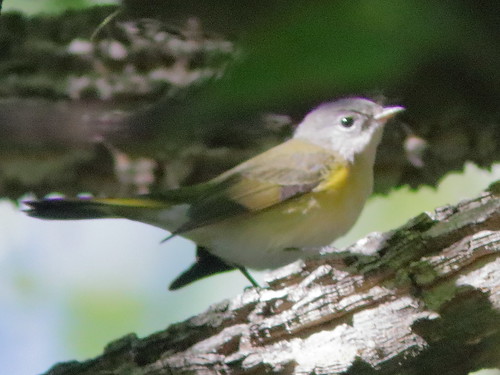
American Redstart 01-20180912

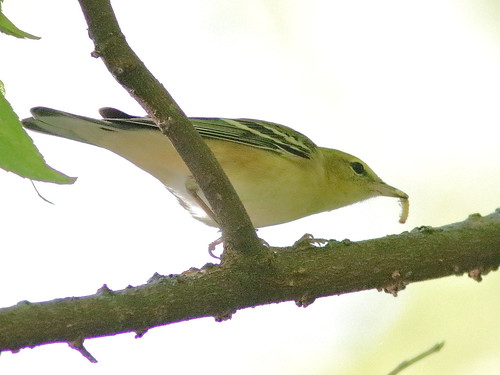
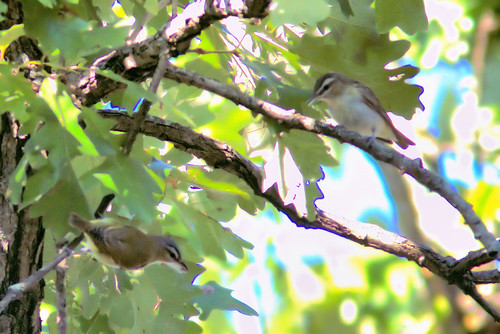
There were quite a few Bay-breasted and Blackpoll Warblers, which are quite similar in their dull fall plumage.

The Blackpoll shows some streaking of its underparts and has a more greenish cast to its head and neck, so this most likely is one here:
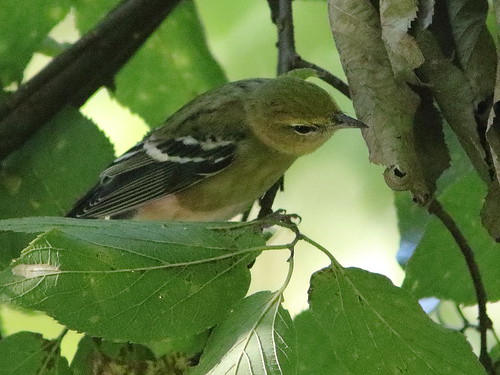
Blackpoll Warbler 03-20180912

Bay-breasted Warbler? It should have dark legs but these appear to be light as in Blackpoll:
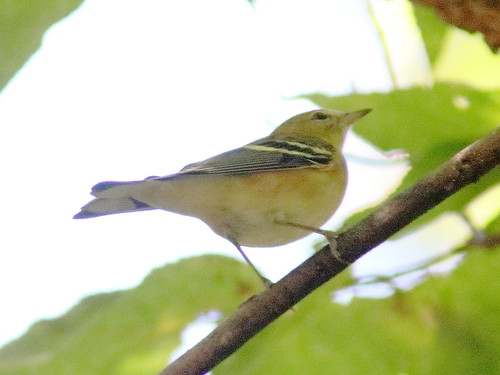
Bay-breasted Warbler 02-20180912

Bay-breasted Warbler 01-20180912

This is a dull female Chestnut-sided Warbler:
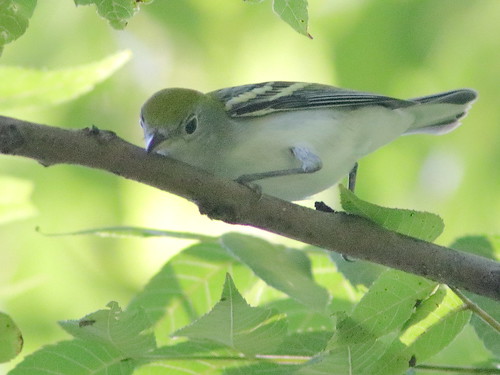
Chestnut-sided Warbler 04-20180912

Bliss Woods Forest Preserve in Sugar Grove has very nice walking trails and a wooden bridge over Blackberry Creek, where Mary Lou is looking at a goldfinch:
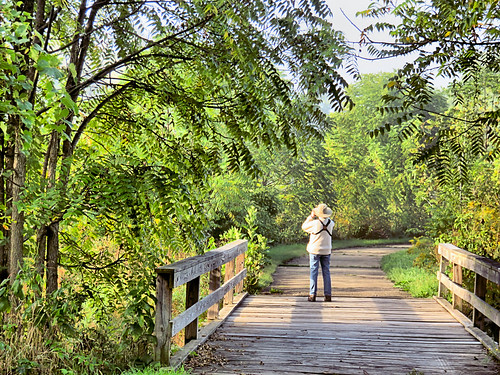
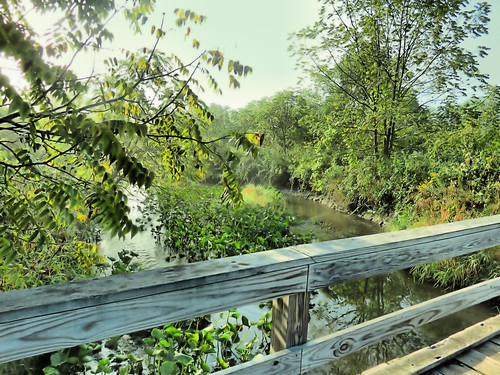
Bliss Woods 02-20180911

Bliss Woods 03-20180911

A Wilson's Warbler brightened our morning:
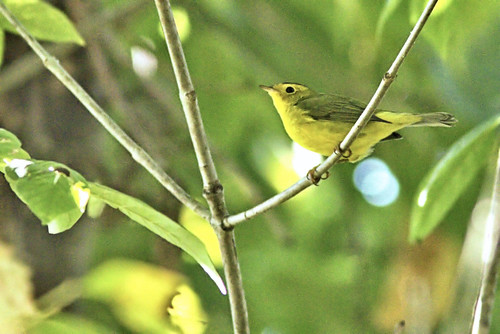
Wilson's Warbler 03-20190911

We saw migrating Swainson's Thrushes...
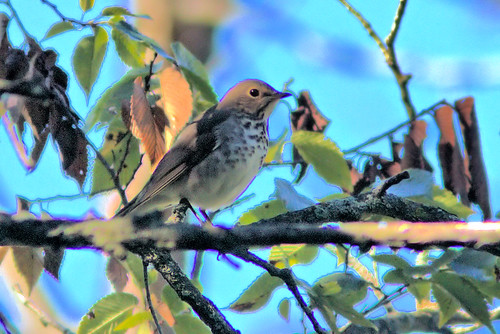
Swainson's Thrush 01-20180911

...and a pair of Red-eyed Vireos:

Red-eyed Vireos two 20180911

A favorite spot is Nelson Lake/Dick Young Marsh Kane County Forest Preserve: 
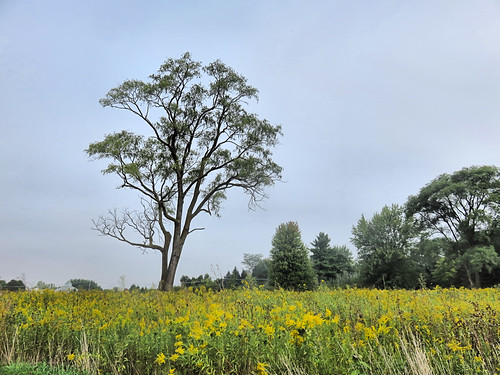
Tree at Nelson Lake 20180920

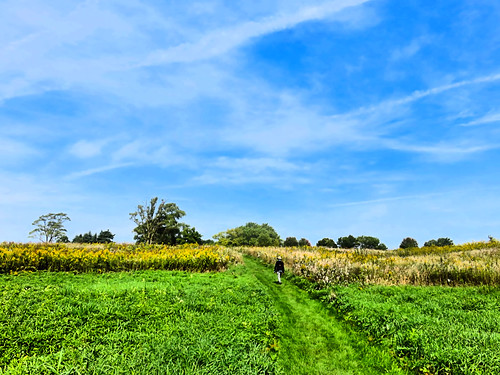
Northwest prairie Nelson Lake 20180920

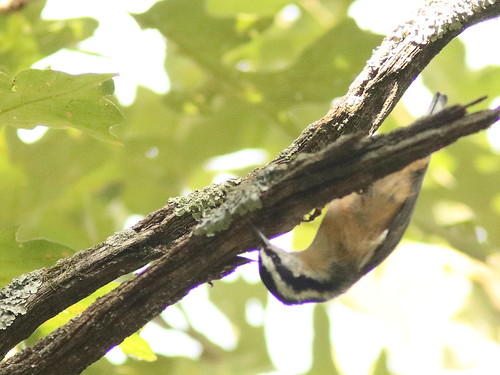
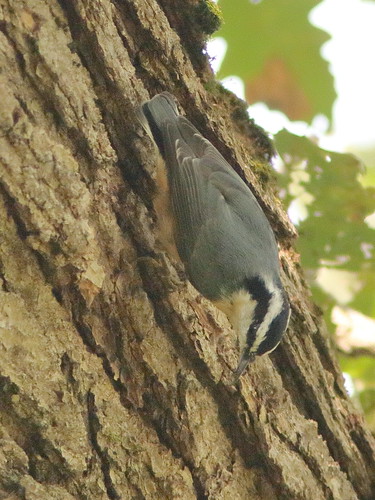
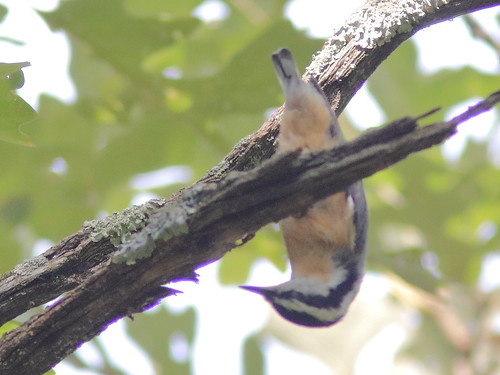
I caught sight of an early migratory Red-breasted Nuthatch, but had to wait a few days before getting one of these little acrobats in my camera viewfinder. It was foraging in this grand oak:
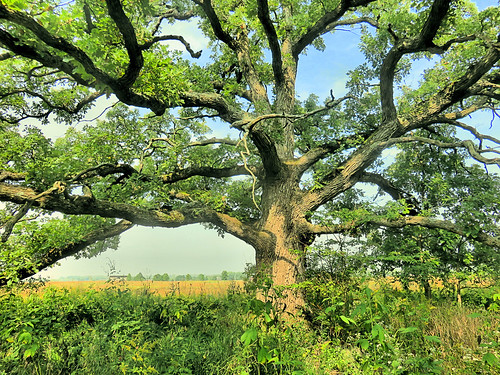
Grand Oak 20180920

Red-breasted Nuthatch 06-20180920

Red-breasted Nuthatch 05-20180920

Red-breasted Nuthatch 08-20180920

The male American Goldfinches were in various stages of molting into their somber winter coats:
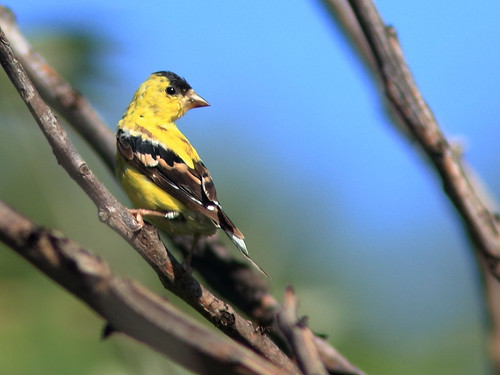
American Goldfinch 02-20180913

A Mourning Dove struck a nice pose:

Mourning Dove 20180914

A Cedar Waxwing had a regal appearance:
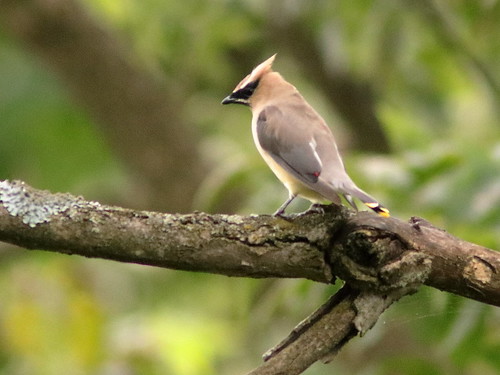
Cedar Waxwing 20180909

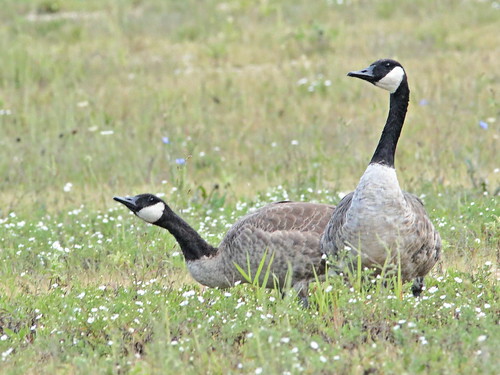
Canada Geese were numerous...

Canada Geese 02-20180909

...as were butterflies, including this Pearl Crescent...
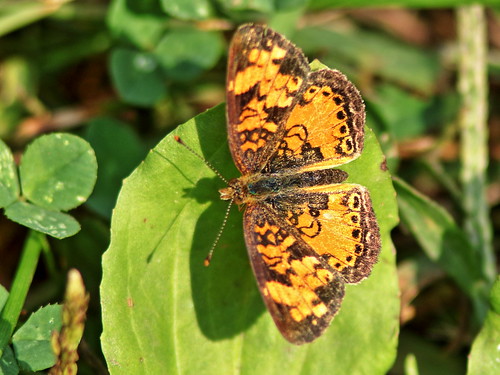
Pearl Crescent 02-20180920

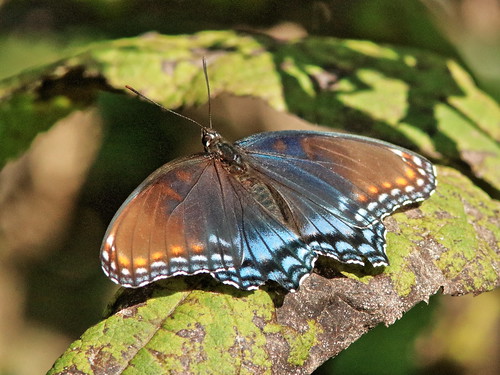
...a Red-spotted Purple...

Red-spotted Purple butterfly 01-20180913

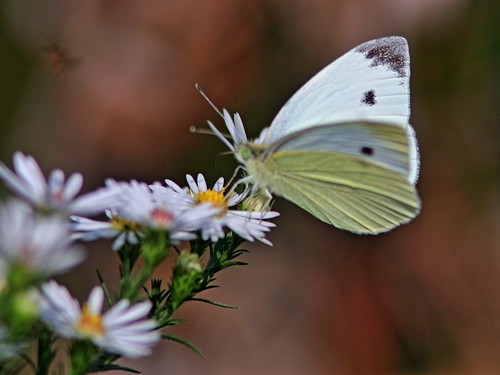
...a Cabbage White...

Cabbage White butterfly 20180920

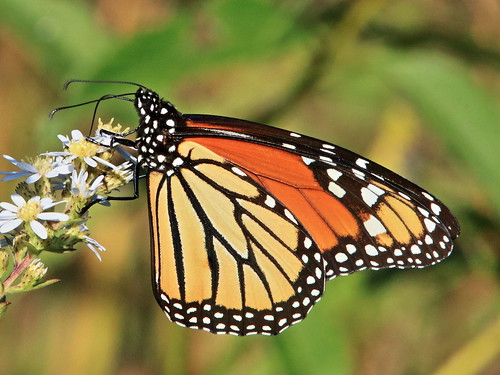
...and many beautiful Monarchs:

Monarch  butterfly 02-20180914

Colorful Milkweed Bugs clustered on the pods of their favorite plant, also host to the Monarch caterpillar:
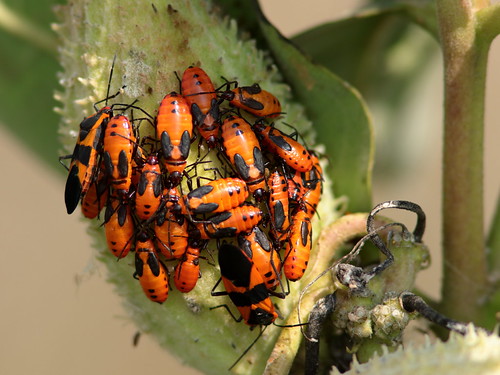
Milkweed Bugs 01-20180920

A view of the upper reaches of the marsh at Nelson Lake is framed by tree branches:
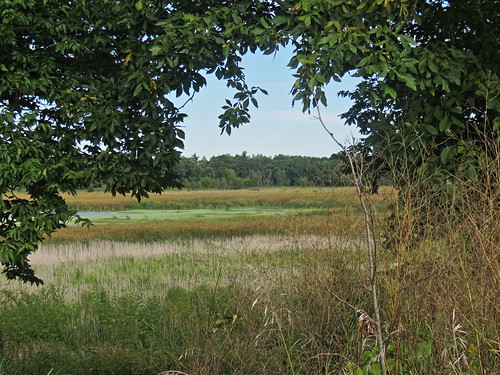
Nelson Lake Marsh view 02-20180909

Back home at our daughter's house, their oldest and youngest pets rested on their patio. Tibetan Mastiff Agramonte is eleven years old and Standard Poodle Cazador is 6 months of age:


Agramonte and Casador 20180920

Casador 29180920

In their back yard, a Silver-spotted Skipper visited a Rose of Sharon:
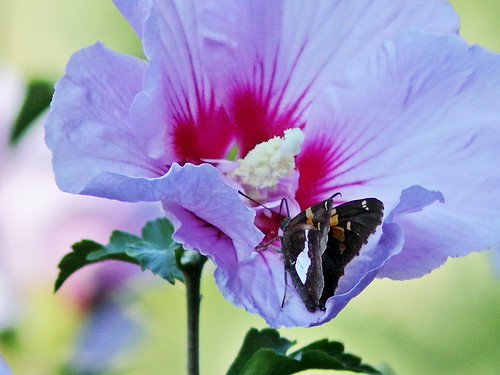
Silver-sppotted Skipper 01-20180913


Upon returning to Florida, I captured this iPhone panorama of the western sky opposite the rising sun (click on image for full view):
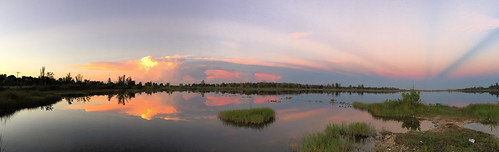
Pano to west at sunrise 20180923

= = =  = = =  = = = =  = = = = =

Linking to Misty's  CAMERA CRITTERS,

Linking to Eileen's SATURDAY'S CRITTERS,

Linking to SKYWATCH FRIDAY by Yogi, Sylvia and Sandy

Linking to WEEKEND REFLECTIONS by James

Linking to BirdD'Pot by Anni

Linking to Our World Tuesday by Lady Fi

Linking to Wild Bird Wednesday by Stewart

Linking to Wordless Wednesday (on Tuesday) by NC Sue

Linking to ALL SEASONS by Jesh

 Linking to Fences Around the World by Gosia

________________________________________________

Please visit the links to all these memes to see some excellent photos on display


________________________________________________

Sunday, September 29, 2013

The Warbler Guide: Review and Reflections

My first field guide was Chester A Reed's 1923 Bird Guide: Land Birds East of the Rockies. This pocket-sized book helped me discover the names of common dooryard birds through toddlerhood and beyond. Regrettably, I defaced the little book, recording my sightings by scrawling "SAW" in big block letters across every bird I identified. Recently I purchased a clean copy, which rekindled childhood memories.  

Three warbler species are particularly hard to identify in the fall, when young birds and females predominate. The spring males of these species are quite distinctive.  

The first of this "Treacherous Triad" is the Blackpoll.  Sole reliance on Reed's color rendering would have placed a bird watcher who encountered an immature bird at a great disadvantage. No warbler looks anything like the one in the upper right in his illustration, described as paler than the female which is "greenish above streaked with black." 

ReedBlackpoll - Copy

Next, in describing the Bay-breasted Warbler, Reed mentions that the female and immature may show "a trace of chestnut on the flanks."

ReedBay-breasted - Copy

In the case of the Pine Warbler, Reed's illustration of the "duller and grayer" female would have been of little help, even at close range.

 ReedPine Warbler

In pursuit of a Boy Scout Merit Badge, I started keeping a Life List in 1948, relying on my copy of Roger Tory Peterson's 1939 Revised and Enlarged First Edition of A Field Guide to the Birds, a gift from my mother a few years before. As I noted in an earlier blog, Roger Tory Peterson Centennialshe paid $2.75 for a used copy in 1942 (before my breakfast CheeriOats were renamed Cheerios). It would have cost $38.22 in today's economy, according to this Inflation Calculator, quite a sacrifice in those days. 

Peterson provided better descriptions and awakened my interest in warblers, but was not much more helpful in addressing the differences between the three problem species as usually seen during fall migration. 

For each of the "treacherous triad" the images of "autumn birds" had pointers which called attention to field marks. 
  • Blackpoll: "Olive-green above, two white wing bars, dingy yellow below, faintly streaked." 
  • Bay-breasted: Same description, except that it is "dingy buffy-yellow below," adding that it has yellow undertail coverts instead of white as in the Blackpoll. 
  • Pine: Similar to the other two, dull olive above, with a plain, unstreaked back and white undertail coverts.
The Peterson Field Guide greatly improved my ability to recognize male warblers in the spring. All the warbler species were depicted in only two color plates; this one illustrated the three similar species.

Peterson Warblers 1939

In his 1947 Second Revised and Enlarged Edition Field Guide, which I acquired about a year after I started my Life List, Peterson published this plate that depicted the "Confusing Fall Warblers." 

Peterson Warblers 1947

I wish he had not used that term "confusing." Although Peterson's intent was to sharpen the reader's birding skills, the illustrations had the opposite effect upon me, leaving me more perplexed than ever. Peterson's characterization simply legitimized my own confusion, especially in trying to distinguish the more common Blackpolls from Bay-breasted Warblers weaving about in the fall foliage! 

 Like most beginners, I learned useful ID tips from more experienced birders, but the "Confusing" three species were often cause for disagreements, even between the experts. I could sometimes separate the Pine Warblers from the other two. Autumn Blackpolls seemed to be more abundant than Bay-breasted, but too many of these went unidentified. Over the years, I came to call them simply "Baypolls."

To my rescue, some 65 years too late, Tom Stephenson and Scott Whittle's The Warbler Guide arrived on the birding scene. Before I received a copy, I expected it to be a rather slim publication. After all, the National Geographic Field Guide to the Birds of North America devotes a hefty 25 pages to the entire warbler tribe. Imagine my surprise to find that the massive Warbler Guide consists of 560 pages, packed with text, photographs and illustrations. 

The Warbler Guide cover

It arrived in time for our August through mid-September trip from Florida to our second home in NE Illinois. Before departing I read many of the 137 introductory pages. They dealt with such topics as warbler topography and what to notice about a warbler, including overall contrast and color, face and head patterns, size, shape, habitat, bill and leg color, breast, belly, back, rump, flanks, tail, wing and undertail coverts, aging and sexing, and seasonal and molt patterns. 

Although I skimmed over the rather technical (for me) discussion of sonograms, the section on how to listen to sonograms presented useful general information about patterns and qualities of warbler songs. 

Sixteen pages consist of about 80 thumbnail "quick finder" warbler illustrations on facing pages: side views, 45 degree views, under-views, faces, spring, fall and western regional comparative groupings, and finally unter-tail patterns. Toward the end of the book there is another "quick finder" for warblers in flight. This remarkable collection of photos and drawings, all sized proportionately and in full color, is worth the price of the book. I looked forward to applying what I learned during fall migration season in Illinois.

At the Fort Lauderdale airport, on our way to Illinois, our checked suitcase was two pounds overweight. I removed The Warbler Guide, thus reducing the weight by three pounds! Having cleared the luggage check-in without paying an extra tariff, I carried the book on the plane and immersed myself in the species accounts, jumping about, perusing those species I most expected (or hoped to see) during our stay in Illinois. 

Thanks to the Peterson plate, I had almost given up on the fall Pine-Blackpoll-Bay-breasted triad. Now, having read Stephenson and Whittle's book, I paid special attention to wing patterns and leg color.

The Warbler Guide, in a departure from traditional field guides, provides many species with more than one set of descriptions and illustrations. "Bright birds" and "drab birds" deserve separate four-page accounts, as if they were different "species."  

For example, the Bay-breasted Warbler has this second set of descriptions and comparisons for the "drab" form, particularly immatures, females and adult males in fall plumage.

Bay-breasted Warbler Drab

Bay-breasted Warbler Drab 2

This approach is very informative. One pearl that I harvested was to look for the high contrast black between the wing bars in the Bay-breasted, while the Blackpoll has more uniform dark olive wing coverts and flight feathers. 

With somewhat increased confidence, I headed out into the field. Migration was slow, but I caught sight of this warbler, definitely one of the "Treacherous Triad:"

Bay-breasted Warbler 2-20130910

Its streaked back ruled out Pine Warbler. Noting the dark primaries and unstreaked breast, I was quite confident that it was a Bay-breasted Warbler. It confirmed my impression by moving up to provide a better view of its buffy flanks, and the definite darker area between the white wing bars:

Bay-breasted Warbler 20130910

One of those "Baypolls" showed a rather pronounced eye-ring and streaked yellowish-olive breast and flanks. Its wings are more uniformly dark, and its legs are light colored, not black. I identified it as a Blackpoll:

Blackpoll Warbler 20130905

Another Blackpoll, with distinct yellow feet:

Blackpoll 20130906

Buffy undertail coverts and breast reveal this as a Bay-breasted Warbler:

Bay-breasted Warbler 20130911

Fall warblering is fun and challenging, but how much easier in the spring, when the warblers match my childhood mental images...

Bay-breasted male (Illinois, May, 2009):

Bay-breasted Warbler 20090502

Male Blackpoll (Illinois, April, 2011):

Blackpoll Warbler male 20110414

Pine Warbler (March, 2011, South Florida):

Pine Warbler 3-20110311

Not a field guide to fit into one's pocket, and not a cocktail table adornment, this is a book to be visited time and time again... at my age, perhaps even more frequently than for most. It exhaustively illustrates the fine points of warbler identification, whether by size, shape, color, habits or vocalizations, and is a worthy addition to the library of any serious students of birds.


Product Details